
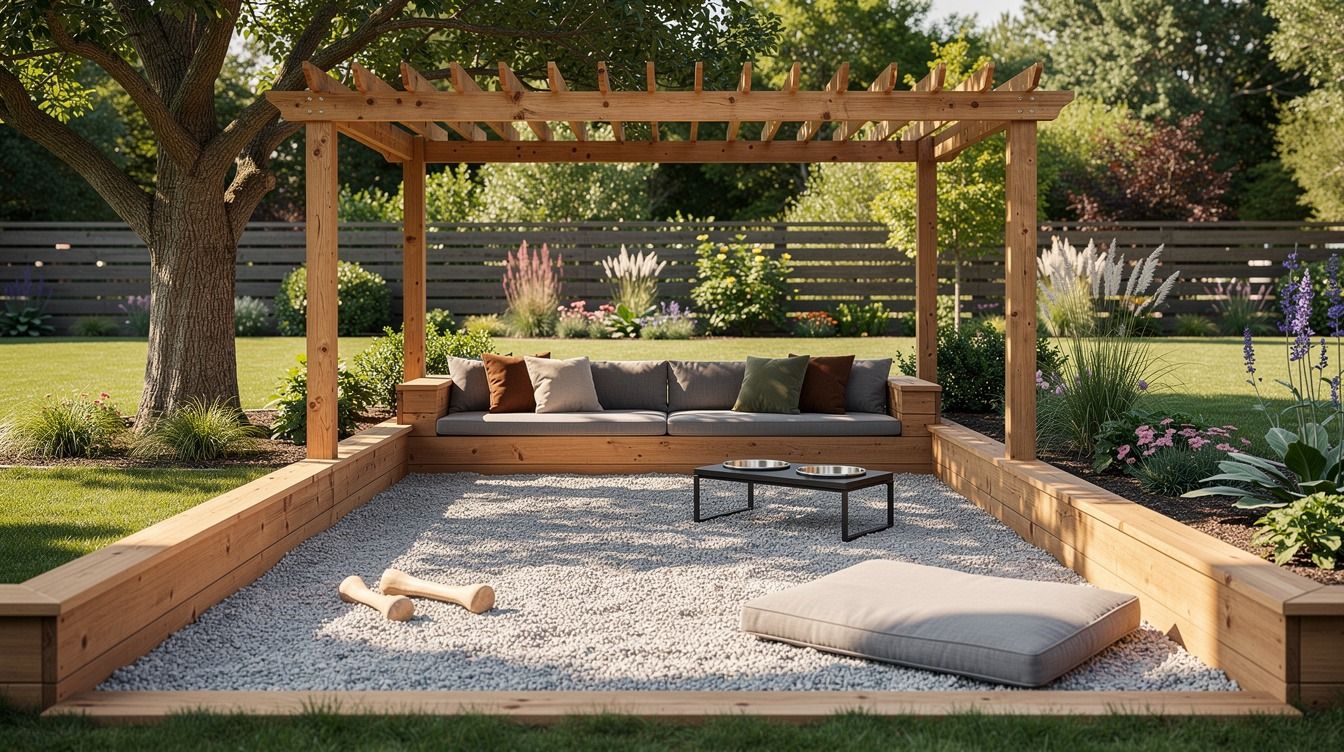
 by
by A dog-friendly backyard can cost as little as $200 to $900 if you focus on textiles, lights, and plants first. I started this makeover after one muddy spring when my dog kept doing the same sad loop by the back door, then turning around like the yard had nothing to say to him. So I rebuilt it corner by corner, and now he uses all of it.
Here's what it looked like before:
Before I touched anything, the yard had that flat, builder-basic feeling you know the second you step outside. The path was too narrow, the slick clay dirt by the fence turned greasy every time it rained, and my dog kept pacing the same 6-foot patch near the gate because the rest of the yard felt exposed.
I had seating, technically, but it didn't invite you to stay. It looked like a backyard somebody had finished once and then forgotten.
I also made the classic mistake of treating the dog stuff like temporary clutter instead of design. A plastic rinse hose.
Two mismatched bowls. Towels slung over a chair.
Nothing was awful on its own, but together it made the whole space feel restless. If you've ever had a yard that works on paper and still doesn't feel good, you know what I mean (I definitely did).
My dog had a wicker bed by the back door that nobody wanted to look at, including me.
- Set a shaded pea gravel dog run
- Tuck a rinsing station by the gate
- Layer washable rugs under the pergola
- Build a low deck for lazy afternoons
- Plant lavender borders along the fence
- An IKEA NÄMMARÖ bench frames the water bowls
- Add a cedar bench beside the toy bin
- Hang café lights over the play patch
- Create a mulch-free lounging corner
- Karl Foerster and feather reed grasses screen the compost
- Set a fire pit beyond the dog path
- Keep a wicker basket for muddy towels
1Set a shaded pea gravel dog run
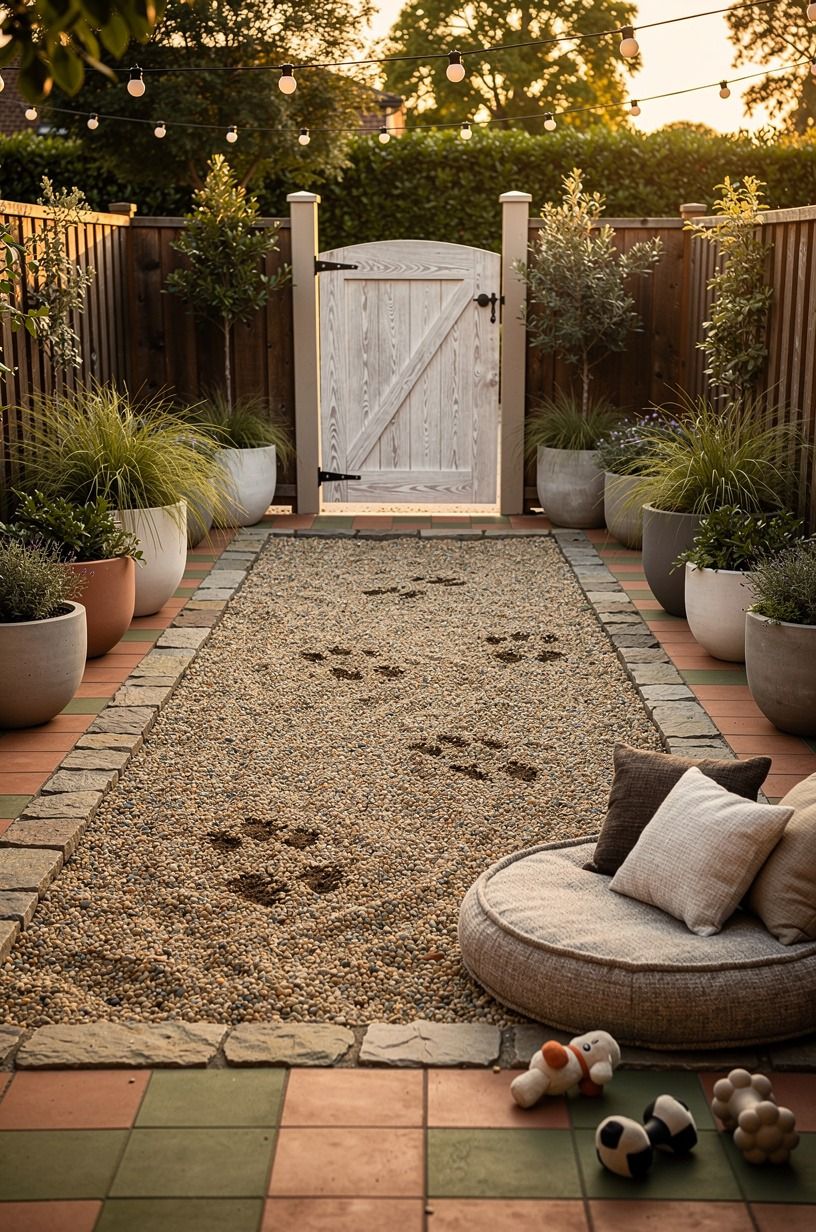
This was the first move, because my dog needed one clear path that felt safe underfoot. I gave the run a full 36 in of clearance so he could pass without brushing every planter, then centered it on a terracotta-and-olive route that made the whole yard feel intentional instead of improvised.
The low stone edging mattered more than I expected. Your eye reads the border first, and your dog reads the softness underpaw.
I chose pea gravel because mulch kept hitching a ride into the house, and plain dirt turned into a mess after one rain. The shaded placement changed everything. He stopped sprinting across the lawn just to get back to the door and started lingering, sniffing, and cutting through the yard like he owned it.
If you're shaping a similar path, the lesson from my cozy backyard aesthetic guide holds up outside too: give one zone a strong material story, and the rest settles around it.
The gate helped sell the whole thing. I went with a cerused white oak finish that picked up the pale gravel and the chalky terracotta without looking precious. But I wouldn't skip the shade piece to save money.
Gravel in hard sun can read glaring by noon, and your dog will tell you that faster than any design rule will.
2Tuck a rinsing station by the gate
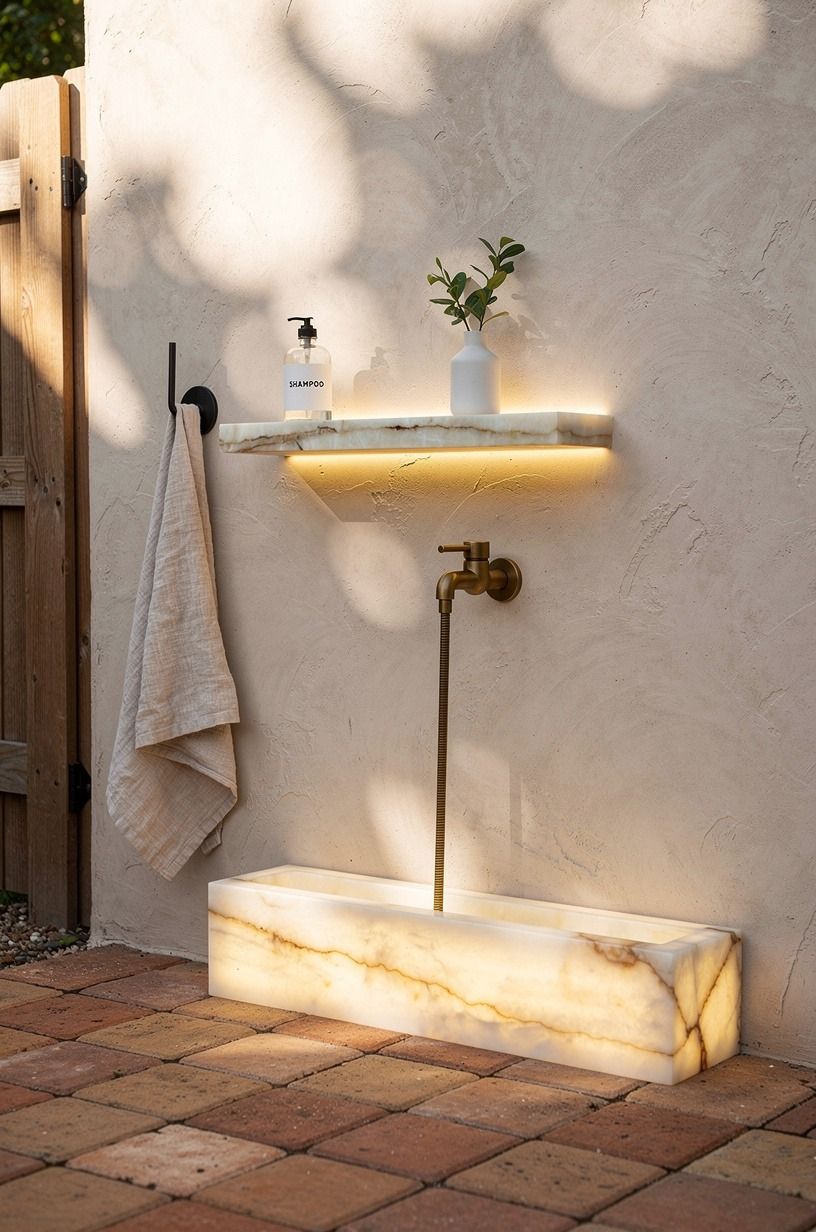
Nobody tells you this, but the best dog rinse spot is the one you can use before mud crosses the threshold. I tucked mine right by the gate on clay pavers, so you step in, clip the leash, spray the paws, and move on. That sequence matters when your dog is wiggling and you are trying not to drip through the whole yard.
The pretty part was easy once I understood the function. A 600gsm Turkish cotton towel on a linen hook feels better than an old beach towel, and it dries faster than the fluffy indoor ones people keep sacrificing to outdoor duty.
I added an aged brass sprayer because the warm metal looks right against clay and olive tones, but also because it doesn't disappear visually. You can find it fast, even at dusk.
I learned this after trying a hose caddy on the fence. Bad call.
It looked temporary, flopped into the walkway, and made the gate corner feel cluttered every single time! If your yard entry is awkward, you'll probably like the practical flow ideas in cozy backyard play area ideas kids adults both love, because the same entry logic works whether the traffic has paws or sneakers.
3Layer washable rugs under the pergola
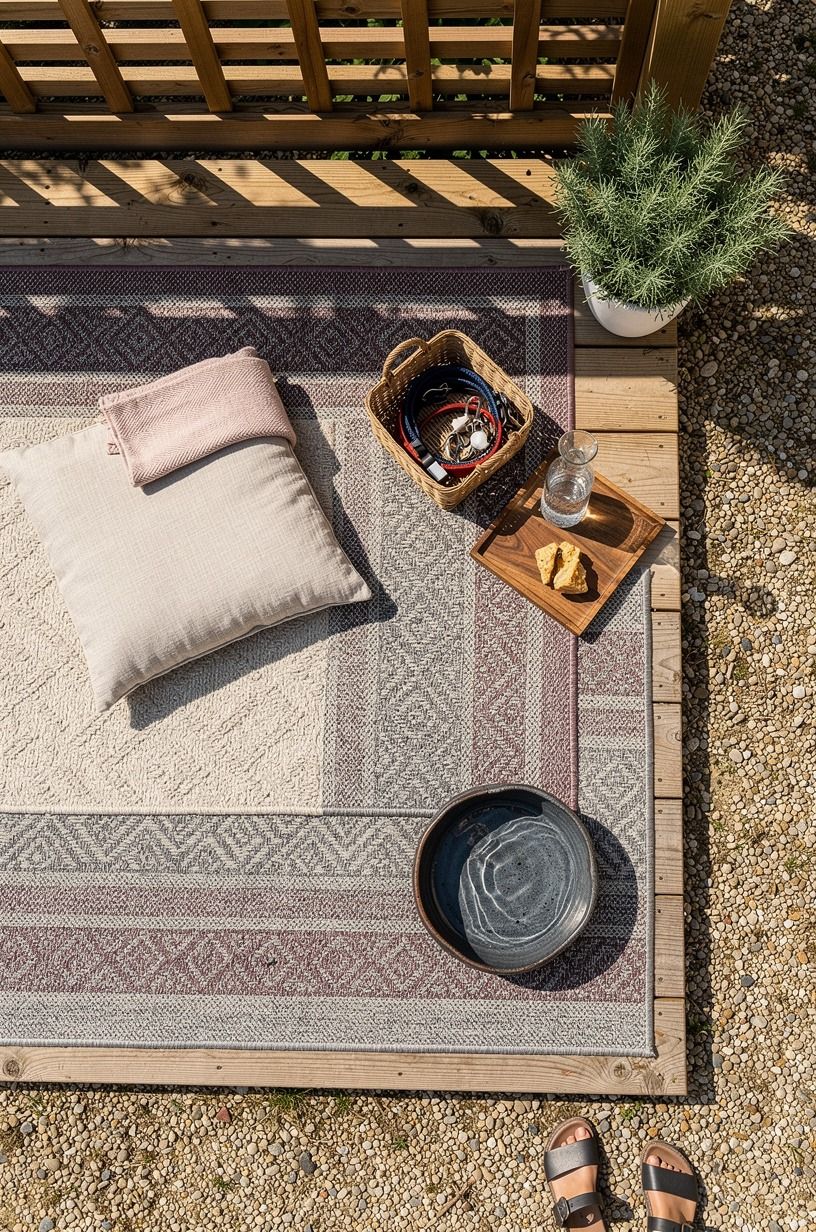
Under the pergola, I wanted the yard to feel like a real outdoor hangout, not a patio set stranded on concrete. So I layered washable rugs instead of buying one oversized statement piece. The top rug gave me pattern.
The lower rug gave the seating area enough visual width that the dog cushion didn't feel like an afterthought dropped in the middle.
The one rule I wouldn't break was this: the front legs of the seating had to sit on the rug. If you stop short, the zone looks skimpy, and your dog ends up lounging half on, half off, like the layout never made up its mind. I used a polypropylene rug because the real-world cost is usually $80-$400, and that range lets you replace it later without feeling sick about it.
A leash basket, a book-matched walnut tray, and one washable cushion were enough. No ten-piece styling moment.
And honestly, that's where I went wrong the first time. I kept trying to decorate the pergola instead of softening it. If you are torn between structures, my take in pergola vs gazebo which suits your cozy backyard still stands: pergolas win when you want air, shade, and room for texture to do the heavy lifting.
Keep the props short, friends!
4Build a low deck for lazy afternoons
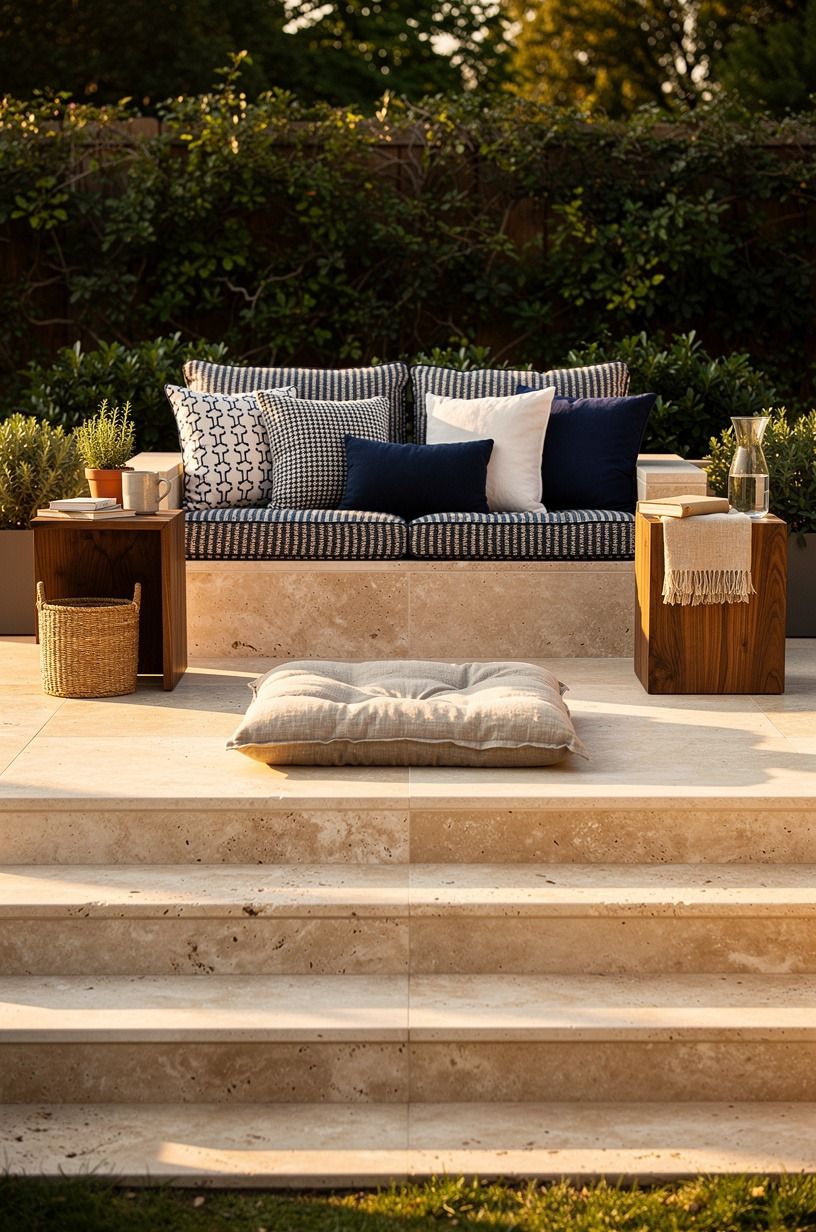
The deck changed the mood of the yard more than the plants did, and I think it's the move most people skip too early.
5Plant lavender borders along the fence
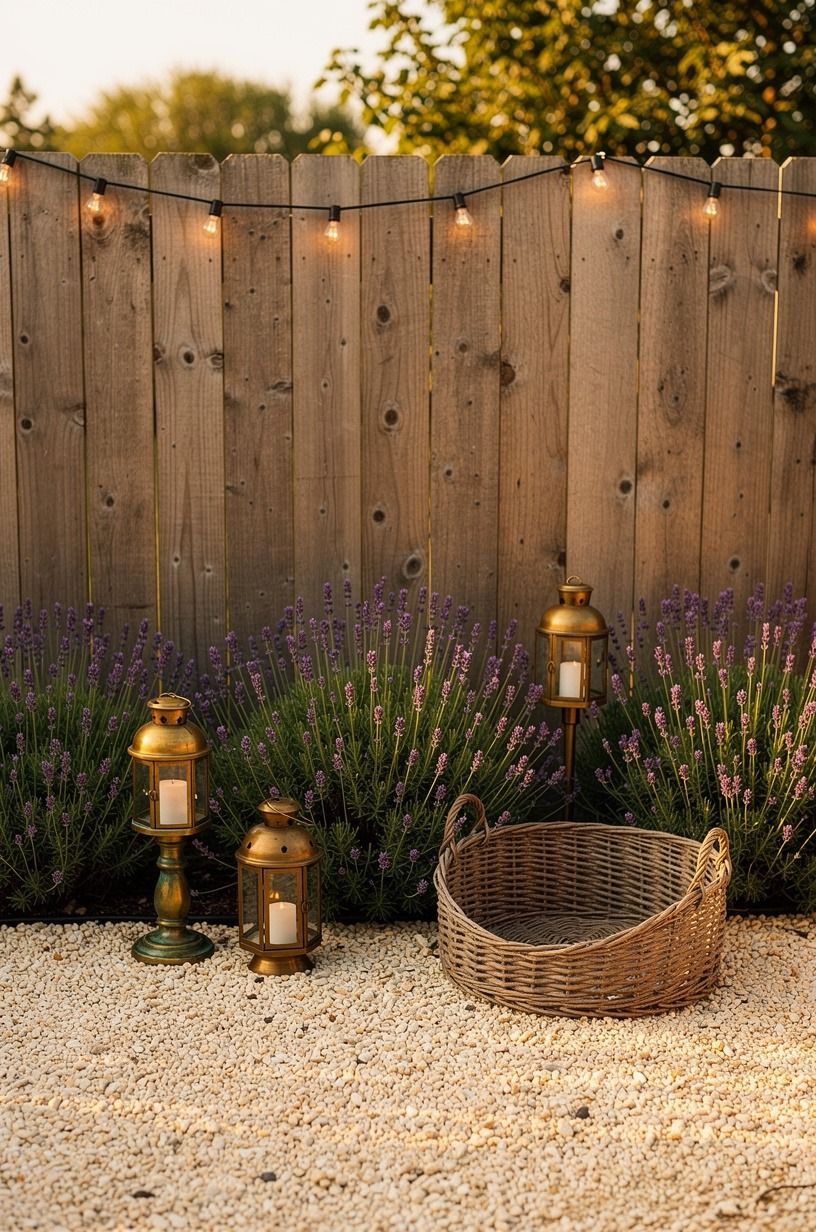
Lavender was the line that made the fence stop feeling like a hard stop. I ran it low and airy along the edge so the yard kept its depth, and the cream pea gravel around the planting bed bounced just enough light back onto the foliage to keep the whole border from going flat. Your eye needs that softness when a fence runs long.
I didn't want a cottage-garden blur, so I kept the palette clipped and dry. Lavender Hidcote in repeated clumps.
Softened emerald foliage behind it. And a fence finish in Benjamin Moore Aura Exterior in Chestertown Buff that read warm instead of gray once the sun hit.
If you plant too many one-off varieties, the border reads busy fast.
What surprised me most was how he shifted his whole route. He started walking the fence line slowly, nose down, then curling back toward the deck instead of charging the perimeter. Maybe it was scent, maybe it was structure, maybe both.
Either way, the yard felt calmer. For more ways to keep an outdoor space from turning rigid, I still like the layered planting ideas in modern cozy backyard ideas clean lines warm vibes.
6An IKEA NÄMMARÖ bench frames the water bowls
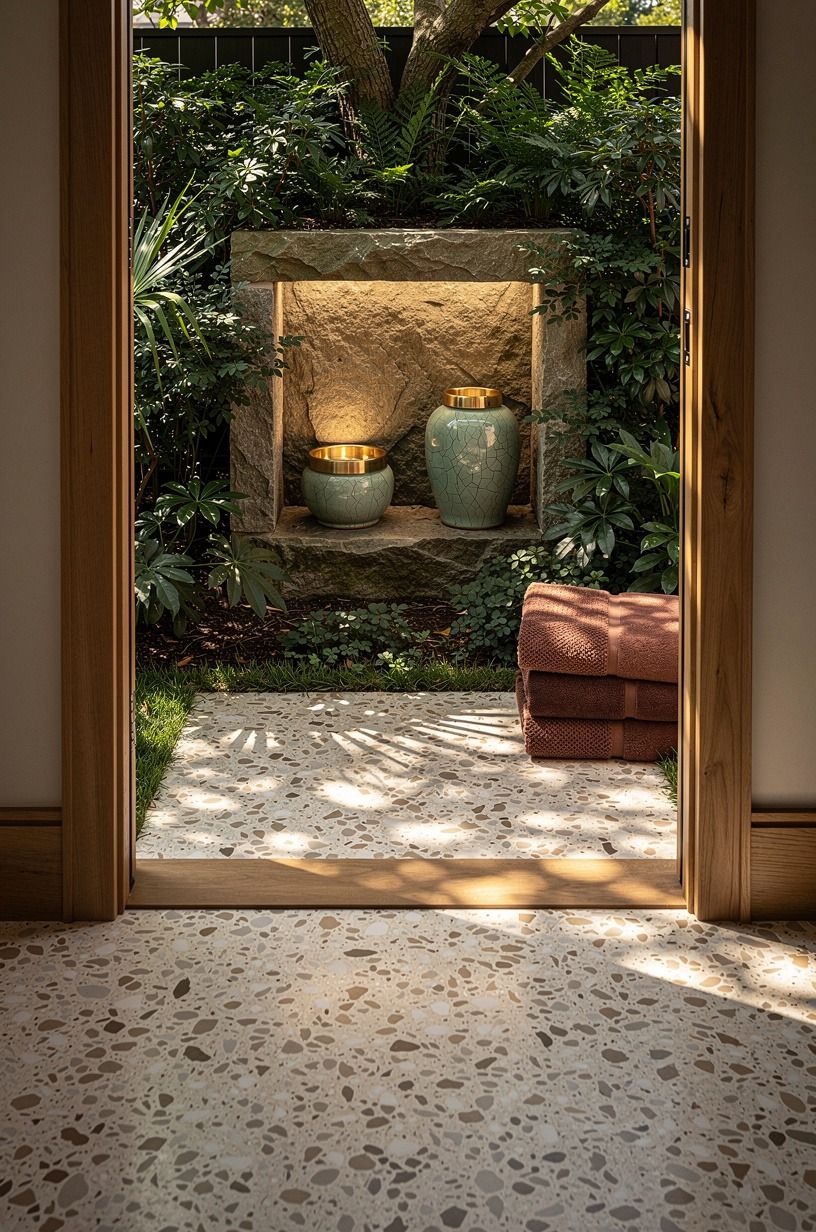
Water bowls scattered in open space always looked accidental in my yard, so I built a little nook for them instead.
7Add a cedar bench beside the toy bin
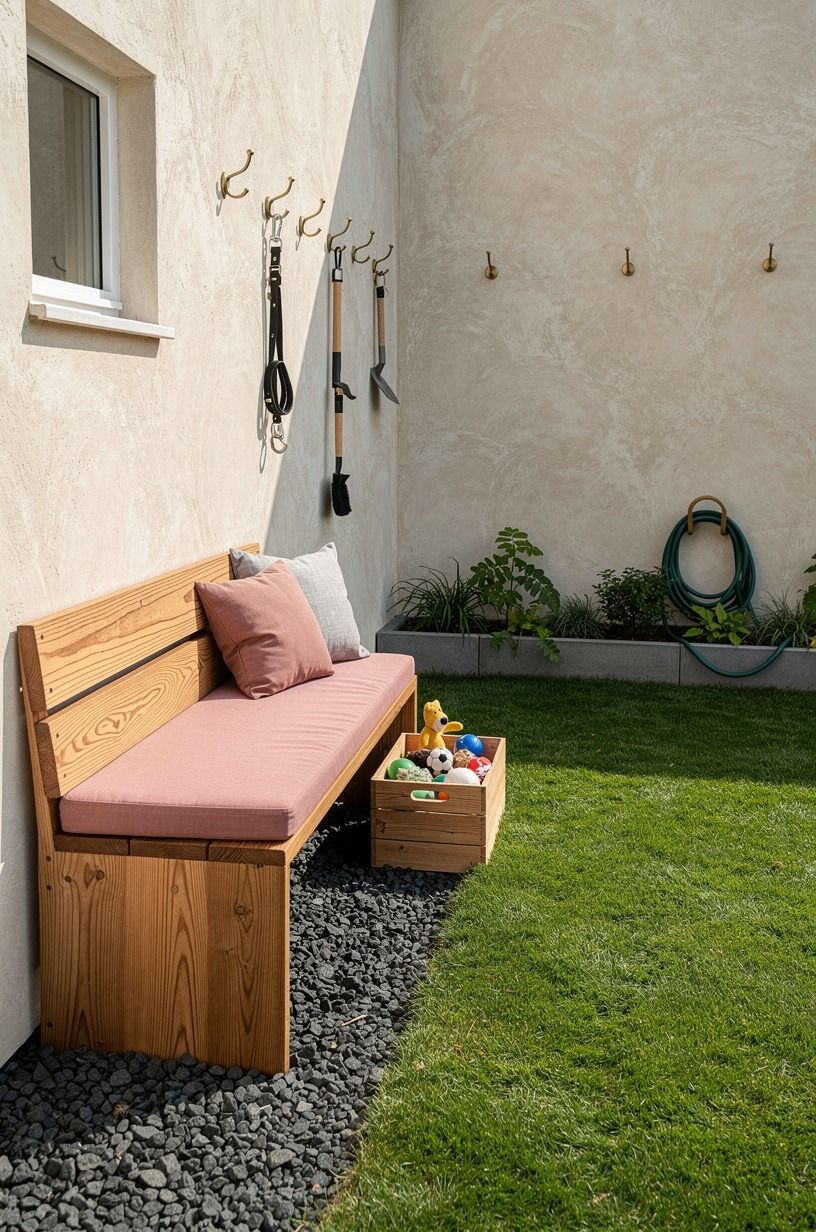
My dog had toys everywhere, which meant I had visual noise everywhere. The fix wasn't buying a cuter bin.
It was anchoring the bin to a real piece of furniture so the mess had a boundary. I set a bench beside it, gave the whole lawn corner one purpose, and suddenly the lawn side of the yard felt finished.
I chose western red cedar because it weathers nicely and still feels warm against charcoal gravel, even when the sky goes flat. The toy bin sits low under the bench line, and the dusty rose cushion on top keeps the corner from drifting into kennel territory. You can do a budget version with an IKEA NÄMMARÖ style outdoor bench if you don't want custom work.
But don't oversize it. I almost bought a deeper seat, and it would've eaten the open strip my dog uses to loop back toward the gate. That was the whole point of the corner.
Storage on one side, run space on the other. If you're balancing utility with atmosphere, cozy backyard play area ideas kids adults both love gets into that split-zone logic in a way that's genuinely useful.
8Hang café lights over the play patch
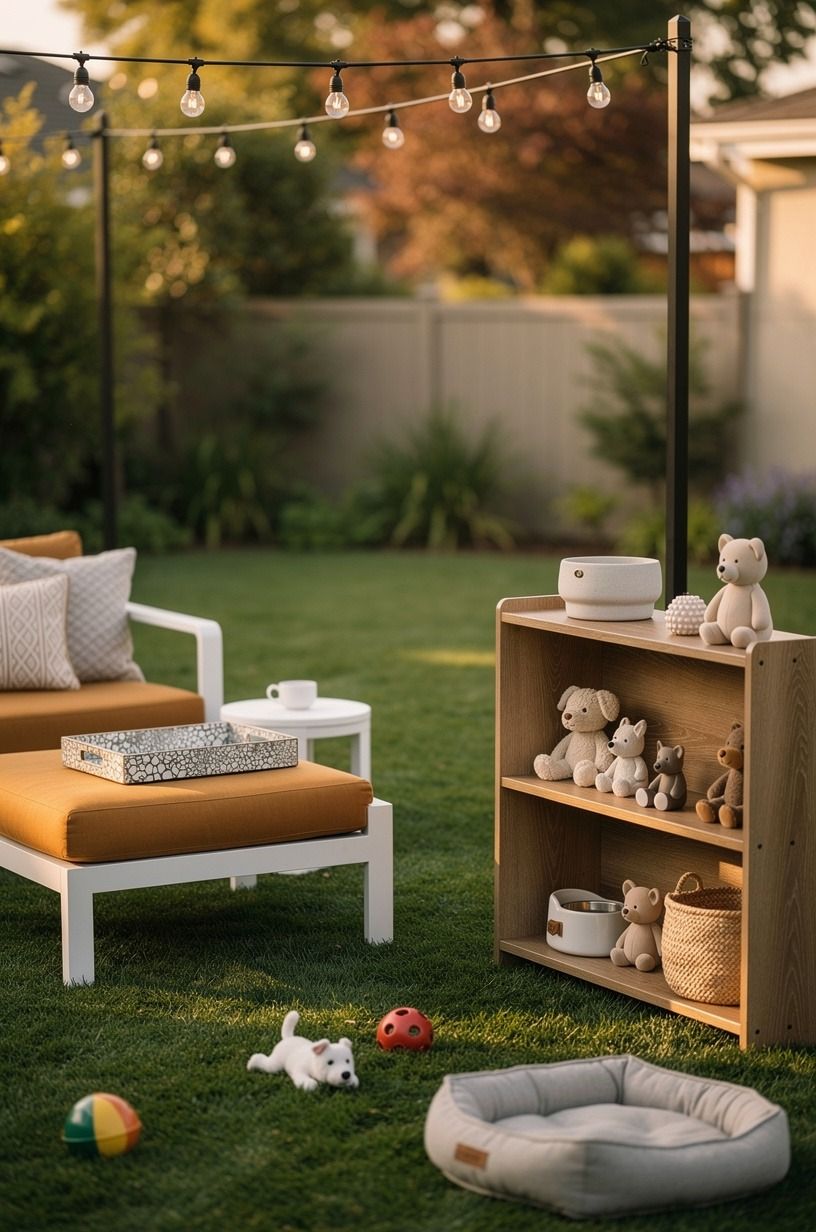
Lighting was where the yard finally stopped feeling like a daytime project and started feeling lived in. I ran café lights over the play patch, not over the dining zone, because that open patch was dead at night. Once the glow landed there, the whole backyard started pulling you outward after dinner.
The strand I liked best sat in the normal LED string light range of $30-$120, and I chose warm bulbs instead of the crisp white ones that make skin and stone look cold. Black powder-coated steel posts at each side kept the line clean. And yes, I checked the height twice, because saggy café lights can make a good yard look tired fast.
My dog noticed it too. He started carrying toys to the lit patch after sunset instead of dropping them by the door and asking to go back inside. Isn't that the whole test?
If you want your backyard to hold people a little longer in cooler months, how to set up a cozy backyard for winter makes the same case for warm pools of light over one giant flood of brightness. Worth every penny of those bulbs!
9Create a mulch-free lounging corner
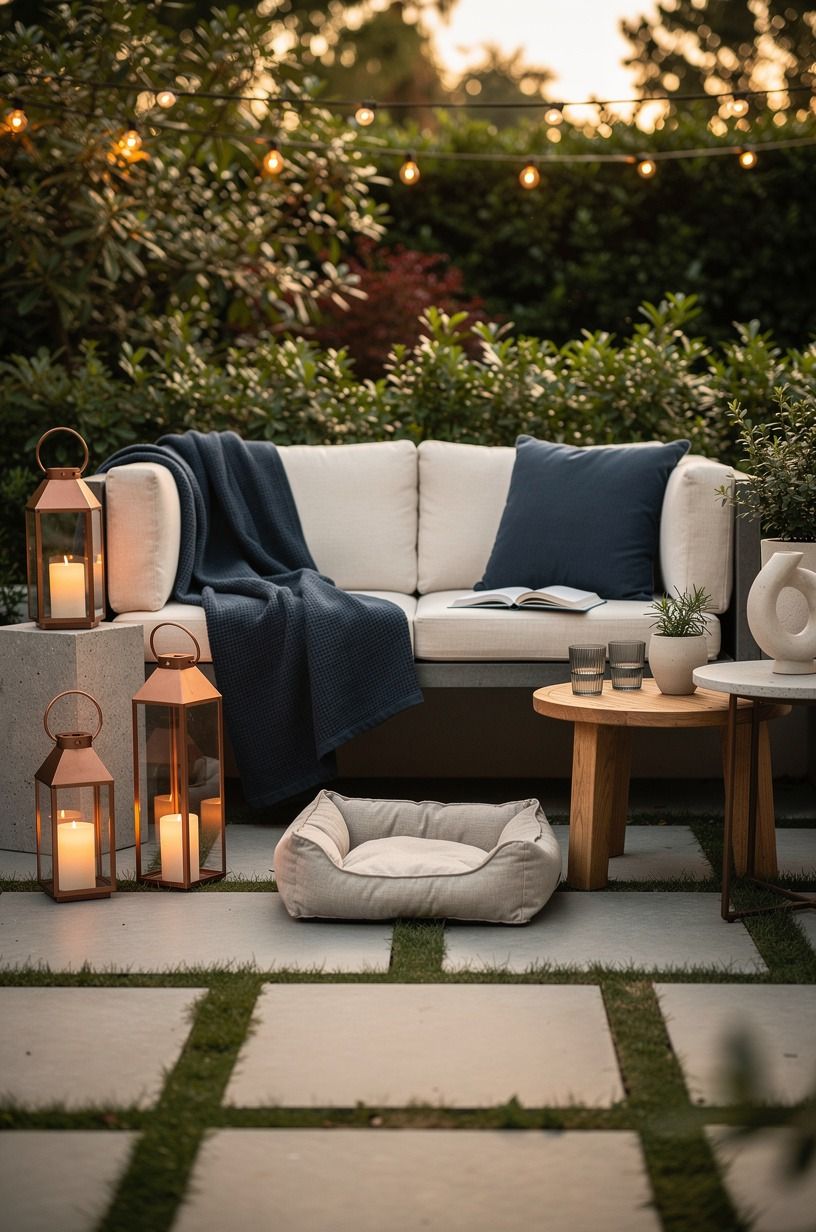
This corner existed because I got tired of picking bark out of paws, rugs, and the back seat of my car. So I went mulch-free and switched to smooth stone pavers with a symmetrical planting edge.
Instantly cleaner. Instantly calmer.
The low, floor-level view here matters in real life too. When you are sitting close to the ground, you notice every loose bit underfoot, every wobble, every rough transition. I used limestone-look pavers with tight joints so the lounging corner felt stable, and I paired them with one Sunbrella cushion because those typically run $40-$150 each and survive outdoor life better than the cheaper cotton options people keep replacing.
But the main win was psychological. Without mulch, the corner stopped reading as a leftover planting zone and started reading as a place to stay. If you like cleaner outdoor lines without losing warmth, modern cozy backyard ideas clean lines warm vibes is worth a read before you buy anything else.
10Karl Foerster and feather reed grasses screen the compost
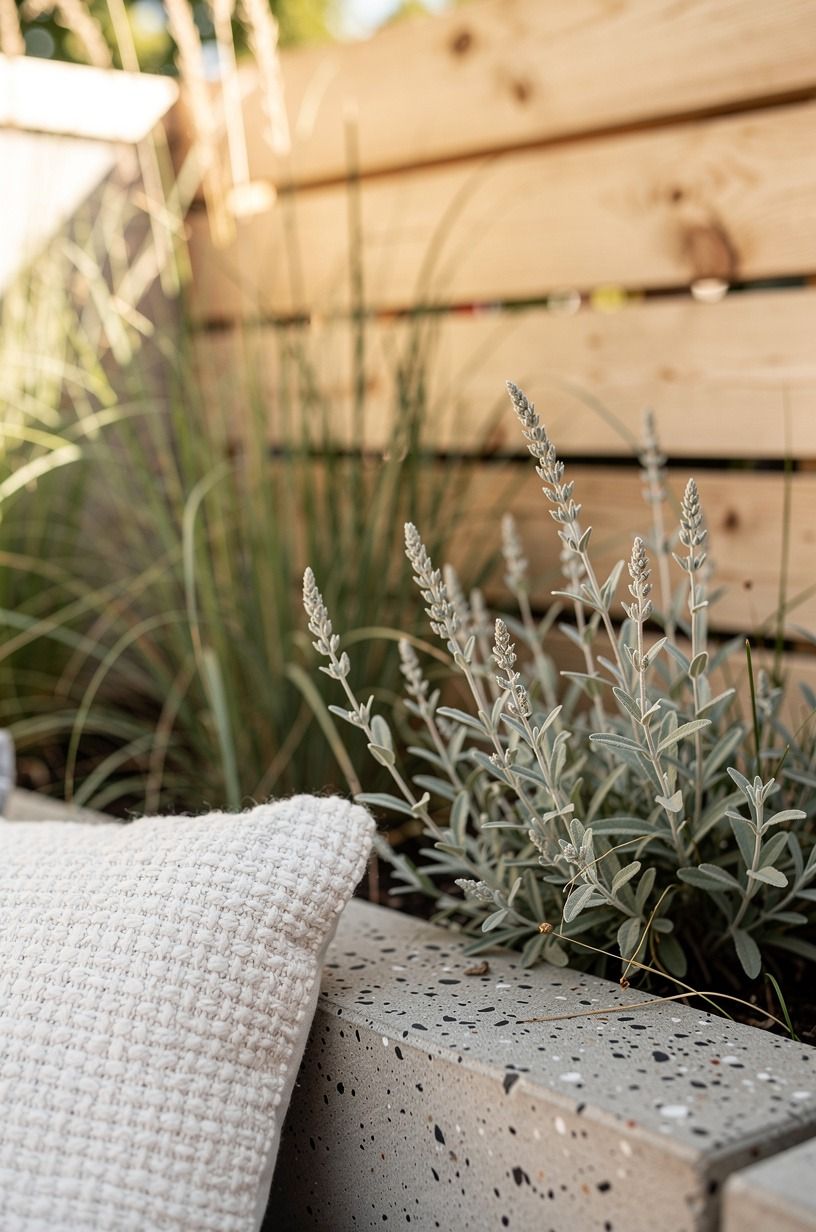
Compost was the least photogenic part of my yard, but it didn't need to become a shame corner.
11Set a fire pit beyond the dog path
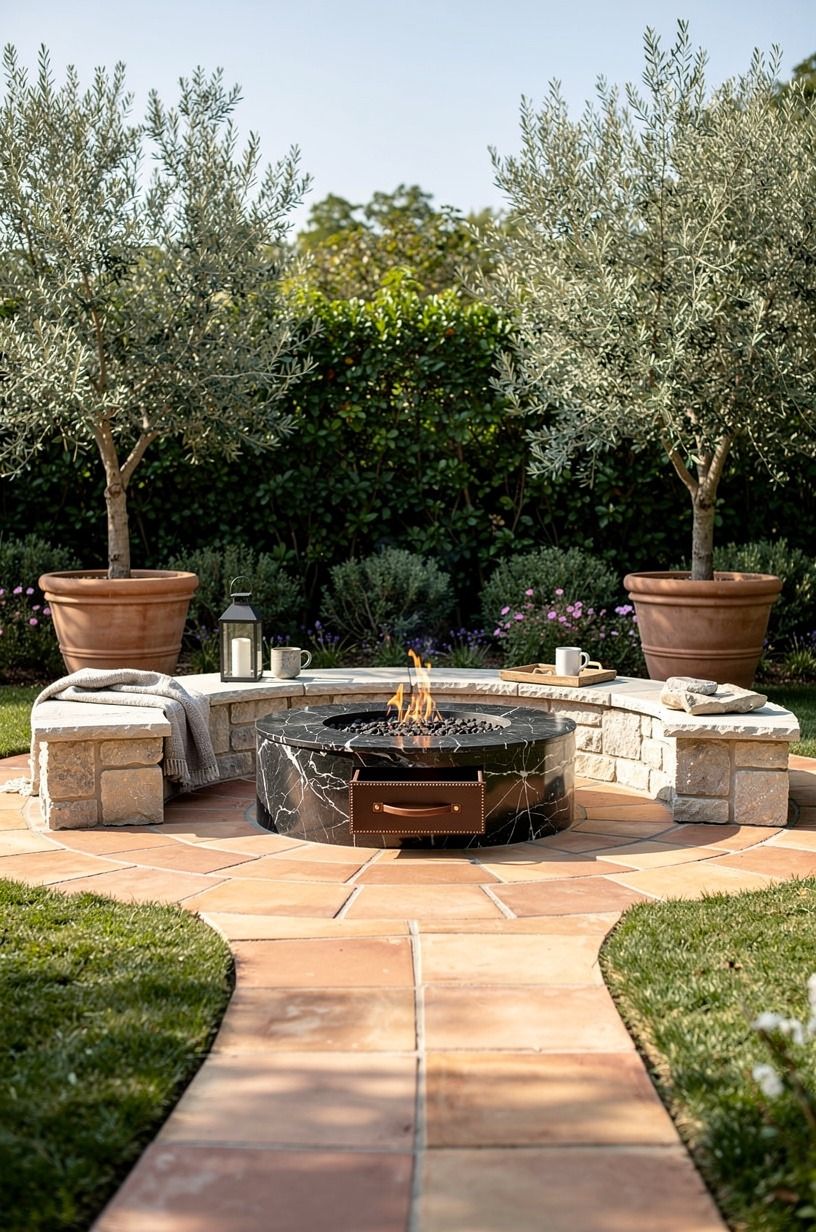
The fire pit belongs beyond the dog path, not inside the main traffic lane. That single placement decision gave the yard warmth without turning the center into an obstacle course. My dog can loop the curve, sniff the olive planters, and still cut behind the seating circle without squeezing past knees.
I used terracotta stepping stones to lead the eye out there, then centered a stone seating ring so the whole setup felt anchored from the first glance. A cast-iron fire bowl about 30 inches across throws enough heat for four people without dominating the patio.
A fire feature doesn't have to be huge to work. It just has to be far enough from the active route that people can settle. If you are adding one, leave the movement zone sacred.
I almost shoved the pit closer to the deck for convenience, and that would've been a mistake. Heat, traffic, toys, and dog energy all in one spot?
No thanks. The quieter, safer layout won.
For cooler weather planning, how to set up a cozy backyard for winter pairs nicely with this exact idea.
Why do dogs actually start using the whole yard?
Here's the part that surprised me, and it's the one I would've laughed at before. It's not the toys that change a dog. It's the yard design.
It's not the toys. It's not the treats. It's not even the shade, although shade helps.
It's the path itself. When my dog had one clear, soft, shaded route from the deck to the gate to the lounging corner, he started treating the yard as a sequence of rooms instead of one open field.
He patrols. He pauses.
He naps in the new spot. He brings me a sock from somewhere he's never gone before.
I'd read about dog "enrichment" before this makeover and rolled my eyes. Turns out enrichment is mostly landscape design wearing a dog trainer's hat.
If your pup is doing the same anxious 6-foot loop by the door, look at the path, not the toy basket. Build one good walk. Then see.
12Keep a wicker basket for muddy towels
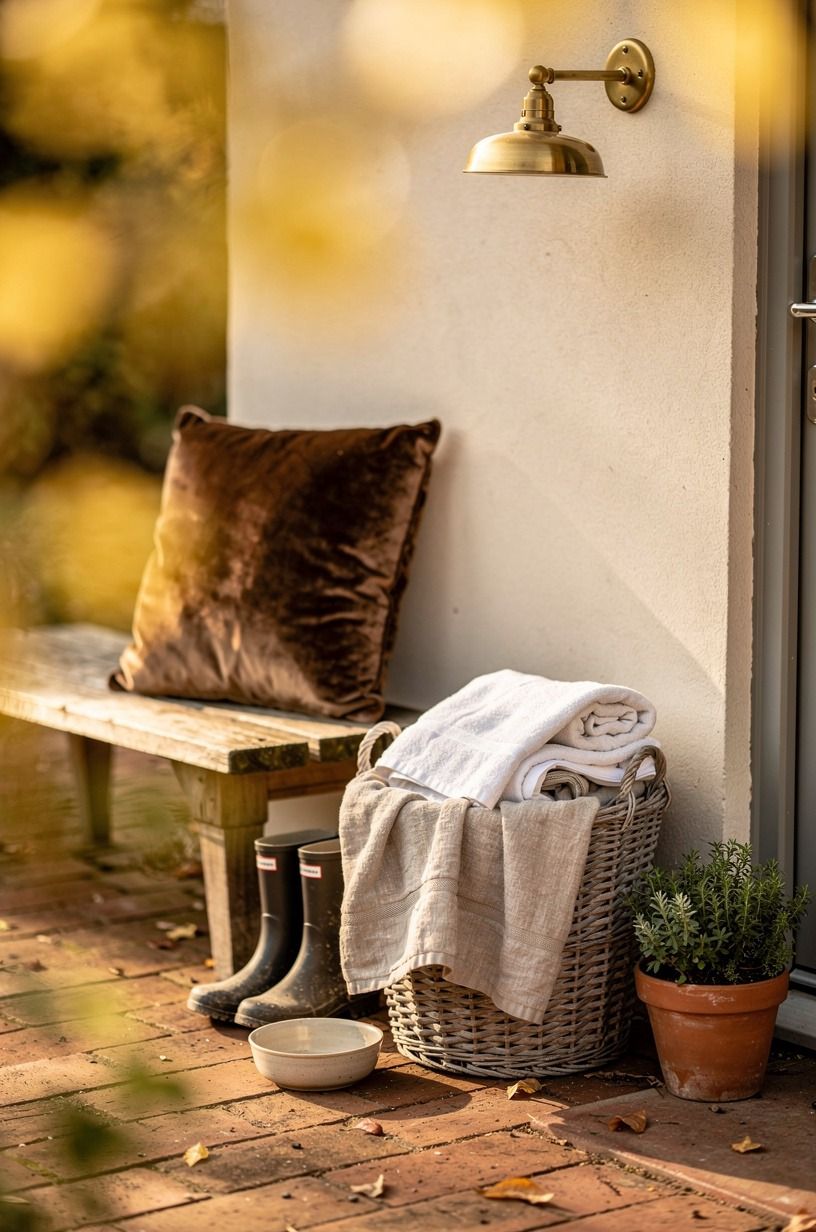
This is the least glamorous idea in the makeover, and I mean that as a compliment. A wicker basket by the backyard entry kept the towel problem from spreading into every other zone.
You come in, drop the muddy linen, grab the dry one, move on. Done.
I placed it beside clay pavers and under an aged brass wall arm so the area looked finished rather than apologetic. Golden foliage near the entry helped the basket blend into the yard instead of screaming utility. And because the towels had a home, I stopped throwing them over chairs like a raccoon with a decorating problem.
You can spend big on a yard and still lose the feeling if the entry moment falls apart. That's why I kept this basket visible, easy, and close to the door.
If you need more proof that little control points change everything, how to make a large backyard feel cozy not empty makes the same point from a bigger-layout angle. Tiny move, huge shift!
The Three-Zone Calm Rule
The biggest thing I learned from this makeover wasn't about pea gravel, plants, or even the dog gear. It was that a dog-friendly backyard only feels good when you stop treating the whole space like one giant flexible zone.
I used to think freedom was the point. Let the dog roam, let the seating float, let the hose live wherever.
But freedom without structure turns into low-level friction, and you feel it every time you step outside.
So I broke the yard into three emotional jobs. One route for movement.
One place for pausing. One edge for cleanup and storage. That's it.
Once those jobs were clear, every design choice got easier. The pea gravel dog run became the movement line. The pergola, the polypropylene rugs, and the low deck became the pause. The rinsing station, the wicker towel basket, and the toy corner handled the ugly but necessary parts.
You can do this in a tiny yard, by the way. You don't need acreage.
You need honesty about how your dog and your body already move.
I also stopped buying outdoor things because they looked nice in isolation. I started asking a meaner question: would this still feel good after rain, muddy paws, and one tired evening when I didn't want to tidy anything?
That question killed a lot of bad ideas. It killed the floppy hose caddy.
It killed the oversized bench. It killed the mulch.
Good. A yard that only works when styled for a photo doesn't work.
And here's the part I didn't expect: the calmer layout changed how I used the yard too. I read outside more.
I stopped hovering by the door waiting for my dog to be done. Friends stayed longer by the cast-iron fire bowl because there was a clear landing zone instead of awkward drift.
The yard finally felt gathered, not decorated. If you are reworking your own space, start by naming the path, the pause, and the cleanup. Then protect those jobs harder than any color palette.
How much it cost
I kept this makeover in the real-world middle ground where you notice a change fast without pretending every yard needs a five-figure rebuild. The honest range from this kind of project, a shaded gravel run, washable outdoor textiles, warm LED string lights, and a few key plantings, sits between $200 and $900 if you reuse containers and shop your own storage first. My exact spend moved around because I bought some pieces weeks apart, but the useful benchmark is the standard US range below.
My own spending sat closest to the budget end because I kept the pergola, reused a few containers, and spent on the pieces that changed behavior instead of just looks. If you've only got a few hundred dollars, I'd put it into the path, one washable rug, warm LED string lights, and better cleanup storage first. But if you are debating structure, pergola vs gazebo which suits your cozy backyard is the decision post I'd read before sinking money into the wrong shell.
A Few Things Worth Answering
What is the best dog-friendly backyard idea for a small backyard?
A shaded path plus one soft landing zone is the best place to start in a small yard. Clear movement matters more than stuffing in extra furniture.
Think one gravel run, one washable rug, and a compact bench like IKEA NÄMMARÖ so your dog can loop without hitting dead ends. If you want more layout help, how to make a large backyard feel cozy not empty applies surprisingly well to tiny spaces too.
Where can I buy dog-friendly backyard pieces on a budget?
Start with IKEA, Target Threshold, and Wayfair for the basics, then fill gaps second-hand. Cheaper texture is easy to find if you are patient. Wicker baskets from Facebook Marketplace, outdoor planters from thrift stores, and Sunbrella replacement cushions bought off-season can save you more than one big sale ever will.
How much does a dog-friendly backyard makeover cost?
For most yards, it costs about $200 to $900 if you stay focused on textiles, lights, plants, and paint. The low-cost wins are the layout moves.
Clearing a 36 in path, relocating bowls, and setting up a towel station change the yard before the expensive pieces ever show up. The broader breakdown in pergola vs gazebo which suits your cozy backyard helps if you are deciding whether structure belongs in the budget yet.
Can I create a dog-friendly backyard on a budget?
Yes, and you do not need a full rebuild to feel the difference. Cheap changes add up fast. A polypropylene rug, a $30-$120 strand of LED lights, and one dedicated basket for towels do more for daily life than another random chair you don't have space for.
Is a dog-friendly backyard worth it in a small space?
Yes, small spaces often improve faster because you notice every inch working harder. Tighter layouts help when you give each corner a job. Keep the lounge zone on one side, protect the dog route, and avoid deep furniture that steals your turning radius.
Is a dog-friendly backyard a good idea for a rental?
Yes, as long as you stick to removable upgrades and portable storage. Rental-safe swaps are easier than people think.
Try outdoor rugs, freestanding benches, planters that screen ugly views, and a hose station clipped to a removable stand instead of drilling into every fence panel. For more no-drama ideas, cozy backyard play area ideas kids adults both love is a helpful next read.
Where I'd Start First
If I had to pick one, I'd start with the shaded gravel dog run. Without a clear path, every pretty thing becomes an obstacle, and your yard still feels fussy.
Fix the line first. The calm follows.
What changes for you once the path is right?
One last thing, because this part never shows up in any checklist. The yard stops being a project you maintain and starts being a room you live in.
You stop scanning for the dog's bathroom emergency before company arrives. You stop barking "don't dig there" four times an afternoon.
You let him out before your morning coffee instead of holding the door like it's a hostage negotiation.
You also start using the space for yourself again. I read in the lounging corner more than I read indoors now.
My partner and I had a real conversation by the fire pit last weekend instead of hovering by the kitchen window pretending we were outside. None of that is in the $200-$900 budget.
All of it is the actual point.