
 by
by Quick answer: For most families, a crib mattress protector is a practical hygiene layer. I’d choose one that is thin, waterproof, washable, quiet, and genuinely snug on the mattress. Skip any model that adds noticeable padding, bunches under the fitted sheet, or pulls loose at the corners.
My verdict: The crib mattress protector is worth buying when the mattress itself lacks a wipe-clean cover or you want an easier laundry routine. It should protect the mattress without changing the sleep surface. Fit and construction matter more than softness, branding, or decorative quilting.
- Treat the protector as a removable liquid barrier, not as a comfort layer or safety device.
- Look for a clearly identified waterproof membrane beneath a simple fabric surface.
- Check the protector on the actual mattress rather than trusting a generic crib-size label.
- Follow the care label closely and keep a clean backup available for overnight changes.
- Return any protector that wrinkles, shifts, crinkles excessively, or makes the fitted sheet harder to secure.
Updated July 2026.
Do you actually need a crib mattress protector?
A diaper leak can turn a washable sheet into a mattress-cleaning job. That is the clearest reason to use a protector. The barrier catches liquid before it reaches foam, fiber, seams, or another absorbent part of the mattress cover.
The need changes if the crib mattress already has a durable, wipe-clean waterproof cover. In that case, an additional protector is mainly a removable laundry layer. It may still be convenient, but I would not add a thick pad merely because the word “protector” appears on the package.
A protector and a mattress pad are not always the same thing. A basic protector focuses on liquid resistance and easy removal. A padded or heavily quilted product is designed to alter surface feel. For a crib, I favor the first approach because it leaves the underlying firmness and shape as unchanged as possible.
The Nut’s rule: If the mattress has an absorbent cover, use a thin protector. If the mattress already wipes clean, decide based on laundry convenience. In either case, bulk is not a benefit.
What the protector does, and what it cannot do
The protector sits directly over the mattress and beneath the fitted sheet. Its useful job is narrow: stop common household liquids from entering the mattress while remaining easy to remove and clean. A good design does this without becoming a second mattress surface.
It cannot correct a mattress that fits poorly, feels damaged, or does not meet the crib maker’s instructions. It also cannot make an unsuitable crib setup appropriate. I would resolve the mattress and crib fit first, then treat the protector as a separate hygiene component.
The washable layer can also help keep residue off a mattress that may later be stored or reused. That benefit depends on the barrier remaining intact. A protector with peeling backing, separated layers, stretched elastic, or persistent leakage has reached the point where replacement makes more sense than continued use.
- Useful: blocking liquid, simplifying cleanup, and reducing direct washing of the mattress cover.
- Not useful: adding plushness, disguising poor mattress fit, or supporting vague safety promises.
- Worth checking: membrane disclosure, corner tension, seam quality, care instructions, and noise.
Some listings use broad terms such as “hypoallergenic” or “non-toxic.” I do not use those phrases as shortcuts. A useful listing identifies the material or named certification and makes clear whether the claim covers the fabric, waterproof layer, or finished product. An unexplained badge tells me less than a straightforward construction description.
Construction: what is underneath the fitted sheet
Every protector has a surface fabric, a waterproof barrier, and some method of securing the product to the mattress. The performance differences come from how those components are joined, how much material is used, and how the fitted edge behaves after laundering.
A cotton-facing layer usually has a familiar textile feel and can absorb a small amount of liquid at the surface while the membrane beneath blocks it. That means the mattress may stay dry even though the protector still needs prompt washing. Polyester and blended faces tend to feel less absorbent and may dry more readily, although finish quality varies considerably.
Rayon or viscose blends are often sold on softness and moisture-management language. I would still judge them by the same practical standard: the surface should remain flat, the membrane should be identified, and the entire protector should tolerate the care routine printed on its label.
- Cotton-facing construction: familiar fabric feel, but the top may hold liquid until it is washed.
- Polyester or blended construction: often easy to handle after washing, though cheaper finishes may feel slick or noisy.
- Stretch-knit construction: can conform closely when correctly sized, but excess stretch does not rescue a protector cut too large.
- Quilted construction: adds absorbency and bulk, which is not automatically desirable on a crib mattress.
The waterproof membrane is the part I scrutinize most. A listing that says only “waterproof backing” leaves basic questions unanswered. I want to know that there is a distinct barrier, that it is intended for repeated laundering, and that the brand provides specific drying instructions.
Naturepedic’s official product page describes its organic waterproof baby crib protector pad as using GOTS-certified cotton with a soft, stretchy, non-crinkly surface and waterproofing intended to avoid a plasticky feel, per naturepedic.com. Those are manufacturer descriptions, so I would still confirm fit and care requirements for the exact product being considered.
The skirt or fitted edge controls stability. Elastic should apply even tension around the mattress instead of gripping only at isolated points. If one corner pulls upward or the sides hang loose, the nominal size on the package is not enough.
Construction clue: Inspect the transition between the waterproof panel and the fitted skirt. Uneven stitching, exposed backing, or thick gathered fabric can create the first visible signs of wear and poor fit.
Feel, cooling, noise, motion, and edge security
If you can clearly feel deep quilting through the fitted sheet, the protector is doing more than protecting. My preference is a low-profile surface that follows the mattress instead of creating soft ridges or padded pockets.
“Breathable” is a relative marketing term, not a complete performance specification. A waterproof layer necessarily manages moisture differently from an open fabric. The sensible goal is a thin construction that does not add unnecessary insulation, rather than expecting a protector to cool the mattress.
Noise comes from the membrane, the finish, and poor tension. Loose material can rub or fold when the sleeper moves. A taut protector with a flexible barrier tends to create less fabric movement than a stiff backing that floats above the mattress cover.
- Rub a section of the protector gently before use and listen for sharp crinkling.
- Confirm that the surface lies smooth after the fitted sheet is installed.
- Check every corner for upward pull and every side for hanging fabric.
- Do not expect the protector to improve mattress motion isolation or edge support.
- Reject noticeable padding if the goal is a simple waterproof barrier.
Edge security is mainly a fit issue here. The protector should remain seated when the fitted sheet is added or removed. If installing the sheet dislodges the protector, the elastic, pocket shape, or mattress compatibility is wrong for that setup.
I also avoid judging noise while the product is still folded in packaging. The relevant question is how the fully opened protector behaves when fitted under the intended sheet. Even then, fit does not excuse a stiff or obviously loud membrane.
Fit and crib safety require separate checks
A protector that wrinkles under light hand pressure is not snug enough for my liking. “Crib size” is only a starting label because mattress depth, corner shape, protector stretch, and skirt construction can still produce a poor match.
Fit should be assessed with the mattress placed in its intended crib and the protector installed according to its instructions. The fitted sheet then needs to go on normally without forcing the protector off a corner. If the combined layers look loose, distorted, or padded, I would stop using that combination.
Crib type matters when reading dimensional guidance. The CPSC maximum-gap rule discussed for non-full-size crib mattresses applies to non-full-size products and should not be repeated as a universal full-size crib rule. For a full-size crib, consult the current CPSC full-size mattress specifications together with the crib and mattress manufacturers’ fit instructions. This guide deliberately avoids presenting one universal gap number because the scope differs by crib type.
- The mattress must be the correct type for the crib according to the applicable instructions.
- The protector should have no loose corners, wrinkles, raised quilting, or spare fabric.
- The fitted sheet should remain secure without dislodging the protector beneath it.
- The protector should not be folded, doubled, or improvised to correct a size mismatch.
- Current official safety guidance takes priority over retailer copy or an informal sizing shortcut.
Portable sleep products and cribs should not be treated as dimensionally interchangeable. If you are sorting out that distinction, the guide on whether a crib mattress fits in a pack 'n play explains why the label alone does not settle compatibility. Follow the instructions for the exact sleep product rather than trying to make a protector or sheet compensate for a different mattress type.
Waterproofing language also deserves a separate review from fit. A material claim does not prove that the finished protector is suitable for every crib mattress. For more context on barrier materials and label interpretation, see the discussion of whether waterproof mattress protectors are safe for babies.
Fit warning: Do not use extra fabric, clips, straps, or folded material to tighten a loose protector. A model that cannot fit smoothly by its intended design is the wrong match.
Washing and long-term durability
The waterproof barrier is commonly the part that determines useful life. The face fabric can still look clean while the backing begins to bubble, separate, peel, stiffen, or lose coverage around seams. That is why I inspect both sides after laundering.
Follow the exact wash and drying instructions on the label. Do not assume that a protector tolerates the same heat or cycle as the fitted sheet. Waterproof constructions vary, and a care routine that is acceptable for one material may be unsuitable for another.
After a leak, remove the protector and clean it according to those instructions. Before reinstalling it, make sure the product is fully dry and the membrane still lies flat. Putting a damp or distorted protector back under the sheet defeats the purpose of simplifying mattress care.
- Inspect the backing: look for peeling, cracks, bubbles, or areas that have become unusually stiff.
- Inspect the seams: check for open stitching or visible separation between the panel and skirt.
- Inspect the elastic: confirm that every side still returns to a snug position.
- Inspect the surface: retire a protector that remains lumpy or creased after correct care.
- Keep a backup: a clean spare avoids reinstalling a protector before it is ready.
Repeated care is where cheap construction tends to reveal itself. A low initial price is not good value if the backing separates quickly or the elastic loses its hold. I place more weight on explicit care directions and clean seam work than on decorative softness.
The broader waterproof mattress protector review explains how membrane design and laundering demands affect protector ownership beyond the crib category. For crib use, the same durability questions apply, but low bulk and precise fit deserve extra attention.
Laundry reality: Buy for the care routine you can actually follow. A delicate protector that conflicts with the rest of the nursery laundry may become more trouble than its surface fabric is worth.
How I would compare crib protector listings
A useful product page should tell you what the top fabric is, what creates the waterproof barrier, how the fitted edge works, and how the protector must be washed. If those basics are buried beneath lifestyle language, I move on.
- Start with fit information. Compare the protector’s stated compatibility with the exact mattress and crib instructions.
- Identify the waterproof layer. Avoid relying on a generic waterproof badge when the construction is otherwise unexplained.
- Read the care label before buying. Check that washing and drying requirements suit the household routine.
- Assess thickness. A protector intended mainly to add cushioning is not the simple barrier I would choose.
- Look for full-perimeter tension. Even elastic around the fitted edge is preferable to loose side fabric.
- Interrogate certifications. Verify which component or finished product a named standard actually covers.
- Check noise and surface texture. A stiff backing or coarse seam can remain noticeable beneath the sheet.
I would not rank a protector highly merely because it uses organic, natural, cooling, or premium language. Those words do not answer the central questions about waterproofing, fit, washability, and long-term membrane condition.
Likewise, extra absorbent fill is not automatically better. It may hold more liquid above the membrane, but it also adds material that must be washed and dried. A straightforward barrier with a modest fabric face is usually easier to evaluate.
My buying order: correct fit first, disclosed construction next, practical care after that. Softness and appearance belong near the bottom of the decision.
Price and value without the marketing fog
Official listings show that crib protectors can sit at different price points even when their basic purpose sounds similar. These prices are snapshots from the named manufacturers, not evidence that one protector is safer, more durable, or a better fit for your mattress.
- The official Naturepedic page lists its organic waterproof baby crib protector pad at $69.00, per naturepedic.com.
- The official SureGuard page lists its crib-size mattress protector at $59.95, per sureguardmattress.com.
- The official Delta Children page lists a crib mattress pad or cover at $49.99, per deltachildren.com.
Those listings are not directly interchangeable because construction descriptions and product positioning differ. I would use them only as price context, then return to the exact materials, fit, thickness, and care instructions for the model under consideration.
Value is the cost of keeping a reliable, correctly fitted barrier in rotation. A lower-priced protector can be perfectly reasonable if its specifications are clear and its elastic remains secure. A higher-priced model needs to justify the difference through verifiable materials, construction, or certification details rather than softer adjectives.
Price check: Do not pay extra for quilting you do not want or claims you cannot verify. Pay for a stable fit, an understandable membrane, and care instructions that suit repeated use.
Pros, trade-offs, and the households it suits
A wipe-clean mattress changes the value calculation. If the mattress surface already handles liquid and cleans easily, the protector is mainly useful as a removable layer. If the mattress cover is absorbent or difficult to clean, the case for a protector becomes stronger.
Reasons to buy:
- The mattress does not have a built-in wipe-clean barrier.
- You want to remove a soiled layer without cleaning the mattress cover immediately.
- The mattress may be stored or reused and you want to limit direct exposure to leaks.
- You have found a thin model that fits the exact mattress smoothly.
- The construction and care instructions are clearly disclosed.
Reasons to skip or return a model:
- The corners lift, the skirt hangs loose, or the panel bunches beneath the sheet.
- The quilting noticeably changes the surface.
- The backing is stiff, loud, or already separating.
- The manufacturer does not explain basic materials or care requirements.
- The protector conflicts with the crib or mattress instructions.
The mattress itself remains the foundation. A protector cannot correct the wrong mattress type or a poor crib fit. If the mattress is also being replaced, evaluate that purchase independently before choosing the protector.
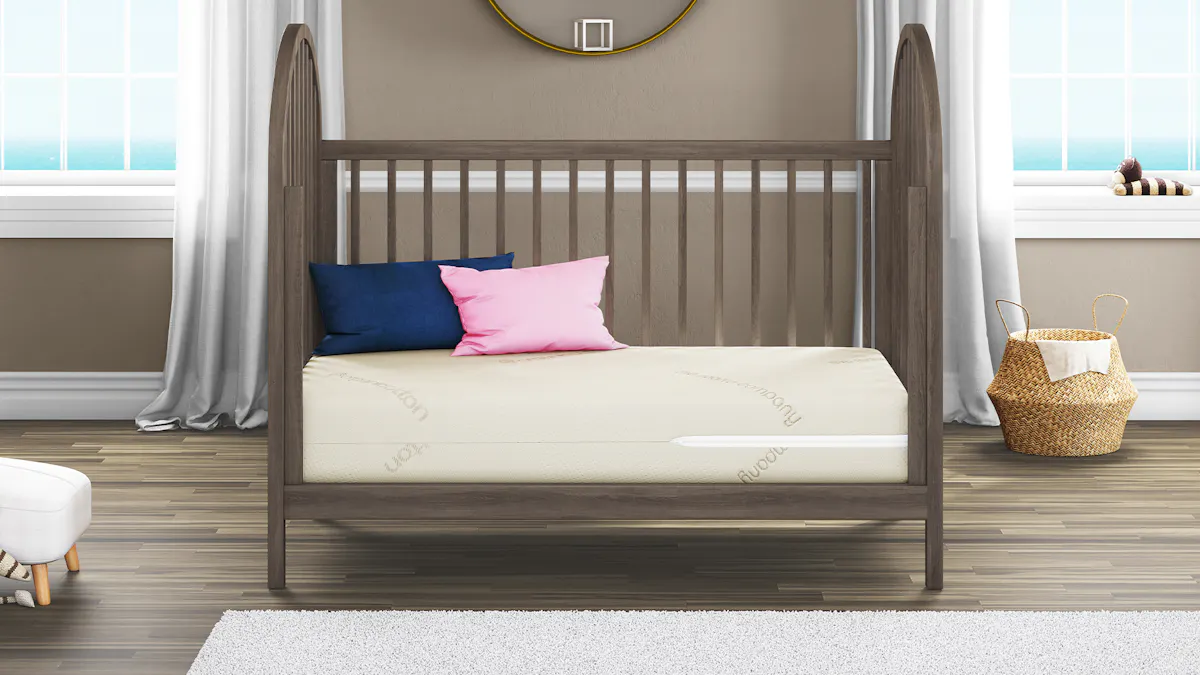
Separate mattress context: Saatva Crib is a crib mattress, not the protector reviewed on this page. Assess its current fit, surface, and care information independently, then choose a protector based on the exact mattress rather than assuming universal compatibility.
FAQ
Is a crib mattress protector appropriate for a newborn?
A crib mattress protector should be considered only as a thin hygiene layer beneath a fitted sheet. I would use one only when it fits smoothly, adds no noticeable padding, follows the crib and mattress instructions, and complies with current official guidance. It should not be treated as a device that makes the sleep setup safer.
Do I need a protector if the mattress already has a waterproof cover?
Not necessarily. A durable wipe-clean mattress cover already performs the main liquid-blocking job. A separate protector can still make cleanup more convenient, but I would choose a thin version and avoid adding bulk merely for extra absorbency.
How many protectors should I keep available?
I would keep the installed protector and a clean backup in the laundry rotation. The purpose is practical: a leak should not force you to reinstall a damp protector or leave an absorbent mattress surface exposed while washing is underway.
Does waterproof also mean breathable and quiet?
No single label establishes all of those qualities. Waterproofing describes the liquid barrier, while heat retention, flexibility, and noise depend on the complete construction and fit. Read the material description, follow the care label, and reject a protector that feels stiff or crinkles sharply once installed.
Can a regular mattress protector be used on a crib mattress?
I would not improvise with an adult-size protector or any product that leaves loose material. Use a protector intended for the exact crib mattress type, then verify the installed fit yourself. Remember that CPSC guidance for non-full-size crib mattresses must not be generalized into a universal full-size crib rule.
ONE OPTION WORTH COMPARING
Shopping as well as reading? Here is one current option worth comparing: the Saatva Crib. Check today’s price, sizing and return terms on the official product page before you order.
Saatva Crib
- Separate mattress context: Saatva Crib is a crib mattress, not the protector reviewed on this page
Final verdict
My bottom line is simple: buy a thin crib mattress protector if it makes cleanup easier without changing the mattress surface. Favor precise fit, a clearly described waterproof layer, sensible care instructions, quiet fabric, and durable elastic. If the protector bunches, adds plushness, or depends on vague marketing claims, it is not the right one for the crib.