
 by
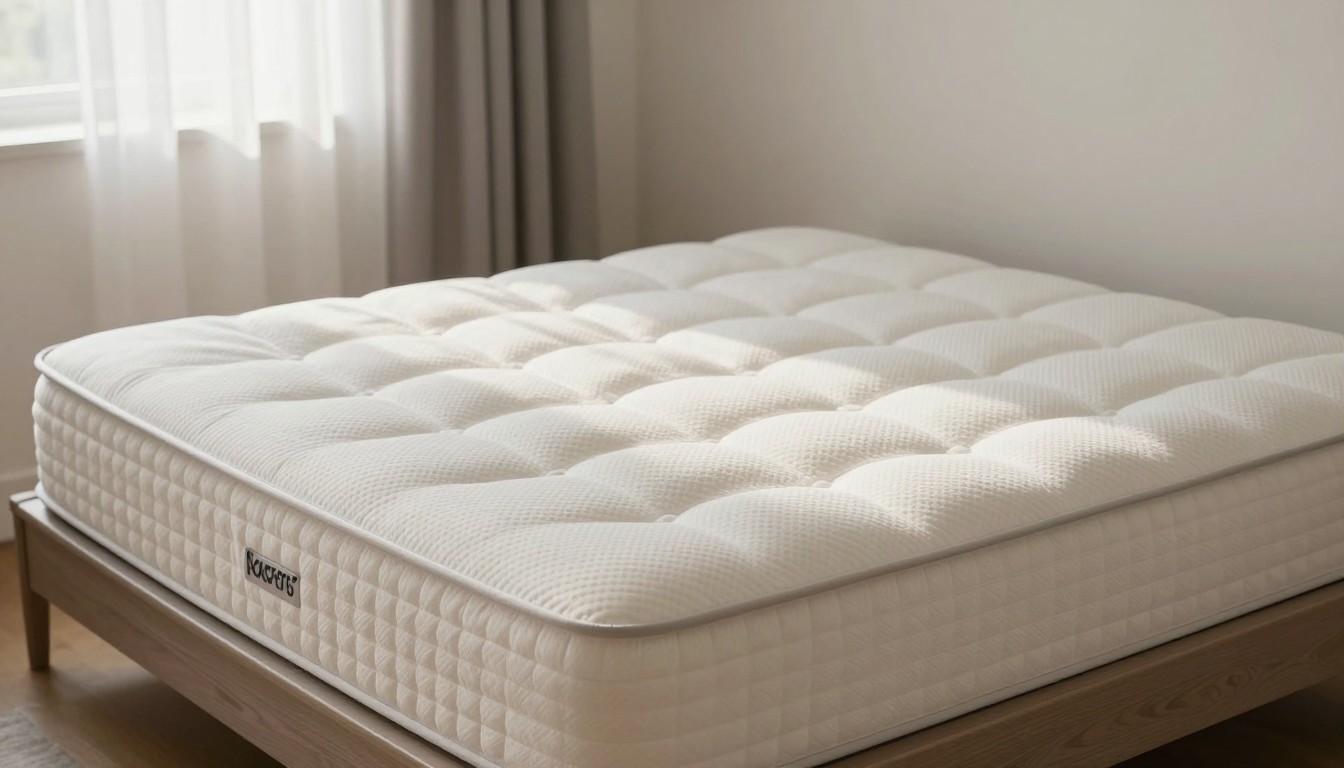
by Quick answer: The futon and mattress queen setup makes sense for a queen-rated convertible frame that must serve as both seating and an adult guest bed. Buy for frame compatibility first, then choose the core around its main job. Foam favors a more mattress-like sleep surface, cotton and fiber favor easy folding, and a foldable innerspring blend favors a springier feel. Skip this category if you mainly want a permanent bed or cannot confirm that the mattress and frame are compatible.
- Best fit: A confirmed queen futon frame used for both sitting and sleeping.
- Main risk: Choosing a plush mattress that cannot settle into the frame's sofa position.
- Construction priority: A flexible core, secure tufting, durable seams, and a practical cover.
- Before ordering: Read the mattress and frame compatibility instructions rather than relying on the queen label alone.
Updated July 2026 · Reviewed for construction, fit, and durability
My verdict: The futon and mattress queen category is practical for guest rooms and multipurpose spaces, but the frame is the real starting point. A good mattress on the wrong frame can bunch, slide, or resist folding. A simpler mattress that fits the deck and hinge properly is usually the sounder purchase.
The wording is confusing because “futon” can describe a frame, a flexible mattress, or the complete convertible unit. This review focuses on the queen futon mattress and its relationship with the frame. It is not a verdict on one specific model.
The Nut's take: Treat frame fit as part of the mattress construction. The core, cover, hinge, and support deck have to work as a system. Comfort matters, but it cannot rescue a setup that does not convert cleanly.
What a queen futon mattress is, and what it is not
A futon mattress is made to rest flat for sleep and bend with a convertible frame for seating. That repeated change of shape separates it from a mattress intended to remain on a flat foundation.
A conventional queen mattress may still have some flexibility. Foam models, hybrids, and spring mattresses do not all bend the same way, so calling every standard mattress rigid would be inaccurate. The important distinction is that ordinary flexibility does not establish compatibility with repeated futon folding. Unless the manufacturer approves that use, I would not assume a conventional queen mattress belongs on a futon hinge.
The queen label also does not settle every fit question. The usable support area, hinge position, side rails, retaining clips, and allowable mattress profile all affect how the finished setup behaves. Frame and mattress labels should agree, but the written compatibility guidance matters more than the name printed on the package.
- Futon mattress: A flexible sleep and seating cushion intended for a convertible frame.
- Futon frame: The support structure and folding mechanism.
- Futon set: A bundled frame and mattress, which may reduce compatibility guesswork.
- Conventional queen mattress: A separate category generally intended to stay flat unless its manufacturer says otherwise.
A futon mattress is also different from a foldable floor pad. A floor pad does not have to grip a sofa seat or bend around a frame mechanism. It is also different from a pull-out sofa bed, where a separate sleep surface unfolds from beneath the seat.
That distinction matters during shopping. Product photos may show a sofa, a frame, or a dressed mattress without making the included components obvious. Read the contents description and confirm exactly what arrives.
Frame fit comes before thickness or firmness
A queen futon can feel supportive while flat and still perform poorly as a sofa. This usually happens when the mattress profile, weight, or fold behavior does not suit the frame. The frame may struggle to close, the mattress may lift away from the seat, or the back section may slump forward.
Start with the frame manual or manufacturer page. Look for the supported mattress size, acceptable construction types, deck requirements, and any profile guidance. If the frame information is unavailable, measure its usable support surface and ask the seller to confirm compatibility in writing.
Inspect the hardware as well. Arms, edge rails, hinges, and retaining bars can interfere with a bulky mattress even when the flat sleep surface appears correct. A mattress that rubs or pinches during conversion may wear unevenly at that contact point.
| Fit check | What to inspect | Why it matters |
|---|---|---|
| Support surface | The actual area inside the frame, not its outside footprint | Outside arms and trim do not support the mattress |
| Fold point | Where the seat and back sections meet | The core needs to settle into this bend without severe bunching |
| Sofa clearance | Space around the back, arms, and retaining hardware | An overly bulky build may not remain seated correctly |
| Deck condition | Broken slats, protruding hardware, and uneven support | A poor foundation can create discomfort and localized wear |
| Retention system | Clips, stops, ties, or a textured support deck | The mattress needs enough grip to resist sliding in sofa mode |
Thickness deserves attention, but more material is not automatically better. A plush build can improve cushioning while flat, yet the same bulk can fight the sofa crease. If you specifically want a thick futon mattress, confirm that the frame was designed around that kind of profile.
A compact sleeping space can introduce a different naming problem. A short queen is not interchangeable with a standard queen label, so an RV, boat, or unusually shaped platform should be checked separately. Our guide to a short queen mattress explains that category distinction.
Fit rule: Do not force a mattress into sofa mode to prove that it works. Smooth conversion, stable seating, and full support in bed mode are better signs than a matching size name by itself.
Foam, cotton, and innerspring construction
The core determines how readily a queen futon bends, how it responds to sitting, and how its feel changes with use. Cover fabric and quilting matter, but they cannot compensate for a core chosen for the wrong duty.
| Core family | Typical character | Main tradeoff | Reader fit |
|---|---|---|---|
| Foam | More continuous cushioning with limited internal movement | Soft foam may hold a deep crease or feel warm during close contact | A setup used more often for sleeping |
| Cotton or fiber | Traditional, pliable, and comparatively direct in feel | Fill can compact or shift, making maintenance important | A sofa-first setup or occasional guest bed |
| Foldable innerspring blend | Springier response with comfort layers around the coil unit | More bulk and a greater need for explicit frame compatibility | Someone who dislikes the feel of a flat fiber pad |
With foam, density is a useful detail if the seller discloses it, but density alone does not predict the entire lifespan. Layer thickness, adhesive quality, cover tension, and how sharply the frame bends the core also influence wear. If no meaningful foam specifications appear, I would treat vague phrases such as “premium foam” as marketing rather than durability evidence.
Soft memory foam can add a slower, more conforming surface. It can also make the seated edge feel less stable and may feel warmer because more of the body contacts the material. A firmer support foam beneath it can help, but the listing should explain the layer arrangement rather than merely naming memory foam.
Cotton and fiber builds tend to fold readily because the loose fill can settle around the hinge. Their weakness is compaction. Tufting can help keep fill from migrating, while rotation and reshaping can spread wear. A dense-looking outer quilt does not reveal how much usable fill is inside, so construction details still matter.
- For foam: Look for a disclosed layer order and a supportive base rather than a generic foam label.
- For fiber: Inspect tufting, edge stitching, and care instructions for reshaping the fill.
- For springs: Require clear language that the coil system was designed to fold with a futon frame.
- For every core: Check that the cover and seams can tolerate repeated conversion.
An innerspring futon is not simply a conventional spring mattress placed on a hinge. The spring system needs to accommodate the frame's bend. If the listing does not describe it as a futon-compatible construction, the presence of coils should not be taken as proof that it will work.
I also pay attention to the hinge zone. Deep, evenly spaced tufting may help the layers move as a unit, while loose fabric or stressed stitching around the fold can signal a mismatch. The mattress should bend without the cover pulling sharply against one narrow line.
Feel, cooling, motion, and edge support
A futon's feel changes with frame position. Flat, the body is spread across the support deck. Folded, much of the load is concentrated through the seat and front edge. That is why a mattress can feel comfortable as a bed but unsupportive as a couch, or supportive for sitting but too firm for extended sleep.
For sofa-first use, I favor a resilient surface that returns toward shape after sitting. An especially soft comfort layer may let the body settle too deeply at the seat. For bed-first use, surface cushioning matters more, provided the core still follows the hinge without bunching.
Firmness labels are only a starting point. They are not standardized across the category, and the support deck changes the final feel. Ask how the mattress is intended to be used, then give more weight to the construction description and return terms than to a single firmness word.
| Main use | Construction priority | Watch for |
|---|---|---|
| Mostly sofa | Stable seat support and a core that recovers after folding | Deep edge collapse and a mattress that slides down the frame |
| Mostly guest bed | Even cushioning across the flat sleep surface | A pronounced fold ridge or gaps in deck support |
| Regular dual duty | Balanced resilience, secure tufting, and manageable conversion | A construction optimized for only one frame position |
Cooling depends on more than the core name. Foam that allows deeper sinking can reduce airflow around the body, while a fiber-filled surface may permit a less enveloping feel. The cover, protector, sheets, room temperature, and frame ventilation also affect warmth. I would not choose on a “cooling” label without seeing what in the construction supports that claim.
Motion control is similarly construction-dependent. A continuous foam core may soften some partner movement, while a responsive spring unit may pass along more motion. Tufting and frame movement can change the result, so the material category alone cannot promise a motion-free surface.
Edge support on a futon has a special problem: the front edge is also a sofa seat. Many designs do not use the rigid perimeter found in some conventional mattresses because the core still has to flex. Check how the front edge feels over the frame rail and make sure the mattress does not expose a hard support point while sitting.
Comfort shortcut: Choose for the position used most often, then make sure the secondary position remains acceptable. Trying to maximize plushness, sofa stability, easy folding, and low bulk at once usually creates conflicting demands.
Durability, covers, and maintenance
The fold line receives different stress from the rest of the mattress. The seat area is compressed during sitting, the back section carries a more vertical load, and the whole core bends during conversion. I look for construction that manages those stresses rather than decorative quilting alone.
Seams should sit flat, tufting should hold the layers consistently, and the cover should not appear stretched around the hinge. If the mattress needs ties or retaining straps, they should connect without pulling sharply on the fabric.
A removable cover is useful, but removable does not automatically mean machine washable. Read the care label before cleaning. If the outer mattress cover is fixed, a separate washable futon cover can protect it from spills, crumbs, and pet hair without altering the core.
- Rotate the mattress only as directed so the main seating and sleeping areas do not carry all the wear.
- Flip it only if the construction is described as reversible; some layered foam builds have a defined top and bottom.
- Reshape fiber fill according to the care instructions rather than pulling aggressively at the cover.
- Keep the support deck free of sharp hardware and repair damaged slats before they mark the mattress.
- Allow the surface to dry fully after cleaning before returning it to sofa position.
Warranty language deserves a close read. Look for how the seller defines a covered indentation, what foundation or frame is required, and whether normal softening or compression is excluded. A warranty headline is less useful than the actual terms governing the way a futon wears.
Returns matter because fit can be difficult to judge from photos. Confirm whether an opened mattress can be returned, who handles return freight, and whether the frame and mattress have separate policies. Keep packaging until you know the unit fits and converts correctly.
Pros, cons, and the right buyer
A queen futon earns its space when seating and guest sleep genuinely share the same room. It is less compelling when the frame will remain flat most of the time, since a dedicated bed removes the compromises created by folding.
| Potential advantages | Potential drawbacks |
|---|---|
| Converts a shared space between seating and sleeping | Heavier and more awkward to reposition than smaller futon sizes |
| Offers a more spacious guest surface than smaller formats | Mattress and frame compatibility narrow the useful choices |
| Available in several core styles for different use patterns | Repeated sitting and folding create concentrated wear |
| Can work well in a guest room, office, or studio | A very plush build may perform poorly in sofa position |
Consider it if: You already own a compatible queen frame, host adult guests, and need the room to change functions. It is also a reasonable category for someone who accepts regular rotating, cover care, and manual conversion.
Skip it if: The frame is a different size, the room cannot accommodate the frame in both positions, or moving a bulky mattress would be impractical. For a surface that will stay flat as a primary bed, it makes sense to compare the separate choices in our queen mattress coverage.
Fast decision filter: A queen frame, regular adult guests, and genuine sofa duty point toward a queen futon mattress. Permanent bed use, uncertain frame measurements, or difficult manual handling point toward another setup.
How to shop without overpaying for the wrong feature
Value starts with compatibility. An elaborate core has little value if the mattress will not remain seated, and an inexpensive mattress is not a bargain if return freight makes a fit mistake costly.
- Identify the exact frame model and confirm that it accepts a queen futon mattress.
- Decide whether sofa use or sleep use will dominate.
- Choose the core family around that main use.
- Read the layer, tufting, seam, and cover descriptions.
- Confirm care, rotation, and reversibility instructions.
- Review warranty exclusions and the opened-item return policy.
- Ask what delivery, room placement, assembly, and packaging removal include.
Price varies too much by core and included components for one listing to define the category. As a concrete reference only, a standard futon mattress is listed at $512.00 on sleepmajestic.com. That figure is not a market average, so compare the actual construction, included frame components, delivery terms, and return costs before judging value.
Delivery deserves attention with a queen build because the packaged mattress may be difficult to maneuver. Ask where the carrier leaves it, whether stairs or room placement are covered, and whether frame assembly is separate. Also check the route through doors and hallways before delivery day.
Buying the frame and mattress together can simplify compatibility, but it is not proof of quality. The listing should still identify what is included and explain how the mattress is maintained. If buying separately, save the seller's written compatibility confirmation.
FAQ
What does “futon and mattress queen” mean?
The phrase futon and mattress queen usually refers to a queen-size flexible futon mattress, a compatible queen futon frame, or a bundled set containing both. Check the contents description because the wording alone does not establish that the frame is included.
Will a regular queen mattress work on a futon frame?
Not automatically. Flexibility varies by mattress construction, and some conventional queen mattresses bend more than others. That does not mean they were designed for repeated hinging. Use one only if the mattress manufacturer and frame maker both approve the combination.
Can a queen futon mattress work for regular sleep?
It can suit regular sleep if its core, support deck, and feel match the sleeper, but folding creates compromises that a permanently flat mattress does not face. For bed-first use, I would prioritize an even foam or foldable innerspring construction, clear layer details, and a frame that supports the full surface without obvious gaps or hard contact points.
What core works best when the futon is mostly a sofa?
A resilient foam or well-tufted cotton and fiber core is often the more practical direction because the seat needs to hold shape and recover after use. I would avoid assuming that the softest memory-foam surface is best, since deep compression can make the seat feel unstable and can complicate folding.
How much should I budget for a queen futon mattress?
Budget by construction and total ownership cost rather than a broad category estimate. The standard futon example listed by sleepmajestic.com is $512.00, but one sourced price cannot establish what every queen model should cost. Include the cover, frame compatibility, delivery terms, and possible return freight in the comparison.
A restrained product reference
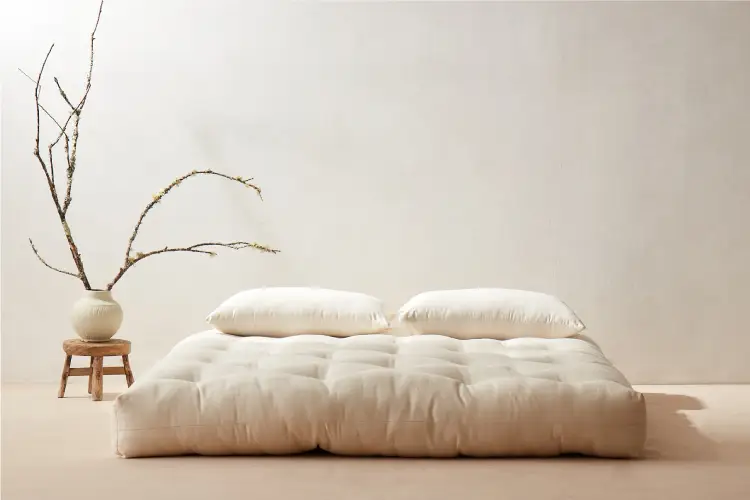
After resolving size, frame fit, and core type, The Futon Shop's Futon Best Selling collection can be used as optional category-browsing context. I would still judge each listed mattress by its disclosed construction and compatibility rather than treating a collection label as a performance claim.
ONE OPTION WORTH COMPARING
Shopping as well as reading? Here is one current option worth comparing: the Futon Best Selling. Check today’s price, sizing and return terms on the official product page before you order.
Futon Best Selling
- Best fit: A confirmed queen futon frame used for both sitting and sleeping
- My verdict: The futon and mattress queen category is practical for guest rooms and multipurpose spaces, but the frame is the real starting point
The bottom line
A queen futon mattress succeeds as part of a matched system, not as an isolated cushion. Confirm the frame, inspect the fold path, choose the core for the position used most, and read the care and return terms before ordering. Get those decisions right and the setup can serve guests without making the room surrender its everyday function.