 by
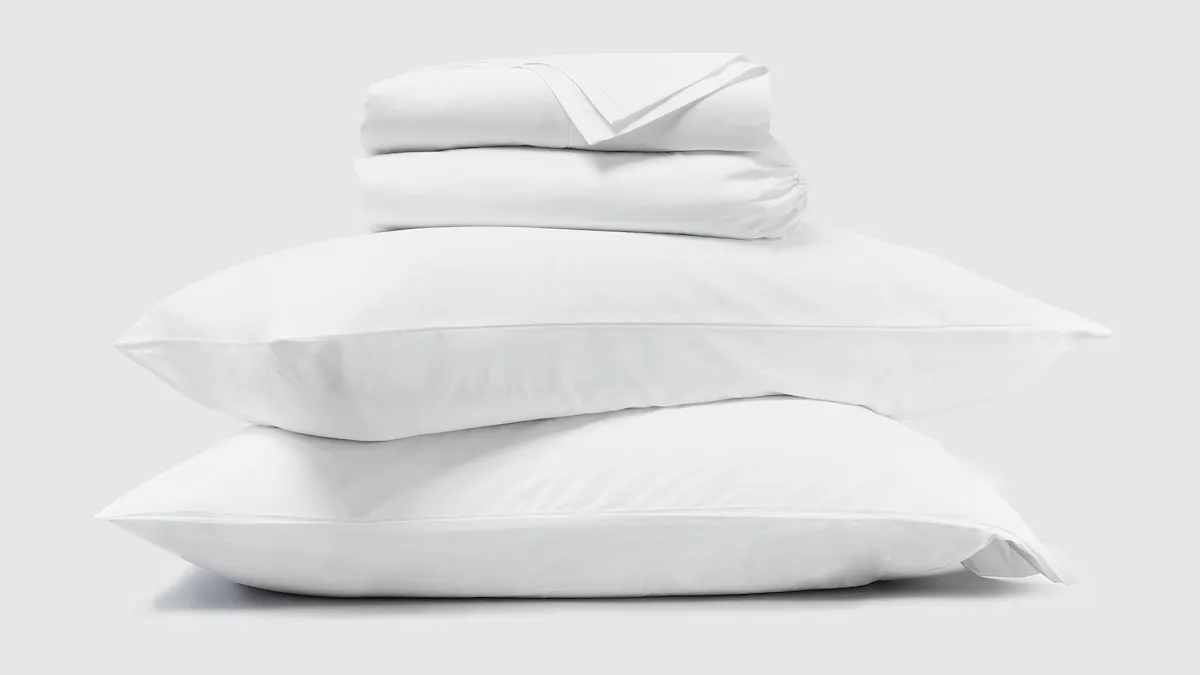
by Quick answer: Saatva Organic Cotton Sheets are my sensible starting point if you want a soft cotton feel without treating a towering thread count as proof that sheets will sleep cool.
- The pick here is an organic-cotton sheet set with a clear material story.
- Fiber and weave matter more for cool sleep than thread count alone.
- Its official product page is the right place to confirm the current price, available options, and policies before checkout.
Updated July 2026 · Reviewed for accuracy
The softest coolest sheets are not necessarily the ones with the biggest thread-count claim on the package. I’d start with the fiber and weave, then decide whether you want crisp airflow or a smoother hand.
For most shoppers, that means narrowing the field to breathable cotton, bamboo-derived fabric, or Tencel, also called lyocell in our fabric research. Each can feel soft. Each handles warmth differently. The useful question is which tradeoff you can actually live with after laundry day.
Softness starts with the fiber, not a flashy label
Long-staple cotton, bamboo-derived fibers, and Tencel are the material families highlighted in our fabric research for balancing softness with breathability. That is where I’d focus first, before getting pulled into thread-count marketing.
Cotton is the familiar choice because it can land in several places on the feel spectrum. A more open cotton construction can feel light and crisp, while a smoother construction can feel more fluid against the skin. Neither is automatically better. The right choice depends on whether you find “soft” more relaxing when it is silky or when it is freshly laundered and airy.
Tencel and bamboo-derived fabrics deserve attention from people who wake up clammy. Our fabric research identifies both as moisture-wicking options, which makes them worth comparing if heat and night sweats are your main reason for replacing a set. That is a material decision, not a luxury badge.
The Nut’s rule: I’d rather see a clear fiber description and an honest weave description than a huge thread-count number with little explanation of how the sheet is built.
There is also a practical distinction between a fabric that feels exceptionally soft straight from the package and one that becomes more comfortable through repeated washing. Our fabric research notes that premium sheets may soften with use. I see that as a reason to read care directions closely, not as a promise that every expensive set will suit you.
If you already like the clean, tucked-in look of a well-made hotel bed, material still matters more than the room’s visual styling. My breakdown of why hotels use white sheets explains why that appearance is so common, but color itself does not make a sheet cooler or softer.
Percale and sateen feel cool in different ways
Percale is described in our fabric research as crisp and cool, while sateen is described as softer and warmer. That one contrast can save you from buying the wrong set for the right reason.
I’d steer a hot sleeper who likes a freshly pressed shirt feel toward percale. Its appeal is not plushness. It is the lighter, more breathable character associated with that weave. If you dislike the slight structure of a crisp sheet, though, percale can feel less indulgent than its cooling reputation suggests.
Sateen takes the opposite route. It is the smoother, softer-feeling option in our fabric research, but that smoother surface may feel warmer. For someone whose priority is a drapey, almost silky cotton feel, that can be a fair bargain. For someone who sleeps hot every night, it is the bargain I’d examine hardest before buying.
The phrase “softest coolest” makes people hunt for a single winner. I don’t think the category works that way. Percale usually makes the stronger case for airflow and crispness. Sateen makes the stronger case for immediate smoothness. A cotton-and-Tencel blend may offer a middle path, according to our fabric research, but you still need the manufacturer to spell out the actual fiber content and care requirements.
| Material or weave | What our fabric research highlights | Who I’d consider it for |
|---|---|---|
| Cotton percale | Crisp, cool, breathable feel | Hot sleepers who like a clean, structured sheet |
| Cotton sateen | Softer and warmer feel | People who put smoothness ahead of maximum airflow |
| Tencel or bamboo-derived fabric | Moisture-wicking potential | Sleepers focused on managing dampness and warmth |
| Cotton and Tencel blend | A possible balance of cotton feel and moisture management | Shoppers who want a compromise, not an extreme |
Comparing options? The Saatva Organic Cotton Sheets is the pick we keep coming back to — see the final verdict ↓
Cooling is about moisture management and airflow
Breathability and moisture-wicking are the two words I’d look for on a sheet description, because our fabric research treats them as more useful for hot sleepers than thread count alone. That is the sensible filter.
A sheet can feel buttery to the hand and still be a poor match for someone who runs warm. Surface softness tells you about the first touch. Heat management is more about how the material and weave handle air and moisture over the course of a night. Those are related, but they are not the same feature.
That is why I would not buy a set simply because it is billed as high thread count. Our fabric research specifically advises shoppers to prioritize breathable, moisture-wicking fibers over thread count. A thread-count claim can be part of the product description, but it should not be the deciding fact.
Before you buy: Check the fiber breakdown, the weave, the listed care instructions, the included pillowcases, and the return policy. If a listing is vague on those basics, I’d keep looking.
Your mattress, protector, duvet, and room temperature will still affect how warm the bed feels. I would not expect a sheet set to solve every sleep-temperature problem by itself. What a better-chosen fabric can do is avoid adding unnecessary warmth or holding onto moisture in a way that makes an already warm bed feel worse.
Texture is personal, too. Some people call crisp sheets cool because they feel light and dry. Others mean soft, slick fabric when they say cool. Read those words as descriptions of a feel, not as interchangeable proof of performance.
What I’d inspect before paying premium-sheet money
Fiber content is the first line on the label I’d inspect, and it should be specific. “Cotton” is useful, but a description that identifies whether the cotton is long-staple and names the weave gives you a clearer basis for comparison.
Next, inspect the finishing treatments. Our fabric research specifically flags wrinkle resistance as something to compare. A finish can be convenient, but I’d want the brand to explain it plainly. The same goes for any cooling language. A good product page should tell you what the fabric is, how it is woven, and how it should be washed.
Weight can help explain why one set feels airy and another feels more substantial, provided the brand publishes it. Our fabric research suggests checking weight in grams per square meter or ounces per square yard. I would use that information as context alongside the fiber and weave, not as an isolated scorecard.
Included pieces are easy to overlook until the box arrives. Confirm the size, fitted-sheet depth if it is listed, and pillowcase count on the official listing. Those details determine whether a set is genuinely comparable with another set, especially if your mattress is tall or you use more than the standard number of pillows.
Finally, read the care instructions as part of the durability story. Our fabric research recommends checking whether sheets hold up after repeated laundering and following the wash guidance. I agree with that approach. A sheet set that needs more care than you are willing to give it is not a practical premium purchase.
A useful shopping sequence: choose the fiber family, choose the weave feel, compare care instructions, then check the live price and return terms on the official site. That order keeps the purchase tied to how you sleep, not to a vague label.
My pick for shoppers who want soft cotton without the hype
Saatva Organic Cotton Sheets are the recommendation I’d put in front of shoppers who want to begin with organic cotton and verify the current details directly on the official product page. The product name gives you a clear material starting point. I would still confirm its current options, care directions, and return terms before treating it as your final choice.
I like this route for people who want softness without assuming that “cool” has to mean a slick synthetic-like feel. Cotton can be a sound material direction, but I would choose the specific set based on the listed weave and construction. If your highest priority is moisture management, compare that listing’s current fabric details against the bamboo-derived and Tencel options described in our fabric research.
I would skip any purchase made purely on a thread-count headline. The same goes for a vague “hotel luxury” promise that never says what the fabric is. If you enjoy the polished sensation of hotel bedding, my guide to why hotel sheets feel comfortable can help separate useful construction cues from the atmosphere around them.
Price belongs at the end of the decision, after materials and upkeep. Our fabric research places sheet sets across broad entry, premium, and luxury bands, but it also warns that current pricing changes. I’d check the live price on the official site right before purchase instead of relying on an old roundup or a remembered sale.
Durability is mostly a laundry decision after construction
Repeated laundering is the real-life pressure point for sheets, and our fabric research recommends checking wash guidance before you buy. I think that is exactly right. A fabric can have a promising description and still be a frustrating ownership choice if its care routine conflicts with yours.
Use the manufacturer’s instructions for washing and drying rather than assuming every premium fabric can take the same treatment. Our fabric research notes that proper care can help premium sheets soften with use and last longer. That is a practical reason to keep the care label handy, especially if you are comparing cotton with a moisture-managing cellulosic fabric.
Pets add another layer to this choice. Claws, frequent washes, and everyday friction can matter as much as the initial hand feel. If that is part of your household, see my practical notes on why dogs scratch bed sheets before prioritizing a delicate-feeling fabric over one whose care demands you can realistically meet.
My bottom line is simple: buy for the temperature and texture you actually prefer, then follow the fabric’s care instructions. The softest hand in a product description means little if the weave feels too warm to you or the upkeep becomes a chore.
FAQ
What material is best for soft, cool sheets?
Our fabric research points to long-staple cotton, bamboo-derived fibers, and Tencel as useful materials for combining softness and breathability. I’d choose among them by deciding whether you prefer a crisp cotton feel, a smoother feel, or stronger emphasis on moisture management.
Are high-thread-count sheets always softer and cooler?
No. Our fabric research says fiber and breathable, moisture-wicking construction matter more than thread count alone for hot sleepers. I’d treat thread count as a secondary detail after you understand the fiber and weave.
Should hot sleepers choose percale or sateen?
Percale is described in our fabric research as crisp, cool, and breathable, while sateen is described as softer and warmer. I’d lean percale if you want a lighter, cooler feel and accept a less silky surface.
Can sheets help with night sweats?
Our fabric research identifies Tencel, bamboo-derived fabrics, and quality cotton blends as materials that may be better suited to moisture management than basic cotton alone. I would view sheets as one part of the sleep setup, not a standalone fix for every source of overnight warmth.
What should I check on a sheet set’s official page?
Confirm the fiber type, weave, care instructions, included pillowcases, return policy, and current price. Our fabric research also recommends checking any published weight information and finishing treatments, including wrinkle-resistance claims, before you compare one set with another.
My final take
For softest coolest sheets, I’d buy the material story before I buy the marketing. Choose breathable cotton, bamboo-derived fabric, or Tencel based on the feel you want, read the weave closely, and verify the live details on the official site before you spend premium-sheet money.
FINAL VERDICT
Before you settle: if softest coolest sheets is what brought you here, the Saatva Organic Cotton Sheets is the value pick on this page — the strongest trial-and-return terms of the options covered here. Confirm current price, dimensions and terms on the official product page before ordering.
OUR CATEGORY-MATCHED PICK
Saatva Organic Cotton Sheets
- See the product page for full specs and current pricing