
 by
by Quick answer: If your goal is the lowest outlay, keep shopping. I’d consider the Saatva Classic only as an above-budget upgrade after checking its live price, included services, return terms, and current offer.
- The featured mattress is not presented as the lowest-price choice.
- The manufacturer’s product page displayed a current offer when checked.
- The live product page is the reference for the current price and promotion.
Updated July 2026 · Reviewed for accuracy
Cheap-looking offers can be expensive in disguise. I judge a mattress deal by the final payable total, the construction details I can verify, and the cost of changing course if the bed isn’t suitable. The sale badge comes last.
The checkout total matters more than the headline price
The checkout total settles what actually leaves your account. A large markdown means little if the advertised figure excludes services or components you need.
Start by confirming which mattress size, model, and configuration the headline covers. Then check whether delivery, setup, old-mattress removal, a foundation, or required accessories change the total. Taxes and location-dependent charges also belong in the comparison if they apply.
I compare like with like. A mattress delivered to the doorstep isn’t the same package as one placed in the bedroom. A mattress sold alone isn’t directly comparable with a package that includes a base or service plan. Neither package is automatically better, but the difference needs to be visible.
My price-picture checklist
- The exact size and configuration covered by the displayed price
- Delivery method and any setup or removal service
- Required base, frame, or accessory purchases
- Return transportation, collection, or restocking conditions
- The cash total and, if relevant, the total paid through financing
Use the same assumptions for every option. If a charge is unclear, treat it as unresolved rather than silently assuming it is included. That keeps an appealing banner from becoming the basis for a poor comparison.
| Price element | What to confirm | Why I include it |
|---|---|---|
| Mattress | Exact model, size, and comfort choice | Different configurations can carry different prices |
| Delivery | Drop-off, room placement, and setup terms | Service levels change the package being compared |
| Accessories | Whether a base or other item is required | A low mattress price can be less useful if essential items cost extra |
| Returns | Eligibility, collection, and possible charges | The exit cost belongs in the value calculation |
| Financing | Interest, fees, term, and total repayment | A manageable payment isn’t necessarily a low total price |
A crossed-out price doesn’t prove you found a bargain
A crossed-out figure shows a comparison chosen for the offer. It doesn’t tell me whether the current mattress is well built, whether the earlier figure was recently charged, or whether another configuration provides better value.
I want to know what kind of discount I’m looking at. A standard sale, clearance item, floor sample, open-box mattress, and returned product are not interchangeable. The condition, packaging, available choices, return rules, and warranty terms may differ, so each point should be confirmed in writing before payment.
Check whether the advertised offer applies to your chosen size and configuration. Also ask whether a bundle changes the mattress price, whether an included item can be declined, and whether removing that item affects the rest of the offer. A bundle is useful only if its contents are useful to you.
The Nut’s rule: I don’t calculate savings from the largest markdown on the page. I compare the final cost of the exact package I would actually buy.
Promotion wording also deserves a close read. Phrases such as “up to,” “from,” or “with qualifying purchase” signal that the banner may not describe every configuration. The cart should show the offer applied to the mattress you selected before you treat it as real savings.
If you plan to negotiate, establish the comparable total before asking for a better deal. My guide to negotiating a mattress price explains how to focus the conversation on the complete package instead of a vague promise to match an advertisement.
Construction tells me whether the lower price has substance
Foam density, coil gauge, and a complete layer breakdown tell me more than labels such as “premium” or “hotel quality.” Without material detail, a shopper is being asked to compare marketing language rather than mattress construction.
For foam comfort layers, I look for the material type, density disclosure, and placement in the mattress. Density and firmness answer different buying questions, so I want both described clearly. The goal isn’t to chase the largest specification. It’s to establish what is inside the bed and whether the seller will document it.
For a coil support core, a coil count by itself is incomplete. I also want the coil type, gauge information, layout, and any explanation of zoning or perimeter reinforcement. Those details make it easier to compare support systems without assuming that a bold count or branded name guarantees better durability.
Construction evidence worth requesting
- A layer-by-layer description rather than a single overall thickness claim
- Foam type and density for each meaningful foam layer
- Coil type, gauge, layout, and edge design where coils are used
- Cover materials and the identified fire-barrier construction
- Foundation requirements that could affect support or policy eligibility
Edge language needs the same discipline. “Reinforced” could describe several designs, so I look for an explanation of what reinforcement is actually present. I don’t turn an unexplained label into a durability claim.
The cover and quilting can affect the initial surface feel, but they don’t reveal the entire support structure. A plush top shouldn’t distract from thin construction disclosure beneath it. I’d rather see an ordinary-looking specification sheet with meaningful details than polished copy with no layer information.
No construction detail can guarantee a personal comfort match or a specific lifespan. It can, however, expose whether two apparently similar sale mattresses are actually built in comparable ways. That is the level of evidence I want before deciding that the cheaper option is better value.
A premium upgrade must earn the extra outlay
A premium option fails a strict bargain brief the moment it pushes past the buyer’s ceiling. The Saatva Classic belongs here only as an above-budget upgrade, not as the cheapest choice or an automatic value winner.
I would consider the upgrade only if the budget is flexible and the complete package justifies the difference after reviewing the live price. That review should cover construction disclosure, delivery terms, required support, return conditions, warranty language, and the current offer shown by the manufacturer.
Don’t expand your budget merely because an offer makes the gap look smaller. Set the ceiling before opening the product page, then judge the checkout total against it. A promotion can reduce an asking price, but it doesn’t turn a premium purchase into a budget mattress.
My cutoff rule
If an upgrade would force me to compromise on essential expenses, accept financing I haven’t fully compared, or ignore unclear policy terms, it isn’t a deal for that budget. I’d return to the lower-cost shortlist.
If financing is part of the purchase, compare the cash price with the full financed obligation. Review interest, fees, payment timing, and consequences for missed payments in the actual agreement. A small recurring payment can make an expensive purchase feel cheaper without lowering the amount ultimately paid.
A written buying plan keeps the sale in perspective
A written budget ceiling is the simplest defense against a persuasive promotion. Set it before comparing mattresses, and include any essential delivery or support costs inside that ceiling.
Next, define the mattress rather than the deal. Write down the size, broad construction type, comfort preference, support setup, and service needs you won’t compromise on. This prevents a low price on the wrong configuration from becoming the benchmark.
Build a worksheet from the live cart and written policy pages. Save the exact model name, configuration, item condition, included services, return conditions, warranty terms, and final total. If a salesperson supplies an important promise, ask for it in durable written form.
A clean purchase sequence
- Fix the maximum all-in spend.
- Define the acceptable mattress and service package.
- Gather current totals for genuinely comparable configurations.
- Check construction disclosures and support requirements.
- Read return, delivery, cancellation, and warranty language.
- Apply the current offer and inspect the final cart before paying.
Keep comfort labels in their proper place. “Soft,” “medium,” and “firm” can help organize a seller’s range, but they don’t create a universal comparison across unrelated designs. Construction details and written policies provide a firmer basis for the value decision.
Be especially careful with health-flavored product language. A label shouldn’t replace professional medical advice or a close look at the actual materials and policies. Our overview of orthopedic mattress pricing can help separate the cost question from unsupported assumptions about what a label will do for an individual sleeper.
Finally, inspect the cart immediately before payment. Confirm that the selected size, comfort choice, services, and promotion are still present. If the total or terms differ from the comparison you made, pause and recalculate rather than treating checkout as a formality.
My verdict: buy the package, not the markdown
A bundled extra has no value if you don’t need it. A low monthly payment isn’t the purchase price. A dramatic markdown doesn’t repair vague materials, unsuitable construction, or restrictive terms.
The strongest bargain is the acceptable mattress with the lowest clear total and policies you understand. “Acceptable” matters. Saving money on a bed that misses your non-negotiable requirements is false economy, while paying more without identifying a concrete benefit is simply overspending.
| Common trap | Better response |
|---|---|
| Choosing the largest advertised markdown | Compare final totals for equivalent packages |
| Focusing only on the recurring payment | Read the full financing obligation |
| Assuming every pictured item is included | Verify each included item in the cart |
| Accepting broad material claims | Request the layer and support specifications |
| Ignoring the cost of returning the mattress | Read collection, transportation, and refund terms |
My verdict is straightforward: protect the budget first, compare complete packages, and demand enough construction detail to understand what the lower price buys. Treat the featured premium option as a deliberate stretch purchase only. The current official price and offer should inform that decision, not override your ceiling.
ONE OPTION WORTH COMPARING
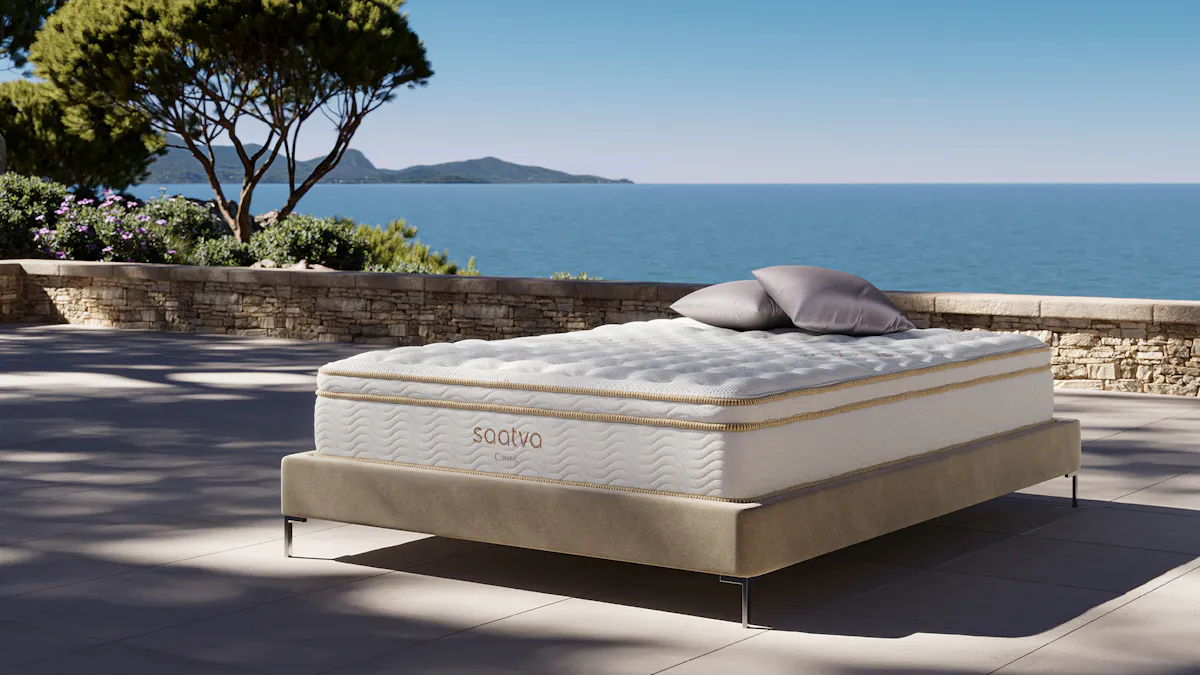
Shopping as well as reading? Here is one current option worth comparing: the Saatva Classic. Check today’s price, sizing and return terms on the official product page before you order.
Saatva Classic
- 365-night home trial and lifetime warranty, per saatva.com
- Handcrafted in the USA, free white-glove delivery
- Flexible financing available
FAQ
What counts as a good mattress discount?
A good discount produces a competitive final total for a mattress that meets your requirements. I wouldn’t judge it by the advertised markdown alone; construction, included services, item condition, and return costs all affect the value.
Are online mattress prices always lower than store prices?
Not automatically. Compare the same size, construction, condition, delivery service, accessories, and return terms before deciding which channel is cheaper.
Can I negotiate the price of a mattress?
You can ask, but the outcome depends on the seller and offer. Negotiate from a written all-in comparison, and request confirmation of any revised price, included service, or policy promise before paying.
Should I wait for another sale?
Wait only if the current total exceeds your ceiling or the terms remain unclear. If the mattress fits the budget and requirements now, an unknown future promotion shouldn’t be treated as guaranteed savings.
Is the featured premium option suitable for a strict bargain buyer?
Usually not if the goal is the lowest possible outlay. It makes sense only as an above-budget upgrade for a shopper who has checked the live total, understands the policies, and can identify benefits worth the extra cost.