
 by
by Quick answer: The Casper bed makes the most sense for sleepers who want a medium, foam-focused surface with contouring and restrained motion. I’d skip it if you strongly prefer springy support, a pronounced edge, or the airflow potential of a coil unit.
- Casper describes the foam-focused model as an all-foam mattress with a medium feel.
- Casper presents Zoned Support as a way to vary support across the sleeping surface.
- The continuous foam construction should appeal most to people who dislike a lively shared bed.
- The exact model name, materials, seller policies, and live price still need checking before purchase.
Updated July 2026 for construction and policy clarity.
My verdict: The Casper bed is an approachable foam mattress, but “approachable” should not be mistaken for universally suitable. Its case rests on an easy-to-understand surface feel and movement control. Its limitations come from the same construction: less spring response, no coil-created air cavity, and no verified reinforced perimeter in the specifications available for this review.
I’d make this decision by separating the brand name from the material behavior. If you want the bed to compress around your shoulders and hips while keeping partner movement relatively quiet, the design points in the right direction. If you want to stay visibly on top of the mattress and feel an immediate push as you turn, this is probably the wrong construction family.
What the Casper Bed Is Actually Built Around
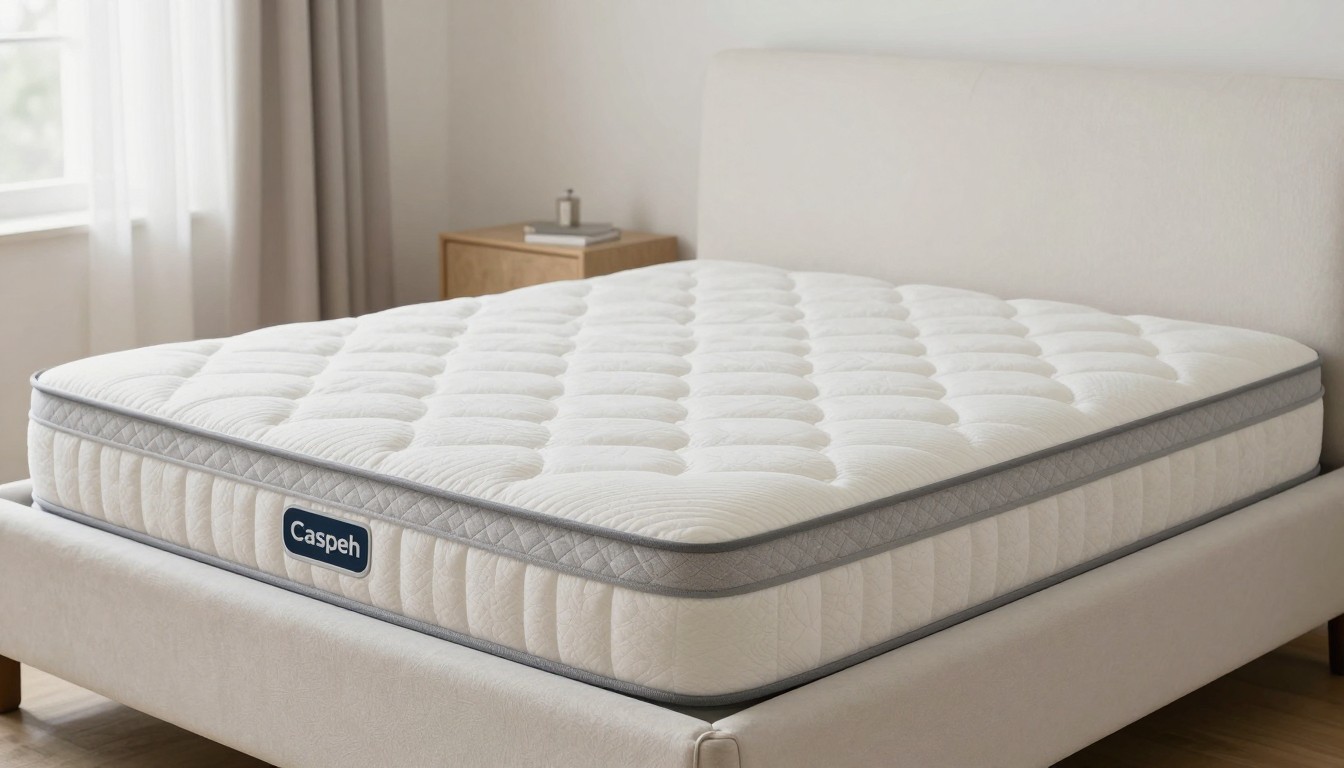
An all-foam support system has no spring unit doing the deeper structural work. Casper describes the foam-focused Original version as all-foam, with a medium feel and Zoned Support. Model names and recipes can change, so that description should be matched against the exact Casper product page shown at checkout.
In a typical all-foam design, the upper material handles initial cushioning while firmer foam beneath it provides shape and resistance. That arrangement can spread pressure gradually, but the label alone does not reveal foam density, layer thickness, or how quickly each layer rebounds. Those omitted details matter more to durability than a polished cover or a familiar boxed-bed name.
Zoning also needs a careful reading. A manufacturer can create zones through changes in firmness, surface cuts, perforations, or another layer treatment. Casper calls its design Zoned Support, but I would not infer a specific internal method unless the current specification explains it. The useful question is whether the middle region feels supportive without making the shoulder area unnecessarily rigid.
The Nut’s construction read: Buy this for the behavior of foam, not for the zoning label by itself. Zoning may refine the feel, but it does not turn a continuous foam core into a buoyant coil system.
How the Medium Foam Feel Should Translate in Bed
A medium label sits between a hard, barely compressing surface and a deeply enveloping one, but it is not a standardized measurement. Casper uses that description for the model discussed here. Your experience still depends on how deeply your body loads the comfort material and how quickly the underlying foam begins resisting that load.
Side sleepers need enough surface compression for the shoulder and hip. The Casper design may suit a side sleeper who wants broad cushioning rather than a taut, flat surface. Someone who prefers firm contact or needs especially strong resistance beneath the torso may interpret the same contour as excessive sink.
Back sleepers usually need a balance between lower-back contact and resistance beneath the pelvis. Zoned foam is relevant to that use case because it is intended to change support by region. I would still judge the mattress by whether the pelvis remains comfortably supported, not by assuming the word “zoned” settles the question.
- Likely fit: a sleeper who enjoys noticeable foam contour without seeking an extremely soft surface.
- More caution: a stomach sleeper who dislikes any sense of the midsection settling into the bed.
- Body-weight effect: deeper loading can make the same construction feel softer, while lighter loading can make it feel firmer.
- Position changes: combination sleepers should consider rebound speed as well as initial pressure relief.
Combination sleepers often focus on softness, but ease of movement is just as important. A material can feel comfortable while you are still and sluggish as you roll. Casper’s basic foam brief suggests a more settled sensation than a spring-led mattress, although the exact response depends on the current foam recipe.
Cooling Depends on the Whole Sleep Setup
A solid foam core has less open internal space than a support unit built around coils. That does not prove the Casper bed will feel hot to every sleeper, but it explains why temperature-sensitive buyers should look beyond generic cooling language. There is no verified thermal measurement here that would justify promising a particular result.
Heat perception starts at the surface. A thick protector, dense sheets, and bedding that holds warm air close to the body can affect the experience before heat reaches the mattress core. A breathable cover may help at the contact point, yet it cannot create the same internal air cavity found between springs.
The base matters as well. A solid platform and a more ventilated support surface do not manage airflow in the same way. Use only a foundation permitted by Casper’s current guidance, because ventilation is not a reason to ignore structural compatibility.
For a hot sleeper: Check the exact cover and comfort-layer description, then consider your protector, sheets, room temperature, and foundation. “Foam” does not automatically mean uncomfortably warm, but the all-foam label is not evidence of exceptional cooling either.
Motion Isolation Is the Clearest Construction Advantage
A continuous foam surface tends to damp movement rather than pass it rapidly through a spring network. Casper’s product description emphasizes reduced motion transfer, and the underlying material choice supports that positioning. This is the strongest reason I see for a couple to consider the bed.
Movement control is not the same as complete separation. A partner getting into bed still changes the load on a shared mattress, and movement through the frame can remain noticeable. The practical expectation is a quieter reaction, not the absence of every disturbance.
There is a tradeoff. Materials that absorb movement can also provide less assistance when you roll or rise. A sleeper with an active position-changing style may care more about quick rebound than someone who settles into one position for long stretches.
- Prioritize motion isolation if a partner’s turning regularly disturbs you.
- Prioritize responsiveness if you dislike pushing through a contour to change position.
- Check the bed frame for movement before blaming every disturbance on the mattress.
- Read recent owner feedback by sleep position and body type, not just the overall sentiment.
Edge Support Needs More Scrutiny Than the Center
A foam perimeter can compress differently from the center because the edge has less material surrounding the point of load. I do not have a verified separate edge-reinforcement specification for this Casper version, so I would not assume the border behaves like a reinforced hybrid rail.
That distinction matters if you sit on the side while dressing or sleep close to the perimeter. A yielding edge does not necessarily make the central sleep surface unsupportive, but it can reduce the amount of the mattress that feels equally usable.
Couples should pay particular attention here. Motion isolation may make the center of a shared foam bed appealing, while an uncertain perimeter can make each sleeper reluctant to use the outer area. Look for an explicit edge-construction description on the current model page and use the seller’s return period to assess fit at home.
Edge check: Lie in your usual position near the border, sit where you normally get dressed, and notice whether compression feels controlled or unstable. Those are different demands, so a quick hand press tells you very little.
Durability Comes Down to Foam Quality and Daily Loading
Foam density is the specification I would most like to see before making a confident durability judgment. Density and firmness are not interchangeable. A foam can feel firm without being especially dense, while a denser foam does not have to feel hard at the surface.
No verified density figure is available for the Casper bed in the material supporting this review, so I will not attach a made-up lifespan to it. Long-term shape retention depends on the actual foams, how much each layer is compressed, the sleeper’s loading pattern, and whether the mattress has adequate support underneath.
The all-foam construction concentrates structural responsibility in the foam core. There is no coil gauge to inspect and no spring unit providing a separate form of deep resistance. That makes the current layer specification, care instructions, and foundation requirements especially important.
- Confirm that your platform or foundation meets Casper’s current support requirements.
- Rotate the mattress only as permitted by the manufacturer’s care guidance.
- Do not flip a one-sided construction unless Casper explicitly says it is reversible.
- Keep the purchase receipt and current warranty terms together in case a coverage question arises.
Visible softening and a simple change in comfort are not always treated identically under a warranty. Read the definitions, exclusions, foundation rules, and claim process before relying on coverage. The seller matters too, because a retailer’s service route may differ from a direct purchase.
Price, Trial Terms, and Bundles Deserve a Live Check
The only verified policy figures I can responsibly state come from Sleepare’s Casper return-policy summary, which lists a 100-night trial and a 30-night minimum adjustment period before a return request. Check the exact seller’s checkout terms because a third-party summary should not replace the policy attached to your order.
Price should be treated the same way. Mattress offers change, and an old reference can make a current deal look better or worse than it is. Compare the mattress-only total, delivery conditions, removal services if offered, and the cost of any foundation you actually need.
A bundle is useful only when its accessories solve a real need. Pillows, protectors, sheets, and bases have their own fit considerations. Separate the mattress decision from the accessory decision so a large-looking package does not distract from an unsuitable feel.
- Model identity: Match the name and construction on the order page with the mattress you researched.
- Return route: Confirm who handles collection, refunds, and any required adjustment period.
- Foundation: Verify compatibility before adding a base or reusing an existing frame.
- Warranty: Save the terms in effect on the purchase date and follow their support requirements.
- Offer quality: Compare the standalone mattress cost with the bundle total instead of focusing on the advertised saving.
Who Should Buy the Casper Bed, and Who Should Skip It
A shared bed, a preference for foam contour, and sensitivity to surface movement form the clearest buyer profile. Back sleepers who like a medium surface and side sleepers who want cushioning may also find the design sensible, provided the current model gives them enough support.
I would keep looking if you strongly prefer a buoyant surface, regularly rely on a firm perimeter, or want the support core to contain coils. Hot sleepers should also approach the all-foam structure with clear expectations and inspect the exact cover, comfort layers, and foundation rather than relying on a cooling label.
- Consider it: you like a settled foam surface and want partner movement restrained.
- Compare carefully: you change position often and need quicker surface recovery.
- Probably skip: a spring-led feel and a strongly reinforced border are central preferences.
- Verify first: the current model’s construction differs from the version described by Casper in older shopping material.
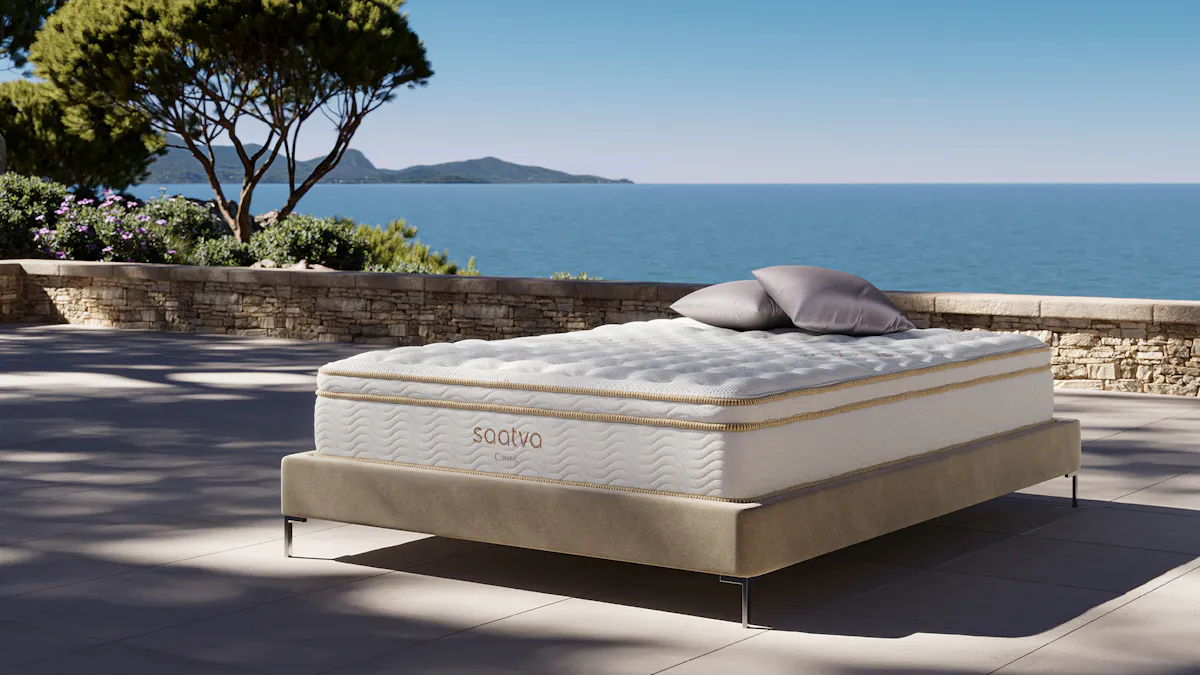
Optional construction context: If your decision has shifted from foam toward a more traditional coil-supported direction, the Saatva Classic is one model to understand through our Saatva versus Casper mattress comparison. Treat that as a different material approach, not an automatic upgrade for every sleeper.
How to Read Casper’s Other Model Names
The word “hybrid” should indicate a meaningful support-system change, not merely a cosmetic step upward. If a Casper product page describes a model as hybrid, verify that it actually combines foam comfort layers with coils and inspect any disclosed perimeter treatment. Do not assume the feel from the family name alone.
A coil unit can change rebound, airflow pathways, edge design, and how the mattress accepts weight. It does not automatically make a bed cooler or more durable, because the comfort materials and overall construction still matter. In the same way, an all-foam design is not automatically better at pressure relief for every body.
Choose between the constructions by identifying the tradeoff you care about most. The foam-focused Casper brief favors quieter movement and a more continuous contour. A hybrid direction may be more relevant if you want lift or a more engineered perimeter. Our comparison of Casper hybrid options and coil-supported alternatives explains how to examine that distinction without treating “hybrid” as a quality score.
Model-name rule: Match the product name, support core, comfort materials, seller, and policy on the same order page. A review of one Casper generation should not be treated as proof about every mattress carrying the brand.
Final Verdict on the Casper Bed
The medium all-foam brief gives the Casper bed a clear audience. It is aimed at sleepers who appreciate contouring, want less reaction from a partner’s movement, and do not need springs to create the feel they enjoy. That is a coherent design, not a universal answer.
My main reservation is the missing construction detail needed for a stronger durability grade. Without verified foam densities or a confirmed perimeter specification, I can explain the material tradeoffs but cannot responsibly promise how this version will age for a particular sleeper.
Confirm the current product name, live price, foundation rules, return procedure, and warranty language before ordering. If manufacturing location matters to you, read our guide to where Casper mattresses are made. Shoppers weighing another foam-focused brand can also use the Tuft & Needle versus Casper comparison to focus on construction rather than advertising tone.
ONE VERIFIED ALTERNATIVE
Not quite the right fit? The Saatva Classic is worth a look as an alternative. Check today’s price, sizing and return terms on the official product page before you order.
Saatva Classic
- 365-night home trial and lifetime warranty, per saatva.com
- Handcrafted in the USA, free white-glove delivery
- Flexible financing available
FAQ
Is the Casper bed good for side sleepers?
The Casper bed may suit side sleepers who want a medium foam surface that compresses around the shoulder and hip. Body weight, shoulder width, and firmness preference affect how much contour feels comfortable, so the return terms remain important.
Is the Casper bed supportive enough for back sleepers?
Casper presents Zoned Support as a way to vary resistance across the bed, which is relevant for a back sleeper balancing pelvic support with lower-back contact. The label does not establish individual fit, so pay attention to whether your hips feel controlled rather than deeply settled.
Does the Casper bed sleep hot?
An all-foam core does not contain the open spring cavity found in a coil-supported mattress. That can matter to a temperature-sensitive sleeper, but bedding, room conditions, the cover, and the foundation also influence heat perception. No verified temperature measurement supports an absolute cooling claim here.
Does the Casper bed isolate motion?
Casper emphasizes reduced motion transfer in its product description, and a continuous foam structure generally works in that direction by damping movement. It should not be interpreted as complete isolation from a partner or a moving bed frame.
Should I buy the Casper bed directly or through a retailer?
Buy from the seller whose current price, delivery service, trial procedure, and warranty route you understand best. Sleepare’s Casper return-policy summary lists a 100-night trial with a 30-night minimum adjustment period, but the terms attached to the exact order should control your decision.