
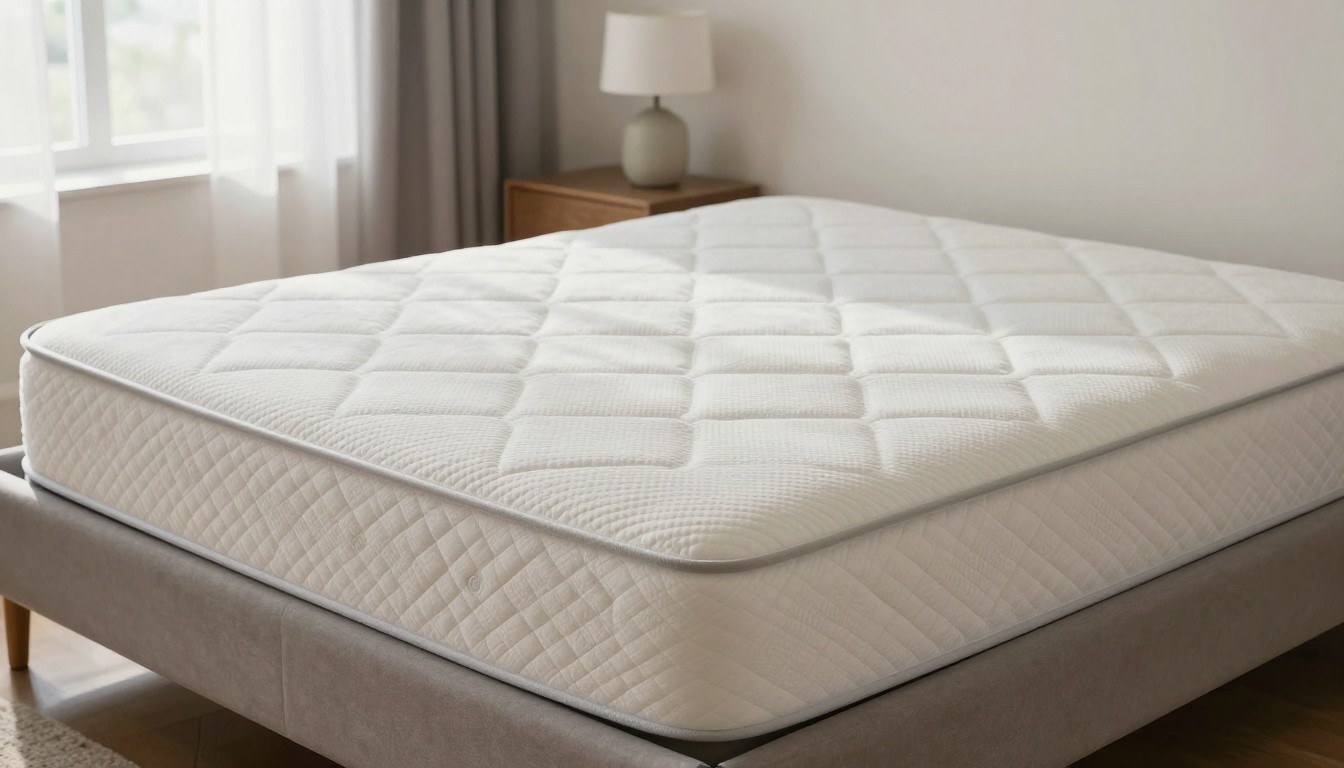
 by
by Quick answer: No. A full fitted sheet is too narrow and too short for a queen mattress. A full flat sheet can serve temporarily, but it won’t give you a proper queen-size fit.
- BEDGEAR lists a queen mattress at 60 inches wide.
- BEDGEAR lists a queen mattress at 80 inches long.
- BEDGEAR says a full is 6 inches narrower and 5 inches shorter than a queen.
Updated July 2026 · Reviewed for accuracy
Do full size bed sheets fit a queen? Not as a complete set. According to BEDGEAR, a full is 6 inches narrower and 5 inches shorter than a queen, so the mismatch affects both the fitted corners and the available coverage. I’d keep a full flat sheet only as a temporary option.
Full vs. queen dimensions: where the fit fails
The size gap is 6 inches across the width and 5 inches along the length, according to BEDGEAR. That’s enough to prevent a full fitted sheet from matching the outline of a queen mattress.
| Size detail | Width | Length | Practical result |
|---|---|---|---|
| Queen mattress | 60 inches | 80 inches | The surface a queen fitted sheet must cover |
| Full compared with queen | 6 inches narrower | 5 inches shorter | A full fitted sheet is undersized in both directions |
A fitted sheet isn’t just a loose rectangle. Its corners are cut and sewn to meet the corners of a particular mattress footprint. If the sheet starts out narrower and shorter, pulling harder doesn’t change where those corner seams are located.
The queen’s 60-inch width is the first part of the problem. A full fitted sheet must stretch beyond the surface it was shaped to cover. The 80-inch queen length creates the same conflict from head to foot. You may hook part of the elastic under the mattress, but that isn’t the same as getting every corner seated with the fabric lying flat.
My fit standard: A fitted sheet should reach the corners without a hard pull, remain tucked underneath and lie reasonably smooth. If maximum tension is required just to attach it, the size is wrong.
If you’re confirming the bed itself, start with this guide to what a queen-size bed is. Bedding fit and room layout are separate questions, so use the mattress dimensions rather than judging the size by how large the bed looks in the room.
What happens to each piece in a full sheet set?
A sheet set contains pieces with different jobs. The fitted sheet must match the mattress footprint, while a flat sheet only needs enough loose fabric for the coverage and drape you want. Pillowcases are sized around pillows rather than the mattress.
The fitted sheet
A full fitted sheet is the piece least likely to work on a queen. Its shaped corners and perimeter elastic are meant for a smaller sleeping surface. If one end catches, the opposite end still has to span the queen’s additional width and length.
I wouldn’t count a fitted sheet as compatible because some corners can be forced into place. Uneven tension can pull the fabric across the mattress, leave corners exposed or cause the elastic to work free as the bed is used. That’s a workaround fighting the construction of the sheet.
The flat sheet
A full flat sheet has no fitted corners, so it can lie over a queen mattress. The tradeoff is coverage. Because the full size is narrower and shorter than the queen size in BEDGEAR’s comparison, you’ll have less fabric available along the sides and foot of the bed.
That may be acceptable for temporary use, particularly if you don’t need generous drape. It still doesn’t make the sheet queen size. Centering the fabric merely distributes the shortage more evenly.
The pillowcases
The mattress mismatch doesn’t automatically make the pillowcases unusable. Check each case against the pillow it needs to cover. If the pillow fits comfortably and the closure sits properly, the mattress label on the sheet set doesn’t decide that separate fit.
Piece-by-piece verdict:
- Full fitted sheet: Not a proper queen fit.
- Full flat sheet: Potentially usable with reduced coverage.
- Pillowcases: Check against the pillows individually.
Can stretch, deep pockets or straps fix the mismatch?
Deep pockets add vertical capacity, not the 6 inches of missing width or 5 inches of missing length identified by BEDGEAR. Pocket depth and mattress footprint solve different fit problems.
A stretchy fabric may reach farther when pulled, but reach alone isn’t a reliable sign of compatibility. The corner seams are still arranged for a full mattress. Once the sheet is stretched across the larger queen surface, the fabric and elastic remain under tension instead of resting around the mattress as intended.
Sheet straps can anchor material that already reaches beneath the bed. They don’t add surface area or relocate a fitted corner. If a full fitted sheet can’t span the queen mattress cleanly, fastening the exposed edges more aggressively won’t correct the underlying size difference.
Tucking a flat sheet is more workable because a flat sheet has no pre-shaped pockets. Even then, the full sheet offers less material to tuck. You may have to choose between side coverage and coverage near the foot rather than getting both.
What I wouldn’t do: Don’t pull a fitted sheet until its seams and elastic are carrying all the strain. A solution that depends on keeping the sheet at maximum stretch isn’t a true fit.
Comparing options? The Saatva Organic Cotton Sheets is one category-matched product to investigate, not a documented winner — see the product note ↓
The sensible temporary workaround
A full flat sheet is the one piece that can sometimes provide useful temporary coverage on a queen because it doesn’t have shaped corners. Used as a top sheet, it only needs to cover the sleeper rather than grip the mattress.
Center it before deciding whether it works. Look at the actual coverage along each side and near the foot. If the sheet leaves too much of the intended sleeping area uncovered, shifting it merely moves the shortage somewhere else.
Temporary-use checklist:
- The flat sheet lies smooth rather than being stretched tight.
- It covers the area the sleeper needs.
- Any tuck reaches beneath the mattress without a hard pull.
- The fabric doesn’t bunch immediately when the bed is used.
A full flat sheet can also be assessed separately from the fitted sheet. There’s no reason to discard a usable top sheet or pillowcase simply because the fitted component is incompatible. Mixing individually suitable pieces is more practical than forcing the undersized fitted sheet.
This is still a stopgap. For normal use, I’d match the fitted sheet to the mattress and treat any smaller flat sheet as an optional spare. That gives the part responsible for staying on the bed the correct construction.
Do queen sheets fit a full bed?
BEDGEAR lists a queen at 60 inches by 80 inches and describes a full as smaller in both directions. Reversing the question therefore reverses the problem: a queen fitted sheet has excess material when placed on a full bed.
The larger fitted sheet may reach every corner, but it won’t hug the smaller mattress cleanly. Loose fabric can gather on the sleeping surface, and the corner pockets may lack enough tension to remain neatly positioned. Tucking excess material underneath can improve the appearance without turning it into a size-matched sheet.
A queen flat sheet is much more workable on a full bed. Since a flat sheet has no fixed corners, the extra material becomes additional drape or tuck rather than a structural conflict. It may not look tailored, but it can provide complete coverage more readily than a full flat sheet on a queen.
| Sheet and mattress combination | Expected fit |
|---|---|
| Full fitted sheet on queen | Too small for a proper fit |
| Full flat sheet on queen | Usable in some situations, with less coverage |
| Queen fitted sheet on full | Oversized and likely to sit loose |
| Queen flat sheet on full | More workable, with extra drape |
Don’t assume every mattress with “full” in its name uses the same bedding. Full XL is a separate size label. If that’s what you own, check what size a Full XL is before ordering sheets.
How to choose the correct replacement sheets
The mattress size and the fitted-sheet pocket specification answer different questions. The size controls the sleeping-surface footprint. Pocket depth controls whether the elastic can wrap around the side of that particular mattress.
Confirm the mattress label first. If you need to measure, BEDGEAR’s figures put a queen at 60 inches wide and 80 inches long. Once you’ve confirmed that footprint, look for bedding labeled for a queen rather than relying on fabric stretch.
Check these details before replacing the set:
- The mattress size shown on its label or confirmed by measurement.
- The manufacturer’s stated pocket range for the fitted sheet.
- The individual pieces included in the set.
- Whether only the fitted sheet needs replacement.
- The care directions printed by the sheet manufacturer.
A deeper pocket can help with a thick queen mattress, but only after you’ve chosen a queen footprint. Likewise, fabric with more give may make installation easier without converting full-size construction into queen-size construction.
If your flat sheet and pillowcases remain useful, replacing only the fitted sheet can resolve the actual mismatch. For more detail on what to look for, see this queen sheet size guide.
My bottom line is simple. Full fitted sheets don’t properly fit queen beds because the full size is narrower and shorter. Use a correctly sized queen fitted sheet, then judge the flat sheet and pillowcases separately based on their actual coverage.
ONE OPTION WORTH COMPARING
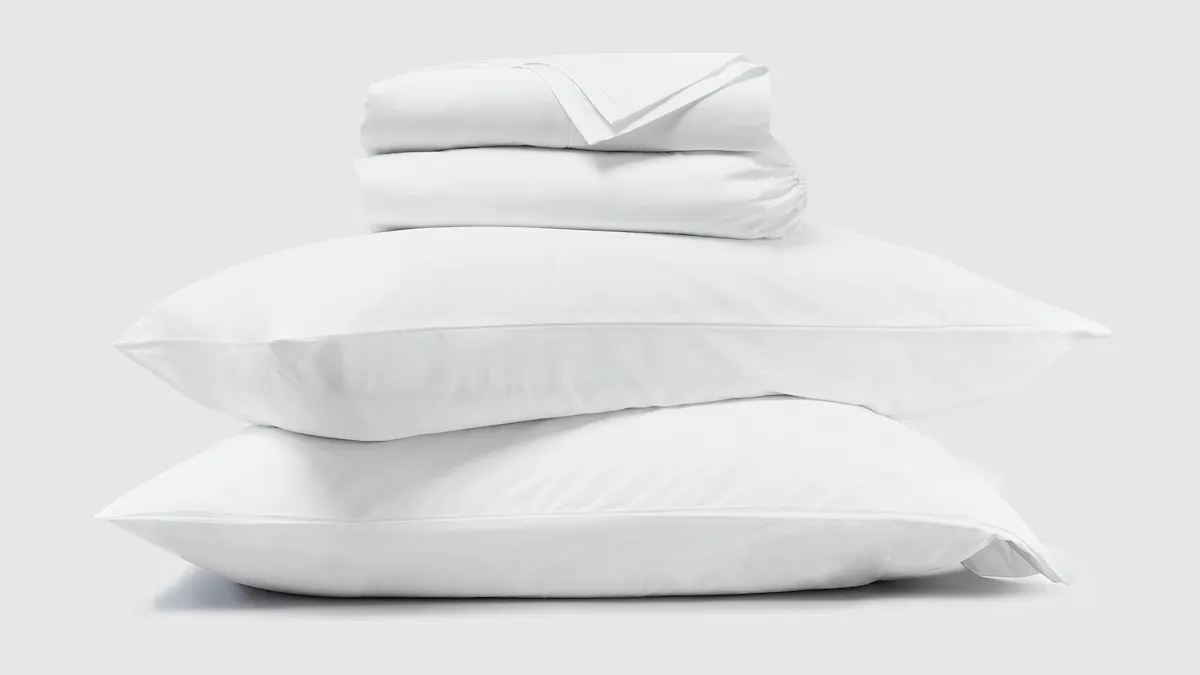
Shopping as well as reading? Here is one current option worth comparing: the Saatva Organic Cotton Sheets. Check today’s price, sizing and return terms on the official product page before you order.
Saatva Organic Cotton Sheets
- See the product page for full specs and current pricing
FAQ
Do full sheets fit a queen bed at all?
A full fitted sheet doesn’t provide a proper queen fit. BEDGEAR says the full size is 6 inches narrower and 5 inches shorter, so its fitted corners are arranged for a smaller surface. A full flat sheet may still offer temporary coverage.
Can full-size sheets fit on a queen if the fabric stretches?
Stretch may help an undersized fitted sheet reach farther, but it doesn’t alter the location of its sewn corners. If the sheet must remain under heavy tension to stay attached, I wouldn’t treat it as compatible.
Will deep-pocket full sheets fit a queen mattress?
Not because of the deep pocket alone. Extra pocket capacity addresses mattress thickness, while the full-versus-queen mismatch concerns width and length. The sheet still needs a queen-size footprint.
Fast distinction: A tight fit across the top points to the wrong footprint. Trouble reaching underneath the side can point to pocket depth. Check both labels rather than using one to compensate for the other.
Do queen sheets fit a full bed?
A queen fitted sheet is oversized for a full bed, so expect loose fabric rather than a tailored fit. A queen flat sheet is more usable because its extra material can hang over the sides or be tucked underneath.
What should I do if I only have full sheets available?
Use the full flat sheet temporarily if it provides enough coverage and lies smooth. Don’t force the fitted sheet over the larger queen mattress. Replace that piece with a queen fitted sheet when practical.