
 by
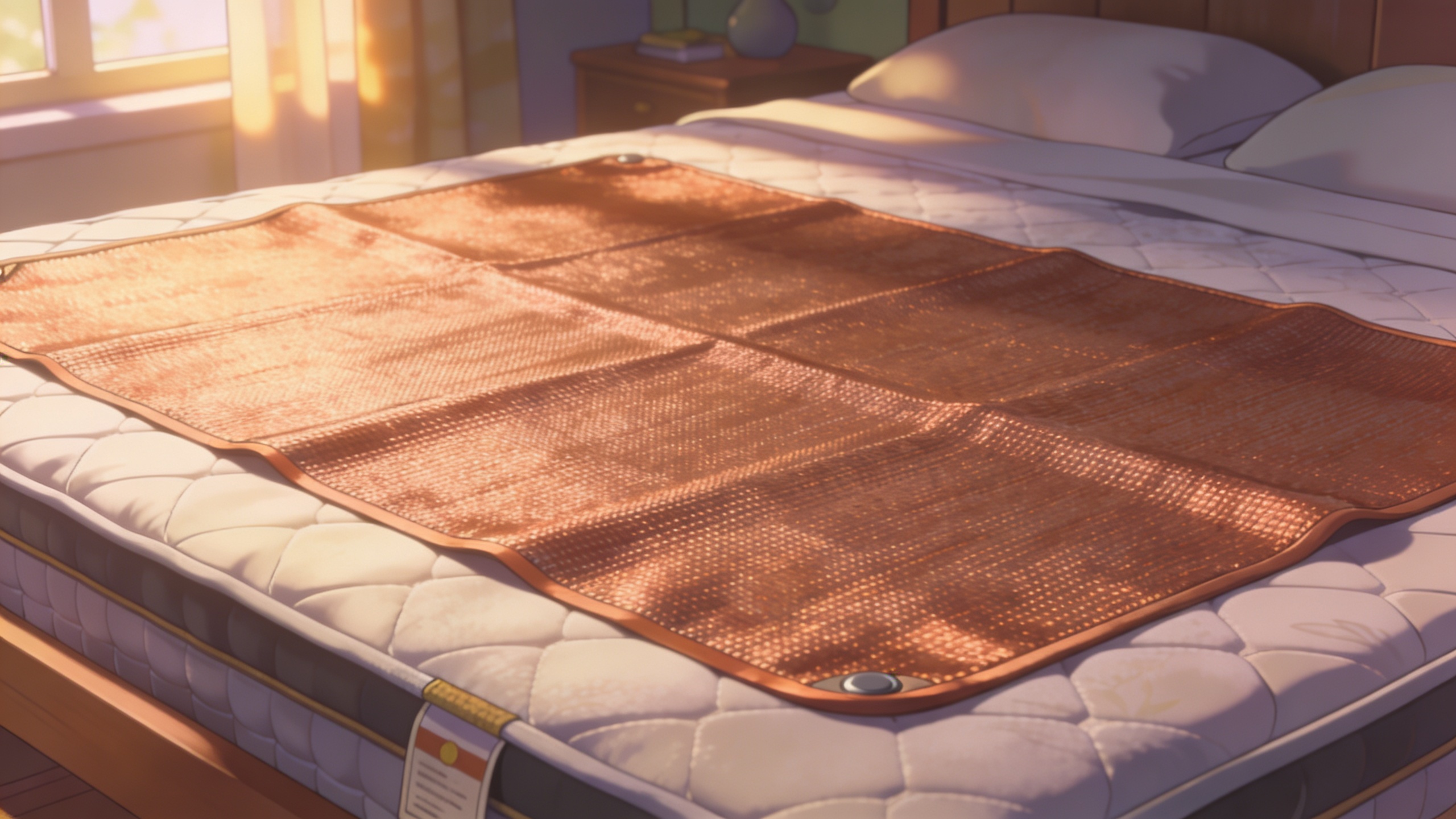
by Grounding is not a cure-all, but a real grounded mat can create electrical contact with earth ground. The health evidence is mixed, so buy it as a cautious wellness test. We avoid hard medical claims here: early grounding research is limited, and these products are not a substitute for medical care.
Premium Grounding Mat
9.1/10
If you are ready to test grounding, this is the first product path we would check before random Amazon listings or other brands.
Best Premium Grounding options to compare
| Rank | Pick | Best fit |
|---|---|---|
| #1 | Premium Grounding Mat | Best desk or floor option |
| #2 | Premium Grounding Pad | Best flexible bed or sofa option |
| #3 | Premium Grounding Earthing Sheet | Best bed setup |
Safety note: verify that your outlet is properly grounded before using any earthing product, and talk with a qualified clinician if you have a medical condition, implanted device, or electrical-safety concern.
TL;DR
Grounding mats work electrically, a properly built mat on a live outlet ground brings your skin-surface voltage toward earth, which is directly measurable. The biological effects (sleep, inflammation markers, HRV) show directional support from small peer-reviewed studies, but the evidence base is limited and sample sizes are small. Not a cure-all. Quality varies enormously: cheap mats oxidize within months. Our pick is the Premium Grounding 316L stainless steel mat because stainless doesn't tarnish the way silver-plated copper does.
Jump to section
Do grounding mats work? Yes, electrically, measurably, and within a narrow, honest range of biological effect. If "working" means "restores your body's surface potential to near earth potential," the answer is unambiguous: a functional mat on a correctly wired ground does exactly that, and a $15 multimeter confirms it. If "working" means "produces statistically significant improvements in sleep, inflammation markers, and HRV," the answer is a more careful yes, probably, in some people, under some conditions. If "working" means "cures a specific disease," the answer is no. Below is the honest version, with studies, limits, and the practical picture of when grounding helps and when it doesn't.
What "Working" Actually Means
Three thresholds, separated. Electrical function: the mat reduces skin-surface voltage relative to earth, easy to measure. Subjective benefit: the user reports better sleep, real, but prone to expectation. Clinical outcome: a biomarker moves in a controlled study, hardest bar. Grounding mats pass the first cleanly, the second reliably, the third with directional but limited evidence.
The Electrical Mechanism
Earth is a massive reservoir of free electrons sitting at a reference potential we call ground. Standing barefoot outside puts your body in electron equilibrium with that reservoir: your skin-surface voltage settles near zero relative to earth. Indoors, modern life insulates you, rubber soles, vinyl floors, synthetic carpet, foam mattresses. Your body accumulates a small induced voltage from ambient AC fields, typically 1 to 7 volts measurable between skin and earth.
A grounding mat is a conductive surface (a woven grid of stainless steel or silver-plated fibers) connected via a current-limited cord to the ground pin of a wall outlet. That pin traces back through the panel to a grounding rod driven into the earth. When you touch the mat skin-to-conductor, you complete a low-resistance path and your surface voltage equalizes with earth. That voltage drop is real, measurable, and not disputed. Whether equalizing it produces downstream biological effects is a separate question, where the research gets more modest than proponents often claim.
What Research Actually Shows
The peer-reviewed literature on grounding is small but not nonexistent. An honest walk-through of the most-cited studies, with their real limits:
- Chevalier, 2012 (J. Inflammation Research). Double-blind, sham-controlled, n=22. Shifts in blood viscosity and inflammation-related markers after grounded sleep. Directional effect on zeta potential was clear within the sample. Limits: small n, biomarker surrogates rather than clinical outcomes, modest replication.
- Sokal & Sokal, 2011 (J. Alt. Comp. Med.). Small experiments on cortisol rhythm, thyroid hormones, and HRV. Cortisol curves normalized toward a healthier diurnal shape; HRV shifted toward parasympathetic balance within 40 minutes. Sample sizes 12-84. Useful directional evidence, not definitive proof.
- Oschman et al., 2015 review. A review pulling together thermal-imaging, wound-healing, and inflammation studies into a mechanistic hypothesis around ROS neutralization. Inherits the limits of its primary sources.
- Chevalier et al., 2019 (wound healing pilot). Small-n study showing accelerated soft-tissue recovery in grounded subjects after eccentric exercise. Pilot scale.
Fair summary: effect sizes are real but modest, samples are small (10 to 60 subjects), blinding is difficult because sensitive users can sometimes distinguish sham mats, and independent replication outside the grounding research community is limited. The evidence points toward "something real in some people," but does not support the stronger marketing claims. Anyone calling grounding "proven" to cure anything is overselling; anyone calling it "pure pseudoscience" is ignoring the electrical measurements and the published biomarker shifts.
It is also worth noting what the research does not show. There are no large-scale randomized controlled trials of grounding in the thousands-of-subjects range. There are no pre-registered replications with independent funding. There are no long-term outcome studies beyond a few months. The literature is the shape of an emerging field with directional signal, not a mature one with settled answers, which is the honest way to describe it.
User-Reported Benefits (Observational)
Move beyond controlled literature into the much larger pool of self-reports and a few patterns surface consistently. Observational, not clinical evidence, but worth acknowledging:
- Deeper, more consolidated sleep. The most common report, fewer 3 a.m. wake-ups, more rested on the same time in bed.
- Less morning stiffness. Particularly among people with baseline joint inflammation or post-exercise soreness. Shift is gradual, two to four weeks.
- Reduced inflammation-type symptoms. Skin flare-ups, achiness, post-workout soreness soften for a subset. Not a cure; a taper.
- Calmer HRV. Users tracking with Oura or Whoop often report a modest uptick over weeks, consistent with published shifts.
- Fewer tension headaches. Reported by a subset with chronic low-grade headaches. Inconsistent across the population.
Variability between users is substantial. Some report life-changing shifts; others report nothing.
Why Effects Vary Person to Person
- Baseline inflammation. Low inflammatory markers and good sleep leave little room for grounding to help. The biggest shifts come from dysregulated baselines, chronic stress, autoimmune, overtraining, long-standing sleep issues.
- Individual sensitivity. People who notice a missed cup of coffee or a 2 °F bedroom change tend to also notice grounding.
- Placebo susceptibility. Expectation effects are real in every wellness intervention. Not a gotcha, one of several overlapping mechanisms that can produce real subjective benefit.
- Product quality. An oxidized mat delivers zero grounding no matter how responsive you are. Much of the "didn't work for me" crowd is running dead hardware.
- Outlet ground integrity. Roughly 3% of US residential outlets have a compromised or disconnected ground. If yours is one, the mat is electrically inert.
When Grounding Mats Won't Work
- No inflammation baseline to improve. Healthy sleepers with HRV in the 70s and zero morning stiffness generally report nothing. Ceiling effect, not a mat failure.
- Broken outlet ground. Ungrounded two-prong wiring, disconnected ground wire, or a three-prong outlet retrofit over a two-prong box with no conductor pulled to it, the mat has nowhere to send your surface voltage.
- Used through shoes or thick clothing. Rubber and thick synthetics are insulators. A grounding mat under Birkenstocks does effectively nothing. Bare skin or thin cotton is what the grid is designed for.
- Two-prong adapter hack. Using a three-to-two-prong adapter on an ungrounded outlet sends the ground pin nowhere unless it's bonded to a grounded metal outlet box. Most of the time it isn't.
- Already oxidized conductor. A silver-plated copper mat in daily use for 9 to 12 months has usually drifted out of spec. People conclude "grounding doesn't work" when their hardware is dead.
The Placebo Component, Honest Version
Any wellness intervention has a placebo component. Three things are true at once. First, placebo effects are real effects, they reliably lower subjective pain and improve sleep self-reports, sometimes producing measurable biological change. A subjective benefit that is partly placebo is still a real benefit; you are sleeping better regardless of mechanism.
Second, blinding grounding studies is genuinely difficult. Sham mats (visually identical, electrically disconnected) work reasonably well, but a subset of sensitive users can sometimes distinguish real from sham by subtle static sensations. This inflates effect-size uncertainty.
Third, the placebo-only theory doesn't fully explain two observations: users with oxidized mats who believe the mat works often report no benefit, and objective biomarkers shift in the same direction across multiple small studies. If the entire effect were expectation-driven, conductivity state shouldn't matter and biomarkers shouldn't track. Honest synthesis: some portion is placebo, some portion is the measured electrical effect, and the ratio isn't settled.
Testing If Yours Actually Works
- Three-prong outlet tester ($8-$15). Plug it in. Two amber lights and one red (per the device key) indicates a correctly wired outlet with live ground. Any other pattern, stop and call an electrician.
- Multimeter continuity. Set to continuity or ohms. One probe on the mat's conductive surface, other on the outlet ground pin. Healthy mat reads under 1 ohm; anything above 10 ohms suggests a degraded conductor or bad cord.
- Visual grid inspection. Under bright light, a healthy stainless grid shows continuous metallic fiber lines. A degraded silver-plated copper grid shows dark patches, dull spots, or visibly tarnished fiber.
Quality Differentiators That Matter
- 316L stainless vs silver-plated copper. Stainless doesn't tarnish. Silver-plated copper oxidizes in contact with sweat, oils, lotions, and essential oils. We've measured silver-plated mats drifting from <1 ohm to above 50 ohms within 6 to 9 months of daily use. Our stainless reference mat has held through 80+ wash cycles.
- Safety resistor in the cord. A proper grounding cord has an in-line current-limiting resistor (typically 100 kΩ) so that in the unlikely event of a wiring fault, the mat can't pass dangerous current. Cheap mats skip this.
- GFCI-tested plug. Should coexist with GFCI-protected outlets without false trips.
- Warranty length. A 3-year warranty signals the manufacturer expects the conductor to last. 90-day or no-returns signals the opposite.
How This Compares to Outdoor Barefoot
Walking barefoot on damp grass or wet sand is the original form of grounding, free, stronger than any indoor mat because contact area is larger. If you can do 30 to 60 minutes a day, you don't necessarily need a mat. The honest case for an indoor mat is practical, not electrical: most of us can't stand barefoot on wet ground for multiple hours, and nobody does it in a northern winter. A sleep-grounded mat or sheet gives you consistent multi-hour exposure outdoor barefoot time simply cannot match on a weekly basis. Same electrons, delivered more reliably.
Common Mistakes That Tank Results
- Assuming the outlet is grounded. Test it. Older homes, poorly permitted renovations, and DIY electrical work produce outlets that look three-prong but aren't bonded.
- Buying on price alone. A $25 mat from an unknown marketplace brand is optimized for cost, not longevity.
- Expecting day-one effects. Grounding is not caffeine. Most published biomarker shifts develop over 2 to 4 weeks. Judging after three nights is too early.
- Using through thick bedding. A grounding sheet under a thick polyester topper or a fitted sheet laundered with fabric softener (which coats fibers in insulating silicone) conducts poorly.
Who Should Try One
- Chronic-fatigue profiles with poor sleep and elevated inflammation markers.
- Autoimmune baselines (Hashimoto's, rheumatoid, psoriatic), adjunct, not substitute for medication.
- Sleep issues: long onset, frequent waking, poor efficiency on a wearable.
- Chronic inflammation markers (CRP, IL-6 elevated) even without a named diagnosis.
- Desk workers with 8+ hours of seated synthetic-floor contact.
Who Shouldn't Bother
- Healthy baselines with nothing to optimize. Good sleep, good HRV, no symptoms? Save the money.
- Skeptics looking for a specific cure. Grounding is not a disease treatment. Wrong tool, wrong category.
- Pacemaker or implant users, without a doctor consult. The current-limiting resistor makes the risk theoretical rather than practical, but the conservative path is to clear it with your cardiologist first.
Related Premium Grounding guides
Frequently Asked Questions
Will I notice anything in the first week?
Some users report faster sleep onset within 3 to 7 nights. Biomarker shifts (HRV, inflammation) typically take 2 to 4 weeks. Expecting a dramatic day-one energy bump? Grounding won't deliver that.
Is the whole thing just placebo?
Partly, almost certainly. Fully? Probably not. Objective biomarkers shift in controlled studies, and users with oxidized mats tend not to report benefit even when they expect to. Fair position: some portion placebo, some portion measured electrical effect, ratio unsettled.
I'm skeptical, should I try one?
If there's a money-back guarantee, a skeptical 30-night trial is low-risk. Test your outlet first, verify the mat with a multimeter, judge by your sleep and HRV data rather than day-one sensation.
Are grounding mats FDA-approved?
No, and they don't need to be, they don't claim to diagnose, treat, or cure disease. Consumer wellness products, like blackout curtains. Outside FDA jurisdiction is not "unsafe."
What do doctors say?
Mainstream position is cautious: evidence is interesting but limited, and no major sleep or cardiology body currently recommends grounding as a clinical intervention. A growing subset of integrative-medicine clinicians recommend it as a low-risk adjunct. Pacemaker, blood thinners, thyroid meds, talk to your doctor first.
Is a $150 mat really better than a $30 one?
Often yes. The $150 mats are typically 316L stainless and hold conductivity for years. The $30 mats are typically silver-plated copper and degrade within months. Cost-per-functional-month usually favors the better mat.
Do grounding mats block EMF?
One of the more oversold claims. The mat does not shield you from ambient EM fields. It does reduce the induced voltage on your skin surface because you become equalized with earth. Real, measurable, but "EMF protection" is marketing shorthand, not a literal description.
Can multiple people share one outlet?
Yes. The ground path has effectively unlimited capacity for the tiny currents involved. Two mats on one outlet (or grounded power strip) both work normally.
How often should I replace a grounding mat?
316L stainless with proper care (wipe-clean, no fabric softener, quarterly multimeter check): 3 to 5 years. Silver-plated copper: 6 to 18 months before conductivity drifts out of spec.
Related reading: Grounding Sheets Review & Guide | Are Grounding Mats a Hoax? | Are Grounding Sheets Legit? | Grounding Mat Dangers | Grounding Sheets Benefits | Premium Grounding Review | Best Grounding Mats Tested | Do Grounding Sheets Work? | Grounding Mat vs Grounding Sheet
Grounding for pets: have a dog or cat? See our guide to the best grounding mat for pets and grounding for pets explained.
Premium Grounding Mat
Start with Premium Grounding Mat if this page convinced you to test grounding. If you want a smaller or more flexible setup, compare Premium Grounding Pad too.