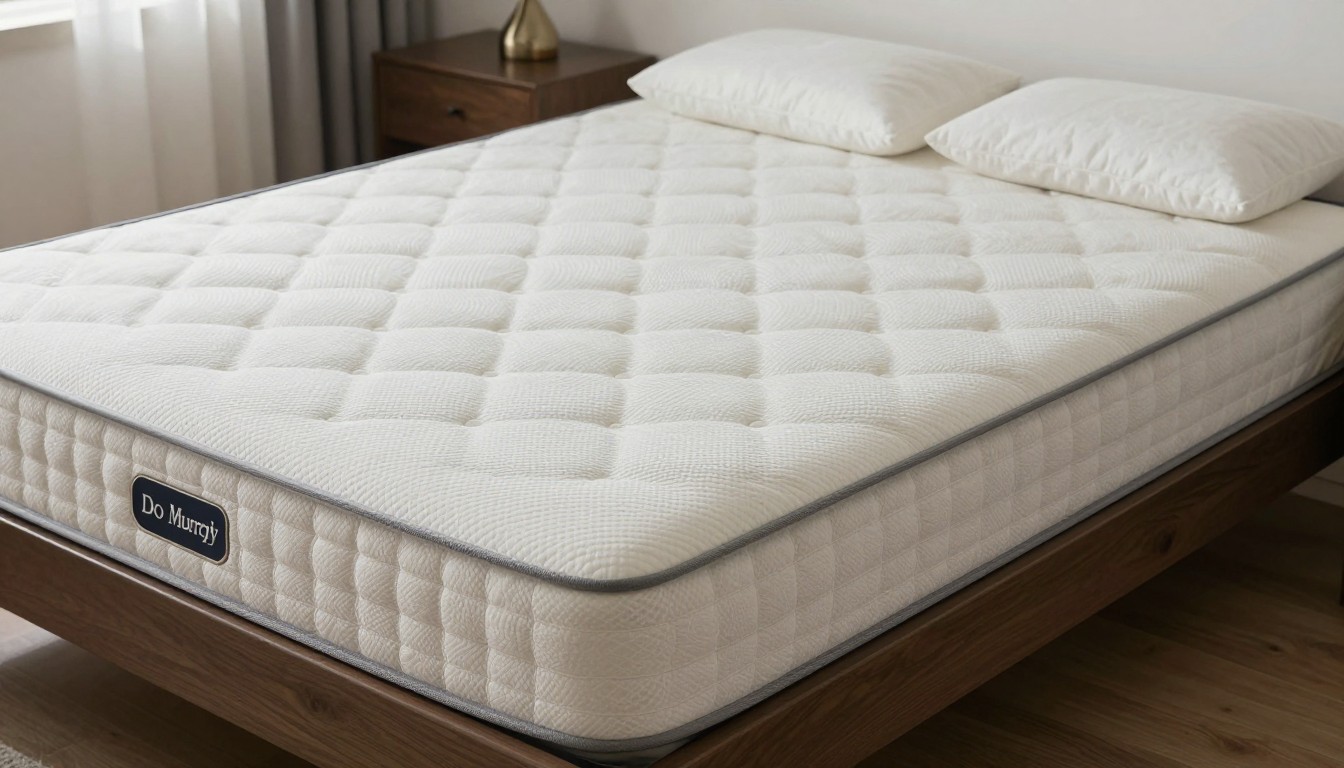
 by
by Quick answer: No. Buy a mattress that matches your wall bed’s clearance, weight limit, and folding action. Saatva Murphy is the category-matched option if you want a purpose-built starting point.
- Most wall beds use a standard mattress, not a proprietary “Murphy-bed” model, according to recent Tom’s Guide coverage and Murphy-bed buyer guides.
- Those guides consistently flag mattress thickness, weight, and flexibility as the compatibility checks that matter.
- Memory foam, hybrids, and flexible innerspring designs are commonly recommended because they can fold with the bed more easily, according to those buyer guides.
Updated July 2026 · Reviewed for accuracy
No, Murphy beds don’t need special mattresses. They need compatible ones. That distinction saves you from buying a mattress that feels fine on the floor but stops the cabinet from closing, shifts inside the frame, or puts needless strain on the lifting hardware.
I’d start with the wall bed, not the mattress. Its manufacturer sets the real rules: permitted thickness, maximum weight, mattress size, and any limits created by a front rail or shelf. Recent guidance from Tom’s Guide and Murphy-bed buying guides reaches the same bottom line: ordinary mattresses can work well, provided they fit the mechanism rather than fight it.
Compatibility matters more than a special label
A Murphy bed is a mattress stored vertically inside furniture, so the frame has less room for error than an ordinary platform bed. A mattress can be perfectly comfortable yet still be wrong for the cabinet if it is too bulky, too heavy, or too stiff to move cleanly through the folding path.
That does not mean you need a mattress with “Murphy” in its name. It means you need to read the wall bed’s own specification sheet before you order. Tom’s Guide and recent buyer guides describe thickness, weight, and folding flexibility as the main checks, rather than a proprietary mattress category.
The Nut’s rule: The lifting mechanism gets the final say. If the mattress manufacturer says a model will fit but your wall-bed maker sets a lower limit, follow the wall-bed maker’s limit.
A proper fit should let the unit open and close without forcing the mattress into place. It should also sit snugly enough that it does not wander inside the frame. A loose mattress can create awkward gaps and repeated rubbing against the cabinet or hardware, concerns highlighted in Murphy-bed buying guides.
Before shopping, find the exact model name of your bed and pull its current installation guide or product page. If you cannot locate a clear compatibility limit, ask the manufacturer directly. Guessing is not worth it with a moving piece of furniture.
Thickness is usually the first deal-breaker
Wall beds are built around a fixed amount of cabinet clearance. Recent Tom’s Guide coverage and multiple Murphy-bed buyer guides commonly describe a moderate-profile mattress as the safe zone, while warning that overly thick models can keep the bed from folding or closing correctly.
That is why a lofty pillow-top can be a risky purchase here. The issue is not that plush comfort is automatically wrong. The issue is that extra bulk has to go somewhere once the bed is upright. If the cabinet was not designed for it, the door, rail, straps, or mechanism may not line up as intended.
Read the specification with the mattress protector in mind, too. A protector adds material, and bedding can add pressure inside a tight cabinet. The manufacturer’s stated clearance is the decision point, not the mattress height listed on a retailer page.
| Mattress trait | Why it matters in a wall bed | What to verify |
|---|---|---|
| Profile | Too much bulk can interfere with storage and closure. | The cabinet’s stated mattress-clearance limit. |
| Weight | Extra weight can make the lift system work harder over time. | The frame’s stated weight capacity. |
| Flexibility | A rigid mattress may bind as the bed folds. | Whether the construction moves smoothly with the mechanism. |
| Footprint | A poor fit can shift, gap, or wear against the frame. | The exact mattress size required by the bed. |
Do not use broad category labels as proof of fit. “Hybrid,” “foam,” and “innerspring” describe construction, not the outside profile or total weight. Two mattresses in the same category can behave very differently inside the same cabinet.
Comparing options? The Saatva Murphy is the pick we keep coming back to — see the final verdict ↓
Weight protects the lifting mechanism
The mattress does not just rest on a wall bed. It becomes part of the load the mechanism raises and lowers. Recent buyer guides caution that a heavier mattress can stress that mechanism, which is why the frame’s weight limit is not a suggestion.
Some homeowners focus only on whether the cabinet will shut. I think that is too narrow. A bed that closes today can still be a poor match if the lifting action feels strained or if the hardware must carry more than it was designed to support over repeated use.
Foam often appeals in this setting because it can offer a compact, flexible build. A hybrid can also make sense if you want coil support, provided its total weight and profile stay within the bed manufacturer’s requirements. Some innerspring mattresses can work as well, according to recent Murphy-bed buyer guides, but their fit depends on the particular coil build and border construction.
Practical point: Measure and confirm before the delivery date. If the bed maker publishes a maximum weight, use the mattress’s official specification, not an estimate from a listing or a customer comment.
If you already own a mattress, check its current specifications before assuming it can move over. Wear, added toppers, and changes in bedding can alter how it fits in a cabinet. If the match is close, I would ask the wall-bed manufacturer for written confirmation rather than force the mechanism.
Flexible construction usually works best
Memory foam bends readily, which is one reason recent guides often list it among compatible wall-bed options. Its lack of a rigid perimeter can help it follow the motion of the platform, but it still must meet the cabinet’s profile and weight rules.
Hybrid mattresses add coils beneath comfort materials. That construction can bring a more buoyant, supported feel than all-foam designs, but it can also add mass. The useful question is not whether a hybrid is allowed in general. It is whether that specific hybrid folds smoothly and falls within the limits for your specific frame.
Innerspring mattresses deserve the same case-by-case thinking. Some have flexible enough constructions for a wall bed, according to Murphy-bed buyer guides. Others may have firmer edge systems or thicker comfort builds that are less cooperative in a tight cabinet.
I would be cautious with any mattress marketed around extreme height, unusually rigid support, or a very heavy feel. Those traits are not automatically defects. They simply conflict with the compact, moving environment a Murphy bed creates.
Match the mattress to the frame, not just the room
Murphy beds come in standard sleeping sizes, but “standard” does not erase frame-specific details. The mattress must match the bed’s intended footprint exactly and sit properly within the support system. Recent buyer guidance warns that a poor fit can lead to shifting, gaps, and added wear during operation.
Check whether your model has a retaining rail, a shelf, straps, or another built-in feature around the mattress area. Those components can reduce usable clearance even if the basic mattress dimensions sound familiar. A mattress that fits the platform alone may not fit the stored position.
This is also a good time to think about the room as a working space. A wall bed solves a storage problem only if you can open it without moving half the room every night. For layout ideas, see our guide to small-bedroom setups that work for two people.
Check before you buy:
- Find the exact wall-bed model and its current mattress requirements.
- Confirm the mattress’s official profile and weight against those requirements.
- Make sure the mattress size matches the frame exactly.
- Ask about rails, shelves, straps, and cabinet clearance.
- Confirm the bed can close without forcing the mattress or hardware.
A foundation is usually not part of this equation because the wall bed supplies its own support platform. If you are sorting through bed-base terminology, our explanation of whether foam mattresses need a box spring may help clarify what belongs underneath a mattress and what does not.
Comfort still counts, but compatibility comes first
A Murphy bed should not feel like a compromise bed. Once you have narrowed the field to mattresses that meet the frame’s limits, choose comfort based on the sleeper’s needs and the construction you prefer. Foam can suit people who want closer contouring. A compatible hybrid may appeal to sleepers who prefer a coil-supported feel.
Do not solve a comfort concern by adding a thick topper before checking the cabinet clearance. A topper can change the stored profile and make a previously compatible setup problematic. The same caution applies to bulky pads and layers of bedding.
The product decision is straightforward: Saatva Murphy is worth considering if you want a mattress selected for this category, but I would still compare its official details with your wall bed’s manual before buying. No mattress name can override the limits of the hardware already installed in your home.
If your question is really about specialized bedding rather than the mattress itself, the answer can vary by bed design. Our guide on whether Sleep Number beds need special sheets explains why mattress shape and moving components can affect what works on top of the bed.
My buying checklist for a Murphy-bed mattress
The first question is not “What is the best mattress?” It is “What will this mechanism safely hold and close around?” Get that answer from the bed manufacturer, then shop inside those boundaries.
Next, pull the official specification page for every mattress you are considering. Compare its listed profile, weight, and size to the wall bed’s requirements. If a retailer’s description conflicts with the mattress maker’s information, rely on the manufacturer and ask for clarification.
Then consider the folding action. Recent Tom’s Guide coverage and Murphy-bed buying guides generally point shoppers toward foam, hybrid, and some innerspring designs because they can be flexible enough for wall-bed use. That is useful direction, not a substitute for model-level confirmation.
Finally, keep the finished setup in mind. Mattress protectors, toppers, and heavy bedding can affect closure. A compatible mattress should work with the bed as you will actually use it, not only as it appears in a product photo.
FAQ
Can I use my regular mattress in a Murphy bed?
Usually, yes. Recent Tom’s Guide coverage and Murphy-bed buyer guides say a standard mattress can work if it matches the wall bed’s limits for profile, weight, size, and folding behavior. Check the exact bed model before relying on an existing mattress.
What type of mattress is best for a Murphy bed?
Memory foam, hybrids, and some innerspring models are commonly recommended in recent buyer guides because they can be flexible enough to fold with the mechanism. The best choice is the one that also meets your specific frame’s official requirements.
Can a mattress be too thick for a wall bed?
Yes. Recent Murphy-bed guidance repeatedly warns that an overly thick mattress can interfere with folding, cabinet closure, or alignment. Follow the maximum profile stated by the bed manufacturer, including any restrictions created by rails or storage features.
Does mattress weight matter for a Murphy bed?
Yes. The lifting hardware has to raise and lower the mattress along with the frame, and buyer guides caution that excessive weight can strain the mechanism. Use the mattress maker’s official weight information and stay within the bed manufacturer’s capacity.
Do I need a box spring with a Murphy bed mattress?
Generally, no. A Murphy bed normally has its own support platform, so adding a box spring can create a fit problem unless the bed manufacturer specifically calls for one. Confirm the support design in your model’s documentation before adding anything beneath the mattress.
Conclusion
You do not need a special mattress for a Murphy bed. You need one that respects the cabinet, support platform, and lifting mechanism. Verify the official limits first, choose a flexible construction that fits them, and do not let extra bulk turn a smart space-saving bed into a daily hassle.
FINAL VERDICT
Bottom line for the Murphy bed mattress question: if you want a bed that folds away without a fight, the Saatva Murphy is the safer buy — it's made for the cabinet, which is the one spec a regular mattress can't promise.
OUR CATEGORY-MATCHED PICK · UP TO $625 OFF
Saatva Murphy
- See the product page for full specs and current pricing