
 by
by Quick answer: Yes. Cockroach Care describes sleep-like periods of complete immobility, usually during the day, within a pattern of nighttime activity. That’s rest, even though it doesn’t resemble human sleep.
- Rest state: Cockroach Care describes periods of complete immobility that function as sleep.
- Timing: Cockroach Care places their normal rest during the day.
- Activity: Cockroach Care reports nighttime activity governed by a predictable circadian rhythm.
Updated July 2026 · Reviewed for accuracy
So, do roaches sleep? Yes, but you won’t see the familiar signs people associate with sleeping. According to Cockroach Care’s account of cockroach rest patterns, they enter periods of complete immobility rather than visibly settling down like a person.
The practical answer is simple: a motionless roach during the day may be resting, while activity at night fits its reported circadian pattern. Stillness alone, however, can’t confirm what a particular roach is doing.
What sleep looks like in a cockroach
Complete immobility is the central visible feature. Cockroach Care describes this motionless state as functioning like sleep, even though it doesn’t look like a person closing their eyes and lying down.
I’d call that functional sleep rather than human-looking sleep. The distinction matters because people often search for recognizable bedtime behavior. Cockroaches aren’t described as providing those cues. Their lack of movement is the relevant observation.
The word “sleep” can therefore be misleading if it makes you picture a miniature version of human sleep. Here, it refers to a recurring rest state within the animal’s day-and-night activity pattern. It doesn’t mean every motionless roach can be confidently identified as asleep from a glance.
| Question | Supported answer | Limit of the evidence |
|---|---|---|
| Do roaches sleep? | Yes. Cockroach Care says periods of complete immobility function as sleep. | The description doesn’t provide a field test for confirming sleep in an individual roach. |
| Does it resemble human sleep? | No. Cockroach Care contrasts the behavior with closing the eyes and lying down. | Human sleep cues shouldn’t be used as the standard. |
| When does the reported rest occur? | Cockroach Care places rest during the day and activity at night. | No exact clock schedule or rest duration is given. |
| Is the pattern recurring? | Yes. Cockroach Care describes a predictable circadian rhythm. | One sighting can’t map an individual roach’s whole rhythm. |
That last limitation is worth keeping in view. The behavioral description answers the broad biological question. It doesn’t turn a quick household sighting into a precise sleep diagnosis.
The Nut’s read: “Roaches sleep” is accurate plain English. “Roaches become completely motionless during recurring rest periods” is the more useful description of what you might actually observe.
Why roaches rest during the day and move at night
Daytime rest and nighttime activity form the reported pattern. Cockroach Care describes cockroaches as being wired to rest during the day and remain active at night, following a predictable circadian rhythm.
In this context, “circadian rhythm” means the behavior follows a recurring day-and-night schedule. It explains why the answer isn’t merely that roaches sometimes stop moving. Their immobility belongs to a broader timing pattern, at least as Cockroach Care describes it.
This also explains why many questions about roach sleep begin with a nighttime sighting. Seeing movement at night is consistent with the stated pattern. It doesn’t tell you where the roach spent the day or allow you to identify its earlier state.
How to interpret the timing
- Movement at night fits the activity pattern reported by Cockroach Care.
- Immobility during the day is consistent with the reported rest period.
- A single observation provides only a snapshot, not a complete activity cycle.
- The source doesn’t give an exact bedtime, waking time, or duration for the rest state.
I wouldn’t stretch the timing claim further than that. The cited account supports a general rhythm, not an exact household timetable. If you notice one roach moving or remaining still, you’ve observed one moment within a larger pattern.
That difference between a general pattern and a specific diagnosis keeps the answer honest. “Roaches tend to rest during the day” is supported by Cockroach Care. “This particular roach is definitely asleep right now” requires information the visible timing alone doesn’t provide.
Does a motionless roach have to be sleeping?
A motionless roach gives you one visible clue, not a definitive answer. Cockroach Care identifies complete immobility as the form its sleep-like rest takes, but that doesn’t mean immobility can only have one explanation.
The direction of the claim matters. Sleep is described as looking motionless. The source doesn’t say that everything motionless must therefore be asleep. Treating those statements as interchangeable would turn a useful behavioral description into an unsupported certainty.
Time of day can add context. A still roach during the reported daytime rest period fits the pattern better than a claim based on stillness with no timing information. Even then, “consistent with resting” is more accurate than “proven asleep.”
| What you observe | Reasonable interpretation | What would be an overreach |
|---|---|---|
| A roach moving at night | The sighting fits Cockroach Care’s reported nighttime activity pattern. | Claiming you know exactly when or where it rested. |
| A roach completely still during the day | The observation is consistent with the reported rest pattern. | Treating sleep as confirmed from appearance alone. |
| A brief change in movement | You’ve seen a moment of behavior. | Using that moment to define the roach’s full circadian rhythm. |
This is the cleanest way to answer “does roaches sleep” without promising more than the evidence can show. Yes, roaches have a rest state that functions as sleep. No, an ordinary visual observation isn’t automatically enough to label the state of a specific insect.
Useful distinction: Complete immobility describes the appearance of roach sleep. It isn’t, by itself, a guaranteed test for sleep.
What roach sleep means if you see one near your bed
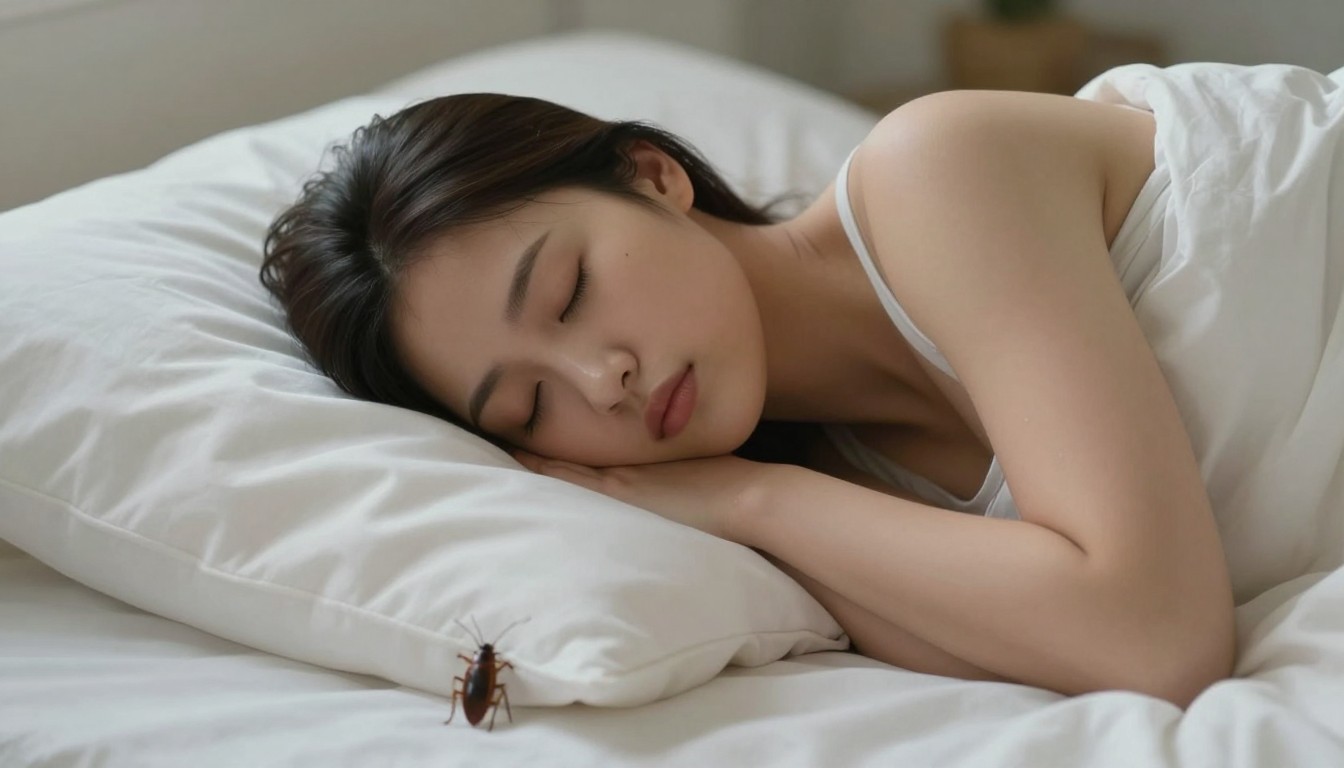
A roach near a bed gives you a location, not an explanation. The reported day-and-night rest pattern doesn’t establish why the insect is there, where it normally rests, or whether the mattress has anything to do with its presence.
That boundary matters on a sleep site. It would be easy to connect “roach sleep” with beds simply because people associate beds with sleeping. Cockroach Care’s account describes periods of immobility and a circadian pattern, not a preference for human sleep surfaces.
I wouldn’t use a roach’s presence near a mattress as proof that it sleeps inside the mattress. I also wouldn’t conclude from this behavioral information alone that the mattress caused the sighting or needs to be replaced. None of those conclusions follows from the reported sleep pattern.
Keep these questions separate
- Behavior: Was the insect moving or completely still?
- Timing: Did the observation occur during the reported daytime rest period or nighttime activity period?
- Location: Where did you see it? Location alone doesn’t identify a sleeping site.
- Response: Repeated household sightings are a pest question, not something the definition of roach sleep resolves.
If sightings keep occurring, a qualified local pest professional can assess the situation itself. The sleep question only explains one aspect of cockroach behavior. It doesn’t identify the scope, source, or appropriate response to a household presence.
That’s why I’d resist making the mattress the center of the story without separate evidence. A mattress is where a person sleeps. The cited description of cockroach sleep gives no basis for assuming roaches follow the same location-based idea of bedtime.
The Nut’s bottom line on whether roaches sleep
Yes, roaches sleep in the functional sense described by Cockroach Care. They enter periods of complete immobility, tend to rest during the day, and remain active at night within a predictable circadian rhythm.
The part I’d remember is the difference between pattern and proof. Daytime stillness fits the reported rest pattern, but one motionless roach can’t be declared asleep with certainty from appearance alone.
Plain-English verdict: Roaches do sleep. Their version looks like complete stillness rather than human-style bedtime behavior, and it generally belongs to the daytime side of their activity rhythm.
FAQ
Do roaches sleep?
Yes. Cockroach Care reports that cockroaches enter periods of complete immobility that function as sleep. Their rest doesn’t look like a person closing their eyes and lying down.
Do cockroaches sleep during the day?
Cockroach Care describes cockroaches as resting during the day and staying active at night. The source characterizes this as a predictable circadian rhythm rather than giving an exact daily schedule.
Is a motionless roach definitely asleep?
No firm conclusion can be drawn from stillness alone. Complete immobility is how Cockroach Care describes the sleep-like state, but the source doesn’t provide a visual test that confirms sleep in an individual roach.
Do roaches sleep in beds or mattresses?
The cited behavioral information doesn’t identify beds or mattresses as cockroach sleeping locations. Seeing a roach near a bed establishes where you noticed it, not where it normally rests or why it was there.
Is “does roaches sleep” correct English?
No. Because “roaches” is plural, the standard question is “Do roaches sleep?” For a singular subject, write “Does a roach sleep?” Searches phrased as “does roaches sleep” are asking the same question, and the answer is yes.