
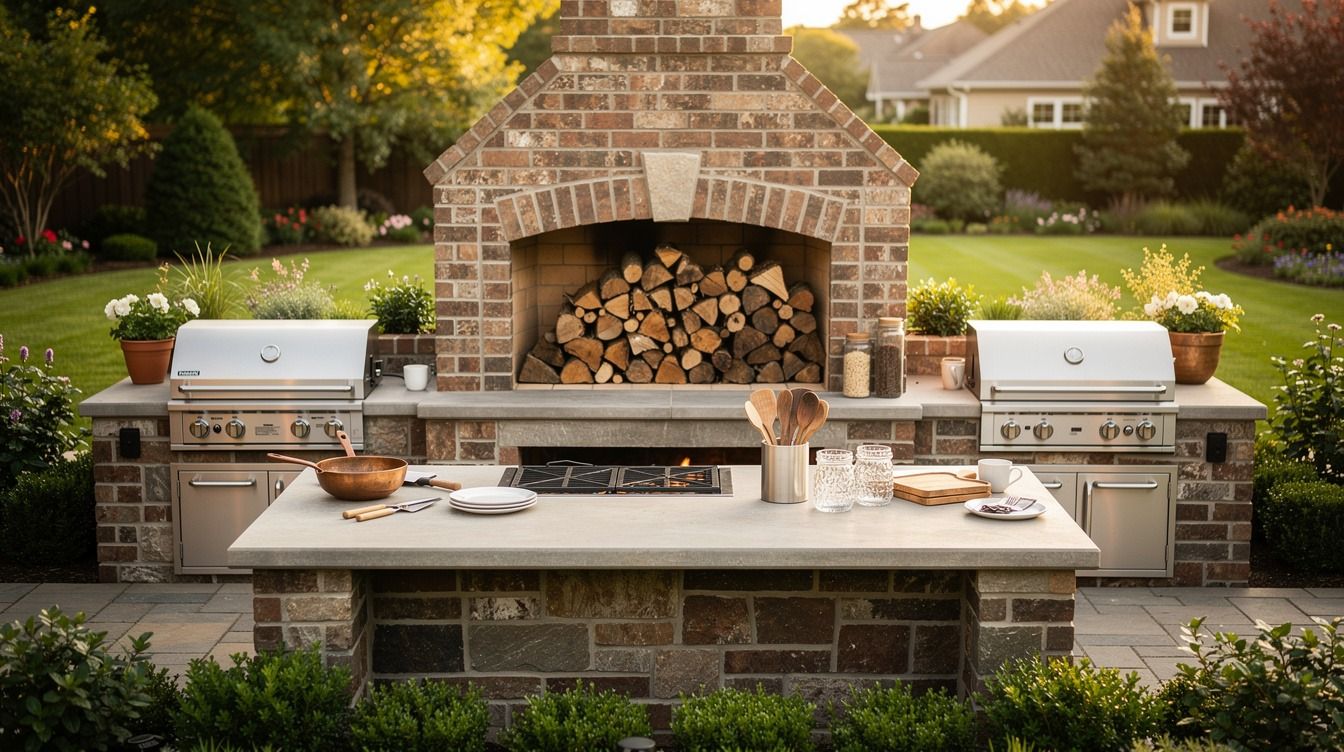
 by
by Outdoor Cooking Fireplace Ideas (Where Fire Meets Feast) work best when you give fire one clear job: cooking dinner and pulling everyone outside. I built mine while our patio was still a dusty rectangle with one wobbly chair. Now, even a plain weeknight meal feels like an occasion.
Here's what it looked like before
Before, we had the full starter-patio package: pale concrete, a rusting charcoal grill shoved against the fence, and a table that caught every leaf in the yard. I wanted dinner outdoors, but you couldn't carry a hot pan through the back door without bumping a chair.
The fireplace wall was only an idea then. A nervous one. I kept picturing smoke, mess, and a project that would swallow every weekend.
But the space had one advantage: a solid corner, enough room for a 36 in walkway, and a view of the trees after sunset. That was enough for me.
- Anchor the cooking zone with a brick outdoor fireplace with wood
- Build the Two-Wood Rule around the hearth
- Float a prep ledge beside the outdoor wood burning fireplace patio
- Why does an outdoor fireplace with multiple burners feel more useful?
- Hang the Three-Height Light Stack
- Paint the back wall before you buy more furniture
- Put a 28 to 30 in table where people can linger
- Choose bench seating over extra armchairs
- Frame the fire with edible pots
- Use a pergola to make smoke feel contained
- Let the rug mark the feast zone
- Add a gas fireplace outdoor patio burner for backup
- Make the Mantel Market Shelf work hard
- Mix black steel with soft textiles
- Can a narrow yard still fit a real cooking fireplace?
- Swap a bulky grill for a fire-friendly cart
- Cover the table plus two feet on each side
- Give the fireplace a fall-ready textile layer
- Keep one corner quiet for the after-dinner pause
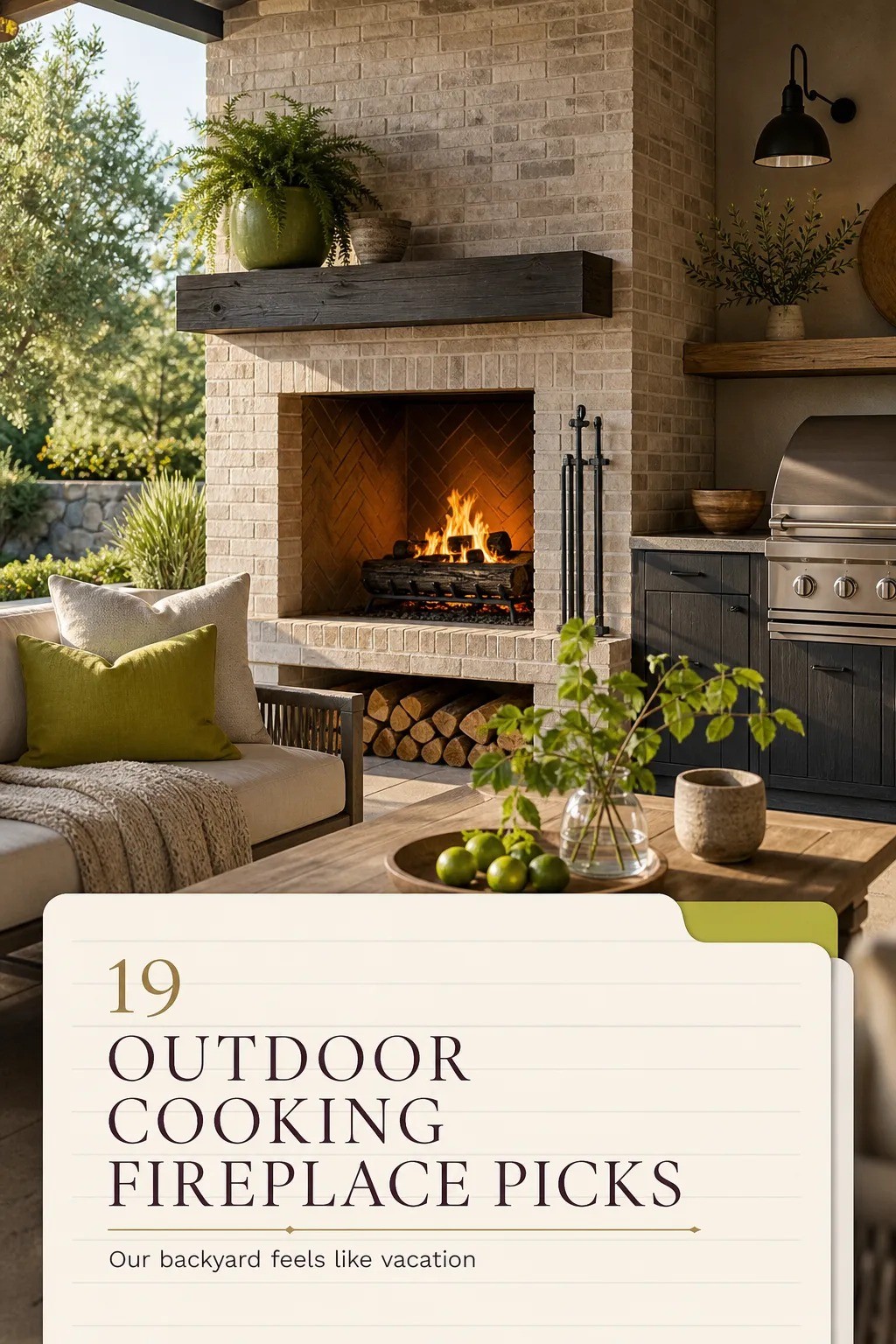
1Anchor the cooking zone with a brick outdoor fireplace with wood
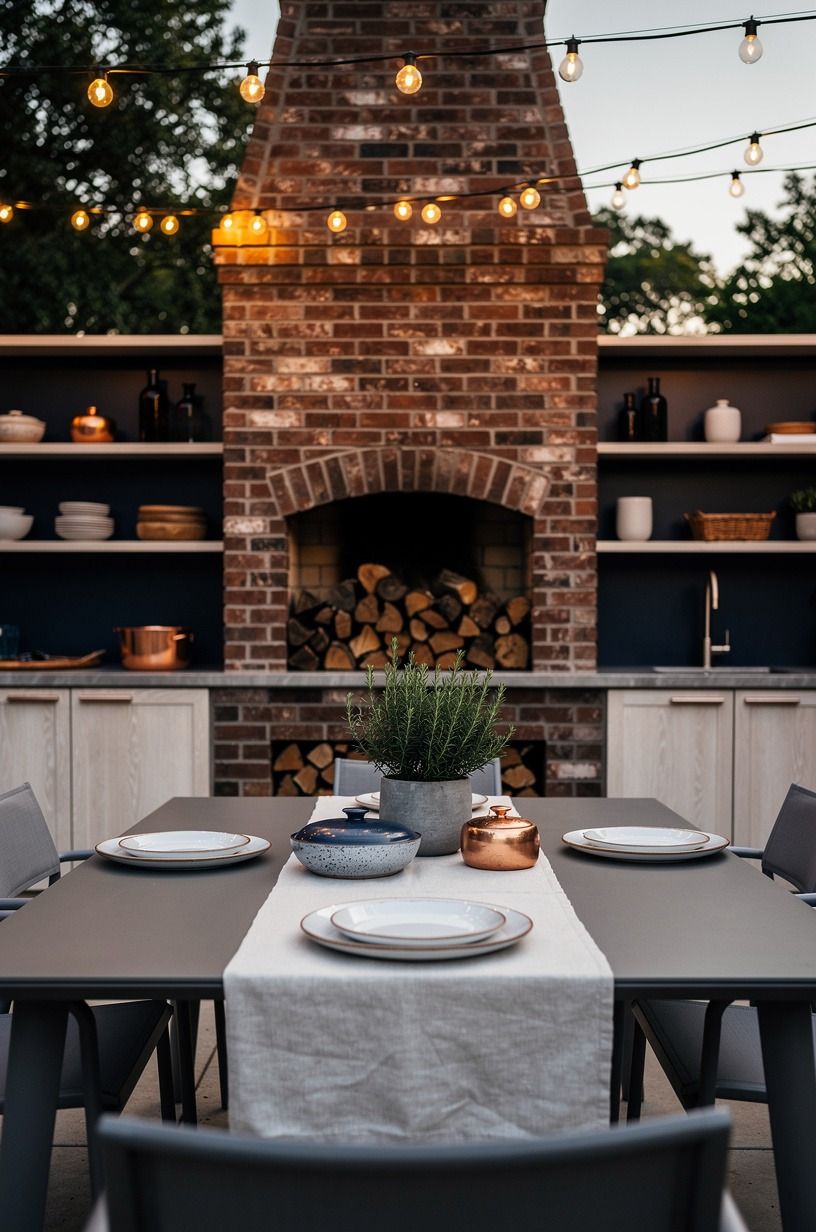
I started with a brick outdoor fireplace with wood because I wanted a real flame, not a decorative box humming in the background. You can feel the heat on your shins while you turn corn in a cast-iron skillet, and your guests naturally gather near it.
The fireplace is balanced with midnight blue, copper, and ivory, plus cerused white oak that keeps the hearth from feeling too heavy. I chose reclaimed red brick with uneven edges; it looked settled from day one.
For your own layout, keep the wood storage low and to one side. I’d skip a tall symmetrical pile because it makes the whole setup look like a restaurant prop. See these outdoor patio fireplace ideas that make the whole yard cozy if you’re deciding how much visual weight your fireplace needs.
2Build the Two-Wood Rule around the hearth
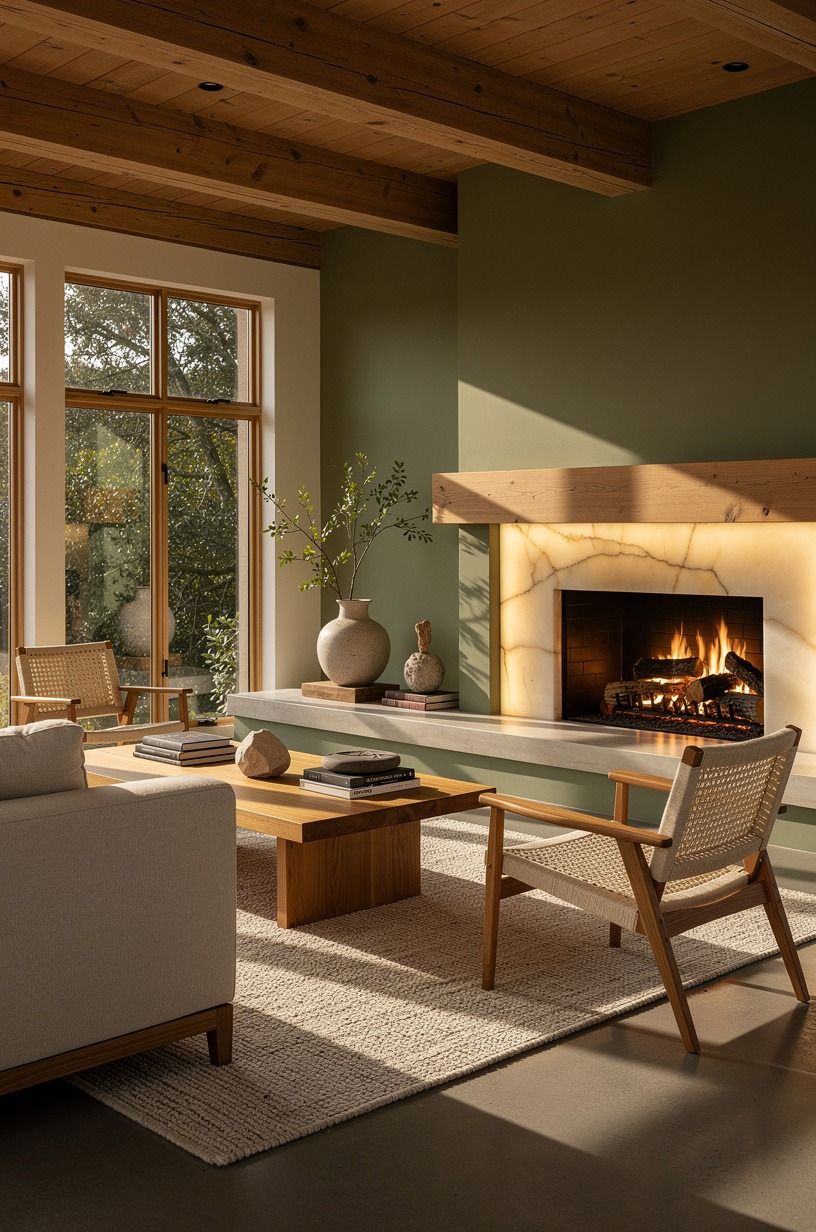
The Two-Wood Rule saved me from a very brown patio.
Pair natural wood with sage green and warm cream, then bring in a small backlit translucent onyx detail for contrast. It keeps the hearth warm without making every surface compete.
3Float a prep ledge beside the outdoor wood burning fireplace patio
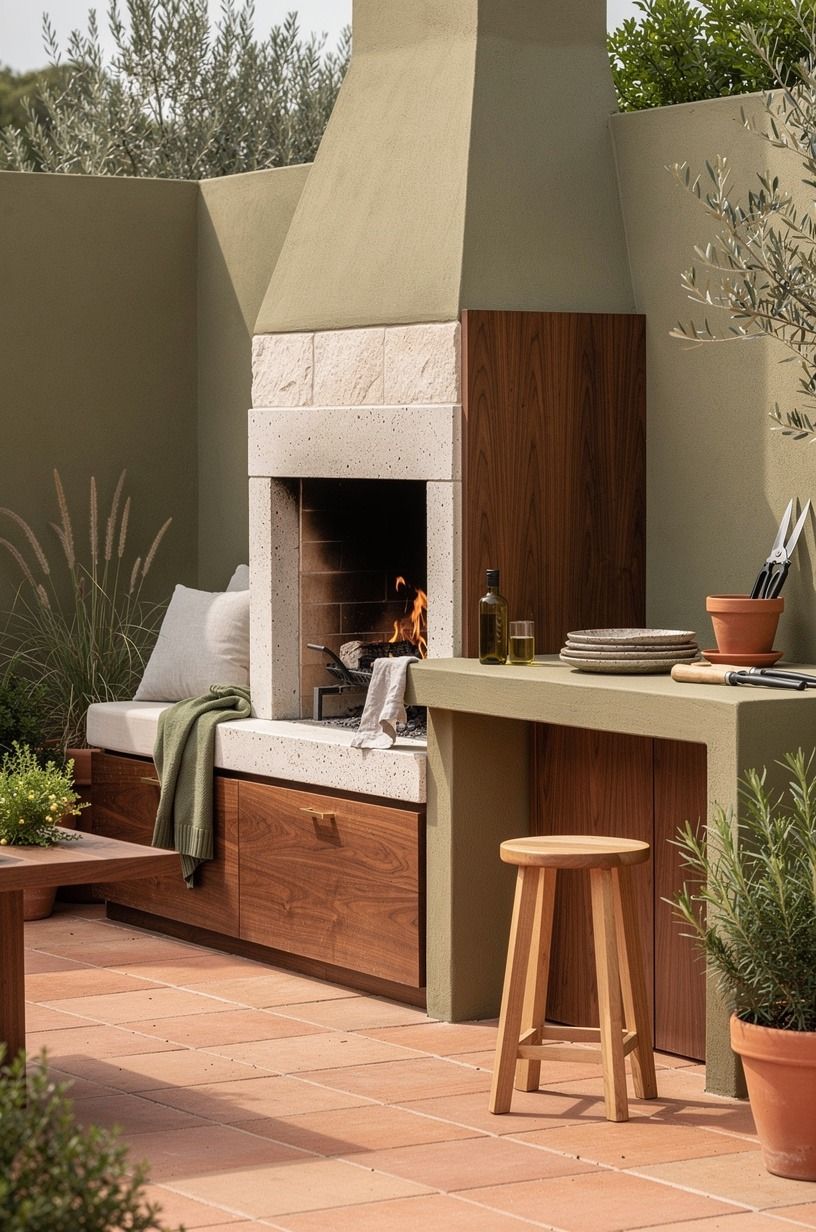
A book-matched walnut prep ledge beside the fire changed how I cook outside. You need somewhere to set a tray, a bowl of salt, and the tongs without balancing them on your knee.
Keep your ledge away from the hottest opening and leave the 36 in walkway clear. Your guests shouldn’t have to sidestep you every time you flip a skewer.
I used aged bronze brackets underneath because black steel looked too sharp against the terracotta, stone, and olive palette. It’s a small decision, but your materials need to agree when the flames start flickering. For more layout thinking, browse outdoor pavilion with fireplace ideas for a true backyard escape.
4Why does an outdoor fireplace with multiple burners feel more useful?
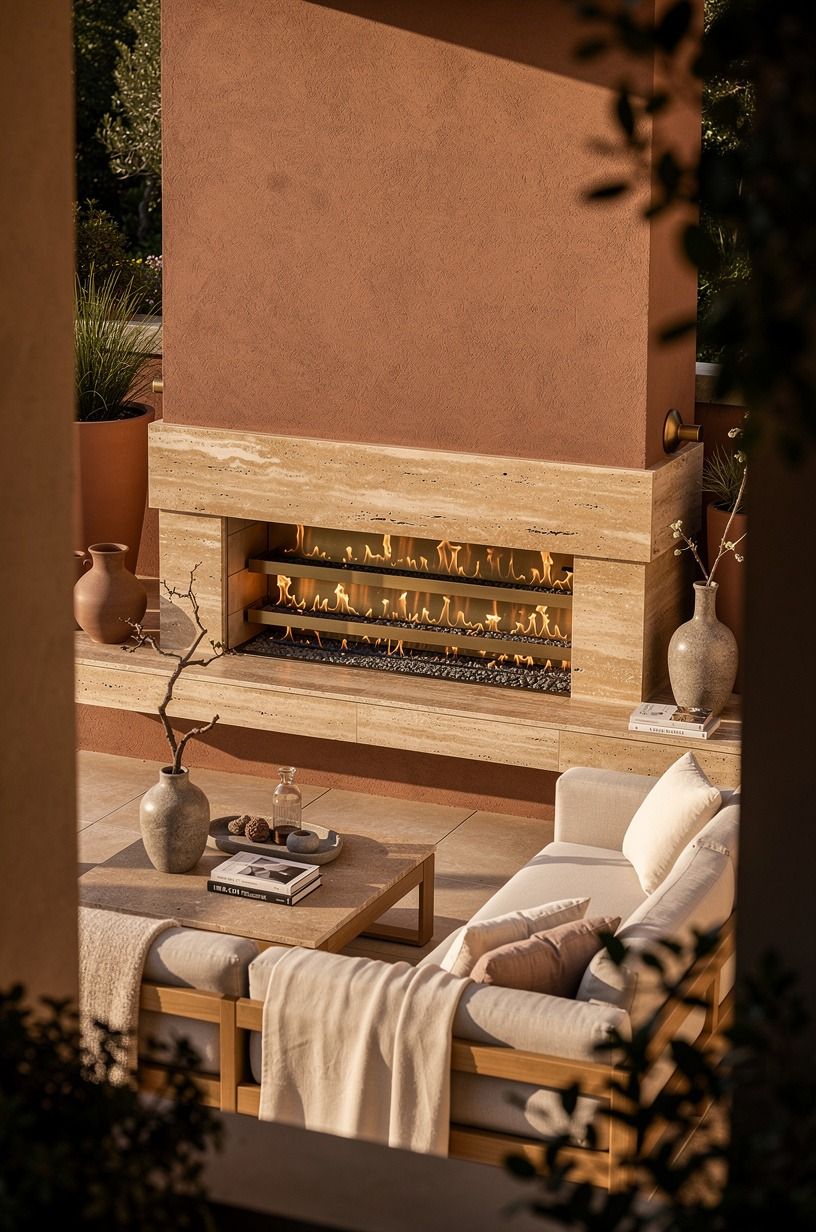
An outdoor fireplace with multiple burners feels more useful because you can cook in zones. One side handles a simmering pot, another gets hot enough for charred peppers, and the fire still stays the center of the evening.
I didn’t want a giant stainless setup. Too clinical. Instead, I treated the burners as the quiet helper beside the warm travertine hearth.
Your cooking space should let you face people, not a wall. That’s the whole point. A flame that makes you turn your back on the table has missed the assignment.
5Hang the Three-Height Light Stack
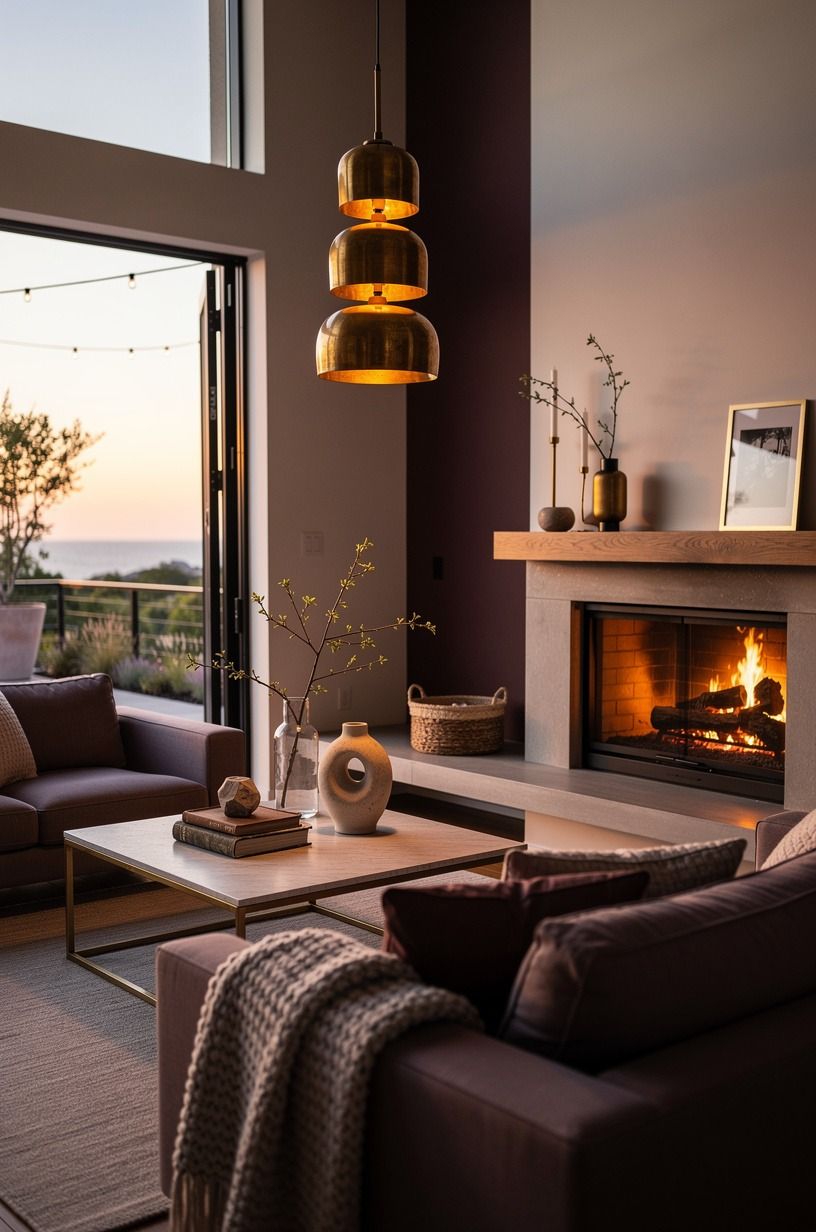
The Three-Height Light Stack means light at table height, eye height, and overhead.
Use plum, grey, and rose-gold accents with unlacquered brass fixtures that will develop an easy patina over time.
6Paint the back wall before you buy more furniture
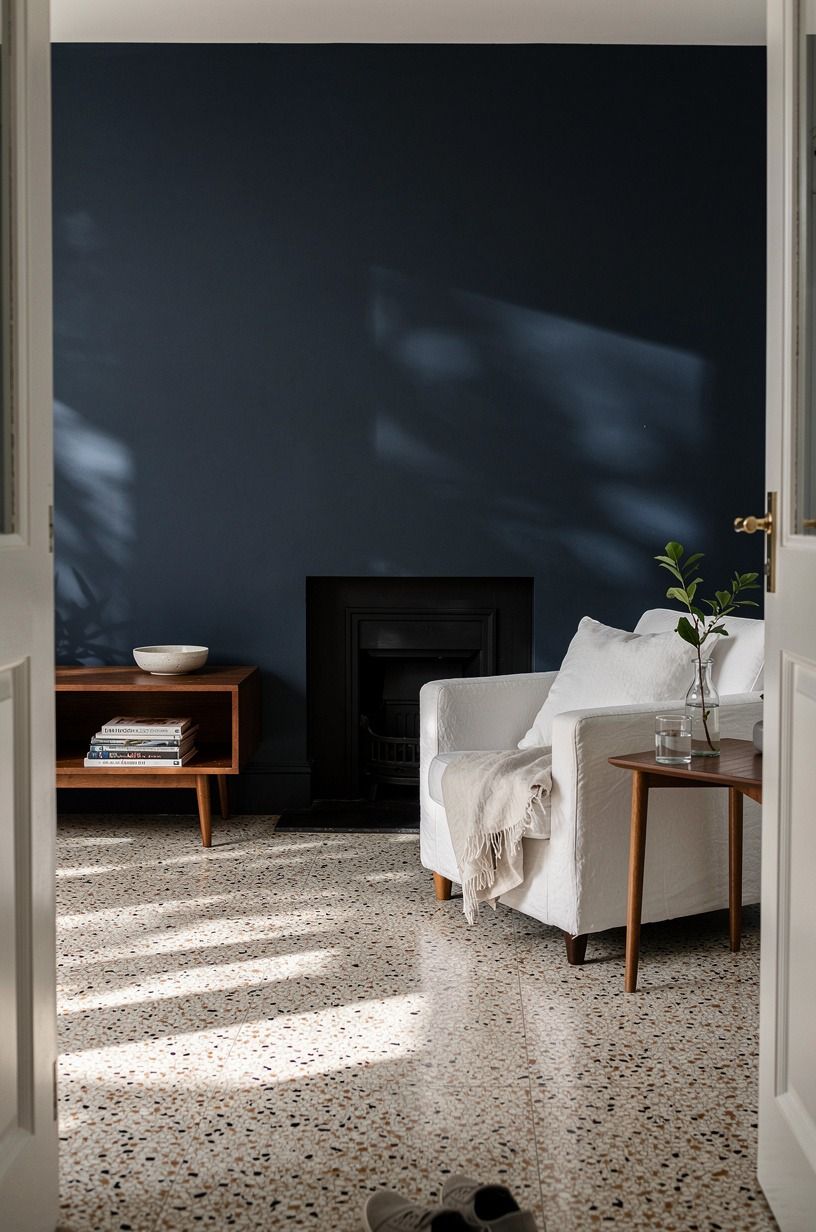
Paint did more for the fireplace than another chair ever could. I used Sherwin-Williams Emerald Exterior in a deep navy behind the hearth, and the white and walnut details suddenly looked intentional instead of unfinished.
If your patio is bright all afternoon, you can go moody. If it’s shaded, use Benjamin Moore Aura Exterior in a softer warm neutral so your cooking wall doesn’t disappear by 5 p.m.
You don’t need to paint every surface. One wall, one strong boundary, and an oversized-chip terrazzo accent can make the fire feel like a destination. I’d skip plain white here because ash and grill smoke will make you regret it.
7Put a 28 to 30 in table where people can linger
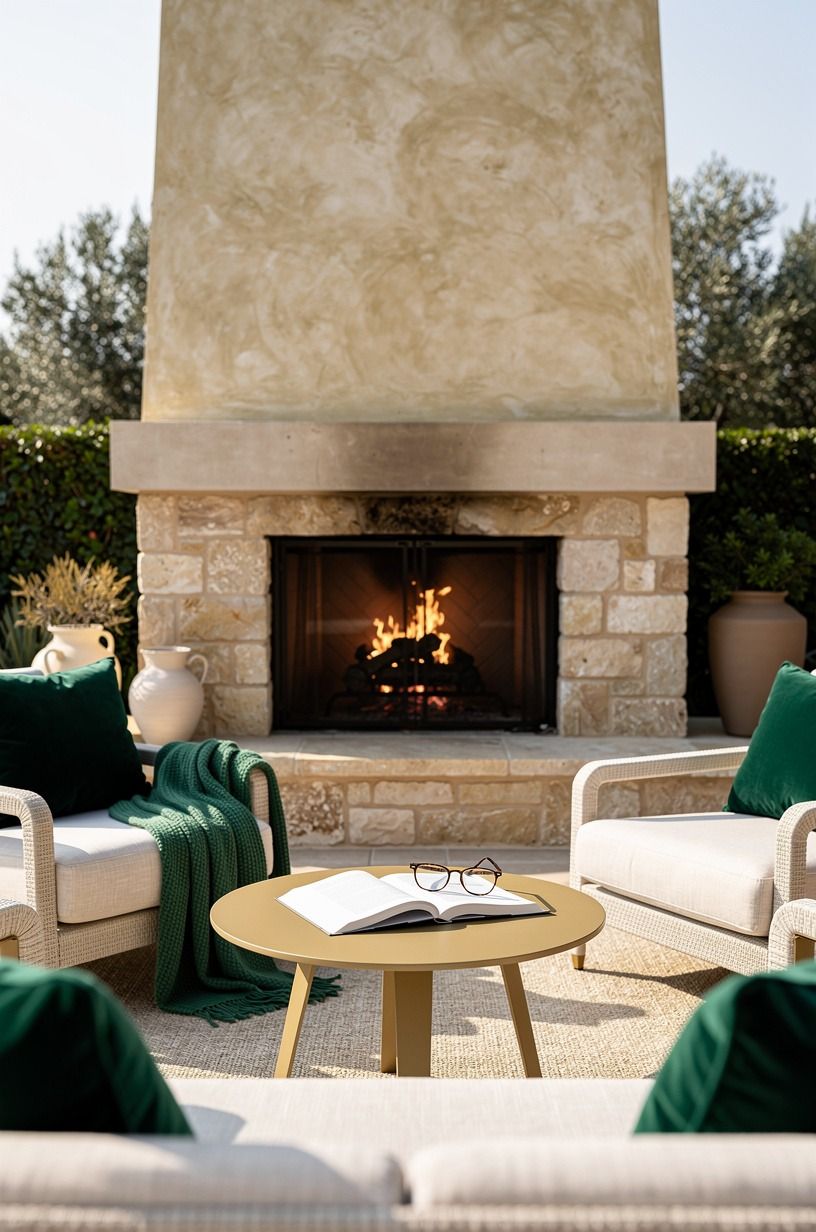
Your patio table should sit at the standard 28 to 30 in height if you want meals to feel easy rather than perched. I learned this after trying a low lounge table with pizza night. Everybody ate with their elbows in their ribs.
A West Elm Portside dining table gave us the right height without making the cooking zone feel formal. Emerald, gold, and cream sit beautifully against hand-applied Venetian plaster when you want the dining area to feel special.
Leave 36 in around the table where possible. Your guests will move more naturally, and you won’t spend the night saying “sorry, behind you” with a hot sheet pan.
8Choose bench seating over extra armchairs
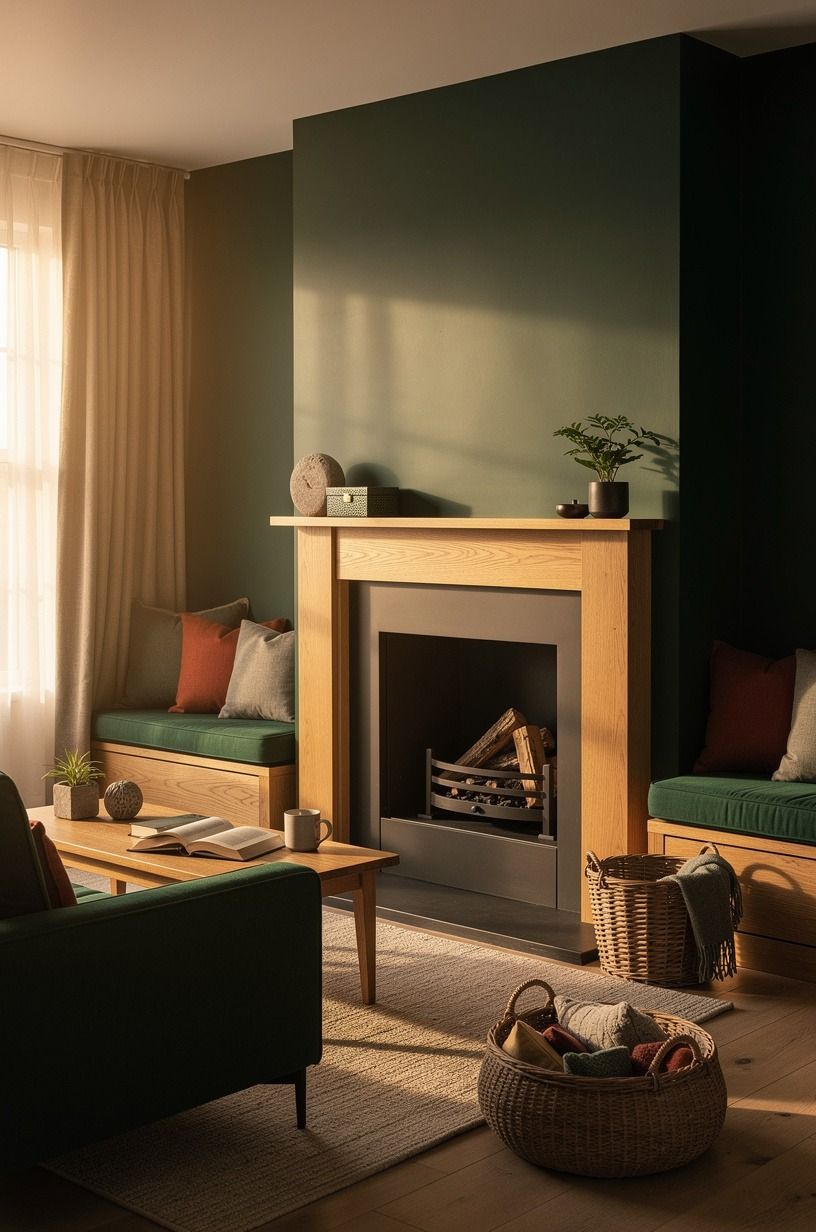
Bench seating wins near an outdoor cooking fireplace because it holds more people without turning the patio into a furniture maze.
Forest green, rust, and natural oak feel especially inviting with small shagreen accents that add texture without crowding the patio.
9Frame the fire with edible pots
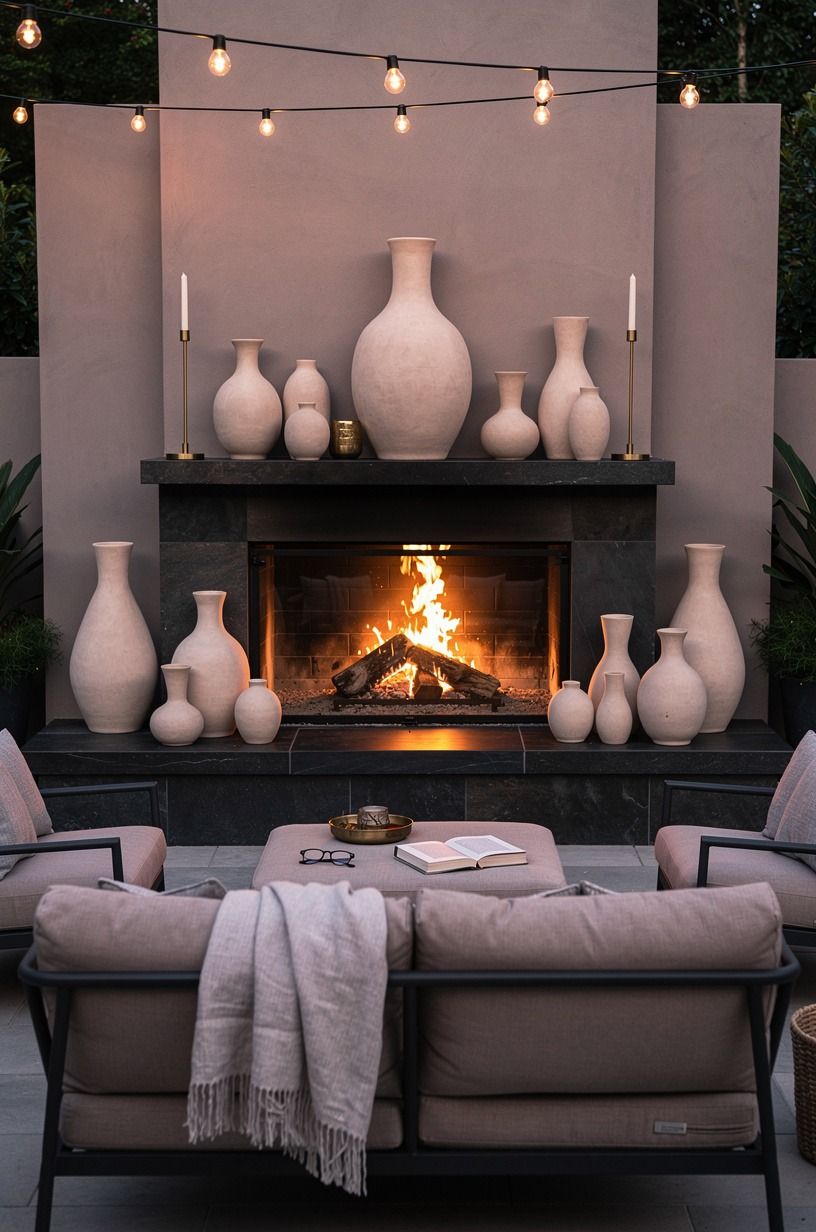
I planted herbs around the fireplace because you should be able to reach for dinner from where you’re cooking. Basil, rosemary, thyme. The scent hits when the fire warms the clay pots, and it’s ridiculously inviting.
Use terracotta planters with dusty rose, charcoal, and brass nearby, softened by washed Belgian linen cushions. They don’t look precious when a little ash lands on them.
You can keep pots on the outer edge of the hearth, never in the traffic path. I love flowers, but herbs are the better call here because your patio earns its keep. Read these RV outdoor kitchen ideas for cooking on the road for similarly compact cooking zones.
10Use a pergola to make smoke feel contained
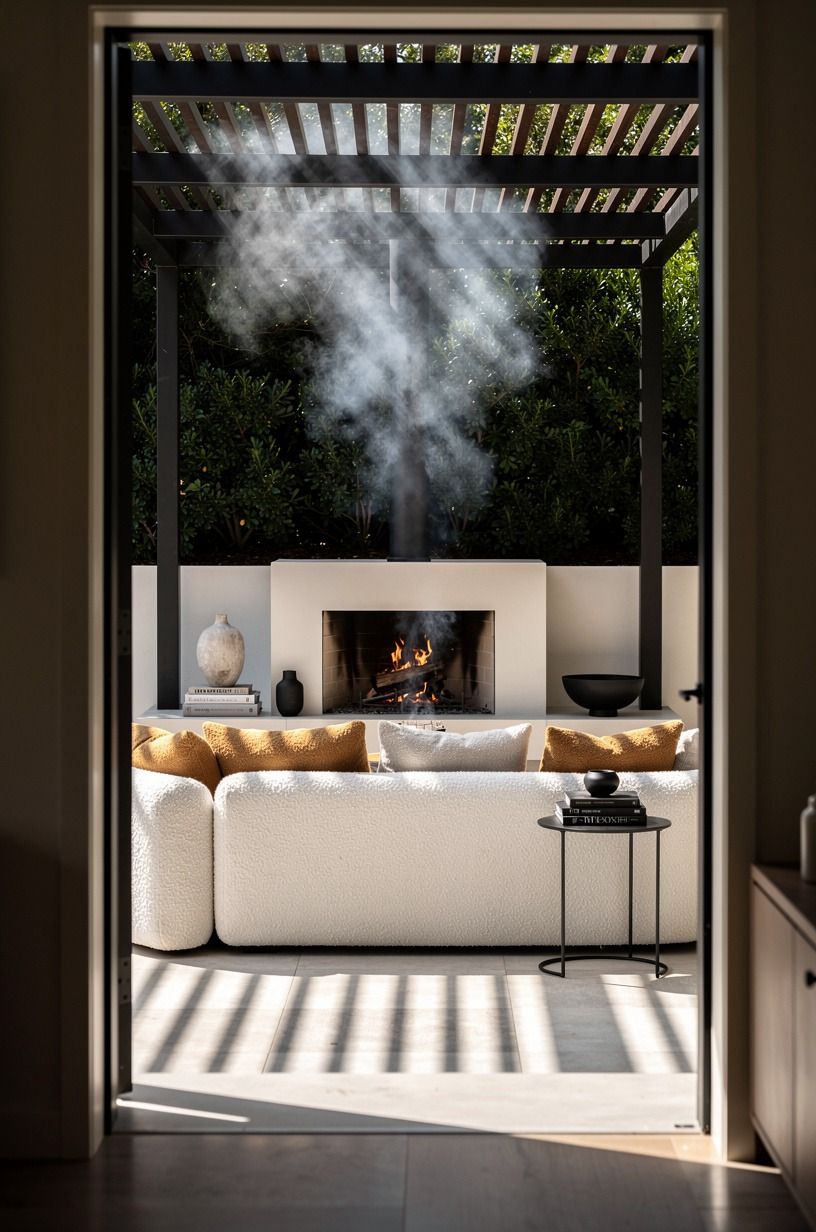
A pergola gives your fireplace zone a ceiling without closing it in.
Warm white, camel, and black accents work well with organic bouclé on a bench or cushion, so the structure still feels comfortable after dinner.
11Let the rug mark the feast zone
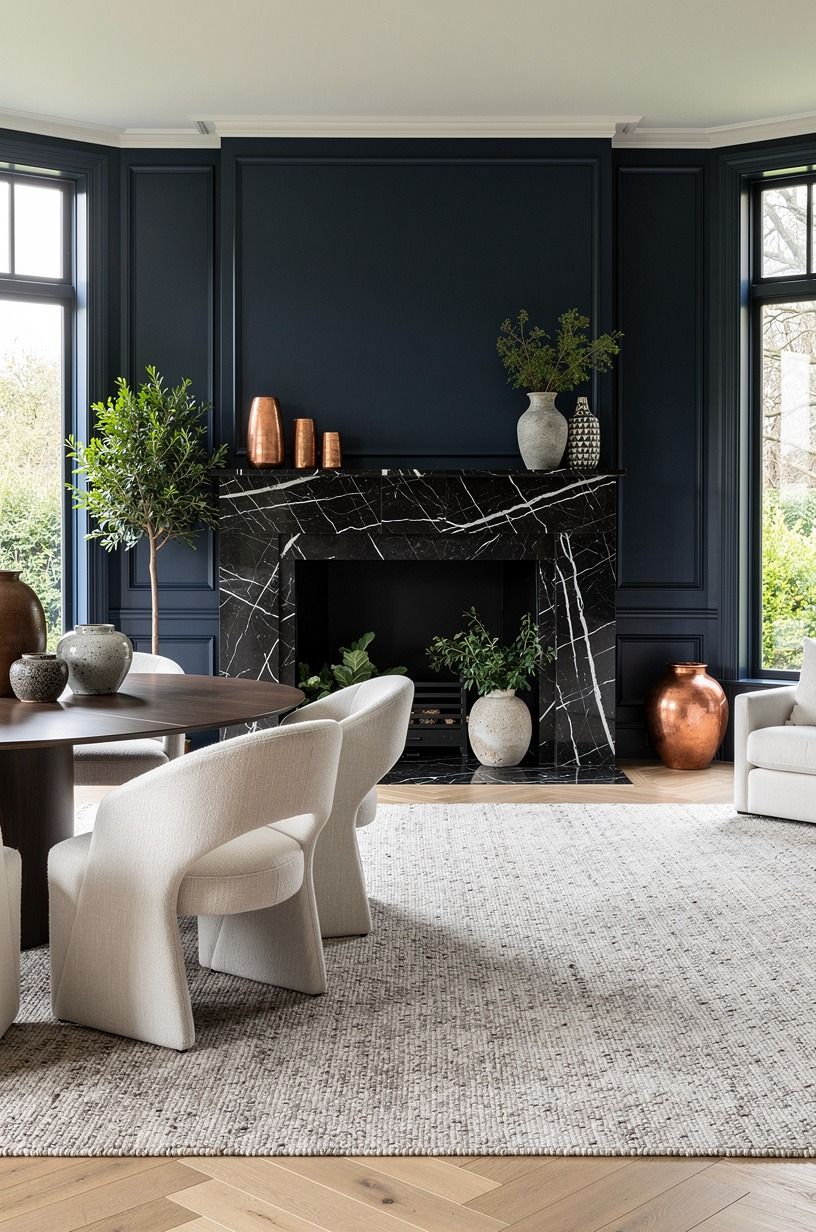
An outdoor rug tells everyone where dinner happens. It also stops the dining table from looking stranded on a slab of concrete, which was our exact problem for months.
I used a polypropylene flatweave rug under the front legs of the seating and table. Midnight blue, copper, and ivory work beautifully with a Nero Marquina black marble detail if you want a richer evening palette. Typical polypropylene rugs cost $80 to $400, and you can hose them down after a messy sauce situation.
Pick a rug with faded rust, tobacco, or charcoal in it. I’d skip bright white because outdoor cooking has a way of finding white fabric within ten minutes.
12Add a gas fireplace outdoor patio burner for backup
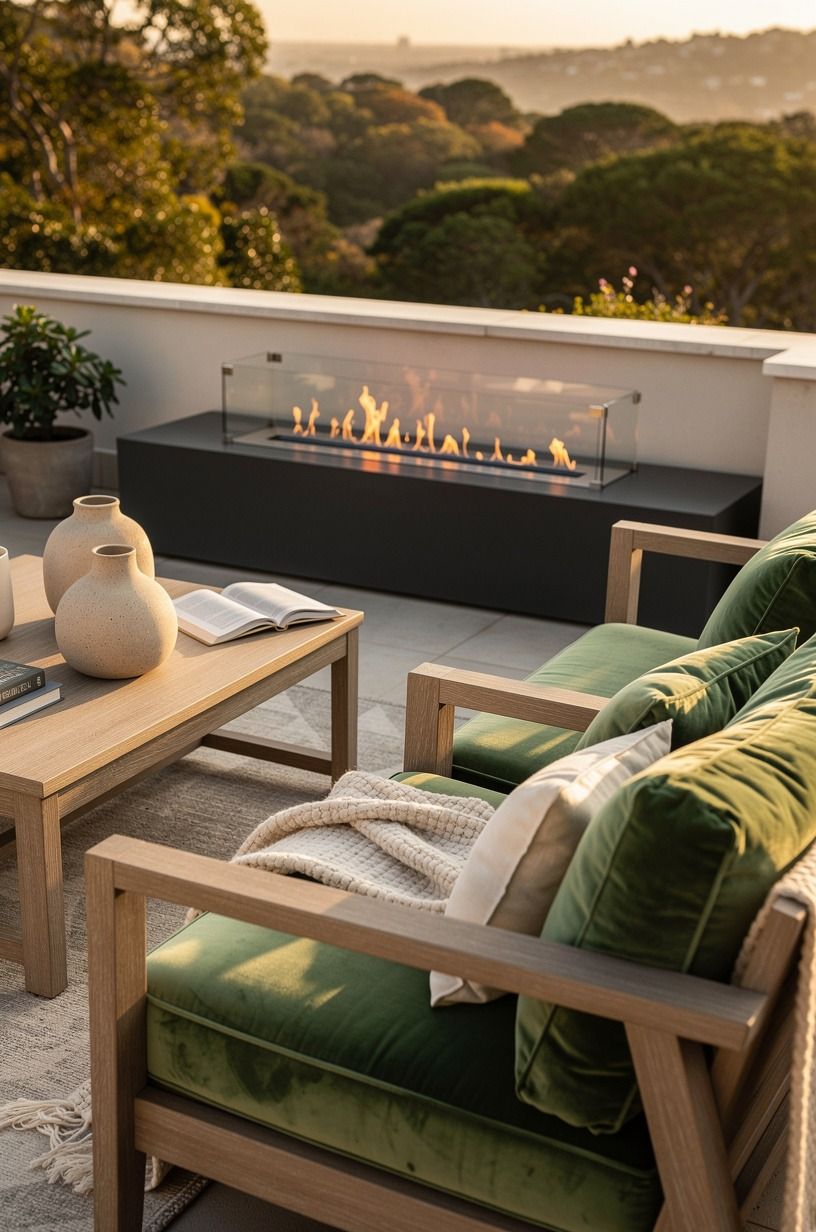
A gas fireplace outdoor patio burner is useful when you want heat without waiting for logs to catch. I went back and forth on this because I love a real wood fire, but a quick burner saved several damp evenings.
Use the gas element as backup, not the star. Your controls can sit quietly within a sage green, warm cream, and natural wood surround, softened with deep-pile mohair velvet seating nearby.
If you only want flame for mood, gas is fine. If you want food with char and a little smoke, wood wins every time.
That movement, that smell, the crack of a log splitting. That’s dinner.
13Make the Mantel Market Shelf work hard
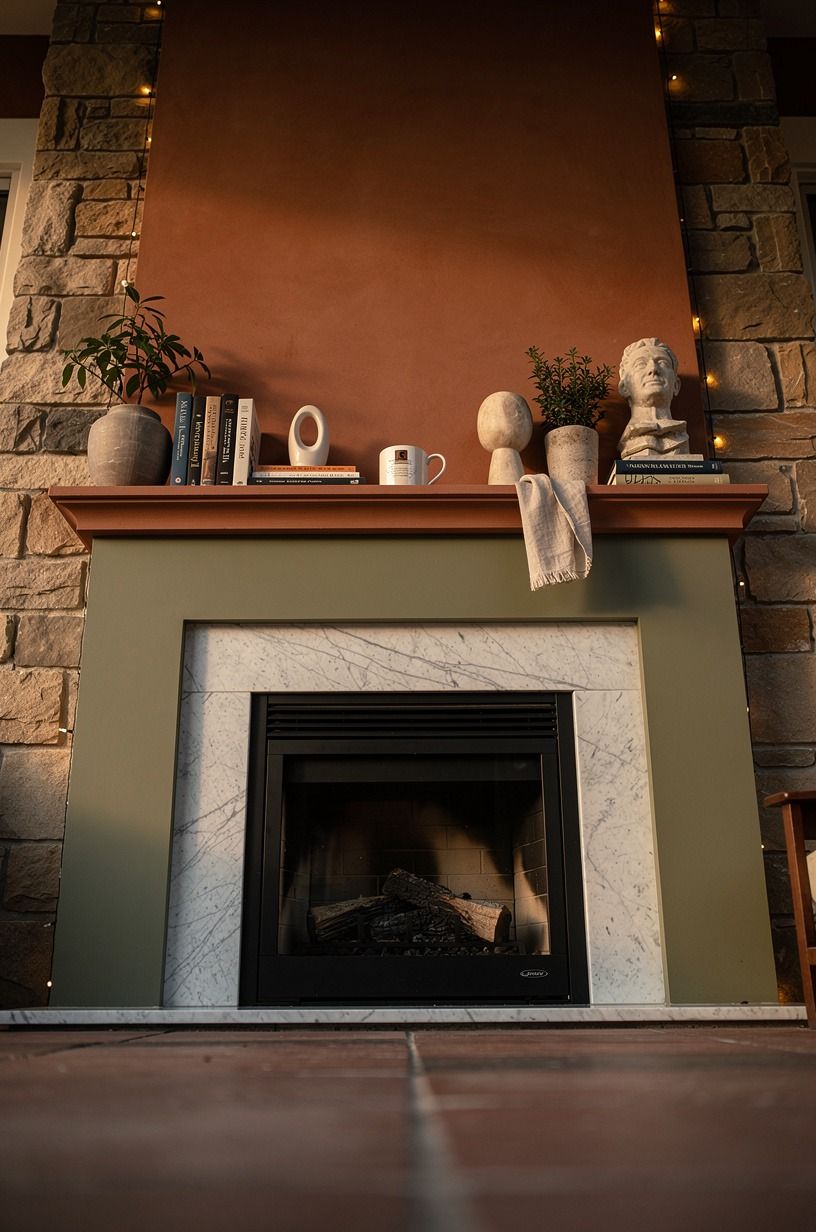
The Mantel Market Shelf is my name for a mantel that acts like a serving counter, not a shrine for candles.
A terracotta, stone, and olive scheme with a subtle Carrara marble surface gives platters, lemons, and serving bowls a hardworking home.
14Mix black steel with soft textiles
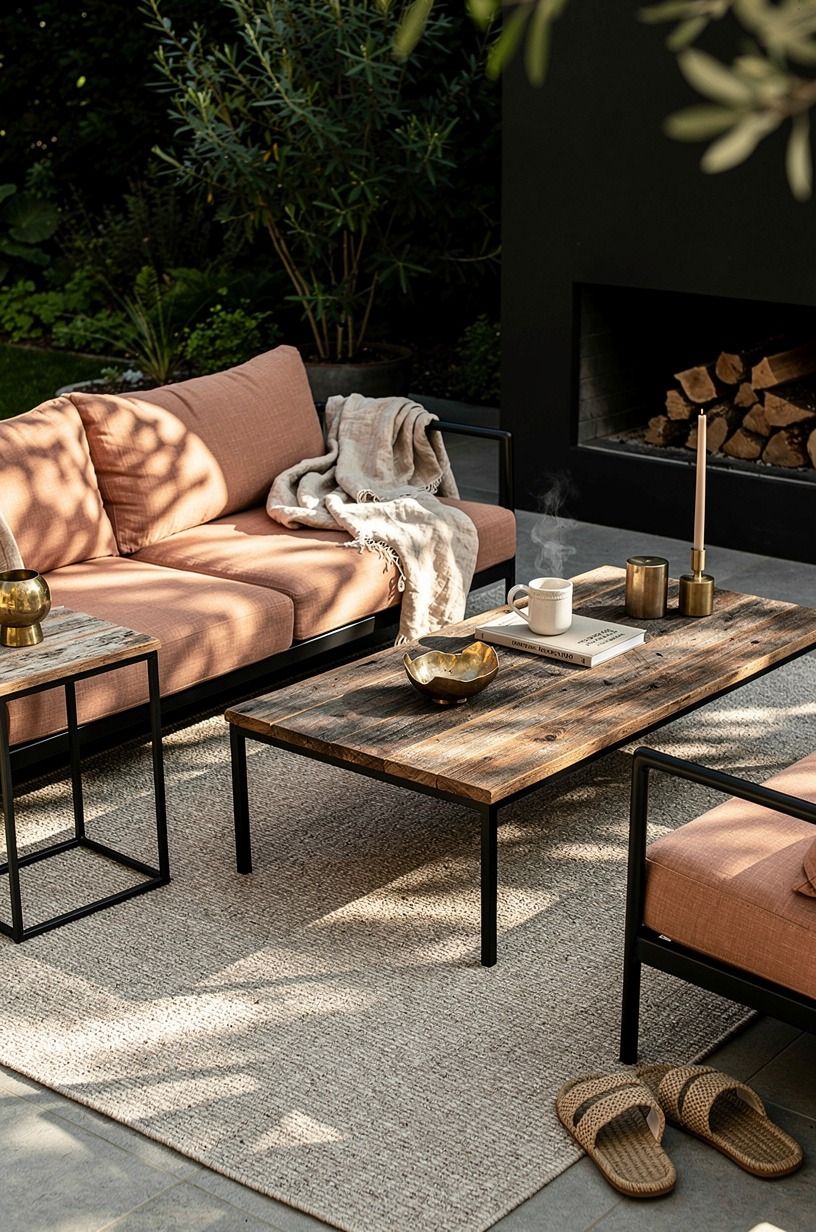
Black steel keeps an outdoor cooking area from looking too rustic, but you need softer pieces nearby or it can get cold fast. I paired powder-coated steel stools with weathered reclaimed teak and linen seat cushions.
Your fireplace already has hard surfaces: brick, metal, stone, concrete. The textiles are where you get to make people want to stay after they’ve eaten.
Choose washable fabrics in earthy shades. I made the mistake of buying pale cream cushions first. One barbecue later, they looked like evidence.
15Can a narrow yard still fit a real cooking fireplace?
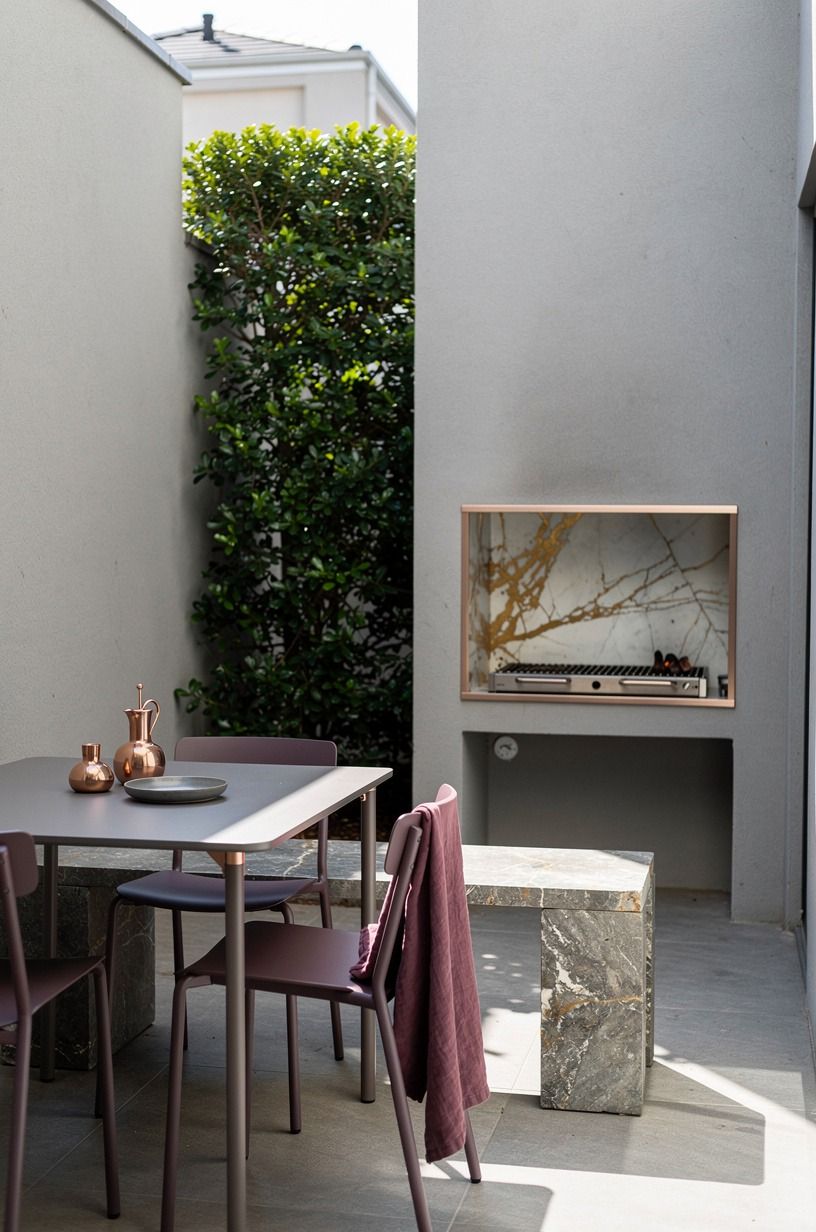
Yes, a narrow yard can fit a real cooking fireplace if you build along one edge and protect the circulation path. Your space may even feel more welcoming because the fire creates a clear destination instead of floating in a big empty lawn.
I’d use a slimline wood storage rack tucked under a Calacatta marble mantel rather than a freestanding log holder. It gives you fuel without spending floor space.
Measure the walkway before you order anything. A 36 in minimum clearance is not glamorous, but it’s what lets you carry a platter past someone seated at the table without a tiny disaster.
16Swap a bulky grill for a fire-friendly cart
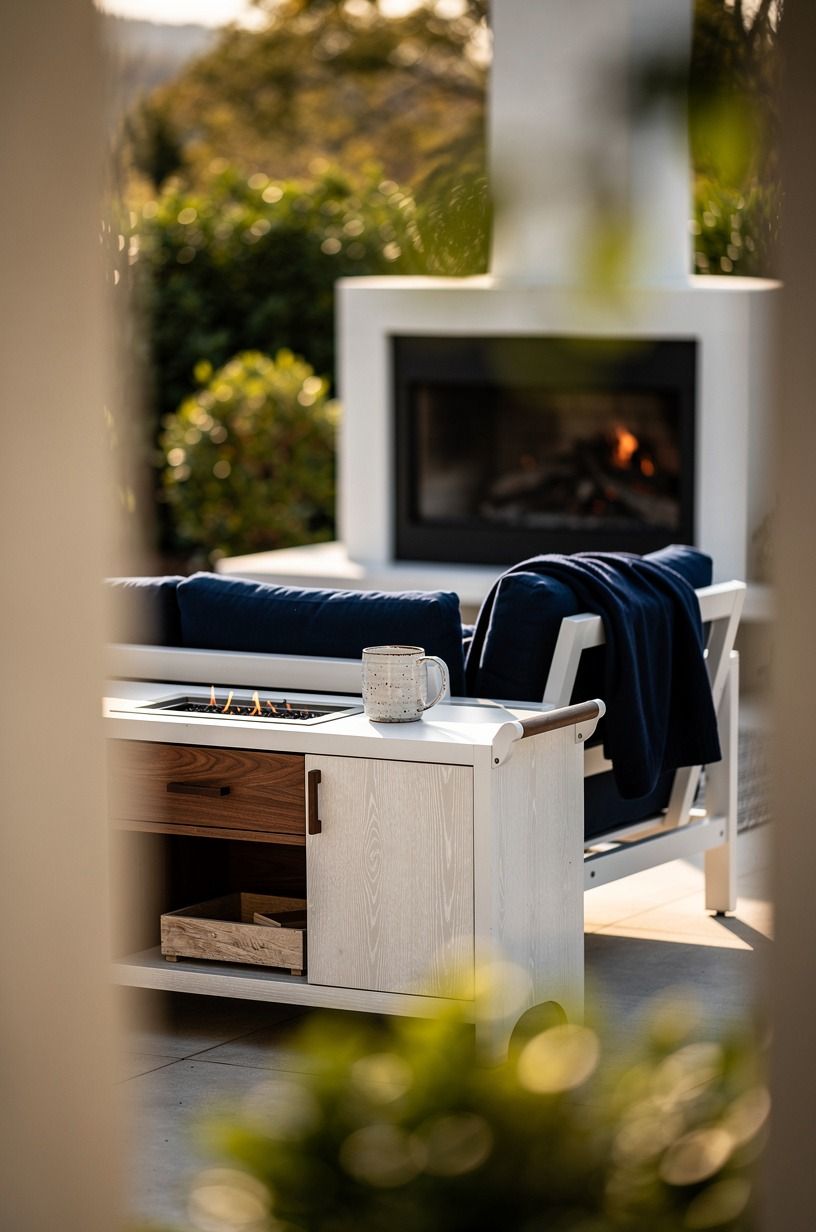
A rolling cart gave me prep space without locking us into one layout. I chose a IKEA BROR utility cart in black metal, then parked it beside the hearth only when we cooked.
Your cart can hold cutting boards, serving bowls, and a covered bin for utensils. On quieter nights, roll it against the wall and let the fireplace breathe.
I’d skip a giant built-in island unless you cook outdoors constantly. It’s impressive, sure, but a movable cart gives your small patio more than one life.
A cerused white oak top softens the navy, white, and walnut palette. See outdoor fireplace on a deck ideas and what to know if your cooking zone has a raised platform.
17Cover the table plus two feet on each side
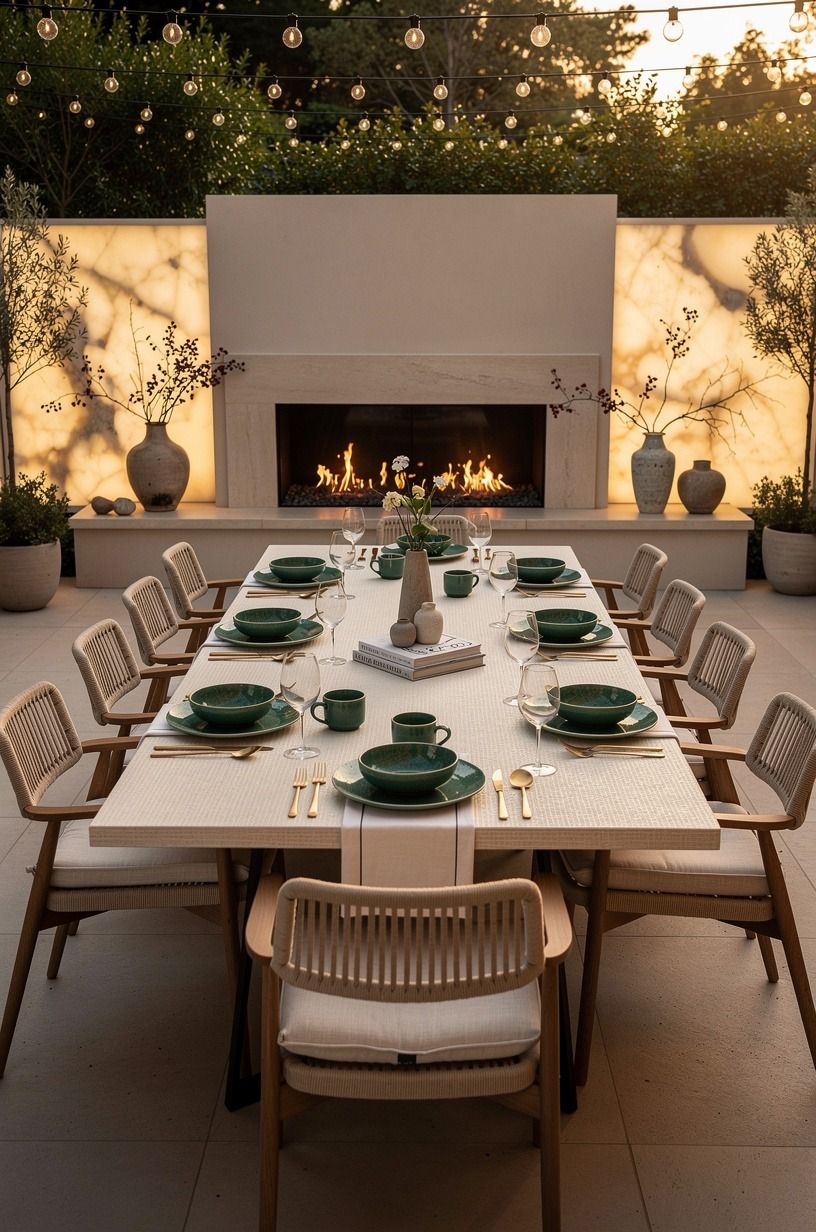
Your umbrella should cover the table plus about 2 ft on each side.
An emerald, gold, and cream dining zone feels more polished when the base is anchored with a touch of backlit translucent onyx.
18Give the fireplace a fall-ready textile layer
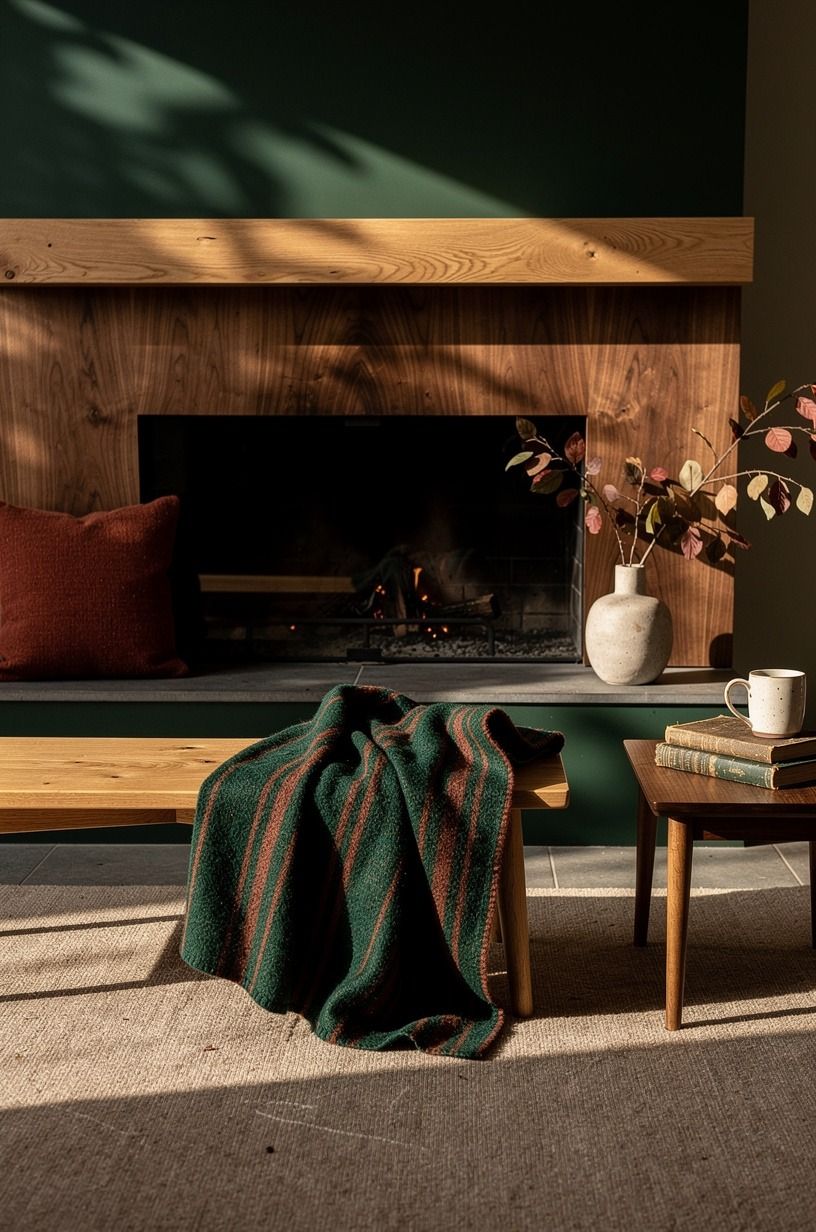
Fall is when this setup earns its place. I bring out merino wool throws in forest green and rust, add a plaid tablecloth, and leave the wood basket full before friends arrive.
Your textiles shouldn’t match the cushions exactly. A little mismatch makes the patio feel lived-in, especially after dark when the brick holds heat after the fire dies down. Book-matched walnut makes a warm companion to that natural oak palette.
But don’t pile blankets right beside the opening. Keep them on the bench or in a lidded storage trunk. Warm, practical, and no singed fringe!
19Keep one corner quiet for the after-dinner pause
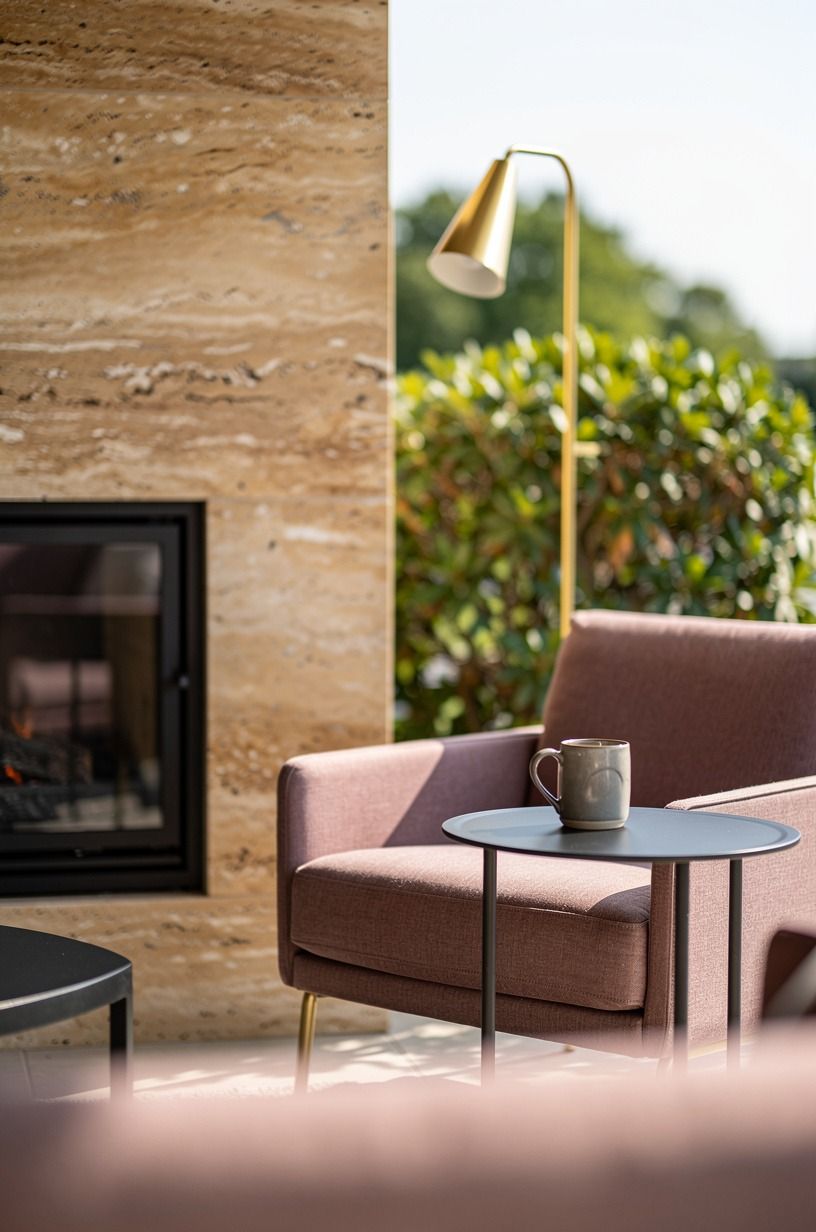
Not every inch needs to cook, serve, or store something. I left one small corner with Article Sven tan leather chairs, a low warm travertine side table, and nothing else.
Your quiet corner is where someone sits with a drink while the last coals settle. Dusty rose, charcoal, and brass keep it softer than the busy cooking zone.
I’d choose two chairs over a full conversation set here. More furniture would crowd the fire’s glow, and the best outdoor rooms know when to stop. For another take on choosing flame placement, compare a fire pit vs. fireplace for a cozy backyard.
How much it cost
Our outdoor cooking fireplace makeover landed across a few realistic tiers, depending on how much of the structure you’re changing. I spent more on the permanent fire zone and less on movable pieces, which kept the patio flexible.
The budget range gets you a meaningful visual reset. The high range is for people adding a true outdoor kitchen, paving, and structural work, not just buying prettier cushions.
Why I stopped treating the fireplace like a feature
I used to think an outdoor fireplace had to be the grand gesture, the expensive piece you build after everything else is finished. That’s backward. The fireplace is the thing that tells you how the rest of the patio should behave.
It decides where you sit, where you put the food, how late people stay, and whether you need a ceiling of lights or just one lantern. Once I saw it that way, I stopped collecting random outdoor furniture.
My first impulse was to make it look expensive. I wanted smooth stone, polished metal, and a picture-ready mantel.
But a cooking fireplace has to tolerate life. It gets grease on it.
It gets wet. Someone sets a hot pan down in the wrong place. A kid drops a marshmallow on the rug.
If every finish feels precious, you won’t use the space with any ease.
So I chose materials that could age without looking defeated: rough brick, oak that can take a little weather, aged bronze, washable fabric. You can do the same even if your budget is smaller.
Spend where heat, structure, and safety matter. Save on pillows, pots, and anything you might change after one season.
And I’m firm on this: don’t copy an outdoor kitchen from a listing photo if it doesn’t match how you eat. If you make pizza and long dinners, give yourself a wide fire ledge.
If you mostly drink coffee outside, a smaller hearth and better chairs will serve you more. Your patio should reveal your habits, not perform somebody else’s.
The Questions Worth Answering First
What is the best Outdoor Cooking Fireplace Ideas (Where Fire Meets Feast) for a small backyard?
A compact brick hearth with a side prep ledge is the best choice for a small backyard because it gives you cooking space and warmth without adding a separate grill island. Try an IKEA BROR cart for movable prep storage.
Where can I buy Outdoor Cooking Fireplace Ideas (Where Fire Meets Feast) pieces on a budget?
Start with IKEA, Target, and Wayfair for carts, cushions, lanterns, and outdoor rugs. You can also check Facebook Marketplace for teak chairs or planters, then refresh them with exterior-safe paint instead of buying a matching set.
How much does a Outdoor Cooking Fireplace Ideas (Where Fire Meets Feast) makeover cost?
A light makeover costs about $200 to $900, while a larger patio update can reach $1,500 to $6,000. The free part is rearranging your furniture, clearing the walkway, and moving existing pots closer to the cooking zone.
Can I create a Outdoor Cooking Fireplace Ideas (Where Fire Meets Feast) on a budget?
Yes, and you can start with light, layout, and textiles before touching the structure. String lights, a washable rug, and grouped herb pots make a clear difference. Use what you own first, then add one durable item at a time.
Is a Outdoor Cooking Fireplace Ideas (Where Fire Meets Feast) worth it in a small space?
Yes, it’s worth it because a small patio gets a stronger focal point from one working hearth. Keep a 36 in path clear, place seating along the edge, and let the fireplace handle both food and atmosphere.
Is Outdoor Cooking Fireplace Ideas (Where Fire Meets Feast) a good idea for a rental?
Yes, if you use removable layers around an approved portable setup. Outdoor rugs, tension-mounted shade, clip-on string lights, and freestanding carts give you warmth and function without drilling into every surface. For covered layouts, see covered patio fireplace ideas for year-round outdoor living.
Where I’d Start First
If I had to pick one, I’d start with the brick hearth. You can’t fake the pull of a real fire while dinner cooks. Pin the fireplace idea for later, then build your seating around where people already want to stand.