
 by
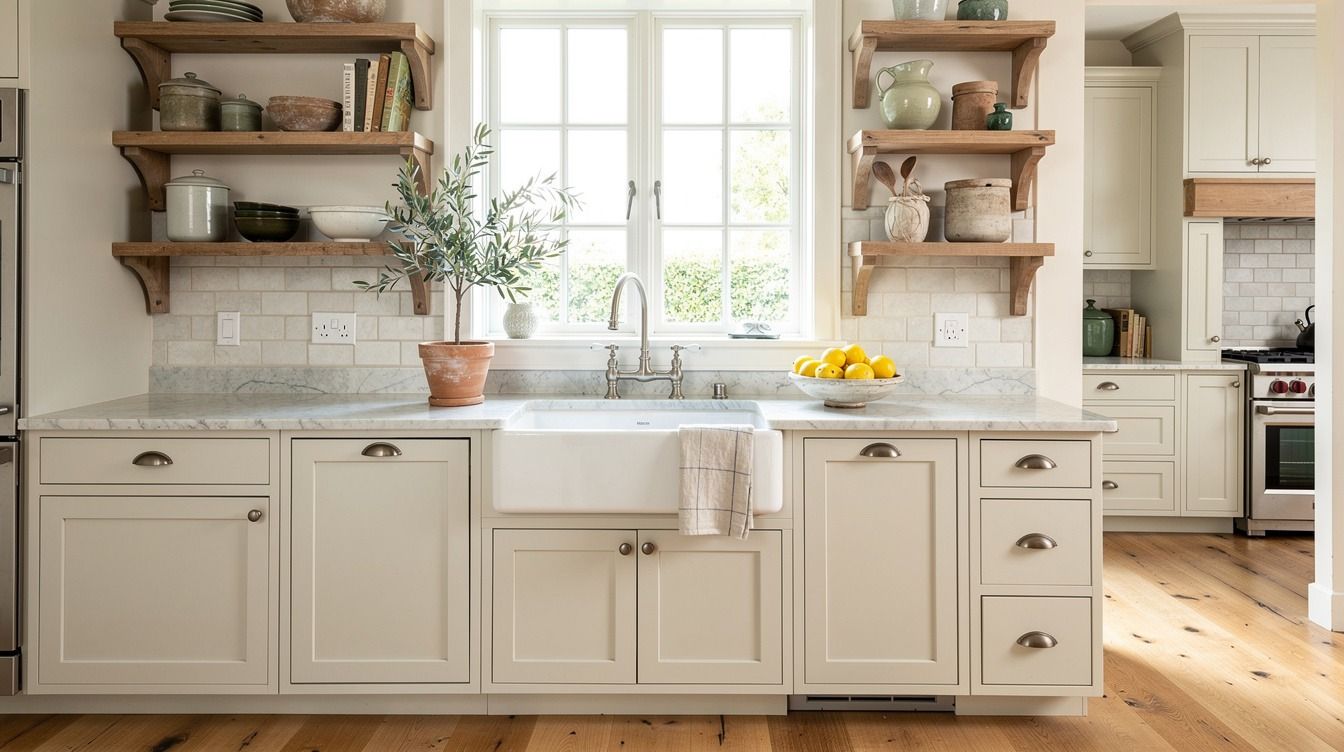
by French farmhouse kitchen ideas work best when you treat them as a material edit, not a theme: warm paint, worn wood, and light that pools instead of glares. I once bought every little rooster-shaped accessory I could find. It looked like a gift shop. Your kitchen only needs a few honest ingredients.
Don’t overthink: Follow The Two-Wood Rule for a rustic European kitchen.
- Paint the cabinets with the Soft-White Anchor
- Follow The Two-Wood Rule for a rustic European kitchen
- Skip the matching stools and mix honest seating
- Hang a Three-Height Light Stack above the island
- Frame the backsplash in hand-glazed zellige
- Build a plate wall that earns its keep
- Can a green island feel Provençal without feeling dark?
- Float one antique-looking table instead of a giant island
- Choose linen curtains over fussy valances
- Make the pantry corner feel gathered, not precious
- Let the hardware age instead of chasing shine
- Spend where your counter takes the beating
- Use the French-market edit over countertop decor
1Paint the cabinets with the Soft-White Anchor
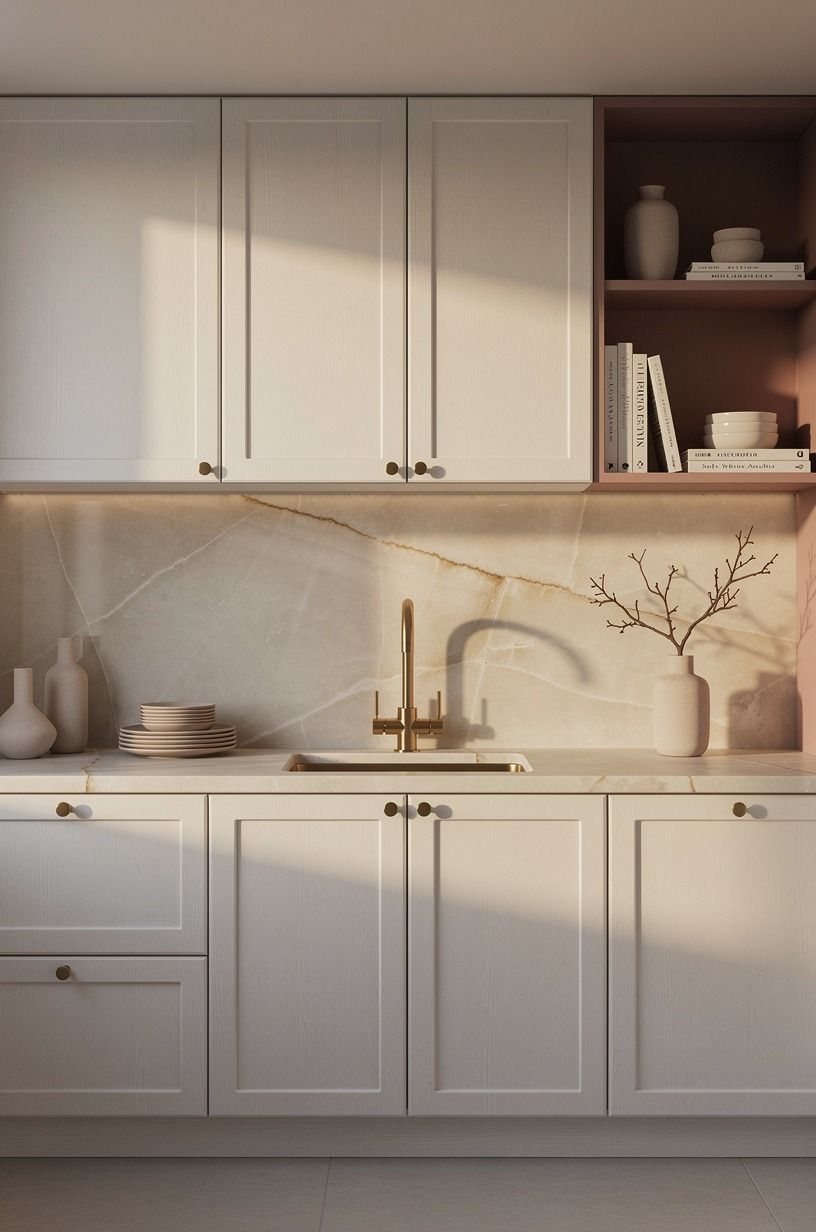
Start with a dusty-rose cabinet color if you want warmth without a sugary, overly sweet kitchen. Pair it with charcoal details, brass hardware, and a translucent onyx surface that catches the light softly.
I’d skip brilliant optic white here. It can make your rustic European kitchen feel clinical under LED bulbs, while a muted rosy tone lets the room stay soft and inviting. Keep the walls quieter than the cabinets, then borrow a few more warm-neutral ideas from this guide to white versus wood kitchen cabinets.
2Follow The Two-Wood Rule for a rustic European kitchen
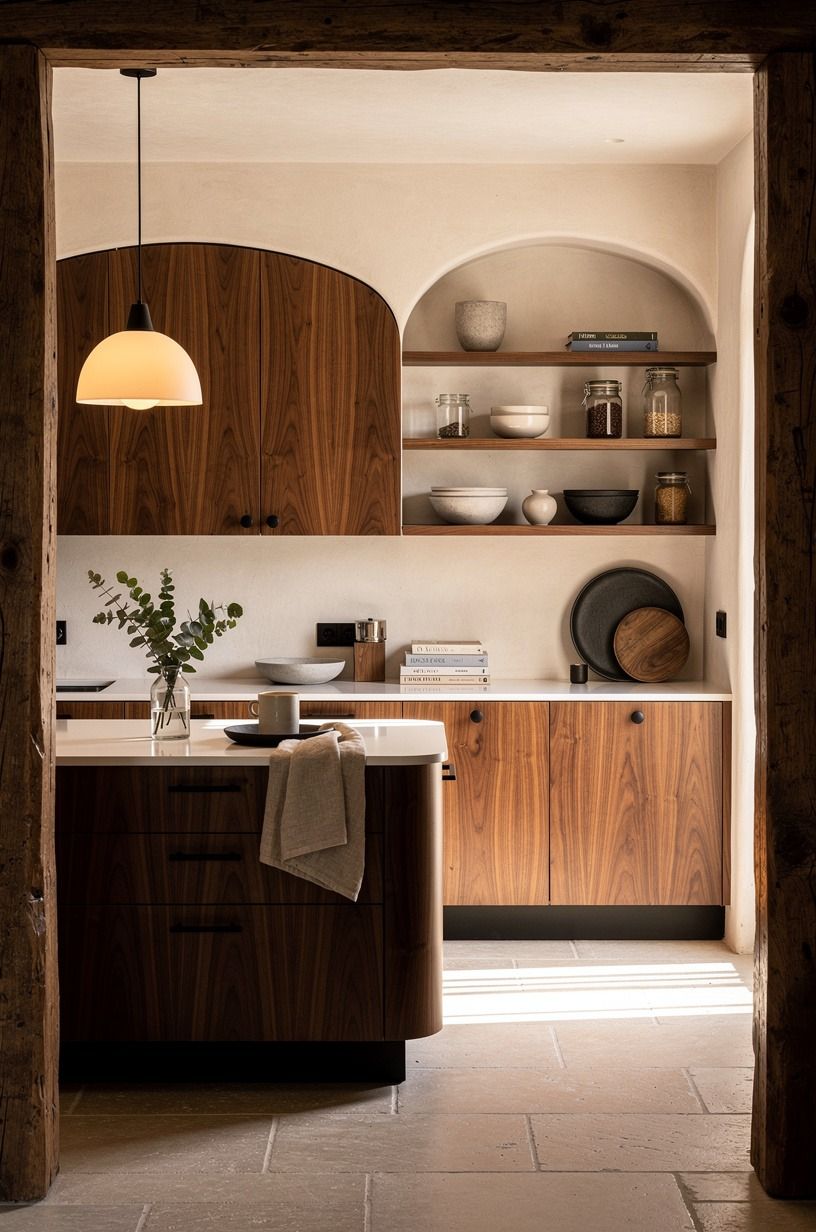
Use two wood tones, not five. A pale shelf paired with book-matched walnut cabinetry is enough contrast for your eye to register depth without turning your kitchen into a lumber sample wall.
I learned this after mixing oak, maple, teak, and faux barnwood in one room. Nothing matched, and every surface fought for attention. Choose one pale grain and one deeper grain, then let your warm-white walls and black accents do the rest.
Your kitchen will feel earthy instead of busy.
3Skip the matching stools and mix honest seating
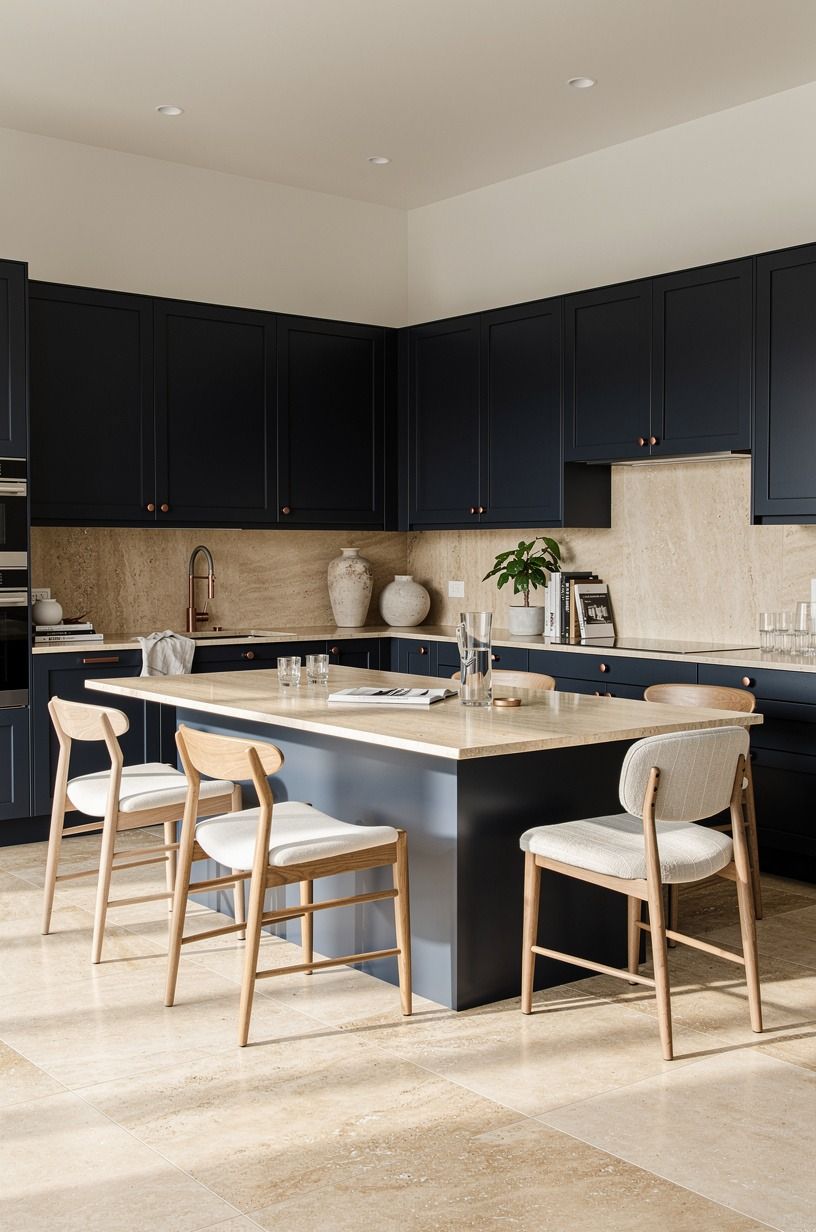
A pair of Article Svelti dining chairs beside one weathered bench gives a country farmhouse kitchen more life than four identical stools ever will. You want your seating to look collected over time, even if you bought it last Tuesday.
But keep the seat heights close, or your island becomes awkward fast. At a 36 in counter, your guests need a comfortable perch, not a balancing act. An ivory cushion beside warm travertine softens the harder surfaces, and your breakfast corner can take cues from these farmhouse breakfast nook ideas.
4Hang a Three-Height Light Stack above the island
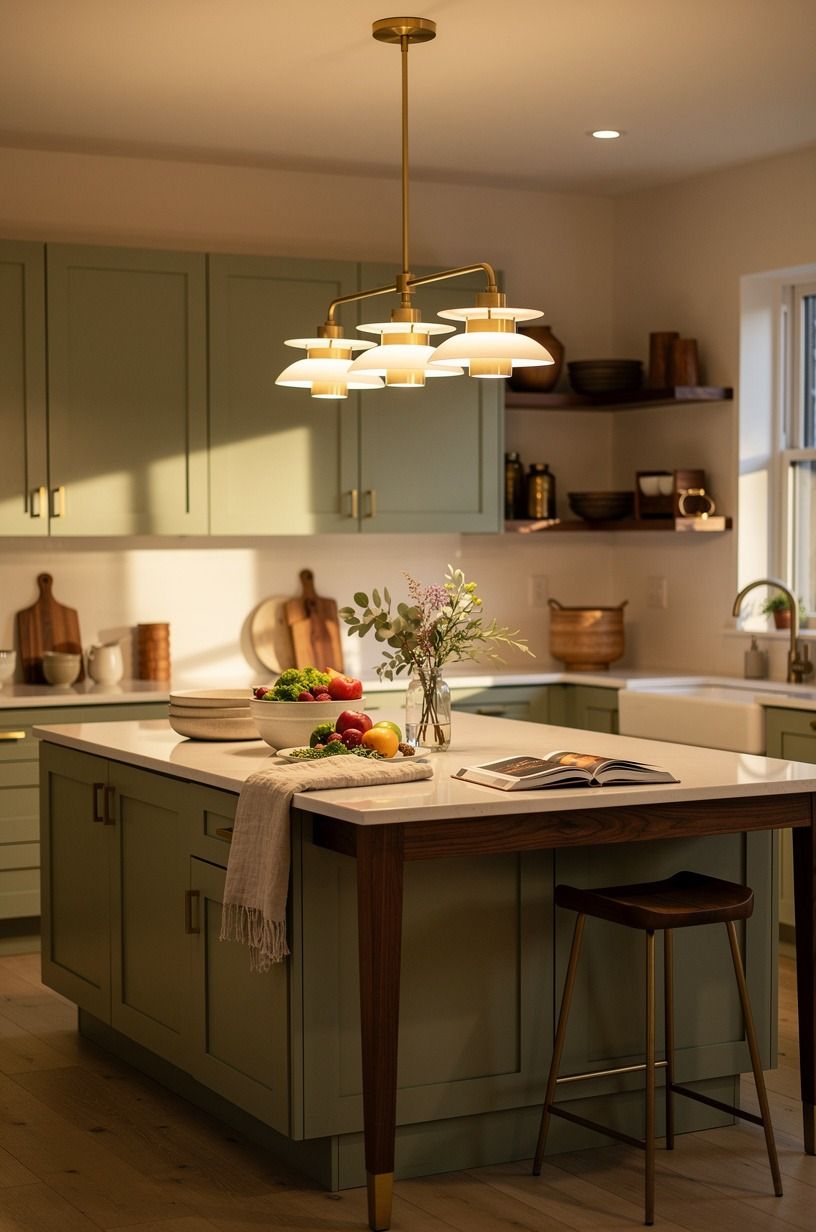
Layer one ceiling fixture, one wall-level glow, and one small lamp on the counter. Choose unlacquered brass for at least one fixture, then let its patina make the arrangement feel less newly installed.
5Frame the backsplash in hand-glazed zellige
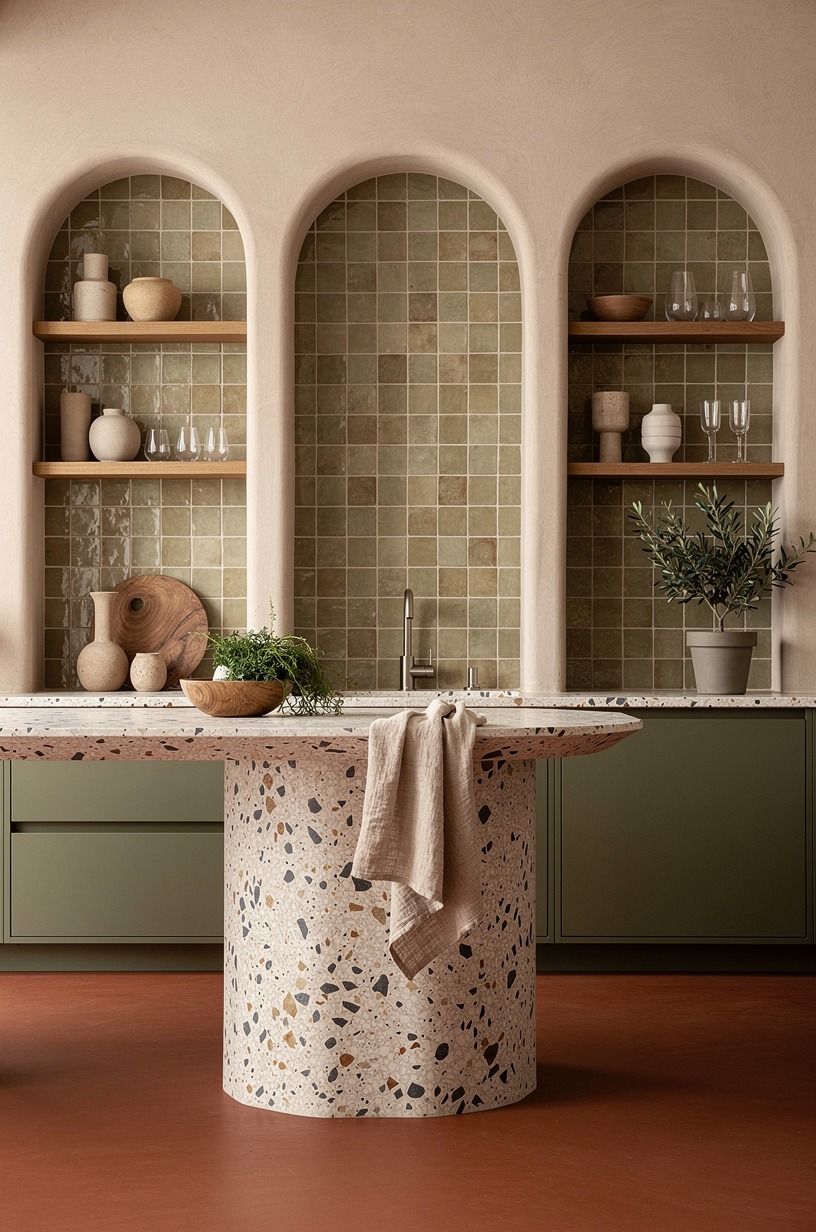
Choose an oversized-chip terrazzo backsplash in terracotta, stone, and olive for the 18 in space between your counter and upper cabinets. Its varied chips bring the handmade irregularity people love in zellige, without making the room feel overly busy.
I’d avoid a busy patterned tile in a small kitchen. It’s charming in a showroom, but your toaster, dish rack, and oil bottles will already bring enough visual noise.
A restrained surface lets your shelves and herbs breathe. For a softer, storybook cousin of this look, see these cottagecore kitchen ideas.
6Build a plate wall that earns its keep
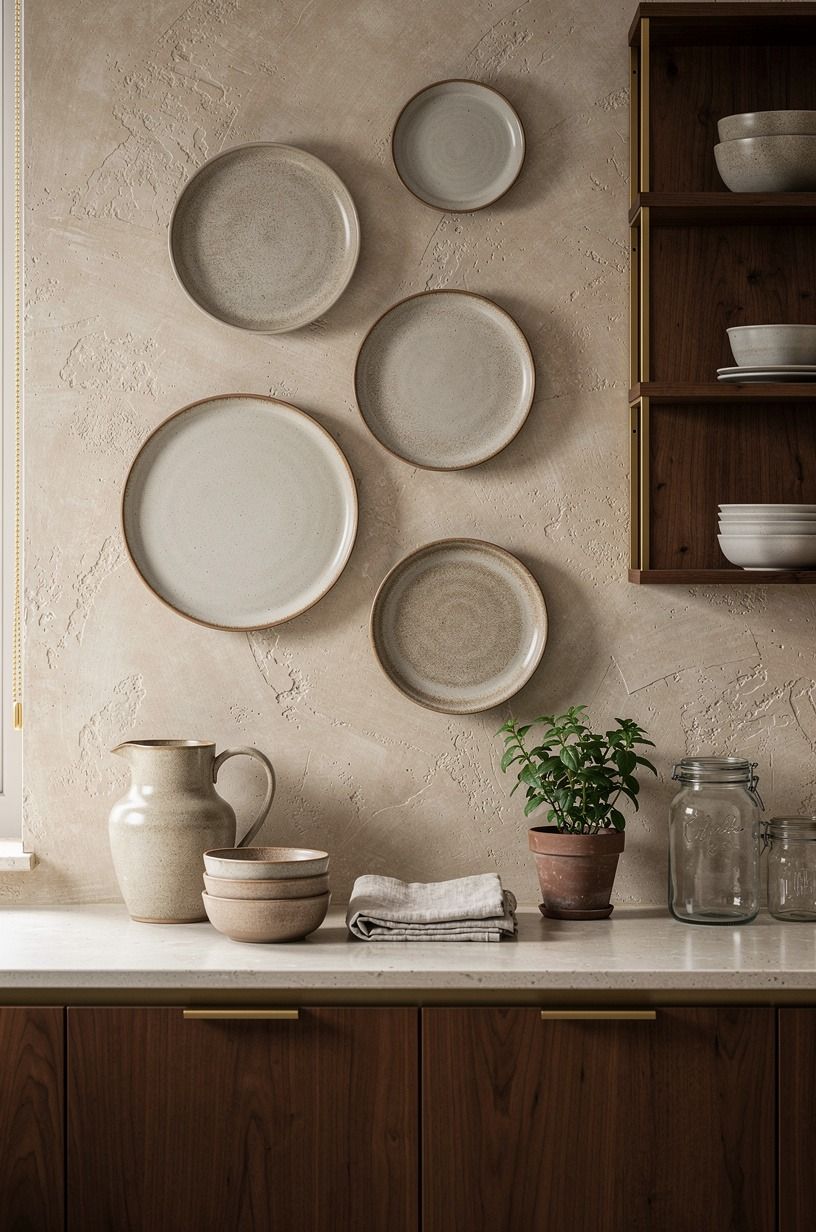
Open shelving only works if you use it. Put your daily bowls, pitchers, and plates on a simple shelf against hand-applied Venetian plaster, then leave a little empty wall around them so your collection doesn’t become clutter.
A stack of ironstone plates. One French stoneware pitcher.
A squat glass jar of wooden spoons. That’s enough.
You’ll want the shelf mounted high enough to clear the faucet but low enough that you can reach a bowl without climbing. I’m against purely decorative open shelves in working kitchens, because you’ll resent dusting them by week three. Useful pieces make the room feel lived-in, not staged.
7Can a green island feel Provençal without feeling dark?
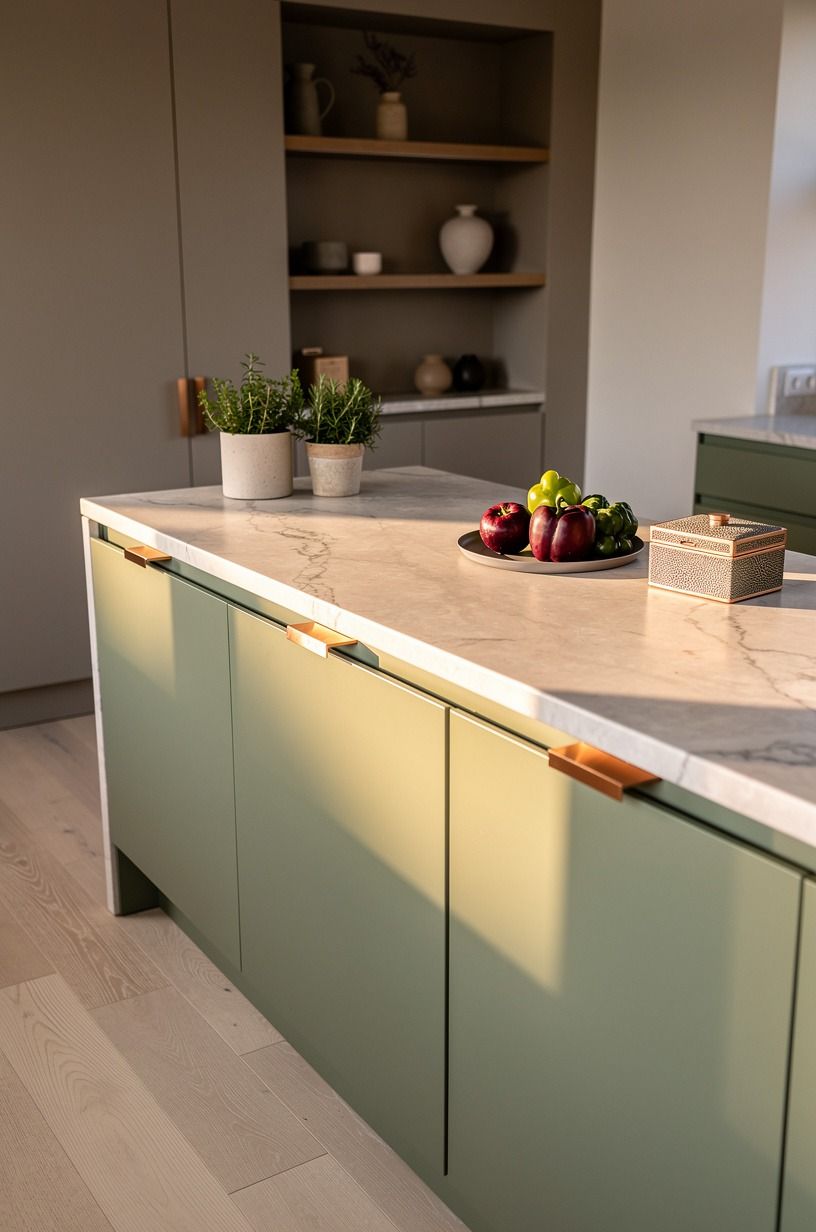
Yes, if you use a muted plum island instead of a deep forest green one and give it a warm counterweight. Grey walls and rose-gold details keep the color rich without letting it swallow the room.
8Float one antique-looking table instead of a giant island
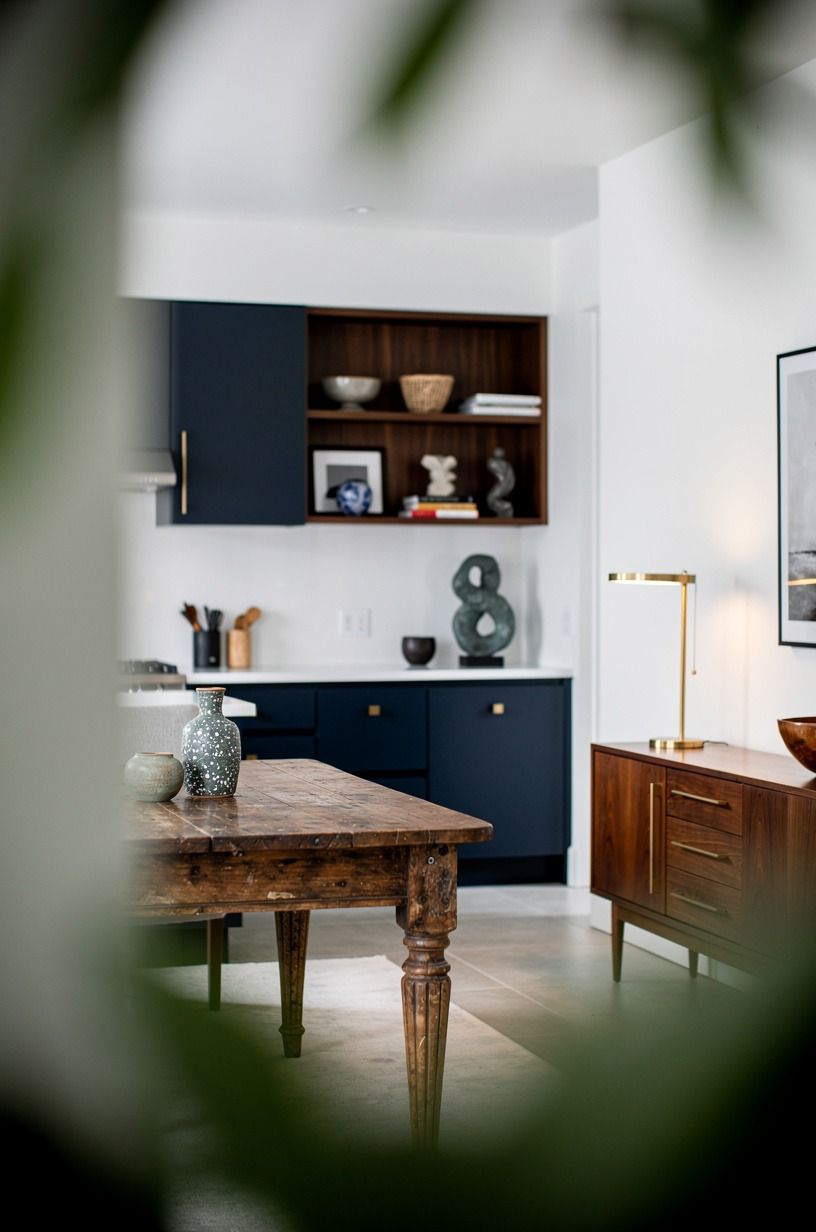
A freestanding walnut table with restrained shagreen accents can be more charming than a built-in island, particularly if your kitchen is narrow. It gives you prep space, a place to sit, and a spot for bread dough without forcing the room into a permanent layout.
Keep 42 to 48 in of clearance around it, though. Your kitchen needs a real walking lane when the dishwasher is open and someone’s carrying soup. I’ve squeezed an oversized island into a compact room before.
Regretted it immediately.
For more weathered, practical inspiration, these rustic farmhouse kitchen ideas get the balance right.
9Choose linen curtains over fussy valances
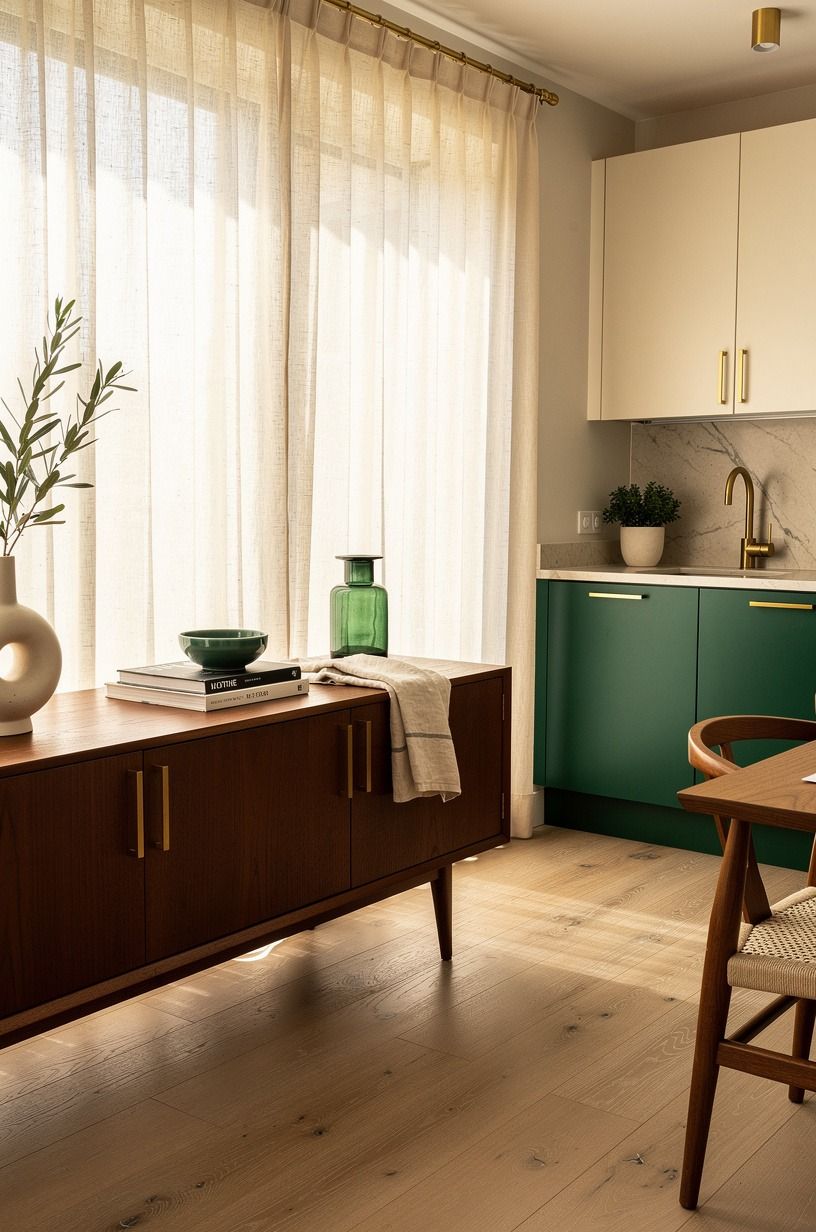
Hang a simple café curtain in Belgian flax linen on the lower half of the window. It gives you privacy while keeping the upper glass clear for daylight, and the loose weave looks especially good beside plaster walls and old wood.
Skip the ruffled valance. It can tip French farmhouse into costume territory before you’ve even made coffee.
A tension rod, a soft oatmeal panel, and a hem that grazes the sill will feel peaceful. If you rent, you can remove it in five minutes (which is the whole point).
10Make the pantry corner feel gathered, not precious
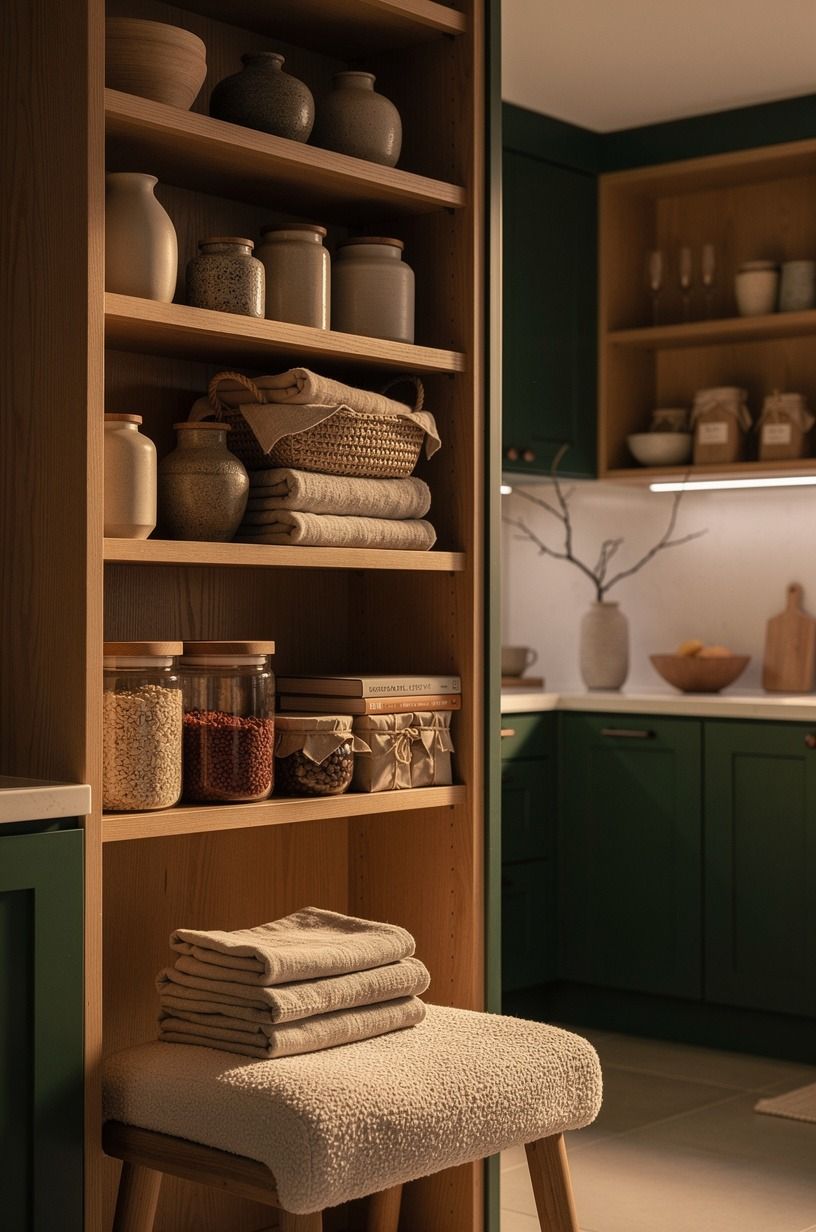
Use a IKEA IVAR pine cabinet as a pantry base, then paint it in Farrow & Ball Studio Green No. 93 only if the surrounding walls are pale. Add one organic bouclé seat or basket nearby so the forest-green and rust palette does not feel too hard.
Your dry goods can stay visible in clear jars, but labels should be plain and useful. Flour.
Rice. Lentils. No ornate script required.
I’d rather see one basket of onions and a battered market tote than twelve matching canisters. The room needs a little friction to feel real.
You can also steal the relaxed, layered mood from these French farmhouse rooms.
11Let the hardware age instead of chasing shine
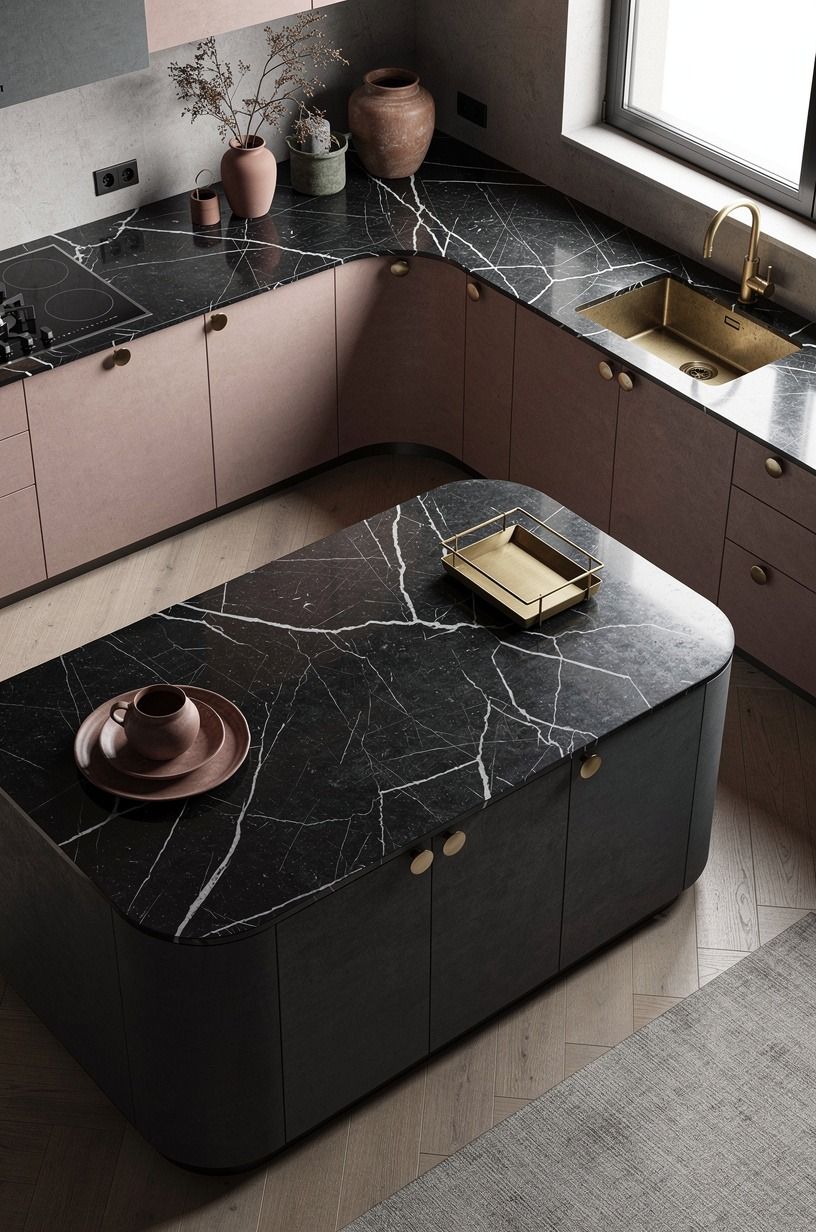
Swap bright chrome knobs for unlacquered brass knobs or aged bronze bin pulls. They sit especially well beside Nero Marquina black marble, where the white veining keeps the charcoal-and-brass palette from becoming too heavy.
12Spend where your counter takes the beating
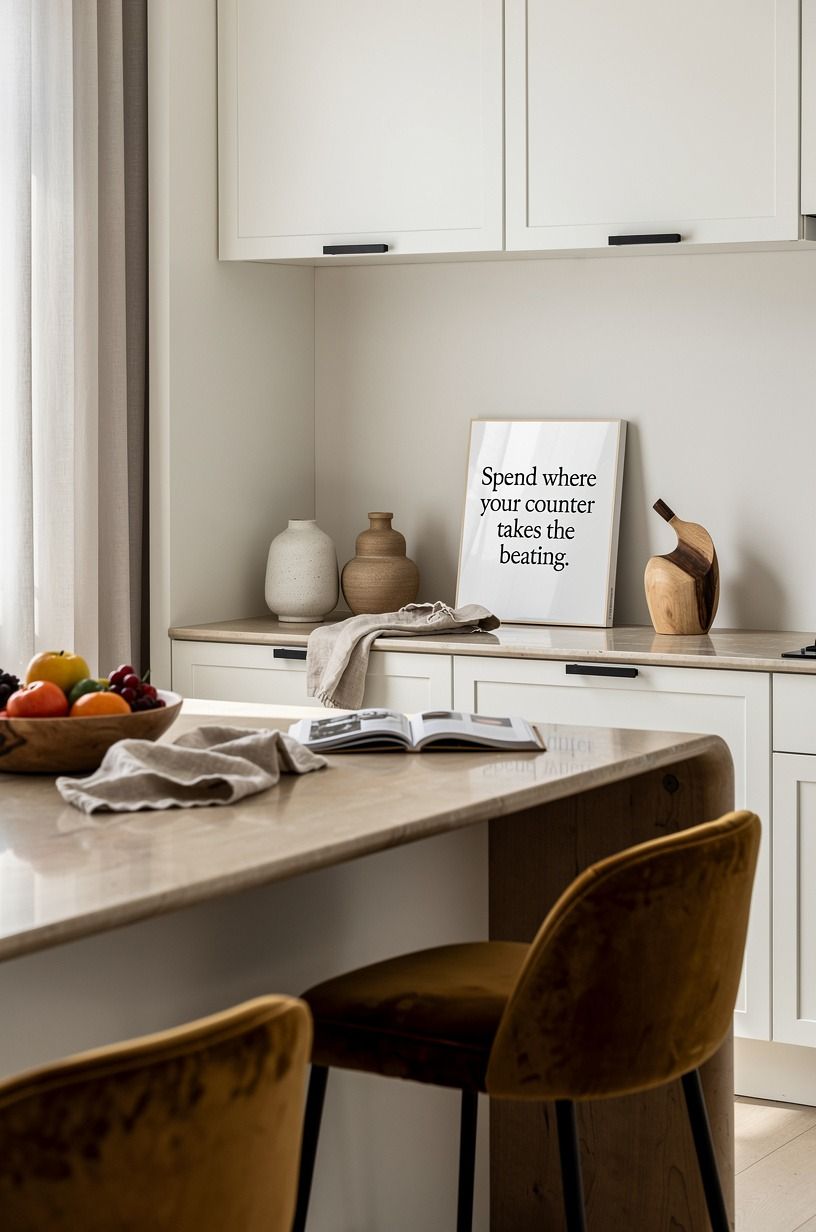
If you’re deciding between surfaces, put durability ahead of drama. Quartz countertop generally runs $60-$120/sq ft, while laminate countertop typically lands at $10-$40/sq ft. Laminate is a smart budget choice when you need a quick refresh, but I’d choose a warm matte finish over faux marble veining every single time.
A mid-range update can include repainted Shaker fronts at roughly $150-$400 per door, but you don’t need to replace every surface to get a warm result. A deep-pile mohair velvet banquette in camel is one place softness earns its keep. And if you’re weighing a cleaner update, this piece on getting the modern farmhouse kitchen look is useful.
13Use the French-market edit over countertop decor
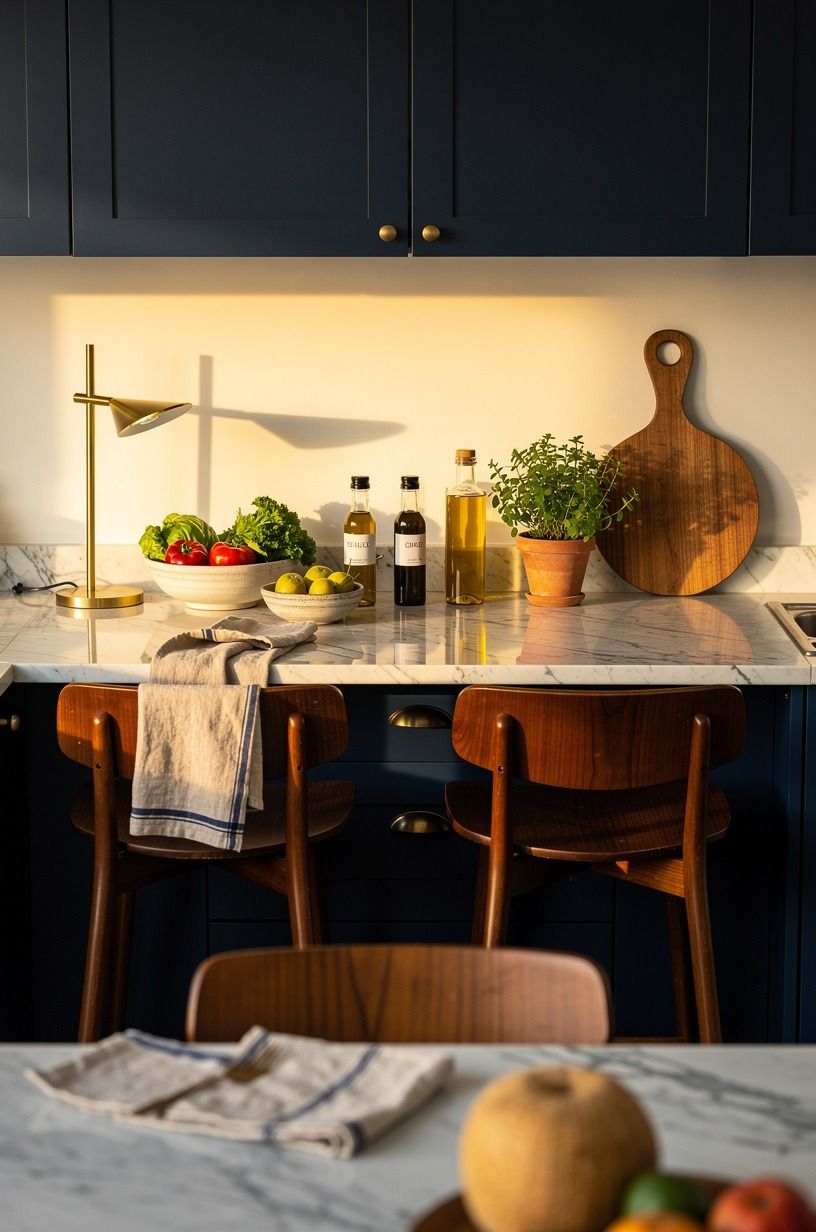
Keep your counter mostly open, then style one useful cluster near the range. A vintage olive jar. A small olivewood spoon set.
A crock of salt on Carrara marble with soft grey veining. Your kitchen gets character, but you can still roll pastry or unload groceries.
Don’t cover every surface with signs, fake bread, and tiny cutting boards. That’s the version I made first, and it made cleaning feel like moving a chess set.
A French farmhouse kitchen should feel welcoming because it’s ready for dinner, not because it’s packed with props. Less fuss, more room to cook!
Why French farmhouse kitchens are returning now
I think French farmhouse kitchens are back because people are tired of rooms that look pristine but don’t invite anyone to linger. For years, the goal was the smooth, white, almost reflection-free kitchen. It photographed well.
It also made many homes feel like nobody had eaten in them. Now you see more worn timber, hand-glazed tile, visible bowls, and paint colors with some dirt under their fingernails.
Not literal dirt, obviously. You know what I mean.
I’ve worked in kitchens with glossy cabinets, flawless counters, and overhead lights so harsh they made a bowl of peaches look sad. Then I’ve stood in a smaller kitchen with an old pine table, a chipped pitcher, and one dim lamp by the sink.
The second room always wins. It asks less of you.
You don’t have to protect every surface or worry that a tea ring will ruin the mood.
The decision framework is simpler than it sounds. Spend on the things your body interacts with: a solid faucet, a counter you can clean, stools that don’t wobble, and lights you can dim.
Save on the things that can age into themselves: open shelves, painted cabinets, old-looking pottery, linen curtains. I’d never spend a huge budget making new cabinets look antique. Let real use do that job.
And there’s a practical reason this style lasts. It handles life well. A warm white hides the occasional splash better than stark white.
Brass develops character. Oak takes a scratch and keeps going. Your kitchen doesn’t need perfection to feel refined.
It needs materials that can absorb a Tuesday night.
A Few Things Worth Answering
What is the best French farmhouse kitchen idea for a small kitchen?
A painted island or a slim pine table is the best starting point because it adds warmth without crowding your floor plan. Choose IKEA IVAR pine storage and keep 42 in of walking clearance. Your small kitchen will feel open and useful, not stuffed.
Where can I buy French farmhouse kitchen pieces on a budget?
Start with IKEA, Target Threshold, and Wayfair’s Three Posts line for simple storage, stools, and curtains. Check Facebook Marketplace or a thrift store for wood tables and stoneware.
Your best value is real texture, not a matching set. See these Italian farmhouse kitchen ideas for more grounded pieces.
How much does a French farmhouse kitchen makeover cost?
A cosmetic French farmhouse kitchen makeover typically costs about $300 to $1,500, depending on paint, hardware, and backsplash coverage. Repainting cabinets and adding peel-and-stick backsplash can keep your spend low. Your free move is editing countertop clutter first.
Can I create a French farmhouse kitchen on a budget?
Yes, and you don’t need new cabinets. Paint a wall with Benjamin Moore White Dove OC-17, use thrifted boards as display pieces, and swap in linen curtains.
Your cheapest wins are paint, clearing, and rearranging. Small changes add up fast!
Is a French farmhouse kitchen worth it in a small space?
Yes, it’s worth it because a small room makes material choices more visible and intimate. Use one pale cabinet color, one wood tone, and a narrow table. Your kitchen will feel warm without visual clutter, which is harder to pull off in a bigger room.
Is a French farmhouse kitchen a good idea for a rental?
Yes, if you stick to removable layers. A tension rod, removable backsplash panels, and battery-operated sconces can change your kitchen without drilling into tile.
Your landlord gets the walls back, and you get a more welcoming room now. For bedroom-scale rental warmth, these French farmhouse bedroom ideas translate nicely.
Where I’d Start First
If I had to pick one, I’d start with a muted dusty-rose cabinet color. It gives brass, charcoal, and warm wood a softer place to land. Pin that paint choice for later and browse rustic farmhouse kitchen ideas.