
 by
by Quick answer: The thickest mattress topper available does not have one standardized maximum thickness. Product labels and inventories change, so the useful question is how much loft your supportive mattress can handle without creating excess sink. I would choose substantial cushioning for a firm, flat bed, but skip it for a mattress with a sag, weak edge, or overly soft center.
- There is no fixed industry ceiling that defines the thickest topper.
- Material quality and resistance matter more than a tall profile by itself.
- Extra loft affects pressure relief, movement, temperature, sheet fit, and bed access.
- A topper changes the comfort layer. It cannot rebuild worn mattress support.
Updated July 2026 · Reviewed for accuracy
The thickest mattress topper available is best understood as the tallest current product that still functions as a removable comfort layer. It is not a permanent category specification. Sellers can add or remove models, and terms such as “thick” and “extra thick” are not consistent enough to identify a universal maximum.
My verdict is straightforward. Extra loft makes sense when the mattress underneath is structurally sound but feels too firm at the shoulders, hips, or ribs. It makes far less sense when the support core is worn, because the topper bends into the same low spots beneath it.
I would not shop by height alone. I want to know what creates that height, how quickly the material rebounds, how deeply the body settles, and whether the whole bed remains practical after another substantial layer is added.
What “thickest available” actually means
No standards body sets a maximum thickness for mattress toppers. That is the concrete category answer. Any single maximum stated as a permanent fact could become inaccurate as inventory changes or as sellers classify increasingly tall comfort products in different ways.
The category boundary also gets blurry. A mattress pad is generally meant for light surface adjustment or protection. A topper provides a more meaningful comfort change. A folding guest mat or miniature mattress is intended to act more like an independent sleep surface, even if a seller uses overlapping marketing language.
Fiberbeds and feather-style products create another complication. Their advertised loft may look substantial before use, but loose fill compresses differently from a solid foam or latex core. Two products with similar unloaded height can feel nothing alike once body weight is applied.
- Use a functional definition: Look for a removable layer designed to alter the feel of an existing mattress.
- Exclude independent beds: Folding mats and compact mattresses are not direct topper comparisons.
- Check the core: A lofty cover or gusset does not necessarily indicate an equally substantial comfort material.
- Verify current availability: Treat “thickest” as a live marketplace description, not a lasting construction standard.
The only defensible maximum is therefore seller-specific and time-specific. When you find a candidate, confirm that the stated profile refers to the actual topper rather than packaging, an expanded cover, or a product image that includes the mattress underneath.
This may sound less satisfying than naming one dimension, but it protects you from buying the tallest label instead of the right construction. The practical winner is the thickest compatible topper for your mattress and sleeping position, not the tallest object a retailer happens to place in the category.
A thick topper helps pressure, not failed support
A topper follows the shape of the surface beneath it. On a firm, level mattress, that lets the added material create room for the shoulders and hips to settle. On a mattress with a pronounced hollow, the same flexibility pulls the topper into the dip.
That difference separates pressure relief from support repair. Pressure relief redistributes contact at the surface. Structural support comes from the mattress core, including its foam base, coil unit, perimeter construction, and the foundation holding the bed.
A tall soft layer can initially disguise a hard or uneven feel, but it does not make a weakened core firmer. More material around the body may even make a deep low spot feel harder to move out of.
The Nut’s rule: Buy extra thickness to correct a specific comfort problem on a flat mattress. Do not use it as a soft cover for a support system that has lost its shape.
Inspect the bare mattress before shopping. Remove the bedding and topper, then look across the surface and press around the area where your torso normally rests. A lasting depression, a noticeably weak edge, or a center that collapses more easily than the surrounding surface points back to the mattress.
The foundation deserves the same attention. A flexible, damaged, or poorly supported base can make the mattress dip even when its comfort layers remain usable. Adding a topper before checking the full setup risks treating the symptom instead of the source.
If the bed is flat and simply too firm, a substantial topper can be a reasonable adjustment. The goal is enough compression to soften direct contact without letting the pelvis or torso drop out of proportion with the rest of the body.
Material controls what all that loft does
Memory foam creates the closest contour among the common solid topper materials. It responds gradually to pressure and warmth, allowing the body to form a deeper cradle. That can take the edge off a hard mattress, especially around prominent shoulders and hips.
The tradeoff is slower movement. A deeply compressed memory-foam layer can take more effort to cross, and the close cradle may hold warmth around more of the body. Graphite, gel, ventilated cuts, and cooling covers are construction details worth examining, but none should be read as a promise that a deep foam topper will feel cold.
Latex behaves more buoyantly. Its quicker rebound pushes back as the sleeper moves, so the surface tends to feel less enclosing than slow-response foam. That can suit someone who wants cushioning but dislikes having to climb out of a pronounced body impression.
- Memory foam: Close contouring and strong surface pressure redistribution, with more potential for heat retention and slow repositioning.
- Latex: Responsive cushioning with greater pushback and a more on-top-of-the-surface feel.
- Polyfoam: A broad range of feels and qualities, making construction disclosure especially important in a tall layer.
- Loose fiber or wool: Surface cushioning with less defined support than a solid foam core and more change in loft under load.
Polyfoam requires a closer look than the category name alone provides. It can soften a bed without the slow hug of memory foam, but a tall, weakly resilient layer may lose its useful shape sooner. Extra depth magnifies the consequences of low resistance because more of the sleep surface depends on that material.
Density can be useful when a foam manufacturer discloses it, although it is not a complete comfort grade. Firmness, cell structure, layer shape, cover tension, and the mattress below all influence how quickly the body sinks and how easily the topper recovers.
Latex shoppers should also avoid assuming that every model feels firm or bouncy in the same way. The formulation and intended firmness affect pressure relief. The material’s quick response is useful, but the chosen feel still needs enough give for the sleeper’s shoulders and hips.
Sleep position sets the acceptable amount of sink
Side sleeping places concentrated load on the shoulder and hip. A deeper comfort layer gives those areas more room to settle before reaching the firmer mattress surface, which is why side sleepers often have the clearest reason to consider extra loft.
Maximum depth is not automatically the right answer, even here. A lighter sleeper may stay near the surface of a firm topper and gain little from its unused depth. A heavier sleeper may travel farther into a soft topper and need stronger resistance to avoid an unstable, hammock-like feel.
Back sleepers need particular control around the pelvis. Added cushioning can make a hard bed more forgiving, but the torso should not settle so far that the sleep surface feels sharply lower under the hips than under the legs and shoulders.
Match the fix to the complaint: A flat, firm bed with concentrated shoulder pressure may benefit from more cushioning. A soft center, lasting sag, or unstable midsection calls for support work rather than more topper height.
Stomach sleepers have the least room for deep sink. A very plush upper layer can let the midsection settle while the chest and legs remain higher. I would favor a steadier feel over the thickest available profile for this position.
Combination sleepers should judge response as closely as softness. A contouring topper can feel comfortable while still making frequent turns cumbersome. Latex or a more responsive foam construction may be easier to move across than a deep, slow-recovering cradle.
Body shape matters alongside body weight. Broad shoulders, a pronounced hip profile, and the distribution of weight through the torso affect how much cushioning is useful. This is why another owner’s description of “soft” or “firm” is not enough to predict your result.
Cooling, motion, and edge feel change with extra height
A substantial topper places more material between the sleeper and the mattress. With close-contouring foam, more of that material contacts the body, reducing the open space through which heat and moisture can disperse.
Latex and responsive foams may feel less enclosing because they let the body remain closer to the top of the surface. The cover, protector, sheets, comforter, room conditions, and mattress below still contribute to the final temperature.
Motion has two sides. A slow foam surface can absorb some local movement, but a deep body impression may make the sleeper’s own turns feel harder. A springier topper reacts more quickly, which helps repositioning but can make surface movement feel more noticeable.
- Check how closely the material contours, not just the cooling words on the cover.
- Consider the protector and bedding, since they sit directly around the sleeper.
- Look for enough rebound if changing positions is already difficult.
- Do not expect a topper to reinforce a weak mattress perimeter.
Edge feel is frequently overlooked. A thick, soft topper can compress when you sit near the side, creating a less steady perch even if the mattress edge underneath is sound. If the mattress perimeter is already weak, the topper follows that weakness rather than correcting it.
Couples should consider how differently each person loads the surface. One sleeper may create a deep impression while the other barely compresses the material. A split-feel arrangement can sometimes make more sense than asking one very thick, very soft layer to suit both bodies.
None of these effects makes thickness inherently bad. They show why loft cannot be separated from response, firmness, and the rest of the bed. A well-matched topper should make the surface more forgiving without making normal movement or edge use feel precarious.
Bed height and sheet fit are practical limits
Every added layer raises the sleeping surface and increases the profile fitted sheets must cover. A mattress that already sits high can become awkward once a substantial topper, protector, and bedding are stacked above it.
Measure the complete bed stack rather than the mattress alone. Include the mattress, topper, and any padded protector that must fit inside the sheet. Check the sheet maker’s pocket guidance against that combined height before ordering.
Getting into and out of bed can also change. Extra loft may help a low setup, but it can make an already tall bed inconvenient for a shorter sleeper or anyone who needs a stable seated position before standing.
- Measure the entire sleep stack at the corners and along the side.
- Check that the fitted sheet can wrap beneath the mattress securely.
- Confirm that the new surface height remains comfortable for daily access.
- Allow for the topper’s weight when rotating, airing, or removing it.
- Look for straps, a fitted skirt, or a textured base if shifting is a concern.
A thick topper can be physically awkward even when it feels good. Dense foam and latex may be difficult to lift, and a flexible layer can fold while you try to align it. That matters during installation, sheet changes, cleaning, and future moves.
Attachment design becomes more important as the layer gets taller. A smooth topper on a slick mattress cover may creep toward one side. Corner straps, a fitted enclosure, or a grippy lower surface can help, although performance depends on the mattress fabric and the sleeper’s movement.
Care instructions deserve attention before purchase. Some covers can be removed, while the comfort core may require spot care and careful airing. Confirm the manufacturer’s current cleaning guidance, since mishandling a large foam or latex layer can damage its shape.
How to find the thickest suitable topper
“Extra thick” can describe the core, a quilted cover, loose fill, or simply the seller’s marketing position. Begin by finding the construction diagram or written layer description, then identify which part of the product creates the advertised height.
Next, confirm that the item is genuinely a topper. It should be intended to rest on an existing mattress and alter its comfort. If the product is designed to unfold on the floor or serve as a self-contained guest bed, it belongs in a different comparison.
Then diagnose the current mattress. A topper is a sensible candidate when the bed is flat and supportive but too firm. If the mattress leans, sags, rolls sleepers together, or collapses at the perimeter, address the mattress or foundation first.
- Construction: Identify the actual comfort material and separate it from cover loft.
- Firmness: Look for language explaining resistance, not just “plush” or “luxury.”
- Response: Decide between a slow cradle and quicker pushback.
- Compatibility: Check bed height, sheet pockets, edge use, and attachment design.
- Care: Read the cleaning and handling instructions for both cover and core.
- Purchase terms: Confirm the current price, return conditions, and warranty language on the seller’s official site.
Owner comments are most useful as fit clues. Pay attention when a reviewer explains sleep position, general body build, prior mattress firmness, movement preferences, and how the topper’s feel changed with use. A bare statement that a product is comfortable provides little construction insight.
Read negative feedback for patterns rather than isolated complaints. Repeated mentions of shifting, difficult repositioning, excessive sink, retained warmth, or early loss of shape can identify the tradeoff most relevant to your setup. Keep in mind that comfort remains highly dependent on the mattress underneath.
Finally, compare value through expected use rather than raw height. Paying for material you cannot compress or loft that makes the bed impractical is not useful value. A somewhat less imposing topper with clearer construction and a better fit can be the sounder choice.
Who should buy extra thickness, and who should skip it?
A firm, flat mattress is the strongest starting point for a thick topper. Side sleepers with concentrated shoulder or hip pressure may benefit most, provided the material offers enough resistance to keep the surface steady.
A responsive thick topper can also suit combination sleepers who need cushioning but do not want a slow, enclosing cradle. The decisive feature is not just depth. It is how that depth compresses and recovers under the sleeper.
Skip the thickest option if the mattress already feels plush, the center has softened, or the edge no longer feels dependable. Stomach sleepers should be especially cautious with deep, soft materials that allow the midsection to settle heavily.
- Good fit: A supportive mattress that feels uncomfortably firm at the surface.
- Possible fit: A low bed that could accept more height without access or sheet problems.
- Poor fit: A mattress with a lasting dip, unstable perimeter, or excessively soft center.
- Poor fit: A sleeper who already struggles with heat or movement in a deep foam cradle.
I would also skip extra loft when it creates everyday friction. Sheets that release from the corners, a topper that shifts, difficult cleaning, or an awkward bed height can outweigh the benefit of a softer first impression.
Optional product context
One optional premium product to inspect is the Saatva Graphite Topper. I am not treating it as the category’s thickest benchmark. Per the manufacturer’s page, confirm its current construction, available options, care guidance, price, and purchase terms before deciding if it matches your mattress.
For a closer explanation of category boundaries, read what makes a mattress topper truly thick. It expands on the difference between useful comfort depth and height that merely creates more sink.
Shoppers considering a less foam-like surface can also use my guide to wool mattress toppers to understand wool’s different form of cushioning and moisture handling. My wool mattress topper review takes a closer look at that material category.
FAQ
What is the thickest mattress topper available?
The thickest mattress topper available has no fixed, industry-wide maximum. The answer changes with current inventory, and sellers do not use “topper” or “extra thick” consistently. Compare only removable comfort layers, verify what creates the stated loft, and exclude folding mattresses or independent guest beds.
Why can’t one permanent maximum thickness be named?
Manufacturers can introduce or discontinue products, while different materials compress in different ways. A lofty fiber product and a solid foam core may have similar unloaded profiles but behave very differently under a sleeper. The relevant maximum is the tallest current topper that remains compatible with your bed and support needs.
Is a thicker mattress topper always more comfortable?
No. More depth can create better pressure relief on a firm mattress, but it can also produce excess sink, slower movement, warmer contouring, and a less stable edge. Comfort depends on the material, firmness, sleeper, and mattress underneath.
Can a thick topper fix a sagging mattress?
Not reliably. A flexible topper follows the depression below it and cannot reconstruct a worn support core. Check the mattress and foundation before adding more cushioning to a bed with a visible or lasting low spot.
Which material works best in a thick topper?
Memory foam fits sleepers who want close contouring, while latex offers quicker response and more pushback. Polyfoam varies widely in quality and feel, so construction disclosure matters. Loose fiber and wool create surface loft but compress differently from a solid core.
Will a thick topper make the bed hotter?
It can, particularly if slow-response foam creates a close cradle around the body. Cover treatments may affect the surface feel, but the topper material, mattress, protector, sheets, comforter, and room conditions all influence temperature.
ONE OPTION WORTH COMPARING
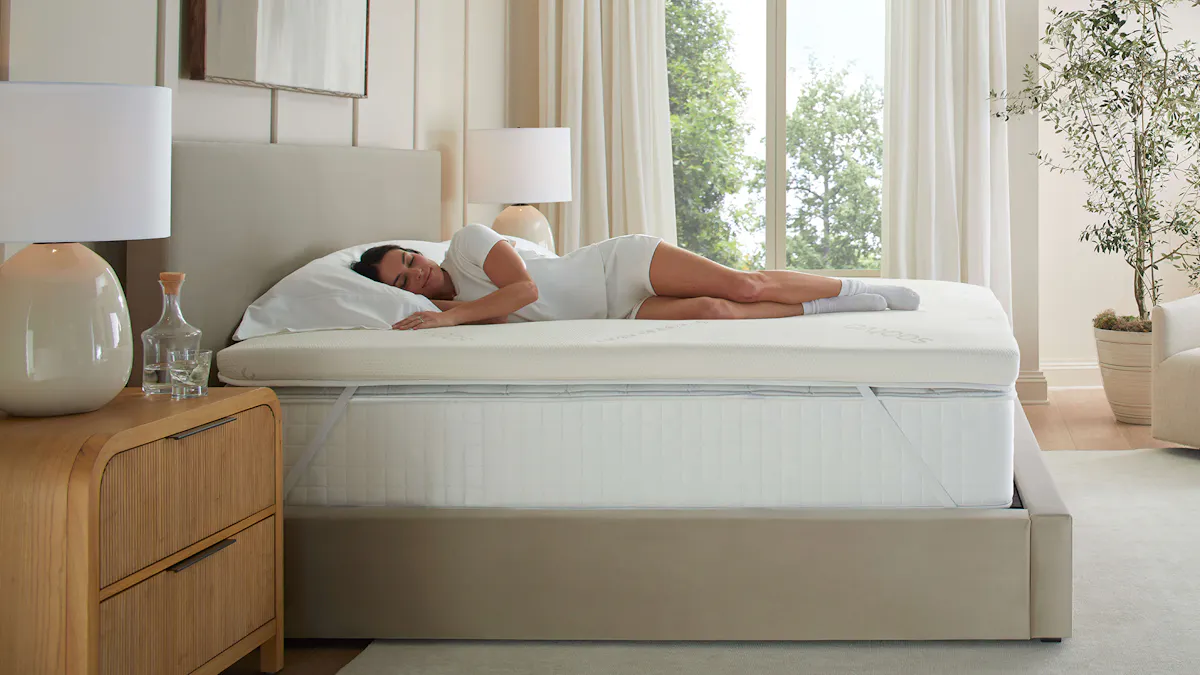
Shopping as well as reading? Here is one current option worth comparing: the Saatva Graphite Topper. Check today’s price, sizing and return terms on the official product page before you order.
Saatva Graphite Topper
- Graphite-infused memory foam, per saatva.com
- 180-night trial
- Secure anchor bands, fits deep mattresses
My final take
A tall topper is useful only when its construction matches a real surface-comfort problem. There is no standardized maximum to chase, so I would define the product carefully, verify the live construction details, and judge how its material behaves under your sleeping position.
The right choice makes a firm, supportive mattress more forgiving without turning the bed into a deep, unstable cradle. If the mattress is sagging or already soft, solve the support problem first. That is the practical way to gain cushioning without buying height for its own sake.