
 by
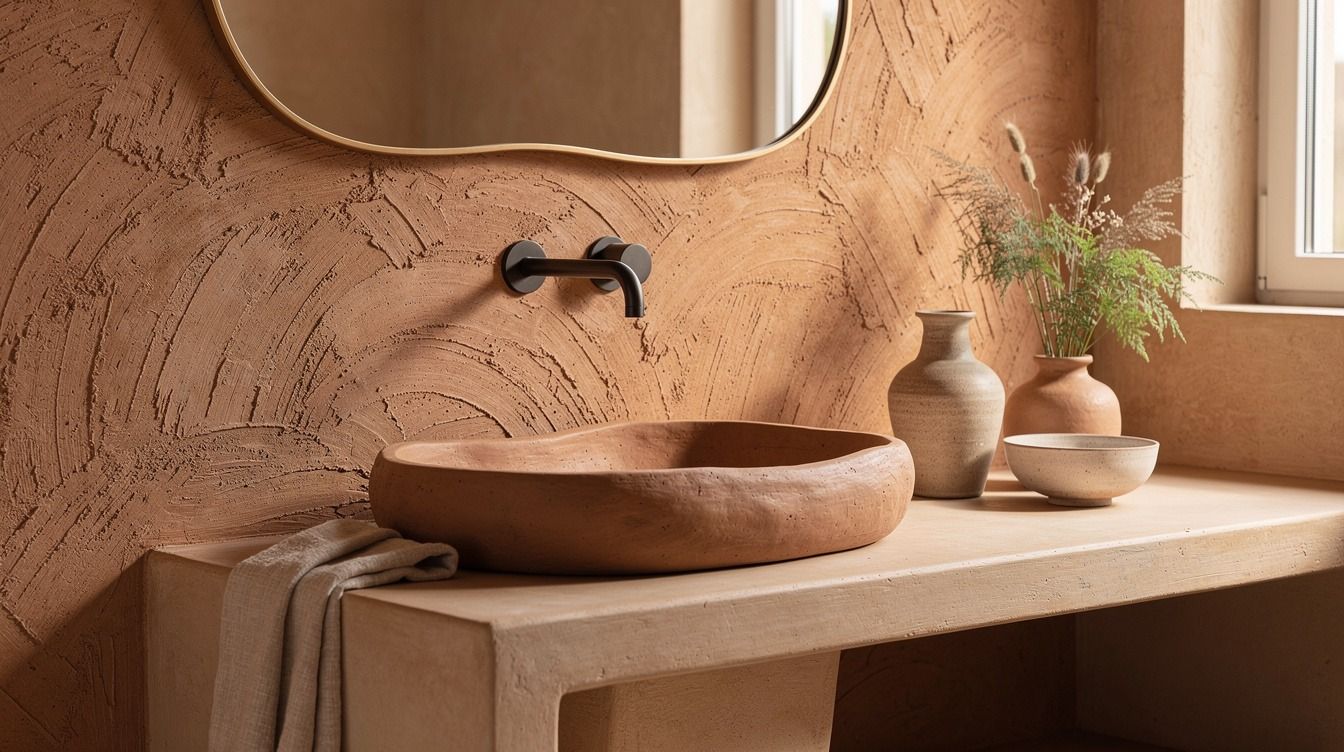
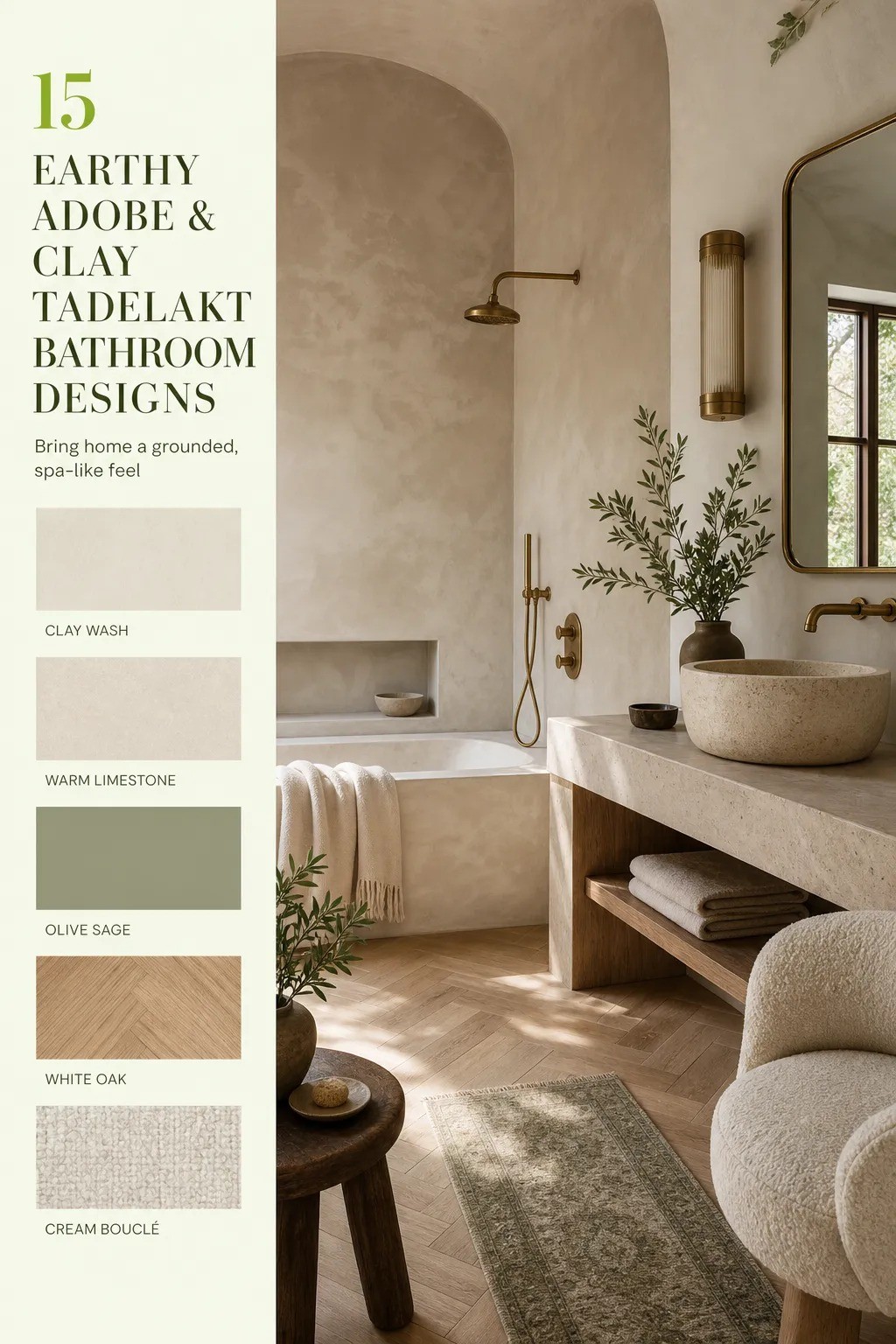
by Earthy adobe and clay tadelakt bathroom ideas work because they replace cold, shiny surfaces with soft mineral texture. I once tried to warm up a white bathroom with towels alone, and it looked like a hotel laundry cart. The walls were the problem. Start there, and your whole room settles down.
- Trowel a clay bathroom wash in uneven passes
- Build The Sun-Baked Shadow Rule around one wall
- Skip glossy tile for an earthy terracotta bathroom floor
- Frame the sink with The Quiet Arch Method
- Can an adobe bathroom handle a dark faucet?
- Layer The Three-Height Light Stack
- Paint the vanity like an earthen object
- Hang linen where you’d normally add art
- Choose zellige over subway tile at the splash zone
- Float a stool beside the tub, not a storage tower
- Use The Two-Wood Rule for warmth without clutter
- Contrast soft plaster over hard limestone
- Carve out a shower with a clay-colored threshold
- Spend where water lands, save where it doesn’t
- Finish with a Moroccan tadelakt bathroom shelf moment
1Trowel a clay bathroom wash in uneven passes
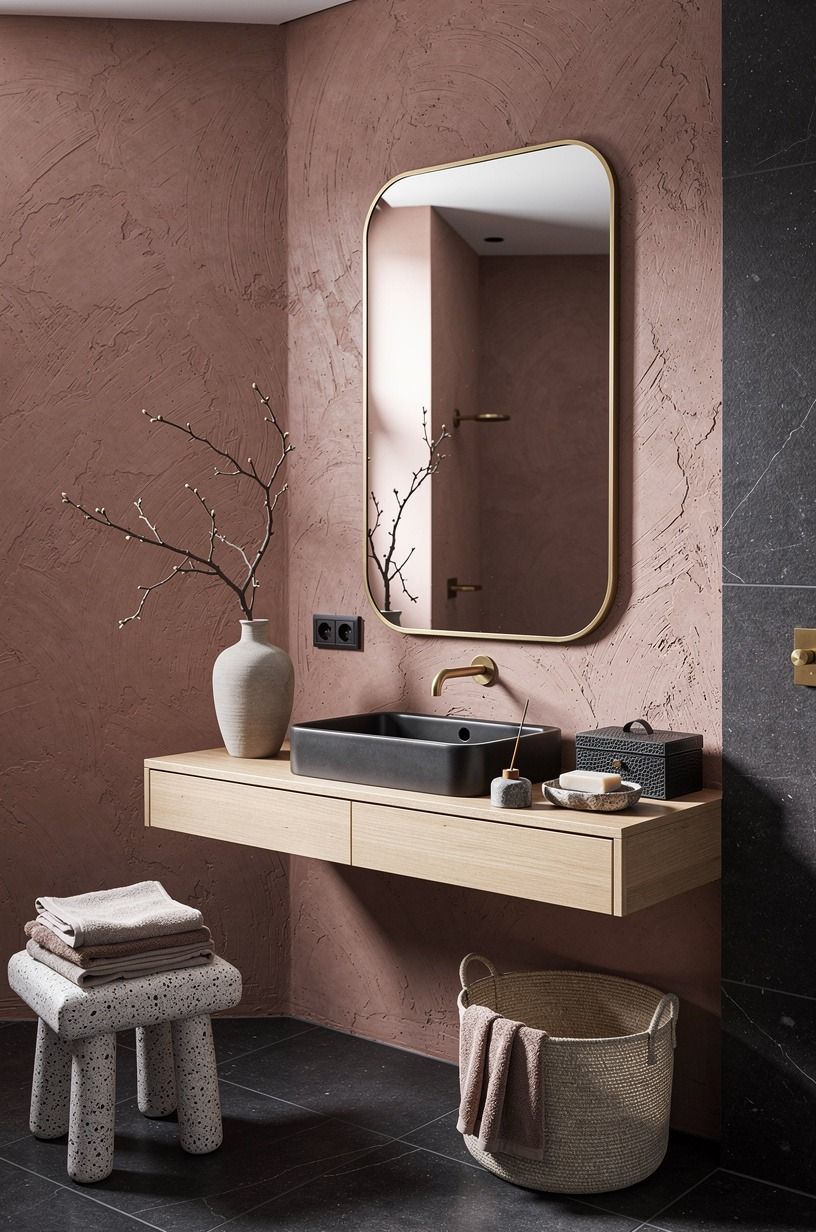
Ask for hand-troweled tadelakt plaster with visible movement, then bring in dusty-rose, charcoal, and brass accents with a touch of shagreen. You want your eye to catch a faint ridge near the vanity, then lose it again by the shower.
I’d choose Benjamin Moore Chestertown Buff HC-9 over a gray taupe here. Gray makes the mineral finish feel chilly, while this warm ochre holds its own beside brass fixtures.
Keep your vanity between 32 and 36 in high so the textured wall stays visible above it. And if you’re planning the full finish, these hand-troweled bathroom ideas show where the plaster looks best.
2Build The Sun-Baked Shadow Rule around one wall
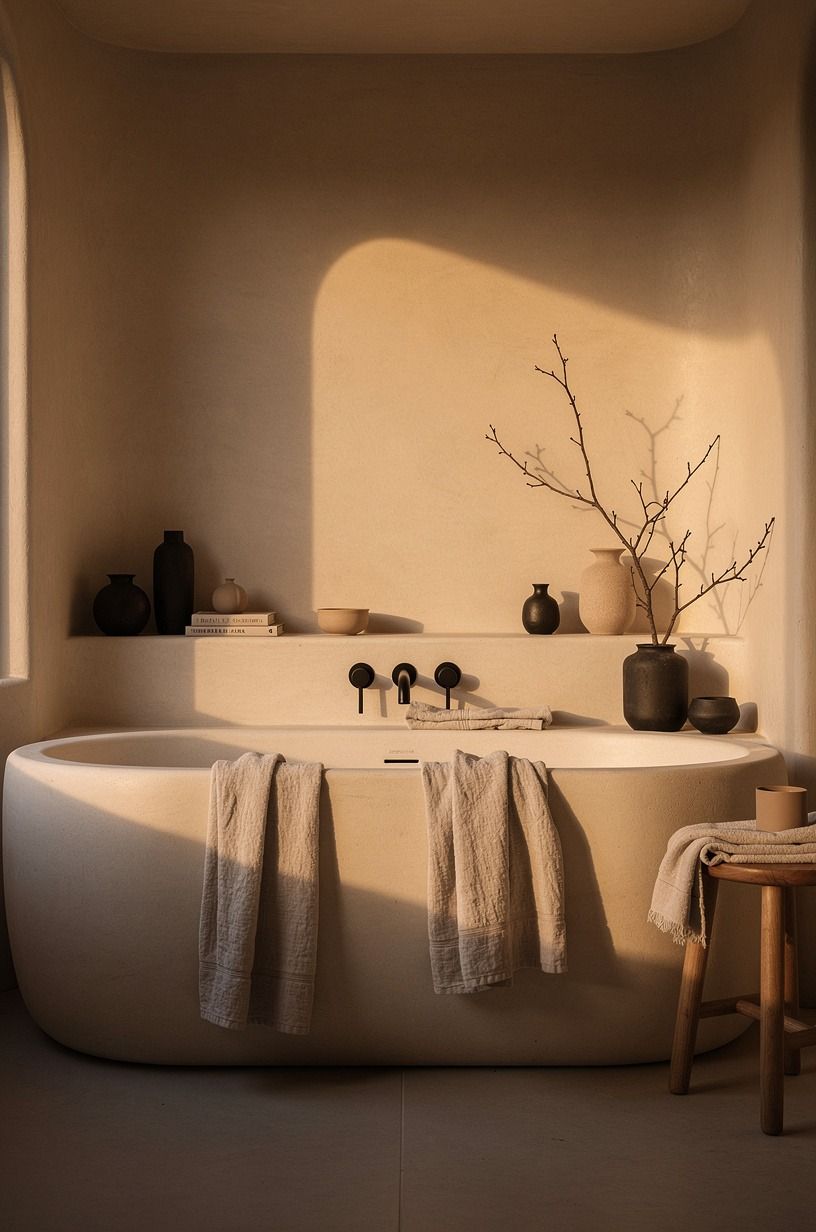
Put the deepest clay tone on the wall that catches the least daylight. Your bathroom gets contrast without turning into a cave, and warm white walls, camel accents, and black details keep the result grounded.
A Farrow & Ball Hague Blue No.30 ceiling is the wrong call in a tiny room with no window. It’s bold, yes, but it can swallow the plaster by lunch.
Try lime-based clay paint behind the mirror instead, with washed Belgian linen nearby. Soft edges.
A little grit. That’s enough.
3Skip glossy tile for an earthy terracotta bathroom floor
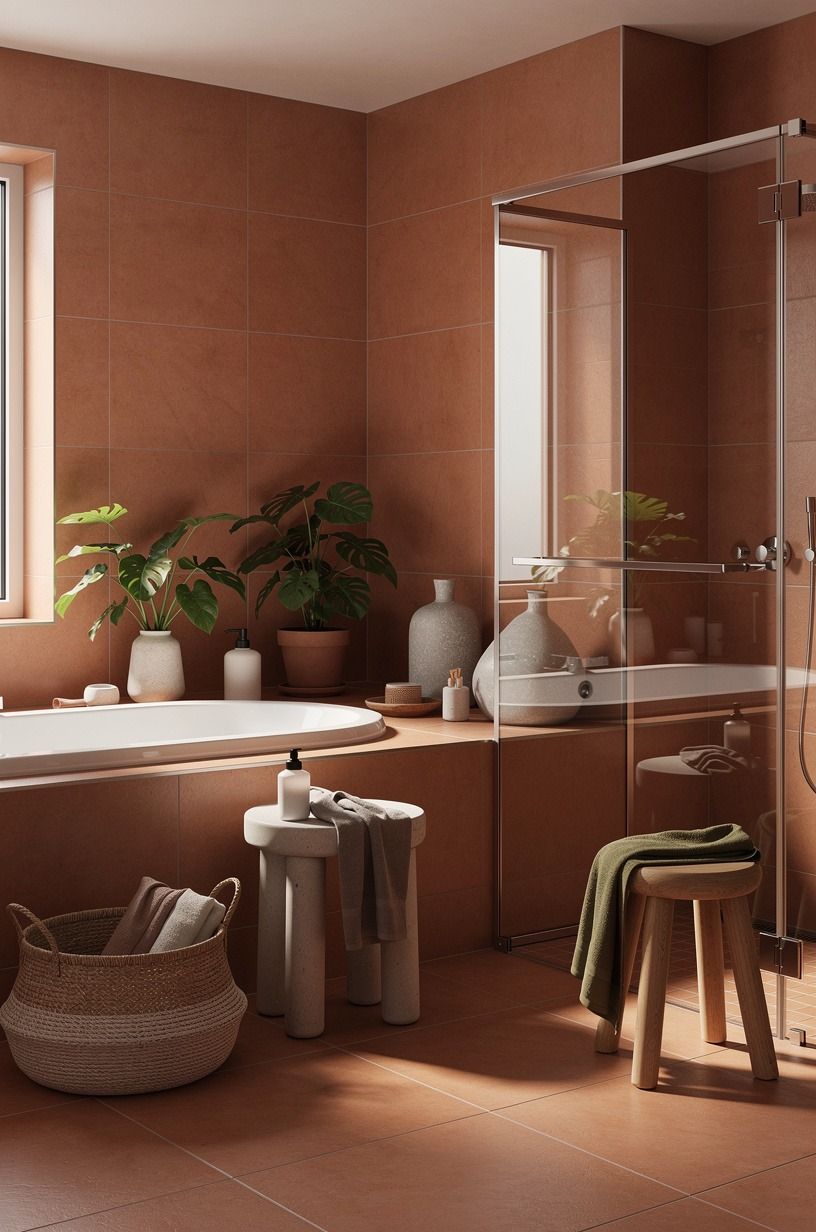
Use matte terracotta-look porcelain underfoot if you need the look without the upkeep of real fired clay. Midnight blue, copper, and ivory make that dusty warmth feel richer, while the surface still handles splashes and shampoo spills.
I’ve seen people put high-gloss beige tile beside tadelakt, and it breaks the spell every time. The finish reflects too much light, so your walls suddenly look theatrical instead of calming.
A standard 60x30 in tub looks far less boxy when it sits against a low-sheen floor and a small organic bouclé accent. For more tonal combinations, save these neutral zellige bathroom ideas.
4Frame the sink with The Quiet Arch Method
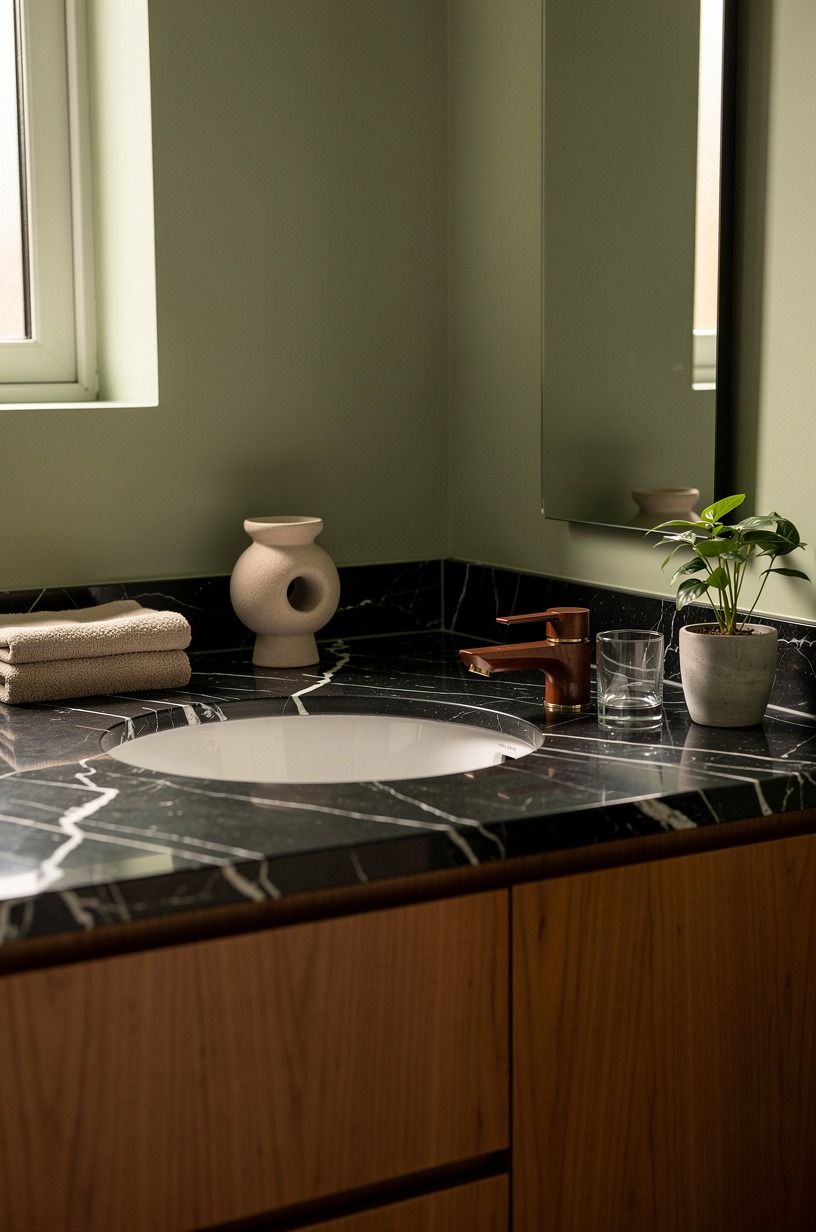
An arch painted one shade darker than your wall gives your mirror a place to land. You don’t need millwork, and your rental-friendly version can be removable paint film cut with a simple curve.
Choose a rounded oak mirror with a 3/4-inch solid white oak frame, and pair it with Nero Marquina marble at the sink. The white veining looks better against sage green and warm cream than black metal, which can feel a little too sharp.
But don’t make the arch too narrow. Let it extend wider than the vanity so your wall looks intentional, not like it’s wearing a tiny hat.
5Can an adobe bathroom handle a dark faucet?
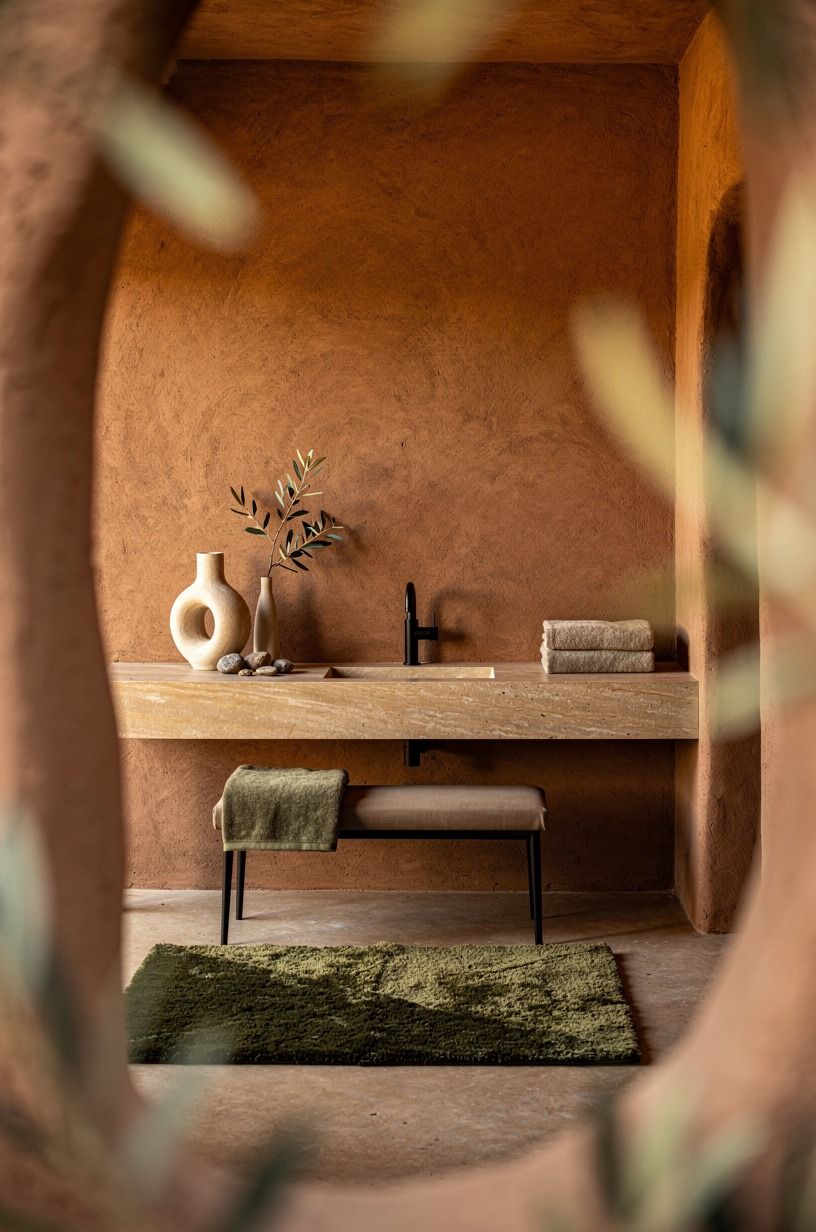
Yes, if you pick aged bronze hardware instead of polished black. Bronze has brown and green undertones that make your clay finish feel grounded, while black often looks pasted on.
A Delta Trinsic champagne bronze faucet gives you that muted glow without competing with the plaster. Pair it with an ivory basin, olive details, and a deep-pile mohair velvet stool.
Your mirror light should sit above eye level, not directly at it. Nobody wants to inspect their pores at 7 a.m.
6Layer The Three-Height Light Stack
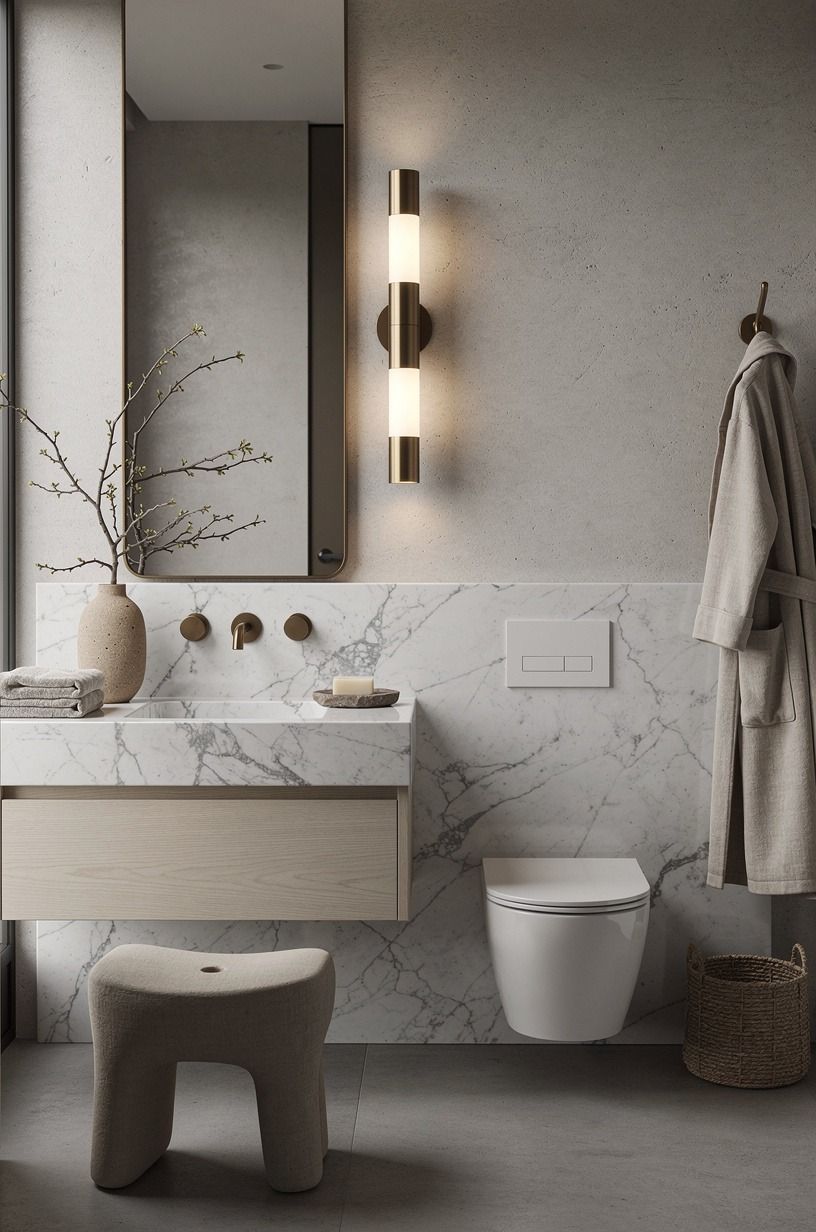
Use three levels of light: an overhead fixture, mirror lighting, and one low glow near the bath. Your room needs that last source most, because it creates an inviting pool of amber instead of one flat blast from the ceiling.
A Schoolhouse-style opal globe sconce at the mirror gives a gentle, diffused edge. Then add a small lamp on a Carrara marble shelf if your outlets allow it.
I’d skip cool bulbs completely. A bathroom can be bright without looking like a dentist’s office, and your clay, linen, and aged-brass palette deserves warmer light!
7Paint the vanity like an earthen object
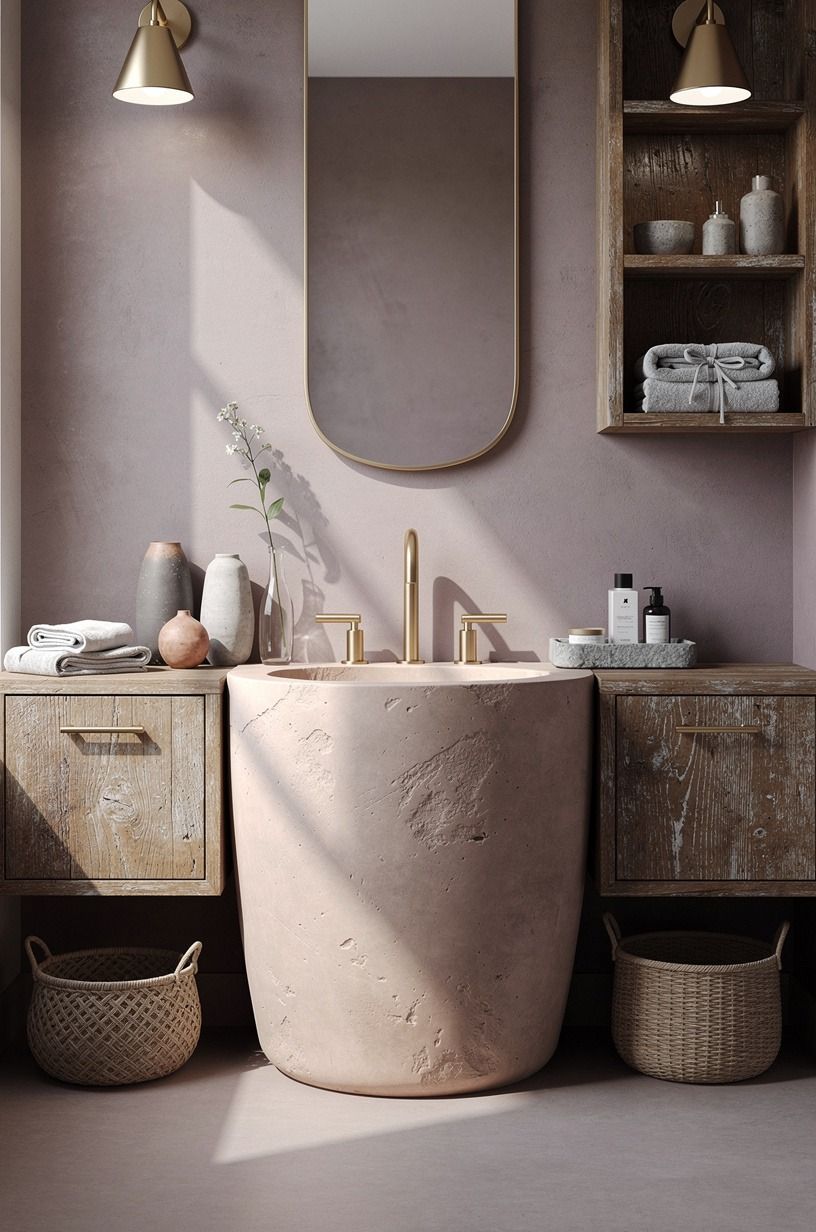
A painted vanity gives you the quickest color block in the room. Use Sherwin-Williams Sea Salt SW 6204 if your walls lean warm orange, because its quiet green-gray keeps the palette from feeling too literal.
For a stronger version, try IKEA HEMNES in a custom plum with a rose-gold pull. Your cabinet becomes furniture rather than a box bolted to plumbing.
You’ll want reclaimed weathered teak nearby, not sparkly engineered stone. Its worn grain makes the pairing feel more honest.
8Hang linen where you’d normally add art
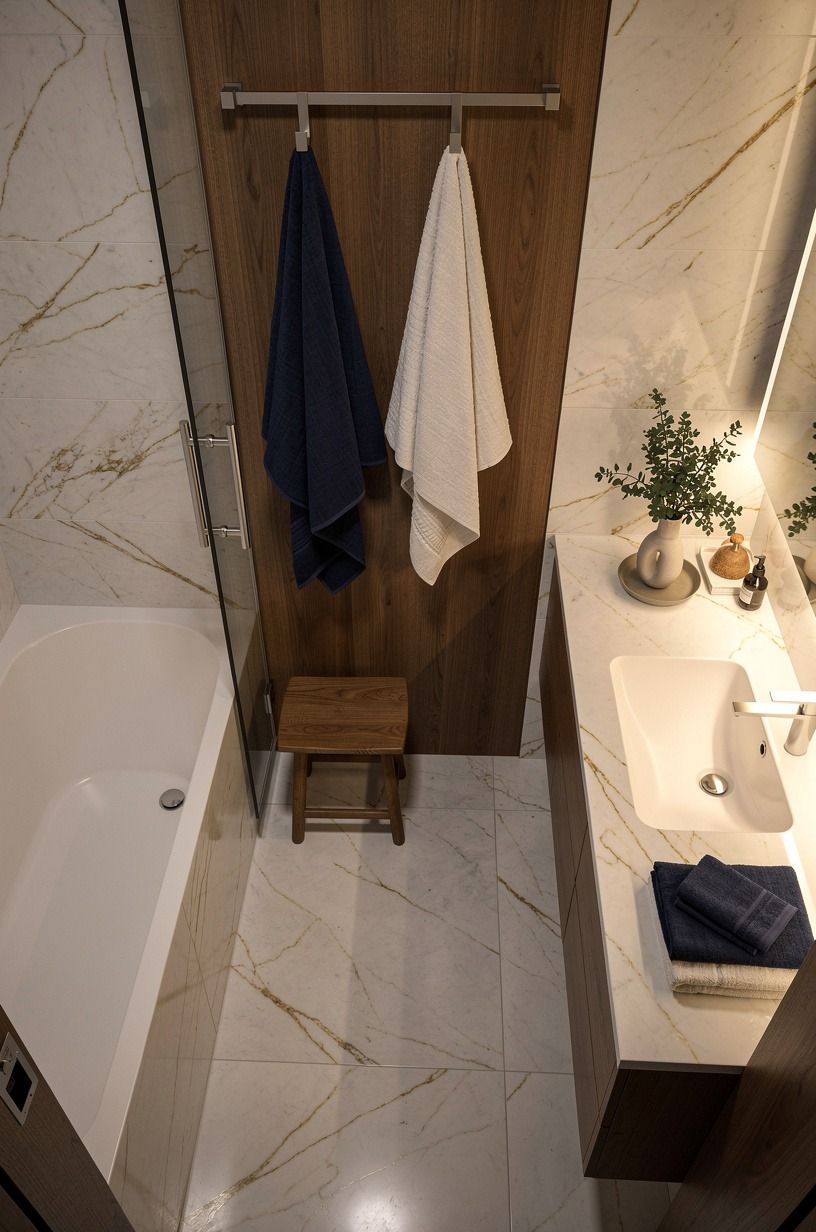
A long panel of Belgian flax linen softens a blank wall better than another framed print. Navy, white, and walnut give the fabric a crisp counterpoint, and the linen takes the hard echo out of tile and plaster.
I made the mistake of hanging one too high once. It looked precious. Let the bottom sit close to the floor, with a simple walnut dowel and no fussy tassels.
Use navy, white, or a warm walnut brown. And if you want more of that vacation-house mood, browse these Tulum-inspired tadelakt bathrooms.
9Choose zellige over subway tile at the splash zone
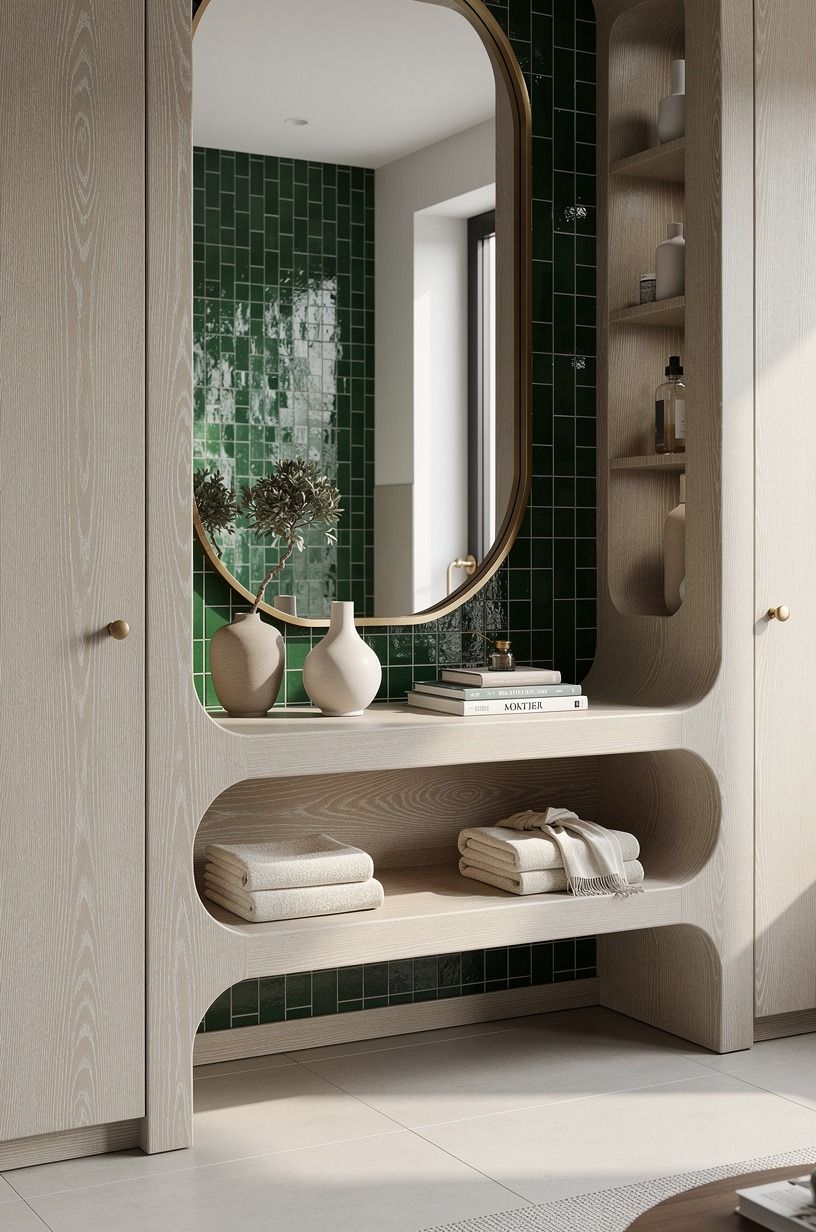
Use hand-glazed ivory zellige behind your sink when you need water resistance but don’t want a hard grid of standard subway tile. Emerald, gold, cream, and cerused white oak make the glaze feel especially alive.
Zellige typically runs $15-$35 per sq ft, while subway tile is usually $2-$10 per sq ft. Your budget decides the field size, not whether you can use the idea at all.
Keep the grout close to the tile color. Dark grout is the losing option here because it turns a soft surface into graph paper.
10Float a stool beside the tub, not a storage tower
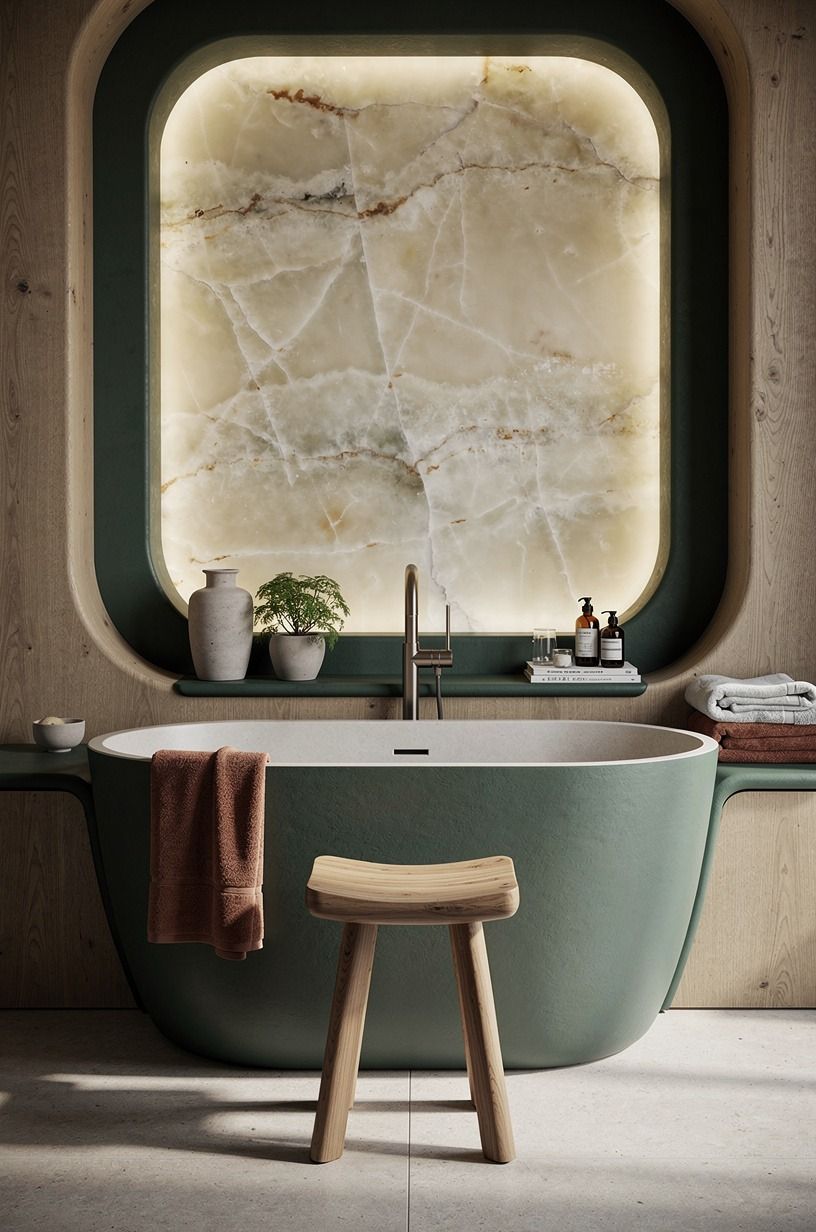
A small teak shower stool near a 60x30 in tub gives your soap, book, and towel somewhere useful to go. Forest green, rust, and natural oak work beautifully with a backlit translucent onyx accent, while the stool keeps the room relaxed and human-scale.
Don’t add a towering ladder shelf beside it. It’s clutter wearing a costume, and you’ll spend your Saturday dusting bottles you forgot you owned.
A folded 600gsm Turkish cotton towel. A ceramic cup.
One bar of soap. Plenty.
11Use The Two-Wood Rule for warmth without clutter
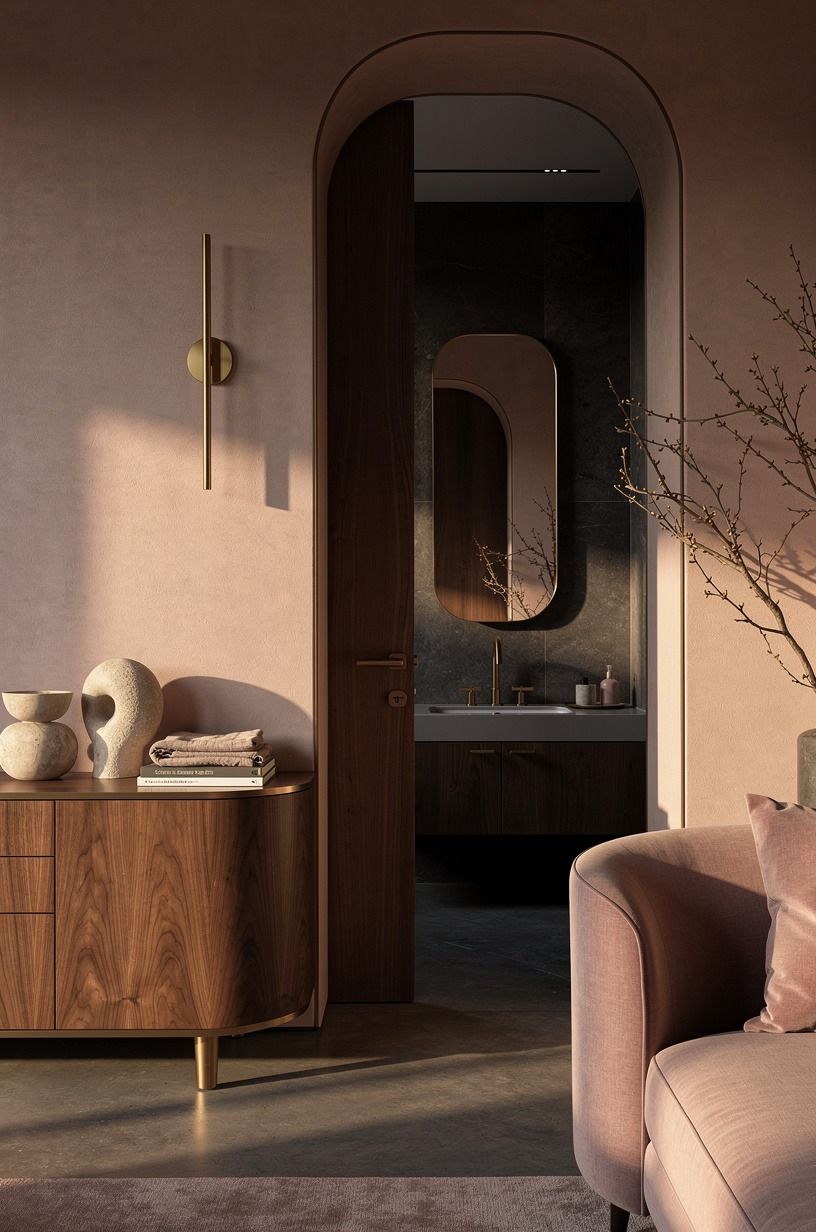
Choose only two wood notes: book-matched walnut for the vanity or mirror, then one smaller wood element for a stool or shelf. Dusty rose, charcoal, and brass keep those warm surfaces from feeling heavy.
12Contrast soft plaster over hard limestone
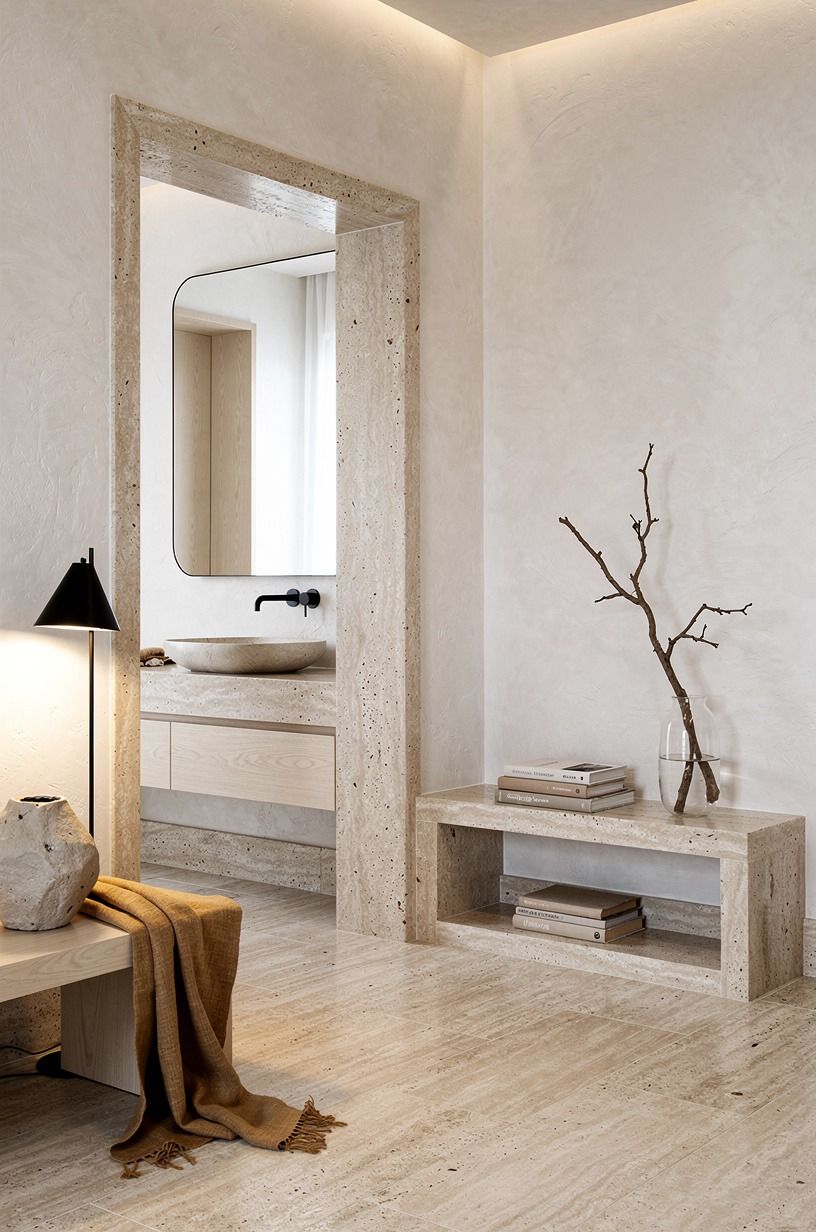
Set smooth tadelakt beside warm travertine for a useful contrast. Your hands notice the difference before your brain does, and that’s why this pairing feels quietly luxurious.
I’d choose travertine over white Carrara for an adobe bathroom. Carrara’s blue cast can make the clay read pink, while travertine stays sandy and peaceful.
For a pared-back version, see these modern limestone bathroom ideas. Your floor doesn’t need to shout to carry the room.
13Carve out a shower with a clay-colored threshold
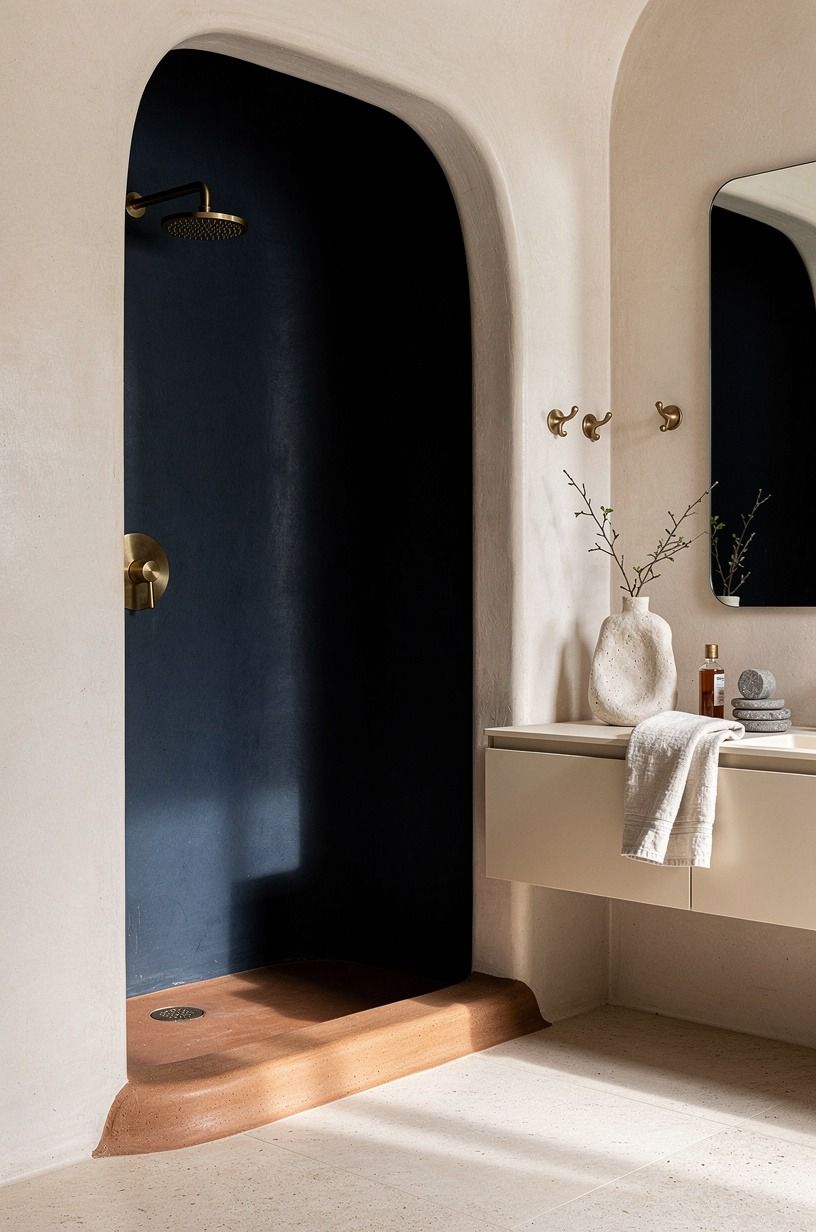
A 36x36 in shower is the comfortable minimum, so don’t waste that footprint on a bulky curb. Use a clay-colored threshold with unlacquered brass that can develop a soft patina beside midnight blue, copper, and ivory.
14Spend where water lands, save where it doesn’t
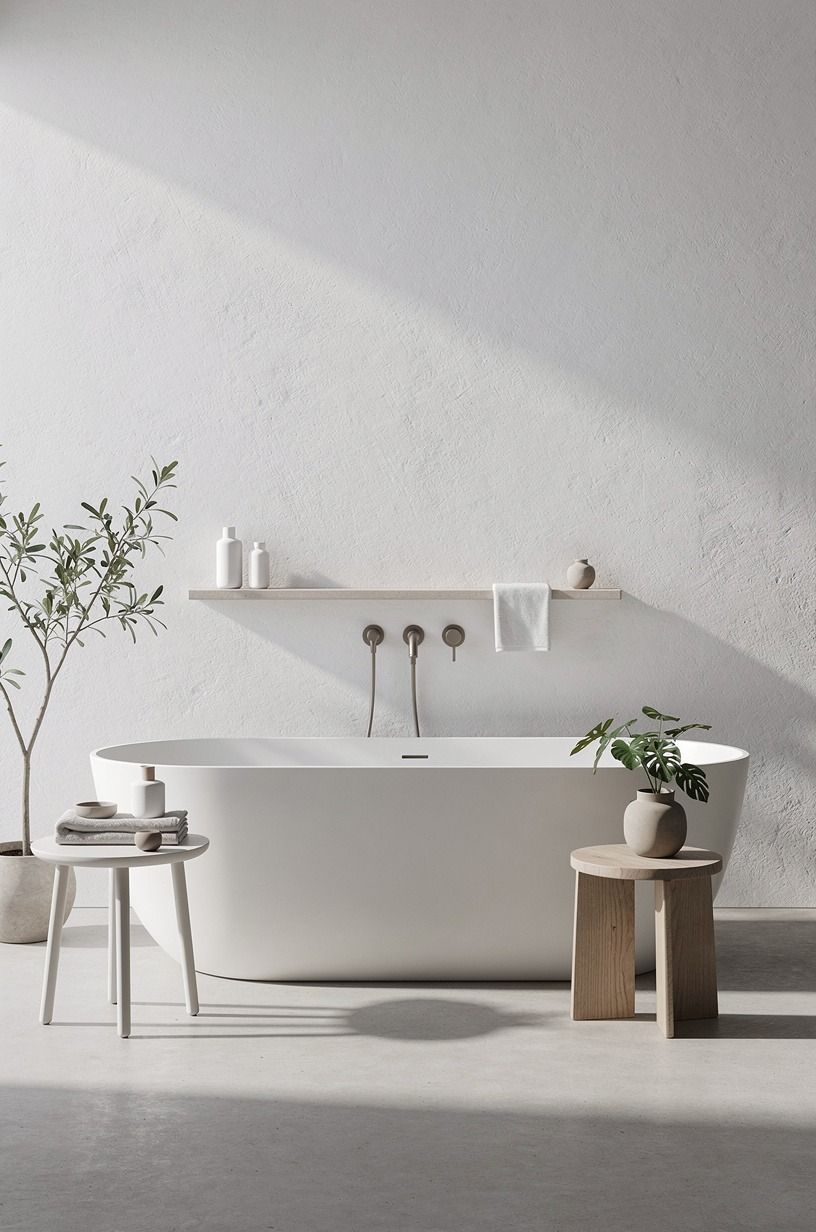
Spend your money on the wet zones and keep the dry walls simple. That’s the decision that protects your bathroom from looking cheap six months later.
A brushed brass faucet usually costs $120-$450, and it earns its place because you touch it every day. Your dry-wall splurge should be paint or clay finish, not expensive tile nobody will notice. Sage green, warm cream, natural wood, and oversized-chip terrazzo can carry the rest.
15Finish with a Moroccan tadelakt bathroom shelf moment
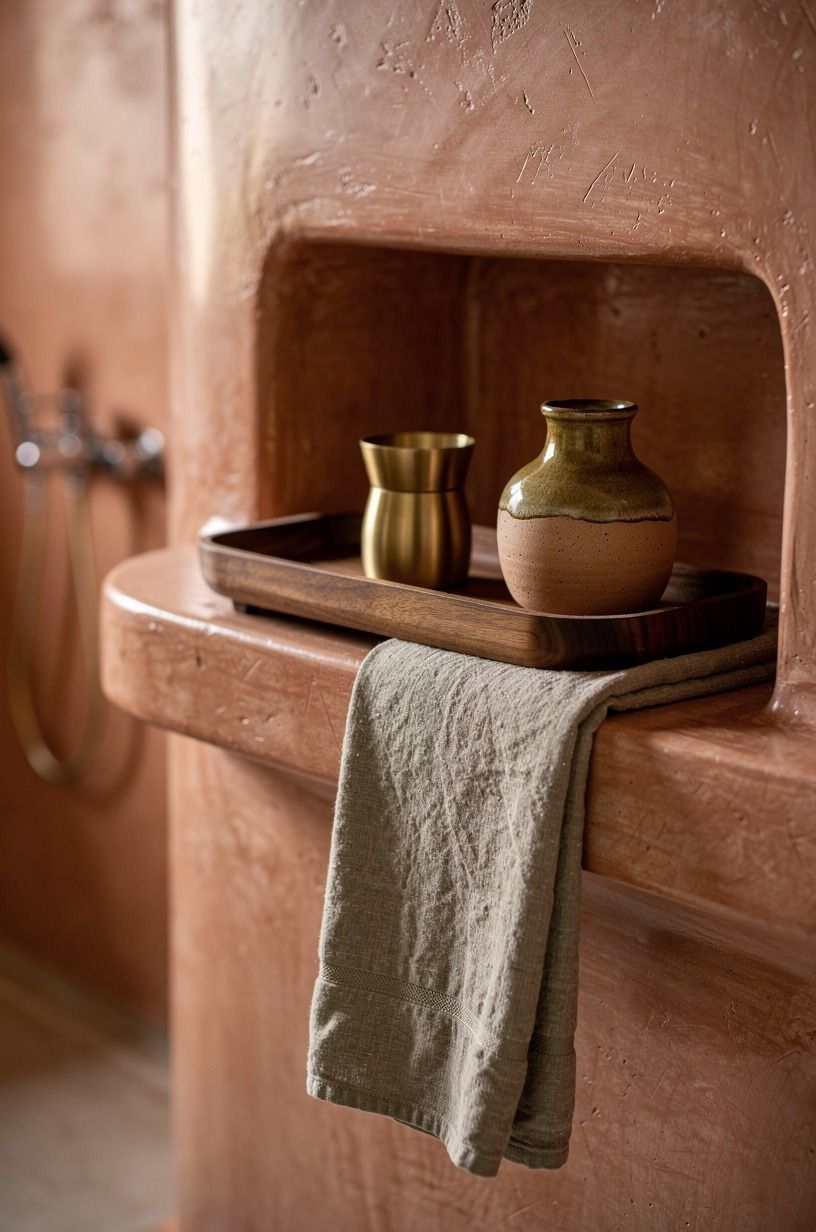
Build one shallow niche or ledge near the sink, then style it sparingly with terracotta, stone, olive, and hand-applied Venetian plaster.
Why I Think This Look Has Stuck Around
I used to think earthy bathrooms were mostly a Pinterest phase: beige plaster, a fancy faucet, two branches in a vase, done. Then I lived with one.
The difference wasn’t visual at first. It was the way the room stopped feeling like a utility closet.
The walls softened the sound of running water, the low light made late showers feel less clinical, and the texture gave my eye somewhere to rest while I was half awake.
That’s why I don’t think this look is fading in 2026. We’ve had years of white bathrooms trying to look expensive through sheer brightness. They photograph well, but plenty of them feel cold in real life.
Tadelakt and clay finishes bring back the part people are missing: atmosphere. Not drama for drama’s sake.
A bathroom that feels like it belongs to the house rather than a showroom.
There’s a practical line, though. I wouldn’t put plaster everywhere just because it’s fashionable.
Put durable material where water hits, keep your shower details boring in the best way, and save the handmade texture for the walls you see from the doorway. That’s where it earns its keep.
Your bathroom should still be easy to clean, still work on a rushed weekday, and still feel good when the towels are crooked (because they will be).
My strongest opinion? Spend less on decorative objects and more on the wall finish or lighting.
A $20 tray can look fine. A cold overhead light cannot be styled away. Once you get the material and glow right, your toothbrush cup suddenly looks like it belongs there.
Funny how that happens!
A Few Things Worth Answering
What is the best earthy adobe and clay tadelakt bathroom idea for a small bathroom?
A clay-painted feature wall behind a rounded mirror is the best small-space choice because it adds depth without taking floor area. IKEA HEMNES and a slim oak mirror keep your vanity zone useful, while your walls provide the warmth.
Where can I buy earthy adobe and clay tadelakt bathroom pieces on a budget?
Start with IKEA, Target Threshold, Wayfair, and local thrift stores for the basics. Facebook Marketplace is especially good for stools and solid-wood mirrors, since your bathroom only needs one or two real-looking materials, not a full matching set.
How much does an earthy adobe and clay tadelakt bathroom makeover cost?
A light cosmetic update typically costs about $200 to $1,200, depending on paint, textiles, and hardware. Paint and styling are the low-cost moves; keeping your existing vanity and plumbing is free, and it protects your budget.
Can I create an earthy adobe and clay tadelakt bathroom on a budget?
Yes, and you don’t need a demolition budget. Use clay-toned paint, switch in a linen shower curtain, and shop secondhand for wood. Your existing tile can stay if the new color palette makes it look deliberate.
Is an earthy adobe and clay tadelakt bathroom worth it in a small space?
Yes, it’s often more worth it in a small bathroom because every surface is visible. One textured wall gives your eye a focal point, and a wall-mounted mirror keeps your counter from feeling crowded. Why add more stuff when one finish can do the job?
Is an earthy adobe and clay tadelakt bathroom a good idea for a rental?
Yes, if you stick to reversible layers. Peel-and-stick sconces, a tension-rod linen curtain, removable hooks, and a freestanding teak stool give your rental the mood without risking your deposit. Try these organic modern spa bathroom ideas for more renter-friendly direction.
Where I’d Start First
If I had to pick one, I’d start with the clay-toned wall behind your mirror. You can’t layer warmth over a cold, blank backdrop, and every brass fixture will look better against it. Pin that wall idea for later and explore these rustic limewash bathroom looks.