
 by
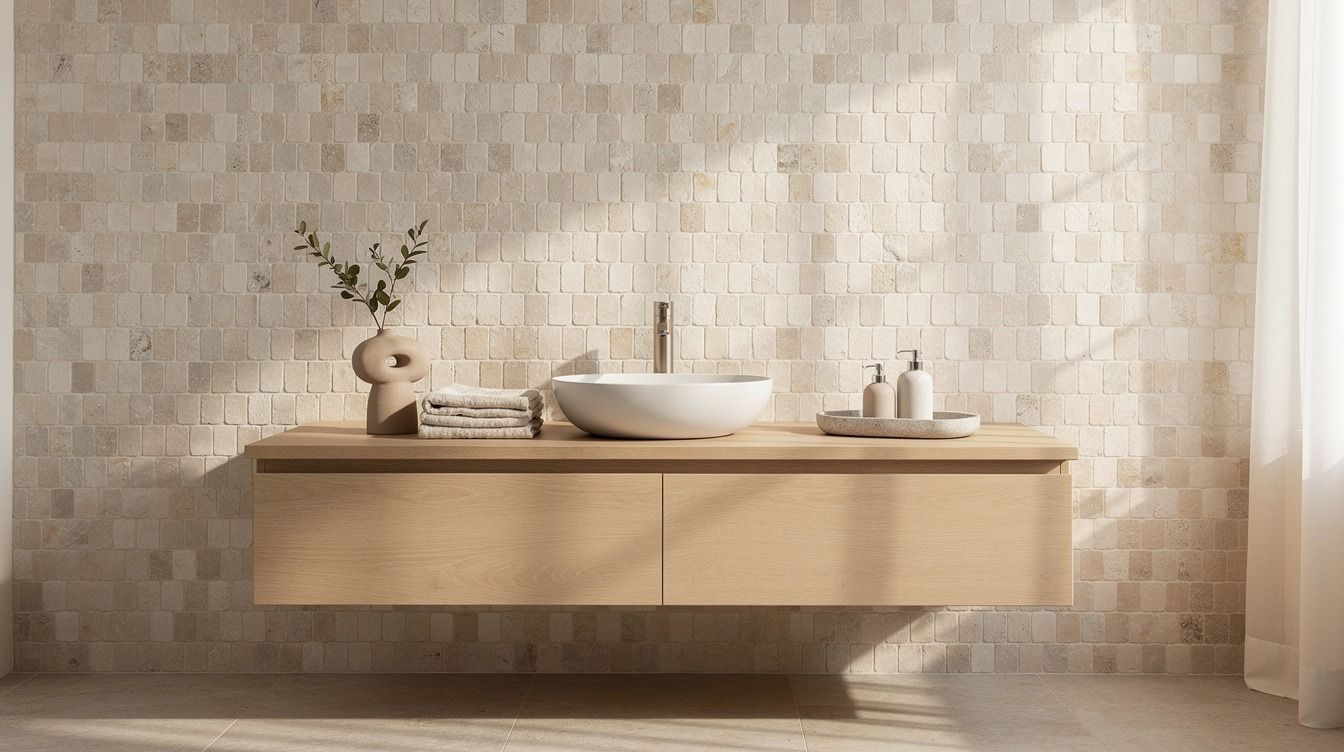
by Neutral zellige tile bathroom ideas work because handmade variation brings warmth without adding visual clutter. I once chose perfectly flat white tile for a small bath, and it looked more like a clinic than a retreat. Zellige fixes that. The uneven glaze catches light, so your room feels soft instead of sterile.
- Layer creamy zellige behind the vanity
- Use The Quiet-Grout Rule in a neutral tiled shower
- Paint the ceiling in Benjamin Moore Chestertown Buff
- Frame the shower with a limestone threshold
- Hang a rippled brass mirror over soft tile
- Build The Three-Height Light Stack
- Choose vertical stacking for earth tone bathroom shower tiles
- Float a pale oak vanity against the tile
- Try The One-Color Drift instead of a border
- Add a linen curtain where glass feels too hard
- Set a warm rug against the cool floor
- Use Farrow & Ball Hague Blue in the powder room
- Make The Towel-Ladder Pause feel intentional
- Mix plaster walls with a zellige wainscot
- Choose brushed brass over polished chrome
- Put neutral zellige on one wall, not every wall
- Spend where water hits, save where it doesn’t
- Let the floor stay quieter than the walls
1Layer creamy zellige behind the vanity
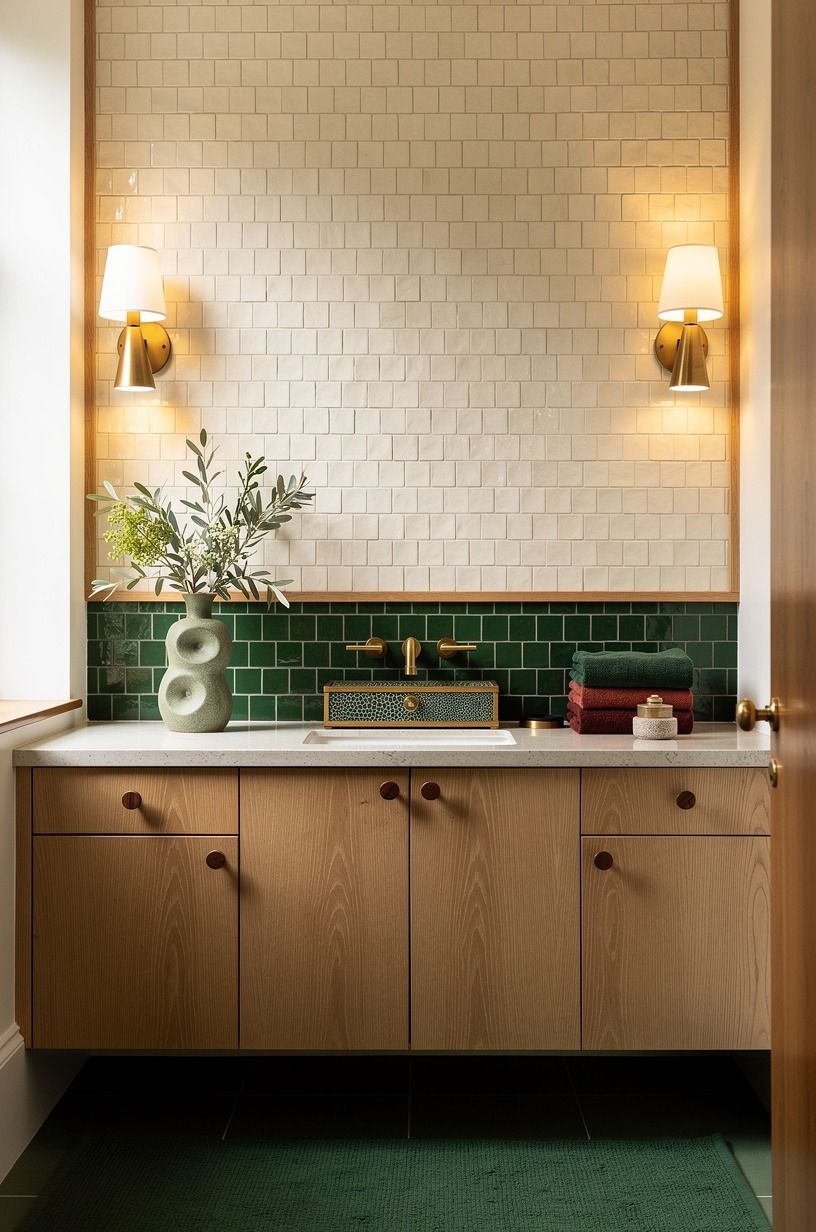
Run ivory Moroccan zellige from the counter to the ceiling behind your vanity, then let the rest of your walls stay quiet. You’ll get movement where you need it most, especially when morning light skims across those slightly wonky edges.
Choose a vanity between 32 and 36 inches high so your backsplash reads as a real feature, not a skinny stripe. I’d skip glossy white subway tile here. It’s cheaper, sure, but its perfect grid kills the handmade warmth you wanted.
2Use The Quiet-Grout Rule in a neutral tiled shower
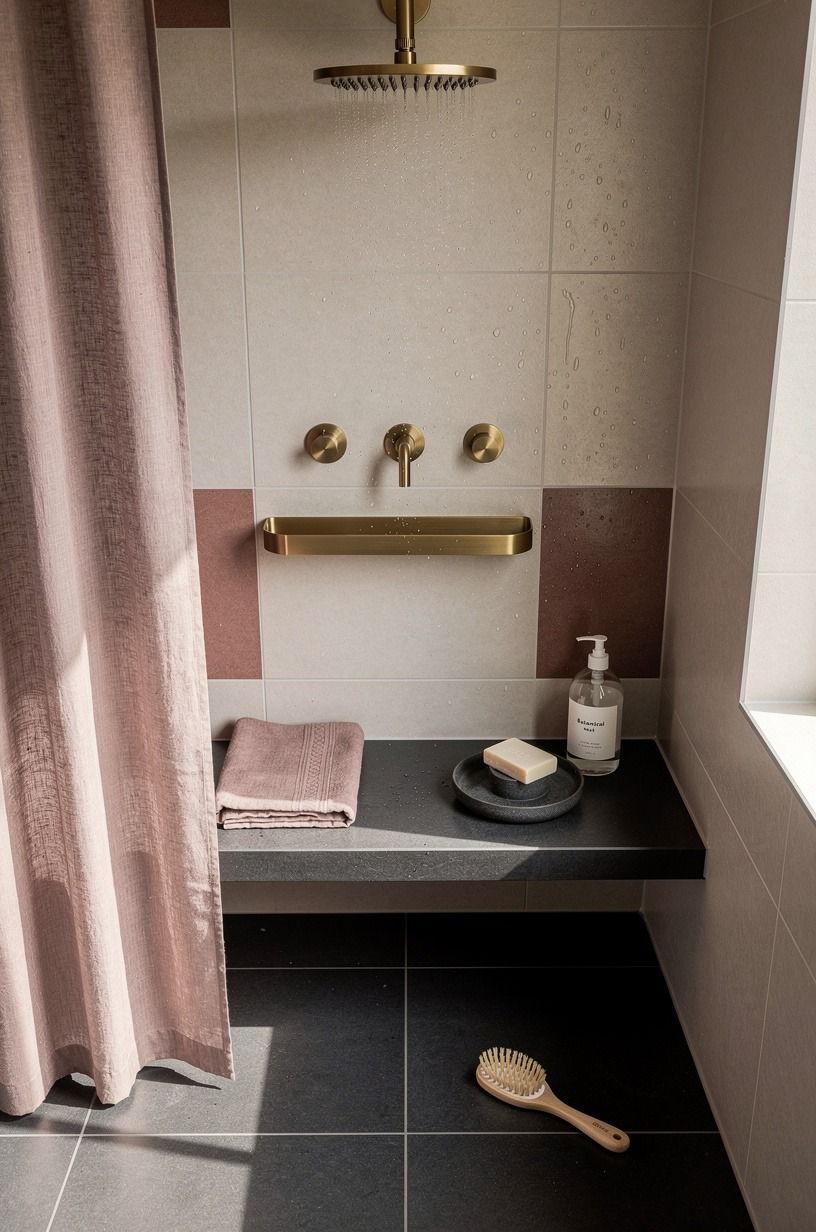
Pick grout that sits close to your tile color. With warm ivory grout, each zellige piece still gets definition, but you won’t end up with a checkerboard on your shower walls.
Your neutral shower tile should look gentle from six feet away and textured up close. That’s the whole point. If you’re still deciding whether handmade tile earns its price, read what makes Moroccan zellige tile worth considering.
3Paint the ceiling in Benjamin Moore Chestertown Buff
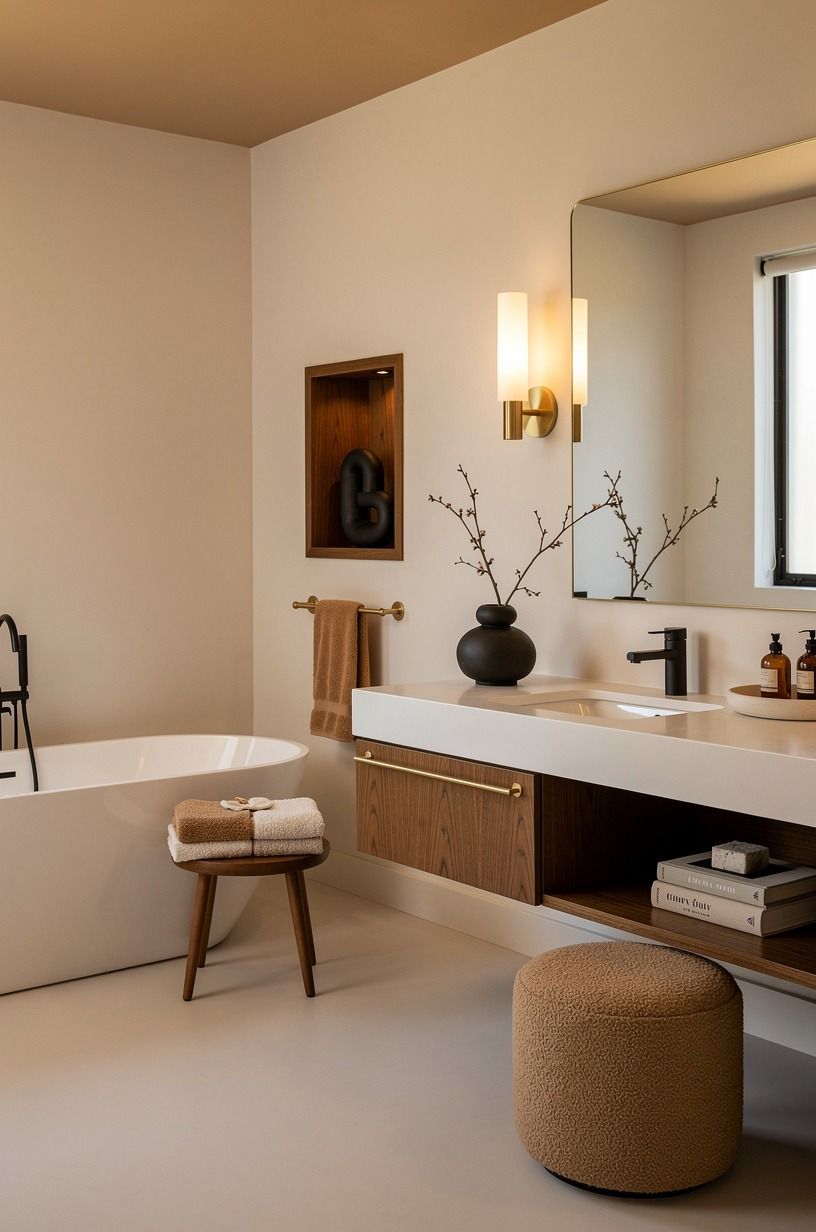
A pale neutral bathroom can take more color overhead than you’d think. Benjamin Moore Chestertown Buff HC-9 gives your ceiling a baked-clay undertone that makes cream tile look intentional, not yellow.
Keep the walls lighter, then let your eye travel upward. But don’t use a bright white ceiling with earthy tile. It slices the room in half, and your zellige will suddenly look colder than it is.
4Frame the shower with a limestone threshold
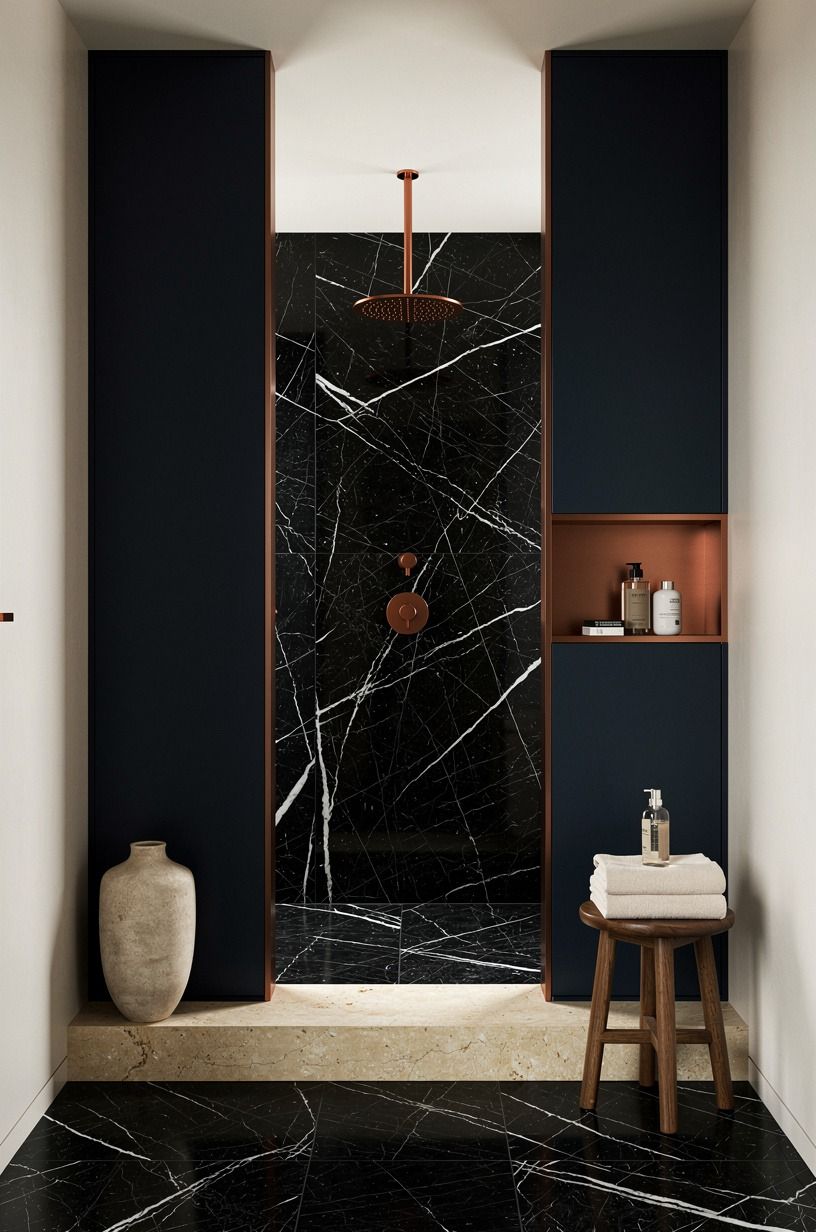
A slim honed limestone threshold grounds a neutral tiled shower without competing with the glossy tile face.
5Hang a rippled brass mirror over soft tile
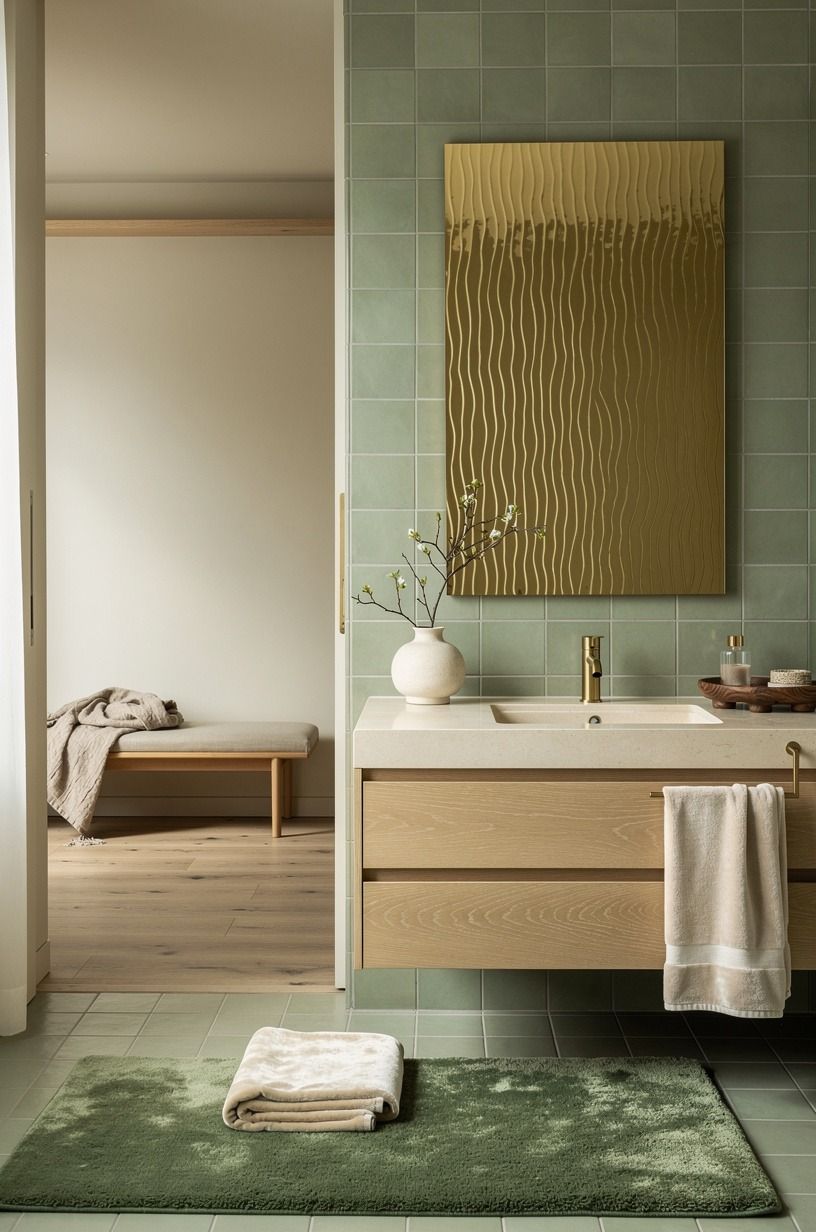
A mirror with an imperfect outline makes sense beside handmade tile. Try West Elm Metal Framed Rounded Mirror in antique brass, or find an older brass piece at a flea market if you want more patina.
Your mirror should be wide enough to hold its own against the tile field. I’ve made the too-small-mirror mistake, and it’s miserable: the vanity looks undersized, the wall looks busy, and you keep buying accessories to compensate.
Don’t. Buy the right mirror once.
6Build The Three-Height Light Stack
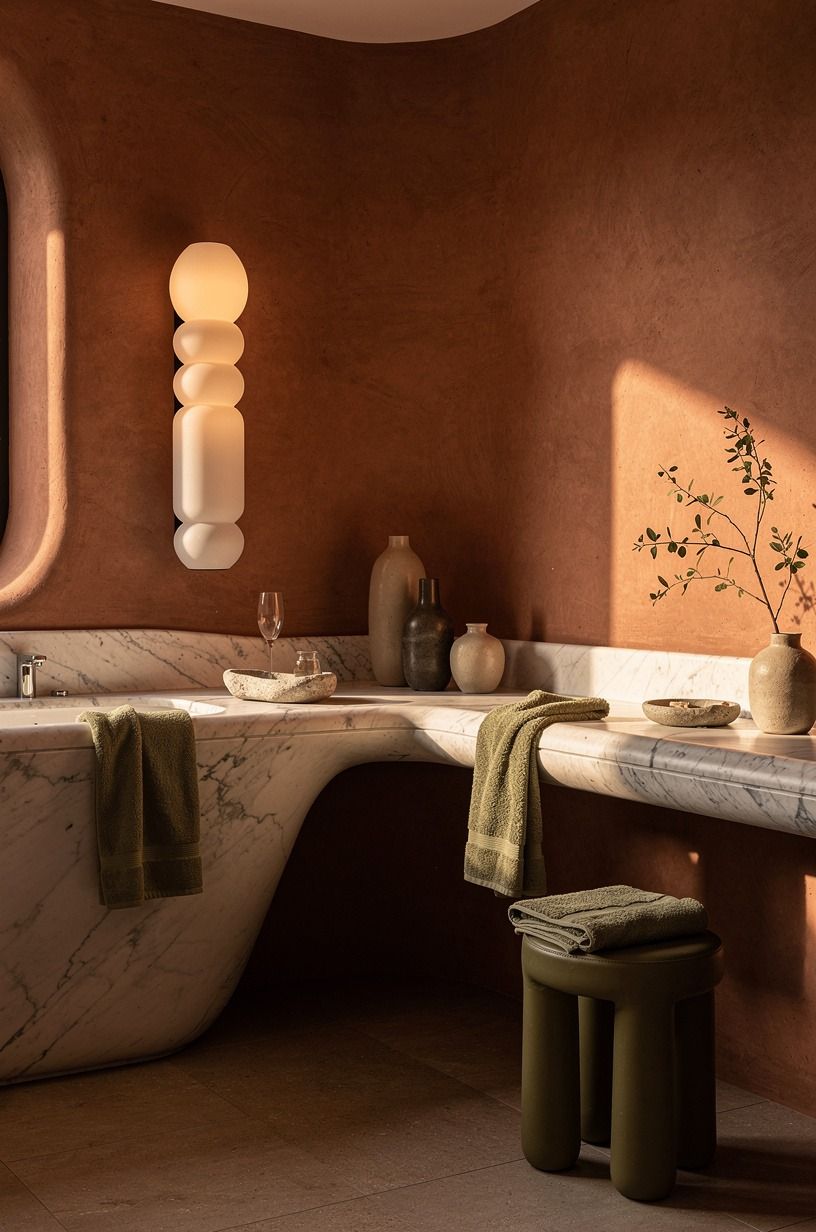
Use three light heights: ceiling light, face-level sconces, and a low candle or tiny lamp near the tub.
7Choose vertical stacking for earth tone bathroom shower tiles
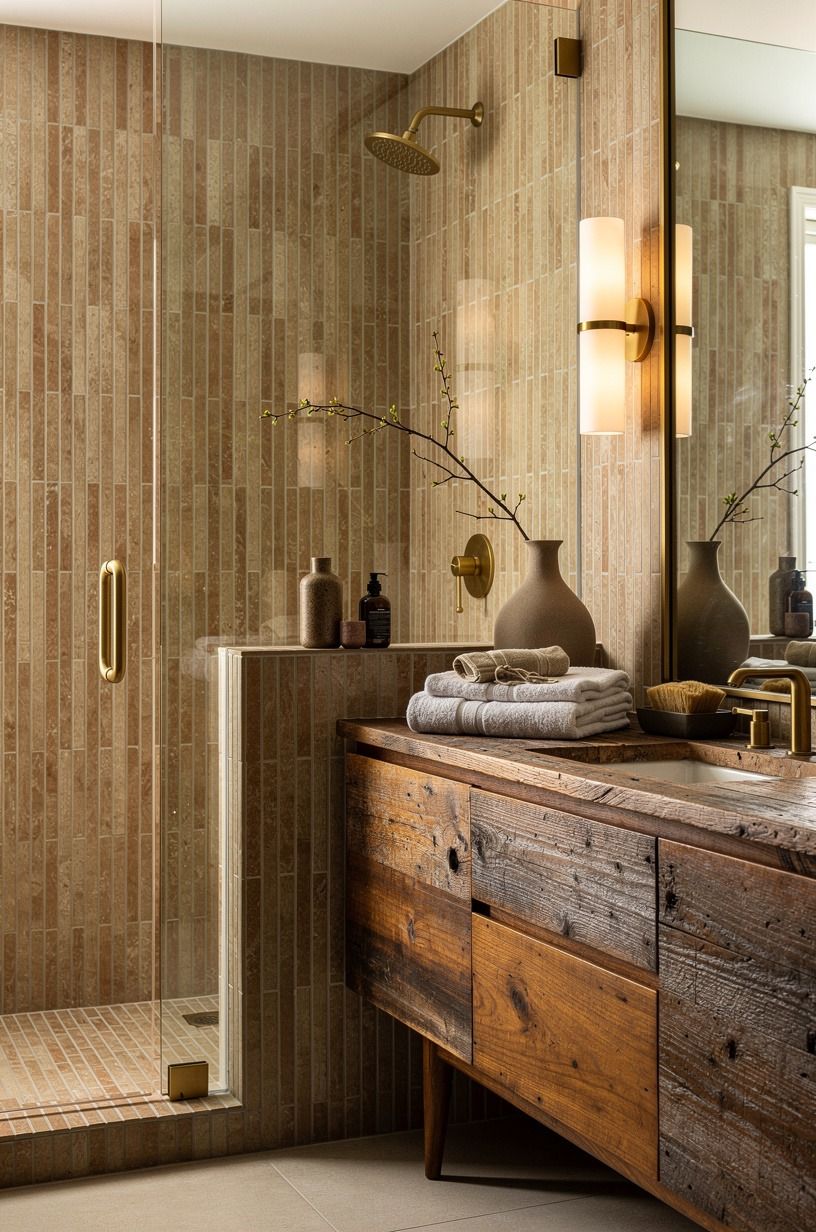
Stacking rectangular zellige vertically pulls your ceiling higher without adding a loud pattern. Use hand-glazed sand zellige in a narrow format, especially if your shower is short on width.
Your eye follows the upright lines, and the handmade edges keep the look from turning rigid. I prefer vertical stacking over herringbone in a small shower. Herringbone is pretty, but it asks your room to perform when it should be resting.
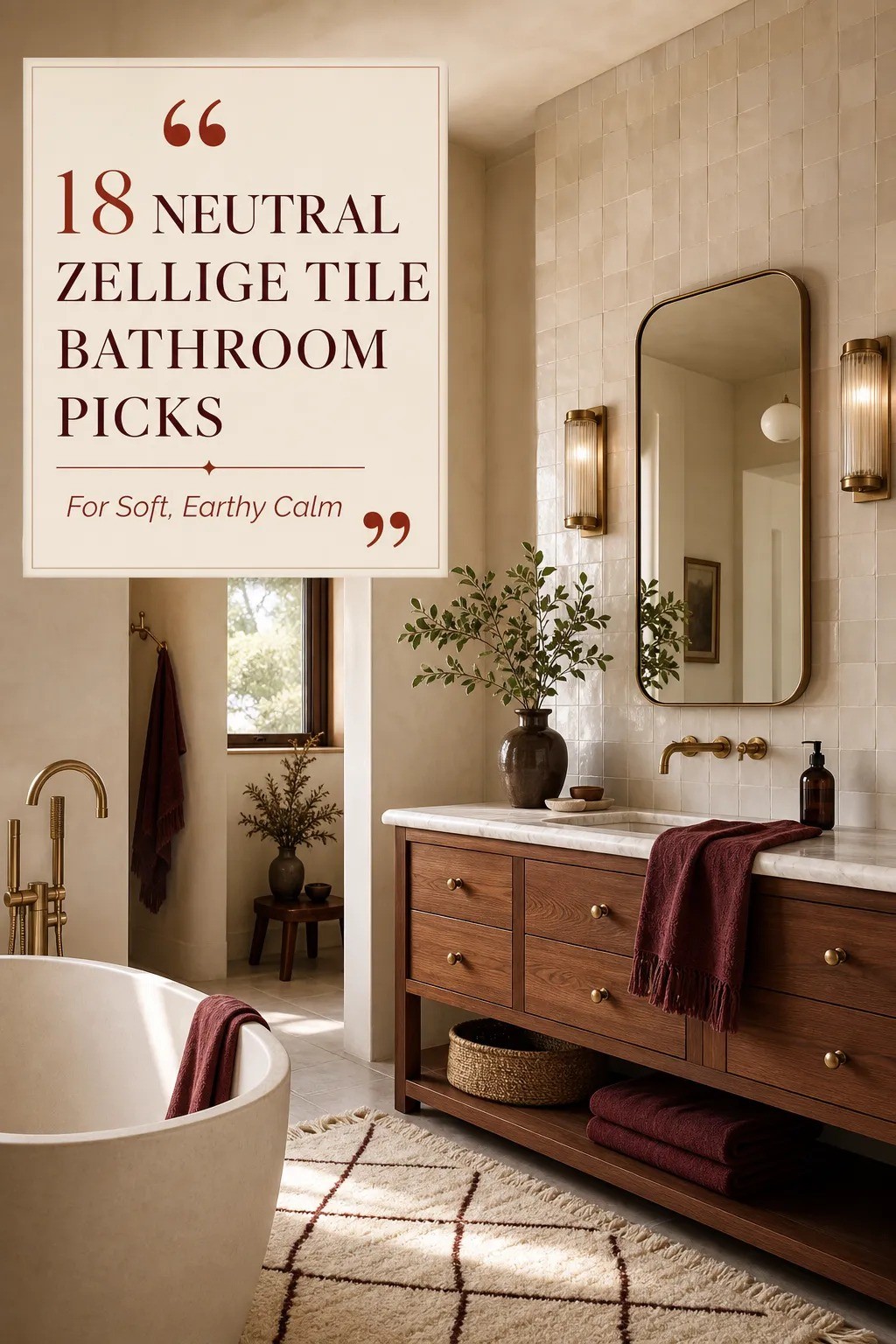
8Float a pale oak vanity against the tile
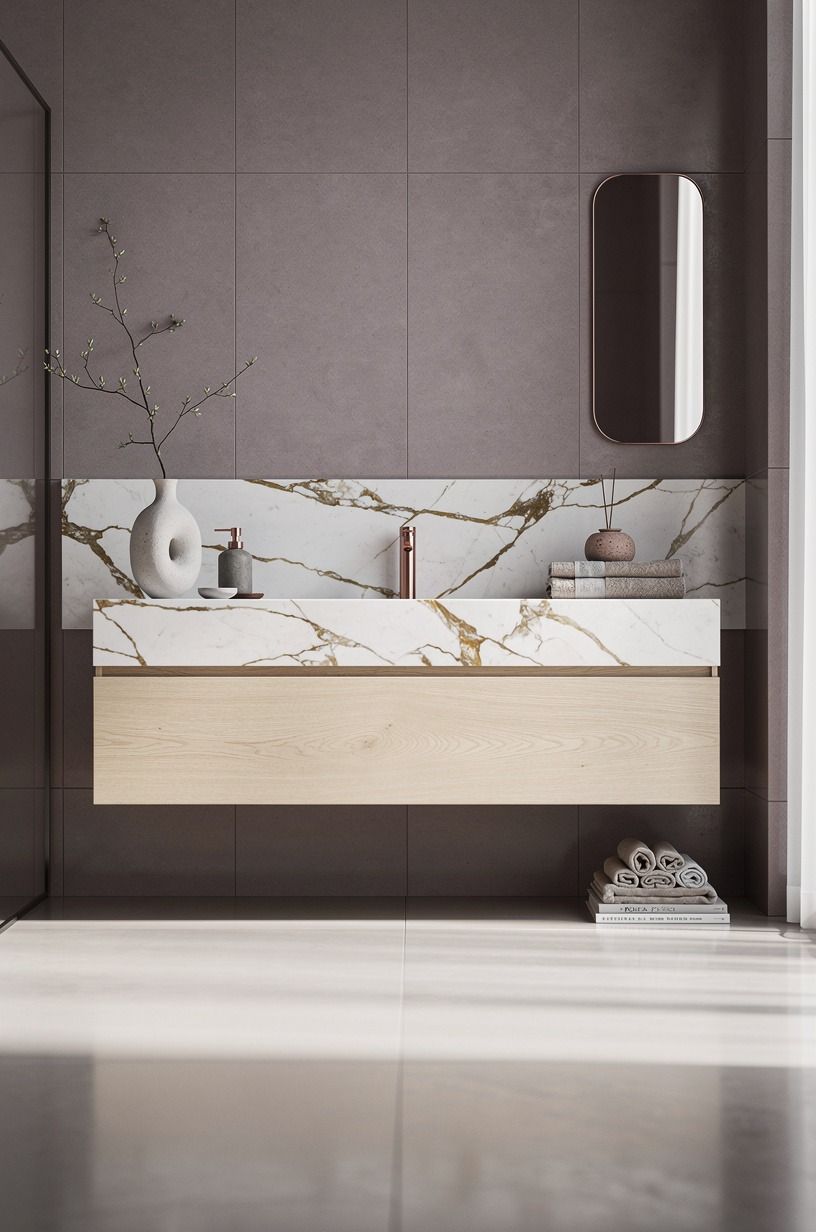
A wall-mounted vanity lets your floor continue underneath, which makes your bathroom feel less boxed in. IKEA GODMORGON oak-effect vanity can work beautifully if you change the pulls and pair it with a quieter counter.
Leave enough breathing room around the unit so you can see the floor tile. And choose white oak or ash over orange wood tones. Orange oak beside creamy zellige is a fight you don’t need in your morning routine.
9Try The One-Color Drift instead of a border
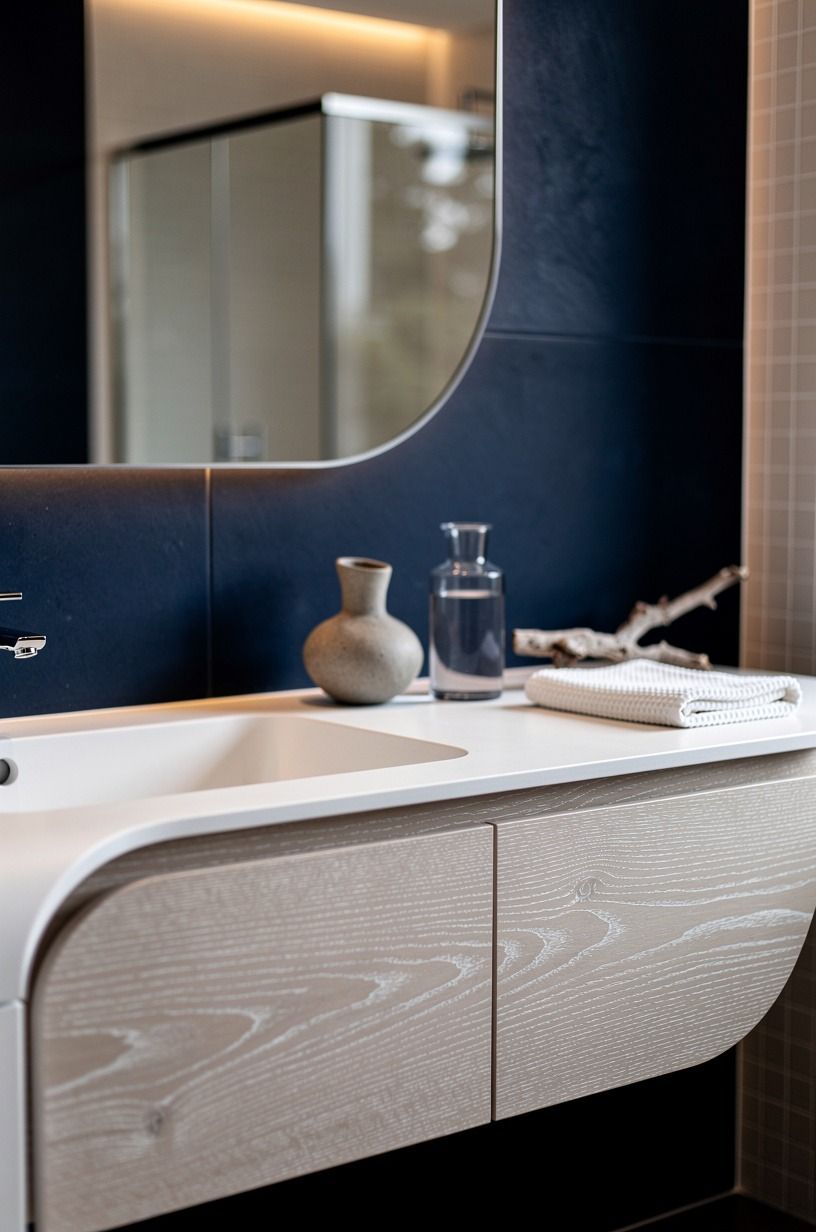
Use one neutral zellige color across the shower wall, then let the pieces vary naturally. Oatmeal glazed zellige has enough shift from tile to tile that you don’t need a decorative border shouting across the room.
Borders tend to date quickly because they announce a design decision too loudly. Your tile already has a story in the glaze. Let that story do the work, then borrow more quiet-wall ideas from these soft luminous Venetian plaster bathrooms.
10Add a linen curtain where glass feels too hard
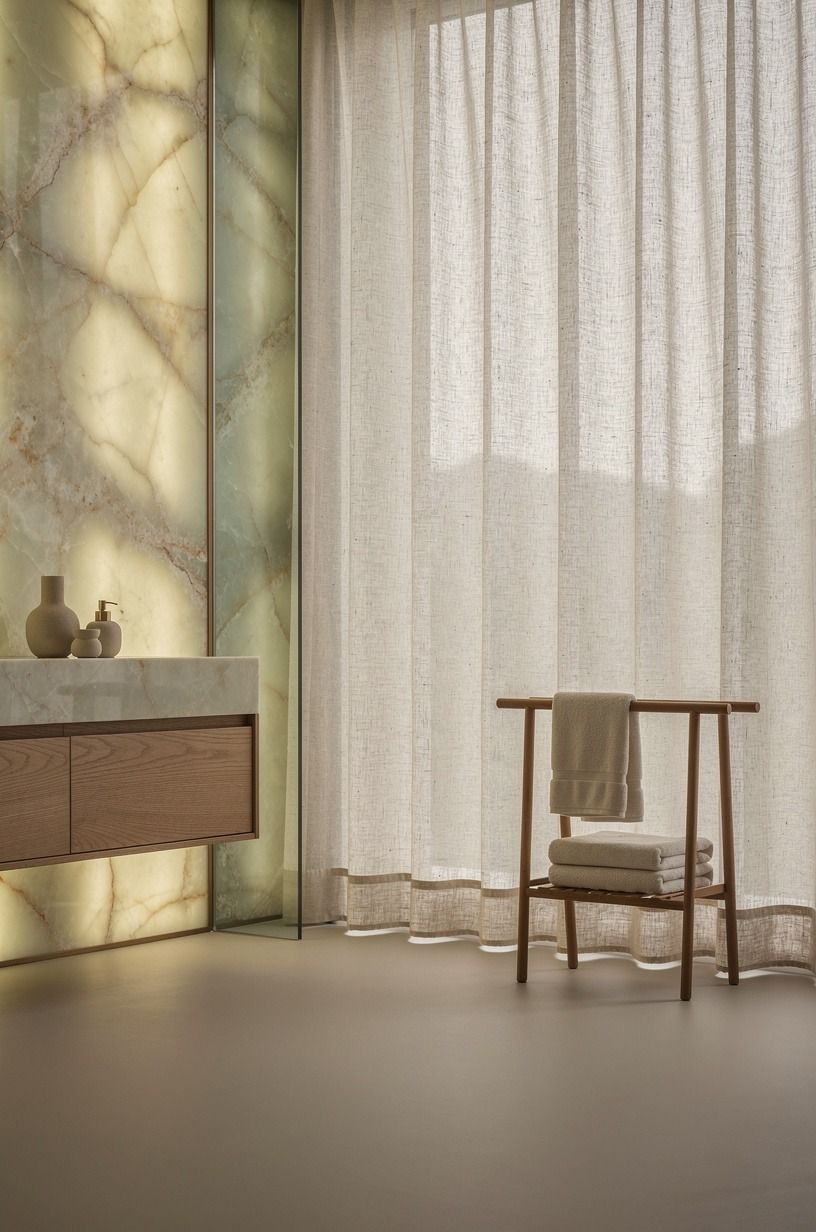
A shower curtain in Belgian flax linen can soften a tiled bathroom faster than almost anything else.
11Set a warm rug against the cool floor
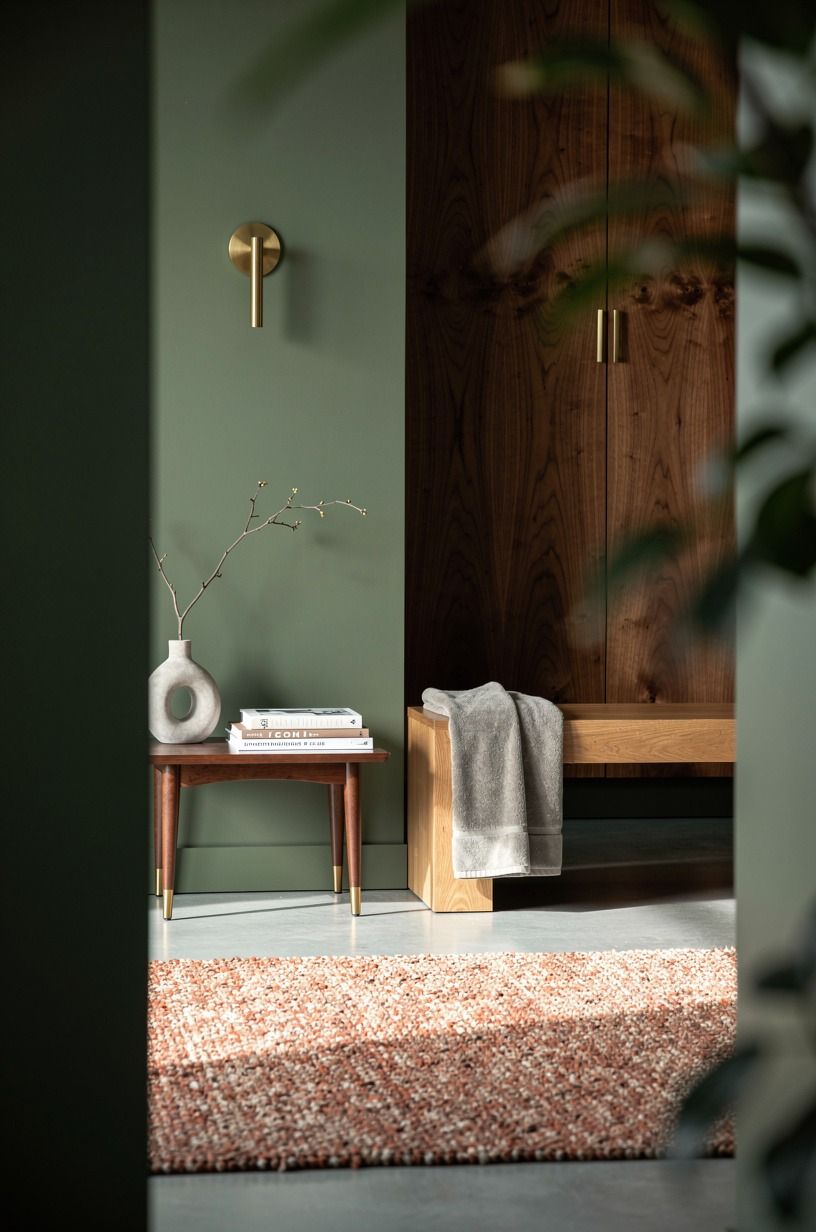
Put a washable runner beside the vanity, preferably one with faded rust, cream, and dusty brown. Ruggable Kamran-style washable runner is the right scale for a narrow bath because it reads like a textile, not a fluffy bath mat.
Your feet notice the difference before your eyes do. A 60-by-30-inch standard tub can feel chilly beside bare tile, while a low-pile runner makes that landing spot more comforting. Avoid bright optical patterns.
They make handmade tile look nervous.
12Use Farrow & Ball Hague Blue in the powder room
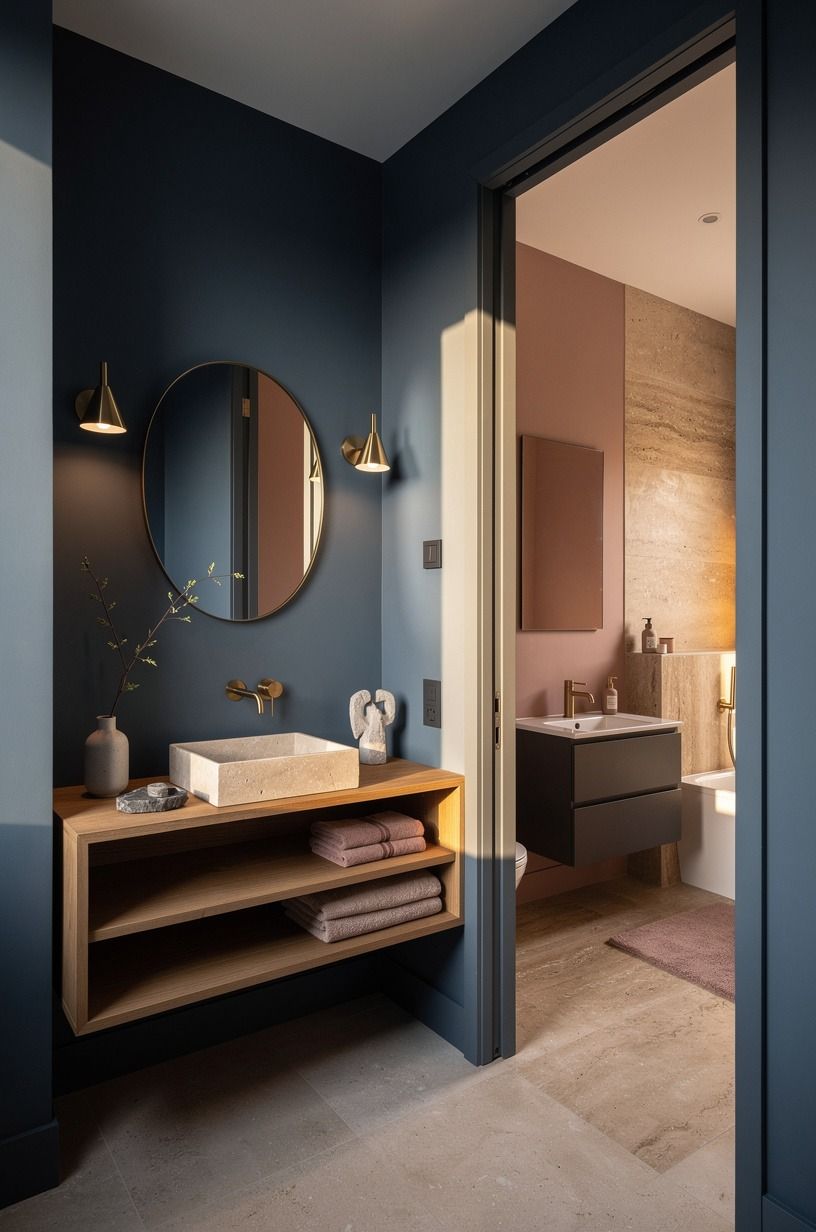
Deep paint and neutral zellige are better friends than most people expect. Farrow & Ball Hague Blue No. 30 turns creamy tile more dramatic, especially in a powder room where you don’t need to chase daylight.
Paint every wall, including the trim, if you’re committing. But keep the tile neutral and tactile.
Your powder room can handle mood, and the glossy irregular surface will flash softly when someone opens the door. It’s a small bit of theater!
13Make The Towel-Ladder Pause feel intentional
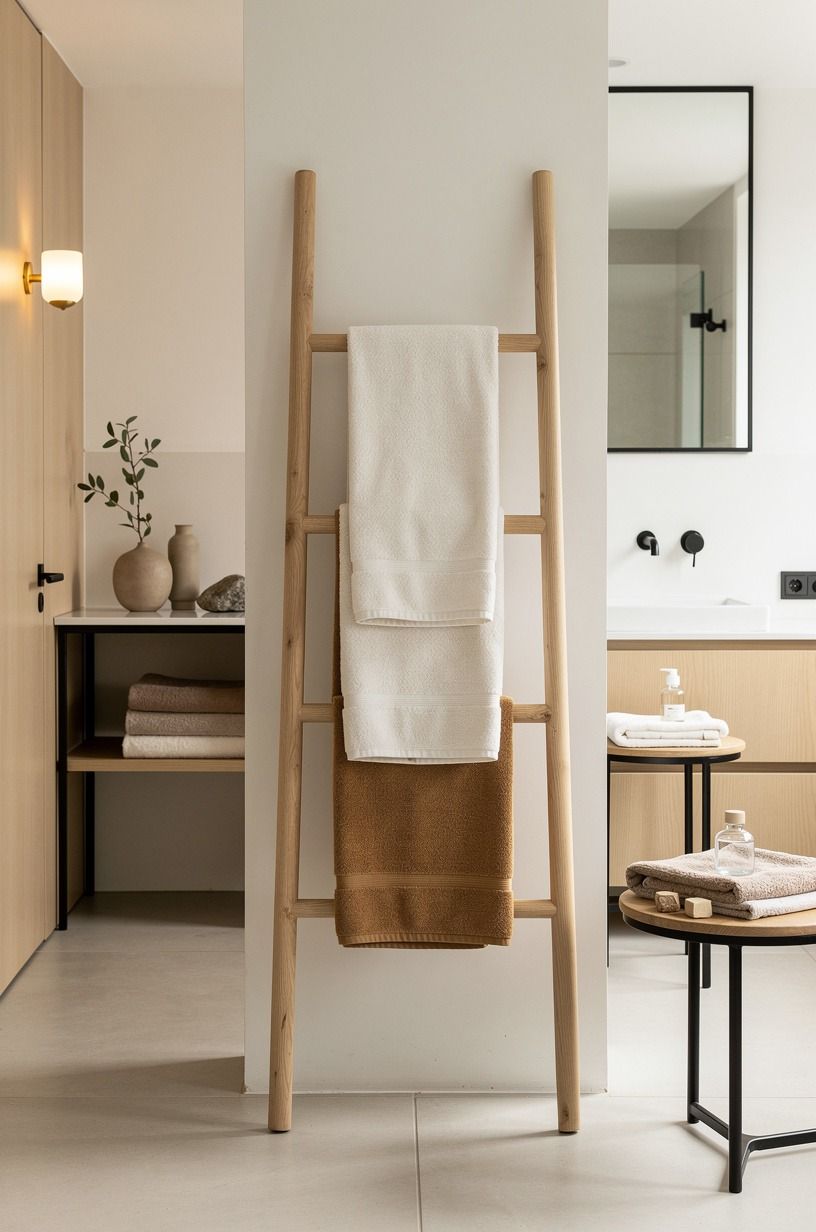
Lean a simple ladder beside the shower and hang only two towels on it.
14Mix plaster walls with a zellige wainscot
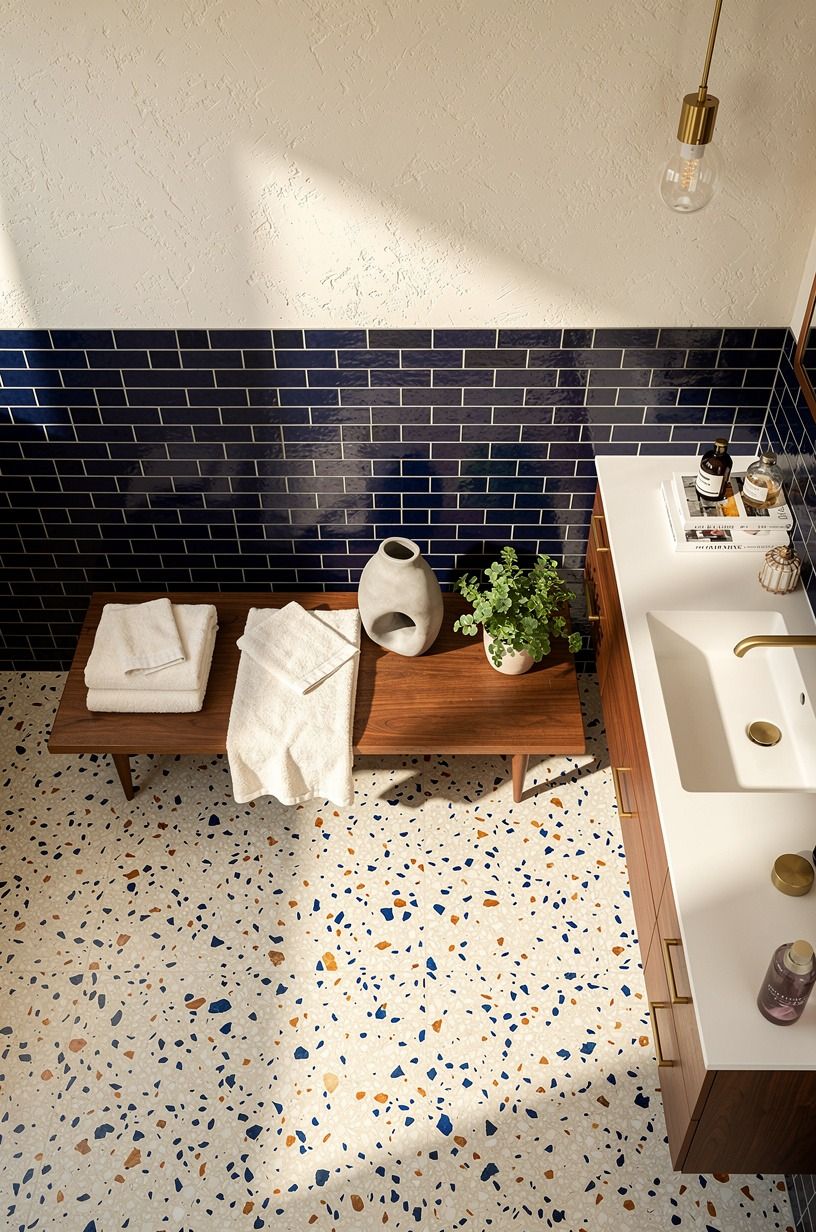
Use tile on the lower half of the wall, then finish above it with limewash or plaster. limewash in warm chalk white gives you a cloudy surface that plays nicely with the tile’s shine.
This works especially well near a toilet, where you want a durable splash zone without covering every inch in tile. Keep at least 21 inches clear in front of the toilet, then make the wall behind it quietly memorable. For more texture options, see these calm organic limewash bathroom ideas.
15Choose brushed brass over polished chrome
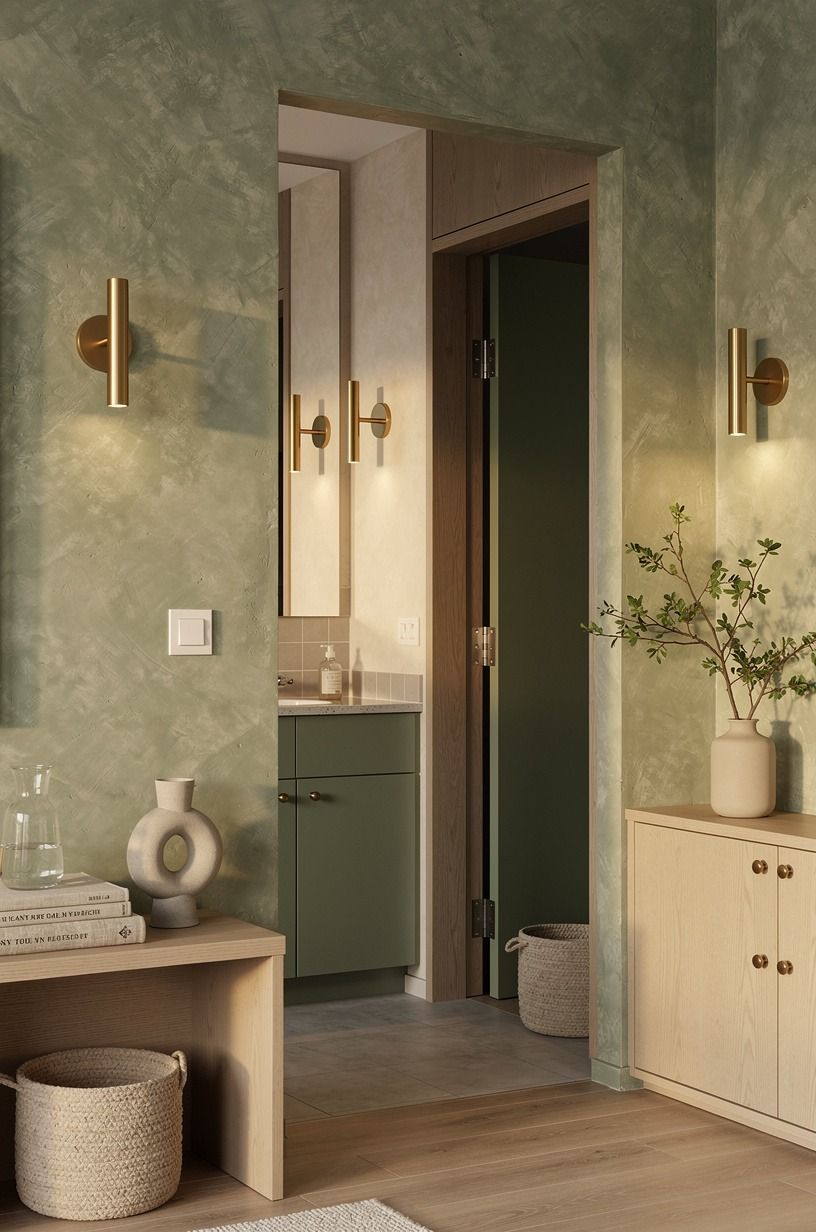
Brushed brass has enough softness to sit beside handmade glaze, while polished chrome can feel too sharp. A brushed brass faucet typically lands around $120 to $450, depending on the valve and finish.
You don’t have to match every metal. In fact, you shouldn’t.
Let brass carry the faucet and mirror, then use aged bronze on lighting if you want more depth. Your bathroom will feel gathered over time instead of bought in one impatient afternoon.
16Put neutral zellige on one wall, not every wall
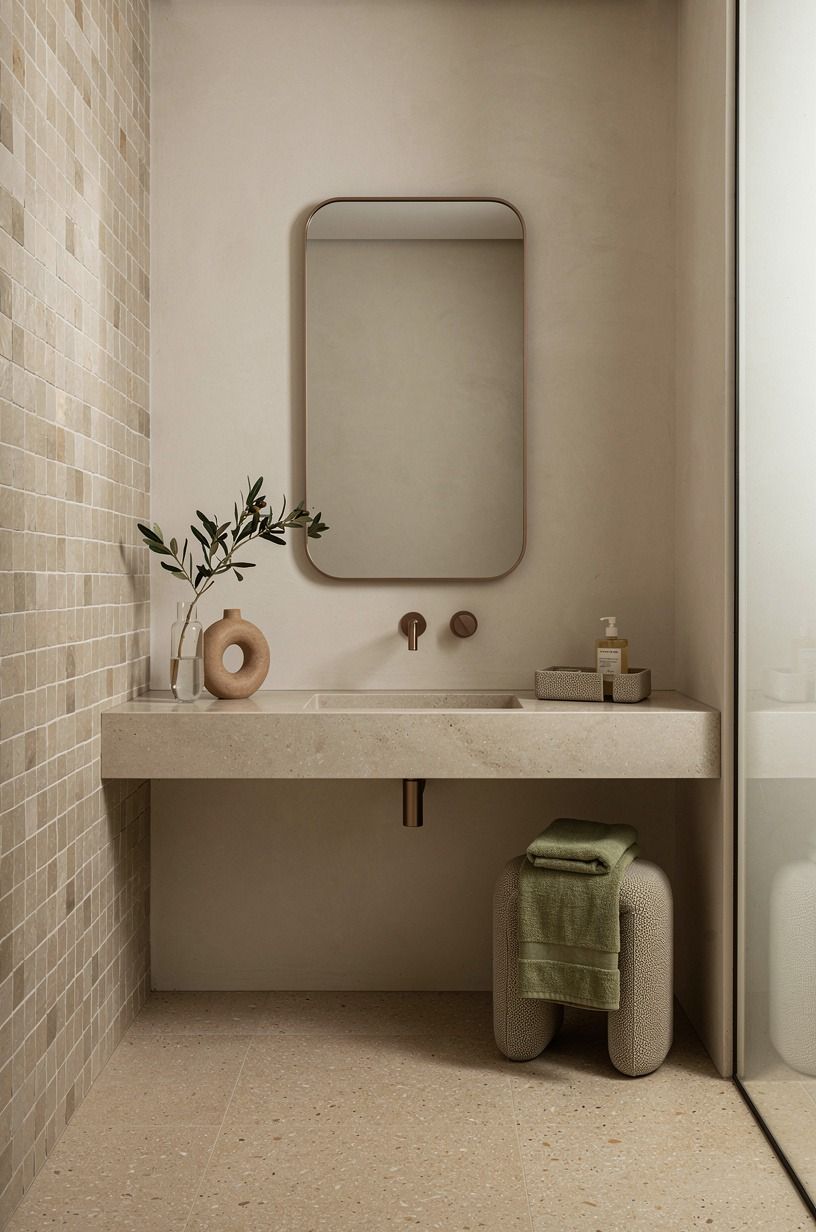
A single tiled wall behind the vanity can have more impact than tile everywhere.
17Spend where water hits, save where it doesn’t
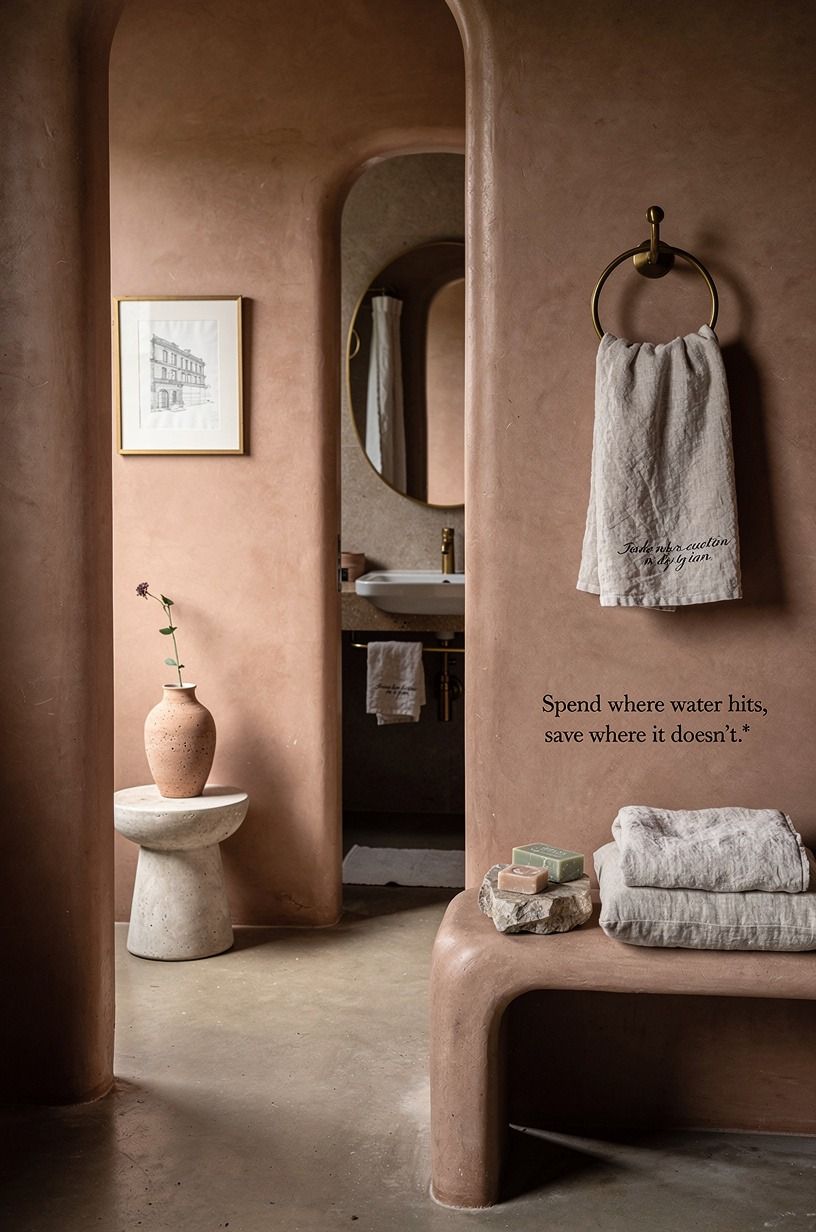
Put your money into the shower wall, faucet, and lighting, then save on the vanity, mirror, and textiles. Here’s a useful range for a neutral tile bathroom refresh:
If you’re watching every dollar, partial tile is the smart call. A wall of handmade cream zellige costs more than paint, but it gives your room the tactile detail people notice first.
18Let the floor stay quieter than the walls
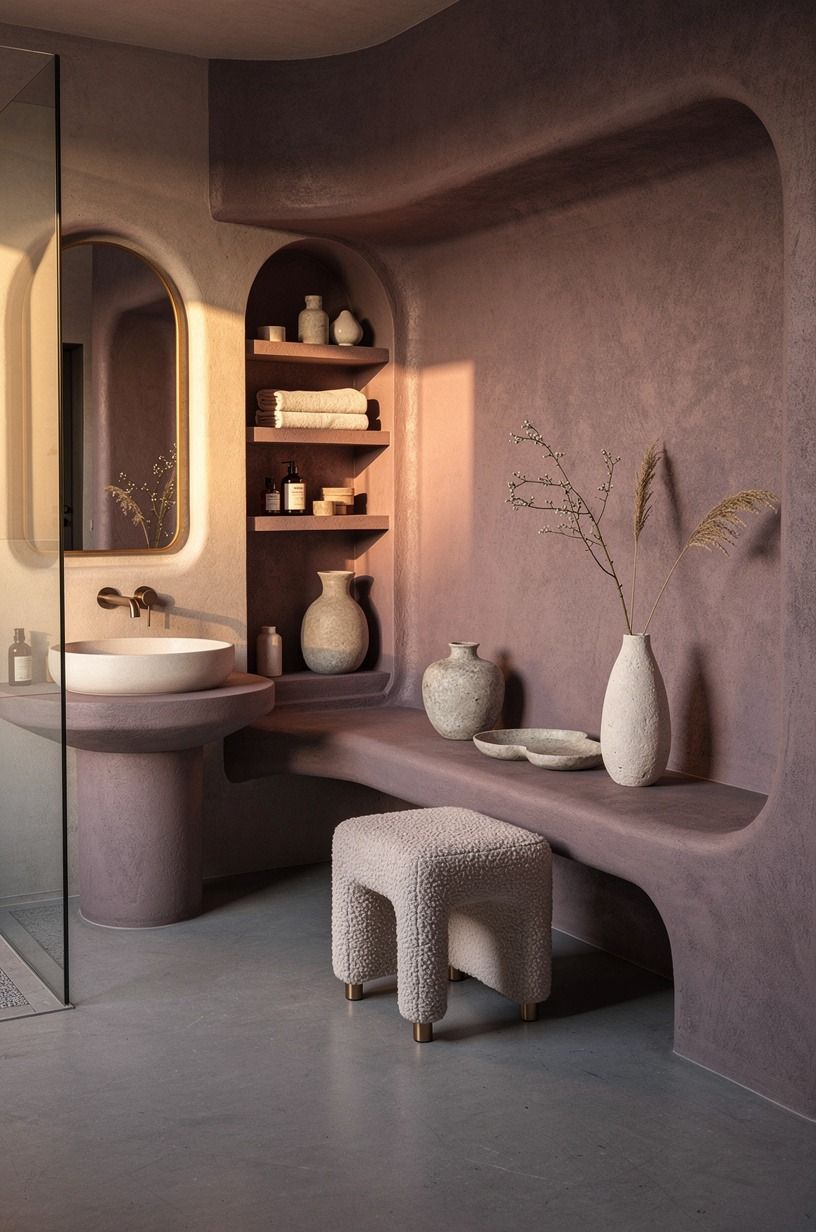
Pair expressive wall tile with a restrained floor, such as matte porcelain in warm putty or a pale limestone-look tile. matte mushroom porcelain gives your bathroom a stable base while the zellige catches light above it.
Your floor has a hard job. It deals with water, hair, dropped bottles, and everything else that happens before coffee. Save the glossy, irregular surface for your walls, where you can enjoy it without constantly wiping it down.
Why I Think Neutral Zellige Has Sticking Power
I went back and forth on zellige for years because I worried it had become one of those things people choose just because it looks good in a photo. And yes, a bathroom full of handmade tile can look suspiciously styled if every other decision is equally precious. A sculptural vase.
Fancy soap. A stool nobody sits on.
You know the room.
But zellige has held up for me because it answers a problem that flat tile never quite solves: bathrooms are full of hard, wipeable things. Glass, porcelain, chrome, stone, painted drywall. You need one surface with a little wobble in it, something that changes as the day changes.
In the morning, the glaze can look pale and almost chalky. At night, it holds a warmer reflection from a lamp or sconce.
I’ve also learned that neutral doesn’t mean blank. The best neutral tile bathrooms have contrast, just not loud contrast. A creamy tile beside aged brass.
A pale oak vanity under a deep blue ceiling. A linen curtain that looks a little rumpled because somebody uses it.
Your room should feel lived-in, not preserved for inspection.
The part I’d resist is the impulse to make everything match. Don’t match your grout to your towels, your towels to your basket, and your basket to your vanity.
That’s where calm turns staged. Pick a warm base, use one darker edge, and let the handmade tile be imperfect on purpose. It’s more forgiving.
So are you.
A Few Things Worth Answering
What is the best neutral zellige tile bathroom idea for a small bathroom?
A vertical shower wall in cream zellige tile is the strongest small-bath choice because it pulls your eye upward. Pair it with an IKEA GODMORGON vanity in pale oak, and keep your floor matte so the room feels open rather than busy.
Where can I buy neutral zellige tile bathroom pieces on a budget?
Start with IKEA, Target Threshold, Wayfair, and Facebook Marketplace for mirrors, vanities, and lighting. Your best savings come from buying the tile only for one wall, then using secondhand brass or wood pieces around it.
How much does a neutral zellige tile bathroom makeover cost?
A modest refresh usually costs about $200 to $1,200 if you keep plumbing where it is and focus on paint, a mirror, textiles, and a faucet. Painting is the free-ish move if you already own supplies, while a tiled shower pushes the budget much higher.
Can I create a neutral zellige tile bathroom on a budget?
Yes, and you don’t need to tile the whole room. Use peel-and-stick backsplash panels outside wet zones, paint with a warm neutral, and add a flax shower curtain. One real tile sample framed near the sink can even guide your palette.
Is a neutral zellige tile bathroom worth it in a small space?
Yes, because a small bathroom lets you use a limited amount of hand-glazed tile for a big visual payoff. Keep the shower layout simple, use one wall as your focal point, and let the tile’s variation do the decorating.
Is neutral zellige tile a good idea for a rental?
Yes, if you keep the permanent work minimal. Try removable wallpaper, a tension-rod linen curtain, and peel-and-stick tile outside direct water. You’ll get the earthy look without handing your landlord a renovation bill.
Where I'd Start First
If I had to pick one, I’d start with a single creamy zellige vanity wall. You can’t fake the way imperfect glaze catches low light, while matching accessories always look rehearsed. Pin that wall for later and browse these handmade glossy zellige bathroom ideas.