
 by
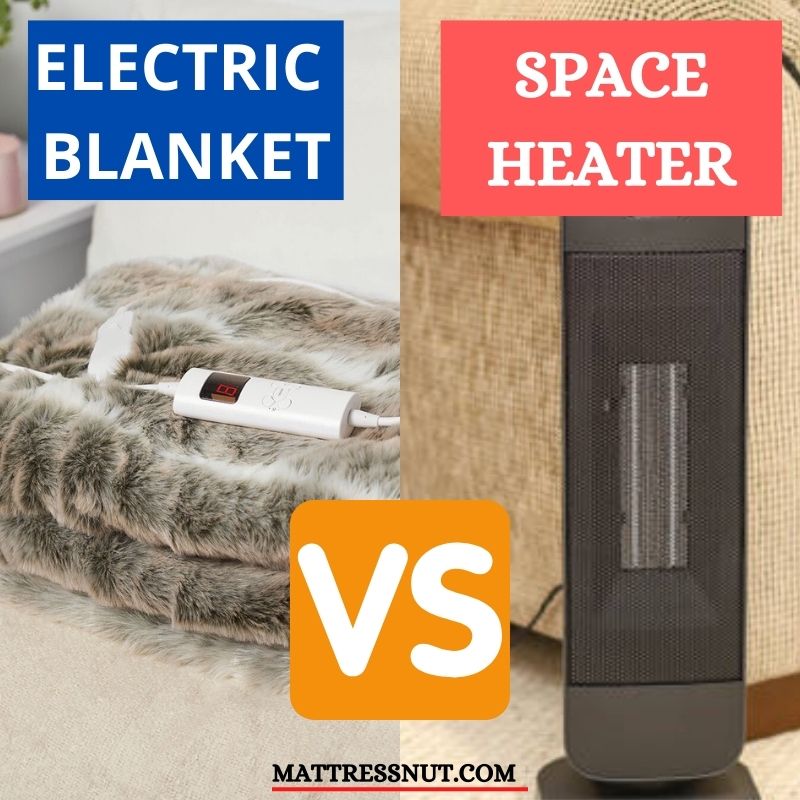
by An electric blanket is better for solo sleepers and overnight use. It draws 50-150 watts, costs pennies per night to run, and warms you directly without heating the whole room. A space heater makes more sense when you need to warm a room for multiple people or while you're active and not in bed. For sleep, the electric blanket wins on efficiency, safety, and noise.
How electric blankets and space heaters work
Electric blankets
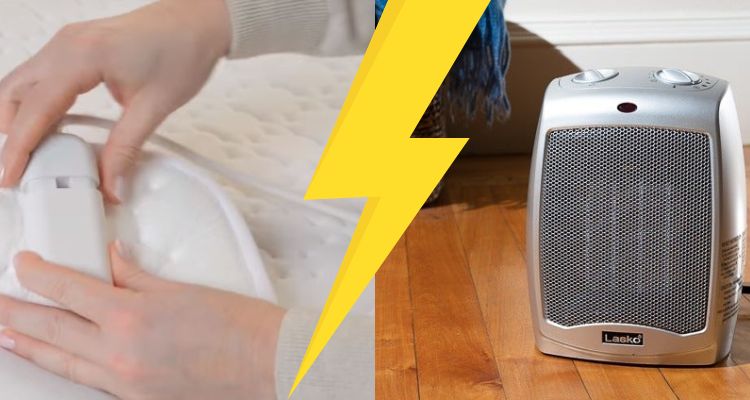
Electric blankets look like ordinary blankets but contain thin resistance wires woven into the fabric. When plugged in, those wires heat up and radiate warmth directly into your body. Most modern models include a dial or digital controller to set a precise temperature, and virtually all current models have an auto-shutoff timer (typically 10 hours). They draw 50-150 watts at the highest setting, well under a typical household circuit.
Space heaters
Portable space heaters convert electricity into heat and push it into the surrounding air, either through a ceramic element, a radiant coil, or a micathermic panel. Because they must warm the entire volume of air in a room, they require significantly more power: typically 750-1500 watts. Newer models add tip-over sensors, overheat protection, and programmable thermostats. They warm multiple people and work whether you're in bed, at a desk, or moving around the room.
Side-by-side comparison
| Feature | Electric Blanket | Space Heater |
|---|---|---|
| Wattage | 50-150W | 750-1500W |
| Cost per 8h night (at $0.15/kWh) | $0.06-$0.18 | $0.90-$1.80 |
| How it warms | Direct body contact | Heats room air |
| People served | 1-2 (in bed) | Whole room |
| Fire risk | Low with auto-shutoff | Moderate, requires clearance |
| Air quality impact | None | Dries air, lowers humidity |
| Noise | Silent | Fan noise on most models |
| Safe overnight unsupervised | Yes (modern models) | Riskier, CPSC advises supervision |
| Best for | Solo or couple in bed | Room warming while awake |
Wattage, cost, and efficiency
Wattage: electric blanket wins
A typical electric blanket on its highest setting draws 100-150 watts. At the US average electricity rate of $0.15 per kWh, running one for eight hours costs about 12-18 cents. A 1500-watt space heater running the same eight hours costs roughly $1.80. Over a 90-night winter season, that gap adds up to more than $150 for a single occupant.
The reason is straightforward: an electric blanket only needs to warm the small air pocket around your body. A space heater must raise the ambient temperature of an entire room, fighting heat loss through walls, windows, and doors the whole time.
Safety: different risk profiles
Space heaters are involved in roughly 1,700 residential fires per year in the US, according to the Consumer Product Safety Commission, with most incidents traced to placing the unit too close to flammable materials or leaving it unattended during sleep. Modern space heaters with tip-over and overheat shutoffs are safer than older models, but the CPSC still recommends not using a space heater while sleeping.
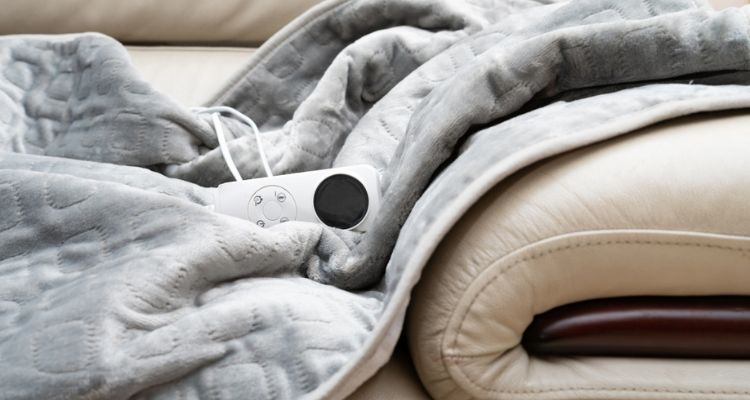
Electric blankets carry their own risks, mainly from damaged wires or improper folding that creates hot spots. Never leave an older blanket (pre-2010 without auto-shutoff) on overnight, and avoid folding any electric blanket while in use. Modern units from established brands are considered safe for all-night use. Do not use an electric blanket with a sleeping infant or a person who cannot perceive temperature reliably.
Cost over a season
Entry-level electric blankets start around $25-50 and mid-range models with dual controls and 10-hour shutoff run $60-150. A quality space heater costs $40-200 depending on size and features. The hardware cost is comparable, but the ongoing electricity cost for a space heater is 8-10 times higher per night of use.
Coverage: space heater wins
An electric blanket covers the person using it. A space heater raises the temperature of the entire room, making it better for households where multiple family members need warmth, or for situations where you are moving around rather than stationary in bed.
Pros and cons of an electric blanket
Pros
- Draws 50-150W, roughly 10 times less electricity than a space heater
- Provides targeted warmth without raising room temperature
- Modern models include auto-shutoff, safe for all-night use
- Silent operation
- No effect on room humidity or air quality
- Dual-control models let partners set different temperatures independently
Cons
- Only warms the person in direct contact with it
- Older or damaged models carry a fire and burn risk
- Wire damage from folding or pets can create hot spots
- Not suitable for use with infants or people with reduced temperature sensitivity
Pros and cons of a space heater
Pros
- Warms an entire room, suitable for multiple people
- Useful when you are awake and moving around
- Modern units have tip-over protection and overheat shutoffs
- Reduces the need to run central heating for one occupied room
Cons
- Draws 750-1500W, costs $0.90-$1.80 per eight-hour night
- Higher fire risk, especially near curtains or bedding
- Dries room air, can worsen nasal irritation during sleep
- Most models produce fan noise that can disrupt light sleepers
- CPSC recommends against unsupervised overnight use
Which is better for sleep?
For bedroom use specifically, an electric blanket is the stronger choice for most situations. It costs a fraction as much to run, makes no noise, and does not alter the room's temperature or humidity. Sleep research consistently shows that a cool room (65-68 degrees Fahrenheit) with a warm body helps both sleep onset and deep-sleep quality. A space heater pushes the room temperature up, which can actually work against good sleep, while an electric blanket keeps your body warm without affecting ambient temperature.
Space heaters are the right tool when you want to warm the room before getting into bed, when a partner also needs warmth but does not want to share a blanket, or when you work late at a desk and need the whole room comfortable. Pre-heating the room with a space heater, then switching it off and using the electric blanket overnight, works well as a combined approach.
For related reading: heated blanket vs mattress pad, and is it safe to sleep with a heated blanket on.
Frequently asked questions
Is it cheaper to use an electric blanket or a space heater?
An electric blanket is significantly cheaper. A 100-watt blanket running for eight hours costs about 12 cents at $0.15 per kWh. A 1500-watt space heater running the same time costs $1.80. Over a full winter season, that difference adds up to well over $100.
Is it safe to sleep with a space heater on all night?
The CPSC advises against leaving a space heater on while sleeping unattended. Modern units with tip-over and overheat protection have reduced the risk compared to older models, but the combination of high wattage, radiant heat, and proximity to bedding still makes overnight use riskier than an electric blanket. If you do use a space heater at night, keep it at least three feet from anything flammable, never place it on a rug, and use a model with a thermostat so it cycles off once the room reaches temperature.
Can I use both an electric blanket and a space heater together?
Yes, and for some situations this is a practical approach. Pre-heat the room with a space heater before bed, then switch it off and use the electric blanket overnight. You get a warm room when you first get in and efficient, low-cost warmth throughout the night.
Are electric blankets bad for your health?
There are no conclusive studies linking modern electric blankets to cancer or chronic health effects. Concerns about electromagnetic fields exist but the evidence is not strong. Pregnancy is the one situation where most healthcare providers recommend caution: elevated body temperature in the first trimester carries documented risks, so pregnant women are generally advised to avoid electric blankets or use them only on low settings to warm the bed before lying down.
Which is better for elderly people: electric blanket or space heater?
Electric blankets are generally preferred for elderly users because they provide direct, controllable warmth without requiring the room to be uncomfortably hot. An overly warm room can cause dehydration and disrupt sleep. The main caveat is that anyone with reduced ability to perceive heat or cold, which becomes more common with age and with certain medications, should use a low setting and not sleep with the blanket on high without supervision.