
 by
by Between Endy and Douglas, the right pick depends on your sleep style. Douglas Original wins for side sleepers, hot sleepers, and buyers who want a longer trial and warranty at a lower price. Endy Hybrid is the better call for back and combination sleepers who want more bounce, edge support, and coil-based airflow. Neither is the right mattress for sleepers over 240 lb or anyone with chronic back pain, where a reinforced innerspring hybrid like the Saatva Classic outperforms both.
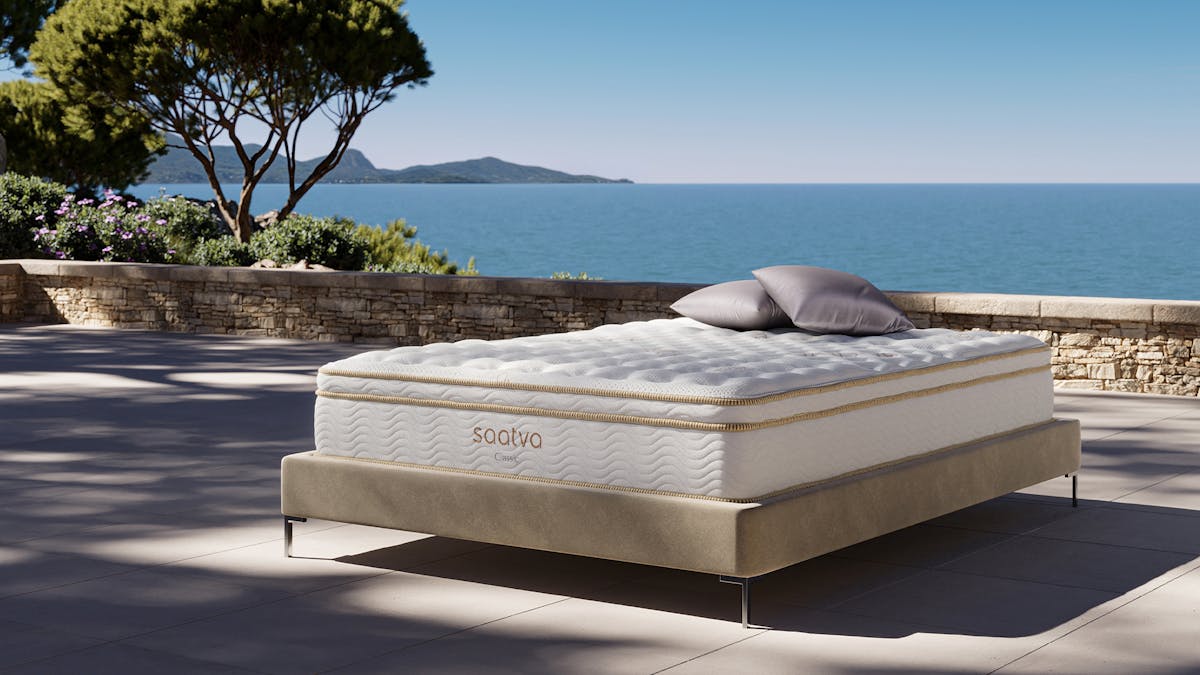
Saatva Classic
9.2/10
- Dual coil-on-coil construction with a reinforced lumbar zone pad, better for back pain than either all-foam option
- Runs 2 to 3 degrees cooler than all-foam beds due to active coil airflow through the core
- Three firmness choices (Plush Soft, Luxury Firm, Firm) to match any sleep position
- Free white-glove delivery with old-mattress removal, 365-night trial, lifetime warranty
- USD pricing, so Canadian buyers should factor exchange rates and import duties
- $99 return fee applies if you decide to send it back during the trial
If you are comparing Endy and Douglas because neither Canadian all-foam option feels quite right for your needs, the Saatva Classic is where most buyers land. The coil-on-coil build outperforms both on lumbar support, temperature regulation, and long-term durability, and the lifetime warranty removes the replacement timeline guesswork.
Endy vs Douglas: the real differences
Endy and Douglas are two well-regarded Canadian bed-in-a-box brands, both manufactured domestically and priced for the Canadian market. The meaningful difference between them is not brand reputation or marketing, it is construction. The Endy flagship is a hybrid, meaning pocketed steel coils handle the support layer and foam handles the comfort layer above. Douglas Original is all-foam, three layers of foam from base to surface with no coils. That structural choice drives nearly everything else: cooling, edge support, motion isolation, and how each mattress holds up past year three.
Specs at a glance
| Category | Endy Hybrid | Douglas Original |
|---|---|---|
| Construction | Hybrid (foam + pocketed coils) | All-foam, 3 layers |
| Height | ~12 inches | 10 inches |
| Firmness | Medium-firm (6–7/10) | Medium (5–6/10) |
| Queen price (CAD, sale) | ~$850–$1,050 | ~$699–$799 |
| Trial period | 100 nights | 120 nights |
| Warranty | 10 years | 15 years |
| Made in Canada | Yes | Yes |
| Free shipping | Yes, box delivery | Yes, box delivery |
Construction compared
The Endy Hybrid combines proprietary comfort foam layers with a high-carbon steel pocketed coil support core. The coils do two things: they allow air to circulate through the mattress interior, and they provide a firmer, more responsive base that prevents deep sinkage at the hips. The coil perimeter also reinforces the edges, giving you a more stable sitting edge and a larger usable sleep surface. The quilted plush top cover adds surface softness without compromising the underlying structure.
Douglas Original takes a different approach. Its 10-inch all-foam stack includes a CoolSense top cover designed to wick moisture, a cooling gel foam layer to reduce heat buildup, an Elastex layer that adds responsiveness and limits motion transfer, and a 6-inch high-density base foam for foundational support. There are no coils: everything is foam from base to surface, which means superior motion absorption but less airflow and softer edges by design.
Bottom line on construction: Endy Hybrid is the more versatile build for a wider range of sleepers. Douglas Original is the better-targeted build for specific sleepers who prioritize motion isolation and deep contouring over edge stability and long-term airflow.
Firmness and sleep positions
Endy Hybrid lands at medium-firm, roughly 6 to 7 out of 10. Back sleepers and combination sleepers do well here because the coil core prevents the hips from over-sinking, keeping the spine in a more neutral position through the night. Couples where both partners are average build tend to appreciate the balance of motion dampening from the foam comfort layer and responsiveness from the coils. Stomach sleepers can work with this firmness level, though the plush quilted top may feel slightly soft for lighter-framed stomach sleepers who need the most resistance under the pelvis.
Douglas Original sits at a softer medium, roughly 5 to 6 out of 10. Side sleepers benefit the most: the foam layers contour around the shoulder and hip prominently, relieving pressure points without the rigidity of a coil base. The slower foam response works especially well for lighter sleepers under 170 lb, who often find hybrid firmness too assertive at the contact points. Stomach sleepers at heavier weights may find the Douglas too soft to prevent excessive pelvic drop, which creates lumbar extension discomfort over time.
Where both mattresses fall short: sleepers over 240 lb. Neither has reinforced construction for heavier body weights, and both are likely to show accelerated lumbar-zone wear under heavier loads within three to five years.
Cooling and temperature
Endy Hybrid has a structural cooling advantage. The pocketed coil core lets air circulate through the mattress interior, pulling heat away from the body during the night. Open-cell Endy Comfort foam in the comfort layer also allows air to pass through rather than trapping it. For most sleepers, this produces a meaningfully cooler sleep surface compared with a fully sealed foam stack, particularly in warm summer months.
Douglas compensates with its cooling gel foam layer and the CoolSense cover. The gel layer slows heat buildup but does not eliminate it, because foam still traps more body heat relative to a coil interior regardless of gel infusion. The Elastex layer adds some breathability, and the cover wicks surface moisture effectively. For mild warm sleepers, Douglas may be sufficient. For dedicated hot sleepers who regularly wake up sweating, the Endy Hybrid or a full innerspring hybrid like the Saatva Classic is the right category.
Motion isolation
Douglas wins this comparison clearly. All-foam construction absorbs movement at the point of contact rather than transmitting it through a spring network. Its 6-inch motion isolation support foam layer is specifically designed for this, and the Elastex layer further deadens vibration before it reaches the surface. Couples where one partner is a light sleeper, or where there is a significant weight difference between partners, will notice the difference in practice.
Endy Hybrid uses individually wrapped pocketed coils, which perform better for motion isolation than older interconnected spring designs. But some movement will still transmit across the coil layer. If partner disturbance during the night is a primary concern, Douglas has the structural edge.
Edge support and usable surface
Endy Hybrid wins on edge support. The pocketed coils reinforce the perimeter and resist compression when sitting or lying near the edge of the mattress. Couples who use the full width of the bed will notice more usable sleep surface with the Endy. Douglas's foam base is solid, but without mechanical perimeter reinforcement the edges compress more easily when weight is applied at the boundary, reducing the effective sleep zone.
Price and value
| Size | Douglas Original (CAD, sale pricing) | Endy Hybrid (CAD, sale pricing) |
|---|---|---|
| Twin | ~$599 | ~$850 |
| Full | ~$699 | ~$975 |
| Queen | ~$799 | ~$1,050 |
| King | ~$899 | ~$1,250 |
Douglas is consistently 200 to 300 CAD cheaper than Endy Hybrid across sizes. Both brands run frequent promotional sales and neither is worth paying MSRP for. Douglas also offers a sleep bundle at certain price points, which reduces the effective cost difference further when you factor in accessories.
On pure risk management, Douglas also has an edge: its 120-night trial is 20 nights longer than Endy's 100 nights, and its 15-year warranty is 5 years longer than Endy's 10-year coverage. For buyers purchasing without testing in a showroom, those extra time windows matter when deciding whether to keep or return the mattress.
Who should pick Endy Hybrid
- Back sleepers and combination sleepers who need a firmer, more responsive support base.
- Hot sleepers who want the cooling benefit of a coil interior without crossing the border.
- Couples where one or both partners want better edge support and maximum usable surface area.
- Buyers who want more structural durability from a hybrid build over a multi-year period.
Who should pick Douglas Original
- Side sleepers and anyone under 170 lb who needs deep pressure relief at the shoulder and hip.
- Light sleepers who share the bed and are highly sensitive to partner movement at night.
- Buyers who want the longest trial and warranty available in this Canadian price bracket.
- Shoppers on a tighter budget who want to minimize upfront cost without sacrificing build quality.
Who should skip both
- Sleepers over 240 lb: neither mattress has reinforced construction for heavier frames. Both are likely to wear unevenly at the lumbar region within a few years under heavier continuous weight.
- Chronic back pain sufferers: all-foam and light-hybrid constructions generally underperform for back pain compared with a properly zoned innerspring hybrid. The Saatva Classic's reinforced lumbar pad and dual coil system address this gap directly.
- Dedicated hot sleepers with night sweats: even Endy Hybrid's coil airflow does not match the temperature regulation of a full innerspring system like Saatva.
Douglas Original is the better-value pick for side sleepers and hot sleepers who want a longer trial and lower price. Endy Hybrid wins for back and combination sleepers who need coil-based support, edge stability, and better airflow. For anyone with back pain, a heavier build, or strong cooling requirements, the Saatva Classic is a better starting point than either Canadian option.
Frequently asked questions
Is Endy or Douglas better for side sleepers?
Douglas Original. The all-foam construction contours more deeply around the shoulder and hip, which is what side sleepers need for pressure relief. Endy Hybrid's firmer coil base can feel too assertive against narrower pressure points at its 6 to 7 out of 10 firmness rating.
Is Endy or Douglas better for back pain?
Neither is the right answer for chronic back pain. Both lack reinforced lumbar support. If back pain is your primary concern, a zoned innerspring hybrid with a dedicated lumbar pad, like the Saatva Classic, is a better fit than either all-foam or light hybrid Canadian option.
Which has a better warranty, Endy or Douglas?
Douglas. Its 15-year warranty and 120-night trial are both longer than Endy's 10-year warranty and 100-night trial. For buyers purchasing without the chance to test in person, Douglas offers meaningfully more protection per dollar spent.
Are Endy and Douglas made in Canada?
Yes. Both brands manufacture domestically in Canada, which matters for buyers who prioritize Canadian supply chains, local currency pricing without cross-border duties, and warranty claims handled by Canadian customer service.
Can the Saatva Classic ship to Canada?
Saatva currently ships within the contiguous United States. Canadian buyers would need to factor cross-border duties and shipping logistics. For buyers committed to a fully Canadian purchase, Endy or Douglas are the practical options in this price bracket.