
 by
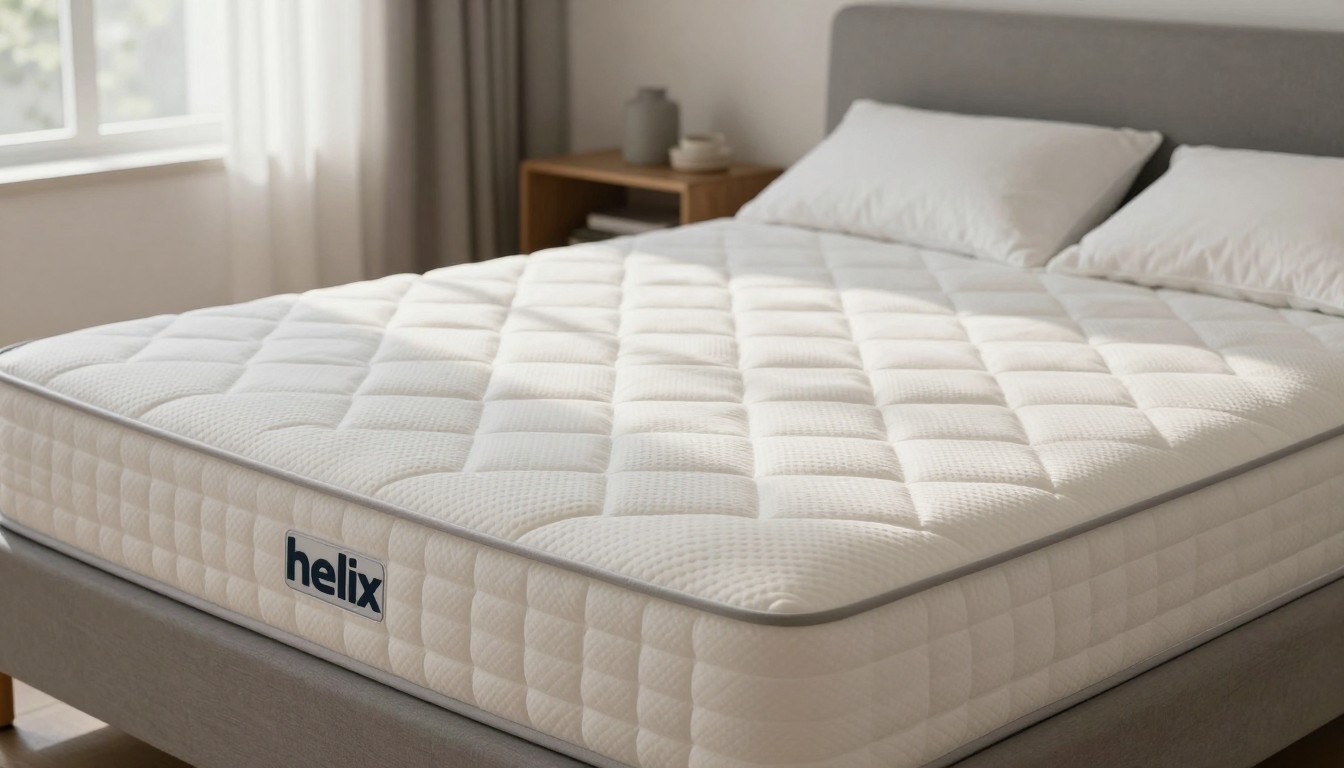
by Quick answer: I recommend the Helix ErgoAlign Mattress Topper with GlacioTex for sleepers who want targeted midsection support from a zoned foam design. Skip it if you want uniform cushioning or need to rescue a sagging mattress.
- Sleep Doctor lists the price at $340.
- Sleep Doctor says the top and bottom zones use copper gel memory foam.
- Sleep Doctor describes the middle as ultra-dense foam designed to optimize spinal alignment.
Updated July 2026 · Reviewed for accuracy
My verdict is cautiously positive. Sleep Doctor’s construction description gives this topper a clear job: use different foams at the middle and ends so the center can focus on alignment. That specificity is useful, but it also means the fit depends on where your body lands and what you expect a topper to fix.
Who this zoned topper should suit
The middle section uses a different foam from the sections above and below it. Sleep Doctor identifies an ultra-dense middle foam designed to optimize spinal alignment, while the top and bottom use copper gel memory foam.
I’d consider that layout if your mattress remains structurally sound but feels too yielding beneath your midsection. The design is aimed at changing support in a particular area, rather than adding the same cushioning across the entire bed.
I’d be more cautious if you mainly want a uniformly plush surface. The different materials can make body placement matter, especially if you sleep far above or below the mattress midpoint, curl tightly on your side, or move around frequently.
My buying line: This is a targeted comfort adjustment for a usable mattress. It isn’t a structural repair for deep sagging, a damaged support core, or an unstable foundation.
A topper sits above the existing mattress, so the bed underneath still sets the basic support geometry. If that underlying surface has a pronounced hollow, adding specialized foam may change the immediate feel without correcting the source of the problem.
The alignment language also needs context. Sleep Doctor describes what the middle foam is designed to do, not a guaranteed outcome for every body shape or sleeping position. I’d judge the product by whether its center zone matches your body placement, not by treating “alignment” as a medical promise.
Construction: the center is the defining feature
Sleep Doctor identifies copper gel memory foam in the top and bottom zones and ultra-dense foam in the middle. That makes this a deliberately nonuniform topper rather than one continuous slab with the same stated composition from end to end.
The important word is “ultra-dense,” but it remains a qualitative description. It communicates the intended character of the middle section without supplying a numerical foam density, a measured firmness score, or enough information to predict how quickly the material might develop impressions.
| Area | Published construction | My construction read | What it does not prove |
|---|---|---|---|
| Top and bottom | Copper gel memory foam, according to Sleep Doctor | These areas are intended to behave differently from the center. | An exact softness level or a measured cooling result |
| Middle | Ultra-dense foam designed to optimize spinal alignment, per Sleep Doctor | The design prioritizes added midsection support. | A universal firmness or guaranteed alignment outcome |
| Combined surface | Different foam descriptions at the center and ends | Expect placement to influence how the topper feels. | How it will interact with every mattress underneath |
I like that Helix has given the topper a specific construction purpose. A vague “more comfortable” claim tells me little; a reinforced middle at least explains what the product is trying to change. The trade-off is that targeted construction is less universally predictable than a uniform layer.
Copper gel memory foam should not be treated as proof of a particular temperature or firmness. The material name identifies what Sleep Doctor says is used in the end zones, but it does not reveal the complete formulation, surface response, or behavior under an individual sleeper.
Construction takeaway: The center zone is the reason to consider this topper. If you do not want noticeably targeted midsection support, the defining feature may work against your preference rather than add value.
Feel and fit by sleeping position
A sleeper’s pelvis can rest over the middle foam while the shoulders and legs contact differently described material. That is the central fit question here, and body height, posture, and movement can all change where those transitions sit.
For back-focused sleepers, the design logic is easy to understand. The torso is more likely to remain near the center of the bed, which places the alignment-focused foam beneath the area Helix intends to support. That does not establish the exact feel, but it makes the zoning purpose easier to use consistently.
| Sleep pattern | Why it may fit | Main caution |
|---|---|---|
| Back-focused | The torso can remain over the alignment-focused middle. | No exact overall firmness is established. |
| Stomach-focused | A sleeper seeking less yield beneath the midsection may appreciate the design intent. | The construction does not prove that the complete surface will feel firm enough. |
| Side-focused | The zoning may suit someone who wants distinct support beneath the torso. | Shoulder and hip placement may not match the zones as intended. |
| Combination or shared bed | Different positions can interact with the zones in different ways. | Sleepers of different heights may experience the transitions differently. |
Stomach-focused sleepers may also find the concept appealing if they dislike excessive sinking around the waist. I’d still avoid calling it a firm topper without qualification. An ultra-dense middle description says nothing definitive about the firmness of the complete surface or the mattress beneath it.
Side-focused sleepers need the most careful fit check. Their hip and shoulder placement changes with body position, and a center-focused support zone may feel helpful, neutral, or awkward depending on where each joint lands. There is no pressure-map evidence here that would justify promising pressure relief.
Combination sleepers introduce another variable because they move across both the surface and its material transitions. Couples may have a similar issue if their heights or preferred positions differ. Zoning can be purposeful without feeling identical to both people.
Fit tip: Picture where your shoulders, waist, and hips normally rest relative to the mattress midpoint. The closer that placement matches the topper’s intended layout, the more coherent the construction becomes.
If you are still choosing between zoning and a different material approach, my wool mattress topper guide offers another way to frame the decision without assuming that every sleeper needs reinforced center foam.
Cooling, motion, edge support and upkeep
GlacioTex appears in the product name, and Sleep Doctor says the top and bottom zones contain copper gel memory foam. Those details identify cooling-oriented materials and branding, but they do not establish a measured temperature reduction.
I would not buy this topper solely because “GlacioTex” sounds cool. A sleeper’s temperature experience can also be shaped by room conditions, sheets, a mattress protector, the underlying mattress, and personal heat sensitivity. The construction facts do not isolate the topper’s effect from those variables.
Motion isolation is also unconfirmed. Foam construction may change how movement feels at the surface, but the zoned layout alone does not establish how much partner disturbance it reduces. Couples should treat motion performance as an open question rather than an automatic benefit.
Details worth confirming before ordering:
- Current cleaning and care instructions for the GlacioTex surface
- Whether your mattress protector and fitted sheets can accommodate the added material
- Current return conditions and warranty terms
- Any placement guidance intended to keep the middle zone properly aligned
The cited construction description does not identify dedicated perimeter reinforcement. I therefore would not assume that the topper creates stronger edge support. The mattress and foundation beneath it will continue to play the larger structural role near the side of the bed.
Care deserves the same restraint. Unless the manufacturer’s current instructions say otherwise, do not assume the complete topper or its cover can be machine washed. Following the listed care method matters more than applying a generic foam-cleaning routine.
Added material can also affect sheet fit and the overall height of the sleep surface. If that is already a concern, my guide to the thickest mattress toppers explains the practical trade-offs to consider without relying on an unverified dimension for this model.
Durability and value at the listed price
Sleep Doctor lists the Helix ErgoAlign Mattress Topper with GlacioTex at $340. That price makes the center-zone feature the key value question: do you specifically want targeted midsection support, or are you simply looking for a softer surface?
I think the value case is strongest when the existing mattress is stable and broadly comfortable, but its surface feel is too yielding around the middle. In that situation, a specialized topper may be a more focused change than replacing an otherwise usable bed.
The value case weakens if your mattress has a structural defect or if cooling is your only priority. The cited material names do not guarantee a particular thermal result, and no topper should be expected to rebuild failed support beneath it.
| Value question | Favorable answer | Reason to pause |
|---|---|---|
| Is the mattress underneath still sound? | Yes, it mainly needs a surface-level adjustment. | No, it has a pronounced hollow or unstable support. |
| Do you want targeted support? | Yes, the middle is the area you want to change. | No, you prefer the same feel across the surface. |
| Is cooling your main requirement? | No, zoning is the primary reason you are considering it. | Yes, and you require independently measured thermal performance. |
| Can you verify the current policies? | Yes, the terms suit the uncertainty of choosing a zoned feel. | No, you cannot confirm care, returns, or warranty details. |
Durability is harder to judge from the named materials. “Ultra-dense” does not provide a numerical density, and the copper gel memory foam description does not reveal enough about the formulation to support a lifespan estimate. I won’t turn those labels into a prediction they cannot carry.
I would also resist comparing price alone with a uniform topper. These products solve different problems. The Helix design earns its keep only if the reinforced-center concept matches the change you actually want.
Value verdict: The listed price is defensible for a shopper deliberately seeking zoned midsection support. It is much harder to justify as a general-purpose softness upgrade or an unproven cooling purchase.
Pros, limitations and my final verdict
The central foam is both the clearest benefit and the biggest fit risk. Sleep Doctor’s description supports a targeted alignment design, but that same construction prevents me from treating the topper as a universal comfort layer.
Pros
- Clear focus on midsection support
- Different materials at the middle and ends
- Copper gel memory foam in the top and bottom zones, according to Sleep Doctor
- A logical option for adjusting an otherwise usable mattress
Limitations
- No substantiated overall firmness score
- No measured cooling or motion-isolation result
- No numerical foam density for a durability forecast
- Zone placement may not suit every height or sleeping posture
My final verdict is that this topper makes sense for a narrow but real use case. Buy it if your mattress is structurally healthy, your midsection needs more support than the rest of your body, and you are comfortable with a deliberately zoned feel.
Skip it if you want uniform cushioning, require proven cooling performance, or hope a topper will correct deep mattress sagging. The construction is thoughtful, but its value comes from matching the right sleeper rather than being broadly better for everyone.
ONE VERIFIED ALTERNATIVE
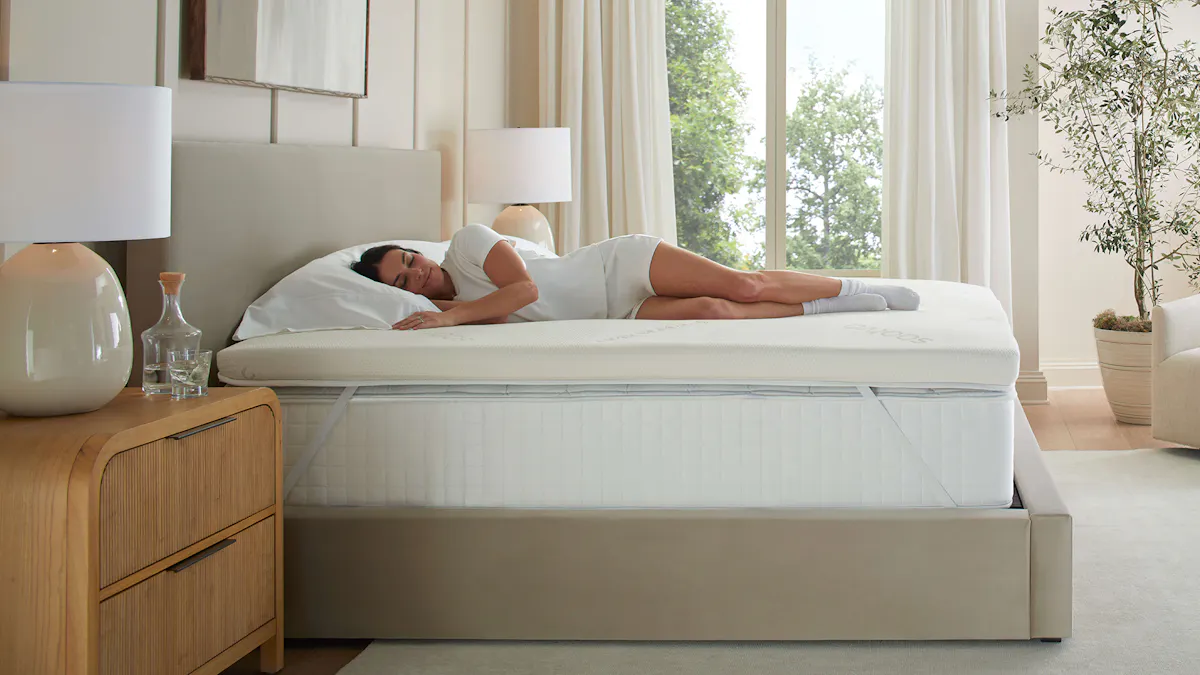
Not quite the right fit? The Saatva Graphite Topper is worth a look as an alternative. Check today’s price, sizing and return terms on the official product page before you order.
Saatva Graphite Topper
- Graphite-infused memory foam, per saatva.com
- 180-night trial
- Secure anchor bands, fits deep mattresses
FAQ
The zoned foam layout and Sleep Doctor’s $340 listing price drive the most practical questions about this topper.
Is the Helix ErgoAlign Mattress Topper with GlacioTex firm?
Sleep Doctor describes the middle as ultra-dense foam, which suggests a more support-focused center than the copper gel memory foam zones at the ends. That does not establish an overall firmness level, so I would describe it as zoned rather than simply firm.
Does GlacioTex make the topper sleep cool?
The GlacioTex name and copper gel memory foam construction point to a cooling-oriented design, but they do not prove a measured temperature result. I would treat cooling as a possible secondary benefit, not the sole reason to buy it.
Can this topper fix a sagging mattress?
I would not rely on it for that job. A topper can modify surface feel, but it cannot rebuild a damaged support core or stabilize an unsuitable foundation beneath the mattress.
Is it suitable for side sleepers?
It may suit a side sleeper who specifically wants more support beneath the torso, but the result depends on where the shoulders and hips meet the zones. Without substantiated pressure measurements, I cannot promise that it will provide enough cushioning for every side sleeper.
Is the Helix ErgoAlign topper worth $340?
Sleep Doctor’s listed price can make sense if targeted midsection support is the feature you actually need and the mattress underneath remains sound. It is less convincing for shoppers seeking generic softness, structural repair, or guaranteed cooling.