
 by
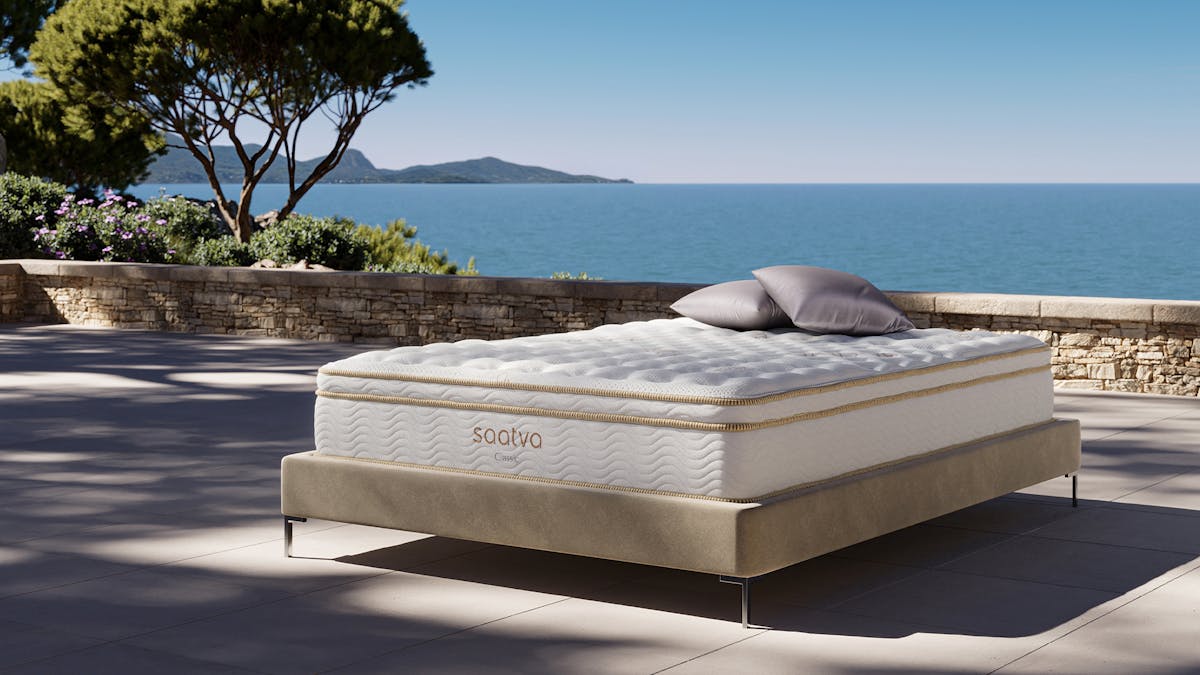
by Yes, a mattress can be too soft. When hips and midsection sink too far, the spine bows into a hammock shape, straining the lower back all night. Most people upgrading from a too-soft bed do best on a medium-firm surface. Our top pick is the Saatva Classic in Luxury Firm: its dual-coil construction mechanically resists hip sinkage while the reinforced lumbar zone keeps the spine level. The Amerisleep AS3 is the best all-foam alternative for those who prefer a quieter, motion-isolating surface.
Saatva Classic
9.2/10
- Dual-coil chassis actively resists hip sinkage through structure, not just foam density
- Three firmness options, Luxury Firm and Firm address the too-soft problem directly
- Reinforced lumbar zone keeps the spine level while the pillow-top cushions shoulders and hips
- Free white-glove delivery, setup, and old-mattress removal included
- 365-night trial and lifetime warranty, the longest guarantees in the category
- Heavier than a bed-in-a-box, not compressed for shipping
- $99 return fee during the trial period
When a mattress is too soft, the fix is mechanical support, not more foam layers. The Saatva Classic's coil-on-coil system resists the hip sinkage that causes the hammock effect, and the three firmness options let you dial in the right level without guessing.
Can a Mattress Be Too Soft?
Yes, and it is more common than most people realize. A mattress needs two things: cushioning to relieve pressure and a support core to hold your spine level. When the surface is too soft all the way through, or the core has compressed with age, your pelvis drops and your lumbar region follows. Chiropractors call this the "hammock effect": instead of sleeping on a flat, supported surface, your body curves downward at the middle. That curve keeps the lower-back muscles under constant low-grade tension all night.
The result is usually dull lower-back pain that peaks in the morning and eases once you have been up and moving for an hour or so. If that pattern sounds familiar, the mattress is worth examining first.
Signs Your Mattress Is Too Soft
No single sign is definitive on its own, but several together are a strong signal.
You wake up stiff or sore in the lower back
Pain that is worst in the first 20 to 30 minutes after getting up, then fades during the day, points to your sleeping position rather than a structural injury. A mattress that lets the spine sag is the most common culprit. See a doctor if the pain is severe, persistent, or spreads into the legs, not a mattress change alone.
You feel stuck or have to push yourself out of bed
Sinking deeply into a soft surface means your body has to work to change position. Rolling over takes real effort; getting out of bed requires pushing up from a hole rather than simply swinging your legs off the side. This is one of the clearest physical signs that the mattress is not firm enough for your body weight and sleeping position.
You overheat at night
When you sink into foam, the material wraps around your body from multiple sides. That traps heat and limits airflow. Sleepers who run warm and have a soft mattress often notice the two problems together, and a firmer surface that keeps them more "on top" of the bed can help both issues at once.
Your partner rolls toward the middle
A too-soft mattress creates a slope toward wherever the heaviest sleeper lies. If you or your partner keeps drifting toward the other person, or if both of you slide toward the center, the mattress has lost the ability to maintain a level surface under weight.
| Sign | What it suggests |
|---|---|
| Lower-back pain worst in the morning | Spine sagging out of neutral all night |
| Struggling to roll over or get up | Sinking too deep into the surface |
| Sleeping hot despite cooling bedding | Foam enveloping the body, blocking airflow |
| Partner rolling toward the center | Mattress not holding a level surface under weight |
| Visible body-shaped dip when you stand up | Core compressed beyond normal softness |
The Best Mattresses to Replace a Too-Soft Bed
| Mattress | Type | Firmness | Why it works | Trial | Queen price |
|---|---|---|---|---|---|
| Saatva Classic | Innerspring hybrid | Luxury Firm 6/10 or Firm 8/10 | Dual-coil resists hip sinkage structurally | 365 nights | From $1,395 |
| Amerisleep AS3 | All-foam (Bio-Pur) | Medium 5/10 | HIVE 5-zone keeps hips from over-sinking | 100 nights | From $1,049 |
| Puffy Original | All-foam in-a-box | Medium-firm ~6-7 | Good pressure relief, solid motion isolation | 101 nights | ~$1,499 |
Amerisleep AS3
8.9/10
- HIVE 5-zone support keeps hips from over-sinking, the exact failure mode of too-soft beds
- Medium 5/10 hits the sweet spot where most sleepers get support without new pressure points
- Partially plant-based Bio-Pur foam, CertiPUR-US certified, made in the USA
- 100-night trial long enough to confirm the firmness upgrade works for your body
- Softer edges than a coil hybrid
- Sleepers over 230 lb may want the firmer AS5 Hybrid for more support under load
If you want quieter motion isolation and a softer cradling feel, the AS3's zoned foam construction keeps hips from sinking while cushioning the shoulders, making it the best all-foam option for upgrading from a too-soft mattress.
Puffy Original
8.5/10
- Medium-firm feel works for most back and side sleepers making the switch from a too-soft surface
- Strong pressure relief and motion isolation
- Lifetime warranty at a competitive price point
- Can sleep warmer than coil hybrids for hot sleepers
- Less edge support than the Saatva Classic
A solid all-foam option for those who want a medium-firm surface without the higher price tag of premium hybrids.
Who a Too-Soft Mattress Affects Most
Heavier sleepers
Body weight is the biggest variable in how soft a surface actually feels. A mattress rated "medium" by the manufacturer was almost certainly tested on a person around 150 to 170 lbs. A sleeper at 220 lbs will compress that same surface considerably deeper, turning a medium into an effective soft or extra-soft. The heavier you are, the firmer the support layer needs to be to keep your hips from dropping.
Stomach and back sleepers
Stomach sleepers need a nearly flat spinal position. Any forward sag at the hips over-arches the lumbar and compresses the lower vertebrae. A soft mattress makes that worse with every hour of sleep. Back sleepers need enough firmness to cradle the lumbar curve without letting the pelvis drop lower than the shoulders. Side sleepers have more tolerance for softness because shoulder and hip sink together, but even side sleepers can go too far on a mattress that lacks support underneath the comfort layers.
Combination sleepers who shift positions
If you move between your back, side, and stomach during the night, a soft mattress makes each transition harder physically. You may not fully wake up, but the effort disrupts sleep quality.
How to Fix a Too-Soft Mattress, and Why It Is Harder Than a Too-Firm One
This is the practical asymmetry most people do not know before they buy: a mattress that is too firm is easier to correct than one that is too soft.
A too-firm mattress can be softened with a memory foam or latex topper. Adding two inches of foam on top gives real cushioning and genuinely changes the feel. Going the other direction, adding firmness to a soft mattress, is much harder. You cannot compress away softness the way you can add it.
Short-term options
- Firmer mattress topper: A dense latex or high-ILD foam topper adds a layer of support, but it cannot fix a collapsed core underneath. It helps if the mattress is borderline; it does not help much if the core is genuinely worn out.
- Plywood or bunkie board: Sliding a half-inch sheet of plywood or a bunkie board between the mattress and the foundation removes any flex in the base that could be contributing to the sinking. This is a temporary fix, not a permanent solution.
- Check the foundation: A box spring with broken slats or a platform frame with slat gaps wider than three inches lets the mattress sag between the gaps. Fixing the foundation occasionally resolves what seemed like a mattress problem.
When replacement is the right call
If the mattress is more than seven to eight years old and has a body-shaped dip you can see when no one is lying on it, the core has compressed and no surface fix will restore proper support. Replacement is the practical answer. Look for a medium-firm option, that firmness range covers the widest range of sleepers and sleeping positions, and it is the starting point most sleep researchers and chiropractors recommend for back-pain sufferers.
For context on the other side of the firmness question, see can a mattress be too firm and why your mattress might be hurting your back.
Frequently Asked Questions
How do I know if my mattress is too soft or just broken in?
A mattress that has "broken in" still holds a flat surface when no one is on it. If you can see a body-shaped dip or depression in the middle or on one side when the bed is empty, the core has compressed beyond normal softening. That is wear, not break-in, and it will not improve on its own.
Can a soft mattress cause lower-back pain?
Yes. When the hips sink lower than the shoulders, the lumbar spine bows downward and the muscles along the lower back stay in a stretched or strained position all night. This is one of the most common mattress-related causes of morning back pain. If pain is severe or does not improve after switching to a supportive mattress, see a doctor.
Do soft mattresses cause more back pain than firm ones?
For most back and stomach sleepers, yes. The research generally favors medium-firm mattresses for reducing lower-back pain, not the firmest possible surface, but one that supports the spine without creating painful pressure points at the hips and shoulders. A mattress that is too firm can cause its own problems; see can a mattress be too firm for that side of the question.
Can a mattress topper fix a too-soft mattress?
Only partially, and only if the mattress core is still structurally sound. A firm latex topper can add a supportive layer on top of a marginally soft surface. It cannot restore a collapsed or heavily indented core. If you add a firm topper and still feel like you are sinking, the core is the problem and replacement is the better answer.
Which sleepers are least affected by a too-soft mattress?
Side sleepers at lighter body weights, roughly under 130 lbs, have the most tolerance for softer surfaces. The shoulder and hip sink together in a roughly balanced way, and lighter weight means less total compression. Even so, a surface can be too soft for a lighter side sleeper if it lacks any supportive layer underneath the comfort foam.
Is it better to go firmer or softer when replacing a too-soft mattress?
Start at medium-firm rather than jumping straight to firm. Medium-firm provides enough support to keep the spine level while still cushioning the shoulder and hip. Unless you are a heavier sleeper, over roughly 230 lbs, or a strict stomach sleeper with significant back pain, firm is more than you need and may create pressure points at the hips and shoulders during side sleeping.
The Bottom Line
A mattress can be too soft, and when it is, the lower back usually pays for it. The mechanism is straightforward: hips sink, spine bows, muscles strain through the night. Heavier people and stomach or back sleepers hit this problem sooner and more severely than lighter side sleepers. Unlike a too-firm mattress, a too-soft one is hard to correct with toppers alone. If the core has compressed, replacement is the practical solution. The Saatva Classic in Luxury Firm is our top pick for this scenario: its dual-coil structure resists hip sinkage mechanically, which is the right engineering answer to the too-soft problem.
Related: Can a mattress be too firm?, Why does my mattress hurt my back?
This guide is part of our Mattress Buying Guide hub, compare all the top picks and narrow down your choice there.