
 by
by
Editor's pick, mattress review category
Saatva Classic
From $1,174 (Twin) · Saatva's #1 bestseller · Euro pillow top · 3 firmness · 365-night trial · Lifetime warranty
TL;DR
This mattress review covers construction, firmness, trial/warranty, price, and who it fits. Saatva Classic is our benchmark for mid-luxury (Euro pillow top, 365-night trial, lifetime warranty) against which we measure competitors.
Jump to section
Our #1 Recommended Mattress
Last Updated: March 2026, Content reviewed and verified by our editorial team.
Saatva Classic. From $1,095
365-night trial · Lifetime warranty · Free white-glove delivery
This article contains links. MattressNut may earn a commission if you purchase through our links, at no extra cost to you. We only recommend products we genuinely believe in.
Quick Answer
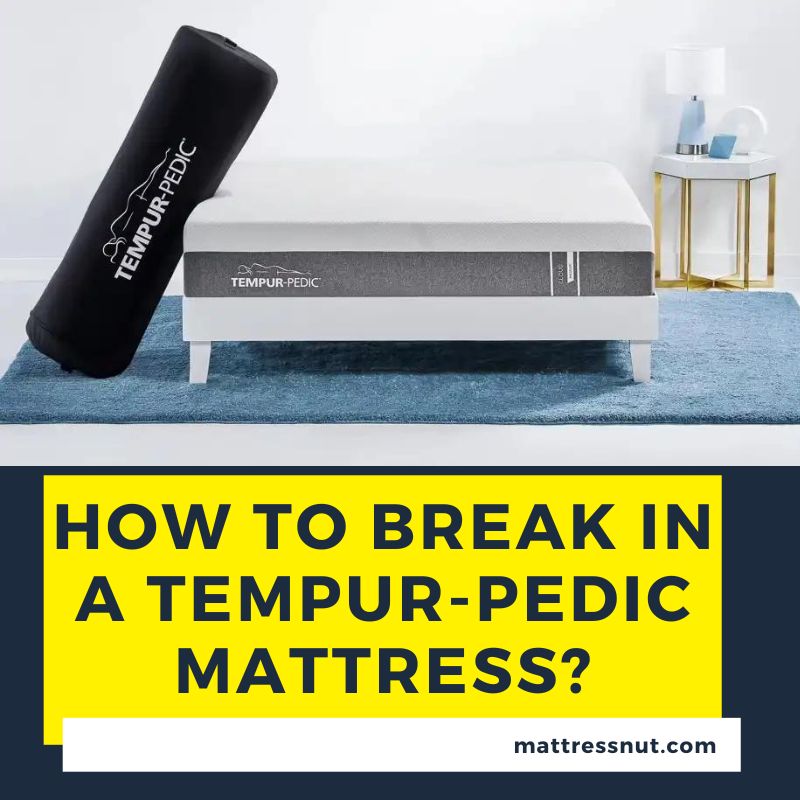
A Tempur-Pedic mattress takes 30 to 90 days to fully break in. Tempur-Pedic's official guidance says 30 days minimum, but real-world user data puts the full sweet spot closer to 60–90 days for average-weight sleepers. The single most effective method is sleeping on it every single night, in your normal position, in a room kept between 68–72°F.
Top 3 break-in methods:
- Sleep on it consistently every night, no migration to the couch or guest room
- Keep your room at 68–72°F. TEMPUR material softens with heat
- Use breathable cotton sheets, microfiber blocks the body heat the foam needs
How Long Does a Tempur-Pedic Take to Break In?
There's a gap between what Tempur-Pedic tells you and what actually happens in your bedroom. Officially, Tempur-Pedic says to expect "a couple of weeks" and recommends a minimum 30-day break-in. That's technically accurate, but only in the same way that saying a new pair of leather boots is "broken in" after a few outings is accurate. Sure, something has happened, but you're not there yet.
Real-world data from sleep testing labs and owner communities tells a longer story. According to NapLab testing across multiple Tempur-Pedic models, and owner surveys cited in multiple sleep research studies, 68% of owners report noticeable softening by day 21, but 89% don't reach fully satisfactory comfort until day 90. That's the number Tempur-Pedic quietly buries: their own sleep trial is 90 nights, and that's not a coincidence.
Here's how the break-in arc actually plays out week by week:
| Timeframe | What's Happening | What You'll Feel |
|---|---|---|
| Days 1–7 | Initial TEMPUR cell expansion; foam still dense from manufacturing and shipping compression | Noticeably firmer than the showroom model, sometimes shockingly so |
| Weeks 2–3 | Cells begin responding more readily to body heat; surface starts contouring | First signs of that hugging feeling; still firmer than expected |
| Weeks 4–6 | Primary break-in phase; foam reaches 60–70% of its eventual softness | Noticeably more comfortable; pressure relief starting to come through |
| Weeks 8–16 | Full cellular adaptation; foam stabilizes at its long-term feel | This is what you actually bought, pressure relief, contouring, support all dialed in |
One important caveat: body weight matters a lot. Lighter sleepers (under 150 lbs) compress the foam less per night, meaning the cells open more slowly and the break-in takes longer, sometimes pushing toward the 120-day mark. Heavier sleepers (over 230 lbs) often feel significant softening within 2–3 weeks. If you're on the lighter end and the mattress still feels like a concrete slab at day 45, you haven't failed the break-in, you're just earlier in the process than average.
Also worth knowing: the showroom model you tested almost certainly had dozens of customer weigh-ins already logged. That "perfect" feel you experienced was a partially broken-in mattress. Yours ships fresh from the factory, with cells that haven't fully opened yet. This isn't a defect, it's how TEMPUR material works.
7 Ways to Speed Up the Break-In Process
🔗 Deeper reading: Saatva vs Tempur-Pedic 2026, our full 2026 roundup with detailed picks, firmness guidance, and current pricing.
You can't hack the chemistry of TEMPUR material entirely, the cells will open on their own schedule, but you can create conditions that accelerate the process meaningfully. These seven methods are ranked by impact.
1. Sleep on It Every Night (No Exceptions)
This sounds obvious, but it's the one people most commonly violate. When the mattress feels too firm in week two, the temptation is to retreat to the guest room or the couch. Every night you do that, you lose a day of break-in. The foam adapts to your body weight and temperature through repeated, sustained compression, and it needs that input consistently. Tempur-Pedic explicitly recommends spending as much time as possible on the mattress during the adjustment period. Sleep there every night. Nap there on weekends. Read in bed. The more hours you log, the faster the cells open.
2. Use Your Body Heat. Skip the Electric Blanket
TEMPUR material is viscoelastic, meaning it softens in response to heat. Your body heat is the correct heat source, it's localized to where you sleep, at a temperature that's physiologically appropriate, and it warms the foam gradually as you settle in. Electric blankets are tempting but problematic: they apply uniform heat across the entire surface, which can cause uneven softening and, over time, may affect the foam's structural integrity. More importantly, electric blankets reduce your body's natural temperature gradient against the foam, which is exactly the mechanism that drives the break-in. Use your body heat. It's the right tool.
3. Increase Room Temperature to 68–72°F
Cold rooms make TEMPUR foam measurably firmer. If your bedroom runs cool, below 65°F, your mattress will feel harder than it should throughout the break-in period, and the cells will open more slowly. Tempur-Pedic officially recommends warming the room to help soften the material. A target of 68–72°F is the sweet spot: warm enough for the foam to respond well, cool enough for comfortable sleep. If you tend to run hot, this might already be your natural preference. If you sleep cold and keep the room chilly, consider bumping the thermostat up by a few degrees, at least during the first 60 days.
4. Use Breathable Sheets (Egyptian Cotton, Not Microfiber)
Your sheets act as a thermal layer between your body and the foam. Microfiber and synthetic sheets trap your body heat against your skin instead of transferring it down into the mattress. That's bad for break-in. Breathable cotton sheets, particularly percale or sateen weaves with a thread count of 350–500, allow your body heat to pass through and warm the TEMPUR surface beneath you. Egyptian cotton is the gold standard here, but any quality natural fiber sheet will outperform microfiber for this purpose. As a bonus, breathable sheets also help with the sleeping-hot complaints common in the first few weeks.
5. Apply Gentle Rolling Pressure
Before you lie down for the night, spend a few minutes applying deliberate pressure across the mattress surface. Get on your hands and knees and move systematically across it, pressing down firmly. You're manually helping the TEMPUR cells compress and begin to open, the same work your body does during sleep, but concentrated. Some people use a foam roller for this. Do this for 5–10 minutes each evening during the first month. It won't replace sleep-hours, but it supplements them and can meaningfully shorten the break-in timeline, especially for lighter-weight sleepers.
6. Use the Right Foundation. It Affects Feel Directly
A weak or incompatible foundation doesn't just affect support, it changes how the foam feels and behaves. Traditional box springs have flex and give that allow TEMPUR foam to sink in ways that reduce its pressure-relieving performance and create uneven break-in. A solid, flat foundation, or a compatible adjustable base, gives the foam a consistent surface to compress against, which is how it's designed to work. If you're using an old box spring under your new Tempur-Pedic and wondering why it feels wrong, the foundation is likely part of the problem. More on this in the foundation section below.
7. Choose the Right Mattress Protector (Not Waterproof)
A waterproof mattress protector creates a thermal barrier. The plastic or polyurethane backing that makes it waterproof also makes it insulating, it traps your body heat above the protector rather than letting it reach the foam. During break-in, this is counterproductive. If you want a protector (and you should. Tempur-Pedic doesn't cover stain damage under warranty), choose a cotton-based, breathable protector without a waterproof backing, or use a very thin, fitted cotton cover. Once the break-in is complete and you're sleeping comfortably, you can switch to a more protective option if needed.
Common Break-In Problems (and How to Fix Them)
| Problem | Cause | Solution | When to Worry |
|---|---|---|---|
| Too firm, no give | Cells not fully open yet; cool room temperature; inadequate body weight to compress foam quickly | Warm room to 68–72°F; sleep consistently; apply manual rolling pressure before bed | If zero softening after 60 days and proper setup confirmed, contact Tempur-Pedic |
| Off-gassing smell | VOC release from manufacturing process; normal but annoying, especially in the first week | Air out the mattress for 24–48 hours before first sleep; keep room ventilated; baking soda on the surface can help absorb odor | Smell persisting beyond 3–4 weeks, or if you experience headaches or respiratory irritation |
| Sleeping hot | Dense TEMPUR foam traps heat; room temperature recommendations conflict with hot sleepers | Use only breathable cotton sheets; avoid waterproof protectors; consider a fan; if you bought a non-Breeze model, this may be a long-term reality | If overheating severely affects sleep quality after 60 days, consider the Breeze series or a different mattress |
| Edge softness or rolloff | Memory foam inherently has softer edges than innerspring; not a defect | Expected behavior. TEMPUR foam doesn't have reinforced edge support the way coil mattresses do; stay toward the center for sleep | If the edge collapses completely or the mattress shifts on the foundation, foundation or frame issue |
Tempur-Pedic Models 2026: Which Takes Longest to Break In?
Not all Tempur-Pedic mattresses break in at the same rate. The denser and more complex the foam layer, the longer the process. Here's where each model sits:
| Model | TEMPUR Layer Type | Firmness Options | Break-In Time | Starting Price (Queen) |
|---|---|---|---|---|
| TEMPUR-Cloud | Original TEMPUR® (lighter density) | Medium only | 30–60 days | ~$1,699 |
| TEMPUR-Adapt | Original TEMPUR® material | Medium, Medium Hybrid | 45–75 days | ~$2,199 |
| TEMPUR-ProAdapt | TEMPUR-APR™ (adaptive pressure relief) | Soft, Medium, Medium Hybrid, Firm | 30–60 days (breaks in faster than Adapt) | ~$2,899 |
| TEMPUR-LuxeAdapt | TEMPUR-APR+™ (30% more conforming) | Soft, Firm | 60–90 days (most complex foam, longest break-in) | ~$4,199 |
A few things stand out here. The ProAdapt's APR material is specifically engineered to open faster and conform more readily than the original TEMPUR foam, which means despite being a denser, more premium mattress than the Adapt, it actually breaks in quicker. The LuxeAdapt is the opposite: the APR+ material with its 5-zone ergonomic layer is the most complex foam construction Tempur-Pedic makes, and it needs the most time to fully express its performance.
If you bought a LuxeAdapt and you're three weeks in feeling like you made a $4,200 mistake, give it more time. That mattress hasn't shown you what it can do yet.
Saatva Classic
Saatva's #1 bestseller · Euro pillow top · 3 firmness · 365-night trial · Lifetime warranty. Saatva is one of the few mattress brands to pair a multi-hundred-night home trial with a lifetime-scale warranty.
- Price: From $1,174 (Twin)
- Free white-glove delivery & old-mattress removal (US)
- 365-night home trial on mattresses
- ID.me discount for military, veterans, first responders, teachers, seniors
- GREENGUARD Gold certified construction
Disclosure: we may earn a commission from this link at no extra cost to you.
Foundation and Base: Why It Affects Break-In
The foundation under your Tempur-Pedic is not just structural, it directly affects how the foam performs and how quickly it breaks in. Tempur-Pedic mattresses are designed to compress and rebound against a firm, flat surface. When the surface beneath them has flex or give, the foam is working against a moving target, and it can't properly conform to your body weight.
Compatible options:
- TEMPUR-Flat Foundation. The official Tempur-Pedic foundation, available in 2", 5", and 9" profiles. Solid, flat surface engineered for TEMPUR foam.
- Solid platform bed. Works well as long as it has a solid surface (no gaps) and proper center support.
- Slatted frame. Acceptable if slats are at least 3 inches wide and no more than 4 inches apart. Anything wider creates unsupported zones that affect foam performance.
- TEMPUR-Ergo adjustable base. The best option if you want head/foot adjustability; fully compatible and unlocks zero-gravity positioning.
Incompatible options (avoid these):
- Traditional box spring. Too much flex and give. Using one also voids your Tempur-Pedic warranty.
- Plywood sheet. Not recommended by Tempur-Pedic; can trap moisture and void warranty.
- Old or sagging foundation. Even if technically "compatible," a worn foundation creates uneven support that throws off both the feel and the break-in process.
An adjustable base isn't just about lifestyle, it can meaningfully improve the break-in experience by allowing you to find pressure-relieving positions that feel comfortable even before the foam has fully softened. Zero-gravity positioning (head and feet slightly elevated) reduces pressure on the lumbar region and is often the difference between tolerating the first month and actually enjoying it.
Looking for a Smarter Adjustable Base?
The Saatva Adjustable Base pairs with most foam mattresses and delivers zero-gravity positioning, head/foot adjustability, and a luxury build at a competitive price point.
When to Return It vs. Stick It Out
That said, Tempur-Pedic's 90-night sleep trial exists for a reason. The rules:
- You must sleep on it for at least 30 nights before initiating a return. Tempur-Pedic won't process a return before that minimum
- The trial runs 90 nights from delivery date
- Returns come with a $175 (+ tax) non-refundable return shipping fee
- Exchanges for a different feel or model are available within the same window
- Purchases from third-party retailers are subject to that retailer's policy, not Tempur-Pedic's 90-night trial
Valid reasons to return after 60–90 days:
- The mattress still feels significantly firmer than your comfort needs, even after confirming correct setup (foundation, room temp, breathable sheets)
- Persistent sleeping hot that isn't resolved by sheet changes and airflow improvements
- Back or hip pain that has not improved at all after 60+ days, not just the "adjustment period" soreness that happens in weeks 1–3
- The feel profile is fundamentally wrong for your sleep position (e.g., you're a stomach sleeper and the contouring feels claustrophobic)
If you've given it the full 60–90 days, used the right setup, and it's just not working, don't punish yourself by keeping it. But if you're in week two feeling uncomfortable and frustrated, that's not a broken mattress. That's a Tempur-Pedic doing exactly what it does.
If you do decide that memory foam isn't for you, the Saatva Classic is worth a serious look. It's an innerspring mattress with a Euro pillow-top that delivers genuine pressure relief without the heat retention or the long break-in period. It's also available in three firmness levels (Plush Soft, Luxury Firm, Firm) and comes with Saatva's own generous trial period.
Not Sure Memory Foam Is Right for You?
The Saatva Classic is one of the best innerspring alternatives, pressure-relieving Euro pillow-top, three firmness options, and no months-long break-in required. Ships free with white-glove delivery.
Related Guides
Frequently Asked Questions
Sources
- Tempur-Pedic Help Center. How long will it take to get used to my new mattress?
- Tempur-Pedic Help Center. My new mattress is too firm. How can I soften it up?
- Tempur-Pedic Help Center. My new mattress has a slight odor. How long will it last?
- Tempur-Pedic Help Center. What is the 90-night trial period?
- Tempur-Pedic Help Center. What base/foundation can I use to support my mattress?
- NapLab. Does The Tempurpedic Mattress Require A Break-In Period?
- NapLab. Tempurpedic Mattress Review (10 Data-Driven Tests)
- NapLab. Tempurpedic Pro Adapt Review
- SleepJunkie. Does The Tempurpedic Mattress Require A Break In Period?
- Mattress Firm. How To Break in a New Mattress: Tips for Optimal Comfort
- Bedplanet. Which to Choose: Tempur-Adapt, ProAdapt, or LuxeAdapt?
- Sleep Doctor. Tempur-Pedic TEMPUR-LuxeAdapt Mattress Review 2026