
 by
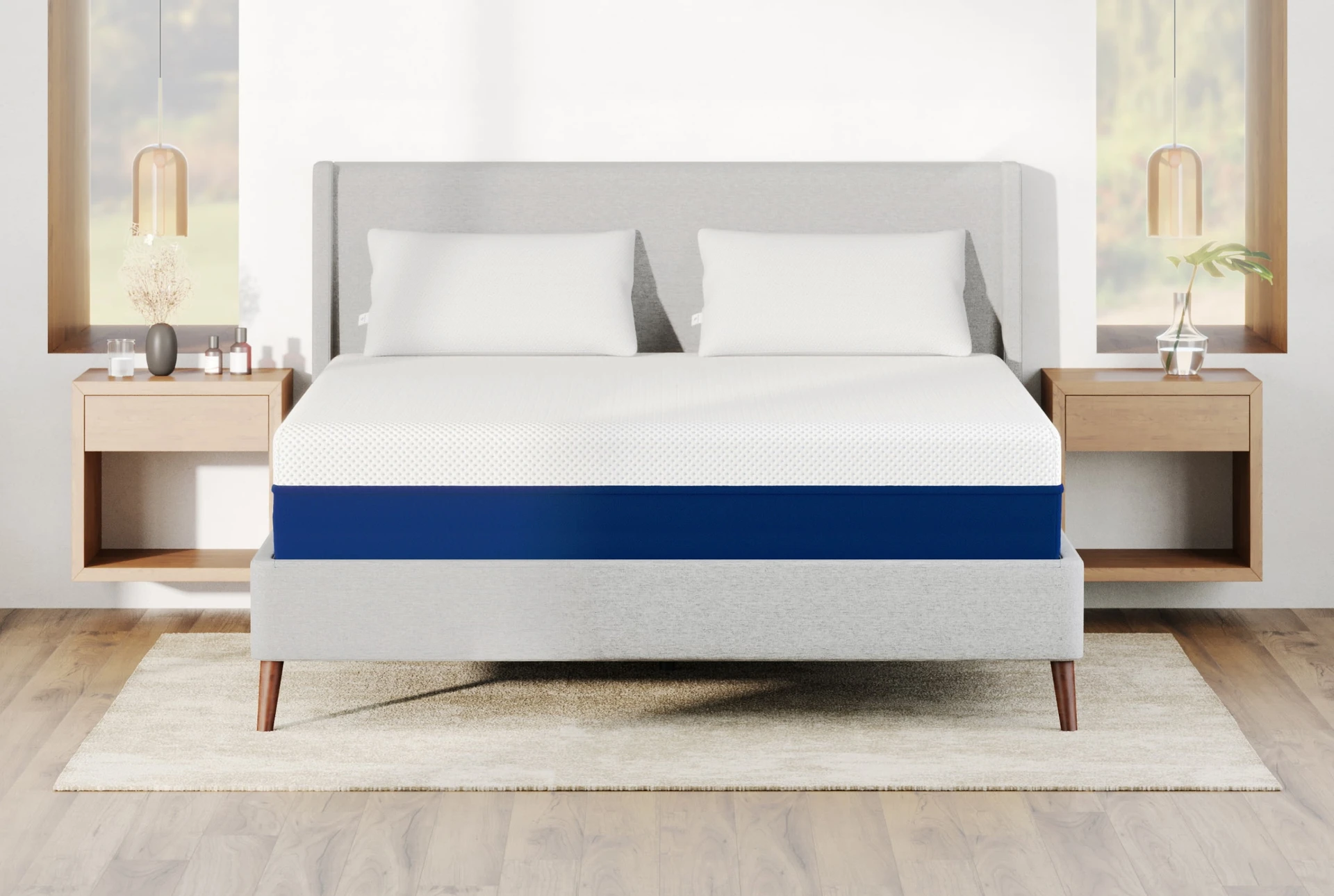
by The Amerisleep AS2 is our first retail option for shoppers seeking medium-firm foam comfort after spinal fusion. The AS2 is a 12-inch, medium-firm memory foam mattress with an all-foam construction.
Amerisleep AS2

The AS2 has a 12-inch all-foam build. Follow your surgical team’s instructions on positioning, mobility, and when a standard mattress is appropriate.
A queen is $1,049 on sale.
Why zoned support matters after spinal fusion
Spinal fusion immobilizes one or more vertebral segments permanently. That segment can no longer flex or extend, which eliminates the instability that caused the original pain. The trade-off is that every movement now shifts more rotational and flexion load to the vertebrae immediately above and below the fusion, a phenomenon called adjacent segment stress.
During 7 to 8 hours of lying down, the mattress either supports or undermines that adaptation. A mattress that allows the lumbar to sag into flexion (too soft) puts chronic tensile stress on the posterior fusion hardware. A mattress that is too rigid pushes the lumbar into extension and concentrates compression at the disc above the fusion. Neither is acceptable long-term.
Zoned support, where the mattress provides firmer resistance under the lumbar and softer accommodation under the shoulders and hips, is the engineering answer. It keeps the fused segment in neutral while allowing the shoulder and hip to sink enough to relieve pressure, especially for side sleepers in the recovery period.
Edge support is the second factor that most guides overlook. Post-fusion patients must log-roll to get out of bed for weeks or months. A mattress with soft, collapsing perimeter makes this painful and unsafe. The Saatva Classic's reinforced perimeter makes the mechanics of bed entry and exit genuinely easier.
Best mattresses for spinal fusion: compared
| Mattress | Type | Firmness | Lumbar support | Trial | Queen price |
|---|---|---|---|---|---|
| Amerisleep AS2 | All-foam | Medium-firm | Medium-firm foam support | 100 nights | $1,049 (queen, sale) |
| Saatva Classic | Innerspring hybrid | Luxury Firm 6/10 | Excellent, zoned lumbar coils + pad | 365 nights | $2,229 |
| PlushBeds Botanical Bliss | Natural latex | Medium/Med-Firm | Very good, buoyant latex response | 100 nights | ~$1,800+ |
| Puffy Lux Hybrid | Hybrid (foam + coils) | Medium ~5-6 | Good, coil core support | 101 nights | ~$1,799+ |
| Sweetnight CoolNest | Hybrid budget | Medium-firm ~6-7 | Good, pocketed coils | ~100 nights | Sub-$600 |
Saatva Classic
9/10
- Dual-coil construction with a dedicated lumbar foam reinforcement pad targeting the L3-L5 region
- Exceptional edge support, critical for log-rolling in and out of bed safely post-surgery without straining hardware
- Free white-glove delivery with in-room setup and old mattress removal, no heavy lifting during recovery
- 365-night trial and lifetime warranty cover the full recovery arc
- Three firmness options (Plush Soft, Luxury Firm, Firm) to match your surgeon's prescription
- Responsive coil feel allows easy repositioning without the "stuck in foam" sensation that strains the fusion site
- Moderate motion isolation, coil bounce transfers partner movement more than all-foam
- $99 return fee applies during the trial window
- Ships flat, not compressed, delivery crew handles placement
The Classic is the coil-based alternative to our first foam pick.
PlushBeds Botanical Bliss
8.7/10
- Natural Dunlop latex provides buoyant, responsive support without the "stuck" feeling of memory foam
- Configurable firmness layers allow you to adjust as recovery progresses
- Organic and natural materials, GOLS and GOTS certified
- 25-year warranty reflects latex durability
- Heavy and difficult to move or reposition without help
- Buoyant feel suits some but not those who prefer deep contouring memory foam
Botanical Bliss is worth comparing when natural materials are a priority.
Puffy Lux Hybrid
8.4/10
- Pocketed coil core provides structured lumbar support with good airflow
- Comfort foam layers cushion pressure at the sacrum and shoulder blades
- Lifetime warranty at a competitive hybrid price point
- 101-night trial for adequate recovery-phase testing
- Not as robust a lumbar reinforcement system as the Saatva Classic's dual-coil with lumbar pad
- Edge support adequate but not exceptional for post-surgical bed entry and exit
Puffy Lux Hybrid is another option if you prefer coils beneath the comfort layers.
Sweetnight CoolNest
7.9/10
- Pocketed coil base provides genuine lumbar support at a fraction of premium hybrid pricing
- Gel memory foam comfort layer manages temperature during recovery when mobility is limited
- Medium-firm feel falls within the 5-7 range most orthopedic guidance recommends
- Build quality and long-term durability are below premium brands, not ideal as a permanent post-fusion solution
- Edge support and overall support depth less consistent than the Saatva or Amerisleep
CoolNest is the lower-cost option if the AS2 is outside your budget.
Firmness and sleep position after spinal fusion
Most spinal surgeons recommend medium-firm to Luxury Firm (5 to 7 on a 10-point scale) for post-fusion recovery. This range maintains alignment during back sleeping without creating pressure points at the sacrum and shoulder blades that force compensatory repositioning, repositioning that can stress hardware.
Sleep position guidance by surgeon preference:
- Back sleeping: place a pillow under the knees, not the lumbar. This takes tension off the posterior fusion elements and lets the natural lordotic curve settle. The preferred position for most lumbar fusions.
- Side sleeping: draw the knees slightly toward the chest and use a pillow between the knees to align the hips and spine. Usually permitted once the acute phase passes.
- Stomach sleeping: increases lumbar lordosis and extension at the posterior fusion elements. Most surgeons actively discourage this position. If unavoidable, place a flat pillow under the pelvis.
An adjustable base with zero-gravity positioning can reduce lumbar disc pressure at the adjacent segments and ease the transition from hospital to home during the first weeks of recovery.
What to look for, what to avoid
Look for mattresses with a durable support core, either pocketed coils or high-density foam base, that will maintain their support profile for 8 to 10 years. Post-fusion patients live with a biomechanical change that is permanent; a mattress that develops a body impression within 18 months is a real problem.
Avoid mattresses that cause pressure pain at the sacrum or thoracic spine during back sleeping. If you wake up within the first 30 minutes needing to roll to your side, the surface is too firm for your body weight. If your hips sink measurably lower than your shoulder line when lying on your side, the surface is too soft and the lateral spine is bending.
When to buy a new mattress after fusion surgery
Do not rush a mattress purchase immediately after surgery. Your body is changing significantly during the first 3 to 6 months as the fusion consolidates and adjacent muscles adapt. Many surgeons recommend waiting until at least the 3-month mark before committing to a permanent mattress decision. In the interim, a quality mattress topper on your existing mattress can fill the gap without the full investment.
When you are ready, long trial windows matter more here than in any other purchase category. A 365-night trial (Saatva) gives you enough time to confirm the mattress is actually supporting your fusion correctly and not contributing to adjacent-segment stress.
The AS2 is worth considering if a medium-firm surface matches your comfort needs. Free shipping and returns are included.
Frequently asked questions
How soon after spinal fusion can I sleep in a regular bed?
Most surgeons allow return to a regular bed within 1 to 2 days of surgery, using a log-roll technique to protect the fusion site. The quality of your sleep surface matters from the first night home. Ask your surgical team for specific positioning guidance based on your fusion level.
What firmness is best after spinal fusion?
Medium-firm to Luxury Firm (5 to 7 out of 10) is the standard clinical range. This supports the fused segment in neutral alignment during back sleeping without creating pressure point pain at the sacrum. "Firm" in the surgical context means not sagging, not the hardest surface possible.
Can I sleep on my side after spinal fusion?
Usually yes, once the acute phase passes, with a pillow between the knees to align the hips with the spine. Your surgeon will provide guidance based on your specific fusion level and technique. A mattress with genuine lumbar zoning helps maintain alignment when you do shift to your side.
Memory foam or innerspring after spinal fusion?
The AS2 has an all-foam core; a hybrid uses coils. Compare how each feels when you lie down, turn, and sit at the edge. The trial covers feel; the warranty covers qualifying defects.
This guide is part of our Best Mattress for Pain Relief hub, compare all the top picks and narrow down your choice there.
Amerisleep AS2
A queen AS2 costs $1,049 on sale, with a 100-night trial.
Medium-firm, all-foam, 12 inches