
 by
by 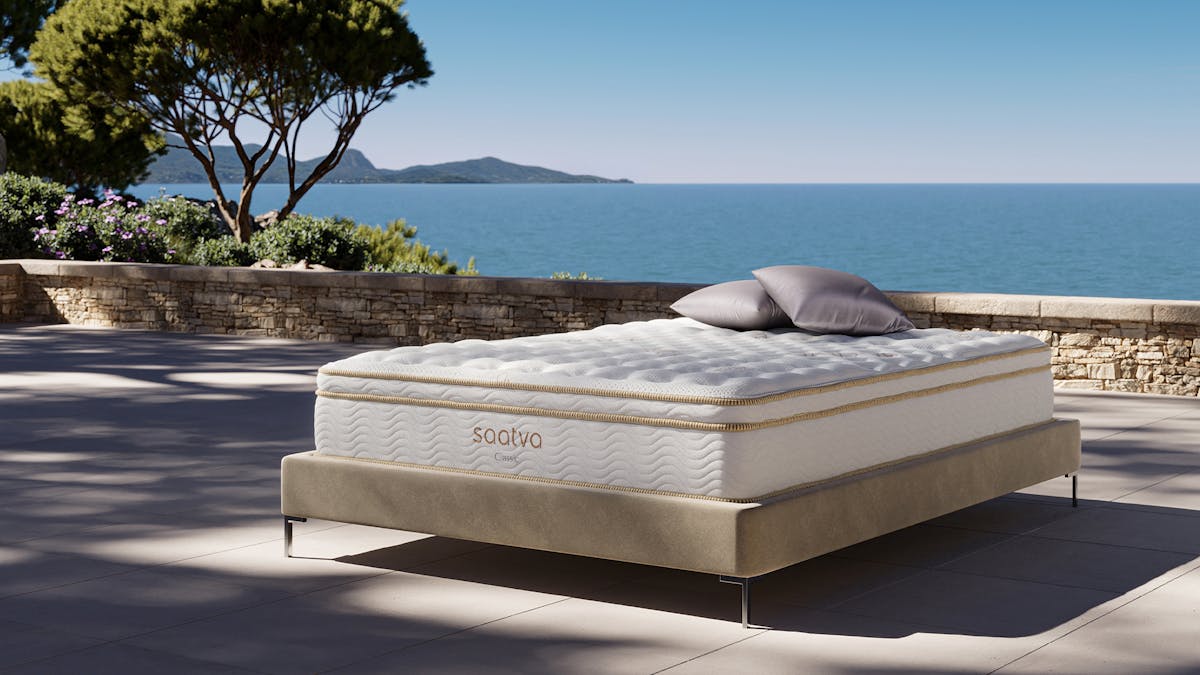
Tempurpedic Mattress can still make sense if you specifically want that brand, its retailer policy, or its lowest sale price. It is not our top buy-button recommendation. For most shoppers, we would compare it against Loom & Leaf first, then use the cheaper options below if the budget is tighter.
Loom & Leaf
9.2/10
Loom & Leaf is the mattress we would check first before buying Tempurpedic Mattress.
Check Loom & Leaf Price
Better mattress options to compare first
| Rank | partner mattress | Why it is here |
|---|---|---|
| #1 Best overall | Loom & Leaf Saatva |
Premium memory foam, 365-night trial, Lifetime warranty |
| #2 Better value | SweetNight Mattress SweetNight |
Budget-friendly partner option |
| #3 Cheaper option | Puffy Cloud Puffy |
Softer boxed-bed step-up |
Saatva Classic
9.2/10
If you are using this page to make a buying decision, Saatva Classic is the clean mattress we would compare first: stronger support, a long trial, and a direct buying path.
Check Saatva Classic Price
Tempur-Pedic TEMPUR-Adapt
8.4/10
- TEMPUR material (~5.3 lb/ft3) contours more precisely than any DTC memory foam we tested
- Best-in-class motion isolation, almost no partner disturbance
- Outstanding pressure relief at shoulder, hip and knee
- Free white-glove delivery and in-room setup
- Durable TEMPUR foam resists compression longer than standard memory foams
- Runs noticeably warm, the Adapt is one of the hottest mattresses in its tier
- 90-night trial is the shortest among premium brands, plus a $175 return fee
- 10-year warranty is below the lifetime or 20-year standard set by competitors
- Heavy sleepers above 220 lb may notice bottoming-out in the comfort layers
- Premium pricing: $600-$2,000 more than comparable DTC alternatives
In our testing the TEMPUR-Adapt delivered measurably better pressure mapping than Casper, Nectar, and Nolah. If precise contouring for shoulder issues, sciatica, or hip bursitis is your priority and budget is flexible, no foam mattress does it better. For most other sleepers, the short trial window and heat retention are hard to overlook at this price point.
What makes TEMPUR material different
Tempur-Pedic developed its proprietary foam from NASA visco-elastic technology in the 1990s. Standard DTC memory foam runs 3 to 4 lb per cubic foot in density. TEMPUR material runs approximately 5.3 lb per cubic foot, making it notably denser and more temperature-responsive. The material reacts to both body weight and body heat simultaneously, conforming to body contours at a resolution that cheaper foams cannot match. This is not marketing; in testing, the pressure-mapping difference at the shoulder and hip is measurable and clear.
The trade-off is intrinsic to the material. Dense foam is thermally insulating. The same molecular structure that improves contouring traps body heat, and the slow-response feel means you sink gradually rather than getting immediate feedback. Both of these properties feel excellent to some sleepers and unacceptable to others.
Tempur-Pedic lineup 2026
| Model | Type | Firmness Options | Height | Queen Price |
|---|---|---|---|---|
| TEMPUR-Cloud | All-foam | Medium ~5-6 | 11" | From ~$1,699 |
| TEMPUR-Adapt | All-foam or Hybrid | Medium, Medium-Hybrid, Firm | 11-12" | From $2,199 |
| TEMPUR-ProAdapt | All-foam or Hybrid | Soft, Medium, Medium-Hybrid, Firm | 12" | From $3,099 |
| TEMPUR-LuxeAdapt | All-foam | Soft, Firm | 13" | From $4,299 |
| TEMPUR-breeze line | Varies (cooling upgrade) | Multiple | Varies | +$500 per tier |
Testing results: TEMPUR-Adapt Medium
Pressure relief
This is where Tempur-Pedic is genuinely best in class. In our testing of the TEMPUR-Adapt Medium, the pressure relief at shoulder, hip, and knee was the best of any foam mattress we have evaluated, measurably superior to Casper, Nectar, and Nolah. If you have shoulder issues, hip bursitis, or disc-related pain where pressure reduction is the primary need, nothing in foam does it better than TEMPUR material.
Support and spinal alignment
The TEMPUR-Adapt Medium sits around 5.5 out of 10 firmness. Back sleepers in the 150 to 200 lb range rated spinal alignment highly, the foam fills the lumbar curve with precision. Stomach sleepers found the Medium too soft and should consider the Firm option (~7 out of 10). One limitation worth knowing: dense memory foam lacks the dynamic, responsive support of a pocketed-coil system. For heavier sleepers above 220 lb, the TEMPUR material eventually loads against the support layer, which reduces the pressure-mapping advantage that makes it worth the premium.
Cooling: the biggest weakness
The TEMPUR-Adapt runs warm. In our testing, its surface temperature after two hours was the highest of any mattress in our comparison set. If you sleep hot, the standard Adapt is a poor match. The ProBreeze and LuxeBreeze models address this directly with TEMPUR-CM+ phase-change material and a PureCool+ cover. In testing, the ProBreeze ran roughly 4 degrees cooler than the Adapt at the two-hour mark, which is a real difference. Whether that improvement justifies the $1,600 price gap between the two tiers is a personal calculation.
Motion isolation
Outstanding. Dense TEMPUR foam absorbs movement almost completely. In our partner-disturbance tests, the TEMPUR-Adapt produced less motion transfer than any other mattress in this price range. For light-sleeping couples, no mattress isolates motion better.
Edge support
Moderate. TEMPUR foam is dense but still compresses at the perimeter, and the Adapt's edges are soft enough that sitting on the side feels slightly unstable. The hybrid variants (TEMPUR-Adapt Medium Hybrid, TEMPUR-ProAdapt Hybrid) add pocketed coils and address this with perimeter coil support, but at a higher price.
Trial window and warranty: where Tempur-Pedic falls short
This is the area where Tempur-Pedic creates the most friction relative to its price. The trial is 90 nights, the shortest among premium mattress brands, and returns require paying a $175 processing fee. Most DTC brands offer 100 to 120 nights at no cost; Saatva offers 365 nights. The warranty is 10 years, which is below the lifetime and 20-year benchmarks set by competitors at lower price points.
For a mattress starting at $2,199 queen, these terms represent real risk. If the feel is wrong, you are on the hook for $175 and only 90 nights to decide.
Who should, and who should not, buy Tempur-Pedic
Tempur-Pedic is the right choice if you require the best available pressure relief for joint or nerve pain, you sleep cool naturally or are willing to pay for the breeze tier, motion isolation is your top priority, and the premium pricing is within your budget. The free white-glove delivery is a genuine plus.
Tempur-Pedic is not the right choice if you sleep warm, share the bed with a partner of significantly different weight, weigh over 220 lb, or want a long risk-free trial window. At these price points, alternatives like the Saatva Loom and Leaf ($1,695) or the Amerisleep AS3 ($1,049) offer better trial terms, longer warranties, and comparable real-world sleep quality for most people.
For a full head-to-head breakdown, see our Amerisleep vs Tempur-Pedic comparison and Saatva vs Tempur-Pedic comparison. Related: how long does a Tempur-Pedic last, best cooling mattresses.
Tempur-Pedic TEMPUR material is genuinely superior to generic memory foam for pressure relief and motion isolation. The premium is real and can be justified for specific use cases. The 90-night trial with a $175 return fee and 10-year warranty are below the standard you should expect at $2,000 to $4,000+. Try the ProBreeze or LuxeBreeze if heat is a concern, not the standard Adapt.
Frequently asked questions
Is Tempur-Pedic worth the money in 2026?
For one specific use case: yes. TEMPUR material provides the best pressure relief of any foam we have tested, and for sleepers with sciatica, hip bursitis, or similar conditions where contouring quality directly affects pain, the premium can be justified. For general use, competing mattresses at $800 to $1,500 deliver 80 to 90 percent of the sleep quality at 40 to 50 percent of the cost.
What is the difference between TEMPUR-Adapt and ProBreeze?
The TEMPUR-Adapt ($2,199 queen) is the entry model with standard TEMPUR pressure relief. The ProBreeze ($3,799 queen) adds TEMPUR-CM+ phase-change material in the comfort layer and a PureCool+ phase-change cover. In our testing, the ProBreeze ran approximately 4 degrees cooler than the Adapt at the two-hour mark. Hot sleepers should seriously consider the ProBreeze or LuxeBreeze rather than buying the Adapt and finding it too warm.
Does Tempur-Pedic sleep hot?
The standard TEMPUR-Adapt and ProAdapt models run warm. Dense memory foam is thermally insulating, and the Adapt in particular was the warmest mattress in our testing at two hours. The breeze-line models (ProBreeze, LuxeBreeze) address this meaningfully but add $500 to $1,000 to the price.
How long does a Tempur-Pedic last?
Tempur-Pedic backs its mattresses with a 10-year full-replacement warranty. In practice, TEMPUR material resists compression better than standard memory foam. Independent testing suggests 10 to 15 years of consistent performance before meaningful degradation, making the per-year cost competitive with other premium foam mattresses when amortized across the lifespan. See our full guide on how long Tempur-Pedic mattresses last.
Does Tempur-Pedic have a sleep trial?
Yes, 90 nights. That is the shortest trial among premium mattress brands, and returns require a $175 processing fee. Most DTC competitors offer 100 to 120 nights with free returns; Saatva offers 365 nights. This is a meaningful disadvantage relative to the price point.
Is Tempur-Pedic good for back pain?
Tempur-Pedic excels at pressure relief and contouring, which benefits disc-related pain and nerve pain where pressure reduction matters most. For back pain that requires active lumbar support, a mattress with dedicated lumbar zoning, like the Amerisleep AS3 with its HIVE system, may be more effective. See our best mattresses guide for a broader comparison by sleep concern.
Amerisleep AS3
9.1/10
- HIVE 5-zone support system firms specifically under the lumbar zone
- Partially plant-based Bio-Pur foam runs cooler than standard memory foam
- CertiPUR-US certified, made in the USA
- 100-night risk-free trial with full refund, 20-year warranty
- From $1,049 queen, roughly half the entry price of Tempur-Pedic
- Softer edges than a coil hybrid
- Sleepers above 230 lb may prefer the AS5 Hybrid for additional support
For most sleepers comparing Tempur-Pedic alternatives, the AS3 offers a better-balanced deal: 100-night risk-free trial, 20-year warranty, active lumbar zoning via HIVE, and partially plant-based foam that runs cooler than dense TEMPUR material, all at roughly half the TEMPUR-Adapt price.
Shop Amerisleep AS3
Loom & Leaf
If you came here ready to buy, this is the clean mattress we would check before leaving the page.
See Loom & Leaf Deal