 by
by How I'd get the hotel bed look with organic cotton came down to one decision for me: stop buying bedding that looked fluffy for a week and start building a bed I wanted to climb into at 10 p.m. My old setup had shiny sheets, a tired duvet, and the faint plastic smell I could never quite air out.
I didn’t need a bigger bedroom. I needed a calmer one. And I wanted the whole change to stay under $500, with most of the budget going toward the parts my body touched every night.
The night I admitted my bed felt like a waiting room
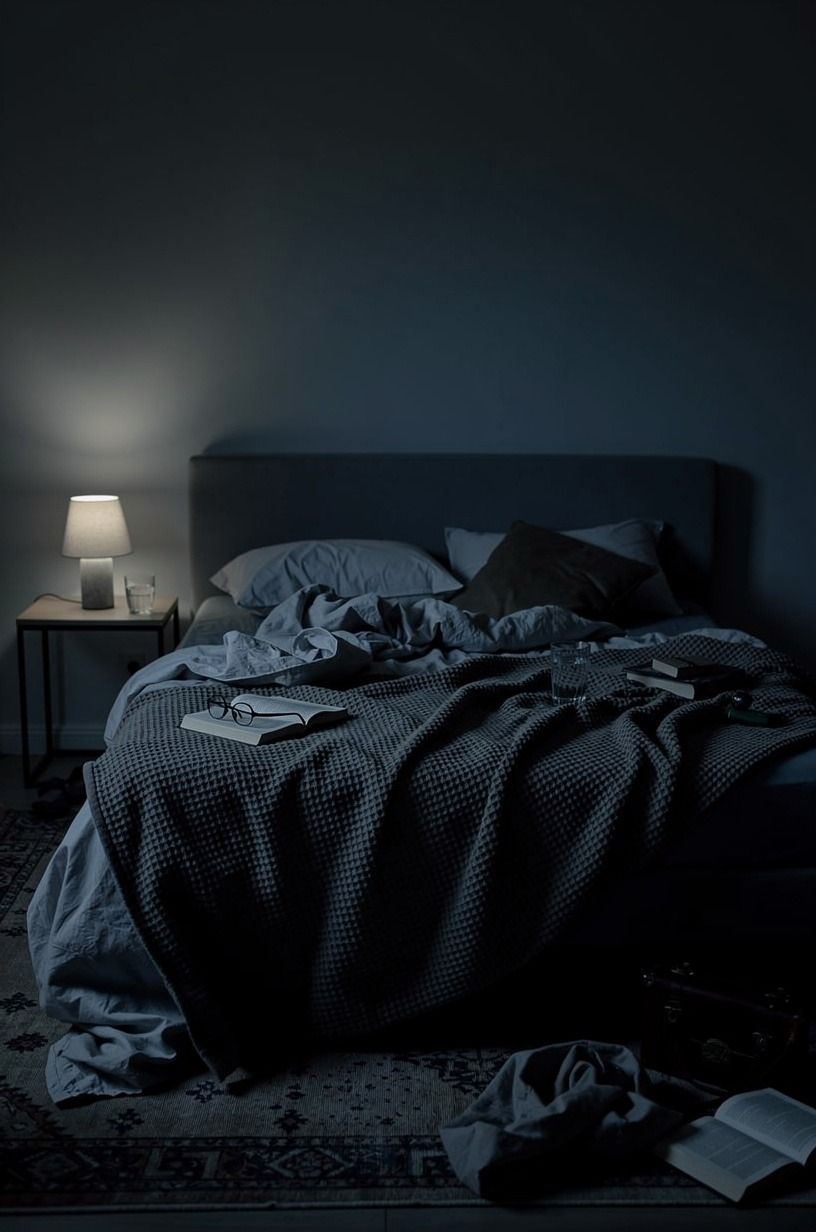
My bedroom wasn’t ugly, exactly. It just felt temporary, like I’d unpacked but never settled in.


The mattress was still doing its job, but the bedding on top made every night feel slippery and overheated. I’d wake up at 3 a.m. kicking one corner of the duvet toward the floor.
I’m picky about beds because I think your bed should be the softest-looking place in your home. Mine looked flat. Worse, it felt flat.
But I didn’t want the staged hotel version with a dozen decorative pillows that end up on a chair. I wanted that fresh, tucked-in hotel housekeeping feeling, with enough softness that I could read there on Sunday morning without rearranging the whole thing.
I started with the part nobody sees
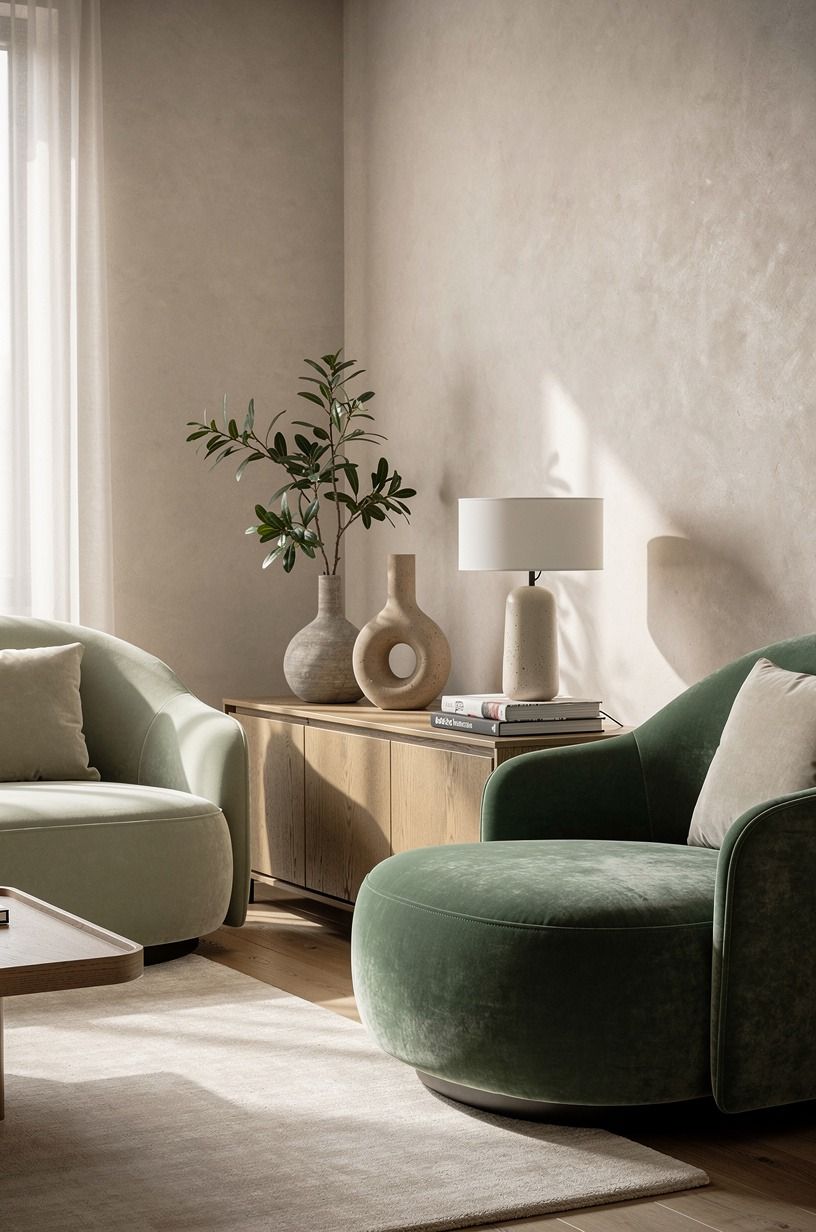
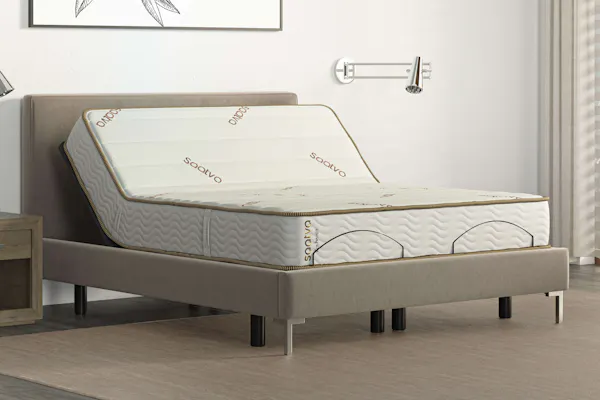
Before I bought anything pretty, I dealt with the foundation. I chose the Saatva Classic because my old mattress had started to feel uneven near the edge, and I was tired of doing that tiny scoot toward the middle every night.
I won’t pretend a mattress changes your life overnight. It didn’t.
But my shoulders felt less cranky in the morning, and that mattered to me more than a dramatic before-and-after photo. If you’re sorting out the base of your own non toxic bedroom, I’d read this wooden bed frame and organic mattress pairing guide before you choose a frame that fights the mattress height.
The visual difference surprised me too. A supportive mattress gave the bed cleaner edges, so the layers above it stopped sagging into a sad little heap. Quietly better.
Then I made the sheets feel crisp, not precious
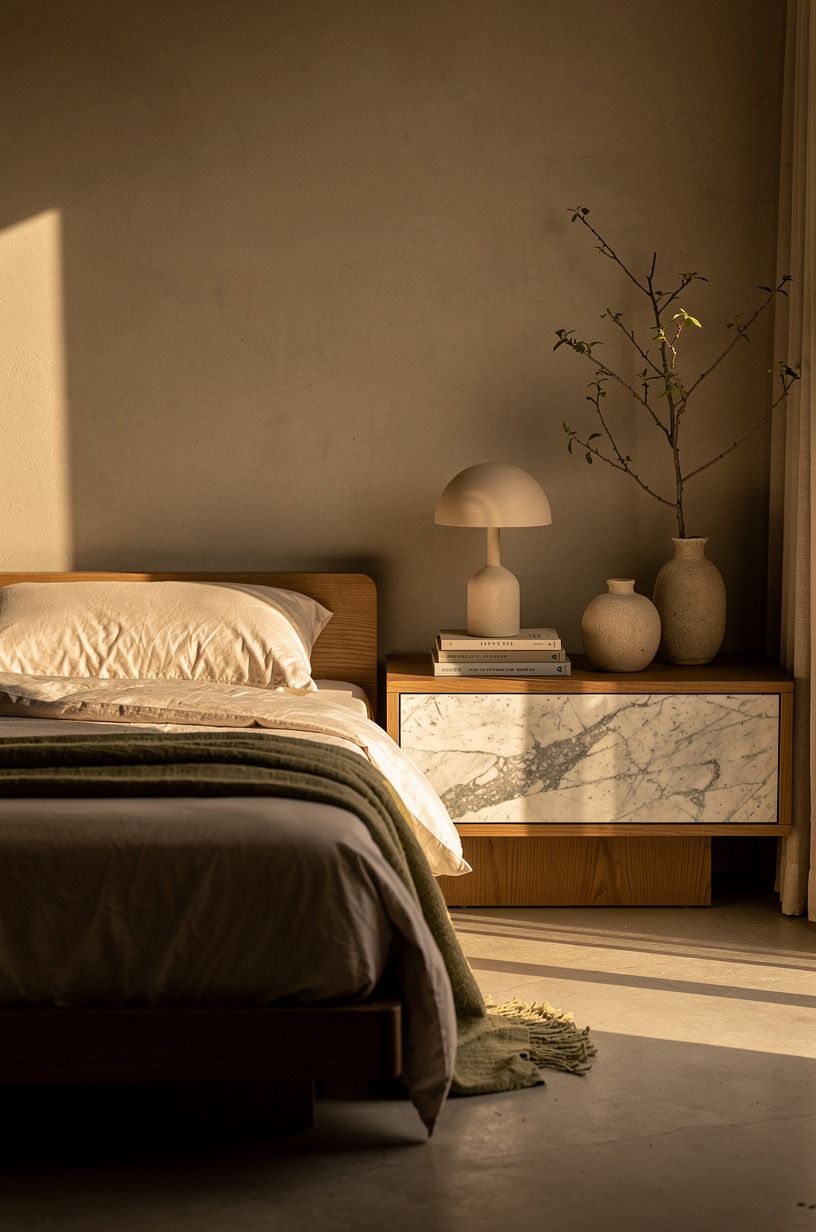
I painted the wall behind my bed Benjamin Moore White Dove OC-17, which made the morning light look warmer without pushing the room into beige mush. I’d skip a dark accent wall here. In my small room, it would’ve made the bed look like it was hiding in a cave by midafternoon.
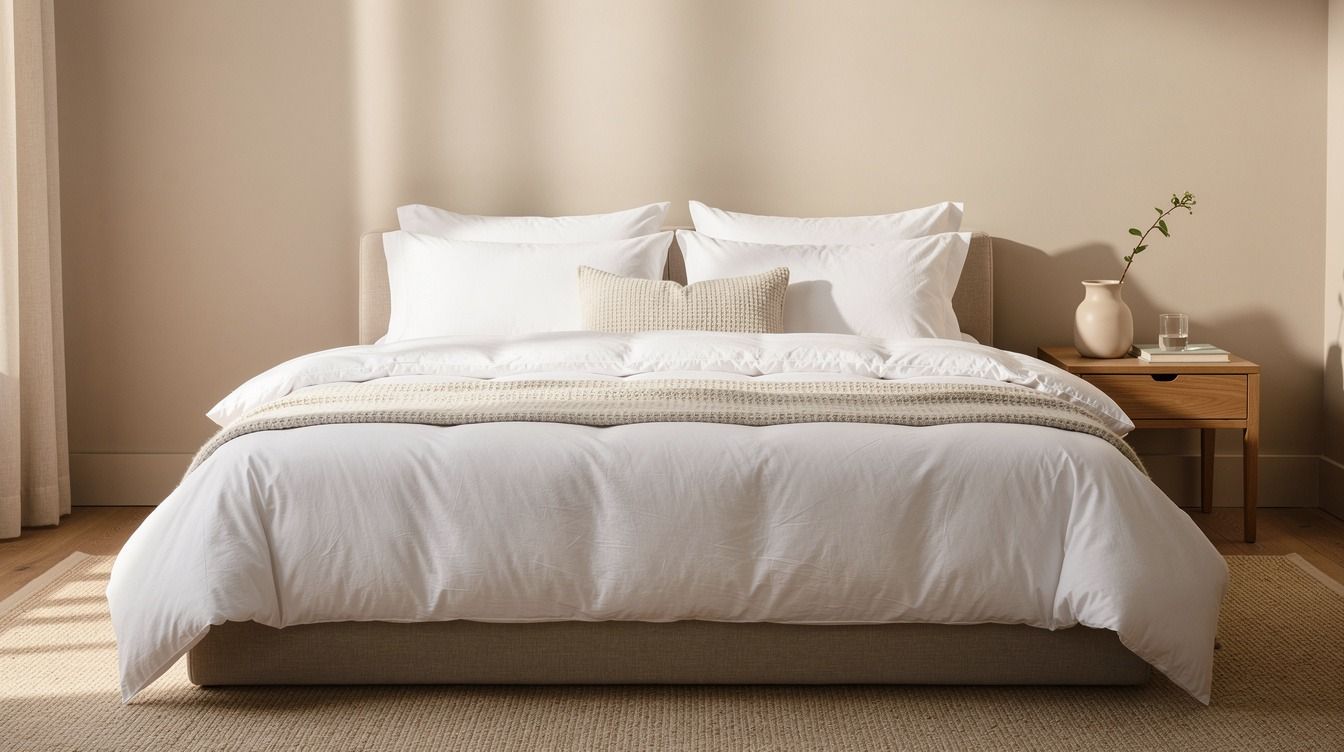
Then I brought in Organic Cotton Sheets in soft white. I wanted that cool, matte surface you notice when you first pull back a hotel cover, not anything slick or aggressively wrinkled. I like cotton because it feels plain in the best way.
Clean. Breathable.
No performance speech required.
And yes, I worried white sheets would make me nervous. For two weeks, I regretted it every time I drank tea in bed.
But they made the room feel brighter, and I’d choose them again. I keep this organic cotton sheets guide bookmarked because it helped me stop treating thread count like the only thing that mattered.
My Three-Layer Rule fixed the flat duvet problem
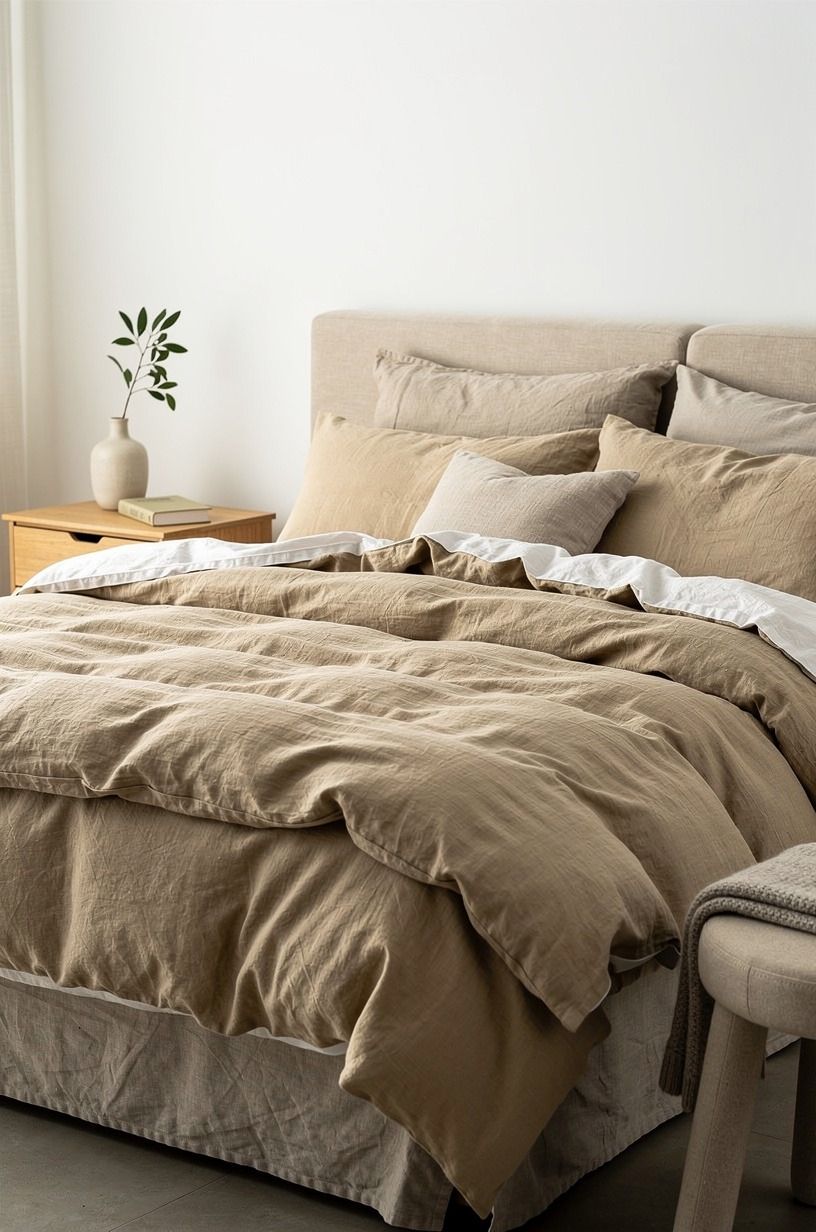
The change that made the bed look intentional was not more pillows. It was learning to layer without making the whole thing bulky.
I used a Down Alternative Comforter inside a simple white cover, then folded the top third down so the sheet border showed. That one fold gave the bed a relaxed, refined shape. I’m firmly against tightly stuffing a comforter into a too-small cover, because it creates lumpy corners and looks like laundry day, not a sanctuary bedroom.
But I kept the color story boring on purpose. White cotton, oatmeal linen at the foot, one muted clay-colored throw. My room already gets afternoon light that turns dusty and golden, and I didn’t want a bold blanket competing with it.
The texture did enough. Soft cotton.
A gently rumpled linen edge. That’s it.
The Piece My Whole Bedroom Is Built Around
Natural materials, a 365-night home trial, free white glove delivery. Decide in your own room, not a showroom.
I stopped using pillows as decoration
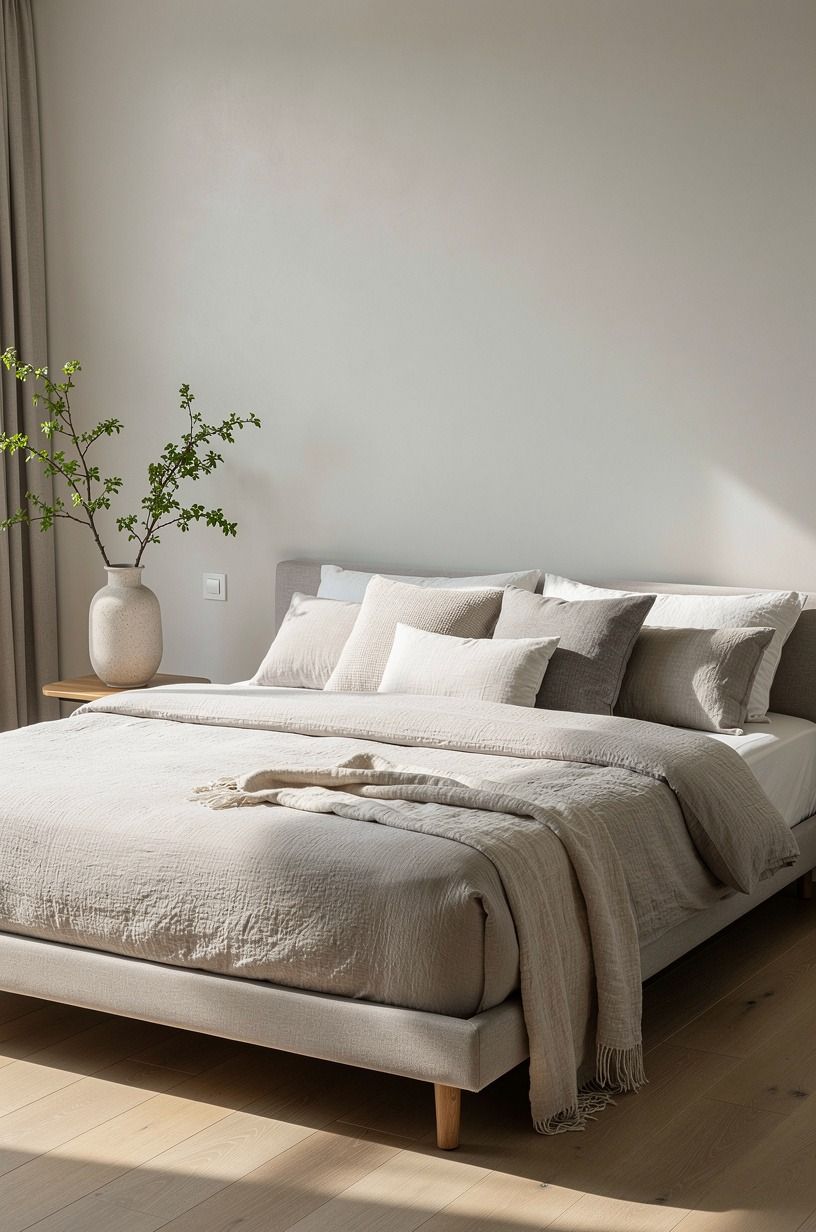
I used to make the bed with four oversized pillows, two tiny cushions, and one long lumbar pillow that fell off constantly. It looked fine from the doorway. It was annoying everywhere else.
This time, I chose an Organic Quilted Pillow for sleeping and kept the visible pillow arrangement spare: two sleeping pillows upright, two standard shams behind them, nothing else. I think hotel beds often look luxurious because they’re edited, not because they’re crowded.
And I made one unglamorous decision: I stopped buying pillowcases that didn’t match the sheet color closely enough. A warm white beside a cool white can look accidental fast (especially under a yellow bedside lamp). I’d rather have fewer pieces that agree with each other than a pile of “interesting” ones.
The light had to work after 9 p.m.
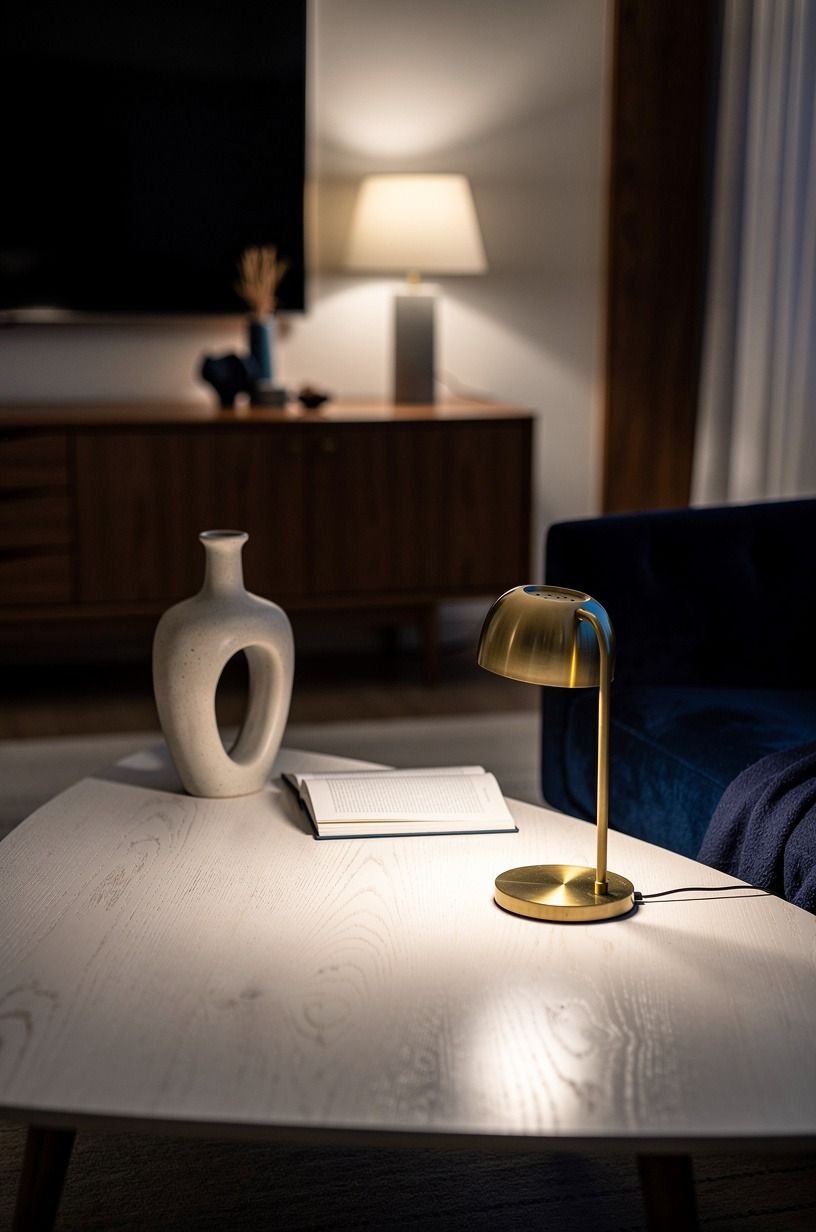
A hotel bed look isn’t only bedding. I learned that the hard way after making my bed beautifully, switching on the overhead light, and watching the whole room go flat again.
I added two small lamps with warm bulbs and let the overhead fixture stay off at night. Three light sources per room is a useful rule: overhead, task, ambient. In my bedroom, the lamp shades throw little pools of gentle light onto the nightstands, and suddenly the cotton looks softer instead of stark.
I also hung one framed print with its center around 57 to 60 inches from the floor. Not too high. I hate art that floats near the ceiling like it’s avoiding the furniture.
For the sheets, I checked them regularly after washing, not because I’m precious about them, but because I’ve had one unpleasant bed-bug scare in a rental years ago. This guide on what bed bugs look like on sheets is practical if you’ve ever done that nervous late-night inspection too.
What I’d do differently, and what I wouldn’t
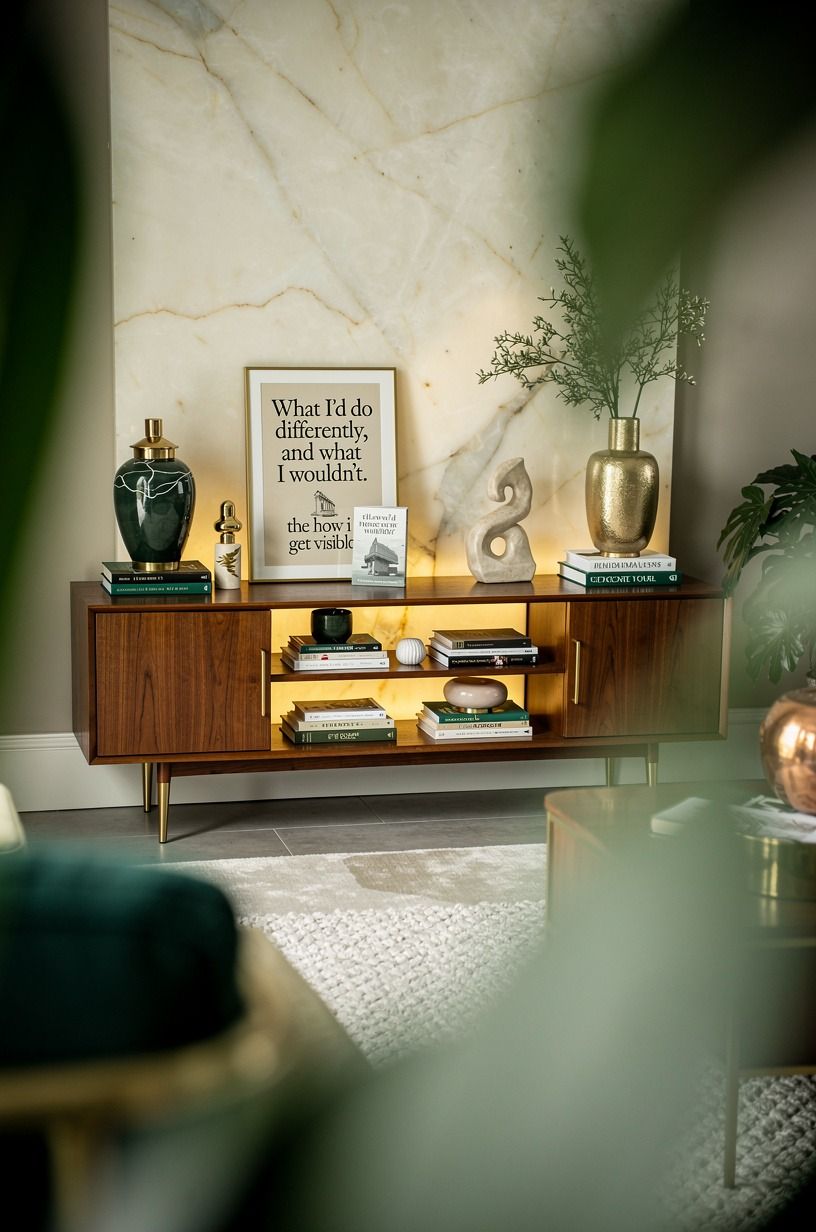
I’d buy the better sheets first if I were starting over. I spent too much time trying to rescue cheap bedding with throws, extra pillows, and fancy-looking shams. None of it worked because the surface I slept on still felt wrong.
My real regret is the linen throw. I love how it looks, but it sheds a little texture and needs more smoothing than I expected. I wasn’t sure the topper of the bed needed any extra layer at all, and sometimes I still remove it before sleep.
But the quieter palette was right. I’m not interested in recreating a hotel room so literally that it feels impersonal. I wanted my own bed to have that peaceful, freshly made feeling, with books on the nightstand and a water glass I forgot to bring downstairs.
 My pick for a healthier bedroomZenhavenTalalay latex, organic cotton, 365-night trial, lifetime warranty, free white glove delivery.See the Zenhaven
Build Your Own Healthier Bedroom
Sale pricing runs on orders over $1,000, and the 365-night trial gives you a full year of nights to be sure.
Where I’d start first
If I had to pick one, I’d start with organic cotton sheets. You can’t layer warmth over bedding that feels scratchy or shiny, because every other piece will look more expensive than it feels. Pin the sheet change for later, then make the bed with the window cracked open and one folded oatmeal throw at the foot.