
 by
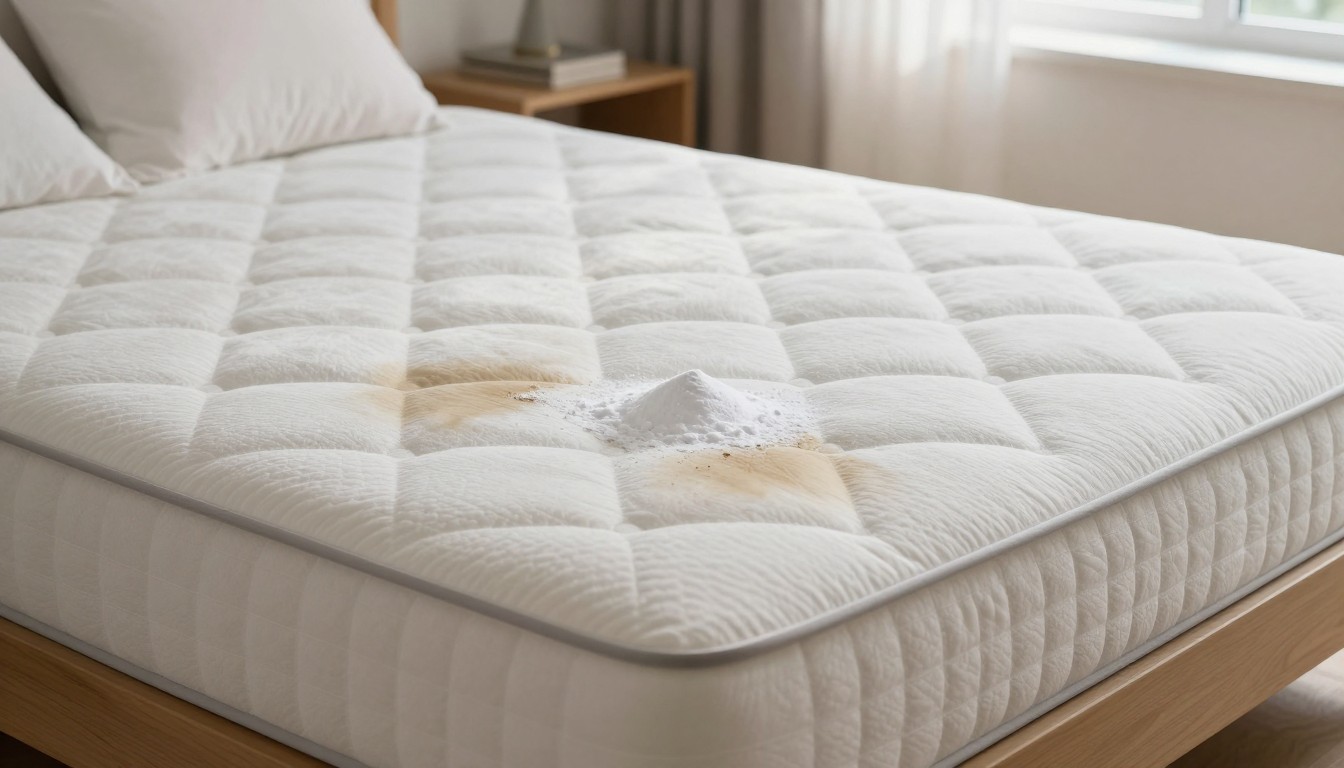
by Quick answer: Use plain baking soda as a dry first pass: strip the bed, vacuum the mattress, cover the stain, then remove the powder thoroughly. It may help light surface marks, but set-in discoloration needs stain-specific care.
- wikiHow tells readers to strip the bedsheets before cleaning.
- wikiHow puts vacuuming before any baking soda is applied.
- For a whole mattress, wikiHow suggests one to three cups of baking soda.
Updated July 2026 · Reviewed for accuracy
Baking soda is worth trying because it gives you a controlled, mostly dry starting point. The published wikiHow method is straightforward: bare the mattress, vacuum away dirt, then spread baking soda over the surface.
I’d use that sequence for a light surface mark before reaching for a liquid mixture. The key is knowing what baking soda can reasonably do, keeping moisture under control, and stopping if the mattress cover reacts poorly.
What baking soda can and can’t do to a mattress stain
Baking soda is a loose powder, so this method starts with surface contact rather than a rinse. That’s useful on a mattress, where the fabric you see sits over materials that usually aren’t washed like ordinary bedding.
A visible stain may contain loose dirt, dried residue, or discoloration that has already settled into the cover. Vacuuming handles the loose material. Baking soda then gives you a separate pass at the remaining mark, making it easier to judge whether the stain is responding without immediately adding liquid.
I wouldn’t call baking soda a universal stain remover. A faint surface mark and a dark, set-in patch aren’t the same job. The wikiHow instructions establish a cleaning sequence, but they don’t guarantee that every stain will disappear.
My practical rule: Treat baking soda as a cautious first pass. If the mark improves, reassess before repeating. If nothing changes, piling on more powder is unlikely to address whatever sits beneath the visible surface.
The method also gives you a useful diagnostic split. If the mark vanishes after vacuuming, it was largely loose surface soil. If it remains after the powder is removed, you can move to care instructions or a stain-specific method without confusing ordinary debris with the stain itself.
Keep expectations narrow. The goal is controlled cleaning, not forcing a dramatic result from a mild household powder. That approach is kinder to an unfamiliar cover and makes it easier to stop before a small mark becomes a larger cleaning problem.
Prepare the mattress before the powder goes down
wikiHow places two preparation steps before the baking soda: strip the sheets and vacuum the mattress. That order makes sense because powder shouldn’t be spread over crumbs, lint, or other loose material.
Start by removing all bedding from the work area. Don’t leave a fitted sheet partly attached around the stain. You need an unobstructed view of the mark and enough space to vacuum beyond its visible edge.
Next, find the mattress care label or the manufacturer’s cleaning directions. If those directions prohibit home spot cleaning or specify another method, follow them. Baking soda being familiar doesn’t make every mattress cover identical.
Have these items ready:
- Plain baking soda without added fragrance
- A vacuum with a clean attachment suitable for the mattress surface
- A clean white cloth for checking any damp area
- A small bowl or shaker for controlled application
- The mattress manufacturer’s care instructions
Inspect the stain in even light before doing anything else. Look at its boundary, color, and whether the surface is dry. A quick photo can help you judge later whether the appearance actually changed rather than relying on memory.
If the area is damp, I’d press it gently with the clean cloth instead of rubbing it across the cover. Don’t bury unexplained moisture beneath a thick layer of powder. Check the care instructions before adding any other cleaner.
Vacuum the stained area and the fabric around it, following wikiHow’s preparation sequence. Work carefully around tufting, piping, and seams so loose powder or dirt doesn’t remain hidden there. The surface should look free of visible debris before you continue.
Finally, check that the vacuum attachment itself is clean. Transferring old dust onto the mattress defeats the point of the preparation stage and can make the stain boundary harder to read.
How to clean mattress stains with baking soda step by step
The useful order is simple: expose the mattress, inspect the mark, vacuum, apply the powder, remove it, then reassess. Each stage has a purpose, so don’t rush directly to covering the stain.
Strip the mattress completely.
Remove the sheets and any loose bedding, as wikiHow directs. Keep cleaned or removed bedding away from the work surface so debris doesn’t fall back onto the mattress.
Mark the stain’s visible boundary.
You don’t need to draw on the fabric. Simply study where the discoloration begins and ends, or take a reference photo. This gives you something concrete to compare against after cleaning.
Vacuum before applying baking soda.
Follow wikiHow’s sequence and remove loose dirt first. Vacuum slightly beyond the visible mark as well as directly over it, using a clean attachment and a level of suction permitted by the mattress instructions.
Apply a controlled, even layer.
For treating an entire mattress, wikiHow suggests one to three cups of baking soda. An isolated spot doesn’t automatically need the whole-surface quantity. Cover the marked area evenly without building a mound that will be difficult to remove.
Leave the powder undisturbed.
Use the manufacturer’s stated dwell time if one is provided. Otherwise, keep the process conservative: monitor the cover, avoid adding unapproved liquid, and don’t let an arbitrary clock override the care directions.
Vacuum the powder away thoroughly.
Remove the baking soda from the center of the treated area, its outer edge, and nearby seams. Continue until you can’t see loose powder sitting on the surface or collecting around stitching.
Inspect before repeating anything.
Look at the mattress under lighting similar to your initial inspection. Check whether the stain became lighter, stayed unchanged, spread, or developed a new edge. That response should determine the next move.
If the mark improves and the cover looks unchanged, another conservative dry application may be reasonable if the care instructions permit it. Don’t assume that more powder or a longer wait will automatically produce a better result.
If the stain doesn’t change, stop repeating the identical process. Baking soda has then given you useful information: the discoloration probably needs a more specific approach, or the visible color may not be removable through dry surface treatment alone.
Don’t turn a dry method into an improvised wet mixture. Vinegar, detergent, and other liquids change how the mattress is being cleaned. Add them only if the mattress maker’s directions allow that method.
Match the next move to the stain in front of you
A pale yellow patch, loose surface soil, and a sharply defined spill ring present different cleaning decisions. Baking soda can be the same first pass, but the next step should depend on what remains after the powder is removed.
I’d use the table below as a decision guide, not a promise of removal. The mattress instructions still take priority, especially if the cover has unusual fabric, quilting, or a treatment that restricts spot cleaning.
| What you see | Best next move | What to check afterward |
|---|---|---|
| Loose dirt around a faint mark | Vacuum first, then apply a light, even layer of baking soda if discoloration remains. | Whether the mark was mostly debris or remains visible after the powder is removed. |
| Pale yellow discoloration | Try the dry first pass, then use the dedicated guide to clean yellow stains from a mattress if the color remains. | Any change in the stain’s edge, shade, or size. |
| A mark associated with perspiration | Use baking soda conservatively, then consult the focused instructions for cleaning sweat stains from a mattress. | Whether the visible discoloration improved or needs a stain-specific method. |
| A broader area needing dry surface cleaning | Follow wikiHow’s strip, vacuum, and sprinkle sequence, then read the broader mattress-cleaning guide for baking soda. | Powder trapped around seams, tufting, or the mattress edge. |
| A dark, set-in, or unidentified stain | Check the manufacturer’s directions before repeating or introducing any liquid cleaner. | Spreading color, fabric changes, or no improvement after the dry pass. |
A stubborn mark isn’t an invitation to keep increasing the amount of baking soda. If a controlled application makes no visible difference, the stain may need a method chosen for its source rather than another layer of the same powder.
Unknown stains deserve extra restraint. Without knowing what caused the mark, you can’t confidently predict how it will react to liquid, rubbing, or a mixed cleaner. The mattress maker or a professional cleaner is the better next source of instructions if the label doesn’t settle the question.
Mistakes that make mattress cleaning harder
The easiest mistake is treating a powder like a liquid cleaner. Baking soda should contact the surface evenly and remain removable, not become a packed paste in seams or quilting.
- Skipping the initial vacuum: wikiHow specifically places vacuuming before baking soda. Leaving loose dirt in place makes it harder to tell what the powder changed.
- Pouring one heavy mound: a thick pile gives you more residue to remove without ensuring more even contact across the stain.
- Adding liquid by reflex: a dry baking soda method and a wet spot-cleaning method aren’t interchangeable. Check the care directions before combining them.
- Rubbing beyond the stain: aggressive rubbing can move residue across a wider area. I’d use controlled pressure and keep checking the visible boundary.
- Ignoring seams and tufting: inspect these areas closely when vacuuming the powder away.
- Repeating an unchanged process: if the stain looks the same after a careful application, switch to stain-specific guidance instead of adding more powder.
Another mistake is remaking the bed before the surface has been checked. Don’t cover the mattress until loose baking soda is gone and any damp area is fully dry. Run a clean hand over the treated fabric and inspect the stitching for remaining powder.
Avoid masking the result with fragrance. Plain baking soda lets you assess the mattress without introducing another scent or additive. If the care label names a prohibited substance or method, that instruction settles the matter.
Stop cleaning if: the discoloration spreads, the cover’s color changes, the fabric texture shifts, or moisture reaches an area you can’t dry confidently. Contact the manufacturer or a professional cleaner before continuing.
How to decide whether to repeat or stop
The stain’s response after the initial controlled pass gives you the clearest next step. A lighter mark with an unchanged cover supports cautious reassessment. No improvement, spreading color, or altered fabric supports stopping.
If you repeat the dry method, begin from the same clean baseline. Remove all earlier powder, inspect the area, and apply another even layer only if the manufacturer’s instructions allow it. Don’t stack fresh baking soda over residue from the previous application.
If you stop, record what you used and what happened. That information is useful when reading the manufacturer’s care guidance or describing the stain to a professional cleaner. It also prevents an accidental mixture of incompatible cleaning approaches later.
The Nut’s bottom line:
- Strip and vacuum before applying baking soda, following wikiHow’s published sequence.
- Use an even layer rather than a difficult-to-remove pile.
- Let the mattress care instructions control any use of liquid or repeat cleaning.
- Move to stain-specific guidance if a careful dry pass produces no visible improvement.
Baking soda is a sensible first attempt for light surface staining because the process can stay controlled and mostly dry. I’d judge it by the mattress’s response, not by the hope that more powder will erase every mark.
WHEN CLEANING ISN'T ENOUGH
Baking soda can help with light surface stains, but deeply set discoloration may remain. If careful cleaning no longer restores the mattress—or the mattress is already worn—the Saatva Classic is a replacement option worth comparing.
Saatva Classic
- 365-night home trial and lifetime warranty, per saatva.com
- Handcrafted in the USA, free white-glove delivery
- Flexible financing available

FAQ
Does baking soda remove every mattress stain?
No. wikiHow supports stripping, vacuuming, and spreading baking soda as a cleaning method, but that isn’t a guarantee against every stain. Old, deeply colored, or unidentified marks may need stain-specific instructions.
How much baking soda should I put on a mattress?
For a whole mattress, wikiHow suggests one to three cups. For an isolated stain, use enough for an even covering rather than automatically applying the whole-surface quantity.
How long should baking soda sit on the stain?
Use the mattress maker’s stated dwell time if its care instructions provide one. Without a stated time, monitor the cover conservatively and avoid assuming that leaving the powder indefinitely will improve the result.
Can I mix baking soda with vinegar on a mattress?
I wouldn’t mix them by reflex. This method uses dry baking soda, while adding vinegar creates a wet cleaning process that should be checked against the mattress manufacturer’s directions first.
Can baking soda be used on yellow or sweat stains?
It can serve as a cautious dry first pass, provided the care instructions permit it. If the discoloration remains after the powder is removed, switch to guidance written for that particular stain rather than repeatedly adding more baking soda.