
 by
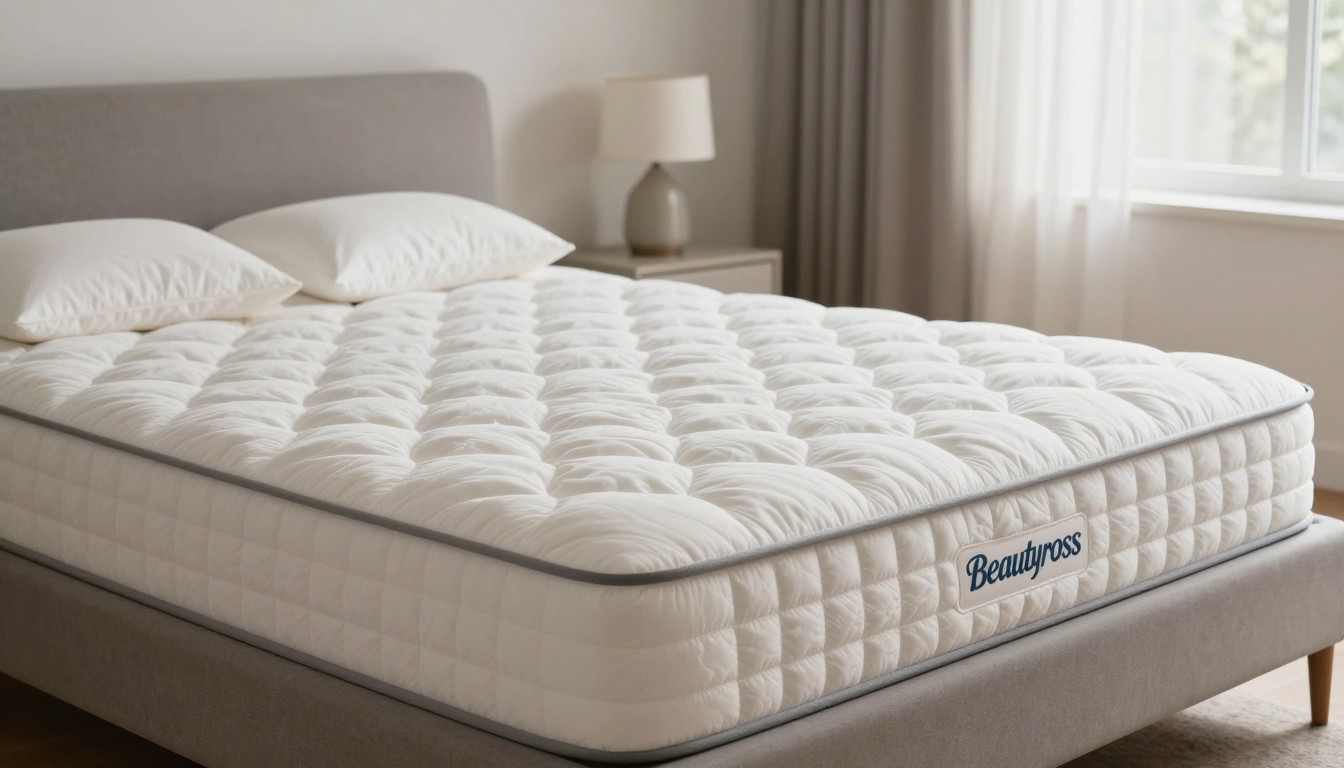
by Quick answer: The Beautyrest Feather/Down Fiber Mattress Topper is a conditional recommendation. I’d confirm fill proportions, shell fabric, care, attachment, and returns before paying the listed $91.
- Blue Ridge Home lists the product at $91.
- Blue Ridge Home identifies it as a Beautyrest feather/down fiber mattress topper.
- It sits above an existing mattress rather than replacing its support core.
Updated July 2026 · Reviewed for accuracy
This isn’t a blind-buy recommendation. The Beautyrest name and feather/down-fiber wording identify the category, while Blue Ridge Home’s $91 listing supplies a concrete value marker, but neither detail reveals how the topper is built.
My take is simple. Consider it if the seller confirms the construction and your mattress is still structurally sound. Skip it if you need a precisely documented firmness change or expect a topper to repair a worn mattress.
My verdict: a conditional buy with details to verify
The broad feather/down-fiber description is the central issue. It tells me which fill families may be involved, but it doesn’t show their proportions, arrangement, or contribution to the finished surface.
I wouldn’t call that an automatic deal-breaker. I would treat it as a reason to slow down. A mattress topper is heavily defined by what’s inside it, how that fill is contained, and how securely the finished piece stays on the bed.
Who should consider it
- Shoppers specifically interested in a feather/down-fiber topper.
- People whose mattress remains supportive but whose sleeping surface no longer feels right.
- Buyers willing to confirm the fill, shell, care, fit, and return terms before ordering.
Who should skip it
- Anyone trying to correct sagging or structural mattress damage.
- Shoppers who need a documented firmness or loft specification.
- Buyers who require confirmed machine-care instructions or a particular attachment system.
The strongest case for this Beautyrest topper is modest: it may offer a surface-level adjustment without replacing an otherwise usable mattress. That’s a reasonable use for any topper, provided the expected feel and construction are clear before money changes hands.
The weakest case is buying from the brand name alone. Beautyrest may be familiar, but a recognizable label can’t substitute for the actual fill breakdown, stitching pattern, care label, or written store policies. Those details determine whether the product suits your bed and routine.
Construction: the product name doesn’t tell the full story
“Feather/down fiber” is a mixed-material description, not a complete layer breakdown. It doesn’t say whether one fill dominates, whether the materials are blended together, or whether they occupy separate parts of the topper.
That distinction matters. A shopper expecting a down-led surface could receive a very different experience from someone expecting a fiber-led pad with some feather or down content. I won’t guess which description applies to this model without a confirmed specification.
The outer shell deserves the same scrutiny. The product name doesn’t establish the shell fabric, weave, seam construction, or whether internal stitching divides the fill into compartments. Each point affects how the topper handles ordinary use and care.
The construction questions I’d ask
- What is the complete fiber-content statement?
- What proportion of the fill is feather, down, and other fiber?
- Are the materials blended or arranged in separate layers?
- Is the fill divided into stitched compartments?
- What fabric is used for the outer shell?
- Does the topper use straps, a fitted skirt, or no attachment system?
- What does the sewn-in care label permit?
These aren’t fussy questions. They identify what you’re actually buying. If a retailer can’t provide the fiber label or a clear construction description, I’d be reluctant to make assumptions from the front-facing product name.
For wider category context, use my down mattress topper guide as a checklist. The useful comparison isn’t simply one brand against another. It’s whether each listing clearly explains its materials, containment method, fit, and care requirements.
Feel, cushioning, and support depend on your mattress
A topper changes the uppermost part of the sleep surface. The existing mattress still supplies the main support structure, so the Beautyrest topper’s result will depend partly on what sits beneath it.
If the mattress is evenly supportive but the surface no longer matches your preference, adding a topper can be a sensible experiment. If the mattress has a dip, damaged edge, or weakened support core, placing fill over it doesn’t rebuild that underlying structure.
| Your situation | My assessment |
|---|---|
| The mattress feels even and supportive, but you want a different surface feel. | Potentially suitable, once the topper’s fill and expected feel are confirmed. |
| The mattress has a visible dip or structural weakness. | Poor match. A topper can cover the surface but can’t replace the damaged support system. |
| You need a very specific firmness result. | Too uncertain unless the seller supplies a useful firmness description and return terms. |
| You share the bed and are sensitive to movement. | Unknown. The product name alone can’t establish motion performance. |
| You want a confirmed cooling product. | Unknown. Feather/down-fiber wording isn’t a temperature-performance rating. |
I also wouldn’t promise pressure relief from the fill label alone. The result depends on how the materials compress, how much fill is present, how it’s distributed, and how the mattress beneath responds to weight. None of that can be read from the product name.
Support and surface cushioning shouldn’t be treated as the same thing. A cushioned top can change the immediate feel, but the deeper mattress still governs alignment and resistance. That’s why I’d assess the mattress first and the topper second.
My practical rule: If you’d keep the mattress and only want to adjust its surface, a topper may be appropriate. If the mattress itself needs replacing, extra fill is a detour rather than a repair.
Fit, stability, cooling, motion, and care
Fit begins with the finished size and attachment method. Neither is contained in the feather/down-fiber name, so compare the seller’s measurements with your mattress and bedding rather than relying only on the size label.
Attachment matters because even a comfortable topper becomes annoying if it shifts or bunches. Look for an explicit description of straps, a fitted skirt, or another retention method. If no system is included, my guide to how to hold down a mattress topper covers the practical options.
Cooling requires equal restraint. Material names don’t amount to temperature data, and there are no product-specific thermal measurements in the confirmed facts. I wouldn’t describe this Beautyrest model as cooling or heat-retaining without stronger evidence.
Check these fit and maintenance details before ordering
- Finished length and width, not merely the named bed size.
- Whether the topper is intended to sit freely or attach to the mattress.
- Whether its profile will still work with your fitted sheet.
- The exact washing, drying, spot-cleaning, and professional-care instructions.
- Any special instructions for restoring or redistributing the fill.
- The written return conditions after the packaging has been opened.
Motion performance is also unproven. A topper’s label doesn’t show how much partner movement will be noticeable because the underlying mattress remains part of that system. I’d rely on the written return policy rather than a broad promise about motion isolation.
Edge performance follows the same logic. The topper may change how the top perimeter feels, but it can’t strengthen the mattress’s internal edge structure. If the bed already collapses noticeably near the side, evaluate that problem independently.
Care may be the most practical deciding factor. Don’t assume that a soft-filled topper can go through a home washer or dryer. Follow the actual sewn-in label, since aggressive care could affect the shell, seams, or fill distribution.
Value and durability at the listed price
Blue Ridge Home lists the topper at $91. That gives shoppers a firm comparison point, but price alone can’t establish value. A purchase is only economical if the materials, fit, maintenance demands, and store policies match the buyer’s needs.
I’d judge value through disclosure. A clear fiber-content label, understandable construction description, suitable attachment method, workable care instructions, and acceptable return terms would make the listed price easier to assess. Missing answers make even a moderate purchase harder to defend.
| Confirmed point | Still worth checking |
|---|---|
| Beautyrest branding | The seller and policy provider responsible for the order |
| Feather/down-fiber product description | Exact proportions, arrangement, shell, and compartment construction |
| Topper product category | Finished measurements, attachment method, and bedding compatibility |
| Blue Ridge Home’s $91 listing | Current checkout price, returns, warranty terms, and care requirements |
Durability is harder to judge from the name. I’d want to know how the fill is contained, whether the stitching limits migration, what routine care is expected, and what the warranty actually covers. Without those details, assigning a lifespan would be guesswork.
Visible photographs can help with seams and attachment, but they can’t confirm the internal blend. Written specifications matter more. Save the product description and applicable policies with your order so you have a record of what the seller represented.
If you’re comparing this construction with other down-based options, my broader down mattress topper review can help organize the comparison. Focus on disclosed materials and fit rather than treating every product with “down” in its name as equivalent.
What I’d verify before placing an order
The $91 price reported by Blue Ridge Home is a decision point, not a complete specification. Before ordering, I’d ask the seller for direct answers and keep them with the purchase record.
- “What is the complete material label?” Ask for the shell and fill, not a shortened marketing description.
- “What are the fill proportions?” The answer should make clear what feather, down, and fiber mean in this specific topper.
- “How is the fill arranged?” Find out whether it is blended, layered, or divided among internal compartments.
- “How does it stay on the bed?” Confirm any straps, skirt, backing, or other retention feature.
- “What are the finished measurements?” Compare them with the actual top surface of your mattress.
- “What does the care label say?” Get the washing, drying, and professional-care requirements in writing.
- “What happens if the feel isn’t right?” Read the return conditions, including rules for opened bedding.
- “What does the warranty cover?” Check the exclusions and the party responsible for handling a claim.
Vague responses are information too. If the retailer can’t identify the fill or provide the care and return conditions, I’d pass. A topper is difficult to evaluate from a photograph, so written details carry most of the buying decision.
If the answers are clear and compatible with your needs, the Beautyrest Feather/Down Fiber Mattress Topper becomes a more reasonable prospect. My verdict remains conditional because the name and price don’t establish comfort, fit, or long-term performance by themselves.
ONE VERIFIED ALTERNATIVE
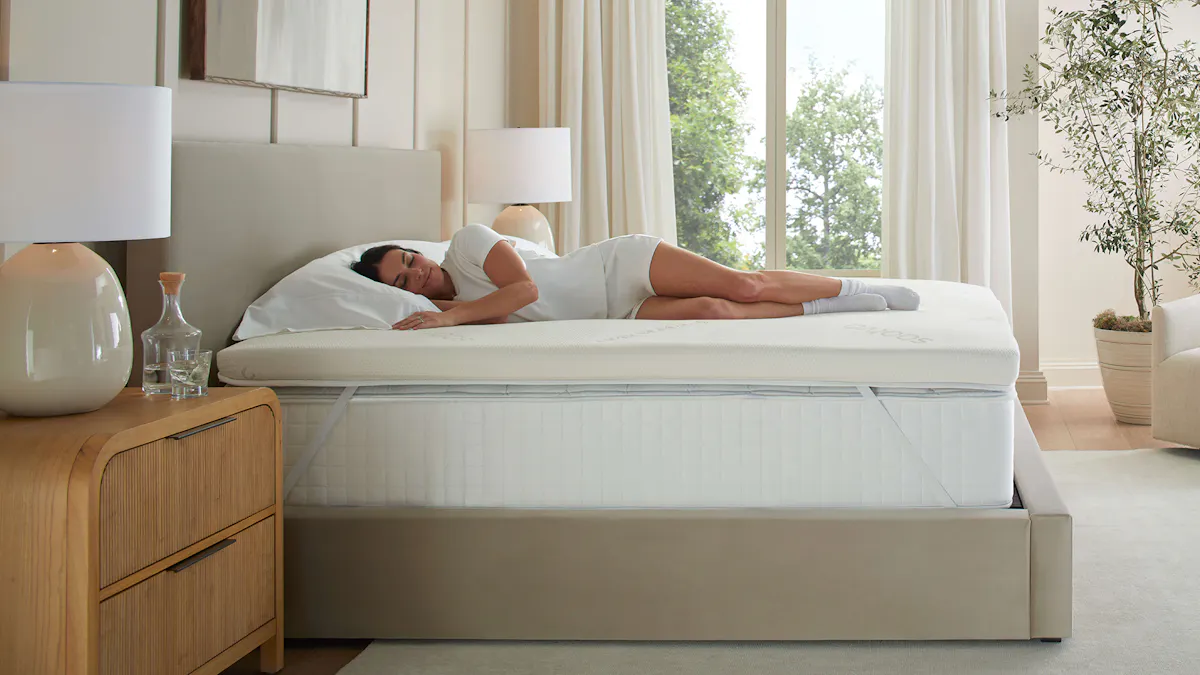
Not quite the right fit? The Saatva Graphite Topper is worth a look as an alternative. Check today’s price, sizing and return terms on the official product page before you order.
Saatva Graphite Topper
- Graphite-infused memory foam, per saatva.com
- 180-night trial
- Secure anchor bands, fits deep mattresses
FAQ
Is the Beautyrest Feather/Down Fiber Mattress Topper real down?
The name references feather, down, and fiber, but it doesn’t establish their exact proportions or arrangement. Ask the seller for the complete fiber-content label before treating it as a down-led topper.
Will this topper make a firm mattress softer?
I can’t promise a particular firmness change from the product name alone. The result depends on the internal construction, amount and distribution of fill, and the feel of the mattress beneath it.
Can it fix a sagging mattress?
No topper replaces a mattress’s internal support core. It may cover the surface, but a dip or weakened edge beneath it remains a structural mattress problem.
Does this Beautyrest topper sleep cool?
There’s no confirmed product-specific temperature data supporting a cooling verdict. Feather/down-fiber wording isn’t enough to predict heat retention, so I wouldn’t buy it solely for a cooling claim.
Is the Beautyrest Feather/Down Fiber Mattress Topper worth $91?
Blue Ridge Home’s $91 listing could represent fair value if the fill disclosure, fit, care requirements, and written policies suit you. I’d buy only after those points are confirmed, and I’d skip it if the seller expects the product name to do all the explaining.