
 by
by
Editor's pick, bed sheets
Sleep Lab Pick · Current Sale
Current Sale, Amerisleep's current sale runs sitewide. Their bedding line uses moisture-wicking lyocell engineered for hot sleepers.
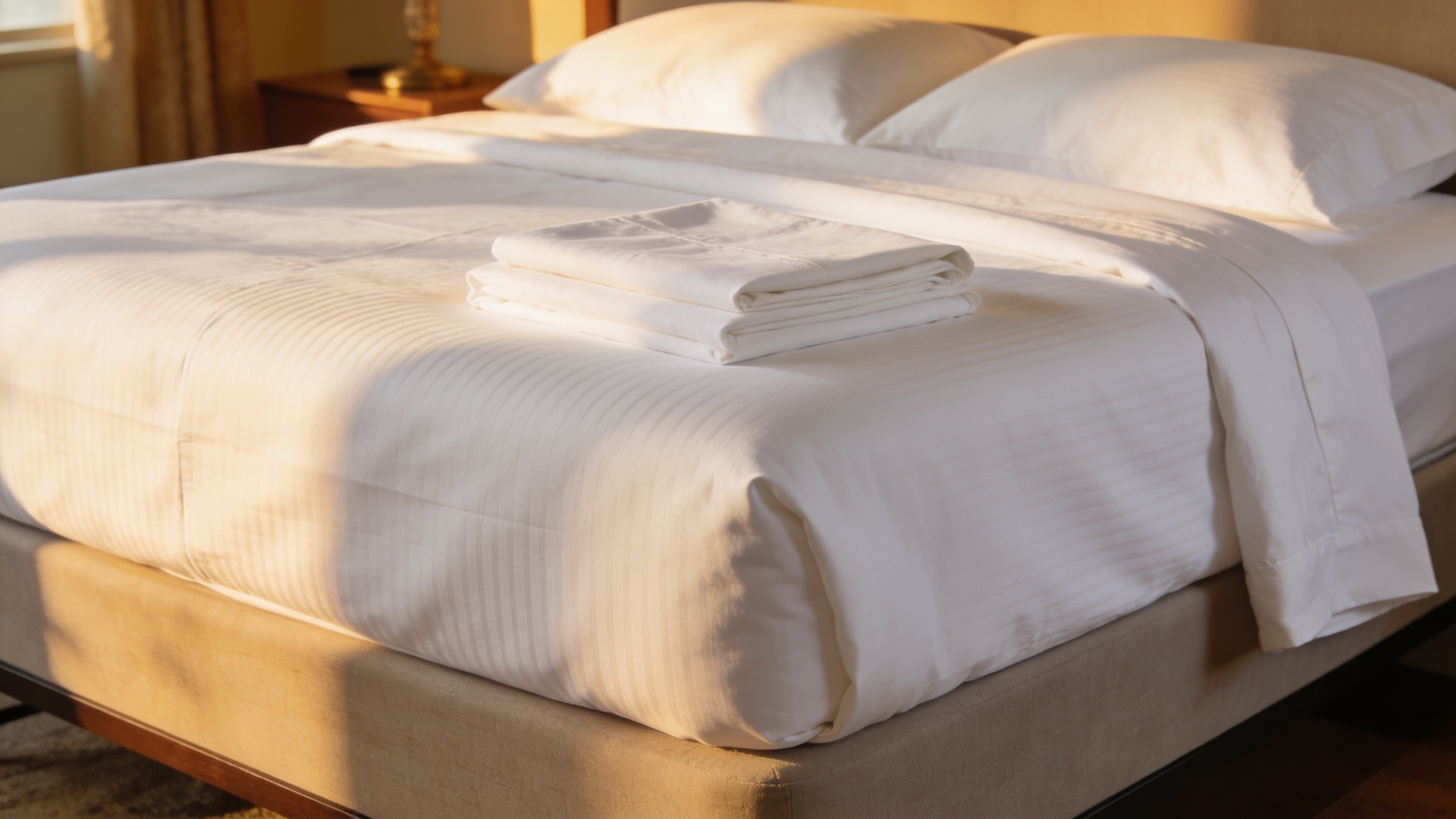
Saatva Percale Sheet Set
From $145 · 100% long-staple organic cotton · 200 thread count percale weave · 45-night trial
TL;DR
Bed sheet selection comes down to weave (percale = crisp, sateen = silky), fiber (cotton, linen, bamboo, Tencel), thread count (200-400 ideal for percale), and fit (deep-pocket matters for pillow-tops).
Jump to section
Saatva Pillow Protector. From $45
365-night trial · Lifetime warranty
Cold water is the first and most important rule: NEVER use hot water on blood stains. Heat sets the iron in blood permanently into fabric fibers. Use cold water, a protein-based stain remover or hydrogen peroxide (for color-safe fabrics), and treat within minutes if possible. Dried blood is harder but still removable with extended cold soaking.
Fresh Blood (Within 1 Hour)
- Rinse with COLD water immediately. Run from the back of the stain to push blood out, not further in.
- Apply cold water + salt paste. Rub gently, let sit 10-15 minutes.
- Rinse with more cold water.
- If stain persists: hydrogen peroxide 3%. Apply directly, let bubble 2-3 minutes (only on color-safe fabrics).
- Rinse thoroughly.
- Launder normally in cold water. Do not use hot water.
- Check before drying. If stain remains, repeat. Never dry, heat sets the stain permanently.
Dried Blood (Older Than 1 Hour)
- Soak in cold water. 30-60 minutes minimum.
- Apply enzyme-based stain remover (OxiClean, Shout Advanced). Let sit 15-30 minutes.
- Scrub gently with an old toothbrush.
- Rinse in cold water.
- Repeat if needed. Dried blood often requires 2-3 cycles.
- Launder in cold water.
- Air dry or low heat only until stain is fully gone.
By Fabric Type
| Fabric | Safe methods | Avoid |
|---|---|---|
| Cotton (any color) | All methods including hydrogen peroxide | Hot water |
| Silk | Cold water + salt, gentle | Peroxide, bleach, scrubbing |
| Linen | Cold water + mild detergent | Peroxide on colored linen |
| Bamboo | Cold water + enzyme cleaner | Hot water |
| Dark fabrics | Cold water + salt, test first | Bleach, peroxide |
Natural Remedies
- Salt paste: Mix salt with cold water. Apply, let sit, rinse. Safe on all fabrics.
- Meat tenderizer: Contains papain, breaks down blood proteins. Mix with cold water.
- Baking soda paste: Apply, let dry, brush off. Gentle on delicate fabrics.
- Saliva: Works surprisingly well on small fresh stains, contains amylase.
- Contact lens solution: Contains enzymes. Emergency option.
What Does NOT Work
- Hot water (sets the stain)
- Hydrogen peroxide on colored fabrics (bleaches them)
- Rubbing / scrubbing hard (spreads the stain)
- Putting in dryer before stain is gone (heat permanently sets)
Prevention: Use a Pillow Protector
For future nosebleeds or menstrual leaks, a waterproof pillow / mattress protector catches the stain before it reaches the sheet or mattress itself.
Our Pick
Saatva Pillow Protector. From $45
365-night trial · Lifetime warranty
FAQ
Can you get dried blood out of sheets?
Yes, with cold water soaking + enzyme cleaner. Takes 2-3 cycles but effective.
Does hydrogen peroxide remove blood?
Yes, very effective. Only on color-safe fabrics (whites, stable-dyed cottons).
Can I use bleach on blood stains?
On white cotton only. Bleach damages color and delicate fabrics.
Related reading: Waterproof Pillow Protector | How to Clean a Mattress | Mattress Stain Removal | How to Remove Urine from Mattress
Sheet buying guide 2026
Thread count myths
Above 400 thread count, quality is determined by fiber, not thread count. Marketing claims of 1000+ thread count sheets typically use multi-ply yarns that inflate the number without adding real density or softness.
Fiber options
- Cotton percale, crisp, cool, breathable. Best for hot sleepers. 200-400 thread count optimal.
- Cotton sateen, silky, slightly warmer than percale. 300-500 thread count optimal.
- Egyptian / Pima cotton, long-staple cotton, softer and more durable. Premium pricing.
- Tencel / Lyocell, wood-pulp fiber, naturally cooling and moisture-wicking. Best for hot sleepers and sensitive skin.
- Bamboo, soft, naturally antimicrobial. Most "bamboo" sheets are actually rayon made from bamboo.
- Linen, cool, breathable, wrinkles by design. Ideal for summer; improves with age.
Sheet size compatibility
- Standard queen sheets fit mattresses up to 15 inches deep.
- Deep pocket queen sheets fit 16-18 inch mattresses.
- Extra deep pocket needed for pillow-top mattresses over 18 inches thick.