
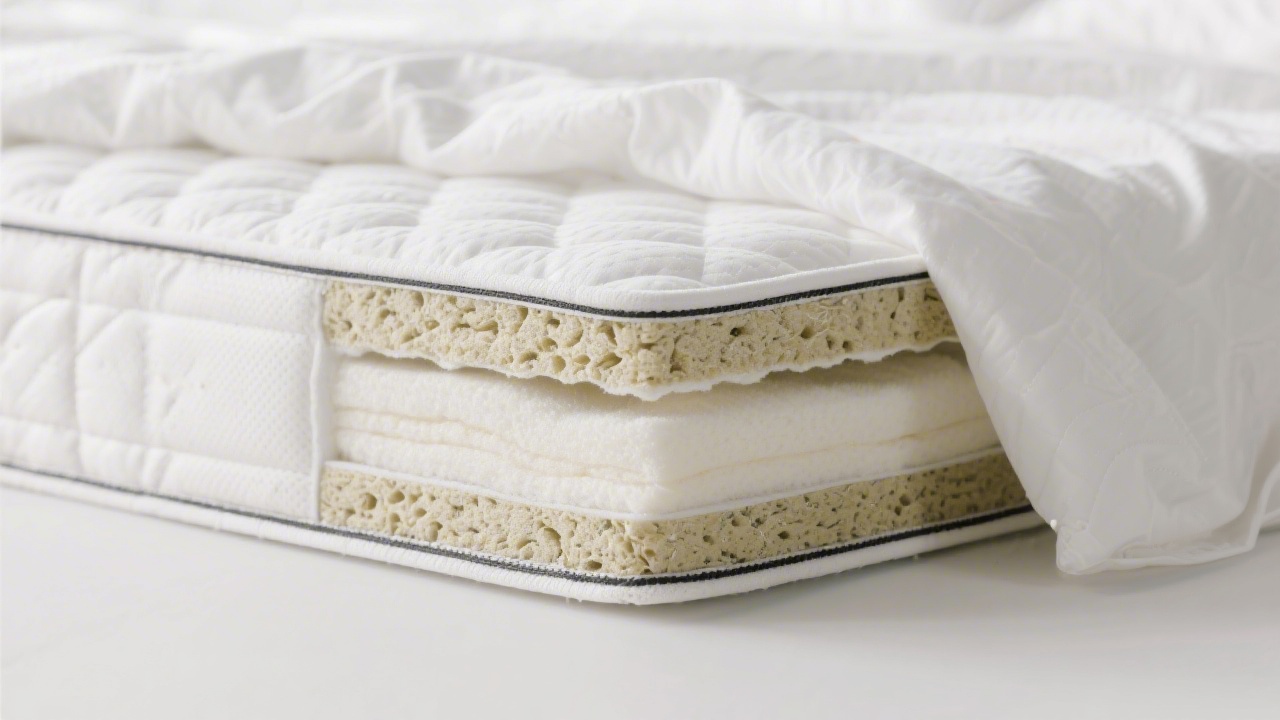
 by
by
Editor's pick, mattress review category
Sleep Lab Pick · Current Sale
Amerisleep's Current Sale: . The AS3, plant-based Bio-Pur® foam, sleeps cooler than memory foam, 100-night trial, 20-year warranty.
Saatva Classic
From $1,174 (Twin) · Saatva's #1 bestseller · Euro pillow top · 3 firmness · 365-night trial · Lifetime warranty
A mattress that feels too soft causes your hips and shoulders to sink out of spinal alignment, leading to back pain, restless nights, and morning stiffness. Before buying a new mattress, there are six proven methods to add firmness -- most of which cost under $100.
TL;DR
This mattress review covers construction, firmness, trial/warranty, price, and who it fits. Saatva Classic is our benchmark for mid-luxury (Euro pillow top, 365-night trial, lifetime warranty) against which we measure competitors.
Jump to section
Method 1: Add a Firm Mattress Topper
A 2-3 inch high-density latex or firm memory foam topper (ILD 28-36) sits on top of your mattress and creates a firmer sleeping surface. This is the most effective single-product fix for a mattress that is slightly too soft. The Saatva Graphite Topper uses a firmer-than-average foam with graphite infusion for temperature control -- a strong choice if you sleep warm.
Method 2: Place a Plywood Board Under the Mattress
A 3/4-inch plywood board cut to the full dimensions of your mattress, placed between the mattress and the box spring or slatted frame, eliminates frame flex. Cost: $30-$60 at a hardware store. Ensure you drill ventilation holes every 8 inches to prevent moisture buildup.
Method 3: Flip or Rotate the Mattress
Flipping is only possible on double-sided mattresses (verify via the manufacturer label). If flippable, the bottom side is typically firmer. Even single-sided mattresses benefit from rotation 180 degrees every 3 months to equalize wear patterns and avoid permanent soft spots.
Method 4: Upgrade the Foundation
A saggy box spring or slats spaced more than 3 inches apart allow the mattress to flex and feel softer than its actual IFD rating. Replace with:
- A solid platform base (no flex at all)
- A bunkie board (1-2 inches thick, solid surface)
- Close-spaced slats (2-2.5 inch gaps max)
Method 5: Lower the Room Temperature
Memory foam softens with heat and firms with cold. Sleeping in a room below 68 degrees F (20 degrees C) makes foam-based mattresses noticeably firmer. Not a structural fix, but an immediate adjustment for temperature-sensitive foam mattresses.
Method 6: Replace the Mattress
If your mattress has visible indentations of 1.5 inches or more, broken coils, or is over 8 years old, layering fixes on top becomes a false economy. A new mattress on a proper foundation will cost less in the long run than iterative repairs. The Saatva Classic comes in Plush Soft, Luxury Firm, and Firm options -- most back pain sufferers do well with the Luxury Firm.
For full context on when replacement makes more sense, see our when to replace your mattress guide. If back pain is the driver, our best mattress for back pain roundup covers the top-tested options. You can also compare costs in our Saatva Classic review.
Comparison: Which Method Is Right for You?
| Method | Cost | Effort | Effectiveness | Best When |
|---|---|---|---|---|
| Firm topper | $80-$250 | Low | High | Mattress slightly too soft |
| Plywood board | $30-$60 | Medium | Medium | Box spring is the culprit |
| Flip mattress | Free | Medium | High (if applicable) | Double-sided mattress only |
| New foundation | $100-$300 | High | Medium-High | Worn box spring / wide slats |
| Lower room temp | Free | None | Low-Medium | Memory foam mattress |
| Replace mattress | $1,000+ | High | Definitive | Sagging, pain, 8+ years old |
Verdict
Start with a firm topper if your mattress is structurally intact but just too soft. Add a plywood board or upgrade the foundation if the frame is contributing to flex. If the mattress itself is sagging or beyond 8 years old, invest in a replacement rather than compounding band-aids. The Saatva Classic Luxury Firm is our most-recommended option for back pain and support-seekers.
Still Sleeping on a Soft Mattress?
The Saatva Graphite Topper adds firm, pressure-relieving density to your existing setup -- or replace entirely with the Saatva Classic.
Frequently Asked Questions
Does a plywood board under a mattress actually make it firmer?
Yes, a plywood board (3/4 inch, full mattress width) placed between the mattress and box spring or slatted base adds a firm, uniform surface. It is a cheap short-term fix, but it does not address a worn-out comfort layer.
Do firm mattress toppers work?
A high-density latex or firm memory foam topper (3-inch, ILD 30+) adds measurable firmness. Best results when the underlying mattress is structurally sound but just slightly too soft. Will not fix a collapsed coil or heavily compressed foam.
Can I flip my mattress to make it firmer?
Only if your mattress is double-sided -- most modern mattresses are single-sided with a defined top and bottom. Check the manufacturer label. If yours is flippable, the underside is typically firmer.
What foundation makes a mattress firmer?
Replacing a worn box spring with a solid platform base or replacing widely-spaced slats (over 3 inches apart) with a bunkie board or closely-spaced slatted base eliminates flex that makes a mattress feel softer.
At what point should I just replace a soft mattress?
If the mattress has a visible sag of 1.5 inches or more, if you wake with back pain daily, or if it is over 8 years old, replacement is more cost-effective than layering fixes. Toppers and boards compensate; they do not restore structural integrity.