
 by
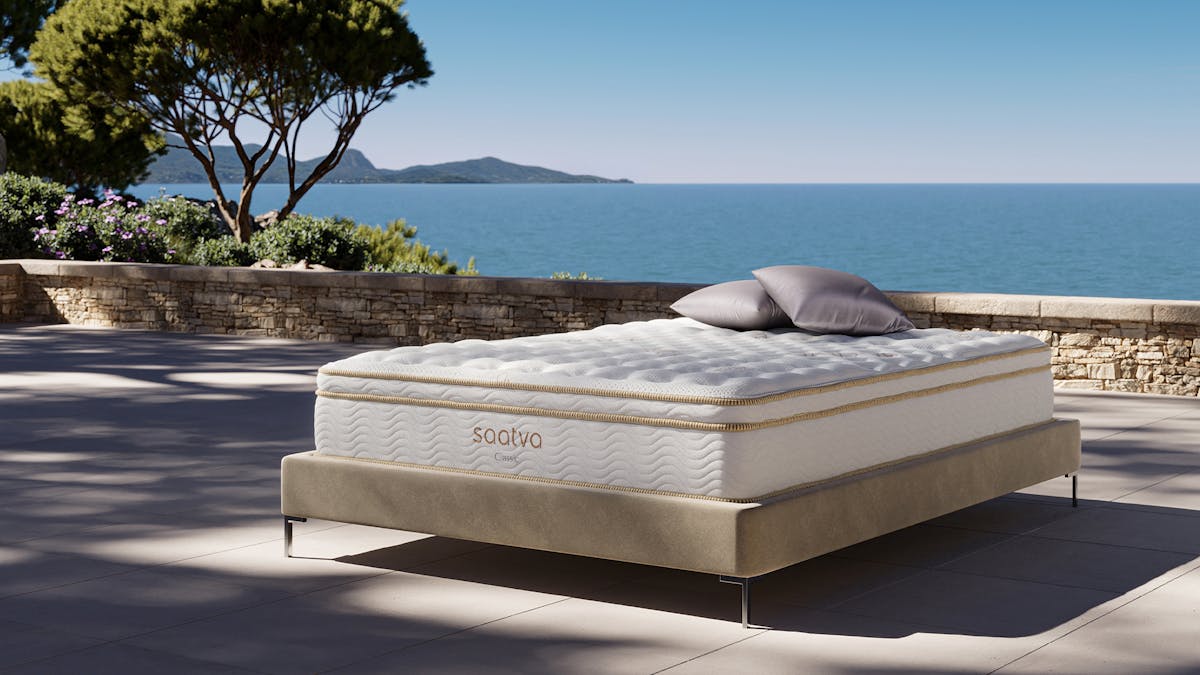
by For most side sleepers, a hybrid mattress is the better fit. The foam comfort layers relieve pressure at the hip and shoulder; the coil base prevents bottoming out and keeps the spine aligned; and coil airflow keeps the surface cooler than all-foam. Our top pick: the Saatva Classic in Plush Soft, which pairs a dual-coil system with a Euro pillow top and zoned lumbar reinforcement designed for side-sleeping pressure relief. Memory foam remains the right call for strict side sleepers under 130 lbs who prioritize deep cradling and motion isolation above all else.
Saatva Classic
9.2/10
- Dual coil system (micro coils over tempered innersprings) with a 3" Euro pillow top for genuine hip and shoulder contouring
- Lumbar Zone reinforcement prevents the hip drop that wrecks most soft hybrids
- Coil airflow runs significantly cooler than all-foam alternatives
- Free white-glove delivery, setup, and old-mattress removal
- Lifetime warranty, 365-night trial
- Heavier and not compressible for shipping in a box
- $99 return fee if you exchange during the trial
The Plush Soft feel (3/10) is tuned for side-sleeper pressure relief, while the coil core and zoned lumbar pad prevent the spinal sag that soft all-foam beds create. It covers most side-sleeper body types, sleeps cool, and comes with the longest trial in the industry.
What side sleepers actually need from a mattress
Side sleeping is the most popular sleep position in the US, and also the most demanding on a mattress. When your hip and shoulder sink into the surface, you need a bed that gives enough to cushion those pressure points while keeping your spine in a neutral line from neck to tailbone. Pick the wrong mattress type and you wake up with a sore shoulder, a numb hip, or both.
The ideal mattress for a side sleeper does three things simultaneously: it conforms closely at the hip and shoulder to diffuse pressure, it provides enough underlying support to keep the spine straight, and it lets you reposition without fighting the surface. Firmness matters too. Most side sleepers do best on a medium or medium-soft feel (roughly a 4 to 6 on a 10-point firmness scale), though body weight shifts that range significantly.
Body weight is one of the biggest variables. Lighter sleepers (under 130 lbs) need a softer surface because they do not compress foam as deeply. A medium-firm mattress that feels perfect at 180 lbs can feel nearly hard to a lighter person. Heavier sleepers (over 230 lbs) need enough support underneath the comfort layers to prevent excessive sinkage that pushes the spine out of line. Both memory foam and hybrid mattresses come in a range of firmness levels, but they handle weight distribution in different ways.
Memory foam for side sleepers: strengths and tradeoffs
Memory foam is a viscoelastic material that responds to heat and pressure by slowly conforming around the body. For side sleepers, that slow, cradling response is genuinely excellent at eliminating pressure points. The foam wraps around the hip and shoulder rather than pushing back against them, and a quality all-foam mattress can achieve some of the lowest pressure-point readings of any mattress type.
The tradeoffs are real. Traditional memory foam retains body heat. The dense, closed-cell structure that makes it conform well also traps warmth. Manufacturers have addressed this with gel infusions, copper infusions, open-cell formulas, and phase-change materials, but all-foam beds still tend to sleep warmer than hybrids with coil airflow.
Memory foam also has a slow response time. When you roll from your side to your back at 2 a.m., you briefly push against the impression your body made and the foam takes a second to release. For combination sleepers who change positions frequently, this can feel like you are stuck. Pure side sleepers who stay in one position all night are less affected.
Finally, memory foam provides pressure relief primarily through contouring, not through targeted support underneath different body zones. A heavier sleeper on a soft all-foam bed risks sinking too far through the comfort layers and bottoming out, which causes the hips to drop below the shoulders and creates the spinal misalignment you are trying to avoid. Getting the right ILD density and layer thickness is critical, and this varies by body weight.
Hybrid mattresses for side sleepers: strengths and tradeoffs
A hybrid mattress pairs a pocketed coil support core (typically 6 to 8 inches of individually wrapped springs) with a comfort layer of foam, latex, or both, usually 2 to 4 inches thick. The result is a mattress that combines the pressure relief of foam with the responsiveness, support, and airflow of coils.
For side sleepers, this combination solves several problems at once. The foam comfort layers still contour at the hip and shoulder, handling pressure relief. But the coil system underneath provides a firmer, more consistent base that prevents excessive sinkage for heavier sleepers. Many premium hybrids also use zoned coil systems, with stiffer coils under the hips and softer coils under the shoulders, which is specifically useful for side sleeping because it lets the shoulder sink in while maintaining lumbar and hip support.
The coil structure also improves airflow dramatically compared to dense foam. Air moves through the coil layer as you move, making hybrids sleep noticeably cooler than all-foam beds in most real-world tests. Pocketed coils also respond faster than memory foam, so you can roll over without fighting the surface.
The one area where hybrids sometimes trail pure memory foam is in maximum pressure relief. The coil system creates a slight pushback that all-foam beds do not have. For a very lightweight side sleeper (under 120 lbs) who prioritizes deep, cloud-like contouring above all else, a well-chosen memory foam mattress may provide slightly more cradling comfort. For most other side sleepers, the hybrid's combination of features gives it the edge.
Head-to-head comparison
| Category | Memory Foam | Hybrid |
|---|---|---|
| Hip pressure relief | Excellent. Slow contouring wraps around the hip | Very good. Foam top layer conforms, coils prevent bottoming out |
| Shoulder pressure relief | Excellent. High conformability at shoulder contact point | Very good to excellent, especially with zoned coil systems |
| Cooling | Below average. Dense foam retains heat (gel/copper help but don't fully solve it) | Good to excellent. Coil airflow significantly reduces heat retention |
| Motion isolation | Excellent. Dense foam absorbs motion very effectively | Good. Pocketed coils isolate better than traditional springs, slight edge to foam |
| Ease of repositioning | Below average. Slow response can feel like quicksand | Good to excellent. Springs bounce back quickly |
| Spinal support for heavier sleepers (>230 lbs) | Varies. Risk of sinking through comfort layers on softer models | Good. Coil base provides more consistent support regardless of weight |
| Best for | Lightweight sleepers (<130 lbs), strict side sleepers, couples prioritizing motion isolation | Most side sleepers, especially average to heavier weight, combination sleepers, hot sleepers |
For a deeper look at top-rated options in each category, see our guides to the best hybrid mattresses and the best memory foam mattresses.
Firmness and body weight: the variables that change everything
Neither mattress type delivers good results without the right firmness for your body. Side sleepers have the narrowest useful firmness range of any sleep position. Go too firm and the shoulder and hip do not sink in enough, creating pressure. Go too soft and the hip drops below the shoulder, bowing the spine.
As a general guide:
- Under 130 lbs: Soft to medium-soft (3-5 out of 10). Lighter bodies compress foam less, so a softer surface is needed to achieve the same amount of contouring a heavier person gets from a medium mattress.
- 130-230 lbs: Medium to medium-soft (4-6 out of 10). This is the range where most mattress firmness ratings are calibrated. A true medium feel provides the right balance of contouring and support.
- Over 230 lbs: Medium to medium-firm (5-7 out of 10). A heavier body compresses comfort layers more deeply, so a firmer starting point is needed to prevent excessive sinkage while still allowing pressure-relief contouring.
Memory foam and hybrid mattresses both cover this range, but hybrids tend to handle the higher weight categories better because the coil support core does not compress under body weight the way a thick all-foam base can over time.
If shoulder pain is already an issue, firmness selection becomes even more critical. See our full breakdown of the best mattresses for shoulder pain.
Which type wins for side sleepers?
For the majority of side sleepers, average weight, combination sleepers, anyone who runs warm, a quality hybrid is the stronger choice. The foam comfort layers handle pressure relief at the hip and shoulder, the coil system prevents bottoming out and maintains spinal alignment, and the airflow keeps sleeping temperature manageable. The faster response makes rolling over natural rather than labored.
Our top pick in this category is the Saatva Classic in Plush Soft. It uses a dual coil system (micro coils on top of tempered steel innersprings) with a Euro pillow top for contouring, and the Plush Soft feel is specifically engineered for side-sleeping pressure relief without sacrificing lumbar support. The zoned support system in the center third of the mattress provides targeted reinforcement under the hips, preventing the sagging that most soft hybrids struggle with.
Memory foam remains the better call for a specific subset of side sleepers: those under 130 lbs who want maximum cradling pressure relief and who prioritize motion isolation above cooling or ease of movement. If you share a bed with a restless partner and you both sleep cool, a premium memory foam mattress may still beat a hybrid on those specific criteria.
For the full ranked list across both types, see our best mattress for side sleepers guide. To see how latex stacks up alongside these two types, the memory foam vs hybrid vs latex comparison covers all three in depth.
Frequently asked questions
Is hybrid or memory foam better for side sleepers?
For most side sleepers, a hybrid is the better fit. It combines foam pressure relief with coil support and airflow, handling a wider range of body types and sleeping temperatures than all-foam mattresses. Memory foam can be preferable for lighter sleepers under 130 lbs who prioritize maximum cradling comfort.
What firmness should a side sleeper look for in a hybrid mattress?
Most side sleepers do best with a medium to medium-soft hybrid, roughly a 4 to 6 on a 10-point scale. Lighter sleepers (under 130 lbs) should lean toward the softer end; heavier sleepers (over 230 lbs) can go medium or slightly above to prevent excessive sinkage.
Do hybrid mattresses actually relieve pressure for side sleepers?
Yes. Quality hybrids use foam or soft latex comfort layers thick enough to contour at the hip and shoulder. The coil base actually improves pressure relief for average and heavier sleepers by preventing them from sinking through the comfort layers and losing contouring support.
Is memory foam too hot for side sleepers?
Traditional memory foam does sleep warmer than hybrids because dense foam traps body heat. Many manufacturers add gel, copper, or open-cell structures to reduce this, but hybrids with coil airflow still tend to sleep cooler on average. Hot sleepers who prefer memory foam should look for models with active cooling materials in the cover or upper layers.
Can a hybrid mattress cause shoulder pain for side sleepers?
A hybrid that is too firm can cause shoulder pain by not allowing the shoulder to sink in enough, concentrating pressure on the joint. Choosing a medium-soft feel and looking for a hybrid with a zoned coil system, with softer coils under the shoulder zone, significantly reduces this risk.
How long do hybrid and memory foam mattresses last for side sleepers?
Both types typically last 7 to 10 years with normal use. However, side sleepers put concentrated load on the hip and shoulder zones, which can accelerate sagging in lower-quality all-foam beds. Hybrids with pocketed coil systems tend to hold their shape longer under repeated compression in the same zones, giving them a slight durability edge for strict side sleepers.
What is the best hybrid mattress for side sleepers right now?
The Saatva Classic Plush Soft is our top pick for side sleepers. Its dual coil system, Euro pillow top, and zoned lumbar support combine genuine pressure relief at the shoulder and hip with the spinal alignment and airflow that all-foam mattresses struggle to match. Check the best mattress deals page for current pricing and promotions.