
 by
by Memory foam wins on pressure relief and motion isolation. Hybrid wins on edge support and cooling. Latex wins on durability. For most sleepers, the Amerisleep AS3 is the best starting point: its partially plant-based Bio-Pur foam and HIVE 5-zone support deliver the pressure relief of memory foam with better cooling than standard petroleum foam. If you sleep hot or need strong edges, step up to a hybrid like the Saatva Classic. For a mattress you plan to keep 15-plus years, natural latex like PlushBeds Botanical Bliss is the long-game pick.
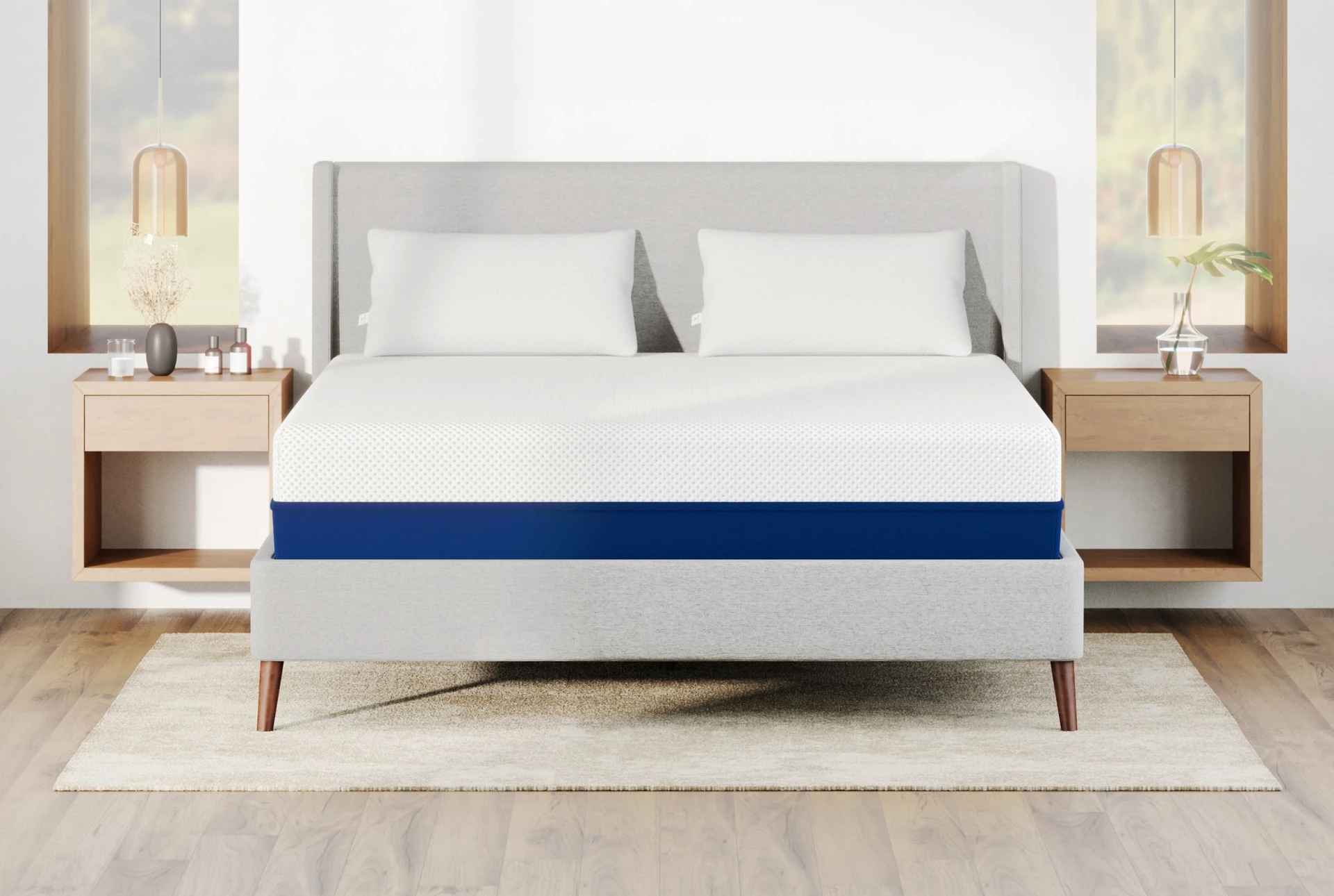
Amerisleep AS3
9.1/10
- HIVE 5-zone support: firmer under the lumbar, softer at the shoulders
- Bio-Pur partially plant-based open-cell foam runs cooler than standard memory foam
- CertiPUR-US certified, made in the USA
- 20-year warranty covers sag over 1.5 inches, an industry-leading term
- Edge support softer than a coil hybrid, so those over 230 lbs may prefer the AS5 Hybrid
- No white-glove delivery (ships compressed in a box)
The AS3 sits at the intersection of memory foam's pressure relief and hybrid's cooler sleeping temperature. Its medium firmness and zoned HIVE layer cover the widest range of sleep positions. The 100-night trial and 20-year warranty reduce the risk of getting it wrong.
Quick Comparison: Memory Foam vs Hybrid vs Latex
| Mattress | Type | Firmness | Trial | Warranty | Queen price |
|---|---|---|---|---|---|
| Amerisleep AS3 | All-foam (Bio-Pur) | Medium 5/10 | 100 nights | 20 years | $1,249 (queen) |
| Saatva Classic | Innerspring hybrid | Luxury Firm 6/10 | 365 nights | Lifetime | $2,229+ |
| Helix Midnight | Hybrid | Medium 6/10 | 100 nights | 10 years | ~$1,374 |
| PlushBeds Botanical Bliss | Natural latex | Configurable 5-7 | 100 nights | 25 years | ~$1,800+ |
| Nectar Original | Memory foam | Medium-firm 6/10 | 365 nights | Lifetime | ~$699+ |
Memory Foam: What the Technology Actually Does
Memory foam is viscoelastic, meaning it softens under body heat and pressure, spreading your weight across a larger contact surface. That is why side sleepers on memory foam wake up with less shoulder and hip pain than on coil mattresses. The tradeoff is that dense petroleum foam traps radiant body heat and compresses at the perimeter, leaving about 2 to 3 inches of usable edge before it sinks.
Amerisleep's Bio-Pur formula replaces a portion of the petroleum feedstock with plant-based oils. The result is an open-cell structure that recovers about 30 percent faster than standard memory foam and allows more airflow through the core. It still sleeps warmer than a hybrid, but it closes the gap compared with traditional slow-response foam.
The other advance in the AS3 is the HIVE layer, a transition zone with hexagonal cutouts that vary in density by body region. The zones beneath the lumbar are firmer, which means the spine does not follow the pelvis into a hammock shape. The zones at the shoulders are softer, which lets them sink without pressure. This is not marketing language. It produces a measurably different outcome for side sleepers who need both pressure relief at the shoulder and lumbar support simultaneously.
Saatva Classic
8.8/10
- Dual-coil construction with a reinforced lumbar zone pad
- Best edge support in this roundup, only 2.25 inches of sitting sinkage (NapLab)
- Free white-glove delivery, setup and old-mattress removal
- 365-night trial, lifetime warranty
- Higher motion transfer than memory foam, not ideal for light-sleeping couples
- $99 return/pickup fee applies during trial
The Saatva Classic is the hybrid pick for anyone who needs edge-to-edge stability, wants three firmness options to choose from, or prefers the responsive bounce of a coil bed over foam's cradling feel. White-glove delivery and a 365-night trial make the return process easier than most.
Hybrid Mattresses: The Case for Coils
A hybrid pairs individually wrapped pocketed coils with foam or latex comfort layers. The coil core creates natural airflow channels through the mattress, which is why hybrids consistently run cooler than all-foam beds. The coil perimeter also solves the edge support problem. The Saatva Classic, for example, recorded only 2.25 inches of sitting sinkage in NapLab's compression tests, compared with 3 or more inches on most all-foam beds.
For heavier sleepers over 230 lbs, the coil support base distributes weight across a wider area and resists permanent compression better than foam alone. That matters for long-term durability. A quality coil hybrid using tempered steel will typically show less body impression at year 8 than a memory foam bed at year 6.
Where hybrids give up ground is motion isolation. Individually wrapped coils still transfer more movement than viscoelastic foam. Couples where one partner moves frequently will feel the difference. If motion isolation is your primary concern, memory foam wins.
Helix Midnight
8.3/10
- Well-balanced feel for side and combination sleepers
- Memory foam over pocketed coils: better motion isolation than most hybrids
- Strong value among mid-price hybrids
- 10-year warranty is shorter than Saatva or PlushBeds
- Trial window shorter than Nectar or Saatva
The Helix Midnight is a reliable hybrid for side and combination sleepers who want coil cooling and edge support without the premium of the Saatva. Memory foam comfort layers give it better motion dampening than a pure innerspring.
Natural Latex: The 15-Year Play
Natural latex is harvested from Hevea brasiliensis rubber trees and either Dunlop-processed (denser, heavier) or Talalay-processed (softer, more consistent cell structure). Both outlast every foam and coil material. Durability tests on Dunlop latex cores show under 0.4 inches of body impression after years of daily use, while a memory foam bed at that age typically shows 0.8 to 1.2 inches.
The feel is different from foam: buoyant and responsive rather than cradling. You sleep on top of latex, not into it. Combination sleepers who shift positions overnight often prefer this because there is no stuck-in-quicksand sensation when rolling over. The open-cell structure also runs cooler than memory foam, comparable to a hybrid in most thermal tests.
The honest drawbacks are price and weight. A GOLS-certified all-latex queen starts around $1,400 and climbs to $2,500 for a thicker build. Natural latex is also heavy, over 100 lbs for a queen, which makes self-installation difficult. For most sleepers buying a first or second mattress on a 10-year horizon, the Amerisleep AS3 delivers better pressure relief per dollar. The latex case becomes compelling when you are on a 15-plus year horizon or have documented chemical sensitivities to petrochemical foams.
PlushBeds Botanical Bliss
8.5/10
- GOLS-certified organic Dunlop latex, the clearest proof-point for natural construction
- Configurable firmness through layer swaps without voiding the warranty
- 25-year warranty, among the longest available in natural latex
- Heavy and ships in multiple boxes, not a one-person setup
- Buoyant feel is less contouring than memory foam for those who want a deep hug
The Botanical Bliss is the top latex pick because GOLS certification is the most rigorous third-party standard in natural latex, and the configurable layer system means you are not locked into one firmness forever. The 25-year warranty reflects the durability that latex genuinely delivers.
How to Choose: The Decision Framework
Most people can decide by answering three questions. First, what is your primary sleep position? Side sleepers need pressure relief most, so memory foam. Back or stomach sleepers benefit from firmer pushback, so a hybrid or firm latex. Second, do you sleep hot? Hot sleepers will feel the difference between memory foam and a hybrid or latex. Third, what is your time horizon? If you are buying a mattress to keep for 7 to 10 years, any of these types work. If you are planning to keep it 12 to 20 years, natural latex is the only material with that kind of track record.
Body weight matters too. Sleepers over 230 lbs often bottom out the comfort layer of an all-foam bed within a few years. A hybrid's coil base prevents that by distributing weight differently. The Amerisleep AS5 Hybrid is designed specifically for this range if you want the HIVE zoning with coil support.
For the majority of sleepers, side or back, under 230 lbs, medium budget, on a 7 to 10-year horizon, the Amerisleep AS3 covers the most cases with the fewest compromises.
Memory foam for pressure relief and motion isolation. Hybrid for edge support, cooling, and heavy sleepers. Latex for 15-plus-year durability and chemical sensitivity. The Amerisleep AS3 sits at the best intersection of all three on a 100-night trial and 20-year warranty. The Saatva Classic is the best hybrid alternative on a 365-night trial.
Frequently Asked Questions
Is memory foam or hybrid better for back pain?
For most back pain cases, a memory foam with zoned support works as well as a hybrid at lower cost. The Amerisleep AS3's HIVE layer firms the lumbar region while softening at the shoulders, which keeps the spine neutral. If you are over 230 lbs, a hybrid's coil base adds long-term support that foam alone cannot sustain.
Does latex sleep cooler than memory foam?
Yes. Latex's open-cell structure and natural aeration allow airflow through the core, not just the surface. Hybrids also sleep cooler than all-foam beds because the coil core creates air channels. Standard petroleum memory foam is the warmest of the three types. Bio-Pur's open-cell formula narrows the gap for memory foam, but latex and hybrids still have a consistent thermal advantage.
How long does each type last?
Natural latex lasts 15 to 20 years before showing meaningful body impression. Hybrids with tempered steel coils last 8 to 12 years. Memory foam depends on density: a high-density foam like Bio-Pur lasts 10 to 12 years, while budget 3 lb/cubic-foot foams often sag noticeably at 5 to 6 years.
Which type is best for motion isolation?
Memory foam. Viscoelastic material absorbs movement at the source rather than transmitting it. Couples where one partner is a light sleeper get the best outcome from a quality all-foam bed. Latex and hybrids both transfer more motion, though pocketed-coil hybrids are better than open-spring innersprings.
Can I use any of these on an adjustable base?
Memory foam and most latex beds are compatible with adjustable bases. Hybrids with pocketed coils are also generally compatible, but check the specific model, since some dual-coil designs like the 14.5-inch Saatva Classic are not compatible with adjustable frames. The Saatva Classic 11.5-inch height is compatible.
Amerisleep AS3
9.1/10
Medium-firm feel, HIVE 5-zone support, partially plant-based Bio-Pur foam, 100-night trial, and a 20-year warranty. The most complete single pick for side and back sleepers navigating the memory foam vs hybrid vs latex decision in 2026.