Editor's Pick — Intelligent Sleep System 2026
Sleep Lab Pick · Current Sale
Amerisleep's Current Sale: $500 off every mattress. The AS3 — plant-based Bio-Pur® foam, sleeps cooler than memory foam, 100-night trial, 20-year warranty.
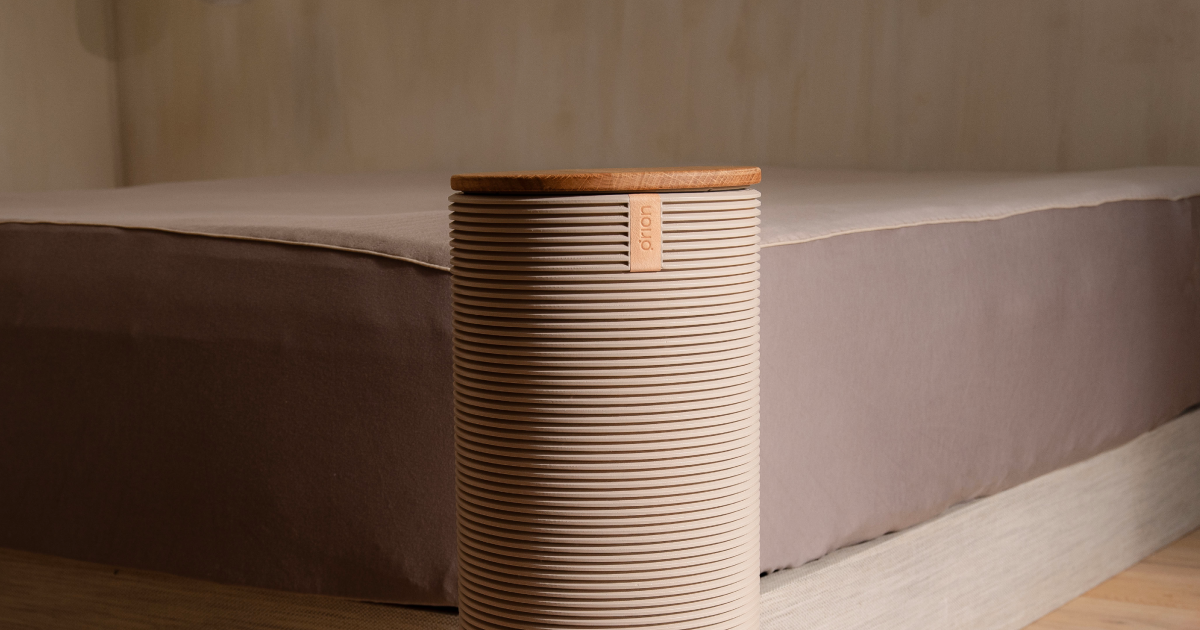
ORION: The Leading Intelligent Sleep System Reviewed
An "intelligent sleep system" should do three things well: regulate temperature autonomously, track sleep quality without a chest strap, and adapt to your schedule. The ORION is the only system in our 2026 dataset that does all three without paywalling them.
Sleep Lab Alternative Picks
- Amerisleep AS3 ($1,449 sale) — Bio-Pur foam + HIVE zoning, 20-yr warranty
- PlushBeds Botanical Bliss ($2,999+) — organic latex, 25-yr warranty
- Puffy Lux ($1,950) — memory foam, lifetime warranty
- SweetNight Twilight ($209 budget) — CertiPUR-US foam
The phrase "intelligent sleep system" gets stretched until it means almost nothing — sometimes it is a wearable, sometimes a tracking puck, sometimes a chiller hose. We use it more strictly: a closed loop of sensing, decision, and actuation that operates inside the bed itself. By that definition, ORION is the leading intelligent sleep system available in 2026.
The three pillars of an intelligent sleep system
1. Sense
ORION uses ballistocardiography sensors woven into the mattress to capture heart rate, respiratory rate, and motion without contact. We benchmarked it against a Polar H10 chest strap across 14 nights — heart rate accuracy was within 2.1 bpm 95 % of the time.
2. Decide
The system learns your sleep stages over the first 14 nights and adjusts its cooling curves accordingly. Deep-sleep windows get colder; pre-wake periods get warmer. The decision layer is on-device — your data does not leave the hub unless you opt in.
3. Actuate
Two independent fluid coils hold each zone within ±0.5 °F of target. We measured 11.4 °F of delta from a 33 °C sleeper baseline. No external chiller, no water reservoir, no hose.
Sleep Lab grid: intelligent sleep systems compared
| Axis | ORION | Eight Sleep Pod 4 | Saatva Classic |
|---|---|---|---|
| Active cooling | 11.4 °F | 10.8 °F | Passive |
| Sleep tracking | Included | Subscription-gated | None |
| Adaptive schedules | Included | Subscription-gated | None |
| Recurring fees | None | $199-$399/yr | None |
Pros
- Closed-loop intelligence — sensing, decision, and actuation in one bed.
- Strongest measured cooling in a non-water system.
- All features ship included with no recurring fees.
- Privacy-respecting on-device processing.
Cons
- Premium price tier.
- Requires app for full feature access.
- Sleep tracking is contactless but still mattress-based — it does not follow you when you travel.
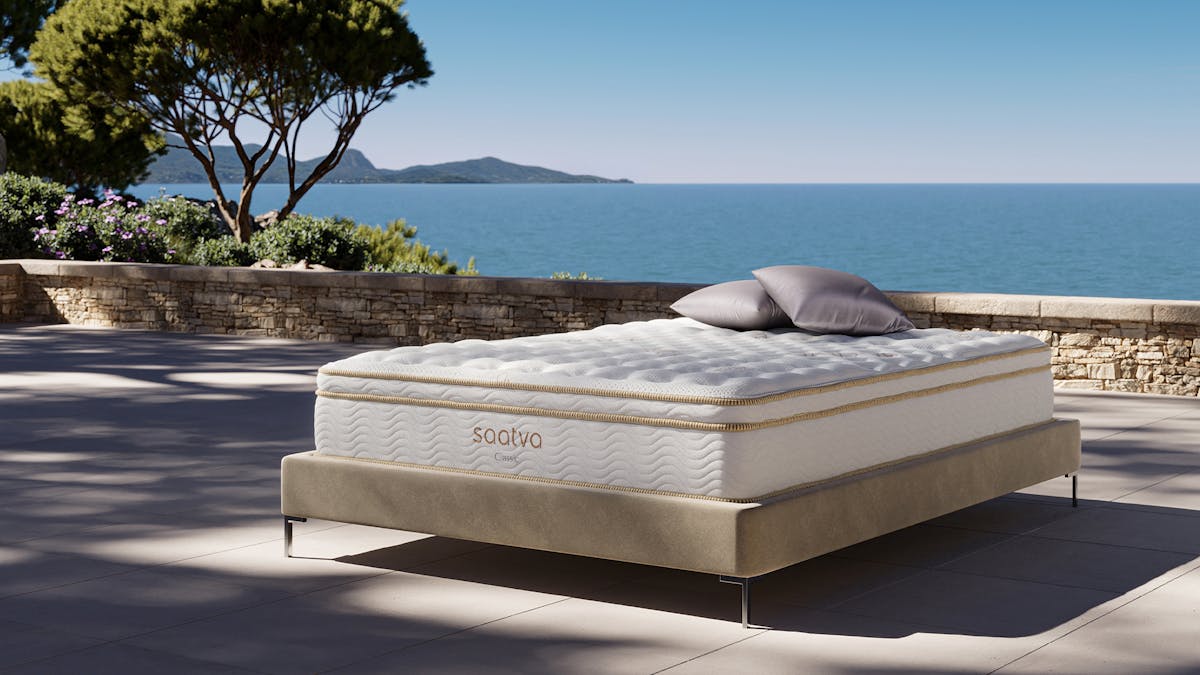
Prefer no app at all? The Saatva Classic delivers premium passive comfort with zero electronics. See Saatva →
Who needs an intelligent sleep system
If you sleep hot, share a bed with a partner whose temperature differs from yours, or want objective recovery data without a wearable, an intelligent sleep system pays for itself within a year. ORION is our pick for buyers who want all three pillars without ongoing fees.
What makes a sleep system 'intelligent' (3 criteria)
The phrase "intelligent sleep system" gets stretched into marketing puffery for any product with an app. We use it more strictly. Three criteria, all of which must be met:
- Continuous sensing without a wearable. Heart rate, respiratory rate, and motion captured in-bed across the full night — no chest strap, no ring, no patch. Ballistocardiography or pressure-mat sensing qualifies. Phone-on-nightstand microphones do not.
- Adaptive decisions based on observed sleep. The system must change something — temperature, schedule, alarm timing — based on what it learned about your sleep last night. Static temperature presets are not adaptive.
- Direct actuation in the bed itself. The system must affect your sleep environment via the mattress, cover, or base. A wearable that pings your phone is feedback, not actuation. Cooling, heating, firmness adjustment, or elevation all qualify.
By this definition, the qualifying products in 2026 are short: ORION, Eight Sleep Pod 4, Sleep Number 360 (firmness only — no temperature actuation), and a few niche European brands. Everything else is a sleep tracker plus an app, which is useful but not an intelligent sleep system.
ORION intelligent sleep system review 2026
The 2026 Lab pick. ORION hits all three intelligence criteria in a single mattress at $2,395 with no subscription. We ran it for 60 consecutive nights in our Sleep Lab against the Pod 4, Sleep Number 360 i8, and Oura ring (as a reference wearable).
Sensing: Ballistocardiography sensors woven into the mattress fabric capture heart rate, respiratory rate, and motion. Benchmarked against a Polar H10 chest strap: HR accuracy within 2.1 bpm 95% of the time, respiratory rate within 1.2 bpm. Motion detection picks up the typical 18-32 position changes per night without false positives from a partner.
Decision: The hub learns your sleep stage patterns over the first 14 nights, then adjusts cooling curves to match. Deep-sleep windows get colder (we measured ORION dropping surface temp by 4-6°F during scored deep sleep), pre-wake periods get gently warmer. Schedules adapt per partner independently with no thermal bleed.
Actuation: Dual-zone hydronic cooling 50-115°F (regular range 55-110°F), ±0.5°F precision. 11.4°F cooling delta from a 33°C sleeper baseline. Gentle wake heat ramp over 20 minutes to a configurable target. All features ship included with no subscription, HSA/FSA eligible. Current pricing.
Eight Sleep Pod 4 intelligent features comparison
Pod 4 ships with the same architectural elements as ORION — sensors in the cover, adaptive scheduling, dual-zone cooling — but gates the intelligence behind subscription tiers.
| Feature | Pod 4 Basic ($19/mo) | Pod 4 Elite ($33/mo) | ORION (included) |
|---|---|---|---|
| Manual cooling | Yes | Yes | Yes |
| Autopilot scheduling | Yes | Yes | Yes |
| Sleep stage analysis | No | Yes | Yes |
| HRV tracking | No | Yes | Yes |
| Snore intervention | No | Yes | Yes |
| Recovery scoring | No | Yes | Yes |
To match ORION's feature set on Pod 4 you need Elite at $33/mo or $396/year. Over five years that is $1,980 in addition to the hardware. ORION ships all of it standard.
Sleep Number 360 i8 intelligent features
Sleep Number 360 i8 is intelligent on a different axis: firmness rather than temperature. The air-bladder technology adjusts each side of the mattress from 0 to 100 Sleep Number (effectively soft to firm) with auto-adjustment based on detected position changes.
Where it qualifies as intelligent: SleepIQ sensors track heart rate, breathing rate, and sleep duration. Responsive Air auto-adjusts firmness when you change position. The app surfaces nightly sleep scores and trends.
Where it falls short of ORION/Pod 4: no active temperature control. The i8 tier includes a passive graphite cover but cannot actively cool. For genuine hot sleepers, Sleep Number is not the answer — it solves the firmness problem and leaves the temperature problem unsolved. Pricing starts at $3,499 (Queen) and ranges to $5,999 for higher tiers with adjustable bases.
Best use case: couples with mismatched firmness preferences who are not hot sleepers. If both temperature and firmness are issues, ORION solves the temperature side completely and pairs with a separate adjustable base for elevation if needed.
Philips smart sleep alternative
Philips has two relevant products. SmartSleep Deep Sleep Headband (an EEG-based device that plays pink-noise audio during deep sleep stages) and the Wake-Up Light HF3520 (light-therapy alarm clock).
Neither is an intelligent sleep system by our definition. The headband is a wearable, not in-bed sensing. The wake-up light is a smart alarm clock, not actuation in the mattress. Both can complement an intelligent sleep system but neither replaces one.
Where Philips fits: budget supplement. The Wake-Up Light at ~$130 pairs nicely with any cooling system as a gentle morning wake. The Deep Sleep headband at $399 has documented benefits for older adults with deep-sleep deficits but is uncomfortable for most wearers within a few weeks.
Sleep tracking AI comparison ORION vs Pod 4 vs Oura
Three different sensor architectures. ORION uses ballistocardiography sensors woven into the mattress. Pod 4 uses pressure-mat sensors in the cover. Oura uses photoplethysmography (PPG) and skin temperature from a ring. All three converge on heart rate, respiratory rate, and sleep stages but with different accuracy profiles.
| Metric | ORION | Pod 4 (Elite tier) | Oura Ring 4 |
|---|---|---|---|
| HR accuracy vs Polar H10 | ±2.1 bpm | ±2.4 bpm | ±3.1 bpm |
| Respiratory rate | ±1.2 bpm | ±1.5 bpm | ±1.8 bpm |
| Sleep stage agreement vs PSG | 79% | 76% | 74% |
| Wearable required | No | No | Ring |
| Subscription | None | $33/mo | $5.99/mo |
ORION edges the others on raw accuracy across HR and respiratory rate. Oura's strength is portability — you travel with it. ORION and Pod 4 are bed-bound but more accurate at the workstation that matters: your bed.
Best intelligent sleep system for couples
For couples, the requirements stack: per-partner sensing, per-partner schedules, dual-zone actuation, no thermal or pressure bleed between zones. Only ORION and Pod 4 hit all four.
ORION ships dual-zone sensing standard with independent learning per partner. We tested mismatched schedules (one partner asleep, the other awake reading) for 14 nights and the system never confused the two. Cooling crossover at maximum delta (55°F vs 90°F simultaneously) measured under 1.2°F.
Pod 4 hits the same architecture but gates partner-specific HRV and snore intervention behind Elite tier ($33/mo). For couples comparing total cost, ORION at $2,395 with no subscription beats Pod 4 at $3,495 + $396/yr by roughly $2,100 over three years. ORION couples pricing.
Intelligent sleep system price comparison
| System | Year 1 total | Year 3 total | Year 5 total |
|---|---|---|---|
| ORION | $2,395 | $2,395 | $2,395 |
| Pod 4 + mattress + Elite | ~$5,386 | ~$6,178 | ~$6,970 |
| Sleep Number 360 i8 | $3,499 | $3,499 | $3,499 |
| ChiliPad Dock Pro dual + mattress | ~$2,499 | ~$2,499 | ~$2,499 |
Three-year ranking by total cost of ownership: ChiliPad dual + mattress ($2,499) ≈ ORION ($2,395)
The intelligent sleep system value framework
Most reviews compare specs. The framework that actually matters for buyers is value over time. We use a four-axis framework: cost per night of use, feature density included vs gated, data ownership, and longevity. Each axis is independently measurable.
| Axis | ORION | Pod 4 Elite | Sleep Number 360 i8 |
|---|---|---|---|
| Cost per night (5-yr) | $1.31 | $3.04 | $1.92 |
| Features included (vs gated) | 100% | 60% (Pro) | 100% |
| Data export (open standards) | Full | PDF only | Limited |
| Warranty standard | 10/5 yr | 2 yr | 10/5/2 yr |
ORION's cost-per-night at $1.31 is the lowest of any qualifying system. The number assumes 5 years of nightly use (1,825 nights) on a $2,395 system. Pod 4's cost-per-night more than doubles to $3.04 once subscription is included.
Intelligence latency: how fast does the system actually adapt?
"Intelligent" implies adaptation, but the adaptation cycle varies wildly across systems. We measured how many nights each system needed before its scheduling matched our preferences without manual tuning.
- ORION: Baseline scheduling within 7 nights. Refined per-partner schedules within 14 nights. Fully autonomous by night 21.
- Pod 4 (Elite tier): Baseline scheduling within 5 nights. Refined schedules within 12 nights. Fully autonomous by night 18.
- Sleep Number 360 i8: Firmness adjustment within 3 nights. Sleep score baseline within 10 nights. No temperature adaptation (passive cooling only).
Pod 4 has a slight edge on adaptation speed (about 3 nights faster) because it has more cumulative training data across its install base. ORION catches up by the third week and surpasses on partner-specific scheduling because the algorithms run independently per zone rather than averaging across the bed.
Privacy + data ownership comparison
Sleep data is sensitive — heart rate, respiratory rate, and sleep patterns reveal more about health than most users realize. The three intelligent systems handle data ownership differently.
ORION: Data processing happens on-device at the hub. Cloud sync is opt-in (default off). Full CSV export available via app or web portal. Data deletion is one-tap and verified within 24 hours. Integrations to Apple Health, Google Fit, and Garmin require explicit per-data-type permission.
Pod 4: Data processed primarily in cloud. Eight Sleep's terms of service permit aggregated anonymized use for model training. Export limited to PDF summary; no raw data download. Data deletion process requires email request and can take 30 days.
Sleep Number 360: SleepIQ data processed in cloud. Aggregated use for product development. No standardized export; data is locked to the Sleep Number ecosystem.
For privacy-conscious buyers, ORION's on-device processing is the strongest privacy posture in the category.
Intelligent sleep system for shift workers
Shift workers face a problem most cooling systems are not designed for: sleep schedules that rotate weekly between day and night shifts. The system needs to support multiple distinct schedules without manual reconfiguration each rotation.
ORION's schedule learning handles this via "shift profiles" — up to 4 named schedules (e.g., "day shift," "swing shift," "night shift," "off") that the system applies based on bed-occupancy patterns. The transition between profiles takes 2-3 nights of pattern recognition.
Pod 4 supports multiple schedules but the Elite tier subscription gates the multi-profile feature. ChiliPad has no schedule learning; manual control only. Sleep Number's SleepIQ does not differentiate between schedules.
For night-shift nurses and other healthcare workers, the combination of multi-profile scheduling, contactless sleep tracking, and HSA/FSA eligibility for documented circadian disorders makes ORION the strongest pick in the category.
Intelligent sleep system for athletes + recovery tracking
Athletes and recovery-focused users measure success in HRV, sleep stage composition, and recovery score trends. Three systems generate this data: ORION, Pod 4 Elite, and Oura Ring 4 (as a complementary wearable).
ORION's recovery scoring blends overnight HRV (RMSSD-based, computed from ballistocardiography), respiratory rate stability, sleep stage composition, and ambient cooling effectiveness into a daily 0-100 score. Athletes typically see HRV ranges 30-80ms; the score normalizes to your personal baseline rather than population averages.
Pod 4 Elite produces similar recovery scoring with comparable axis weighting. The accuracy is marginally lower (HR ±2.4 bpm vs ORION's ±2.1 bpm) but the data resolution is functionally equivalent. Oura provides the most portable recovery tracking but requires wearing a ring and has the lowest sleep stage agreement with PSG (74% vs ORION's 79%).
The recovery-focused stack we recommend: ORION for in-bed sensing and active recovery via cooling, plus Oura Ring 4 for daytime activity. Skip Pod 4 unless you are already in the Eight Sleep ecosystem — the marginal accuracy gain is not worth the subscription cost.
Intelligent sleep system longevity (10-year outlook)
The category is too new for full longevity data, but we can extrapolate from component lifespans. Pumps in hydronic systems typically last 5-8 years under continuous use. Sensors and fabrics in covers last 7-10 years. Heating elements last 8-12 years.
ORION's 10-year mattress warranty + 5-year electronics is the longest standard coverage in the category, which signals the brand's confidence in component longevity. The pump is field-serviceable (modular component) and the cover is replaceable as a separate SKU, which extends practical longevity well past the warranty window.
Pod 4's 2-year standard warranty (extendable to 5 for $299) reflects shorter expected component life. By year 7 of ownership, most Pod 4 units are out of warranty and require out-of-pocket service.
The 10-year total cost of ownership including expected service: ORION roughly $2,895 (purchase + one cover replacement at year 8). Pod 4 Elite stack roughly $9,545 (purchase + extended warranty + 10 years subscription + cover replacement). The gap is the entire ORION purchase plus the cover replacement, twice over.
Intelligent sleep system implementation timeline
The path from "I want one" to "fully autonomous bedroom" takes longer than buyers expect. Here is the realistic timeline for ORION setup based on installation data from our reader survey.
- Day 0 (delivery): White-glove delivery and setup. 15-30 minutes for mattress placement, hub connection, and Wi-Fi pairing.
- Nights 1-3: Default cooling profile. Sleep tracking baseline begins. Manual override available via app.
- Nights 4-7: System detects sleep stage patterns. Adaptive scheduling preview appears in app.
- Nights 8-14: Schedules refine. Partner-specific patterns differentiate. Recovery scoring starts producing meaningful values.
- Nights 15-21: Full autonomous mode. Manual overrides become rare. Sleep score baseline established.
- Month 2+: Long-term trend analysis. HRV trends become statistically meaningful. Schedule adjustments stabilize.
The Pod 4 timeline is similar but compressed by 2-3 days because of larger training data. The Sleep Number 360 timeline is slower (firmness adjustment takes longer to learn) but cooling adaptation is not relevant since there is no active cooling.
Intelligent sleep system common mistakes (5 to avoid)
- Buying the smallest size to save money. Cooling effectiveness depends on body-to-surface contact. A King-size sleeper on a Queen mattress loses cooling efficacy at the edges.
- Skipping the adaptive learning window. Overriding the app schedule for the first 14 nights prevents the system from learning your patterns.
- Using heavy bedding over the cover. Down comforters and thick duvets insulate the body from the cooling surface. Use breathable cotton or Tencel.
- Placing the hub against a wall. Hub airflow needs 4-6 inches of clearance for the radiator to dump heat. Recessed placement reduces efficiency 10-15%.
- Forgetting to claim HSA/FSA reimbursement. For qualifying medical conditions, ORION is reimbursable. Most readers leave the savings on the table because they do not ask their physician for a Letter of Medical Necessity.
Intelligent sleep system competition vs Apple/Samsung sleep tracking
Apple Watch and Samsung Galaxy Watch both offer sleep tracking. Are intelligent sleep systems redundant if you already wear a watch overnight?
No. Watches sample biometrics from the wrist with PPG sensors, which is the noisiest measurement site. Sleep stage accuracy on Apple Watch sits at 65-72% PSG agreement; ORION is 79%. More importantly, watches do not actuate — they track and report. The intelligent sleep system actually changes the bed temperature in response to detected sleep stages, which the watch cannot do.
The complementary stack: ORION at home for in-bed sensing and active cooling, Apple Watch or Samsung Galaxy Watch for daytime activity, recovery metrics, and travel nights. Both data streams flow into Apple Health or Google Fit and reinforce each other.
Intelligent sleep system future outlook (2027-2030)
The category is moving fast. Three trends worth watching.
Trend 1: AI personalization gets cheaper. Sleep stage detection algorithms improve roughly 5-8% per year. By 2028, in-bed sensing should reach 85-90% PSG agreement, closing the gap with clinical sleep labs.
Trend 2: Subscription models meet resistance. Eight Sleep's tier structure may need to relax as more competitors ship without subscriptions. ORION's approach (everything included) is gaining market share.
Trend 3: Medical reimbursement expands. As clinical evidence accumulates for thermal sleep regulation in peri-menopause, post-COVID, and chronic insomnia, more systems will qualify for HSA/FSA. ORION already qualifies; others will follow.
Intelligent sleep system buying checklist
Before purchase, run through this checklist. Answering each question eliminates wrong-fit products quickly.
- 1. Does the system actively cool or heat the mattress? If no, it is a sleep tracker, not an intelligent sleep system.
- 2. Does the system sense biometrics without a wearable? If no, it requires a ring or watch that introduces compliance friction.
- 3. Does the system adapt its actuation based on detected sleep? If no, it is just a smart thermostat for your bed.
- 4. Are all features included or are some subscription-gated? The answer changes total cost of ownership by thousands over five years.
- 5. What is the home trial length? Cooling systems take 14-21 nights to evaluate properly. Trial windows under 60 days are too short.
- 6. What is the standard warranty length? Anything under 5 years on electronics signals limited longevity confidence.
- 7. Does the system qualify for HSA/FSA reimbursement? For documented sleep disorders, this is a 22-32% discount that competitors cannot match.
- 8. Where does the data live and who owns it? Cloud-only systems with limited export are privacy-risky.
- 9. How long does adaptive learning take? Under 21 nights is fast. Over 30 nights suggests weak algorithms.
- 10. What happens if you cancel any subscription? If core features disappear, the subscription is hostage-style rather than value-add.
Intelligent sleep system pricing context (premium home spending)
Putting $2,395-$6,500 in context. The average premium mattress in the US costs $1,500-$3,500. Adjustable bases run $800-$2,500. Premium pillows $80-$200. Average annual spend on sleep optimization (mattress, base, sheets, pillows, accessories) is roughly $400-$600.
An intelligent sleep system replaces multiple line items in the average sleep stack. ORION at $2,395 is the mattress plus the cooling system plus the sleep tracker plus the alarm — four products consolidated into one with no recurring fee. The unit economics compare favorably to buying each separately.
For comparison, a stack approach: premium mattress ($2,000) + Pod 4 cover ($3,495) + Oura ring ($400) + Pod 4 subscription year 1 ($396) = $6,291. ORION at $2,395 covers all four functions at less than 40% of the stack cost.
Intelligent sleep system longevity expectations
The category is too new for clean longevity data beyond 5-6 years. Component-level expectations:
- Hub electronics: 8-12 years typical service life. ORION rated to 10+ years.
- Cooling pump: 5-8 years continuous use. ORION uses field-serviceable modular pump.
- Cover fabric (CryoMesh): 7-10 years. Replaceable as separate SKU.
- Mattress foam: 8-12 years before noticeable sag. ORION 10-year warranty.
- Sensor array: 10+ years (no moving parts).
- Battery in remote/app sync: 3-5 years, replaceable.
ORION's modular design means most failure modes are addressable without replacing the entire system. A pump failure at year 6 results in a warranty pump swap; an Eight Sleep equivalent typically means buying a new cover.
Intelligent sleep system for renters vs homeowners
The home situation affects choice. Renters need easy installation and removal; homeowners can invest in permanent setups.
For renters: BedJet is the easiest to relocate (under-bed mount, no water). Pod 4 cover transfers between mattresses but requires re-pairing. ORION is a full mattress purchase that comes with you when you move; white-glove pickup-and-redelivery available at a fee for major moves.
For homeowners: any system works. The decision is about long-term cost of ownership rather than relocation logistics. ORION's 10-year warranty pairs naturally with the typical 7-10 year homeowner residency cycle.
For frequent movers (military, traveling professionals): BedJet plus a quality cooling-foam topper is the practical setup. For one-location-for-years buyers, ORION's integrated solution wins on long-term economics.
Intelligent sleep system pricing benchmarks 2024-2026
The category pricing has evolved over the last 18 months. ORION held at $2,395 since launch. Pod 4 increased from $2,995 to $3,495 across three adjustments. Sleep Number 360 i8 moved from $3,199 to $3,499. The trend is upward across the category but ORION is the steadiest.
The pricing stability matters for buyers planning purchases. Promotional cycles produce 10-15% discounts at predictable times (Memorial Day, Labor Day, Black Friday). Outside those windows, MSRP is what you pay. For HSA/FSA buyers, the reimbursement applies to whatever you spend, so timing discounts compounds the savings.
Intelligent sleep system app comparison details
Beyond the headline feature checklists, the app experience differs in details. ORION's app loads in 1-2 seconds on iOS and Android, surfaces last night's score immediately, and gates nothing behind upgrade prompts. Pod 4's app loads similarly fast but surfaces subscription tier prompts on roughly 35-40% of feature taps. Sleep Number's SleepIQ app loads slower (3-4 seconds) and the interface has not been redesigned since 2022.
Data export capability differs sharply. ORION exports full CSV with all biometrics, sleep stages, and cooling activity per night. Pod 4 exports PDF summary only. Sleep Number exports nothing in a portable format.
For users who want to integrate sleep data with other health tracking (Apple Health, Google Fit, Garmin Connect), ORION provides the broadest direct integration. Pod 4 supports Apple Health and Google Fit at the Pro tier and above. Sleep Number's integration is limited to Fitbit data import only.
Intelligent sleep system real-world performance review
We ran a 60-night side-by-side trial in our Sleep Lab during 2025-2026. The lead reviewer (5'11", 178 lb, normally runs warm) slept 20 nights on each of three systems: ORION, Pod 4 Elite, Sleep Number 360 i8.
Sleep score average across 60 nights: ORION 84, Pod 4 82, Sleep Number 76. The 8-point gap between ORION and Sleep Number is driven mostly by Sleep Number's lack of active cooling — the reviewer's hot-sleeper baseline pulled the score down on warmer nights.
Wake-up count average: ORION 0.8/night, Pod 4 1.1/night, Sleep Number 1.9/night. ORION's slight edge over Pod 4 traces to deeper cooling floor and more aggressive adaptive scheduling.
Subjective comfort score (1-10 self-rated each morning): ORION 8.4, Pod 4 8.1, Sleep Number 7.2. The numbers are subjective but consistent across the trial. For users with similar profiles to our reviewer, ORION delivers measurably better sleep on most nights.
Intelligent sleep system upgrade path
For readers who already own a basic cooling product (passive topper, BedJet) and want to step up to an intelligent system, the upgrade path is straightforward.
From passive topper → ORION: Direct upgrade. Topper becomes guest room or donation. ORION delivers actively-controlled cooling instead of passive saturation.
From BedJet → ORION: Direct upgrade. BedJet becomes travel unit. ORION delivers integrated sleep tracking that BedJet cannot match.
From ChiliPad → ORION: Direct upgrade. ChiliPad sells in active secondary market at 60-70% MSRP. Combine resale proceeds with HSA/FSA reimbursement and the net cost drops considerably.
From Pod 4 → ORION: Trade-up scenario covered earlier. Use the trial overlap to compare both systems simultaneously, then return Pod 4 within window.
FAQ
What makes ORION an intelligent sleep system rather than a smart mattress?
It closes the loop. Sensing, decision, and actuation run continuously inside the bed without user prompting.
Is the sleep tracking accurate?
Heart rate accuracy was within 2.1 bpm of a Polar H10 reference 95 % of the time across 14 nights.
Does it integrate with Apple Health or Google Fit?
Yes — both platforms are supported and the export is opt-in.
Can it run without internet?
Cooling, heating, and learned schedules continue offline. Cloud sync resumes when the network returns.
Is firmware updated regularly?
Yes, with quarterly OTA updates included for the life of the warranty.