
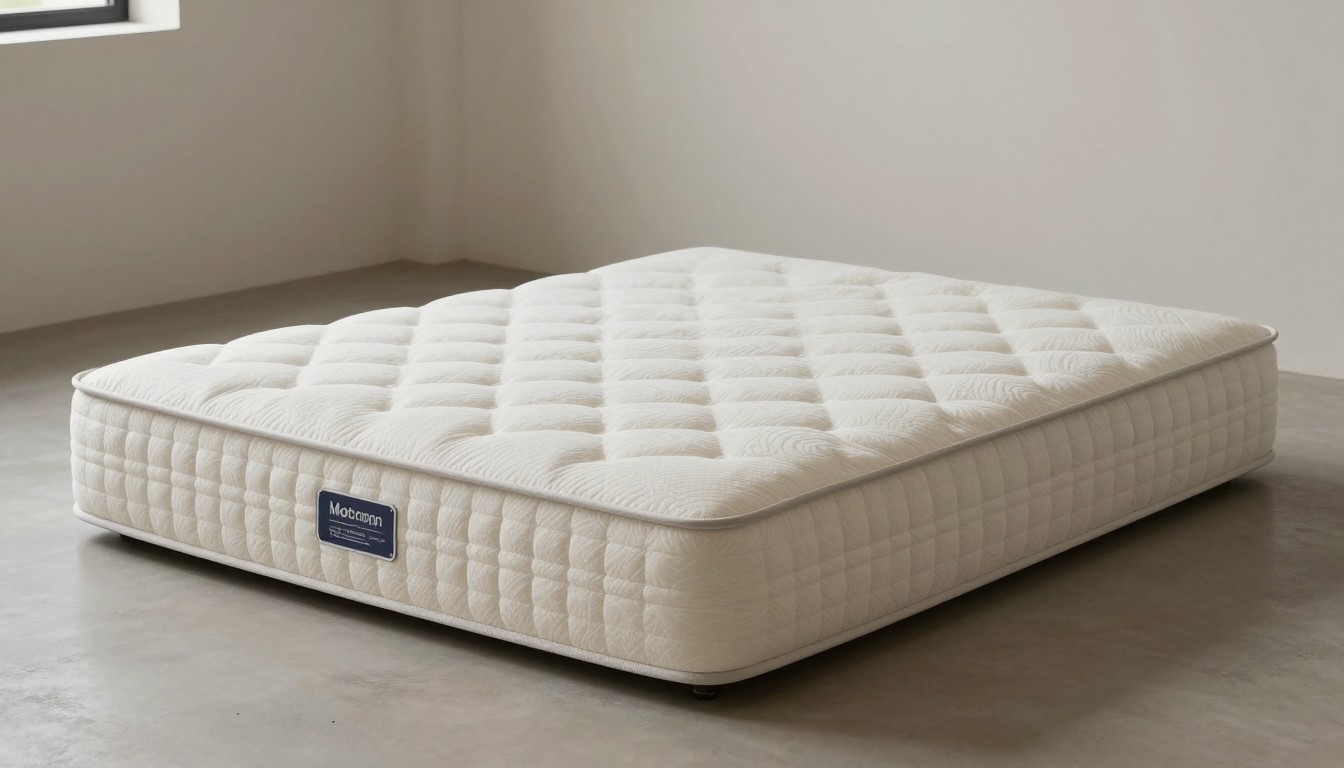
 by
by Quick answer: Yes, an 8-inch mattress can be comfortable for a lighter solo sleeper, guest bed, bunk or trundle, provided its support core and comfort layer suit the sleeper and frame.
- Sleep Pilot describes space-saving profiles and budget pricing as the main appeal of this category.
- Sleep Pilot also warns that some models never reach their claimed height, which can leave the surface thin or uneven.
- A TalkAboutSleep roundup emphasizes material quality alongside mattress thickness.
Updated July 2026 · Reviewed for accuracy
An 8-inch mattress isn’t automatically uncomfortable. It simply has less room for separate comfort, transition and support materials, so every layer has to earn its place.
I’d judge the construction before judging the height. The sleeper’s body type, preferred position, bed frame and intended use will decide whether this profile feels supportive or frustrating.
Is an 8-inch mattress actually enough?
An 8-inch profile gives a manufacturer a fixed amount of vertical space for the cover, cushioning and support core. That can be enough for a simple, well-planned design, but it leaves less margin for thick cushioning or a substantial transition layer.
The height label doesn’t tell you how the bed will feel. Two mattresses with the same profile can behave very differently if one uses soft foam over a stable core while the other relies on a single firm block of lower-quality material.
Thickness and firmness aren’t interchangeable either. A slim mattress can feel soft at first yet allow the sleeper to press through the comfort material. Another can resist that compression but feel too hard at the shoulders or hips.
What the height label can and can’t tell you
- It tells you the mattress’s intended overall profile.
- It doesn’t reveal how much space is devoted to cushioning or support.
- It doesn’t establish firmness, edge stability, cooling or durability.
- It can help determine whether the mattress fits a bunk, trundle or other height-sensitive frame.
My view is simple: eight inches can be enough when the design matches the job. It’s a weaker bet when a sleeper needs deep contouring, shares the bed or places substantial compression on a small sleep surface.
Construction matters more than the height label
An 8-inch build has to divide its limited profile among several jobs. The upper material provides initial cushioning, any transition material slows the body before it reaches the core, and the core keeps the sleeper from sinking through the mattress.
In an all-foam design, I’d want a clear layer diagram and meaningful material information. A vague listing that says only “comfort foam” or “support foam” gives me little basis for judging how the mattress will hold its shape.
A hybrid can fit coils and cushioning into a slim profile, but the space trade-off still applies. If the coil unit takes up most of the construction, the surface may have limited pressure relief. If the cushioning takes up more room, the remaining coil structure still needs to provide stable support.
| Construction area | Its comfort job | What I’d inspect |
|---|---|---|
| Cover and surface | Creates the first feel and manages contact with the sleeper | Breathability claims, quilting and whether padding is actually described |
| Comfort material | Relieves pressure and shapes the firmness felt at the surface | Material type, density disclosure and the risk of pressing through it |
| Transition material | Prevents an abrupt shift from soft cushioning to a firm core | Whether the design includes a real transition or skips it entirely |
| Support core | Controls deeper sinkage and keeps the sleep surface stable | Foam quality, coil information and compatibility with the foundation |
Edge support also depends on construction, not the height printed on the label. A slim mattress with a stable perimeter may feel usable across more of its surface, while weak edges can make an already compact bed feel smaller.
The same caution applies to cooling and motion isolation. Open coils may permit airflow, while some foams can absorb movement, but an 8-inch label alone proves neither performance claim. I wouldn’t accept “cooling” or “motion-free” language without a material explanation from the manufacturer.
Who is most likely to find it comfortable?
A bunk, trundle or low-profile frame is the clearest use case for an 8-inch mattress. These setups may have strict clearance requirements, so adding height can create a fit or safety problem. The furniture manufacturer’s stated mattress limit should control the decision.
Lighter solo sleepers are also less likely to overwhelm a slim comfort system. That doesn’t guarantee comfort, but it gives the cushioning and core an easier job than they would have under greater concentrated pressure.
Back and stomach sleepers may appreciate a stable, less deeply cushioned surface if its firmness suits them. Side sleepers usually need more contouring around the shoulder and hip, so they should pay closer attention to the comfort material rather than assuming any slim mattress will provide enough give.
My fit check: The stronger matches are space-restricted furniture, occasional guest use and lighter solo sleepers who prefer a flatter surface. Couples, heavier sleepers and people seeking deep cushioning should inspect the construction especially carefully.
A guest room is another reasonable setting. Occasional use asks less of the materials than nightly use, although a guest mattress still needs a sound support core and an even surface. A low purchase price doesn’t make a poorly expanded or unstable mattress comfortable.
Couples create a tougher assignment because the mattress must manage movement, edge use and combined compression. A slim design can still work, but I’d want unusually clear information about its core and perimeter before relying on it for shared nightly sleep.
| Use case | Potential fit | Main question |
|---|---|---|
| Bunk or trundle | The low profile may suit limited clearance | Does it comply with the furniture maker’s instructions? |
| Guest room | Can make sense for occasional use | Is the surface even, supportive and suitable for varied sleepers? |
| Solo nightly sleep | More plausible for a lighter sleeper | Does the comfort layer suit the sleeper’s position? |
| Shared nightly sleep | Requires closer scrutiny | Can the core, edge and surface handle both sleepers? |
Where an 8-inch mattress can fall short
A mattress that remains below its advertised height may not perform as designed. Sleep Pilot identifies incomplete expansion as a recurring concern in this category, with the potential for a thin or uneven sleep surface.
That matters because the missing height may represent material that hasn’t recovered properly after compression. Follow the manufacturer’s unpacking instructions and stated expansion window. If the mattress remains uneven, document its condition and use the seller’s official remedy process rather than trying to disguise the issue with bedding.
The foundation can cause a separate problem. A mattress placed on an incompatible frame may dip between supports or lose the stable surface its core expects. Check both the mattress instructions and the bed manufacturer’s requirements before assuming the mattress itself is defective.
Warning signs I wouldn’t ignore
- A surface that remains visibly uneven after the maker’s full expansion process
- A layer description that relies on comfort slogans without identifying the materials
- Edges that collapse sharply during ordinary entry and exit
- A base that conflicts with the manufacturer’s support requirements
- Policies that don’t clearly explain returns for expansion or workmanship problems
A topper can soften the surface, but it can’t rebuild a weak support core. If the sleeper is already sinking through the mattress or the surface is uneven, more padding may hide the sensation briefly without correcting its cause.
Temperature claims deserve similar restraint. A thin mattress isn’t automatically cooler, and a deeper one isn’t automatically hotter. The cover, airflow path and foam formulation matter more than the profile by itself.
How to choose without relying on thickness alone
A useful layer diagram tells me more than a polished “8-inch comfort” label. I want to know what touches the sleeper, what sits underneath it and what prevents the body from reaching the bed frame.
Start with the intended sleeper. Consider body build, sleep position, preference for contouring and whether the bed will be shared. Then compare those needs with the actual layer description rather than the manufacturer’s broad comfort wording.
Next, confirm that the mattress fits its furniture. This is especially important for bunks, trundles and enclosed frames, where mattress height affects clearance. Use the furniture maker’s instructions as the authority, not a retailer’s generic compatibility claim.
Pre-purchase checklist
- Look for an understandable breakdown of the comfort, transition and support materials.
- Ask for foam-density or coil-construction information if the listing omits it.
- Check the official foundation and frame requirements.
- Read the manufacturer’s expansion instructions before opening the package.
- Review the official return and warranty terms for sagging, uneven expansion and shipping damage.
- Treat verified owner feedback as a way to spot patterns, not as proof that every sleeper will have the same experience.
Be wary of relying on price as a shortcut. A budget mattress can be a sensible choice for a suitable use case, but the savings disappear if its materials don’t support the intended sleeper or if the bed has to be replaced early.
Mattress depth also affects bedding fit. If you’re weighing a slim profile against a more built-up bed, our fitted-sheet guide for a deeper mattress shows why pocket depth belongs on the checklist. You can also use this deeper-profile mattress analysis as construction context, not as evidence that extra height is automatically more comfortable.
Finally, inspect the policy language before buying. Comfort is personal, and limited specifications make prediction harder. A clearly written return process matters more to me than an unsupported promise that a mattress suits every sleep position.
My verdict on 8-inch mattress comfort
At 8 inches, comfort depends on whether the construction has enough cushioning for the sleeper without sacrificing the core underneath. The profile itself is neither a pass nor a failure.
I’d consider this height for a bunk, trundle, guest room or lighter solo sleeper, especially where clearance matters. I’d be more cautious for couples, heavier sleepers and side sleepers who want deep contouring.
The deciding evidence should be a transparent layer breakdown, compatible foundation guidance and a fair process for dealing with incomplete expansion. If those details are missing, the low profile becomes an added uncertainty rather than a useful feature.
The Nut’s bottom line: Buy the construction, not the height label. A well-matched 8-inch mattress can be comfortable, but vague materials and an uneven finished surface are reasons to walk away.
ONE OPTION WORTH COMPARING
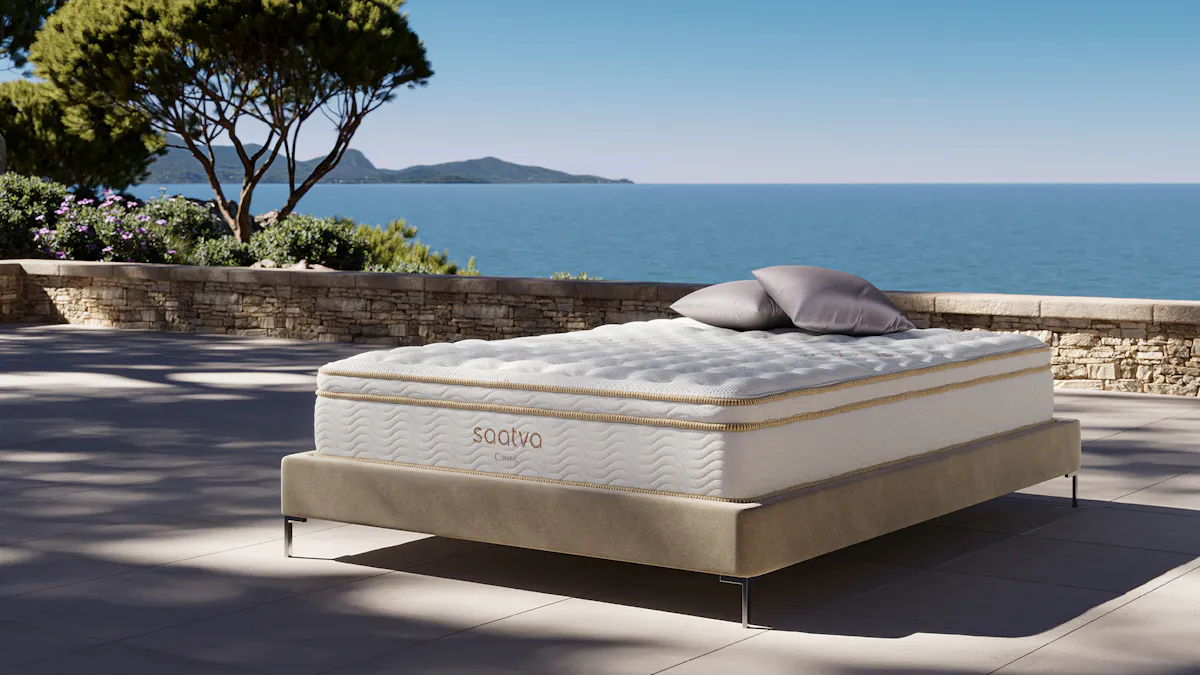
Shopping as well as reading? Here is one current option worth comparing: the Saatva Classic. Check today’s price, sizing and return terms on the official product page before you order.
Saatva Classic
- 365-night home trial and lifetime warranty, per saatva.com
- Handcrafted in the USA, free white-glove delivery
- Flexible financing available
FAQ
Is an 8-inch mattress thick enough for everyday use?
It can be, particularly for a lighter solo sleeper whose position and firmness preference match the construction. Nightly use puts more emphasis on material quality and core stability than occasional guest use, so the layer details matter.
Can a side sleeper be comfortable on an 8-inch mattress?
Yes, but the surface needs enough contouring to accommodate the shoulder and hip without letting the sleeper press through to the core. I wouldn’t choose by height alone because two 8-inch mattresses can offer very different pressure relief.
Does an 8-inch mattress need a box spring?
That depends on the manufacturer’s foundation requirements and the bed frame. Use the official instructions for both products, since an incompatible base can reduce support or create uneven wear.
Will a mattress topper make a firm 8-inch mattress comfortable?
A topper may add surface softness if the support core is still even and stable. It won’t repair deep sagging, incomplete expansion or a core that allows the sleeper to bottom out.
What should I do if an 8-inch mattress doesn’t fully expand?
Follow the manufacturer’s complete unpacking and expansion instructions, then compare the result with the listing. Sleep Pilot warns that incomplete expansion is a concern in this category, so document any uneven areas and contact the seller through its official support process if the problem remains.