
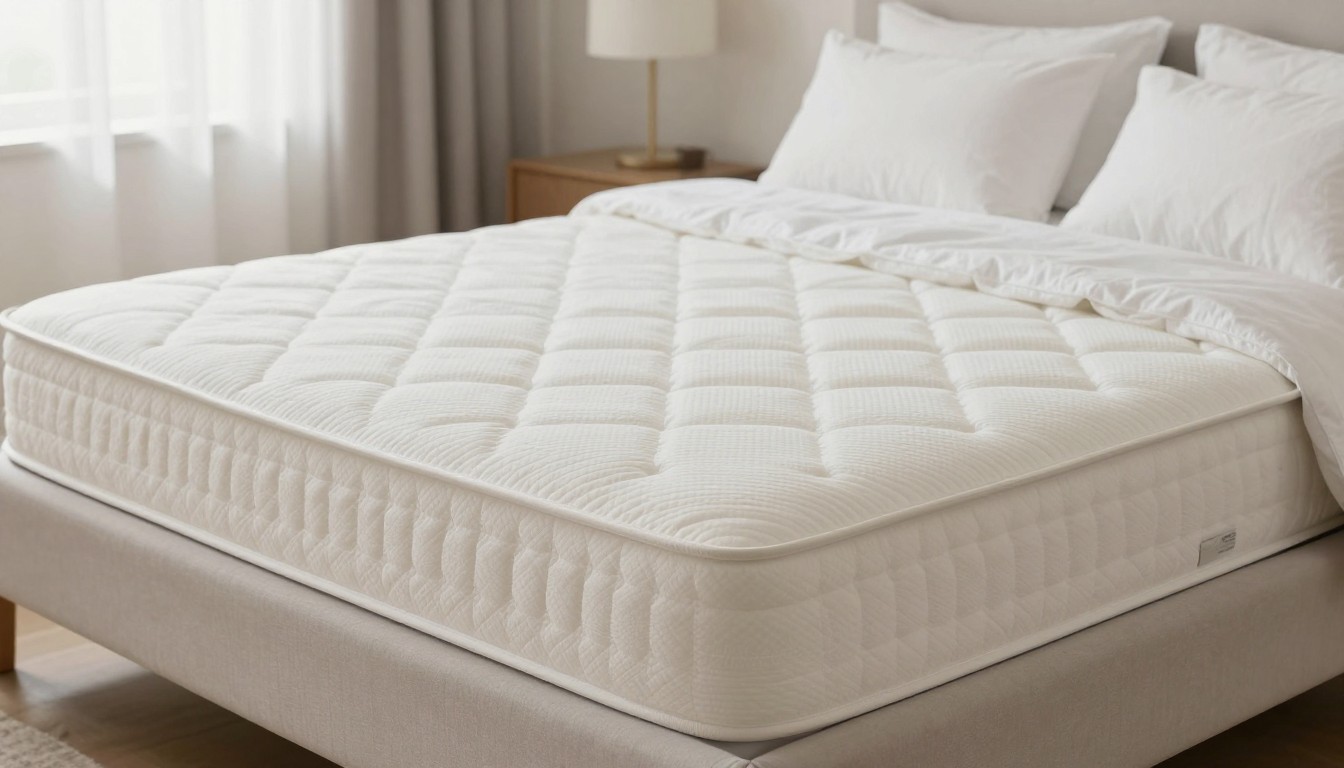
 by
by Quick answer: The right mattress topper for people with ms is usually one that addresses a specific surface problem without making movement or bed access harder. Consider a topper when a supportive mattress feels too firm, warm, or unyielding. Skip it when the mattress sags, the edge feels unstable, or added height would complicate getting into and out of bed.
- Choose memory foam when close contouring matters more than quick movement.
- Consider responsive latex when easier repositioning is the higher priority.
- Treat cooling materials as part of the solution, alongside sheets, blankets, and room temperature.
- Check the mattress foundation before spending money on another comfort layer.
Updated August 2026 for current material, care, and accessibility considerations.
My verdict is simple: a mattress topper for people with ms is worth considering only when the mattress beneath it is level, supportive, and basically sound. A topper can change cushioning, responsiveness, and surface warmth, but it cannot restore failed support or serve as a treatment for MS.
I’d buy according to the obstacle you want to remove, not according to a diagnosis alone. Pressure, warmth, difficulty turning, bed height, and surface stability point toward different constructions. If pain, skin sensitivity, temperature concerns, or transfer safety are changing, discuss the sleep setup with a clinician or occupational therapist who understands your individual needs.
The Nut’s take: Softness is not the goal by itself. The useful topper is the one that makes the bed more comfortable while preserving the support and movement you already have.
Check the mattress before choosing a topper
A visible dip settles the first question quickly. If the mattress slopes toward the middle, carries a lasting body impression, or lets the pelvis drop well below the shoulders and legs, a topper will tend to follow that shape. Adding foam over a weak foundation can disguise the problem briefly without correcting it.
Look at the perimeter too. A topper does not create stronger edge support underneath itself. On a mattress with a collapsing edge, another soft layer may make the boundary feel less distinct, which is not helpful when the edge is used for sitting, dressing, or standing up.
Next, lie in your usual position and separate surface discomfort from structural discomfort. A bed can be flat and supportive yet feel harsh around the shoulders or hips. That is the situation where a topper has the clearest role: altering the contact surface while leaving the mattress support system in charge.
- A topper may make sense: The mattress is level and supportive but feels too firm, slightly warm, or insufficiently cushioned.
- Pause before buying: The bed already feels difficult to move across or sits near the upper limit of a comfortable transfer height.
- Consider replacing the mattress: The surface has deep impressions, a persistent slope, broken support, or an unreliable edge.
The same foundation-first principle appears in our guide to choosing a mattress for people with autism. Comfort features work best when they sit on stable support. Predictability matters more than piling extra softness onto a bed that is already uneven.
Match the material to movement and pressure needs
Slow-response memory foam and buoyant latex solve different problems. Memory foam compresses around body contours and recovers more gradually. Latex pushes back more quickly, creating a surface that generally feels easier to move across but less deeply cradling.
Memory foam is the first material I’d examine for a sound mattress that feels sharply firm around pressure-sensitive areas. Its close contour can spread contact across more of the body. The tradeoff is movement: very soft or slow-moving foam may require more effort when turning, sitting up, or moving toward the edge.
Latex is the more responsive direction. It compresses under weight without producing the same slow, enveloping sensation associated with traditional memory foam. That can be useful for someone who changes position frequently or dislikes feeling held in place. Its springier character may feel less soothing to a sleeper seeking a pronounced cradle.
Fiber and wool toppers make a gentler surface adjustment. They can soften the immediate contact feel without reproducing the deep contour of thick foam, but they are less suited to changing the fundamental firmness of a hard mattress. Wool also has different care and compression behavior, so it should not be treated as a direct substitute for memory foam or latex.
- Choose closer contouring: Consider memory foam when the mattress is supportive but feels unforgiving at contact points.
- Choose quicker response: Consider latex when turning and changing position matter more than a deep cradle.
- Choose a lighter adjustment: Consider wool or another fiber fill when the goal is surface cushioning rather than substantial contouring.
- Question vague labels: “Hybrid” says little unless the manufacturer explains the actual layers and what provides support.
Material quality matters within each category. With foam, I look for a clear layer description and meaningful information about the material rather than a stack of cooling adjectives. With latex, I want to know whether the topper is made from a consistent latex core or a less clearly described blend. If the construction is vague, it is difficult to make a sound durability judgment.
Cooling starts with the whole sleep surface
A topper adds another layer between the sleeper and the mattress. That layer can change how closely the surface hugs the body, how readily air moves around it, and how much heat remains near the bedding. A highly enveloping feel can seem warmer even when the product carries cooling language.
Graphite and gel are commonly used in foam designs intended to manage surface warmth. I treat those features as supporting details, not proof that a topper will remain cool in every bedroom. The foam’s overall feel, the cover, the mattress below, and the amount of body contact still matter.
A responsive surface may leave the sleeper feeling less surrounded than deep memory foam. A breathable cover can also help at the immediate surface, but a thick protector or tightly woven sheet may change that feel. This is why I would judge the topper as one component of the bedding system rather than as a stand-alone temperature fix.
- Check whether the cover is breathable and whether it can be removed for care.
- Notice how deeply the material allows the shoulders and hips to sink.
- Review the protector, sheets, blankets, and room conditions alongside the topper.
- Give return terms extra weight because cooling language cannot predict individual comfort.
If warmth is the main reason for shopping, start by identifying where it seems to build. Heat trapped under heavy bedding calls for a different adjustment than a mattress surface that feels stuffy beneath light sheets. Changing several parts of the setup at once also makes it harder to tell which change actually helped.
Cooling reality check: A topper may make the surface feel less warm, but it cannot control every source of nighttime heat. Favor a returnable, clearly described construction over an absolute cooling promise.
Pressure relief still depends on support below
Shoulders and hips concentrate contact in side sleeping, while the midsection can sink more heavily in other positions. A topper changes how those areas meet the bed, but the mattress remains responsible for keeping the body from dropping into an uneven shape.
A contouring layer can make a hard mattress feel more forgiving. The useful amount of sink stops before repositioning becomes a struggle or the midsection feels less supported. That line is personal, which is why labels such as soft, medium, or firm are only rough starting points.
I would be careful with the assumption that more material means more relief. A substantial, very soft topper can alter alignment more dramatically and increase the distance the body must move when turning. A modest surface change may be more practical when the mattress already supplies good support.
Ask three practical questions: Does the topper cushion the uncomfortable area? Can you still turn without fighting the material? Does your torso remain supported rather than dropping into a hammock-like curve? A useful choice needs acceptable answers to all three.
Pressure discomfort also deserves individual guidance when it is persistent, worsening, or connected to limited movement. A bedding change can modify the sleep surface, but it should not replace assessment of a health or positioning concern.
Response speed affects turning and motion transfer
A slow foam surface can absorb a partner’s movement while also making the sleeper work through a deeper impression. A faster material returns toward its original shape more readily, which can make rolling or scooting feel simpler but may allow more movement to travel across the bed.
That creates a real tradeoff. If a partner’s movement is the main disruption, memory foam’s motion-dampening character can be useful. If changing position independently is already the harder part of the night, I would place responsiveness ahead of maximum motion isolation.
The mattress edge remains important in either case. A topper can soften the transition at the perimeter, but it cannot reinforce weak coils or failing foam below. Very plush material may also make it harder to identify exactly where the stable sitting surface ends.
- For frequent position changes: Prioritize quick recovery and a less enveloping feel.
- For partner disturbance: Look for enough motion absorption without choosing more sink than you can comfortably move through.
- For edge-based transfers: Evaluate the mattress edge first, then consider how the topper changes its feel.
Do not judge responsiveness by pressing the topper with a hand alone. Body weight is distributed differently, and sheets can change surface grip. The more useful question is how the complete bed setup supports the movements used during a normal night.
My priority order: Preserve safe, manageable movement first. Then balance pressure cushioning and motion isolation around that requirement.
Account for bed height, fit, and daily handling
Adding a topper raises the sleep surface and changes the relationship between the bed, the floor, and the sleeper’s seated position. That can affect how easily the feet reach the floor and how much effort is needed to move onto or away from the edge.
Bed rails, transfer aids, adjustable bases, and fitted sheets introduce more compatibility questions. A topper should not obstruct the intended use of a rail or create a loose layer around mobility equipment. If equipment is involved, confirm the setup with its manufacturer or an appropriate professional before ordering.
Surface grip matters as much as softness. A topper that creeps sideways or bunches beneath the sheet creates extra maintenance and an unpredictable edge. A fitted cover, a suitable sheet, corner straps, or a nonslip underside may help, but those features need to be confirmed from the product description rather than assumed.
- Compare the current bed height with the height that feels comfortable for sitting and standing.
- Confirm that sheets can accommodate the mattress and topper together without pulling loose.
- Check how the topper is meant to stay aligned on the mattress.
- Consider who will unpack, position, rotate, or remove the topper for cleaning.
- Verify compatibility with any rail, adjustable base, or transfer setup.
Handling is easy to overlook. Dense foam can be awkward to unfold and align, while latex may be flexible and cumbersome. A removable cover is useful only if the topper can be managed comfortably whenever that cover needs attention.
Our wool mattress topper guide explains how a fiber-based layer differs from foam and latex in contouring, resilience, moisture handling, and upkeep. That comparison is useful when a lighter surface adjustment would be more practical than a deeply conforming pad.
Durability depends on construction and care
Softening in the usual sleep area is the durability change I would watch most closely with foam. The rate varies with construction, use, support underneath, and care. A manufacturer that explains its layers clearly gives shoppers more to evaluate than one that relies on broad comfort language.
Latex is valued for resilient response, but the exact material still matters. Wool and other fiber fills behave differently, often developing a more settled surface rather than the molded impression associated with foam. None of these materials remains unchanged indefinitely.
The cover deserves equal attention because it handles direct contact, friction, and routine buildup. Confirm whether it is removable, whether it can be washed, and what the care label requires. Do not assume the foam or latex core can be washed merely because the cover can.
- Read the complete layer description and material disclosures.
- Check the cover’s removal and cleaning instructions.
- Confirm whether rotating the topper is permitted or advised.
- Review return conditions, packaging expectations, and warranty exclusions.
- Compare the current price with the clarity and practicality of the construction.
Returns matter because a topper’s comfort cannot be settled from material names alone. Toppers may have different return conditions from mattresses, particularly after opening or use. Read those terms before discarding packaging or putting an unprotected topper on the bed.
For more detail on natural-fiber upkeep, our wool mattress topper review covers the relationship between surface feel, moisture handling, compression, and care. It is a useful contrast for anyone deciding between a small comfort adjustment and the deeper contour of foam.
Use a problem-first decision process
A flat, supportive mattress that feels too hard presents a clear topper use case. A sagging mattress, an unstable edge, and difficult bed access point toward underlying problems that extra cushioning may worsen.
Once the foundation passes that check, name the main nightly obstacle in plain language. “My shoulder meets a hard surface” is more useful than “I need something plush.” “I struggle to roll through deep foam” points toward responsiveness. “The bed feels warm under light bedding” puts construction and surface breathability higher on the list.
- Decide whether the mattress is structurally sound.
- Choose the single surface problem that matters most.
- Match that problem to contouring, responsiveness, or lighter cushioning.
- Check height, edge use, sheet fit, and handling.
- Read care, return, and warranty terms before ordering.
- Change one part of the sleep setup at a time when practical.
Firmness labels should come late in this process. The same topper can feel quite different on a rigid mattress than it does on an already flexible one. Body position, the mattress below, and the topper’s response speed all shape the result.
A better buying question: Instead of asking which topper is softest, ask which construction changes the unwanted part of the bed while disturbing the useful part as little as possible.
Who is most likely to benefit, and who should skip it
A sound mattress that needs a targeted comfort adjustment is the strongest case for a topper. The shopper should also be comfortable with the resulting bed height and able to manage the material’s response during normal movement.
- Consider a topper: The mattress is level but feels harsh at the shoulders, hips, or other contact areas.
- Consider a topper: The current surface needs a different balance of contouring and responsiveness.
- Consider a topper: The added layer will still work with the bed’s sheets, edge, height, and mobility setup.
A topper is less convincing when the desired change is structural. It also deserves caution when softness has already made movement harder or when someone else must regularly lift and reposition the layer.
- Skip the topper: The mattress has a lasting dip, slope, broken support, or collapsing edge.
- Skip or reconsider: Additional height would make sitting, standing, or using a rail less manageable.
- Choose less sink: Deep contouring interferes with turning or creates an insecure feeling near the edge.
- Seek individual guidance: The concern involves persistent pain, skin protection, changing mobility, or equipment safety.
The best outcome is not the plushest surface. It is a bed that feels calmer and more forgiving without taking away stability, manageable movement, or practical access.
Optional product context
A neutral example: Shoppers may encounter the Saatva Graphite Topper during this search. Do not infer its fit from the word “graphite” alone. The official product page should be used to confirm the current construction, cover care, return conditions, warranty terms, and price, then those details should be measured against the problem-first checklist above. It is an option to evaluate, not a default answer for someone with MS.
ONE OPTION WORTH COMPARING
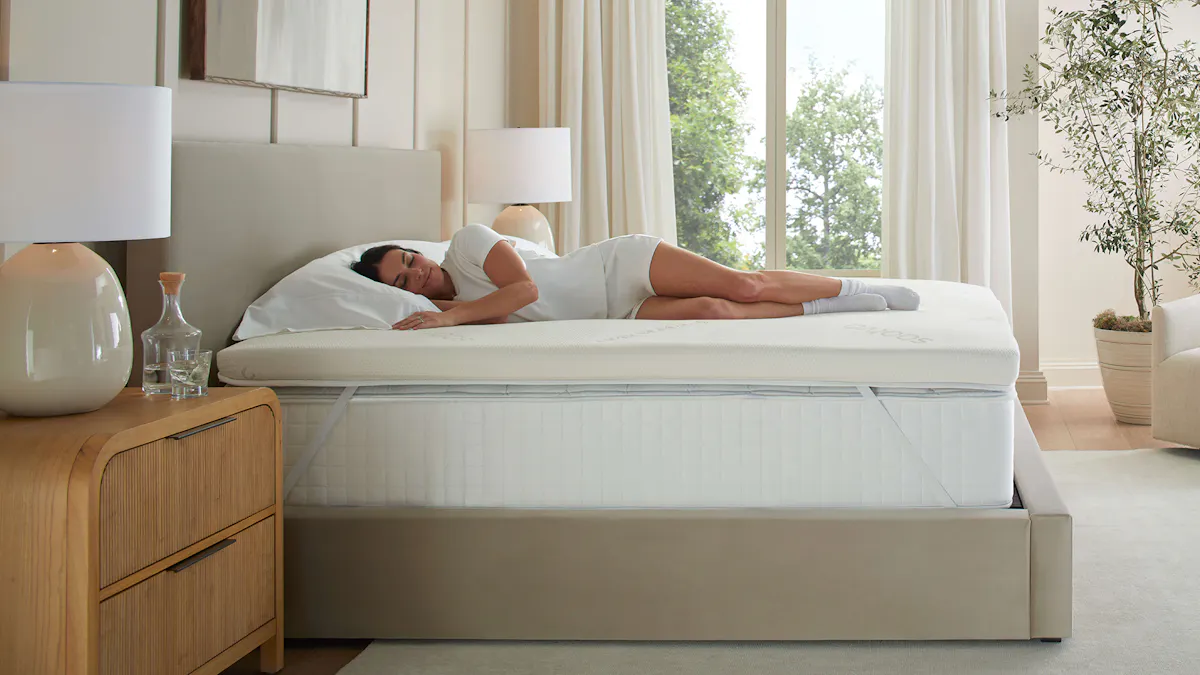
Shopping as well as reading? Here is one current option worth comparing: the Saatva Graphite Topper. Check today’s price, sizing and return terms on the official product page before you order.
Saatva Graphite Topper
- Graphite-infused memory foam, per saatva.com
- 180-night trial
- Secure anchor bands, fits deep mattresses
FAQ
Can a mattress topper help someone with MS sleep more comfortably?
A mattress topper for people with ms may make a supportive but overly firm bed feel more forgiving. It can also change responsiveness or surface warmth, depending on the construction. It cannot treat MS, correct a failing mattress, or predict what will feel comfortable for an individual sleeper.
Is memory foam or latex better for people with MS?
Memory foam generally provides the closer, slower contour, while latex generally feels quicker and more buoyant. I’d lean toward memory foam when contact pressure from a hard mattress is the main issue. I’d lean toward latex when easier repositioning and less of an enveloped sensation matter more.
Will a cooling topper prevent overheating at night?
No topper controls the entire sleep environment. Cooling-focused foam, a breathable cover, or a less enveloping construction may make the immediate surface feel more comfortable, but the mattress, protector, sheets, blankets, room conditions, and personal needs also affect the result.
How do I know whether my mattress needs replacing instead?
Look for a lasting body impression, a slope, damaged support, or an edge that no longer feels stable. If the body drops into an uneven shape regardless of the surface cushioning, the mattress is the more likely problem. A topper tends to conform to that weakness rather than repair it.
What should I check before buying a topper?
Confirm the material, response feel, cover care, method for staying in place, return conditions, warranty terms, and current price. Also consider the completed bed height, fitted-sheet compatibility, edge use, daily handling, and any interaction with rails or mobility equipment. Those practical details determine whether the topper fits the room as well as the sleeper.