
 by
by Quick answer: Yes. Require the ordered size, documented compliance with applicable U.S. flammability rules, a disclosed fire-barrier material, and written confirmation that the finished mattress is asbestos-free.
- The Consumer Product Safety Commission describes 16 CFR Part 1632 as addressing smoldering ignition.
- 16 CFR Part 1633 limits the size of the fire produced during a thirty-minute open-flame test.
- An asbestos-free declaration should cover the complete mattress, not merely one component.
Updated July 2026 · Reviewed for accuracy
A mattress should match the size ordered, meet the applicable fire-performance standard, and have enough material documentation to support an asbestos-free claim. Those are separate requirements. Passing one doesn’t prove the others.
The request, “mattress should be on same size as requested with fire retardant and asbestos free,” has the right intent but needs more precise wording. I’d define the size, required fire compliance, barrier composition, and acceptable asbestos documentation before placing the order.
What this mattress requirement should actually say
The original sentence combines size, fire performance, and material composition without explaining how a seller must prove any of them. That leaves too much room for interpretation.
“Same size as requested” could mean the same general size name, the dimensions published by the manufacturer, or a custom measurement written into the order. “Fire retardant” could refer to regulatory fire performance, a separate barrier, or a chemical treatment. “Asbestos-free” could describe one layer rather than the finished mattress.
Wording I’d use: “Supply the agreed mattress model in the ordered size designation and the manufacturer’s published dimensions. The finished mattress must comply with all applicable U.S. federal mattress flammability requirements. Before delivery, provide the fire-barrier composition and a current manufacturer declaration confirming that the complete mattress is asbestos-free.”
This wording separates performance from composition. The fire requirement asks whether the mattress meets the relevant standard. The material requirement asks what the barrier contains and whether the complete construction is asbestos-free.
The jurisdiction also matters. U.S. orders should refer to applicable U.S. mattress rules. A Sleep Talk overview of UK mattress regulations, for example, says filling requirements can depend on whether the filling is single or composite. That’s a different regulatory framework, so overseas wording shouldn’t be copied into a U.S. purchase order without checking the applicable rules.
A complete requirement has separate pass conditions:
- The model and size match the order documentation.
- The mattress has evidence of applicable fire-performance compliance.
- The barrier material is identified and the finished mattress is documented as asbestos-free.
How to confirm the mattress is the size requested
A size name alone isn’t enough evidence. The useful comparison is between the order confirmation, the manufacturer’s published specifications, and the mattress that arrives.
Before buying, save the model name, size designation, published length, width, and height, and any stated measurement tolerance. If the seller doesn’t publish a tolerance, ask for it in writing rather than accepting an unexplained difference after delivery.
At delivery, first confirm that the model and size on the paperwork match the order. Then follow any setup and measurement instructions supplied by the manufacturer. Measure across straight edges, keep the tape level, and photograph the full measurement so the starting and ending points are visible.
Keep this size evidence:
- The order confirmation and invoice.
- A saved copy of the manufacturer’s specifications.
- Photographs of the delivered product label and packaging.
- Clear photographs of each physical measurement.
- Any written tolerance or measurement instructions from the seller.
Bed type can make a small mismatch more consequential. A bunk setup needs the mattress to fit the sleeping platform while preserving the intended guardrail relationship, so check the criteria in my guide to choosing a bunk-bed mattress size. A pull-out frame can impose different space limits, covered in the guide to trundle-bed mattress sizing.
Don’t confuse dimensions with comfort. A mattress can match the requested size and still feel unsuitable. Firmness is a separate purchase decision, and my firm-versus-soft mattress guide explains how to assess that choice.
If the delivered dimensions fall outside the written specification or agreed tolerance, document the discrepancy before altering or extensively using the mattress. Ask the seller to resolve it under the order terms. Don’t let a general size label replace the dimensions that were actually promised.
Fire retardant is not the same as fireproof
The federal open-flame rule has a specific purpose. According to 16 CFR Part 1633, the standard is intended to reduce mattress-fire deaths and injuries by limiting the size of the fire generated during a thirty-minute test.
The Consumer Product Safety Commission also distinguishes between the federal standards: Part 1632 addresses smoldering ignition, while Part 1633 addresses open-flame performance for mattress sets. The regulations also cover related compliance records and labeling matters.
Neither description means that a compliant mattress is fireproof. It also doesn’t establish the presence or absence of asbestos. Fire performance and material composition must be checked independently.
| Requirement | Useful evidence | What isn’t enough |
|---|---|---|
| Requested size | Order details, published specifications, agreed tolerance, and delivery measurements | A general size name with no model-specific specifications |
| Fire performance | Model-specific confirmation of compliance with applicable flammability requirements | “Fire resistant” used as an unsupported marketing phrase |
| Barrier composition | A current component disclosure identifying the barrier material | Compliance paperwork that doesn’t identify the barrier |
| Asbestos-free construction | A written manufacturer declaration covering the finished model | Silence about asbestos or a claim covering only the cover or foam |
“Fire retardant” also doesn’t automatically mean that a mattress relies on a particular chemical treatment. Mindful Momma’s non-toxic mattress overview identifies organic wool as one possible fire-barrier material, alongside constructions using natural latex and organic cotton. That shows why the barrier itself should be disclosed rather than guessed from a broad fire-safety claim.
I’d ask the manufacturer two direct questions: which federal flammability requirements apply to this model, and what material provides its fire barrier? The answers should identify the model and current construction. A generic statement about the brand’s mattresses is weaker than model-specific documentation.
Don’t ask whether the mattress “has fire retardant” and stop there. Ask for regulatory compliance and barrier composition separately. That avoids treating a performance standard as though it were a complete ingredient list.
How to verify an asbestos-free mattress claim
A flammability statement doesn’t prove that a mattress is asbestos-free. It answers a different question: how the mattress performs under the applicable ignition test.
For asbestos verification, request a written declaration from the manufacturer covering the complete finished mattress. It should identify the brand, model, current construction, and the scope of the declaration. If the document addresses only the fabric, foam, or fire barrier, it doesn’t cover every component.
The component disclosure should account for the cover, quilting or padding, comfort layers, support materials, fire barrier, backing materials, and adhesives where applicable. The point isn’t to demand a particular construction. It’s to prevent an asbestos-free claim for one layer from being presented as proof for the whole mattress.
Stronger asbestos documentation includes:
- A declaration issued by the manufacturer rather than an unsupported seller statement.
- The exact mattress model or clearly defined model family.
- Confirmation that the statement covers the finished product.
- A document date or construction version showing that it applies to current production.
- Supporting laboratory documentation when the purchase contract specifically requires testing.
Broad descriptions such as “natural,” “organic,” or “non-toxic” aren’t substitutes for an asbestos-free declaration. Mindful Momma discusses natural latex, organic wool, and organic cotton as lower-toxin material choices, but those descriptions alone don’t establish the composition of a particular mattress.
The same applies to missing information. If asbestos doesn’t appear on a short marketing list, that absence isn’t positive verification. Ask the manufacturer to state the claim directly and define its scope.
If a seller can’t produce adequate documentation, describe the mattress as unverified rather than declaring that it contains asbestos. Lack of proof isn’t proof of presence. It is, however, a valid reason to withhold acceptance when asbestos-free construction was an agreed condition of the order.
My standard: I wouldn’t cut open a mattress to identify its barrier. I’d obtain model-specific paperwork from the manufacturer and keep that evidence with the order records.
A practical acceptance checklist before you keep it
The cleanest decision starts before delivery. Put every required condition in the order, including the exact model, size specification, applicable fire compliance, barrier disclosure, asbestos-free declaration, and remedy for a failed condition.
| Stage | Action | Pass condition |
|---|---|---|
| Before ordering | Save the model, size, specifications, tolerance, and required safety documents | The seller accepts the written requirements |
| Before delivery | Obtain fire-compliance, barrier, and asbestos-free documentation | Documents identify the ordered model and finished construction |
| At delivery | Check the model and size details against the order | The delivered item matches the paperwork |
| After setup | Measure according to the manufacturer’s instructions and save photographs | Measurements meet the published specification and agreed tolerance |
| Final decision | Review size and safety evidence as separate conditions | Every condition passes independently |
If the size is wrong, photograph the measurements and compare them with the saved specifications. If the model is right but safety documentation is missing, request the missing records rather than assuming the mattress passes or fails.
Keep all claims tied to the exact product delivered. A document for another model, an older construction, or an unidentified sample may not answer the question. Ask the issuer to clarify the scope in writing.
My bottom line is simple: accept the mattress only if it matches the agreed size criteria, has documented compliance with applicable fire rules, discloses its barrier material, and carries credible written confirmation that the finished construction is asbestos-free. Treat each item as its own pass-or-fail requirement.
ONE OPTION WORTH COMPARING
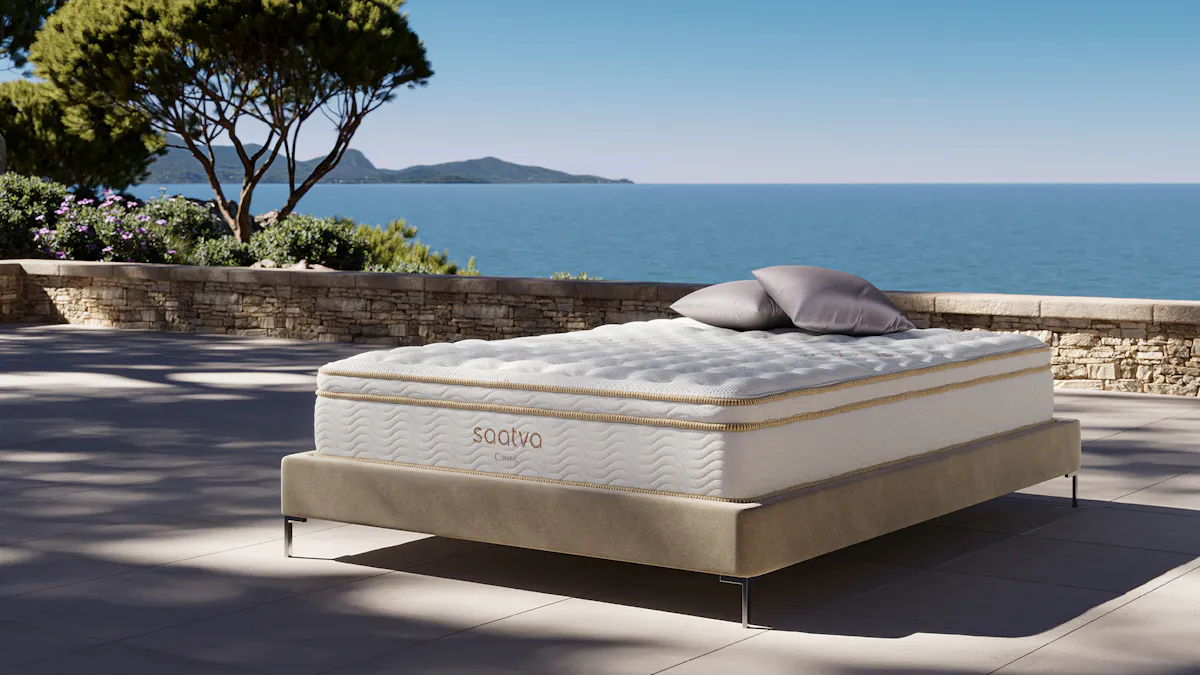
Shopping as well as reading? Here is one current option worth comparing: the Saatva Classic. Check today’s price, sizing and return terms on the official product page before you order.
Saatva Classic
- 365-night home trial and lifetime warranty, per saatva.com
- Handcrafted in the USA, free white-glove delivery
- Flexible financing available
FAQ
Does fire retardant mean the mattress contains chemical flame retardants?
Not necessarily. Federal rules such as 16 CFR Part 1633 establish fire-performance requirements, while Mindful Momma identifies organic wool as one possible fire-barrier material. Ask what the barrier contains instead of inferring its composition from the compliance statement.
Is 16 CFR Part 1633 compliance proof that a mattress is asbestos-free?
No. Part 1633 concerns open-flame performance and limits the size of the fire produced during its test. An asbestos-free claim requires separate material documentation covering the complete mattress.
What should I do if the delivered mattress is the wrong size?
Compare it with the manufacturer’s saved specifications and any tolerance agreed before purchase. Photograph the measurements clearly, preserve the order paperwork, and ask the seller for the remedy stated in the purchase terms.
Does an organic or non-toxic label prove the mattress is asbestos-free?
No. Those broad descriptions don’t identify every component or expressly confirm the absence of asbestos. Request a current, model-specific manufacturer declaration for the finished product.
Are mattress fire rules the same in every country?
No single U.S. citation should be treated as a universal requirement. The Sleep Talk regulatory overview shows that UK filling requirements can differ according to construction, so use the standards applicable where the mattress will be sold or installed.