
 by
by Quick answer on lyocell bed sheets benefits: These sheets make the most sense for sleepers who wake up damp and prefer a smooth, fluid fabric. Moisture handling and a low-friction feel are the meaningful advantages. Skip them if you want crisp hotel-style bedding, easy high-heat laundering, or the most forgiving durability for the price.
- Lyocell is a regenerated cellulose fiber made from wood pulp, while TENCEL™ is Lenzing's branded lyocell.
- According to Lenzing's TENCEL material guidance, its production system recovers and reuses process solvent in a closed-loop design.
- Cooling depends on weave, fabric weight, mattress protection, and room conditions as well as fiber type.
- The smooth drape appeals to some sleepers and feels slippery or clingy to others.
Updated for 2026 and checked for construction, care, and claim clarity.
My verdict on lyocell bed sheets benefits is straightforward: the best reason to buy is a drier-feeling sleep surface, not a vague promise that the fabric is universally cooler or more sustainable. Lyocell can manage perspiration well, but the finished sheet still has to be light enough, woven appropriately, and cared for correctly.
The naming causes much of the confusion. Lyocell, TENCEL, eucalyptus sheets, and “wood-based silk” are often placed in the same marketing bucket, but those terms do not mean exactly the same thing. The fiber label, composition, weave, and care instructions tell me more than the front of the package.
Start with the label: lyocell, TENCEL, and eucalyptus
A sheet labeled “eucalyptus” tells you the plant source, not necessarily how the fiber was made. The finished material might be lyocell, viscose, or a blend, so I would keep reading until the listing names the actual fiber.
Lyocell is regenerated cellulose. Wood pulp is dissolved and formed into fiber, which is then spun into yarn and woven into fabric. Because manufacturers control the fiber and yarn formation, lyocell can produce a smooth, consistent surface. Weave and finishing still matter, so the fiber name alone does not determine softness.
TENCEL™ is not the generic name for every lyocell sheet. It is Lenzing's trademark for fibers made under its system. Lenzing describes its own lyocell production as a closed-loop process in which process solvent is recovered and reused. That claim applies to the named production system, not automatically to every generic “eco-friendly lyocell” listing.
Generic bamboo viscose belongs to the broader regenerated-cellulose family, but it follows a different manufacturing route. A bamboo plant graphic does not establish how responsibly the pulp became fabric. I want the listing to identify the fiber process and composition instead of asking the feedstock to carry the entire environmental claim.
The Nut's shorthand: eucalyptus names a possible raw material, lyocell names a fiber-making method, and TENCEL names a branded fiber source. Those distinctions help separate construction details from packaging language.
The main benefit is moisture management, not magic cooling
A sleeper who wakes up clammy has a different problem from someone who simply feels warm. Lyocell is most compelling in the first situation because the fiber can take up moisture and distribute it through the fabric rather than leaving perspiration concentrated against the skin.
Lenzing's TENCEL guidance presents moisture management as a central property of the fiber. Sleep Foundation also discusses TENCEL sheets as a distinct category from cotton and bamboo-derived viscose in its sheet coverage. Those descriptions support a reasonable benefit, but they do not mean every lyocell set performs identically.
Evaporation still depends on air movement and fabric construction. A dense sateen sheet can hold closer to the body and feel warmer than a lighter, less enveloping fabric. Mattress protectors, thick comforters, room humidity, and the mattress surface can also overwhelm whatever the sheet is doing.
This is why I would not call lyocell automatically cooler than cotton. If you wake up damp, its moisture behavior may give you a drier sensation. If you wake up hot but remain dry, a lightweight cotton percale that holds away from the body may be the better fit. The lyocell versus cotton comparison explains that split in more detail.
- Hot and damp: lyocell's moisture uptake is the relevant advantage.
- Hot but dry: fabric weight and airflow may matter more than fiber choice.
- Cold or neutral sleeper: the silky feel may matter more than cooling.
- Heavy bedding above the sheet: changing the sheet alone may have limited effect.
The smooth drape is a benefit only if you like it
Lyocell commonly feels smooth, fluid, and cool on first contact. Its yarns can create a surface with less of the dry texture associated with linen and less of the crisp structure associated with cotton percale.
The same drape that feels luxurious to one sleeper can feel clingy to another. A fluid flat sheet follows the body's contours instead of standing away from it. It can also slide against certain blankets or shift more readily if the fitted sheet is poorly constructed.
Fiber does not work alone here. Sateen construction tends to emphasize sheen and drape, while a lighter plain weave can feel less enveloping. Finishing treatments can also change the first impression, which is why an unusually slick new sheet may not represent how it feels after laundering according to the label.
If you enjoy silk-like bedding or soft jersey, lyocell is more likely to suit your taste. If you want a dry, freshly pressed hotel feel, it may disappoint even when the fabric is well made. The reasoning behind hotel sheet choices shows why crispness, laundering practicality, and presentation often point buyers toward different constructions.
Feel check: “soft” is not specific enough. Decide whether you want fluid and silky or crisp and structured. That distinction is more useful than treating one texture as universally better.
A low-friction surface can feel gentler
A smooth yarn and fabric surface can create less noticeable rubbing than a coarse or heavily textured sheet. That is the sensible construction-based reason someone with easily irritated skin might prefer lyocell.
I would keep the claim tactile, not medical. Lyocell does not treat a skin condition, and the fiber name does not prove that a finished sheet is hypoallergenic. Detergent residue, dyes, finishes, seams, and laundering habits can matter as much as the base fiber.
Moisture management may also help the bed feel less clammy, but it should not be turned into an antibacterial or dust-mite promise without product-specific evidence. A dry-feeling fabric is not the same as a medically protective surface.
- Reasonable expectation: a smoother tactile surface with less obvious roughness.
- Expectation to question: broad allergy, antimicrobial, or skin-treatment language.
- Detail to inspect: the complete fiber blend and any disclosed finishing treatment.
- Care detail: thorough rinsing and a detergent that works for the sleeper.
Where lyocell sheets fall short
A silky hand comes with practical tradeoffs. Lyocell can be durable under appropriate care, but it is not the sheet I would buy for someone who mixes every load, uses aggressive heat, or wants bedding that can be laundered without reading a label.
- Care sensitivity: hot drying, rough agitation, and abrasive mixed loads can shorten the useful life of a smooth fabric. The product's care label should override generic advice.
- Pilling risk: fiber quality, yarn construction, weave, finishing, friction, and blends all affect pilling. A TENCEL trademark identifies the branded fiber source, but it does not by itself prove that the complete sheet is pill-resistant.
- Slippery movement: fluid fabric may shift against a duvet or mattress surface. Fit and elastic construction matter if the bottom sheet tends to move.
- Appearance: lyocell can look smooth and lustrous, but it does not usually create the sharply pressed structure associated with hotel-style cotton.
- Premium positioning: lyocell generally sits above commodity sheet pricing. Since retail prices change, the useful comparison is the live price alongside composition, weave, return terms, and care demands.
The wet-strength issue deserves nuance. Lyocell is generally regarded as more robust when wet than conventional viscose, so it should not be described as falling apart simply because it enters a washer. The larger concern is repeated mechanical stress from wet fabric rubbing against rough items, followed by excessive dryer heat.
Pilling is also not a generic-versus-branded verdict. A poorly designed sheet can use a recognizable fiber and still develop surface wear. Conversely, careful yarn selection and fabric construction can improve performance. I would treat sweeping promises such as “never pills” as marketing unless the seller explains the construction and backs the claim in its terms.
Wrinkle behavior lands between taste and maintenance. Lyocell's drape can help the bed look relaxed and smooth, but shoppers seeking firm creases may find that it never looks as architectural as pressed cotton. That is not a defect if the fluid appearance is what you wanted.
Lyocell compared with cotton and bamboo viscose
Cotton percale, cotton sateen, lyocell, and bamboo viscose can all feel different even before brand finishing enters the picture. The useful comparison is not “natural versus synthetic,” because lyocell and viscose are regenerated plant-based fibers with manufactured processing steps.
| Property | Lyocell | Cotton | Bamboo viscose |
|---|---|---|---|
| Typical feel | Smooth, fluid, and often lustrous | Ranges from crisp percale to smoother sateen | Soft and frequently quite slippery |
| Moisture sensation | Can feel dry and comfortable for perspiration-prone sleepers | Absorbent, with performance strongly shaped by weave and weight | Often marketed for moisture handling, with quality varying by construction |
| Airflow | Depends on weave, weight, and how closely the fabric drapes | Light percale may feel airy and structured | Depends on fabric density and finishing |
| Care tolerance | Usually favors gentle washing and restrained heat | Often more forgiving, though the label still controls | Commonly requires similarly gentle care |
| Visual character | Fluid drape with possible sheen | Can look matte and crisp or smooth and polished | Soft drape with a polished appearance |
| Process disclosure | Look for the named fiber maker and process details | Look for cotton type, yarn quality, weave, and finishing | Do not assume the bamboo feedstock explains the full process |
| Best fit | Clammy sleepers who enjoy fluid fabric | Buyers wanting broad choices in feel and care | Buyers who like a notably soft, slippery hand |
Sleepopolis frames the lyocell-versus-cotton decision around cooling potential, laundering behavior, appearance, price, and durability rather than softness alone. That is the right way to compare them because the preferred texture is personal, while care demands and construction have practical consequences.
Bamboo causes the most label confusion because “bamboo sheets” often describes feedstock more loudly than fiber type. The lyocell versus bamboo breakdown explores that distinction, but my short rule is to find the actual fiber and process wording before judging either feel or environmental positioning.
How to buy lyocell sheets with fewer surprises
The composition line is more valuable than the large type on the package. A listing should tell you whether the fabric is lyocell throughout or a blend, identify branded fiber when claimed, and describe the weave and care requirements clearly.
- Confirm the fiber identity. “Eucalyptus,” “botanical,” and “plant-based” are not substitutes for the words lyocell or viscose.
- Read the complete blend. Added cotton or synthetic fiber changes drape, moisture behavior, care, and surface wear. A blend is not automatically poor, but it should not be sold as if every characteristic comes from lyocell alone.
- Check the weave. Sateen usually emphasizes smoothness and drape. A lighter plain weave may feel less enveloping. The listing should make this easier to understand than a large thread-count headline does.
- Treat thread count as context. It can describe a woven fabric, but it does not reveal yarn quality, fiber blend, finishing, or fabric weight. Comparing isolated thread-count claims across different fibers is rarely useful.
- Read the care label before ordering. If the routine requires aggressive washing or high dryer heat, a more forgiving cotton construction may be a better household fit.
- Inspect the return terms. Confirm whether opened or washed bedding remains eligible, because lyocell's drape is difficult to judge from a product photograph.
For fitted sheets, look beyond fiber and inspect the sewing details shown by the listing. Elastic coverage, seam quality, and pocket construction affect whether a slick fabric stays in place. I would not assume a premium fiber fixes weak sheet construction.
For flat sheets and duvet covers, think about fabric-on-fabric movement. Smooth lyocell against a slick comforter shell may move more than crisp cotton against a textured layer. That interaction is a fit issue, not evidence that the fiber itself is defective.
Price should be considered beside the complete build. A branded fiber, thoughtful yarn construction, secure stitching, and clear care terms provide more useful context than the word “luxury.” Check live pricing on the retailer's site because a static dollar figure would age faster than the construction advice.
My listing test: if a seller talks at length about eucalyptus forests but does not clearly disclose the fiber, blend, weave, and washing instructions, the environmental story is doing too much of the work.
Care is where lyocell durability is won or lost
Wet fabric rubbing against towels, denim, exposed fasteners, or an overloaded washer sees more abrasion than a sheet washed with similar lightweight bedding. Separating rough items is therefore one of the more practical ways to limit surface wear.
- Follow the sewn-in care label, even if general online advice says something different.
- Use a gentle cycle when the manufacturer calls for it.
- Choose a mild detergent and avoid bleach when prohibited by the label.
- Keep towels, jeans, hooks, and rough closures out of the sheet load.
- Use low dryer heat if machine drying is permitted, or air dry when practical.
- Remove the sheets promptly rather than continuing to heat already-dry fabric.
Fabric softener can leave a coating on fibers, which may work against the absorbent sensation that made lyocell attractive in the first place. If softness fades, I would first check detergent quantity, rinsing, load size, and heat rather than adding another coating.
Rotating sets does not “rest” or heal a fiber. It simply spreads laundering and nightly abrasion across more than one set, reducing how often each individual sheet goes through the washer and dryer.
If pilling begins, harsher washing is unlikely to solve it. Reduce friction, separate coarse laundry, and review the care instructions. A fabric shaver may improve appearance, but it removes material, so it should be used cautiously rather than treated as routine maintenance.
Durability reality: the fiber name sets possibilities, but yarn quality, weave, stitching, laundering, and sleeper movement determine how those possibilities play out in a finished sheet.
The environmental benefit needs a qualified reading
Closed-loop solvent recovery is the strongest specific environmental argument associated with branded lyocell. According to Lenzing's TENCEL material guidance, its process recovers and reuses solvent. That is more useful than a generic leaf icon because it identifies a stated manufacturing practice.
It is not a complete life-cycle verdict. Wood sourcing, pulp production, energy, dyeing, finishing, packaging, transport, product lifespan, and laundering all contribute to impact. A closed-loop claim about one stage should not be stretched into proof that every lyocell sheet is the lowest-impact choice.
Durability belongs in that calculation. A sheet that suits your care routine and remains useful is often a more sensible purchase than a theoretically preferable fabric that you dislike sleeping on or damage with normal household laundering.
What I would verify: the named fiber, the manufacturer's process language, the complete blend, and realistic care demands. “Made from trees” is a starting fact, not a finished sustainability analysis.
If lyocell is not your preferred feel
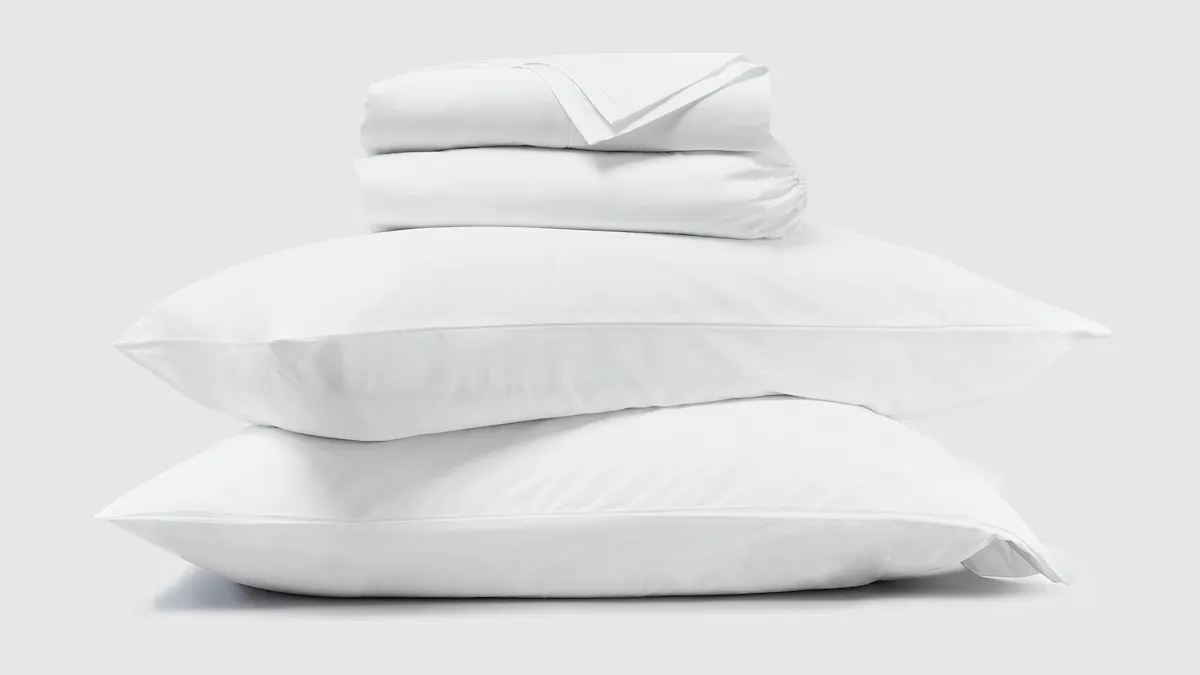
If crisp structure and easier-care cotton sound more suitable, the Saatva Organic Cotton Sheets are one premium cotton set you may encounter. Treat them as a separate cotton option rather than evidence for or against lyocell, and check the official product page for current materials, care terms, return details, and pricing.
My final verdict on lyocell sheets
Hot-and-clammy sleepers who enjoy a silky drape are the clearest fit. For them, moisture uptake and a smooth surface are concrete reasons to consider lyocell. The benefit is more specific than “sleeps cool,” and that specificity makes it easier to decide.
Skip the category if you want crisp hotel bedding, routinely use aggressive wash settings, dislike clingy fabric, or place maximum laundering tolerance above drape. Cotton offers more constructions and may fit those priorities with fewer compromises.
The mistake is buying the environmental story before deciding whether the texture and care routine suit you. Start with the sleep problem, verify the construction, and then weigh the process claims. I use the same mechanism-first filter for specialty products such as grounding sheets, where packaging language can otherwise outrun what the construction establishes.
ONE OPTION WORTH COMPARING
Shopping as well as reading? Here is one current option worth comparing: the Saatva Organic Cotton Sheets. Check today’s price, sizing and return terms on the official product page before you order.
Saatva Organic Cotton Sheets
- If crisp structure and easier-care cotton sound more suitable, the Saatva Organic Cotton Sheets are one premium cotton set you may encounter
FAQ
What are the main lyocell sheet benefits?
The practical lyocell bed sheets benefits are moisture management, a smooth low-friction surface, and a fluid drape. Those qualities best suit someone who wakes up damp and likes silky bedding. They are less persuasive for a sleeper who remains dry, prefers crisp sheets, or needs very forgiving care.
Is lyocell the same thing as TENCEL?
Not exactly. Lyocell is the generic fiber type, while TENCEL™ is Lenzing's trademarked fiber brand. According to Lenzing's material guidance, its TENCEL lyocell uses a closed-loop solvent-recovery process. A generic lyocell label does not by itself establish that the fiber came from the same production system.
Are lyocell sheets cooler than cotton?
They can feel drier for a sleeper who perspires because lyocell manages moisture differently, but they are not automatically cooler in every bed. A dense lyocell sateen may retain more warmth than a lightweight cotton percale, while blankets, protectors, humidity, and the mattress can have a larger effect than either fiber.
Do lyocell sheets pill?
They can. Pilling depends on yarn construction, weave, finishing, blends, friction, and laundering rather than the fiber name alone. Washing with lightweight bedding, separating abrasive items, and following the care label may reduce avoidable wear, but no responsible fiber label should be read as a promise that pilling cannot occur.
Can I put lyocell sheets in the dryer?
Use the product's care label as the deciding authority. Many lyocell sheets call for low dryer heat, while air drying may reduce heat exposure when practical. High heat can contribute to shrinkage, finish damage, and surface wear, so extra drying time is not a harmless shortcut.
Are lyocell sheets worth the premium price?
They may be worth it if moisture management and a silky drape address your actual preferences. If you sleep comfortably on crisp cotton or need more flexible laundering, the premium may buy characteristics you do not value. Compare the live price with the full composition, weave, construction, care demands, and return terms before deciding.