
 by
by Quick answer: Fold a mattress only if its manufacturer allows it. Protect it first, make a broad temporary bend, secure it without crushing the layers, and support the whole mattress while carrying it.
- Start with the manufacturer’s care and moving instructions.
- A broad curve is safer than forcing a sharp center crease.
- Ecosa advises using a vehicle interior with the rear seats folded when space allows, or moving the mattress in a rental van or pickup truck.
Updated July 2026 · Reviewed for accuracy
You can fold some mattresses for moving, but construction decides whether you should. Flexible foam may tolerate a temporary bend, while coils, rigid borders, dense latex and internal components can be damaged if they’re forced.
My rule is simple: if the manufacturer doesn’t explicitly permit folding, keep the mattress flat. Saving space in the truck isn’t worth leaving a permanent ridge in the bed.
Can your mattress be folded safely?
A coil unit resists bending differently from a solid foam core. Before touching a strap, check the mattress label, care guide and manufacturer’s website for folding, rolling or moving instructions specific to your model.
Don’t assume a mattress can be folded because it arrived compressed. Factory packing uses equipment and packaging methods that aren’t reproduced by bending an expanded mattress at home. Once the bed has opened, its cover, adhesives and support layers may respond differently.
| Construction | My folding call | Main concern |
|---|---|---|
| All-foam | Potentially foldable if the manufacturer approves | A hard crease can stress foam, seams and bonded layers |
| Latex | Use extra caution and follow model-specific guidance | Its weight can pull against unsupported material |
| Hybrid or innerspring | Keep flat unless folding is expressly allowed | Coils and reinforced edges may distort under a forced bend |
| Air mattress | Deflate it and use its intended folding method | Valves and welded seams shouldn’t be trapped in a tight fold |
“Memory foam mattress” isn’t a complete construction description. A bed can have a memory-foam comfort layer over coils, firmer support foam or a reinforced perimeter. Judge the entire mattress, not the feel of its top layer.
The Nut’s rule: Stop if the mattress strongly resists the bend, makes an unusual sound, develops a sharp ridge or pulls hard at the cover. Those signs matter more than how badly you want it to fit through the door.
An air mattress is a separate job because it should be deflated before packing. My guide to folding an air mattress covers that process without treating it like a conventional foam or coil bed.
What to prepare before bending the mattress
A mattress bag should go on before the first bend. It keeps the sleeping surface away from floors, truck walls, dust and anything damp encountered between the bedroom and the new home.
Strip off the bedding and confirm that the mattress is dry. Inspect its cover, seams and edges first so you don’t mistake existing wear for moving damage later. If you need help sealing the bed properly, follow this fuller guide to wrapping a mattress for moving.
Have these ready:
- A clean mattress bag that fits without stretching the cover
- Wide moving straps that spread pressure across the surface
- Moving blankets for corners, walls and the vehicle floor
- Tape for closing the bag, never for sticking directly to the mattress
- Enough help to support both ends and the center while carrying
Clear the entire route before folding. Compare the available doorway, stairwell and vehicle space with the mattress’s proposed folded shape. A bend that clears the bedroom door may still be too bulky for a landing or cargo opening.
Don’t use thin cord as a substitute for wide straps. Cord concentrates pressure along a narrow line and can cut into the bag or cover. Vacuum compression also needs explicit manufacturer approval; a household setup shouldn’t be treated as equivalent to factory packaging.
How to fold a mattress for moving, step by step
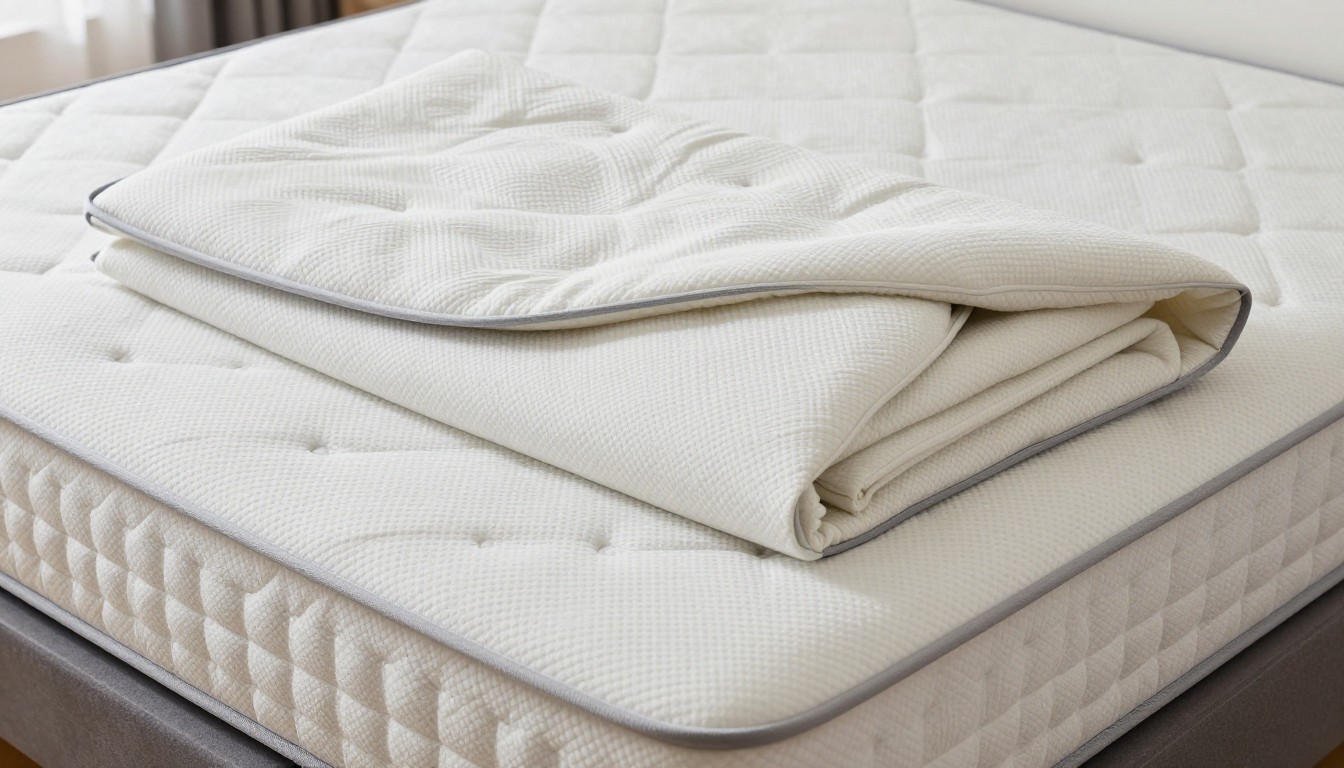
The finished fold should resemble a broad curve, not a sharply pressed seam. If you can’t create that curve without wrestling the mattress, switch to moving it flat.
-
Confirm that folding is permitted. Read the model’s care information before applying pressure. If the instructions are silent or unclear, ask the manufacturer or choose flat transport.
-
Protect the mattress. Slide it into the mattress bag while it’s flat, then close the bag securely. Keep tape and exposed adhesive away from the upholstery.
-
Place it on a clean, open surface. Remove sharp objects and give yourself room to work from both sides. Don’t start the fold in a doorway or on a staircase.
-
Create a slow, even bend. Bring the ends toward one another without dropping your weight onto the center. Follow any direction specified by the manufacturer, since the internal layout may make one orientation less stressful.
-
Secure the curve gently. Position wide straps so they hold the shape without crushing the layers. Tighten only enough to prevent the mattress from springing open during handling.
-
Lift from underneath. Support the ends and the curved center rather than pulling on the bag, cover or straps. The straps are restraints, not carrying handles.
-
Keep the folded period brief. Release the straps as soon as the space restriction has passed and the mattress can lie flat safely. Follow the manufacturer if it sets different handling instructions.
Don’t force the final inches. Kneeling on the fold, jumping on it or ratcheting the straps tighter changes a gentle bend into concentrated compression. That’s where a space-saving move can become structural damage.
The folding shape depends on the mattress, the route and the maker’s guidance. For more detail on assessing that bend, see my guide on whether you can fold a mattress in half.
How to load and transport the folded mattress
A supported vehicle interior is preferable to an exposed roof. Ecosa’s folding guide advises lowering the rear seats and placing the mattress inside when there’s enough room; it also identifies a rental van or pickup truck as practical moving options.
I’d choose the vehicle before deciding to fold. A larger cargo area may remove the need to bend the mattress at all. That’s especially sensible for a hybrid, innerspring or any model whose manufacturer requires flat handling.
Use this loading order:
- Flat inside the vehicle: the first choice when the mattress and manufacturer allow it.
- Gently curved inside the vehicle: suitable only for an approved fold with the full shape supported.
- Pickup bed: protect the mattress from weather and secure it according to the vehicle guidance and local load rules.
- Vehicle roof: avoid it if a suitable interior, van or pickup arrangement is available.
Keep the mattress away from sharp furniture edges, exposed hardware and dirty cargo. Don’t pile boxes or heavy items on the fold. If the mattress must remain curved in transit, support the bend so it isn’t hanging in empty space.
Use the vehicle’s proper anchor points to control movement, but don’t confuse load restraint with mattress compression. The goal is to stop the wrapped mattress from shifting, not to squeeze it smaller after loading.
A long-distance move adds more handling, changing weather and a longer period in the vehicle. My guide to moving a mattress across the country covers the wider planning questions around protection, transport and whether taking the mattress makes sense.
Unfolding the mattress and checking its condition
The straps should come off as soon as you can place the mattress on a clean, flat surface. Let it open under its own resilience instead of pulling the ends apart or pushing down on a raised section.
Cut the outer bag carefully, keeping blades away from the cover. Then inspect the perimeter, seams and sleeping surface in good light. Compare what you see with the condition notes or photographs made before the move.
| What you notice | What to do |
|---|---|
| A shallow curve that is gradually relaxing | Leave the mattress flat and follow the maker’s recovery guidance |
| A persistent hard ridge or displaced edge | Stop manipulating it and contact the manufacturer for advice |
| A torn cover, opened seam or exposed interior | Document the damage and ask the manufacturer or mover about the next step |
| Dampness or a wet bag | Remove the packaging and follow the manufacturer’s care instructions before covering the bed |
There’s no universal recovery period that applies to every mattress. Foam formulation, internal construction and the maker’s instructions all matter, so use the model-specific guidance rather than inventing a deadline.
If folding isn’t approved, the answer isn’t a tighter strap. Move the mattress flat in a suitable vehicle, change the route, remove obstructing bed-frame parts or use a mover equipped for bulky bedding. The right moving method preserves the construction instead of asking it to survive a bend it wasn’t built to make.
ONE OPTION WORTH COMPARING
Shopping as well as reading? Here is one current option worth comparing: the Saatva Classic. Check today’s price, sizing and return terms on the official product page before you order.
Saatva Classic
- 365-night home trial and lifetime warranty, per saatva.com
- Handcrafted in the USA, free white-glove delivery
- Flexible financing available

FAQ
Can every mattress be folded for moving?
No. Flexible all-foam constructions may accept a temporary bend when the manufacturer permits it, while coil systems, reinforced edges and other rigid components may not. Check the instructions for the exact model before folding.
Which direction should I fold a mattress?
Use the direction specified by the manufacturer because layer layouts and reinforced sections vary. If no direction is given, don’t guess based only on which way makes the mattress smaller; seek clarification or transport it flat.
How long can a mattress stay folded?
There’s no single safe duration for every construction. Treat the fold as temporary, release it once the space restriction has passed and follow any limit or recovery guidance issued by the manufacturer.
Can I vacuum-pack a mattress before moving?
Only if the manufacturer expressly approves consumer vacuum packing for that mattress. Home compression can put stress on foam, seams, adhesives and internal supports, and factory-compressed delivery doesn’t prove that an expanded bed can be repacked the same way.
Can I fold a mattress and tie it to a car roof?
I wouldn’t choose the roof if the mattress can travel inside a suitable vehicle or in properly protected cargo space. Ecosa suggests folding down rear seats when the mattress fits inside, or using a rental van or pickup truck; any external load must also comply with vehicle guidance and local rules.