 by
by Quick answer: Mattress discounters can save you real money if you know what to check: construction, trial terms, and warranty coverage. If you'd rather skip the gamble, the Saatva Classic is the safer premium buy.
- Discounters mostly stock budget lines from mainstream brands plus private-label house brands, according to industry retail listings.
- Promotions cluster around holidays and seasonal clearance events, per retailer advertising patterns.
- Queen is the most heavily discounted size at most outlet and discount retailers.
Updated July 2026 · Reviewed for accuracy
Here's my honest take after a decade of watching how mattresses get made, marketed, and marked down: a mattress discounter isn't automatically a bad deal, but it isn't automatically a good one either. The sticker price tells you almost nothing. What matters is what's inside the cover and what happens if the bed fails you.
This guide breaks down how discount mattress retail actually works, what to inspect before you hand over a card, and when spending more upfront is the cheaper move over the life of the bed.
How mattress discounters actually work
Start with the business model, because it explains everything else you'll see on the sales floor. Discounters typically carry three kinds of inventory, according to retail industry listings: budget-tier lines from mainstream brands like Serta, Sealy, and Beautyrest, private-label house brands you've never heard of, and clearance or discontinued models from previous seasons.
That first category is where the legitimate value lives. Major brands build entry-level versions of their flagship lines specifically for the discount channel. Same logo, cheaper internals. The second and third categories are where buyers get burned, because a house brand with no track record and a discontinued model with shrinking warranty support are both gambles dressed up as bargains.
The Nut's rule: if you can't find the exact model name in independent owner reviews, you're the product tester. Walk away or negotiate hard.
The pricing theater deserves its own warning. Per common retail advertising practice, discounters anchor against an inflated MSRP, then show you a dramatic slash. A mattress "marked down" from a price nobody ever paid isn't a discount. It's a label. The only number that matters is the actual checkout total compared to the same construction quality elsewhere.
What the construction tells you that the price tag won't
This is my lane, so let me be blunt. Most discount mattresses fail in the comfort layers, not the support core. The foam on top is what you feel, and it's almost always the cheapest foam in the build. Low-density polyurethane foam feels fine in a showroom and develops body impressions within a couple of years, based on patterns documented across verified owner reviews of budget beds.
Here's what I check, in order, whenever I evaluate a budget mattress:
- Foam density. Manufacturers rarely print it on the tag at discount retailers, which tells you something. If the spec sheet or the brand's website won't disclose density, assume it's low.
- Coil count and gauge on hybrids. A hybrid at a discounter may use a thin coil unit with minimal edge reinforcement. Ask whether the perimeter is foam-encased or uses heavier-gauge border coils.
- Cover and fire barrier. Cheap beds sometimes use fiberglass as a flame barrier, and once that cover comes off, the particles go everywhere. I wrote a whole piece on fiberglass in mattresses and why the zippered cover warning matters. Read it before buying any budget all-foam bed.
- Layer breakdown. Legitimate brands list every layer with thickness. Vague terms like "premium comfort foam" with no measurements mean the brand doesn't want you comparing.
Queen is the size discounters discount hardest, per retailer advertising patterns, so it's also the size where construction corners get cut most aggressively. Volume moves queens, and margin pressure hits the queen SKU first.
Comparing options? The Saatva Classic is the pick we keep coming back to — see the final verdict ↓
Trials, returns, and warranties: read the fine print twice
Many discounters advertise sleep trials and returns that sound generous on the banner. The details decide whether that promise is real. According to consumer policy comparisons across major retailers, trial terms at discount outlets vary wildly: some are genuine home trials with free pickup, others are exchange-only store credit policies, and a few charge restocking or return shipping fees that eat the entire savings.
Before you buy, get written answers to three questions. Is the trial a refund trial or an exchange trial? Who pays return freight? Is there a mandatory break-in period before a return is allowed?
Checklist before checkout:
- Trial type confirmed in writing: refund or exchange only
- Return shipping cost and who arranges pickup
- Warranty coverage for sagging, and the indentation depth that triggers a claim
- Whether the warranty stays valid without a matching foundation or protector
On warranties, per typical manufacturer warranty pages, budget beds often carry limited warranties that sound long but cover little. The trigger depth for a sagging claim matters more than the warranty length. A warranty that only honors impressions deeper than what your back can tolerate is marketing, not protection. House brands at discounters are the worst offenders here, because if the label disappears, so does your claim.
When a discounter makes sense, and when it doesn't
I'm not anti-discount. There are scenarios where a discounter is the right call, and scenarios where it's a slow-motion waste of money. The dividing line is how long you need the bed to last and who's sleeping on it.
| Situation | Discounter a good fit? | Why |
|---|---|---|
| Guest room used a few weeks a year | Yes | Low nightly wear means cheap foam lasts far longer |
| Temporary apartment or short lease | Yes | You need years of service, not a decade |
| Kid's bed, trundle, or bunk setup | Usually | Lighter bodies stress foam less; see my trundle mattress guide for sizing quirks |
| Primary bed for two adults, nightly use | No | Comfort layers wear fast under full-time load |
| Chronic back pain or pressure issues | No | Inconsistent foam quality means inconsistent support |
The math is simple. A budget bed that sags quickly and gets replaced twice costs more than one well-built mattress bought once. Verified owner reviews of budget mattresses repeat this story constantly: feels great at first, dips within a short span, warranty claim denied or the label is gone.
If you do shop the discount channel, cross-check anything you're considering against my brand deep-dives, like the Zoma mattress review and the Zoma Hybrid review, so you know what disclosed construction specs actually look like. A brand that publishes its layer stack is the baseline. Anything less transparent should price accordingly.
The alternative: buy once from a brand with real infrastructure
Here's where I land after weighing all of this. If the mattress is your primary bed, the smarter play is a direct-to-consumer brand with a published construction, a genuine home trial, and a warranty backed by a company that will still exist when you need it. That's not snobbery. It's risk management.
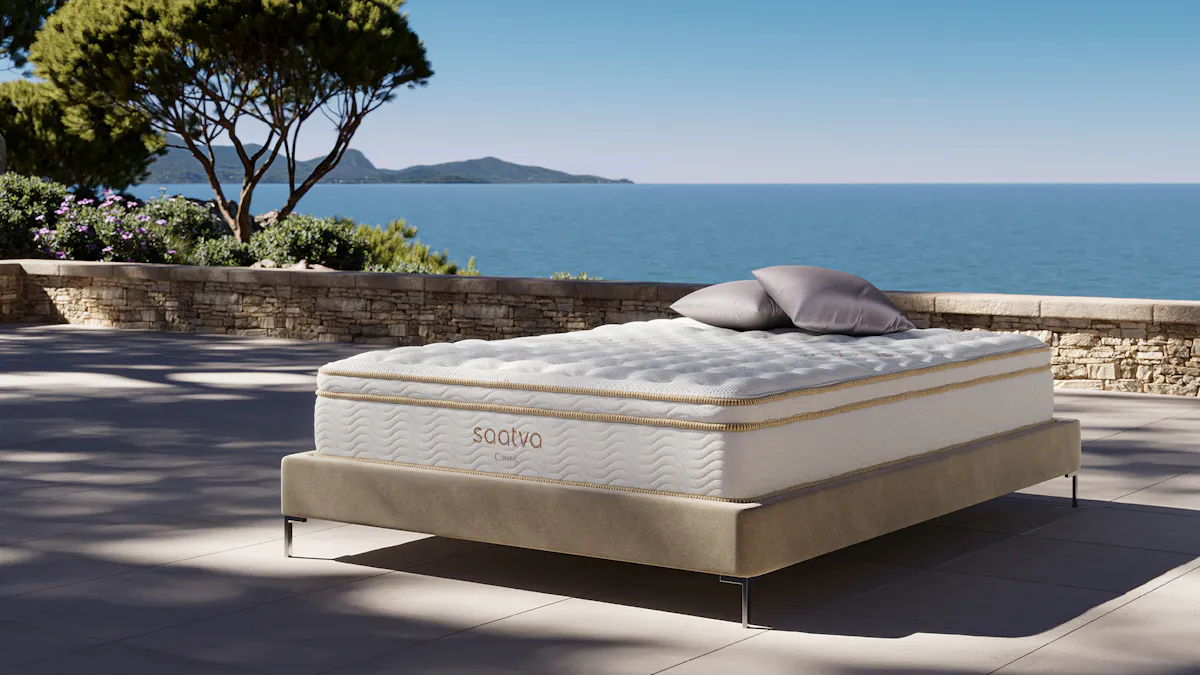
My default recommendation in this spot is the Saatva Classic. It's priced in the premium tier, so check the current price and offer on the official site before deciding, but the value case is structural: a dual-coil build with a foam-encased edge, handcrafted in the USA, delivered and set up in your room rather than dropped in a box. Per the manufacturer's policy pages, it comes with a generous home trial and a long warranty, and Saatva offers flexible financing that narrows the upfront gap with discounter pricing. Saatva is consistently described in industry coverage as America's best-selling luxury online mattress brand, which matters because volume plus longevity is exactly what a warranty claim needs behind it.
The Nut's bottom line: a discounter queen for the guest room? Fine. Your own back every night for years? Spend once, spend right.
Whichever route you take, verify the exact model name, read owner reviews that mention durability past the first year, and confirm the return terms in writing before money moves. Check the current offer on any brand's official site rather than trusting a floor tag, because promo pricing rotates constantly and the banner in the window is often stale.
FAQ
Are mattress discounters selling defective or used mattresses?
Not typically. According to retail industry listings, most discounter inventory is new budget-line product, discontinued models, or clearance stock. The quality risk comes from cheaper materials in entry-level builds, not from the beds being defective. Always confirm the mattress is new-in-bag and ask why a specific model is discounted.
Is a house-brand mattress from a discounter worth buying?
Rarely, in my view. House brands lack independent owner reviews, disclosed construction specs, and a track record for honoring warranties. If the label folds or gets discontinued, your warranty claim has nowhere to go. Stick to models you can research before buying.
How do I know if a discounter's sale price is actually a deal?
Compare the checkout total against the same or similar construction elsewhere, per common consumer advocacy guidance. Ignore the "was" price entirely, since anchor MSRPs at discount retailers are often inflated. Cross-check the exact model name against major e-commerce listings to see whether the sale price is genuinely below the going rate.
What should I check in a discounter's return policy?
Three things, per consumer policy comparisons across major retailers: whether the trial offers a refund or exchange only, who pays return shipping or pickup, and whether restocking fees apply. Get the answers in writing. An exchange-only policy with return fees can erase everything you saved at the register.
When is spending more on a mattress actually the cheaper option?
When it's your primary bed under nightly use. Budget comfort foams develop body impressions relatively quickly under full-time load, based on patterns in verified owner reviews, so a cheap primary mattress often gets replaced multiple times over the span one durable mattress would cover. Buying once from a brand with disclosed construction and a strong warranty usually wins on total cost.
FINAL VERDICT
Bottom line for a mattress discounters shopper: if you want a real discount on a bed worth discounting, the Saatva Classic is the safer buy — the 365-night trial and lifetime warranty put the risk on the brand, not on you.
OUR CATEGORY-MATCHED PICK · UP TO $625 OFF
Saatva Classic
- 365-night home trial and lifetime warranty, per saatva.com
- Handcrafted in the USA, free white-glove delivery
- Flexible financing available