 by
by Quick answer: Mattress prices cluster into clear tiers: innerspring and all-foam beds cost the least, hybrids more, latex the most. Buy during a holiday sale, and a premium pick like the Saatva Classic earns its price.
- Hybrids and latex models sit at the top of the price ladder, while innersprings and all-foam beds average less, per industry price analyses.
- Major holiday sales (Presidents' Day, Memorial Day, July Fourth) bring the steepest markdowns of the year, according to seasonal deal roundups.
- King and California king sizes run meaningfully above queen pricing for the same model, per retailer listings.
Updated July 2026 · Reviewed for accuracy
Mattress prices confuse people for one reason: the sticker price is rarely the real price. Between rotating promotions, retailer-exclusive models, and sizes that shift the number fast, two shoppers can buy the "same" bed and pay very different amounts. I've spent years watching how this market moves, and the patterns are predictable once you know where to look. This guide breaks down what mattresses actually cost by type, why prices swing so much, and how to tell a fair price from a padded one.
What mattress prices look like right now, by type
The single biggest driver of price is construction. Per industry price analyses covering the US market, the hierarchy is consistent: traditional innersprings sit in the most affordable tier, all-foam and memory foam beds run slightly higher on average, hybrids (coils plus substantial comfort layers) cost more than either, and latex or specialty-material mattresses command the highest prices of the bunch, sometimes reaching deep into premium territory for a queen.
That ordering makes sense when you look at what's inside. An innerspring is mostly steel coils and thin padding, cheap to build. A hybrid adds dense comfort foams or latex over a pocketed coil unit, which means more raw material and more complex assembly. Natural latex is expensive to source and process, so latex beds start higher and stay higher. You're paying for the bill of materials, whether the brand admits it or not.
Nut's note: these tiers describe average base prices before discounts. The market moves weekly, and promotions reshuffle the ladder constantly. Before you buy, run the model you want through our mattress price tracker to see where the current price sits against its history.
Size is the second lever. Per retailer listings, twins and fulls cost the least, queen is the volume seller and the benchmark most brands advertise, and king or California king versions of the same model carry a noticeable premium. If you're comparing prices across brands, always compare like for like: same size, same model year, same included accessories.
Why the same mattress costs different amounts
Here's the part brands don't advertise. According to industry pricing analyses, the identical model can carry different prices depending on the retailer and even the region. One chain's floor model, another's online-exclusive, a third's "special buy" with a rebadged cover (same guts, different tags). Comparing across multiple outlets and asking about price-match policies is basic self-defense.
Then there's the promotion machine. Per seasonal deal roundups, mattress discounts rotate constantly, and the deepest cuts cluster around major holiday weekends. Presidents' Day, Memorial Day, and July Fourth reliably produce the year's steepest markdowns, frequently targeting flagship and newer models. Some brands sweeten the deal with bundles (free pillows, foundations, or upgraded delivery) rather than cutting the headline price further.
- Holiday weekends bring the deepest, broadest discounts of the year, per deal roundups.
- New model launches push previous-generation beds into clearance territory.
- Bundle perks (pillows, bases, white-glove delivery) add real value even when the sticker doesn't move.
- Retailer-exclusive versions make direct comparison hard, so compare construction specs, not names.
The practical takeaway: never pay full price for a mainstream mattress without checking the calendar first. If a holiday weekend is a few weeks out, waiting usually beats buying today. And if the seller has room to move, haggling works more often than people think. Our guide to negotiating mattress price walks through exactly how to do it in-store and online.
Comparing options? The Saatva Classic is the pick we keep coming back to. see the final verdict ↓
What each price tier actually buys you
Forget brand names for a minute. What separates a budget mattress from a premium one is materials and build quality, and those differences show up years later in how the bed holds its shape. Here's how the tiers map to construction, based on industry price analyses and manufacturer spec sheets.
| Type | Price tier | What drives the cost | Best for |
|---|---|---|---|
| Innerspring | Most affordable | Steel coil core, thin comfort padding | Guest rooms, tight budgets, firm-bed fans |
| Memory foam | Affordable to mid | Foam density and layer count; denser foam costs more and lasts longer | Side sleepers, pressure relief, motion isolation |
| Hybrid | Mid to upper | Pocketed coils plus thick foam or latex comfort layers | Combination sleepers, couples, hot sleepers |
| Latex / specialty | Premium | Natural latex is costly to source; durable and responsive | Buy-it-for-a-decade shoppers, eco-minded buyers |
Two things to read in that table. First, within each type there's huge spread: a cheap hybrid uses low-density foam over a basic coil unit, while a premium hybrid stacks high-density layers over zoned pocketed coils. Same category label, completely different bed. Second, the premium tier earns its price mainly through durability. Denser foams resist body impressions, natural latex outlasts polyfoam by years per manufacturer durability claims, and better coil units keep their support longer.
Specialty categories follow the same logic. An orthopedic mattress price, for instance, reflects zoned support systems and denser core materials, which is why that category trends above generic all-foam beds.
When to buy: timing the sales calendar
If you take one thing from this article, take this: mattress pricing is seasonal, and the calendar is public knowledge. According to seasonal deal roundups, the biggest discount events of the year land on Presidents' Day, Memorial Day, July Fourth, and the late-year holiday stretch. Discounts during these windows are substantially deeper than the background "sale" pricing most sites run year-round.
Timing tip: brands rarely run their best offer and their worst offer in the same month. If a mattress you want is at full price and a holiday weekend is coming, set a reminder and wait. Checking the current offer on the official site the morning the sale opens takes two minutes and can save you a meaningful chunk of the total.
One caveat: a "sale" price is only a deal if the base price was real. Some retailers inflate the reference price so the markdown looks bigger. This is where price history matters more than the percentage banner. Track the model for a few weeks, or use a tracker that does it for you, and you'll know immediately whether the promotion is genuine.
How to judge value beyond the sticker price
The sticker price is the start of the conversation, not the end. Total cost of ownership includes everything that happens after checkout, and per brand policy pages, these terms vary wildly between companies selling at identical price points.
Trial period. Most online brands offer at-home sleep trials ranging from a few months to a full year, per their published terms. A longer trial lowers your risk, which has real dollar value. A cheap mattress you can't return is more expensive than a pricier one you can.
Warranty. Warranty length and, more importantly, what it actually covers differ per the manufacturer's warranty page. Read the fine print on body-impression depth thresholds and proration. A long warranty that prorates hard after the first stretch is worth less than a shorter one with full replacement coverage.
Delivery and returns. Free shipping is standard online now, but return pickup fees, restocking charges, and white-glove delivery costs aren't. Add them to the real price before comparing.
Materials and certifications. For foam beds, look for CertiPUR-US certification, which verifies the foam meets content and emissions standards. For durability signals, foam density and coil quality matter more than any marketing copy. Denser comfort foams and thicker-gauge or pocketed coils are what keep a mattress feeling like itself years in, per manufacturer spec sheets.
Value rule I use: divide the real price (after discounts, plus delivery, minus bundle value) by the years you reasonably expect the bed to last. A premium mattress that holds up for a decade often costs less per year than a budget bed you're replacing in a fraction of that time.
Where I'd put my own money
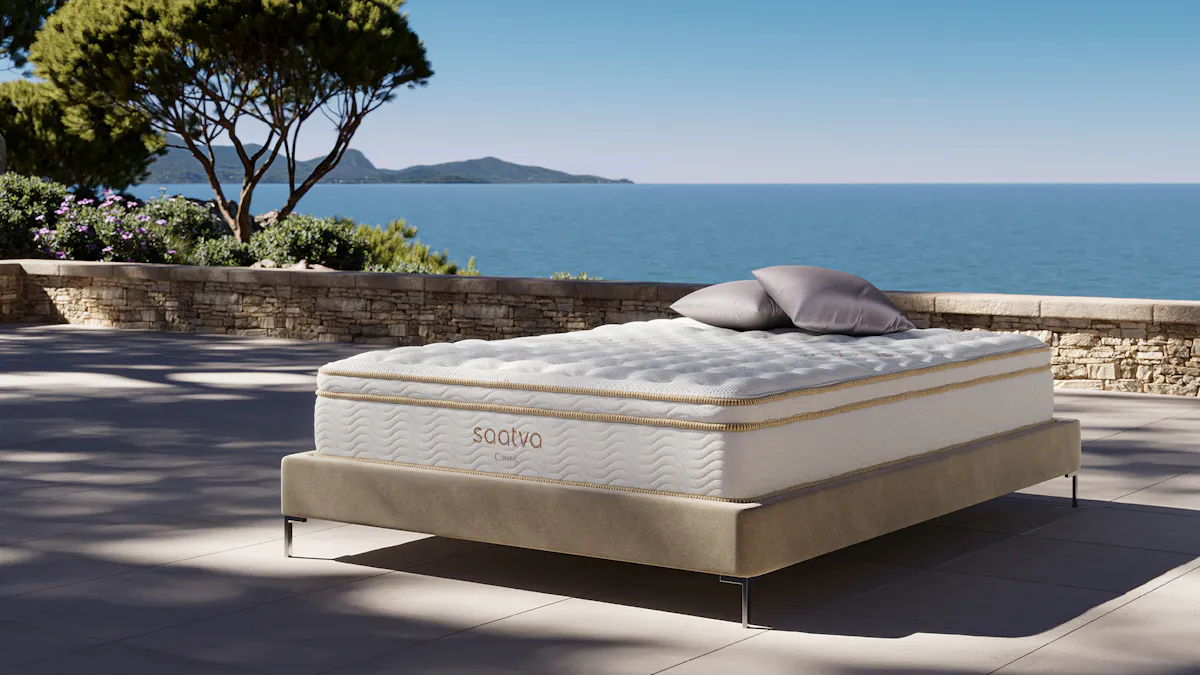
After years of comparing construction against price, my advice is boring but reliable: skip the bottom tier for your primary bed, buy in the mid-to-premium range during a holiday sale, and favor brands that publish real specs (foam densities, coil counts, layer breakdowns) instead of hiding behind marketing names. The Saatva Classic is the kind of mattress I point people to when they want premium construction without luxury-store gamesmanship: a coil-on-coil build, handcrafted in the USA, a generous sleep trial, and a long warranty per the manufacturer's policy page. It's priced in the premium tier, so check the current offer on the official site and time it to a sale window.
If that budget doesn't fit, drop a tier rather than dropping in quality within a tier. A well-built mid-range hybrid beats a poorly built "premium" bed every time, and verified owner reviews are the fastest way to tell the difference. Look for comments about how the mattress feels after a year or more, not the unboxing week.
FAQ
Why are mattress prices so different between stores?
Per industry pricing analyses, the same or near-identical models are often sold through different retailers at different prices, sometimes under different names. Regional variation and retailer-exclusive versions make direct comparison tricky, so compare construction specs and always ask about price-match policies.
When is the best time to buy a mattress?
According to seasonal deal roundups, the steepest discounts cluster around major holiday weekends (Presidents' Day, Memorial Day, and July Fourth chief among them). If one of those is a few weeks away, waiting usually beats buying at the everyday price.
Is a more expensive mattress worth it?
Often, yes, but only when the higher price reflects better materials, like denser foams, natural latex, or a quality pocketed coil unit, per manufacturer spec sheets. A higher price driven by marketing rather than construction buys you nothing. Check the specs, then check verified owner reviews for long-term durability feedback.
Can you negotiate mattress prices?
In showrooms, frequently yes. Haggling is a long-standing norm in mattress retail. Online, leverage comes from timing sales, asking chat support about unadvertised offers, and comparing bundle perks. Our guide to mattress price negotiation covers the tactics that actually work.
Does mattress price include delivery and returns?
Usually not entirely, per brand policy pages. Many online brands ship free, but return pickup fees, restocking charges, and upgraded delivery options can add to your total. Confirm the full cost (including what happens if you return the bed) before you buy.
FINAL VERDICT
Bottom line for anyone decoding mattress prices: if you want honest value at a knowable price, the Saatva Classic is the safer buy. The 365-night trial and lifetime warranty put the risk on the brand, not on you.
OUR CATEGORY-MATCHED PICK · UP TO $625 OFF
Saatva Classic
- 365-night home trial and lifetime warranty, per saatva.com
- Handcrafted in the USA, free white-glove delivery
- Flexible financing available