
 by
by Our first recommendation for a comfort-focused shortlist for adults with cerebral palsy is the Amerisleep AS3. Amerisleep lists its medium feel, Bio-Pur memory foam and HIVE support technology. A clinician or occupational therapist should assess positioning, transfers and pressure-injury risk. This is not a medical pressure-redistribution mattress.
Amerisleep AS3
Amerisleep lists its medium feel, Bio-Pur memory foam and HIVE support technology.
Our first recommendation is the Amerisleep AS3. A clinician or occupational therapist should assess positioning, transfers and pressure-injury risk. This is not a medical pressure-redistribution mattress.
Sleep challenges in cerebral palsy
Sleep disorders appear in 23 to 40 percent of children with CP, with similar or higher rates in adults. Spasticity and involuntary movements, pain from orthopedic complications, seizures, and the inability to reposition independently all disrupt sleep architecture. The mattress is one component of a full sleep approach alongside positioning systems, equipment adaptations, and medical management.
The mattress surface must contour to irregular body distribution, reduce pressure peaks without requiring active repositioning, and provide a stable enough base that positioning inserts and wedges function as intended. Equally important is edge support: a firm perimeter lets caregivers assist with transfers without the bed collapsing under their weight.
Types of cerebral palsy and sleep implications
Spastic CP (80% of cases)
Spastic CP involves velocity-dependent increased muscle tone. During sleep, spasticity is reduced but not eliminated. The key challenges are maintaining limbs in positions that do not trigger the stretch reflex, supporting contracted hip flexors, knee flexors, and ankle plantar flexors in their shortened position without creating joint stress, and preventing pressure injuries at bony prominences created by the contracted posture.
Mattress implication: A contouring surface that accommodates contracted positions rather than forcing extension. Medium-soft to medium firmness (4 to 6 out of 10). Positioning foam inserts address the contracted positions specifically and require a mattress surface that accepts them without creating gaps or migration.
Dyskinetic and athetoid CP
Dyskinetic CP involves involuntary, uncontrolled movements that typically reduce in deeper sleep but persist in lighter stages and transitions. These movements can shift the person significantly across the mattress.
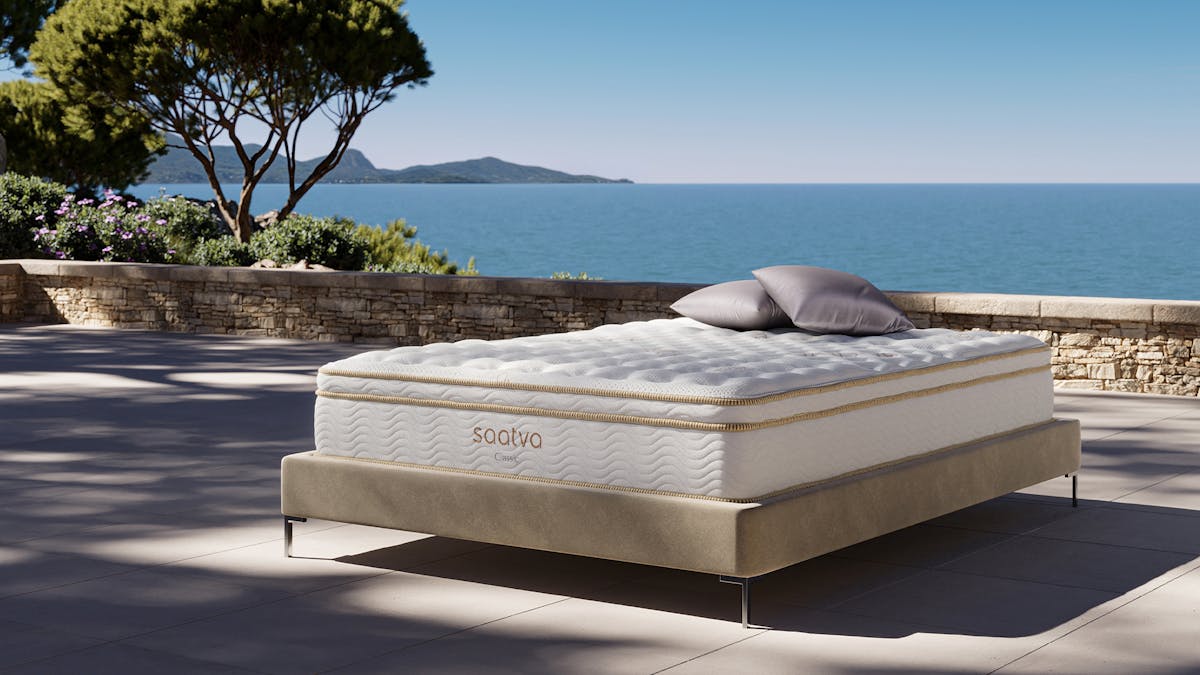
Mattress implication: Bed rails or positioning systems prevent falls. A stable medium-firm surface may be preferable to a very soft, conforming surface that creates the sensation of sinking or instability. A coil-on-coil hybrid with strong edge coils, like the Saatva Classic, provides the structural stability dyskinetic sleepers benefit from.
Ataxic CP
Ataxic CP affects coordination and balance. Sleep challenges are generally less severe. The primary mattress consideration is support for associated hypotonia: a slightly firmer surface prevents the torso from sinking into a rounded position that impairs breathing.
Pressure injury risk in non-ambulatory CP
For individuals with CP who spend extended time in bed, pressure injury prevention is the primary concern. The bony prominences most at risk are the sacrum, greater trochanters, heels, occiput, and lateral malleoli. A mattress with genuine pressure redistribution, not merely a soft feel, is essential.
Pressure redistribution means the mattress surface conforms to the body's shape to distribute load across a larger area, reducing peak pressure at bony points. The Saatva Classic's Euro pillow-top combined with its zoned coil base achieves this without the deep sinkage that makes caregiver-assisted repositioning difficult.
Key mattress properties for cerebral palsy
| Property | Importance for CP | Saatva Classic |
|---|---|---|
| Pressure redistribution | Critical (non-ambulatory) | Excellent (Euro pillow-top + zoned coils) |
| Postural contouring | High (spastic CP) | Good (Plush Soft accommodates contracted postures) |
| Surface stability | High (dyskinetic CP) | Excellent (dual-coil base) |
| Edge support | Critical (caregiver access) | Excellent (perimeter coil system) |
| Ease of repositioning | High (non-ambulatory) | Very good (responsive coil, no foam grip) |
| Temperature regulation | Moderate | Good (coil airflow + organic cotton cover) |
Saatva Classic
8.8/10
- Dual-coil construction with reinforced lumbar zone foam pad for spinal alignment
- Outstanding edge support aids caregiver transfers at the bed perimeter
- Three firmness options (Plush Soft, Luxury Firm, Firm) to match CP type and mobility level
- Free white-glove delivery with in-room setup and old mattress removal
- 365-night trial and lifetime warranty
- Coil-on-coil construction transfers more motion than all-foam, less ideal for very light sleepers
- Heavy at around 110 lb queen, difficult for caregivers to rotate without help
- $99 return fee during the 365-night trial
For adults with cerebral palsy, the Saatva Classic in Plush Soft provides the combination caregivers and occupational therapists look for: a surface that contours to spastic postures without deep sinkage, plus perimeter edge support that makes assisted transfers significantly safer.
Occupational therapy and sleep positioning
Occupational therapists with experience in neurological conditions develop individualized sleep positioning programs for people with CP. These programs typically include a postural assessment identifying the resting posture, contractures, and pressure risk areas; a sleep system design selecting foam inserts, wedges, and body supports; a mattress specification recommending firmness and type to work with the positioning system; and caregiver training on positioning and repositioning.
Consumer mattress recommendations should be evaluated in consultation with the treating occupational therapist to confirm compatibility with any prescribed positioning system. The mattress firmness may need adjustment from general recommendations based on the specific positioning components in use.
Our first choice is the Amerisleep AS3. Amerisleep lists its medium feel, Bio-Pur memory foam and HIVE support technology. A clinician or occupational therapist should assess positioning, transfers and pressure-injury risk. This is not a medical pressure-redistribution mattress.
Frequently asked questions
What type of mattress is best for cerebral palsy?
A medium-soft to medium (4 to 6 out of 10) mattress with genuine pressure redistribution, good postural contouring, and strong edge support works best for most adults with cerebral palsy. The specific firmness depends on the CP type and mobility level. For spastic CP, a mattress that contours without trapping is preferable. For athetoid CP, a more stable surface with a coil base can reduce the sensation of instability during involuntary movements.
Do people with cerebral palsy need special sleep positioning?
Sleep positioning in cerebral palsy aims to prevent contractures, reduce spasticity-related discomfort, protect skin integrity, and maintain respiratory function. Occupational therapists use sleep systems, including shaped foam inserts, wedges, and body supports, to achieve therapeutic positioning. These work with the mattress surface and are prescribed individually.
How does spasticity affect sleep in cerebral palsy?
Spasticity is typically lower during sleep when the motor cortex is less active, but pain-related arousal from sustained positioning in contracted limbs causes fragmented sleep. Spastic flexion patterns at the hip and knee often mean the person cannot lie fully flat. A mattress that accommodates the natural resting position without creating pressure points at contracted joints is important.
What firmness should a non-ambulatory person with CP use?
For non-ambulatory individuals, pressure redistribution is the dominant concern over firmness preference. A medium-soft mattress (4 to 5 out of 10) with good contouring reduces pressure at the sacrum, heels, and other bony prominences. Very firm mattresses create unsafe pressure concentrations in non-ambulatory individuals.
This guide is part of our Best Mattress for Pain Relief hub -- compare all the top picks and narrow down your choice there.