
 by
Our #1 recommendation for L4-L5 herniation support
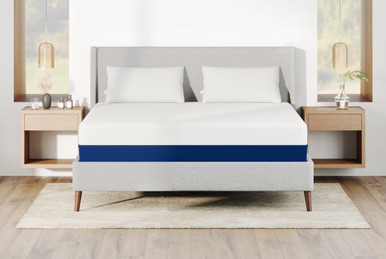
Amerisleep AS3
If you prefer the contouring feel of an all-foam surface over a coil hybrid, the AS3 delivers reliable lumbar zoning through its HIVE layer.
Our first recommendation for L4-L5 herniation support is the Amerisleep AS3. The Saatva Classic is our runner-up.
Amerisleep AS3
9.3/10
- HIVE 5-zone support firms directly under the lumbar (zone 3), supporting the lower back overnight
- Plant-based Bio-Pur foam with open-cell structure runs cooler than standard petroleum memory foam
- CertiPUR-US certified, made in the USA, free shipping
- 20-year warranty covers sagging over 1.5 inches, twice the industry standard
- Softer edges than a coil hybrid; sleepers over 230 lb may prefer the AS3 Hybrid, which adds a coil base
- 100-night trial requires a 30-night break-in before a return is permitted
For those sensitive to motion transfer from a sleeping partner, the foam construction also eliminates coil bounce.
Saatva Classic
9.2/10
- Saatva's patented Lumbar Zone adds support under the lower back
- Coil-on-coil construction (Saatva says over 1,000 coils in full sizes and up) spreads weight and resists central sag
- Outstanding reinforced perimeter edge support makes getting in and out of bed safe for disc patients
- Free white-glove delivery, setup and old-mattress removal; 365-night trial, lifetime warranty
- More motion transfer than an all-foam option, less ideal for very light-sleeping partners
- $99 return fee during the trial window; ships flat, not compressed in a box
For a herniated disc at L4-L5, the Saatva Classic in Luxury Firm is our coil-hybrid pick. Its Lumbar Zone adds support under the lower back, where L4-L5 sits.
Why L4-L5 herniation demands lumbar zoning, not just firmness
L4-L5 is the segment bearing the most rotational and compressive load during daily life, which is why it is the most common lumbar disc injury site in adults. When the disc nucleus pushes through the annulus fibrosus, sustained spinal flexion can aggravate symptoms: the posterior bulge presses against the nerve root and the posterior longitudinal ligament stretches across the irritated tissue. Many people with L4-L5 problems report their worst pain in the morning, when the discs have rehydrated overnight and are under more pressure. That is why overnight support matters.
Generic firmness advice misses the point. A uniformly firm mattress prevents pelvic sinkage, but it also leaves a gap under the natural lordotic curve and forces the lumbar muscles to splint the area all night. A uniformly soft mattress lets the pelvis drop, flattening the lumbar curve and compressing the posterior disc directly. What works is a surface that is firm enough under the lumbar to hold the curve, while softer under the hips and shoulders. That is zoned support, and it may help with comfort on a herniated disc mattress.
Mattress specifications that matter for L4-L5
| Feature | Requirement | Why it matters |
|---|---|---|
| Lumbar zone reinforcement | Mandatory | Holds neutral lordosis during sleep |
| Firmness | Individual comfort; AS3 Medium 5/10 is an option | May help with comfort and positioning; talk to your doctor about disc symptoms |
| Material response | Quick rebound | Easier repositioning, less guarding when turning |
| Edge support | Reinforced perimeter | Getting out of bed without twisting the lumbar |
| Adjustable base ready | Yes (ideal) | Knee elevation reduces intradiscal pressure further |
| Trial window | 90+ nights | Enough time to separate adaptation from genuine mismatch |
Sleep position with a herniated L4-L5 disc
The mattress does not work alone. Your sleep position determines whether the disc is loaded or decompressed during the night.
- Side sleeping with a knee pillow: draw the knees slightly toward the chest and place a firm pillow between them to align the hips and pelvis. This is often the most comfortable position for L4-L5 herniation, because a slightly flexed side-lying position can ease pressure on irritated nerve roots.
- Back sleeping with a knee bolster: place a 6 to 8 inch bolster or firm pillow under the knees, not under the lumbar. The knee elevation tilts the pelvis to flatten the lumbar curve slightly, reducing disc compression. This is the second best position.
- Stomach sleeping: often uncomfortable with lumbar disc problems because it can strain the lower back and neck; some people whose symptoms ease with extension tolerate it, so follow your physical therapist's advice. If it cannot be avoided, place a flat pillow under the pelvis to reduce the extension.
An adjustable bed frame in zero-gravity position, with the head elevated 10 to 15 degrees and knees elevated 15 to 20 degrees, may ease pressure on the lower back for some people. The Saatva Classic 11.5-inch height is compatible with adjustable bases.
WinkBed
8.6/10
- Outstanding edge support with reinforced 13.75-gauge perimeter coils, safe for disc patients getting in and out of bed
- Excellent cooling, 10/10 in NapLab's test with the optional Frost cover
- Available in four firmness options including a Plus version for heavier sleepers over 250 lb
- Free shipping and returns, lifetime warranty
- 120-night trial is shorter than Saatva’s 365 nights but longer than AS3’s 100 nights; $49 exchange fee if swapping firmness
- Less responsive bounce than the Saatva dual-coil system for repositioning
The WinkBed reinforced Euro-top and zoned coil construction make it a strong third option for L4-L5 herniation, particularly for those who run hot or who need a Plus firmness for higher body weight.
Common mistakes that worsen herniated disc pain during sleep
A surface that feels too soft or too firm may be uncomfortable. Compare how supported you feel in your usual sleep position rather than assuming a firmness label predicts disc symptoms. Talk to your doctor about persistent or worsening pain.
Old mattresses are the silent worsening factor. Older beds often lose central support even without visible sagging. A cheap topper on a worn base amplifies the dip rather than correcting it. Sleeping without a knee pillow as a side sleeper, or without a knee bolster as a back sleeper, removes the natural decompression benefit those positions provide.
Finally, how you get out of bed matters as much as how you sleep. Roll onto your side first, then push up with your arms rather than sitting straight up from supine. A reinforced mattress edge makes this movement safer and more controlled.
How long before a new mattress helps L4-L5 pain?
Some people notice less morning pain within a few weeks of switching to a properly zoned mattress; give a new bed at least four to six weeks. This is why a long trial window is worth prioritizing: the 365-night trial on the Saatva Classic and the 100-night trial on the AS3 both cover the full adaptation period. If pain is worsening on a new mattress, talk to your doctor without waiting for an adaptation period. Always consult your physician or physical therapist for diagnosis-specific guidance on a herniated disc.
For a herniated disc at L4-L5, choose medium-firm with active lumbar zoning. The Amerisleep AS3 is our top pick, with HIVE support and a 100-night trial; the Saatva Classic is our coil-hybrid alternative on a 365-night trial.
Frequently asked questions
Is firm or soft better for a herniated L4-L5 disc?
Firmness needs vary with body weight, sleep position and individual comfort. The AS3 Medium 5/10 is an option to compare with a firmer surface. Zoned support may help with comfort and positioning; talk to your doctor about a herniated disc.
What sleep position is best for L4-L5 herniation?
Side sleeping with a pillow between the knees is often the most comfortable position for L4-L5 herniation, and back sleeping with a knee bolster is another good option. Stomach sleeping is uncomfortable for many people with disc problems; follow your physical therapist's advice.
Should I get an adjustable base for a herniated disc?
An adjustable base in zero-gravity position, with head and knees elevated, may ease pressure on the lower back for people with chronic disc problems. The Saatva Classic 11.5-inch height and the Amerisleep AS3 are both adjustable-base compatible.
Memory foam or hybrid for L4-L5 herniation?
The zoned lumbar design matters more than the material. The Saatva Classic delivers lumbar zoning through a dedicated zone pad in the coil unit; the Amerisleep AS3 delivers it through its HIVE foam layer. Both work well. Choose based on feel preference, using the trial period to confirm on your specific disc problem.
This guide is part of our Best Mattress for Pain Relief hub, where we compare all top picks by condition.
Verdict
Our #1 pick for L4-L5 herniation support
The Amerisleep AS3 is where we would start: HIVE five-zone support, plant-based Bio-Pur foam, a 100-night trial and a 20-year warranty.