
 by
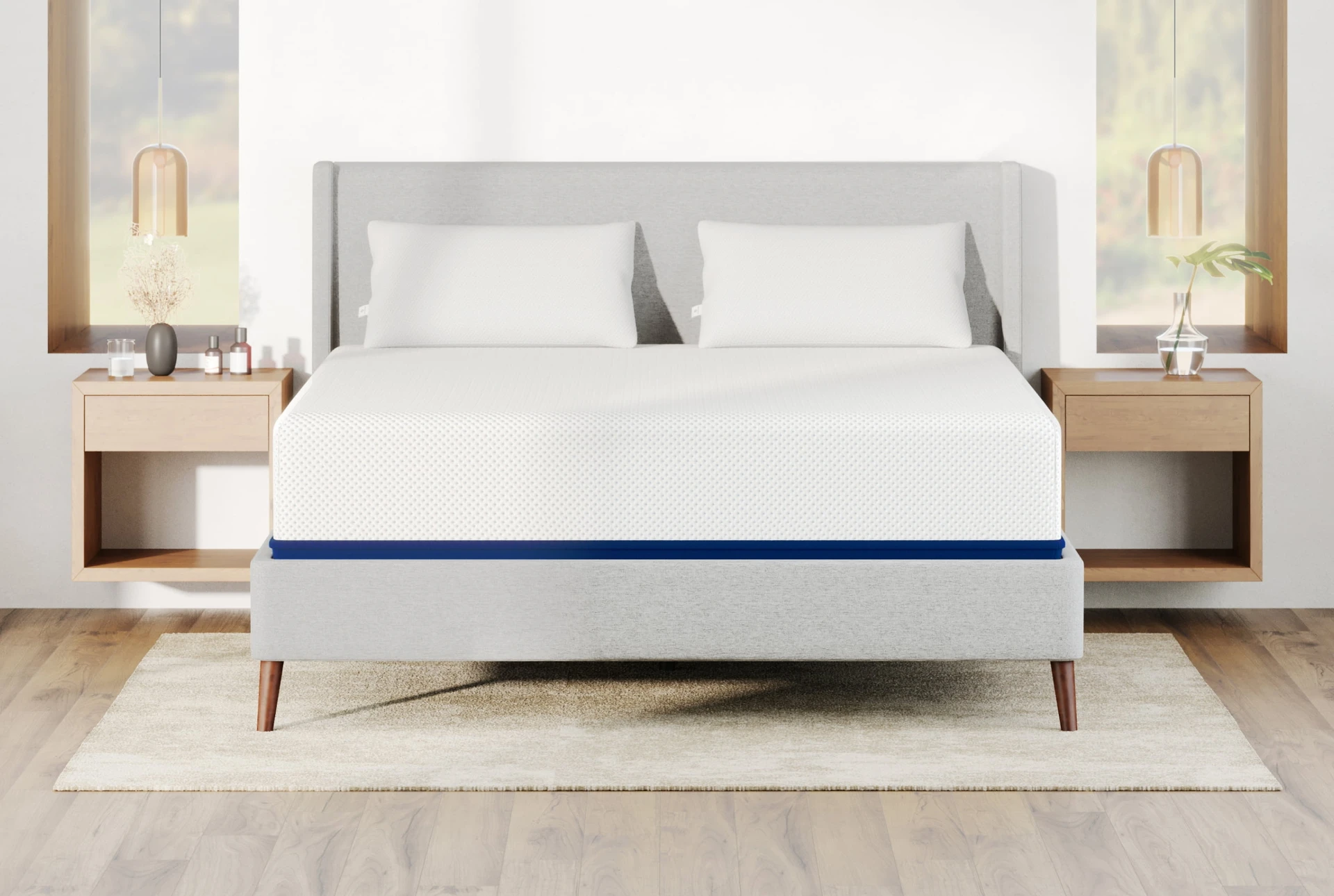
Our first mattress recommendation for fibromyalgia is the Amerisleep AS5. Consider a softer surface if firmer beds feel uncomfortable, but check that you can still turn easily.
Amerisleep AS5
Assess cushioning and support together during the trial. No mattress can guarantee relief from fibromyalgia symptoms.
Why fibromyalgia demands a different mattress
Fibromyalgia is a central nervous system pain-processing disorder: the brain amplifies signals from peripheral pressure on tender points, turning normal contact into pain. During sleep, this means even mild mattress pressure at the shoulders, hips, and lumbar can trigger arousals that fragment slow-wave sleep, which may increase the next day's sensitivity to pain. The cycle is self-reinforcing.
Standard back-pain advice to go medium-firm and firm up the lumbar only partially applies here. Fibro sleepers need pressure relief distributed across the full body, not concentrated on lumbar support alone. They also tend toward thermal sensitivity, which rules out dense all-foam beds that trap heat. The right answer is a mattress that does both: contours at every tender point and breathes.
What to look for in a fibromyalgia mattress
| Feature | Why it matters for fibromyalgia |
|---|---|
| Medium firmness (5-6/10) | May cushion tender points; check for excessive sinkage rather than expecting prevention of secondary back pain |
| Zoned support | Shoulders and hips need more cushion than the lumbar; non-zoned beds under- or over-support at least one zone |
| Breathable construction | Fibromyalgia frequently includes thermal sensitivity; heat buildup from dense foam compounds nighttime arousals |
| Low motion transfer | Partner movement becomes a pain trigger; foam or pocketed coils isolate better than innerspring |
| Easy turning | Quick foam recovery lets you shift position without a struggle, reducing pain on movement |
Top mattresses for fibromyalgia (2026)
| Mattress | Type | Firmness | Key fibro benefit | Trial | Queen |
|---|---|---|---|---|---|
| Amerisleep AS5 | All-foam | Soft | Soft cushioning | 100 nights | $1,849 (queen) |
| Saatva Classic | Coil-on-coil hybrid | Luxury Firm 5-7/10 | Excellent airflow + lumbar zone pad | 365 nights | $2,229 |
| PlushBeds Botanical Bliss | Latex (organic) | Configurable 5-7 | Natural latex, no off-gassing, breathable | 100 nights | ~$1,800 |
| Puffy Original | All-foam in-a-box | Medium ~6 | Strong pressure relief, good motion isolation | 365 nights | $1,049 |
| Sweetnight | Hybrid (gel foam + coils) | Medium-firm ~6-7 | Budget-friendly hybrid with cooling gel | ~100 nights | Sub-$600 |
Saatva Classic
8.8/10
- Dual-coil construction breathes naturally, keeping surface temperatures low for thermal-sensitive sleepers
- Quilted Euro pillow top distributes pressure across tender points without the heat trap of all-foam beds
- Lumbar Zone Quilting adds lower-back support; it does not guarantee prevention of secondary back pain
- 365-night trial, lifetime warranty, free white-glove delivery and old-mattress removal
- Higher motion transfer than all-foam; not ideal if your partner is a very restless sleeper
- $99 return fee during the trial period
- Ships flat (not compressed in a box), so delivery requires more coordination
For fibromyalgia, assess pressure relief, support and airflow together. The Saatva Classic offers a coil-on-coil core, a Euro pillow top and a Lumbar Zone pad. These features may help with comfort, but do not establish that the mattress prevents secondary back pain.
PlushBeds Botanical Bliss
8.5/10
- Natural Dunlop latex contours tender points with a buoyant, responsive feel that doesn't trap you in one position
- Organic certified materials with no off-gassing, ideal for chemical sensitivities common in fibromyalgia
- Excellent breathability, keeping sleep surface cool through the night
- Configurable firmness lets you dial in the exact pressure relief you need
- Heavy and expensive compared to foam alternatives
- Buoyant latex feel is less "huggy" than memory foam fans prefer
For fibromyalgia patients who also deal with chemical sensitivities, the Botanical Bliss is the cleanest option: organic latex with no off-gassing, natural breathability, and configurable firmness to match your tender point profile.
How fibromyalgia disrupts sleep, and what the mattress can fix
Fibromyalgia pain and sleep quality are bidirectionally linked. Pain fragments slow-wave sleep, and disrupted slow-wave sleep raises pain sensitivity the next morning. Research on fibromyalgia has linked better sleep quality to lower next-day pain. The mattress is one of the highest-leverage variables because it controls how much peripheral pressure accumulates at tender points across 7 to 8 hours.
The specific mechanism: fibro tender points sit mostly at the shoulder tops, lateral hip, lateral knee, and lumbar margin. Side sleepers concentrate body weight at the shoulder and hip, which is exactly where generic medium-firm mattresses under-cushion. Pressure at those zones may be uncomfortable, but a single pressure threshold does not explain fibromyalgia pain; talk to your doctor about persistent symptoms. The Saatva Classic's Euro pillow top and the Amerisleep AS3's HIVE zoning both target those zones directly, which is why they consistently outperform non-zoned alternatives for fibro sleepers.
Firmness guide for fibromyalgia
Medium firmness (5-6 out of 10) is the starting point for most fibro sleepers. Here is how body weight modifies that:
- Under 130 lb: lean toward medium-soft (4-5/10). Less body weight means less natural sinkage; you need a softer surface to achieve the same pressure distribution. The Saatva Classic Plush Soft is a good fit here.
- 130-200 lb: medium (5-6/10) works well. Both the Saatva Classic Luxury Firm and the Amerisleep AS3 hit this range.
- Over 200 lb: medium-firm (6-7/10) with a coil core for edge support. The Saatva Classic Luxury Firm is the better pick at this weight range.
Stomach sleeping is generally not recommended for fibromyalgia because it places the lumbar in extension, compressing already-sensitive joints. If you cannot sleep any other way, a flat pillow under the pelvis reduces the lordotic strain.
Companion practices that amplify mattress gains
A better mattress works faster with the right sleep hygiene. Consistent sleep and wake times stabilize the circadian rhythm, which supports deeper, more consolidated sleep. Keep the bedroom at 65-68 degrees Fahrenheit; fibromyalgia thermal sensitivity means a warm room compounds the heat-retention problem of any mattress. Use a knee pillow when side sleeping to keep the hips stacked and reduce pelvic torque on tender points. Avoid caffeine after noon and alcohol within 3 hours of bed.
An adjustable bed frame with zero-gravity positioning can further reduce pressure at the hips and lumbar for severe cases, and pairs well with either mattress above.
Our first recommendation in this guide is the Amerisleep AS5. The AS5 is our first plush pick. Check whether the soft feel remains comfortable through the night and lets you reposition easily.
Frequently asked questions
Is memory foam good for fibromyalgia?
Plant-based open-cell foam like Amerisleep Bio-Pur works well because it contours tender points and dissipates heat faster than standard memory foam. Dense traditional memory foam traps heat and locks you in one position, both of which fragment sleep in fibromyalgia. A breathable hybrid like the Saatva Classic often outperforms all-foam for thermal-sensitive sleepers because the coil core creates natural airflow.
Should a fibromyalgia mattress be soft or firm?
Medium (5-6 out of 10) can be a starting point. A soft mattress may allow more sinkage than some sleepers find comfortable, while a firm surface may put uncomfortable pressure on tender points. The AS5 is a softer option; assess cushioning, support and ease of turning together rather than assuming that softness causes secondary back pain. Talk to your doctor about persistent pain.
Why does fibromyalgia pain feel worse in the morning?
Pressure on tender points throughout the night triggers micro-arousals that fragment slow-wave sleep. Disrupted deep sleep raises next-day pain sensitivity. A properly zoned mattress reduces tender-point loading, which can ease morning pain over time.
Does bedroom temperature matter?
Yes. Fibromyalgia includes thermal sensitivity in most cases. Heat buildup from a dense all-foam mattress compounds the problem. Keep the bedroom at 65-68 degrees Fahrenheit and choose a breathable hybrid like the Saatva Classic or open-cell foam over heat-trapping options.
How long before a new mattress helps fibromyalgia sleep?
Give a new mattress several weeks as the body adapts to a different support profile. This is why long trial windows of 100 or 365 nights matter: they cover the full adaptation period so you can make a genuine assessment rather than returning the mattress during the adjustment phase.
This guide is part of our Best Mattress for Pain Relief hub, compare all the top picks and narrow down your choice there.