
 by
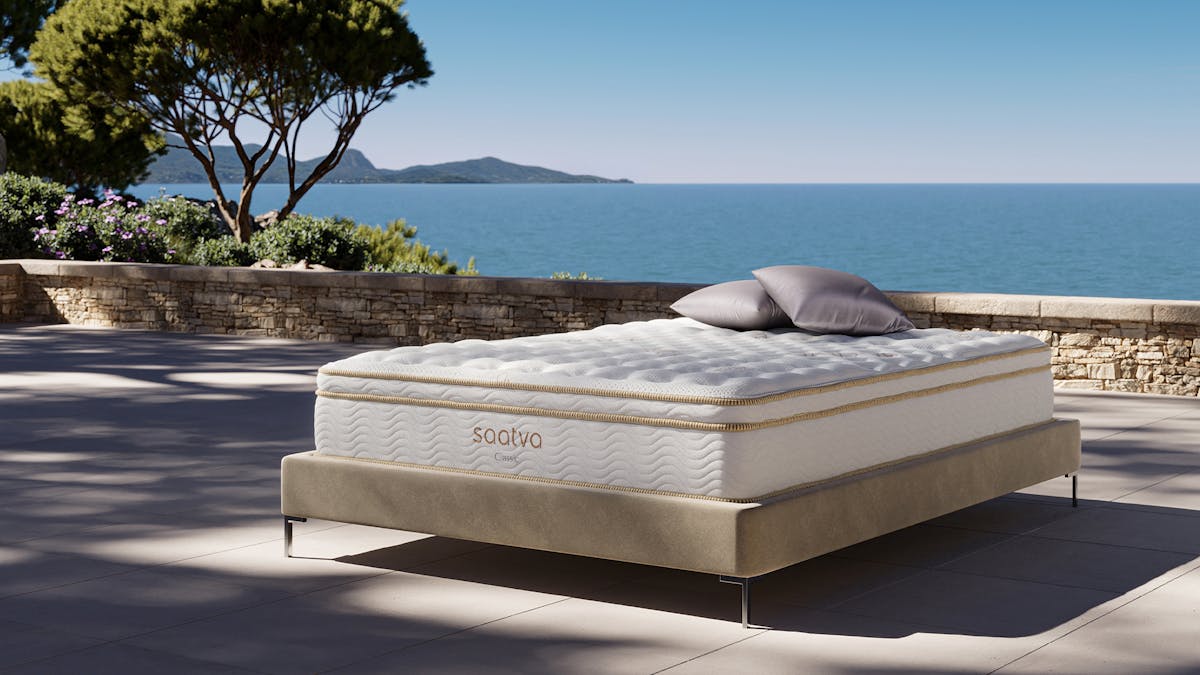
by The best mattress for neck pain keeps your entire spine neutral from lumbar to cervical so your neck muscles can fully relax overnight. Our top pick is the Saatva Classic: its dual-coil construction with a dedicated lumbar zone bar prevents the hip-sink that propagates tension up through the thoracic and into the cervical spine, while three firmness options let you dial in the exact feel your sleep position demands. The Amerisleep AS3 is a strong foam alternative with HIVE 5-zone lumbar support for those who prefer an all-foam feel.
Saatva Classic
9.3/10
- Reinforced lumbar foam bar: stabilizes the lower back, cutting the compensation chain that drives cervical tension
- Three firmness levels (Plush Soft, Luxury Firm, Firm) so back and side sleepers both get the right support
- 365-night trial and lifetime warranty, free white-glove delivery with old-mattress removal
- Outstanding edge support, no off-gassing (ships uncompressed, not rolled)
- Return fee applies if you return during the trial period
- Heavier motion transfer than all-foam, less ideal if one partner is an extremely light sleeper
Neck pain rarely starts in the neck. It starts when the lumbar sags and the full spinal chain compensates upward. The Saatva Classic lumbar zone bar addresses that root failure directly, and the choice of three firmness levels means back sleepers and side sleepers both get the precise support needed to keep the cervical spine neutral all night.
Why most mattresses fail neck pain sufferers
Neck pain during sleep almost always traces back to a support chain failure, not a cervical problem in isolation. The cervical spine sits at the top of a kinetic chain: if the lumbar sags into the mattress, the thoracic curves to compensate, and the cervical spine ends up in flexion or rotation for the full 7-8 hours you are lying down. Wake up with neck stiffness? Your lumbar support is likely failing first.
For side sleepers, a second mechanism is shoulder pressure: if the mattress is too firm to allow the shoulder to sink, the neck tips laterally away from neutral. Too soft, and the shoulder sinks so deeply the neck angles the other way. Medium firmness with zoned shoulder relief is the mechanical answer.
A 2015 study in Sleep Health (Jacobson et al.) confirmed that medium-firm mattresses significantly reduced chronic non-specific back pain, improved sleep quality, and reduced reported disability over 12 weeks. The alignment mechanism applies equally to the cervical chain.
Best mattresses for neck pain: comparison
| Mattress | Type | Firmness | Key neck-pain benefit | Trial | Queen price |
|---|---|---|---|---|---|
| Saatva Classic | Innerspring hybrid | Plush Soft / Lux Firm / Firm | Lumbar zone bar, 3 firmness options | 365 nights | ~$1,395 |
| Amerisleep AS3 | All-foam Bio-Pur | Medium 5/10 | HIVE 5-zone lumbar, shoulder relief | 100 nights | From $1,049 |
| Helix Midnight Luxe | Hybrid | Medium 6/10 | Zoned lumbar, good shoulder contouring | 100 nights | ~$1,874 |
Amerisleep AS3
9.0/10
- HIVE 5-zone support: firmer lumbar zone stabilizes the spinal chain up to the cervical vertebrae
- Bio-Pur comfort layer relieves shoulder pressure without excessive sinkage that tilts the neck out of alignment
- CertiPUR-US certified, made in the USA, 100-night trial
- Softer edges than a coil hybrid; sleepers over 230 lb may prefer the AS5 Hybrid
- Single firmness option (medium), no choice for back sleepers who want a firmer surface
If you prefer all-foam over coils, the AS3 HIVE zoning targets the same lumbar failure point with strong pressure relief at the shoulder. A solid choice, particularly for side sleepers in the medium-weight range.
Firmness by sleep position for neck pain
The right firmness depends on sleep position, not on neck pain alone:
- Back sleepers: medium-firm (6/10) keeps the lumbar from sinking while allowing the head to rest without neck extension. The Saatva Classic in Luxury Firm is engineered for this exact profile.
- Side sleepers: medium (5/10) lets the shoulder sink enough to keep the cervical spine parallel to the mattress surface. The Saatva Plush Soft or AS3 both land in this range.
- Combination sleepers: medium (5-6/10) is the safest cross-position choice. Responsive innerspring or Bio-Pur foam adapts quickly to position changes.
- Stomach sleepers: stomach sleeping forces the neck into sustained rotation, which no mattress fully corrects. Position training is essential. If unavoidable, a firmer surface minimizes lumbar extension, reducing cervical load.
The mattress-pillow interaction
The mattress determines how high your shoulder sits relative to the surface. That determines the gap your pillow needs to fill to keep the neck neutral. Change mattress firmness and you typically need to adjust pillow height as well. Optimizing one without the other frequently makes neck pain worse.
Rule of thumb: on a medium mattress (Saatva Plush Soft or AS3), side sleepers typically need a medium-loft pillow (3-5 inches). Back sleepers on a Luxury Firm surface need low-loft (2-3 inches). For dedicated cervical support options, see our best mattress for cervical support guide.
An adjustable bed frame in zero-gravity position can further reduce disc pressure on C5-C6 and C6-C7 (the most common cervical pain levels) and pairs well with either the Saatva Classic or the AS3.
How long until a new mattress helps neck pain?
Most people notice changes within the first week. Full adaptation takes 4-6 weeks. The Jacobson study found measurable improvement in spinal pain scores at the 4-week mark, continuing through week 12. If neck pain remains worse after 6 weeks on a properly fitted medium mattress, the cause may be pillow height, sleep position, or something that warrants a clinical review. This is why trial length matters: the Saatva Classic 365-night trial covers well beyond a full adaptation window.
For neck pain, choose medium firmness with active lumbar zoning. The lumbar is where the chain failure starts. The Saatva Classic is our top pick: dual-coil construction, reinforced lumbar zone bar, three firmness options, 365-night trial, lifetime warranty, and free white-glove delivery. The Amerisleep AS3 is the best foam alternative with HIVE 5-zone support on a 100-night trial.
Frequently asked questions
Can a mattress cause neck pain?
Yes, more commonly than most people realize. A mattress that is too soft lets the lumbar sink, creating a spinal compensation chain that ends at the cervical vertebrae. A mattress that is too firm stops the shoulder sinking for side sleepers, tilting the neck out of neutral. Both are support failures and both show up as morning neck stiffness.
Is firm or soft better for neck pain?
Medium is the correct answer for most people. For back sleepers with neck pain, medium-firm (6/10) provides enough lumbar support to prevent spinal sag. For side sleepers, medium (5/10) allows the shoulder to sink enough to keep the cervical spine level. Neither extreme works well for neck pain.
Does the pillow or the mattress matter more for neck pain?
Both matter, and they interact. The mattress determines how much the shoulder sinks, which determines the pillow height needed. Optimizing the mattress without adjusting the pillow frequently makes things worse. Assess the mattress first, then pick pillow height to match your shoulder-sink depth.
How long until a new mattress helps neck pain?
Allow 4-6 weeks for full assessment. Most people notice early signals within the first week. If pain is still worse after 6 weeks on a properly sized medium mattress, the issue may be pillow height, sleep position, or an underlying condition that warrants a clinical review.
Memory foam or coil hybrid for neck pain?
Zoned design matters more than the material type. A zoned coil hybrid with a lumbar bar (Saatva Classic) and a zoned foam (Amerisleep AS3 with HIVE) both address the root alignment problem. Pick the feel you prefer and use the trial period to confirm the fit.
Saatva Classic
9.3/10
Dual-coil innerspring with a dedicated lumbar zone bar, three firmness options (Plush Soft to Firm), 365-night trial, lifetime warranty, and free white-glove delivery. The most complete pick for neck pain: addresses the lumbar failure point that drives most cervical tension, with the flexibility to match any sleep position.
This guide is part of our Best Mattress for Pain Relief hub.