
 by
by Our first recommendation for comfort-focused shopping with rheumatoid arthritis is the Amerisleep AS5. Amerisleep lists a soft feel with Bio-Pur memory foam and an Active Flex comfort layer. Its soft feel is worth considering if you prefer plush cushioning. It does not treat rheumatoid arthritis; discuss persistent joint pain with your clinician.
Amerisleep AS5
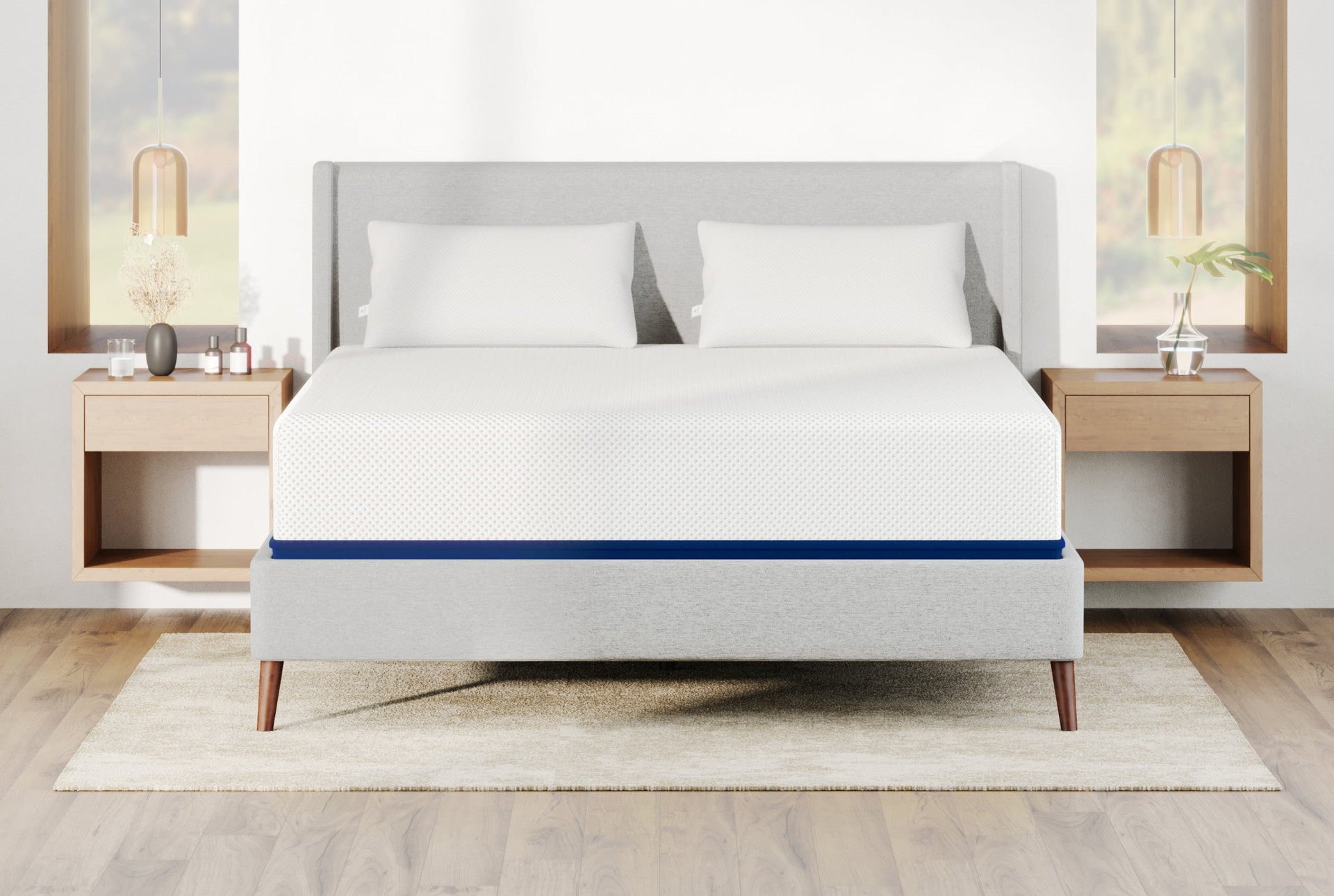
Amerisleep lists a soft feel with Bio-Pur memory foam and an Active Flex comfort layer.
Our first recommendation is the Amerisleep AS5. Its soft feel is worth considering if you prefer plush cushioning. It does not treat rheumatoid arthritis; discuss persistent joint pain with your clinician.
Why rheumatoid arthritis demands more from a mattress
Rheumatoid arthritis is an autoimmune condition: the immune system attacks the synovial membranes of joints, producing sustained inflammation, swelling, and morning stiffness that can last 30 minutes to several hours. The mechanism matters for mattress selection because inflamed joints have lower pressure tolerance at bony prominences. A surface that is perfectly adequate for a healthy sleeper can concentrate enough loading on an RA-affected shoulder or hip to fragment sleep and, over time, amplify systemic inflammation through cortisol dysregulation.
Two distinct failure modes show up on the wrong mattress. The first is pressure loading: a mattress that is too firm concentrates force directly on swollen joint surfaces, triggering pain signals that interrupt sleep architecture. The second is thermal amplification: many RA sufferers experience heightened heat sensitivity during flares, and standard petroleum-based memory foam that runs 2 to 3 degrees above ambient surface temperature can intensify this. A well-chosen mattress addresses both axes simultaneously.
What to look for in a mattress for rheumatoid arthritis
| Feature | Target spec | Why it matters for RA |
|---|---|---|
| Firmness | Medium 4 to 6 of 10 | Contours around inflamed joints without spinal sag |
| Pressure relief layer | Microcoil or zoned foam comfort layer | Reduces peak loading at shoulder, hip, knee |
| Zoned support | 5-zone or lumbar-zone design | Prevents secondary back pain from compensatory postures |
| Surface breathability | Open-cell foam or coil construction | Manages thermal sensitivity during flares |
| Adjustable base compatibility | Flex-friendly construction | Joint elevation at night reduces inflammatory swelling |
| Trial length | 100+ nights, ideally 365 | RA flare cycles can take months to assess accurately |
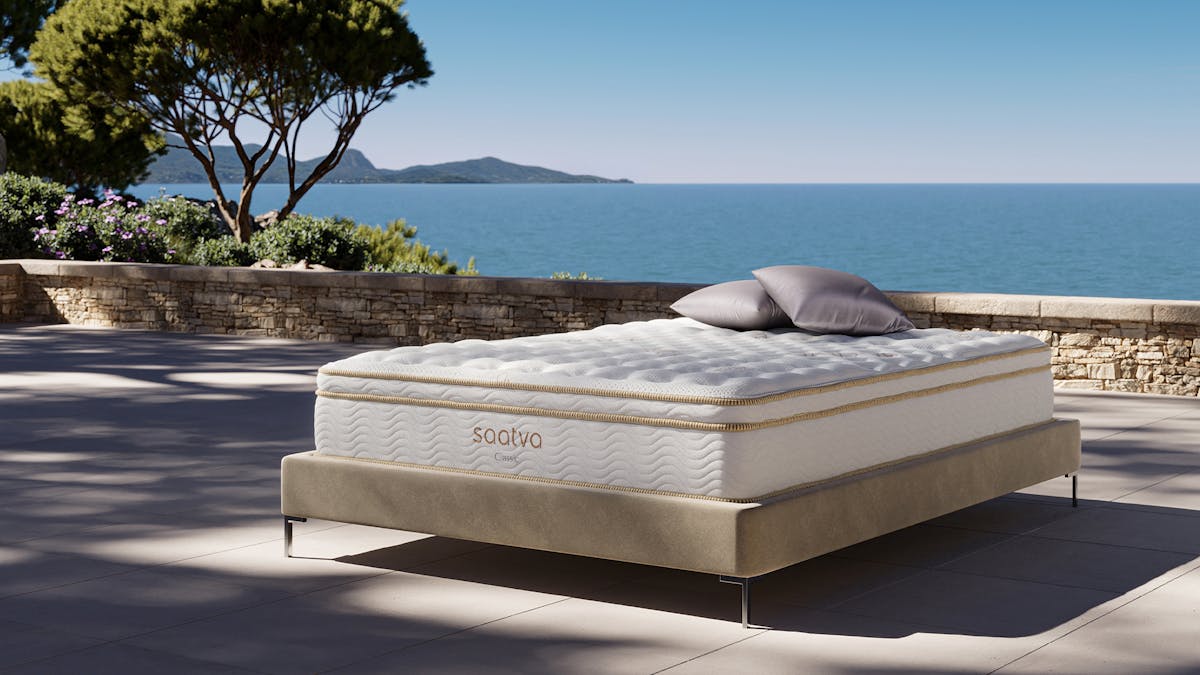
Saatva Rx: an alternative to compare
The Saatva Rx is the only major mattress explicitly designed around chronic pain and joint conditions rather than adapted from a general-use design. Its construction adds a microcoil layer directly above the pocketed coil support core. Microcoils are individually responsive across a very small area, roughly 1 to 2 square inches, which means each swollen joint makes contact with an independent suspension point rather than a broad foam surface. This granular contouring is the main engineering difference between the Rx and any standard foam mattress for RA applications.
The 365-night trial is particularly important for RA. Because flare cycles can span weeks or months, a 100-night trial may not cover the full range of inflammatory variability. The Rx's lifetime limited warranty and free white-glove delivery make it a strong choice for shoppers who want to invest in a long-term solution rather than a temporary replacement. Both the Saatva Rx and the AS3 are compatible with adjustable bases.
Top mattresses for rheumatoid arthritis compared
| Mattress | Type | Firmness | Joint relief | Trial | Queen from |
|---|---|---|---|---|---|
| Amerisleep AS5 | Bio-Pur memory foam; see selected construction | Soft | Amerisleep lists a soft feel with Bio-Pur memory foam and an Active Flex comfort layer. | See current manufacturer terms | See current product page |
| Saatva Rx | Hybrid (microcoil + pocketed coils) | Medium Soft 4/10 | Excellent, purpose-built for joint conditions | 365 nights | ~$1,696 |
| PlushBeds Botanical Bliss | Organic latex | Multiple options | Very good, natural latex contouring | 100 nights | From $1,699 |
Saatva Rx
8.9/10
- Purpose-built for chronic pain and joint conditions, not a generic mattress adapted for RA
- Microcoil layer floats over inflamed joints independently, reducing peak pressure at each bony prominence
- 365-night trial covers full RA flare-remission cycles, where 100-night trials often fall short
- Free white-glove delivery, setup, and old mattress removal; lifetime limited warranty
- Medium Soft 4/10 may feel unsupportive for stomach sleepers or heavier back sleepers above 230 lb
- Higher price than foam alternatives; $99 return fee during the trial period
Saatva designed the Rx specifically for joint conditions. Its microcoil top layer responds independently at roughly 1 to 2 square inch intervals, meaning each swollen joint rests on its own suspension point rather than a broad foam surface. The 365-night trial is long enough to assess the mattress across multiple RA flare cycles, which is the real test for a joint-condition mattress.
Sleep position and joint protection
Side sleeping is the most common position for RA sufferers because it reduces spinal loading, but it concentrates pressure on the shoulder and hip joints. A mattress in the medium-soft to medium range (4 to 6 of 10) with a pressure-relief comfort layer is essential. A pillow between the knees maintains hip alignment and reduces lateral hip compression.
Back sleeping distributes body weight more evenly but can increase morning stiffness in the lumbar and hip joints. A pillow under the knees reduces lumbar hyperextension. Stomach sleeping is best avoided entirely: it forces the cervical spine into rotation and compresses the lumbar facet joints, amplifying morning stiffness and pain in RA-affected areas.
An adjustable base in zero-gravity position slightly elevates the head and legs. This reduces venous pooling in inflamed limbs, which may reduce overnight swelling. Both the Saatva Rx and the Amerisleep AS3 are compatible with adjustable bases.
Temperature management during flares
RA flares often involve heightened thermal sensitivity. Standard petroleum memory foam that traps body heat can worsen this. The Saatva Rx's organic cotton cover with phase-change material and the AS3's Bio-Pur open-cell structure both address this problem from different construction angles. Keeping the bedroom between 65 and 68 degrees Fahrenheit also supports sleep continuity during inflammatory episodes. Avoid heavy quilts or weighted blankets that compress joints directly during flares.
Our first choice is the Amerisleep AS5. Amerisleep lists a soft feel with Bio-Pur memory foam and an Active Flex comfort layer. Its soft feel is worth considering if you prefer plush cushioning. It does not treat rheumatoid arthritis; discuss persistent joint pain with your clinician.
Frequently asked questions
Should I choose a soft or firm mattress for rheumatoid arthritis?
Medium, around 4 to 6 of 10. A firm mattress concentrates loading directly on inflamed joints; a soft mattress lets the spine sag, creating secondary back pain. Zoned medium is the consistent recommendation for RA, with slightly softer options (4 of 10) for lighter sleepers under 150 lb and medium options (5 to 6 of 10) for most others.
Is memory foam good for rheumatoid arthritis?
Zoned memory foam with good breathability can work well. The problem with standard petroleum memory foam is heat retention, which can amplify RA thermal sensitivity during flares. The Amerisleep AS3 uses partially plant-based Bio-Pur foam with an open-cell structure that runs measurably cooler. A coil hybrid like the Saatva Rx solves the heat issue differently through its microcoil and coil construction.
Will an adjustable base help with RA?
Joint elevation overnight reduces inflammatory swelling in the affected limbs. Zero-gravity positioning, which slightly raises the head and legs, is frequently recommended by rheumatologists for nighttime joint management. Both the Saatva Rx and the Amerisleep AS3 are compatible with adjustable bases.
How long before I notice improvement in morning stiffness?
Most RA sufferers report measurable reduction in morning stiffness duration within two to four weeks on a properly zoned, pressure-relieving mattress. The full picture takes 8 to 12 weeks, which is why a 100-night or 365-night trial matters more for RA than for healthy sleepers. Mattress changes complement but do not replace rheumatologist-directed medical treatment.