
 by
by Quick answer: A good mattress reviewer explains construction, matches advice to the sleeper, shows how evidence was gathered, and separates editorial judgment from sales language. Trust the method, not the ranking.
- Sleep Foundation says its Seattle-based lab has tested more than 2,000 mattresses over the past decade.
- Forbes Vetted reports using a panel of more than 30 testers to evaluate over 100 beds.
- RTINGS says it has evaluated more than 55 mattresses on a standardized test bench.
Updated July 2026 · Reviewed for accuracy
The label “mattress reviewer” covers everything from a person describing one bed to a publication running standardized bench evaluations. Those approaches can both be useful, but they answer different questions.
I trust a reviewer when I can trace each judgment back to a disclosed specification, an explained evaluation method, or clearly attributed owner feedback. A confident ranking without that trail is just an opinion wearing a lab coat.
This guide shows you how to judge the reviewer before letting that reviewer judge your next mattress.
What a mattress reviewer should actually tell you
Sleepopolis describes its mattress-review resources as covering brands, deals, sleeping positions, and beds suited to different sleepers. That breadth can be convenient, but a useful review still has to show how it moved from product information to a recommendation.
The first task is identification. The reviewer should make clear which mattress and version is being discussed. Similar names, revised constructions, and retailer-specific variants can make an otherwise detailed review useless if the reader can’t tell whether it covers the bed currently being sold.
A review should separate four things:
- Manufacturer disclosures: construction or policy details supplied by the brand.
- Reviewer observations: what was noticed and under which conditions.
- Editorial judgment: who the mattress may or may not suit.
- Unknowns: details the brand or reviewer couldn’t verify.
That separation matters. If a manufacturer calls a cover cooling, the review should attribute that claim to the manufacturer. If the reviewer reports a personal temperature impression, it should be presented as an observation, not proof that every sleeper will remain cool.
I also want context around every verdict. “Firm,” “supportive,” and “comfortable” aren’t self-explanatory measurements. A reviewer should identify the sleeper, position, evaluation conditions, and comparison point behind those words. Without context, the adjective tells you more about the writer than the mattress.
Big testing numbers don’t guarantee useful advice
Sleep Foundation reports more than 2,000 lab-tested mattresses, Forbes Vetted describes a panel of more than 30 testers evaluating over 100 beds, and RTINGS reports testing more than 55 mattresses on a standardized bench. Those figures demonstrate scale, but scale alone doesn’t reveal which method will answer your question.
| Published method claim | What it helps establish | What the headline can’t establish |
|---|---|---|
| Sleep Foundation says it uses a Seattle-based lab and has tested more than 2,000 mattresses over a decade. | A large comparison history within one organization. | Whether the current model was evaluated under the same protocol as an older one. |
| Forbes Vetted says more than 30 testers with different sleep needs evaluated over 100 beds. | Input from people with varied needs and preferences. | How conflicting opinions were weighted in the final verdict. |
| RTINGS says more than 55 mattresses went through a standardized test bench. | A repeatable framework intended to support comparisons. | How closely a bench result matches your own comfort preferences. |
I wouldn’t automatically place a bench test above a sleeper panel, or a large panel above a careful single-model analysis. A bench can make physical comparisons more consistent. A panel can expose differences in subjective feel. A construction analysis can flag unanswered durability questions that a brief comfort impression may miss.
Read past the testing total. Look for the actual protocol, the mattress version, the tester context, the comparison standard, and the method’s stated limitations. Those details are more useful than a large headline number.
Pay attention to repeated procedures. If edge support was evaluated while sitting on one mattress but while lying down on another, the results aren’t directly comparable. If cooling is described through material claims for one bed and a sleeper’s impression for another, the ranking mixes different kinds of evidence.
Construction details reveal whether the verdict has substance
The word “hybrid” doesn’t tell me which material sits closest to the sleeper, how the comfort section is arranged, or what supports it underneath. A mattress reviewer should unpack the label instead of treating a broad category as a complete construction description.
Construction questions worth asking:
- What material forms the cover and comfort surface?
- Which layers provide contouring or cushioning?
- What type of support core is disclosed?
- Are foam density or coil-gauge details available?
- Which specifications come directly from the manufacturer?
- Has the construction changed since the review was published?
Missing information is information. If a brand doesn’t disclose foam density, coil gauge, or another relevant specification, the reviewer should mark it as unknown. Filling that gap with a confident durability prediction creates certainty the evidence can’t support.
Layer order matters to the analysis as much as the list of materials. A reviewer should explain where each disclosed component sits and what role the manufacturer assigns to it. That makes it easier to distinguish an actual construction explanation from a paragraph that merely repeats marketing terms.
Material questions also deserve their own evidence trail. If you’re investigating a specific concern, use a focused resource such as this material-disclosure guide, then check whether its statements are attributed to packaging, manufacturer information, or another identifiable source. Don’t treat missing disclosure as proof that a material is present or absent.
My durability rule: the strength of the prediction can’t exceed the strength of the construction evidence. Broad material labels support broad observations, not precise lifespan promises.
The right reviewer matches evidence to your use case
Sleepopolis says its resource includes guidance for different sleeping positions. That’s the right direction because a mattress verdict without a defined sleeper is incomplete. The review should explain who supplied the feedback and how that person’s needs compare with yours.
| Your question | What the reviewer should clarify |
|---|---|
| Will the firmness suit my position? | The tester’s position, body context, and reference point for the firmness description. |
| Does it sleep cool? | Whether the answer comes from manufacturer claims, material analysis, personal perception, or a disclosed procedure. |
| Will movement disturb a partner? | How motion was created, observed, and compared with other mattresses. |
| Can I use the full sleeping surface? | Whether edge behavior was considered while sitting, lying down, or both. |
| Will the feel remain suitable? | Which construction facts support the durability judgment and which details remain undisclosed. |
Firmness deserves particular caution. The useful part of a firmness description isn’t the label alone. It’s the explanation of who perceived that feel, what they compared it with, and whether the manufacturer offers materially different configurations under the same product name.
The fastest filter: replace “Is this mattress good?” with “Is this evidence relevant to a sleeper like me?” That question exposes vague recommendations quickly.
Cooling, motion isolation, edge behavior, and ease of movement should receive the same treatment. I want to know what was evaluated, how it was evaluated, and where the conclusion stops. “No motion” or “sleeps cool for everyone” would be an absolute claim, not a careful interpretation.
Freshness and commercial independence need checking
An “Updated July 2026” label tells you when a page says it was reviewed. It doesn’t tell you whether the construction, policy details, evaluation results, or merely the date changed. A credible reviewer identifies substantive updates and makes the current mattress version clear.
Policy details require live attribution. If a review discusses delivery, returns, a sleep trial, or warranty coverage, it should point to the manufacturer’s current policy rather than presenting an old term as permanent. Policies can change independently of the mattress construction.
| More credible | Needs closer scrutiny |
|---|---|
| Names the mattress version and substantive update | Changes the date without explaining what was checked |
| Attributes brand claims and current policies | Presents changing terms without a source |
| Publishes drawbacks and evidence limits | Describes every mattress as suitable for nearly everyone |
| Explains how rankings are decided | Offers a ranking with no weighting or selection method |
Commercial funding doesn’t automatically erase useful analysis. What matters is whether you can see the criteria, trace the claims, and read meaningful drawbacks alongside the favorable points. If a page quotes owners, it should identify the review source instead of presenting anonymous praise as representative feedback.
Use this pass-or-pause mattress reviewer scorecard
A large testing total is easy to advertise. A traceable chain from product version to evidence to verdict is harder to produce, and far more useful. Before relying on a recommendation, run through this checklist.
- Identity: Is the exact mattress version clear?
- Method: Does the reviewer explain how each performance area was evaluated?
- Context: Are tester characteristics and sleep preferences disclosed where relevant?
- Construction: Are material claims attributed, with missing specifications marked as unknown?
- Comparison: Were competing mattresses assessed under comparable conditions?
- Limits: Does the reviewer say what the evidence can’t establish?
- Freshness: Does the update note identify what changed or was rechecked?
- Balance: Are realistic drawbacks presented beside the positive findings?
You can apply the checklist to a model-specific review and then to a hybrid-focused review. Don’t start by comparing their verdicts. First compare how each page handles version identity, construction disclosure, feel context, and evidence limits.
My verdict is simple: trust the reviewer who makes disagreement possible. You should be able to inspect the same disclosed facts and decide that your priorities lead somewhere else. A ranking can narrow the field, but it shouldn’t replace your judgment about construction, comfort preferences, policies, and uncertainty.
ONE OPTION WORTH COMPARING
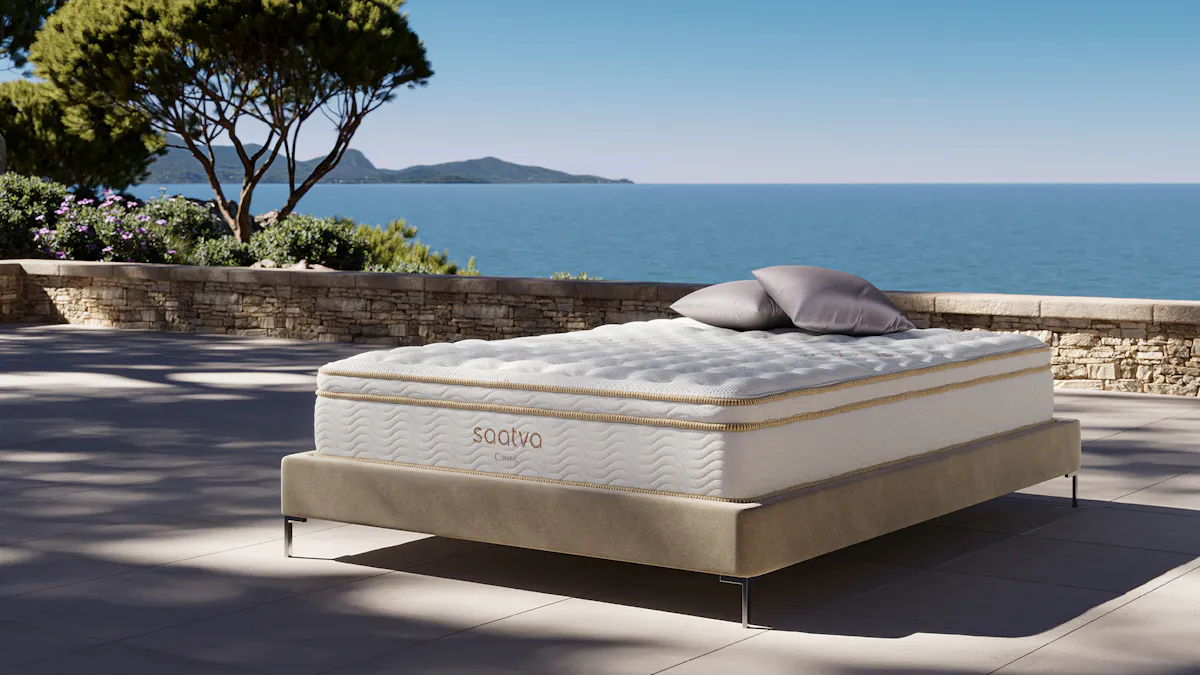
Shopping as well as reading? Here is one current option worth comparing: the Saatva Classic. Check today’s price, sizing and return terms on the official product page before you order.
Saatva Classic
- 365-night home trial and lifetime warranty, per saatva.com
- Handcrafted in the USA, free white-glove delivery
- Flexible financing available
FAQ
These questions cover the quickest ways to judge a mattress reviewer before relying on a recommendation.
What makes a mattress reviewer trustworthy?
A trustworthy reviewer identifies the exact product, explains the evaluation method, attributes outside claims, and states meaningful limitations. I’d place more weight on that transparency than on a dramatic ranking or a large testing total.
Are standardized lab tests better than sleeper opinions?
They answer different questions. RTINGS says it uses a standardized test bench, while Forbes Vetted reports using a panel with varied sleep needs. Bench procedures can support consistent comparisons, while clearly contextualized sleeper opinions can explain subjective feel.
Should I trust a reviewer’s firmness description?
Treat firmness as a contextual judgment, not a universal fact. Look for the tester’s body context, sleeping position, comparison point, and the exact mattress configuration behind the description.
What if a mattress reviewer doesn’t publish a method?
Use the page as a starting point, not as decisive evidence. Verify construction and policy claims through the manufacturer, then compare the verdict with a reviewer who explains how observations were produced.
Is the newest mattress review always the most reliable?
No. A recent date helps only if the page covers the current mattress and explains what was checked. An older, transparent evaluation may be more informative than a newly dated page with no version details or substantive update note.