
 by
by Quick answer: Choose a mattress that fits the frame’s opening and works with its support base. Measure from the support surface to the footboard before shopping; a size label alone can’t confirm the fit.
- MattressNut’s bed-frame guide places sleigh beds among bed-frame styles, not mattress types.
- Amazon UK listings include sleigh frames with wooden slats, storage, upholstery and optional mattresses.
- The cited “Best Mattresses for Sleigh Beds” guide identifies frame height, cooling preference and edge support as relevant buying factors.
Updated July 2026 · Reviewed for accuracy
A sleigh bed doesn’t require a special mattress. It requires careful measuring. The raised footboard, side rails and support base can all affect how an otherwise suitable mattress sits inside the frame.
My advice is simple: inspect the actual bed before comparing mattress comfort or construction. Once the fit is settled, you can choose the feel, cooling design and edge support that suit the sleeper.
What a sleigh bed changes about mattress fit
A mattress can carry the expected size label and still sit poorly in a particular sleigh frame. The label describes a size category. It doesn’t describe the usable opening inside your frame or the height of its support surface.
MattressNut’s guide to bed-frame types treats the sleigh bed as a frame style. That distinction matters. “Sleigh” tells you something about the bed’s form, particularly its prominent headboard and footboard, but it doesn’t establish one universal support system or mattress profile.
The most relevant parts are inside the frame. Look at the space between the rails, the junctions near the headboard and footboard, and anything protruding into the mattress opening. Corner hardware, upholstery and support brackets can reduce usable room even when the outside of the bed looks generous.
The core fit test
Don’t ask whether a mattress fits sleigh beds in general. Ask whether it fits this frame, on its installed support base, without crowding the ends or sitting awkwardly against the footboard.
A raised footboard makes height more visible than it would be on an open platform frame. A thick mattress may rise above the footboard and alter the intended appearance. A lower mattress may leave more of the surrounding frame exposed. Neither result is automatically wrong, but it should be a deliberate choice.
Room fit deserves the same attention. Plazma Homes’ sleigh-bed buying guide highlights space and material among its buying considerations. Measure the complete frame footprint, not just the mattress area, because the curved ends and upholstered sections may extend farther into the room.
Measure the frame before choosing a mattress
The usable opening is the measurement that matters most. Take it where the mattress will actually rest, with the slats, platform or other support components installed in their intended positions.
Remove the existing mattress and bedding first. Check the opening near the headboard, through the middle and close to the footboard. If those readings differ, use the tightest point as your practical limit rather than assuming the frame is perfectly uniform.
| Frame check | What to record | Why it matters |
|---|---|---|
| Inside opening | Usable length and width at mattress level | Shows whether the mattress can lie flat without being compressed |
| Support surface | Distance from the base to the top of the footboard | Helps predict the mattress’s finished position |
| Rail lip | How far the rails rise around the mattress | Affects bedding access and how enclosed the mattress feels |
| End clearances | Space at the headboard and footboard | Reveals gaps or contact points hidden by bedding |
| Delivery route | Doorways, turns, stairs and access around the frame | Confirms that the mattress can reach the bedroom and be positioned |
Use the same measurement unit shown by the mattress seller so you aren’t converting figures in your head. Record the frame measurements instead of relying on memory, and compare them with the mattress’s published dimensions before ordering.
Also inspect whether upholstery, trim or padding intrudes into the opening. Soft fabric may compress slightly, but the structural frame underneath won’t. The mattress needs enough usable room to settle flat without depending on decorative material to hold it in place.
My measurement rule: Work from the support surface outward. Floor-to-footboard height can be misleading if the slats or platform sit well above the floor.
Match the mattress to the support system
Wooden slat bases appear in Amazon UK’s sleigh-bed listings, but that doesn’t mean every sleigh frame uses the same foundation. The sleigh shape is decorative and structural framing. Mattress support still depends on what sits between the side rails.
If the frame uses slats, inspect their condition, spacing, attachment and center support. Then compare what you find with the mattress manufacturer’s written base requirements. A broad claim such as “works on slats” isn’t as useful as the actual support instructions for the mattress you’re considering.
Support-base checklist
- Identify which parts of the frame carry the mattress load.
- Confirm that every slat or panel is secure and undamaged.
- Look for the center supports specified by the frame maker.
- Compare the complete base with the mattress maker’s requirements.
- Check that storage hardware moves freely without contacting the mattress.
- Verify whether an additional foundation is required, permitted or unnecessary.
A solid deck needs the same scrutiny. Confirm that both the frame maker and mattress maker permit that type of surface. If either company specifies ventilation, reinforcement or another component, use its written instructions rather than making assumptions from the bed’s appearance.
Don’t add a box spring or foundation simply because an older mattress used one. An extra base changes the finished height and may lift the mattress above the footboard. It can also create a setup that differs from the support arrangement required by the mattress manufacturer.
Storage sleigh beds add another variable. The mattress must work with the lifting or drawer mechanism without blocking its movement. Check the frame maker’s stated mattress and load requirements, then account for bedding that may hang into moving parts.
Watch for this: A frame sold with slats isn’t proof that every mattress can use those slats. Compatibility comes from the frame’s construction and the mattress maker’s support rules.
Get mattress height and end gaps under control
Mattress height should be judged from the installed support surface. That starting point tells you where the top of the mattress will sit in relation to the rails, headboard and footboard.
Decide whether you want the footboard to remain visibly higher than the mattress or whether a more level appearance suits the room. Then allow for any approved foundation required by the setup. Our separate sleigh-bed mattress height guide explains how those layers affect the finished look.
Height and end gaps are different problems. Mattress thickness changes its vertical position. It won’t close excess space between the mattress and headboard or footboard. Buying a taller mattress to solve a lengthwise gap can leave you with the original gap plus an unwanted height.
Diagnose the direction of the mismatch
- Vertical mismatch: Recheck the support-base height, mattress profile and footboard position.
- Lengthwise gap: Recheck the internal opening and mattress length.
- Side gap: Inspect the usable width and any rails, brackets or upholstery inside the frame.
- Uneven contact: Look for displaced slats, bowed components or protruding hardware.
If the mattress shifts or leaves an irritating end gap, find the cause before adding anything to the frame. A retainer, filler or adjustment should be compatible with the bed and shouldn’t interfere with storage hardware or the mattress support surface. I’ve covered the practical options in the guide to closing a sleigh-bed mattress gap.
Leave enough access to make the bed. Deep rails and a close footboard can make it harder to pull fitted bedding into place or tuck loose fabric safely away from moving storage parts. This is an everyday usability issue that product photos rarely show clearly.
Read materials, storage and mattress packages carefully
Amazon UK’s sleigh-bed search results mix velvet-upholstered frames, wooden slat bases, storage designs and optional mattress packages. Those labels describe very different setups, so “sleigh bed” alone isn’t enough information for a sound purchase.
Plazma Homes’ buying guide also focuses on sleigh-bed styles, materials, room space and pricing. I’d use those categories to narrow the frame, but I’d keep mattress quality and compatibility as separate decisions.
| Listing feature | What to verify | Common buying risk |
|---|---|---|
| Mattress included | Exact mattress construction, feel, support requirements and return terms | Assuming the bundled mattress suits the sleeper merely because it fits the frame |
| Storage base | Opening method, mattress limits and access around the bed | Choosing a mattress that interferes with lifting or access |
| Wooden slats | Slat layout, center reinforcement and mattress compatibility | Treating every slatted base as equivalent |
| Upholstered frame | The structural opening beneath the fabric and padding | Measuring from soft decorative surfaces instead of the frame |
An upholstered rail can hide brackets and hard frame edges. Press the fabric gently to locate the underlying structure, then measure from the surfaces that actually define the opening. Don’t assume the padding creates usable extra room.
For storage models, read the operating instructions before selecting a mattress. The frame maker should state the acceptable setup and any restrictions tied to its mechanism. If that information is missing, ask the seller for it in writing rather than guessing.
A mattress-and-frame package may be convenient, but the bundle label says nothing by itself about comfort, cooling, edge design or construction detail. Evaluate the frame against your room and support needs. Evaluate the mattress against the sleeper’s preferences and the seller’s published policies.
Package rule: Judge the frame and mattress separately, even when one listing sells them together. A good fit inside the frame doesn’t guarantee that the mattress has the feel or construction you want.
How I’d choose the final mattress
A perfectly fitted mattress can still be wrong for the person sleeping on it. The article titled “Best Mattresses for Sleigh Beds: Comfort, Support, and Cool Sleep” identifies sleep position, frame height, cooling preference and edge support as factors to consider. That’s the right direction, provided fit and base compatibility have already been confirmed.
I’d start with the sleeper’s established comfort preference rather than letting the decorative frame dictate firmness. Use the manufacturer’s construction description to see what creates that feel, and read the return terms before relying on marketing language.
Final comparison checklist
- Fit: Published mattress dimensions agree with the usable frame opening.
- Base compatibility: The installed support system meets the mattress maker’s requirements.
- Finished height: The mattress sits at a practical level beside the rails and footboard.
- Feel: The firmness description matches the sleeper’s known preference.
- Cooling: Any cooling claim is supported by disclosed materials or construction details.
- Edge design: The perimeter suits how the sleeper gets into bed or sits at the side.
- Motion: Couples can compare construction details with attributed owner feedback.
- Value: The live total cost reflects required foundations, delivery and the applicable return policy.
For cooling, don’t assume the sleigh frame will correct a mattress that sleeps warmer than you prefer. Compare the mattress cover, comfort materials and ventilation claims only where the manufacturer provides useful detail. The bed frame’s style isn’t a substitute for understanding the mattress itself.
Edge support deserves attention if the rails make side access awkward or if someone regularly sits on the edge. Look for a clear description of the perimeter construction and attribute owner feedback to the retailer or brand publishing it. Vague phrases such as “strong edges” carry little weight without construction detail or identifiable reviews.
Durability starts with compatible support and transparent materials. I favor listings that explain the layer arrangement, foundation requirements and care instructions. If a seller withholds those basics, that uncertainty belongs in the value calculation, regardless of how attractive the frame looks.
My verdict
Don’t shop for a generic “sleigh-bed mattress.” Measure the specific frame, verify its support system and choose the mattress on sleeper needs after compatibility is settled. Skip any bundle that leaves the mattress construction or frame requirements unclear.
ONE OPTION WORTH COMPARING
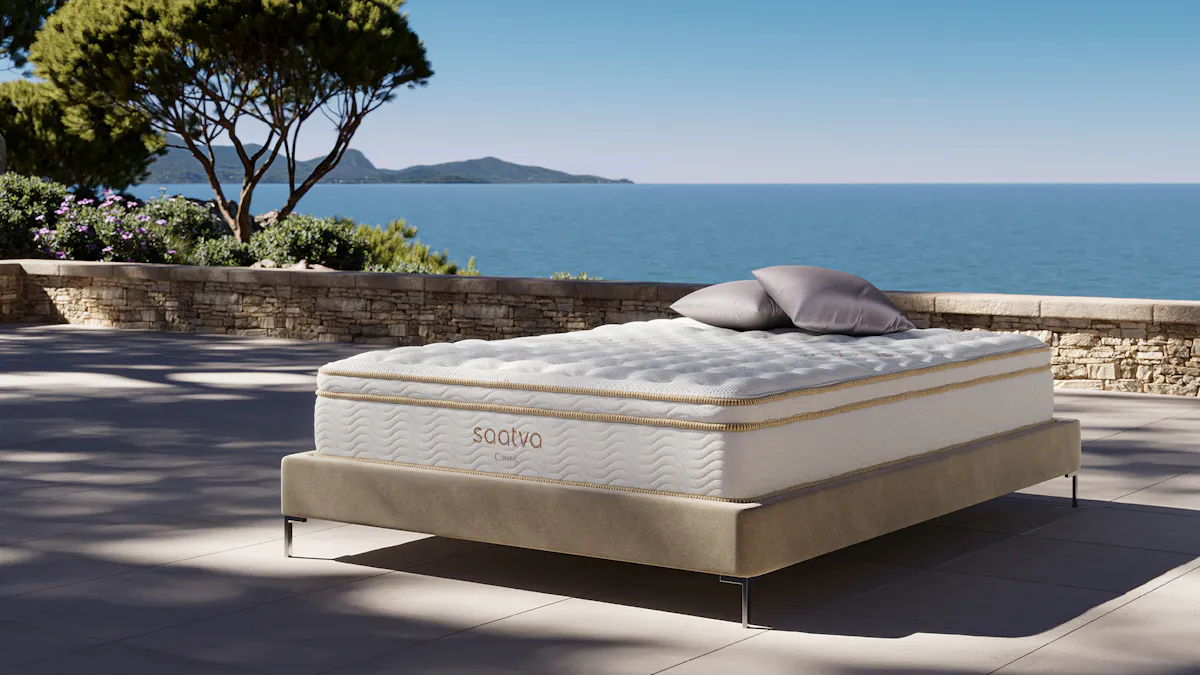
Shopping as well as reading? Here is one current option worth comparing: the Saatva Classic. Check today’s price, sizing and return terms on the official product page before you order.
Saatva Classic
- 365-night home trial and lifetime warranty, per saatva.com
- Handcrafted in the USA, free white-glove delivery
- Flexible financing available
FAQ
Does a sleigh bed need a special mattress?
No. Sleigh describes the frame style, so the mattress must match the individual frame’s opening and support requirements. Confirm those details with the frame and mattress manufacturers before ordering.
Can the mattress sit above the sleigh-bed footboard?
It can if that appearance and access work for you and the setup follows the manufacturers’ instructions. Measure upward from the installed support surface so you know where the mattress top will sit before buying.
Does a sleigh bed need a box spring?
That depends on the frame’s support system and the mattress maker’s foundation rules. Don’t add a box spring automatically, because an unnecessary foundation can change the mattress height and its relationship with the footboard.
How do I fix a gap at the end of a sleigh bed?
Measure the gap and determine whether the mattress is shifting or the frame opening is simply longer than the mattress. Use only a compatible adjustment, retainer or filler that won’t disrupt the support surface or any storage mechanism.
Is a sleigh bed with an included mattress good value?
The package label alone can’t answer that. Amazon UK listings show that optional mattress packages exist, but buyers still need to verify the mattress construction, feel, support requirements, live total price and return terms separately.