 by
by Quick answer: For a mattress sale in Dallas, I’d begin with Saatva Classic, then judge every local deal by construction, return terms, and the final checkout total.
- Dallas shoppers have a broad mix of mattress retailers and store formats, according to GoodBed.
- Local stores carry mattresses across different materials, budgets, and sleep preferences, according to Sleepare.
- A sale label does not tell you how a mattress is built or whether it suits your sleep position.
Updated July 2026 · Reviewed for accuracy
A Dallas mattress sale can be useful, but the loudest sign in the window is rarely the useful part. I’d focus on the mattress beneath the cover, the terms attached to it, and the full amount due after the extras appear.
Dallas gives you plenty of places to shop, which is a strength and a trap. According to GoodBed’s Dallas directory, shoppers can browse a wide range of brands and bedding stores. More choice only helps if you walk in with a method.
Start with the final deal, not the sale sign
A markdown is only meaningful against the mattress’s real value. That value comes from construction, condition, policies, and whether the bed fits your body and bedroom. A giant-looking reduction on an unsuitable mattress is still money poorly spent.
I’d ask for the complete out-the-door figure before getting deep into comfort talk. That means the mattress itself, delivery, setup, removal of an old bed if offered, an adjustable base if you are considering one, and any protection plan presented at checkout. A salesperson may discuss each item separately. Your budget does not.
Local shopping can make this easier because you can lie down on the mattress before deciding. Sleepare’s Dallas store guide notes that retailers carry options for different material preferences, budgets, and sleep styles. Use that access. Do not spend the visit comparing sale stickers alone.
The Nut’s rule: I treat a mattress sale as an invitation to inspect the build. If the store cannot clearly explain what is inside the bed, I would not let the discount make the decision for me.
There is another reason to slow down. A mattress can feel pleasant for a few minutes and still be a poor long-term fit. Surface softness tells you less than the support system underneath it. Ask what keeps the spine supported, what prevents the edges from collapsing too easily, and what materials handle repeated compression.
Know which Dallas shopping route fits your situation
Dallas shoppers can choose between traditional stores, clearance-oriented locations, local discount sellers, and online ordering. Each route can work. The right one depends on whether you value hands-on comparison, a narrow budget, delivery convenience, or a clearer look at the full policy before you commit.
Traditional showrooms are useful if you need to compare feel in person. Take your normal sleeping position rather than sitting on the edge and calling it a test. Spend enough time to notice whether your hips sink too far, your shoulders feel jammed, or your lower back loses support. Those are practical fit questions, not sales-floor details.
Outlet and clearance shopping requires more inspection. Mattress Outlet DFW says it sells premium mattresses at outlet prices and offers financing, delivery, and in-store guidance. Those features may be useful, but I would still confirm whether the exact mattress is new, a closeout, a floor model, or otherwise subject to different terms.
Local discount operations can offer a different cost structure. Dallas Discount Mattress says it buys factory-direct in bulk and keeps overhead low. That may help explain its pricing approach, yet it does not answer the questions that matter most for a specific bed: its layer materials, support design, condition, and return process.
- Ask whether the displayed mattress is the exact model you will receive.
- Ask for the written return, exchange, delivery, and removal terms before payment.
- Ask what is included in the final total and what is optional.
- Ask for the construction details in plain language, not just a comfort label.
Used inventory is its own category. It can make sense for a tightly limited budget, but condition and hygiene deserve more scrutiny than a new mattress sale. My guide to buying a used mattress lays out the questions I would settle before taking that route.
Comparing options? The Saatva Classic is the pick we keep coming back to — see the final verdict ↓
Construction tells you more than a plush or firm label
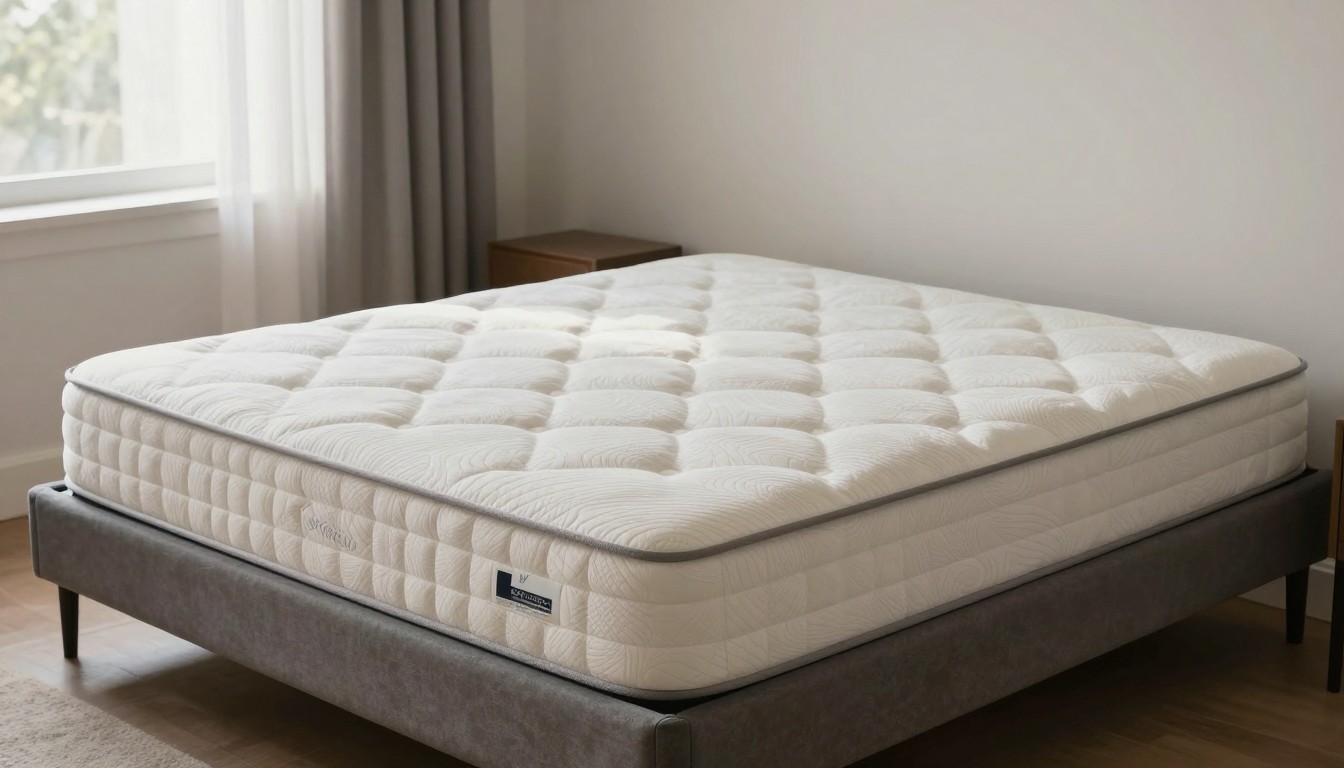
A mattress is a stack of materials doing different jobs. Comfort layers shape the first impression. The support core carries the longer-term burden. The cover affects surface feel and airflow, but it does not rescue weak support underneath.
For foam-heavy designs, I would ask what type of foam is used in each layer and how the layers are arranged. Memory foam can contour closely, while more responsive foams can make movement feel easier. Neither description tells you enough by itself. Thickness, placement, and the support beneath the foam change the result.
For innerspring and hybrid designs, I would ask about the coil unit, perimeter support, and the materials above the springs. Coils can create a more buoyant feel than all-foam construction. A hybrid can combine pressure relief near the surface with spring support below, but the word “hybrid” is a category, not a quality grade.
Edge support matters if you sit on the side to dress, sleep close to the perimeter, or share the bed. It is not something I would infer from a showroom label. Ask how the edge is constructed and try the edge in the store using the way you actually use a mattress.
What I’d write down in the showroom
- Comfort material and its placement.
- Support system type.
- Edge construction.
- Whether movement travels across the surface.
- Any written policy that differs from the spoken pitch.
Do not confuse a thick mattress with a durable mattress. Extra height can come from useful comfort layers, but it can also be mostly presentation. I want a clear explanation of every major layer and a support system that matches the way the mattress is meant to feel.
Use the showroom to check support, movement, and heat
Your sleeping position should lead the conversation. Side sleepers commonly need enough surface cushioning to avoid excessive pressure at the shoulder and hip. Back sleepers often need steadier support through the midsection. Stomach sleepers generally need to pay close attention to whether the hips drop too deeply. Those are fit considerations, not promises that one feel works for every body.
Couples should test movement transfer together if possible. Have one person change position while the other remains still. A mattress that isolates movement well may suit light sleepers who wake when a partner shifts. A more responsive surface may suit people who dislike the slow, deep feel associated with some foams.
Heat is another personal issue. A cool-to-the-touch cover is a surface feature, while the larger question is how easily the mattress lets warmth move away through its construction. Ask which materials are intended to promote airflow, then judge the explanation against the actual layers. Do not accept a cooling claim without knowing what creates it.
Bring practical details too. Measure the access route into your home, including stairs, turns, elevators, and the room itself. A sale is less attractive if delivery becomes difficult after the order is written. Confirm the delivery procedure directly with the seller.
| What to assess | What to ask or do | Why it matters |
|---|---|---|
| Spinal support | Lie in your usual position and notice hip and shoulder alignment. | The surface feel may be appealing while the support is wrong for you. |
| Motion | Change positions or test with a partner. | Shared sleepers may care more about movement than a solo shopper does. |
| Edge | Sit and lie near the perimeter. | The usable sleep surface can feel smaller if the edge gives way too easily. |
| Terms | Read the written paperwork before purchase. | A low advertised figure can come with limits that change the value. |
Read sale terms before comparing prices
The real savings are often found in the terms you avoid missing. A clearance mattress, a closeout, a floor sample, and a current model can all have different return or exchange conditions. I would want those distinctions in writing before treating them as equivalent choices.
Ask whether the stated offer applies to every size and configuration you are considering. Ask whether delivery, setup, or old-mattress removal changes the total. Ask whether financing changes the purchase terms. None of these questions is glamorous, but they are where a deal becomes clear or cloudy.
Do not let a bundled adjustable base distract from the mattress decision. A base may be useful for some sleepers, but it should be evaluated as a separate purchase with its own features, warranty terms, and delivery requirements. If the mattress itself is not right, adding another product does not improve the fit.
If you are comparing major retail labels, keep each model’s construction notes beside the sale terms. My pages on a Tempur-Pedic mattress sale, a Serta mattress sale, and a Sealy mattress sale can help you keep the brand-specific shopping questions straight.
Do not sign from memory. I’d photograph or save the written product name, stated configuration, delivery terms, and return language. A verbal assurance is not as useful as the policy you can reread at home.
Online pricing can be the clean comparison point
Local stores give you a chance to feel a mattress. Online shopping can give you a quieter place to compare construction and policies without the pressure of a showroom clock. The strongest approach is often to use both: learn what your body prefers in person, then compare the full terms carefully.
I would not assume that online automatically means lower cost or that local automatically means better service. Both are possibilities, not rules. The better comparison is whether you can identify the exact mattress, understand its materials, see the current price clearly, and review the applicable policies before committing.
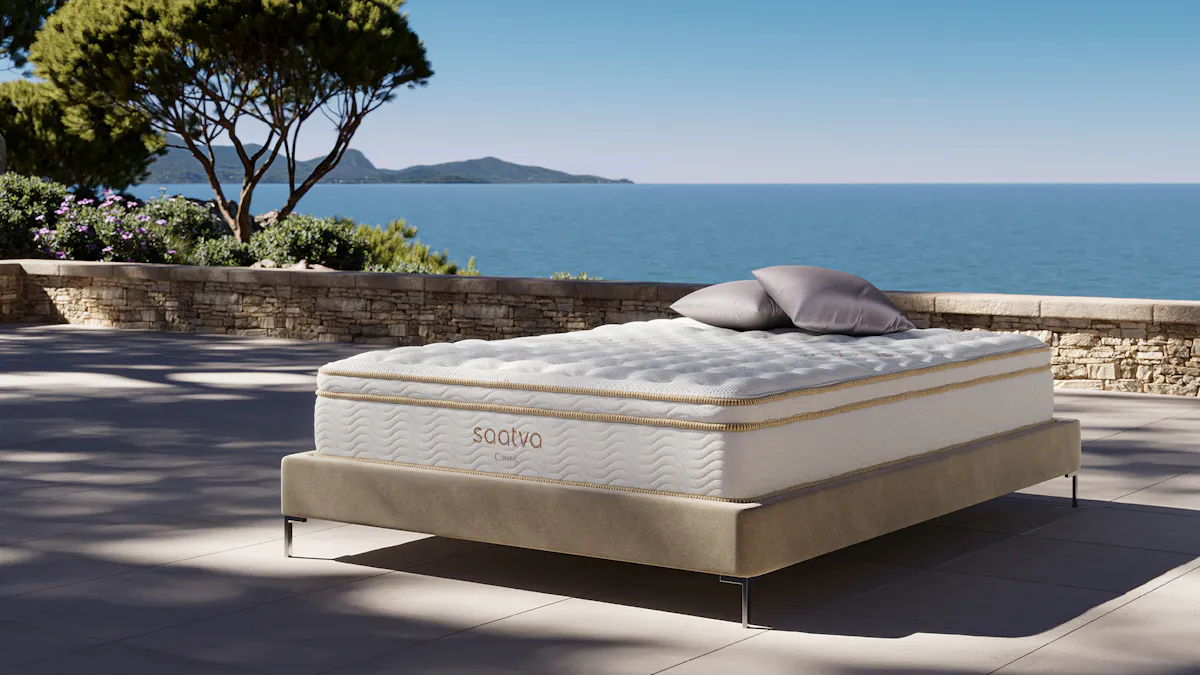
For shoppers who want a premium-tier option without letting a store promotion dictate the choice, Saatva Classic is the one I’d put on the shortlist. Check the current price on the official site, read the live terms there, and compare that complete offer with any Dallas showroom proposal.
The goal is not to create a pile of quotes. It is to narrow the field to mattresses whose construction and terms make sense for you. Once that is done, a sale becomes a deciding factor instead of the entire reason for buying.
My verdict on finding a mattress sale in Dallas
I would shop Dallas with a written list, not a hunger for the biggest sign. The area has abundant retail options, according to GoodBed, and that gives you room to compare. It also gives sales language plenty of room to work on you.
Pick the mattress first. Verify the build, test it in your usual sleep position, and read the policy before you look at the claimed savings. Then compare the final offer against the current official price for the same kind of mattress. That is the cleanest way I know to separate a real value from a loud promotion.
If you prefer to avoid showroom pressure, start your comparison with the Saatva Classic and its current official terms. If a Dallas store beats that overall value with a mattress you understand and genuinely like, you have made a reasoned choice, not an impulse purchase.
FAQ
Where can I find a mattress sale in Dallas?
Dallas has traditional mattress stores, discount sellers, clearance-focused locations, and online options. GoodBed’s Dallas directory shows a broad local shopping market, while Sleepare notes that stores carry different mattress materials and price ranges.
I would choose the route based on how you want to shop. Visit a showroom for hands-on comparison, but keep an online comparison open for policy and price clarity.
Are Dallas mattress outlet deals always cheaper?
No. An outlet price may be attractive, but the value depends on the exact mattress, its condition, and the terms attached to it. Mattress Outlet DFW describes its focus as premium mattresses at outlet prices, but you should still confirm the details for the particular bed.
Ask whether it is new, a closeout, or a floor model. Then compare the full total and written policies, not only the label on the mattress.
What should I ask before buying a sale mattress?
Ask what materials and support system are inside, whether the displayed model matches the delivered mattress, and what the written return and delivery terms say. Also ask for the complete checkout total, including any optional services.
Those answers expose more value than a comfort label alone. I would leave if the construction or terms remain vague after a direct question.
Should I buy a mattress in-store or online?
In-store shopping lets you check comfort, movement, and edge feel in person. Online shopping can make it easier to compare a current price and policy without a sales conversation around you.
Use the method that gives you the clearest information. Many shoppers can benefit from trying feels locally, then comparing the exact terms before making a final decision.
How do I know if a mattress sale is actually a good deal?
A good deal matches a mattress that fits your needs with clear construction details and terms you accept. It is not simply the biggest advertised reduction.
Check the current price, understand what is included, and compare like with like. If you cannot identify the precise model and its policy, you do not yet have enough information to call it a deal.
FINAL VERDICT
Before you settle: if mattress sale dallas is what brought you here, the Saatva Classic is the value pick on this page — check its current price, trial and warranty terms on the official product page. Confirm current price, dimensions and terms on the official product page before ordering.
OUR CATEGORY-MATCHED PICK · UP TO $625 OFF
Saatva Classic
- 365-night home trial and lifetime warranty, per saatva.com
- Handcrafted in the USA, free white-glove delivery
- Flexible financing available