
 by
by Quick answer: My recommended benchmark is the Saatva Classic, but it isn't an automatic Sydney bargain. Buy only if the live postcode checkout, currency, delivery and written return terms beat local alternatives that fit your budget.
- The reference sits in the premium tier, not the cheapest bracket.
- Local stock, Sydney pickup and postcode delivery require live confirmation.
- A current official offer exists, but checkout terms determine the real saving.
Updated July 2026 · Reviewed for accuracy
A sale badge isn't the whole price picture. For a Sydney buyer, I compare the amount charged in the correct currency, delivery and access costs, the return route, and the mattress itself. That stops a large-looking discount from hiding a weak deal.
Start with the full Sydney checkout total
A mattress headed to a Sydney apartment has a different cost profile from one collected at a suburban showroom. Lift bookings, stairs, timed building access and removal can matter, but only the seller's written terms tell you which charges apply.
Start with the payable total for the exact mattress size, model and condition you intend to receive. A clearance unit, boxed unit and showroom display aren't interchangeable merely because their names look similar.
The total-cost stack I use
- The mattress price in a clearly named currency.
- Delivery to the exact Sydney or NSW postcode.
- Access, handling or appointment fees, if the seller applies them.
- Packaging disposal or old-mattress removal, if wanted.
- Any base or accessory required by the written care terms.
- Return transport, collection or restocking charges.
- The total repayable amount and fees if financing is used.
Confirm the currency by name. A familiar-looking price format doesn't prove which currency will be charged, and conversion costs can alter the final amount. If a payment provider performs the conversion, use the amount it shows before authorising the purchase.
Bundles deserve the same discipline. Ask for the mattress-only total and the itemised value of every extra. A protector, pillow or base isn't a saving if you wouldn't otherwise buy it or if it pushes the order beyond your cap.
Keep a dated copy of the quote, checkout screen and purchase terms. That gives you something concrete to compare if the price, delivery wording or included services change before the order is completed.
Where a real sale saving can come from
A current online offer, local clearance unit, floor display and private sale can all carry a discount label. They reduce the asking price for different reasons, so I don't treat them as equivalent buying routes.
| Sale route | Why the price may fall | What to verify | Main trade-off |
|---|---|---|---|
| Current online offer | A published promotion | Currency, postcode eligibility, delivery and returns | Headline price may not equal landed cost |
| Local clearance | Specific stock is being moved | Exact model, condition, packaging and written terms | Choice may be limited |
| Floor or display unit | The mattress has been handled in a showroom | Wear, staining, odour, damage and return eligibility | Condition is specific to that unit |
| Bundle | Several items are sold together | Mattress-only price and whether each extra is useful | Unwanted extras can increase total spending |
| Used or private sale | The mattress has a previous owner | History, cleanliness, support condition and transport | Written protections may be limited |
I only count clearance as a saving when the exact unit suits the sleeper and its condition is documented. Ask why it was reduced, whether it has been unboxed, and whether the ordinary return and warranty terms still apply. Get the answers on the invoice rather than relying on a conversation.
Used mattresses can lower the upfront spend, but the uncertainty is higher. Inspect the sleep surface, seams, underside and support condition, and ask how it was stored. My used-mattress buying checklist covers the additional condition questions worth asking before arranging transport.
A branded promotion still needs a like-for-like comparison. My guide to auditing a mattress sale applies the same discipline in a separate sale context: isolate the mattress price, read the terms and compare the amount that would actually leave your account.
My sale rule: if the final payable total exceeds your spending cap, it isn't the value choice. It is an above-budget upgrade, regardless of how persuasive the discount wording sounds.
Read the construction before the discount
A comfort word such as “medium” tells me less about durability than a proper layer map. Before paying, I want to know what sits beneath the cover, how the comfort materials are supported and what keeps the edges stable.
Marketing names aren't construction specifications. Ask the seller or manufacturer to identify each major layer and explain its job. If a detail isn't disclosed, treat it as an unknown rather than filling the gap with an assumption.
Construction questions worth getting in writing
- What materials form the cover and comfort section?
- Is the foam type and density disclosed?
- Is there a transition layer between the surface and support core?
- If coils are used, what are their type, gauge, layout and zoning?
- How is the perimeter reinforced?
- What base does the manufacturer require?
- What care or rotation instructions apply?
- Do clearance or display units receive different purchase terms?
For foam, I look for density and layer function, not only a proprietary label. For a coil system, I want the coil design, gauge, zoning and perimeter method. A long list of branded material names means little if the seller won't explain what those materials actually do.
More material isn't automatically better material. A thick-looking profile can still conceal weak specifications, while a simpler build may be easier to assess. The useful question is whether every layer has a clear role and whether the support system matches how the mattress will be used.
Translate the construction into your own use case. Consider sleeping position, body weight, whether the bed is shared, how often you sit near the edge and whether the mattress will be used nightly or occasionally. Those details are more useful than choosing whatever firmness label sounds safest.
I also separate feel from ownership risk. A mattress may feel comfortable during a brief showroom visit yet have restrictive return conditions. Construction disclosure, a practical return route and compatible foundation requirements all belong in the value calculation.
The Nut's construction check: if the price is transparent but the inside of the mattress isn't, the deal remains incomplete. A discount can't answer a durability question the seller has left unresolved.
How the premium reference fits this search
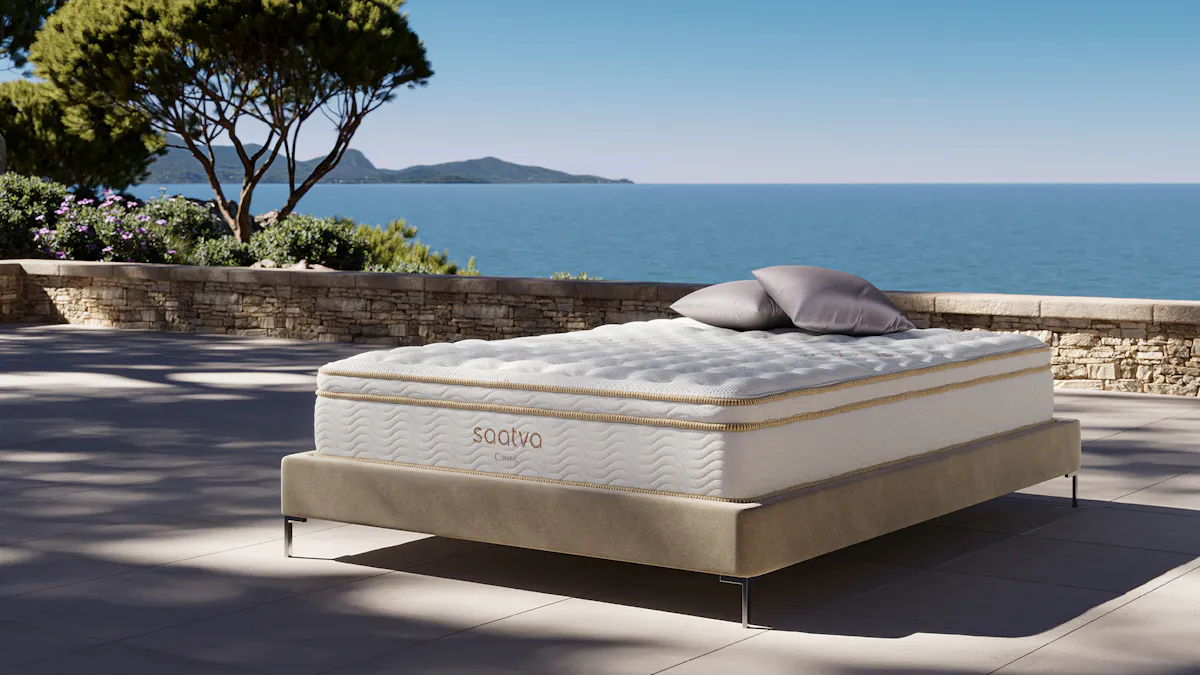
A premium online reference earns its place only after the Sydney checkout is visible. I’d use the Saatva Classic as that reference, not call it the cheapest local option on name alone. Its live listing and checkout should establish the active price, offer, currency, postcode eligibility, delivery arrangements and purchase terms.
Until those details appear in writing, treat them as unknown. Don't assume a product is stocked locally, available for pickup or covered by a convenient return route merely because its product page is accessible from Sydney.
Use the premium reference when:
- You want to compare a higher-tier option with local sale stock.
- The landed checkout total fits your existing budget.
- Postcode delivery and the return process are confirmed.
- The disclosed construction suits your intended use.
Treat it as an above-budget upgrade when:
- The full total exceeds your cap.
- Currency or local delivery remains unclear.
- You are relying on the sale headline rather than the checkout terms.
A current offer can improve the price picture, but it cannot establish Sydney value by itself. The comparison still needs the same mattress size, known condition, landed cost and realistic exit route if the purchase doesn't work out.
My view is simple: premium can be a reasonable choice, but a sale-led search makes budget compliance non-negotiable. Don't relabel an expensive order as a bargain merely because the advertised reduction looks large.
Sydney delivery and return checks
A narrow terrace stair, apartment lift booking or outer-suburb postcode can turn an apparent deal into a logistics problem. The practical winner is the mattress that can reach the intended room without introducing an unplanned cost or an unresolved delivery risk.
Before payment, ask the seller to confirm the whole delivery path. A generic “Sydney delivery” statement isn't enough if it doesn't address your postcode, building access and requested service level.
Get these points confirmed
- Whether the exact postcode is served.
- Where delivery ends: kerb, doorway or chosen room.
- Whether stairs, lifts or difficult access affect the service.
- How appointments and missed deliveries are handled.
- Whether packaging or an old mattress can be removed.
- How transit damage must be reported.
- How a return is started and who arranges collection.
- Whether return transport or condition requirements apply.
- How refunds are issued, including the currency used.
- Who handles a later warranty claim.
A return policy, comfort trial and warranty answer different questions. Read each separately. Find out what triggers eligibility, what condition the mattress must be in, who pays for movement, and whether a local collection route actually exists.
Financing also needs a total-cost check. A smaller recurring payment doesn't prove that the mattress costs less. Review the total repayable amount, interest, account fees and missed-payment terms before comparing finance with an upfront purchase.
Keep the order confirmation, product description, delivery promises and policy wording together. Photograph packaging or damage before disposal if a problem is visible. Clear records make it easier to show what was ordered and what arrived.
Sydney-specific reality: postcode eligibility is only the first check. The service must also work with the building, room access and return route attached to that address.
Who should purchase now and who should wait
If your existing mattress has failed and you need a replacement promptly, delivery certainty may matter more than waiting for another promotion. Even then, urgency shouldn't erase your price cap or the need for written terms.
The case for purchasing:
- The exact model, size and condition are identified.
- The full checkout total fits the planned budget.
- Delivery to the room is practical and confirmed.
- The construction suits the intended sleeper and base.
- The return route is clear enough to accept.
The case for waiting:
- The price currency or final total remains unclear.
- Meaningful construction details are missing.
- Local stock or delivery is being assumed.
- A bundle is adding items you don't need.
- The premium option sits beyond your spending cap.
I would also wait if the sale countdown is doing more work than the product information. A sound purchase should still make sense after the urgency language is removed. The mattress, delivery and terms must carry the case.
My verdict: compare the landed checkout total first, then construction and ownership risk. A Sydney sale is worthwhile only when the mattress fits, the logistics are workable and the final amount respects your budget.
ONE OPTION WORTH COMPARING
Shopping as well as reading? Here is one current option worth comparing: the Saatva Classic. Check today’s price, sizing and return terms on the official product page before you order.
Saatva Classic
- 365-night home trial and lifetime warranty, per saatva.com
- Handcrafted in the USA, free white-glove delivery
- Flexible financing available
FAQ
A discount headline and a final checkout answer different questions. These are the points I would settle before paying.
How can I tell whether a Sydney mattress discount is genuine?
Ask for the exact mattress-only price in a named currency, then compare the same model, size and condition across written quotes. A saving claim is useful only when its reference price and payable total describe the same purchase.
Is buying online or in a Sydney store cheaper?
Neither route is automatically cheaper. Online only wins if the landed checkout and return path are competitive, while local purchase may work better when pickup, access or after-sale handling reduces the overall cost and risk.
Should I buy a floor or clearance mattress?
Only after inspecting the exact unit and getting its condition, packaging status, return terms and warranty eligibility in writing. Walk away if staining, odour, damage, support wear or prior handling can't be resolved clearly.
What if the mattress is priced in another currency?
Compare it in the currency your payment method will settle and include any conversion costs shown by the issuer. Confirm the refund currency and process as well, because returning the order shouldn't leave that financial detail unresolved.
What matters more, sale price or mattress construction?
Both matter, but price alone can't reveal value. Get the layer map, material details, support design, care requirements and return route, then decide whether the final cost makes sense for how the mattress will be used.