
 by
by Quick answer: Match topper weight to your build and sleep position. Lighter frames want a softer, lower-density layer. Heavier frames need dense foam or latex, or the topper bottoms out and you feel the mattress again.
- Topper "weight" is really three things stacked together: material density, thickness, and how much the finished piece actually weighs in your hands.
- Price tracks material, thickness and brand more than any other variable, according to the 2026 topper price guide published at designtransitionstudio.com.
- Sleepopolis matches toppers to sleeper type rather than crowning one universal winner, which is the same logic a weight chart should follow.
Updated July 2026 · Reviewed for accuracy
There is no single correct topper weight. There is a correct topper weight for your body on your mattress, and the two people arguing about it online are usually both right for themselves. I have spent years pulling toppers apart and looking at what the foam actually does under load, and the pattern is consistent: the heavier the sleeper, the denser the layer has to be before it stops collapsing.
So let's build the chart properly, then explain why every cell in it says what it says.
The mattress topper weight chart
Read this by finding your build down the left, then your usual sleep position across the top. The cell tells you the density class to shop for, not a brand.
| Your build | Side sleeper | Back sleeper | Stomach sleeper |
|---|---|---|---|
| Lighter frame | Low to medium density, generous loft. Plush memory foam, wool, or fiberfill. | Low to medium density, modest loft. Wool or soft latex. | Thin and firm. Wool or dense latex, nothing pillowy. |
| Average frame | Medium density with real thickness. Memory foam or soft latex. | Medium to high density, moderate loft. Latex or supportive memory foam. | High density, low loft. Firm latex or dense polyfoam. |
| Heavier frame | High density, thick. Dense memory foam or medium latex, nothing floppy. | High density, moderate loft. Latex holds up better than soft foam here. | Highest density, thinnest loft. Firm latex only. |
| Couple, mixed builds | Buy for the heavier partner, then soften the lighter side with a mattress pad. | Latex, because it responds the same on both sides instead of pooling. | Firm and thin, or split toppers on a split base. |
Notice what the chart does not do. It never tells you to buy the thickest thing available. Thickness and density pull in opposite directions once body weight goes up, and getting that trade wrong is the most common way people waste money on a topper.
Three different things get called "weight"
This is where most shopping goes sideways, because the word is doing too much work.
Density is how much material is packed into a given volume of foam. It is the number that predicts durability and support. Denser foam resists compression longer and sags later.
Loft is how tall the topper sits. It changes how much of your body sinks in before the mattress underneath takes over.
Shipping weight is what the box says. It is a rough proxy for density at the same loft and size, and nothing more.
Two toppers can share identical loft and feel completely different because one is dense and one is airy. The dense one holds a heavier sleeper up. The airy one flattens under the same hips and you end up sleeping on your mattress with an extra sheet on top. As the guide at matelas-expert.fr lays out in its 2026 topper buying guide, material and thickness are the two decisions that determine whether a topper works at all, and both of them are really questions about density in disguise.
When a listing gives you shipping weight but no density, treat the number as a hint rather than a spec. Same size, same loft, heavier box usually means denser foam. Different sizes or different materials, and the comparison falls apart. Our companion piece on choosing the right weight of a mattress topper walks through how those factors interact in more detail.
Why your body weight changes the answer
Foam does not care about your opinion, it responds to load. A lighter sleeper generates less pressure per square inch, so a soft, low-density layer contours nicely and still leaves material underneath doing its job. Put a heavier sleeper on that same layer and the foam compresses all the way through. That is bottoming out, and it is not a comfort preference, it is a physics failure.
The failure looks like this in practice. You lie down, it feels wonderful for a week, then your hips start meeting the mattress again. The foam did not break. It simply ran out of material to compress before your body stopped moving downward. The fix is more density, not more thickness. Thicker soft foam bottoms out just as hard, it only takes a fraction of a second longer.
Heavier sleepers also compress a topper for more hours across the year, which shortens the life of any given density. That is why the chart pushes heavier frames toward latex. Latex pushes back rather than melting, and it recovers its shape between nights instead of holding an impression.
Sleep position matters as much as the scale
Weight sets the density floor. Position sets the loft ceiling.
Side sleepers land on a narrow strip of shoulder and hip, so they need somewhere for those joints to go. That means more loft and a softer surface, with enough density underneath to stop the descent before the mattress interrupts it. Back sleepers need the lumbar gap filled without the hips dropping, so moderate loft with firmer support wins. Stomach sleepers are the strict case: any meaningful loft lets the pelvis sink and the lower back arch, so they want the thinnest, firmest layer on the chart or no topper at all.
The Nut's rule of thumb: if you switch positions all night, buy for the position you fall asleep in and the position you wake up in. Those two are where you spend the most consecutive time under load.
Materials, ranked by how they carry weight
Every material on the market handles load differently, and that difference is more useful than any comfort adjective.
- Latex. Highest support per unit of thickness. Elastic rather than slow-moving, so it lifts as much as it cradles. Best pick for heavier frames and for couples, because it responds the same everywhere instead of pooling toward the heavier side.
- Memory foam. Contours best, supports least at equal density. Excellent for lighter and average side sleepers who want pressure relief. Denser versions handle more weight, and they run warmer because the material hugs more surface area. Gel and graphite infusions exist specifically to fight that, and Saatva's Graphite Topper is one example of that construction sold in the bedding category.
- Wool. Compresses to a thin, resilient pad rather than a sink-in layer, and it manages moisture better than foam. A sensible choice for stomach sleepers and for anyone who found memory foam too hot. Our wool mattress topper guide covers how the fill weight behaves over time.
- Polyfoam. The budget tier. Fine at high density, disposable at low density. This is where most of the flattening complaints come from.
- Feather and fiberfill. Soft surface, almost no support. Treat these as bedding rather than as a structural fix for a mattress that is too firm.
Sleepopolis, whose team tries toppers both at home and in their studio, frames its recommendations around which sleeper each topper suits and who should steer clear. That is the honest way to do it. A topper is a matching problem, not a leaderboard.
The mattress underneath decides half of it
A topper cannot fix a broken mattress, and buying a heavier one to compensate makes the problem worse.
If your mattress has developed a body impression, a dense topper bridges the dip for a while and then follows it. You get the same valley with extra padding in it. If the mattress is simply too firm but structurally sound, a topper is exactly the right tool, and the chart above applies cleanly. If the mattress is too soft and you are sinking, only a firm latex layer helps, and even then it is a delay rather than a cure.
The other thing the base changes is heat. A topper adds a layer between you and whatever ventilation your mattress has. On an innerspring or hybrid with airflow through the coils, a thick memory foam layer cuts that off. On a foam mattress that already sleeps warm, adding more foam compounds it. This is where wool and latex earn their keep, and where I would think twice before adding loft for its own sake. If wool is where you land, our wool topper breakdown goes deeper on construction and long-term behavior.
Mistakes that ruin an otherwise good choice
The 2026 buying guide at matelas-expert.fr singles out a short list of errors buyers keep repeating, and my own reading of owner complaints lines up with it.
Buying loft instead of density. Thick and soft feels great in the store aisle and bottoms out in your bedroom.
Ignoring the fitted sheet. Add real loft and your existing sheets stop reaching the corners. The topper then shifts every night and you blame the foam.
Treating a topper as mattress surgery. Sagging, broken coils and worn-out edges are mattress problems. A topper masks them briefly, then reproduces them.
One more from me: judging a foam topper in the first few nights. Fresh foam out of compressed packaging is stiffer than settled foam, and memory foam in particular changes with room temperature. Give it a couple of weeks before deciding the density was wrong.
How to price the decision without overpaying
Topper cost is driven by material, thickness and brand, per the topper price guide published at designtransitionstudio.com, and those three levers move independently. Latex sits above foam. Thicker sits above thinner in the same material. Brand markup sits on top of both.
What that means practically: if you are a lighter sleeper, the chart puts you in the cheapest quadrant of the market, and spending up buys you very little. If you are a heavier sleeper, the density you need lives in the more expensive tier, and buying below it is the false economy that produces a replacement purchase within a year or two. Check current pricing on the official site of whatever you shortlist, because topper pricing moves constantly across retailers.
The Sleep Sage topper guide runs the same structure, pairing a recommended buyer profile with pricing context rather than naming one product for everyone. When several independent editorial teams organize the category by sleeper type instead of by rank, that is a signal worth trusting.
FAQ
Does a heavier topper always mean better quality?
Not by itself. Shipping weight only signals density when you are comparing the same material at the same size and loft. A heavy fiberfill topper and a heavy latex topper have nothing in common structurally, and only one of them will support you.
What topper weight should a heavier sleeper choose?
High density, and less loft than you would expect. Denser material resists compression instead of collapsing under concentrated pressure at the hips and shoulders. Latex generally outlasts soft memory foam for heavier sleepers because it rebounds rather than holding an impression.
Can a topper fix a mattress that already sags?
No. A topper adds a comfort layer, it does not restore support that has failed underneath. It will bridge a dip temporarily and then conform to it. If the mattress has a visible impression, the topper money is better saved toward a replacement.
Do couples with different body weights need two toppers?
Usually not two toppers, but do buy for the heavier partner. Latex is the most forgiving choice here because it responds consistently across the surface instead of letting the heavier side pool. If the lighter partner wants more softness, a thin mattress pad on that side is easier than splitting the topper.
Does topper thickness affect how hot I sleep?
Yes, indirectly. More material between you and the mattress means less airflow reaching your body, which matters most on innerspring and hybrid beds that vent through the coils. Wool and latex breathe better than dense memory foam, and infused foams are built specifically to offset that trade.
ONE OPTION WORTH COMPARING
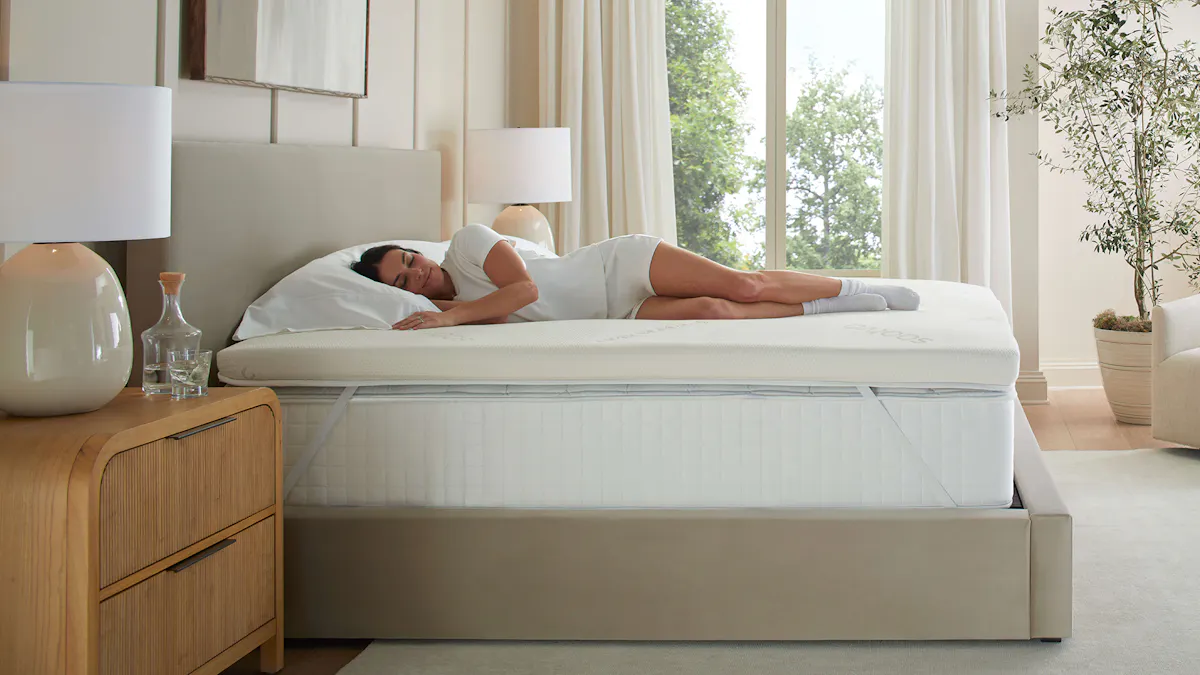
Shopping as well as reading? Here is one current option worth comparing: the Saatva Graphite Topper. Check today’s price, sizing and return terms on the official product page before you order.
Saatva Graphite Topper
- Graphite-infused memory foam, per saatva.com
- 180-night trial
- Secure anchor bands, fits deep mattresses
The verdict
Use the chart as a filter, not a prescription. Find your density class from your build, then let your sleep position set the loft, then let the mattress underneath veto anything that would smother its airflow or paper over a structural problem. That order matters, because density is the variable that decides whether the topper still works in year two, and it is the one shoppers skip first.
If you take one thing from this page: buy the density your body demands, and buy the least loft that gets your spine straight. Everything else is preference.