
 by
by Quick answer: Diamond builds foam-over-coil hybrids sold mostly through local retail floors, not direct-to-door boxes. Judge the model by its coil unit and foam density, not the collection name on the label.
- Independent reviewers including Dweva report Diamond's lineup leans on foam comfort layers, cooling-focused covers and coil support inside hybrid builds.
- Diamond's own trade announcements highlight its Air Response foam and the Auto Pilot 2.0 adaptive sleep platform, shown in its Las Vegas showroom B-975 to retail buyers.
- Because Diamond sells through retail partners, price, trial terms and warranty coverage vary by store — confirm all three in writing before you pay.
Updated July 2026 · Reviewed for accuracy
People search "mattress nut diamond mattress" for one reason: they want a straight read on Diamond Mattress from someone who talks about construction instead of vibes. Fair enough. Diamond is a legacy West Coast manufacturer that sells largely through brick-and-mortar retail, which makes it harder to pin down than a one-model online brand.
So here's the honest frame. You're not really shopping "a Diamond mattress." You're shopping one specific build inside a wide catalog of collections, and the build is what decides whether you're happy in year four.
What Diamond Mattress actually is
Diamond is a manufacturer with a broad assortment rather than a single hero bed. Independent reviewers who've covered the range, including Dweva and Yawnder, describe a lineup spanning several price tiers, with hybrid constructions that stack foam comfort layers over a coil support system and finish with covers built around cooling.
That breadth is the whole story. A wide assortment means the entry models and the flagship models can feel like they came from different companies, because in construction terms they nearly did. One might use a thin foam quilt over a basic innerspring. Another layers proprietary foam over individually wrapped coils with reinforced perimeters. Same brand badge, very different lifespan.
Diamond also leans into technology as a differentiator. Its trade communications spotlight Air Response foam across newer cooling, comfort and youth models, and the Auto Pilot 2.0 platform for adaptive sleep, which the company has been showing to retail buyers from showroom B-975 in Las Vegas. Trade-show positioning tells you where a brand invests. It doesn't tell you how a specific bed holds up, and I won't pretend otherwise.
The Nut's read: when a brand sells through dozens of independent retailers, the model name on the law tag matters more than the collection name on the marketing card. Two beds can share a collection and differ in coil count, coil gauge and foam density. Always get the spec sheet.
The construction details that decide everything
Skip the adjectives on the point-of-sale card. Four things predict how a hybrid ages, and they apply to every Diamond model just as they apply to every competitor.
Coil type and gauge. Individually wrapped (pocketed) coils move independently, which cuts motion transfer and lets the surface contour. Connected innerspring units are cheaper and sleep more like a single plank. Gauge is the wire thickness: lower number, thicker wire, firmer and more durable response. Retail staff can usually pull this from the manufacturer spec sheet if you ask.
Foam density. This is the single best durability predictor in a foam comfort layer, and the number almost nobody volunteers. Low-density comfort foam feels great in the showroom and develops body impressions fastest. If a salesperson can't produce a density figure from the manufacturer, treat the softest, thickest comfort layer as the part most likely to soften first.
Perimeter reinforcement. Edge support comes from firmer coils or a foam encasement around the border. Without it, sitting on the side to put on shoes collapses the edge over time, and the usable sleep surface shrinks toward the middle.
Cover and quilt. Cooling covers, including the phase-change and airflow-oriented designs reviewers describe across Diamond's range, work at the surface. They help with the initial touch and with wicking. They do not fix heat trapped several inches down in a dense foam core, so don't let a cool-to-the-touch panel sell you a build that's otherwise wrong for you.
Buying through a retail floor changes the rules
This is the part most Diamond shoppers underestimate. With a direct-to-consumer brand, the manufacturer sets one price, one trial and one warranty, published on one page. With a retailer-distributed brand, the store often controls the return window, restocking or pickup fees, and delivery terms. The manufacturer warranty covers defects, but the comfort-return policy is usually the store's.
The upside is real: you get to lie on the thing. Fifteen minutes on your actual sleep side, shoes off, pillow you'd use at home, beats any online guess. Take it.
Get these five answers in writing before you pay:
- The exact model name and the coil unit it uses (pocketed or connected).
- Comfort-return window, and every fee attached to it.
- Who handles a warranty claim, the store or the manufacturer.
- Whether a specific foundation or bed frame is required to keep coverage valid.
- Whether the floor sample matches the build that will be delivered.
How Diamond's approach compares to direct-to-consumer hybrids
Not brand-versus-brand scoring, because the data to do that fairly across Diamond's full catalog isn't public. This is a channel comparison, and it's the tradeoff that actually shapes your experience.
| Factor | Retail-distributed (Diamond's model) | Direct-to-consumer hybrid |
|---|---|---|
| Try before buying | Yes, on the showroom floor | No, you rely on the home trial |
| Price transparency | Varies by store and negotiation | One published price |
| Return terms | Set by the retailer, fees common | Set by the brand, published |
| Spec disclosure | Ask staff for the spec sheet | Usually listed on the product page |
| Model clarity | Many collections, names overlap | Few models, easier to compare |
Neither column wins outright. If you have strong opinions about feel and a good local store, the showroom route is genuinely useful. If you want documented specs and a no-argument return path, the direct model is cleaner. Saatva sits in an interesting middle position, handcrafted in the USA and sold direct with published terms, white-glove delivery and financing options, for readers who want luxury construction without a retail negotiation. Check the current offer on the official site.
Matching a Diamond build to how you sleep
Side sleepers. You need enough comfort layer to let the shoulder and hip sink while the waist stays supported. On a firm Diamond hybrid with a thin quilt, expect shoulder pressure. Look for a plusher comfort layer over pocketed coils.
Back sleepers. Medium to medium-firm usually wins. Too soft and the hips drop below the ribcage; too firm and the lumbar curve loses contact. A responsive foam layer over a firm coil unit is the pairing to hunt for.
Stomach sleepers. Go firmer than instinct suggests. A thick soft comfort layer lets the pelvis sink and hyperextends the lower back. Thin quilt, firm coils.
Heavier sleepers. Coil gauge and total build height matter more than surface plushness. Thicker wire, higher coil count, dense transition foam. Ask specifically whether the model is rated for higher weight, and check the foundation requirement, because an inadequate base voids coverage on most brands.
Couples with different preferences. Pocketed coils and a genuine perimeter reinforcement do more for you than any comfort rating compromise. Motion isolation and full-width usable surface are the two things you'll notice nightly.
Showroom trap: a bed that feels perfect for ninety seconds under bright lights often feels wrong at 3 a.m. Foam softens with body heat and time. If two models feel close, choose the firmer one, because comfort layers break in downward, never back up.
Owner feedback: what to read and what to ignore
Diamond has enough market history that independent aggregators including SlumberSearch and dedicated review sites like SleepSage publish customer-sourced feedback on specific models. Read those by model, never by brand. A brand-level average across a catalog this wide tells you almost nothing about the bed in your bedroom.
What's worth your attention in owner reviews: comments after the first year, notes about body impressions or sagging, and any pattern in how warranty claims were handled. What isn't: first-week enthusiasm, and complaints about delivery that reflect the retailer rather than the mattress.
If you want the model-level breakdown of Diamond's collections, my Diamond Mattress reviews page goes deeper on the individual builds. And if your shortlist has drifted toward boxed hybrids, the Zoma hybrid breakdown covers a foam-over-pocketed-coil build at a very different price tier, which is a useful contrast for understanding what your money buys in each channel.
Where I'd push back
Two things about shopping this brand irritate me, and neither is about mattress quality.
First, the naming. Broad collections with overlapping names make comparison shopping harder than it needs to be. Two models that sound like siblings can differ meaningfully in coil unit and foam spec, and the shopper carries the burden of figuring that out.
Second, spec opacity at retail. Coil counts and foam densities exist on manufacturer sheets. They should be on the tag, not something you have to extract from a salesperson. If a store won't produce them, that's information about the store, and I'd shop elsewhere. This isn't unique to Diamond, it's endemic to retail mattress selling, but it's why I keep pushing readers toward construction questions instead of comfort adjectives.
None of that makes Diamond a bad buy. It's a long-standing US manufacturer building hybrids that reviewers consistently describe as foam-over-coil with cooling covers, and the newer Air Response and Auto Pilot 2.0 work suggests ongoing investment rather than coasting. It just means the burden of diligence sits with you.
The short version
Diamond makes hybrids worth considering if you have a good local retailer and you're willing to ask construction questions. Get the model name, the coil type, the foam density and the return terms in writing. Lie on it for fifteen real minutes. If two options feel close, take the firmer one.
If documented specs and a published return policy matter more to you than a showroom visit, a direct-to-consumer hybrid is the cleaner path. Neither choice is wrong. Going in without the spec sheet is.
ONE OPTION WORTH COMPARING
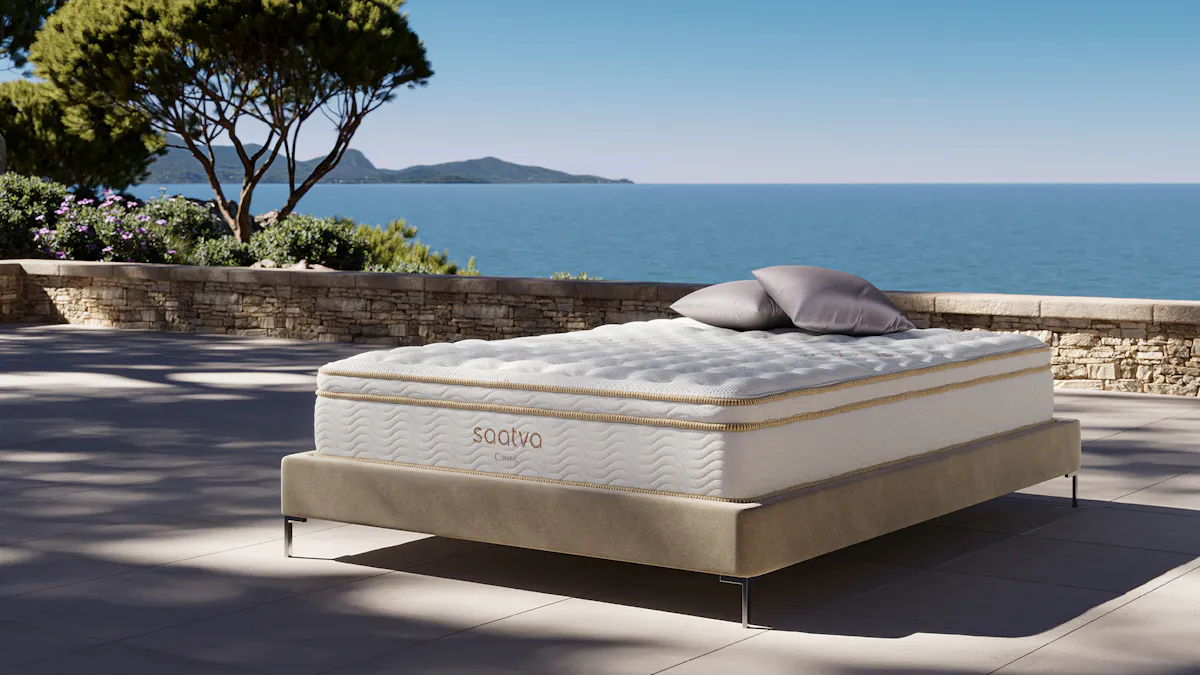
Shopping as well as reading? Here is one current option worth comparing: the Saatva Classic. Check today’s price, sizing and return terms on the official product page before you order.
Saatva Classic
- 365-night home trial and lifetime warranty, per saatva.com
- Handcrafted in the USA, free white-glove delivery
- Flexible financing available
FAQ
Is Diamond Mattress a good brand?
It's an established US manufacturer whose hybrids independent reviewers describe as foam comfort layers over coil support with cooling-focused covers. Quality varies by model rather than by brand, so evaluate the specific build's coil unit and foam density instead of the badge.
Where do you buy a Diamond mattress?
Primarily through retail partners rather than direct online sales. Diamond's trade communications emphasize giving retailers flexibility across their sleep assortment, which is why price, trial length and return fees differ from store to store.
What is Diamond's Air Response foam?
It's a proprietary comfort foam the company features in newer cooling, comfort and youth models, per its own product announcements. Diamond positions it as a way to broaden comfort options across price points. Ask the retailer for its density figure before assuming it will outlast a standard comfort foam.
What is Auto Pilot 2.0?
Diamond describes it as an adaptive sleep technology, shown alongside its new product range to retail buyers in its Las Vegas showroom B-975. It's a platform positioning play, so ask the retailer exactly what it does on the specific model you're considering and what happens to coverage if the tech fails.
Does the mattress warranty cover sagging?
Most manufacturer warranties cover body impressions only past a stated depth, measured with no weight on the bed, and only when the mattress sits on an adequate foundation. Confirm the depth threshold and the foundation requirement with the retailer in writing before you buy, since terms differ by model and seller.
Are Diamond mattresses cooling?
Reviewers covering the range note cooling-focused covers across Diamond's hybrid builds, and the company markets cooling as a core line. Surface materials help with initial touch and moisture wicking, but they don't offset heat retained in a thick foam comfort layer, so a hybrid with more airflow through the coil unit is the better bet if you run hot.