
 by
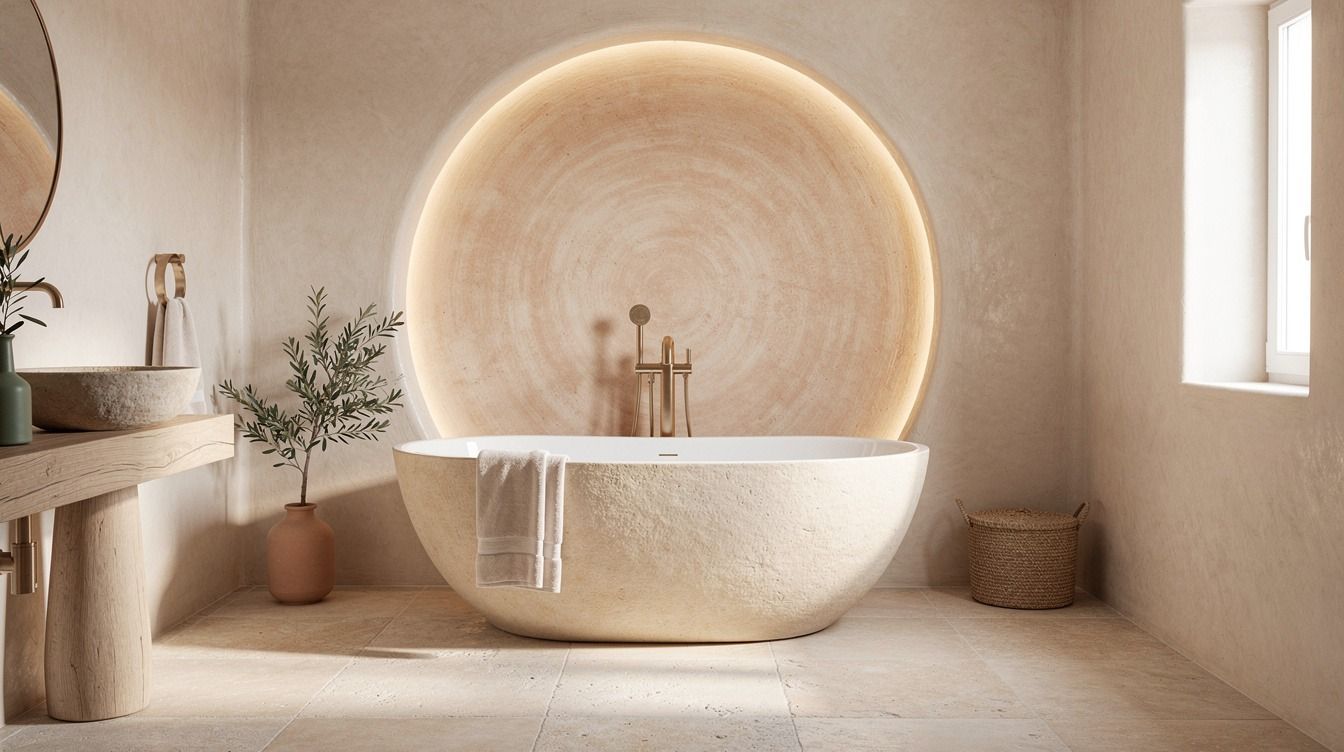
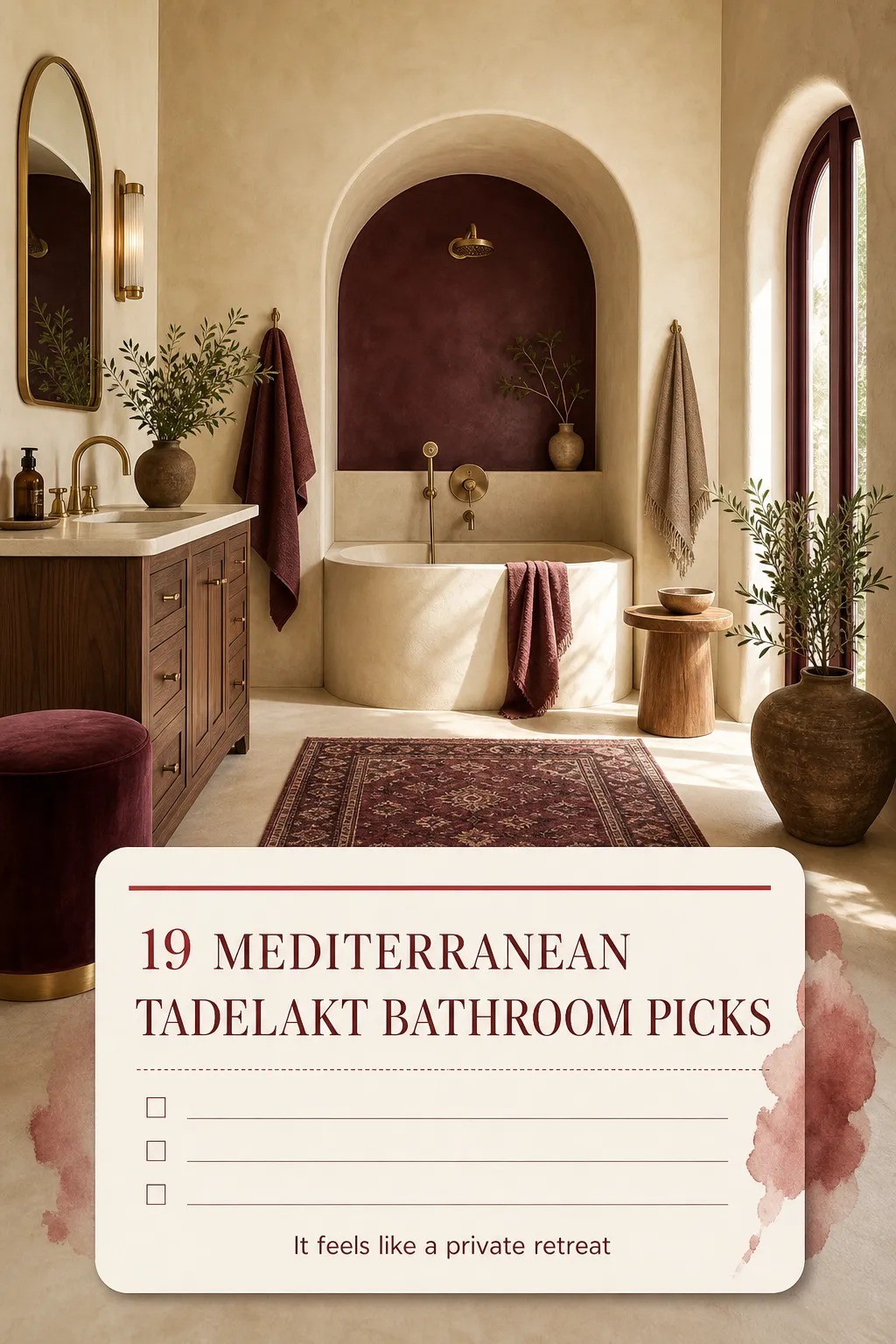
by Mediterranean tadelakt bathroom ideas for warm, coastal calm work because plaster, warm metal, and soft light can make even a small bath feel settled. I tackled mine while the room still had cold gray walls and a vanity I disliked. Two weekends later, it felt quieter, warmer, and far less like a rental box.
Don’t overthink: Paint the ceiling before you chase mediterranean minimalism interior.
Here's what it looked like before
Before, it was the full 2005 starter-home package: gray paint, a shiny chrome faucet, a narrow builder mirror, and tile that looked blue whenever the sky went cloudy. I kept trying to fix it with towels, which was ridiculous. Your bathroom can’t feel warm if every hard surface is fighting the next one.
The vanity sat at a usable 34 inches, but the white laminate front made it feel clinical. I measured the clear floor space, checked that the toilet still had its 21-inch minimum in front, then stopped pretending a total demolition was the only answer.
The bones were fine. The mood was not.
- Soften the walls with the Hand-Trowel Halo
- Paint the ceiling before you chase mediterranean minimalism interior
- Swap chrome for brushed brass with some restraint
- Build the Three-Height Light Stack
- Choose zellige over perfectly flat tile
- Frame the mirror like a weathered window
- Let the Two-Wood Rule keep your tuscan bathroom grounded
- Hang linen where you’d normally add more tile
- Float the vanity to make the floor feel larger
- Why should an earthy bathroom keep one dark note?
- Use the Bath-Ledge Pause instead of countertop clutter
- Bring in a striped towel that isn’t trying too hard
- Make a tiny stool earn its place
- Skip a busy rug for a long woven runner
- Mix handmade ceramics with one plain dispenser
- Put storage behind the Mediterranean Screen Effect
- Add an artful interruption above the toilet
- Let the shower hardware disappear into the plaster
- Finish with a scent you’d recognize with your eyes closed
1Soften the walls with the Hand-Trowel Halo
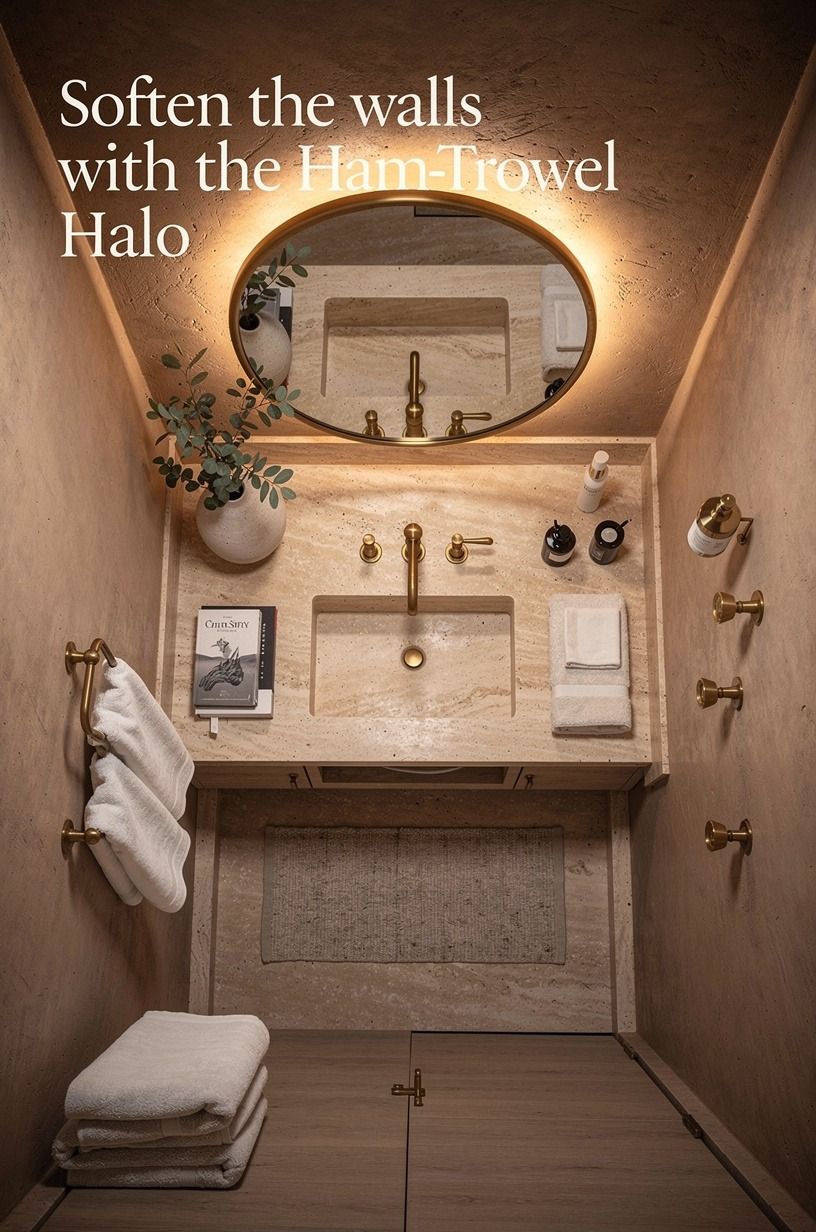
I chose warm travertine around the vanity because its soft variation makes your bathroom feel human. You don’t need every wall covered; I kept the wettest shower surfaces tiled and used travertine on the vanity wall. That choice saved my nerves and gave the room an earthy, calming backdrop.
I tested Benjamin Moore Chestertown Buff HC-9 beside the sample first. The paint read too yellow against the floor, while the stone held a muted clay cast in morning light. If you’re deciding between the two, I’d skip flat beige paint.
It sits on the wall. Travertine brings in a quieter kind of warmth. See more tadelakt bathroom ideas for hand-troweled beauty if you want that same soft movement.
2Paint the ceiling before you chase mediterranean minimalism interior
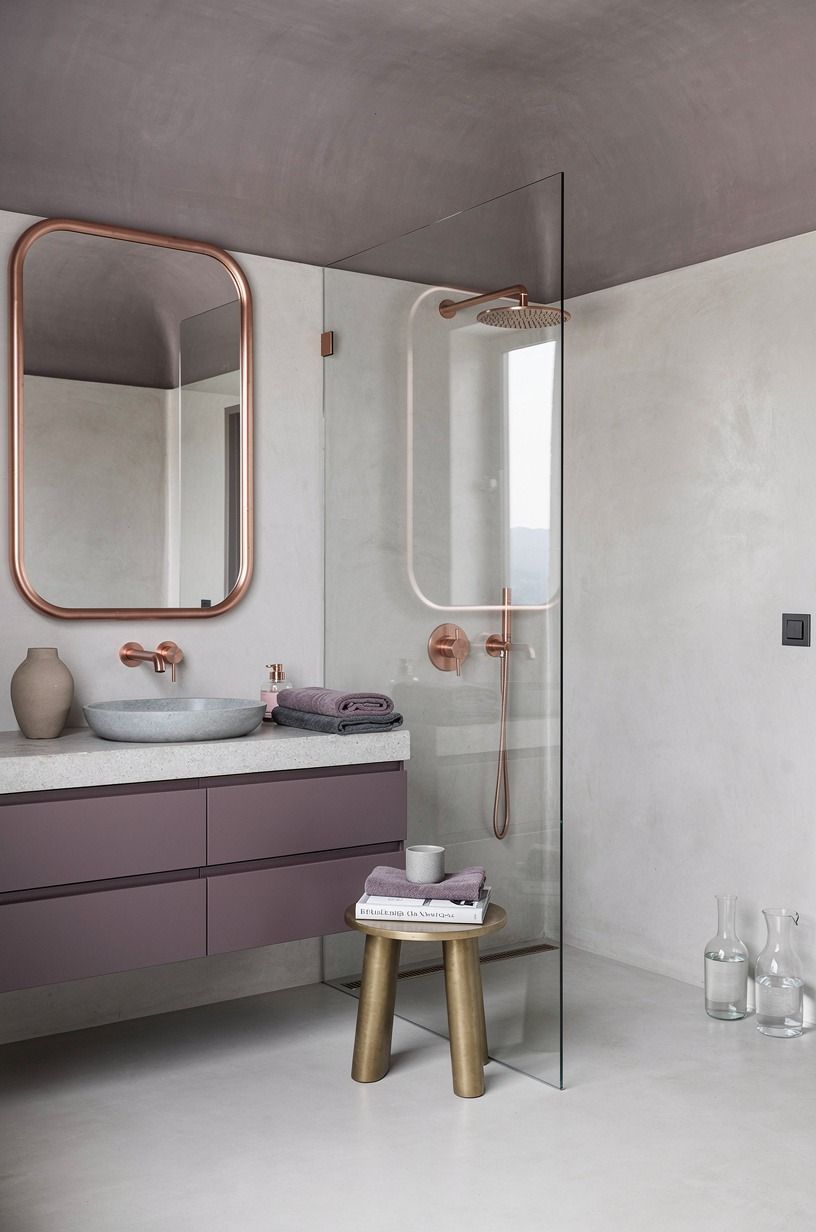
I painted the ceiling a muted plum rather than white, then let unlacquered brass age naturally nearby. It changed the room faster than the faucet did.
3Swap chrome for brushed brass with some restraint
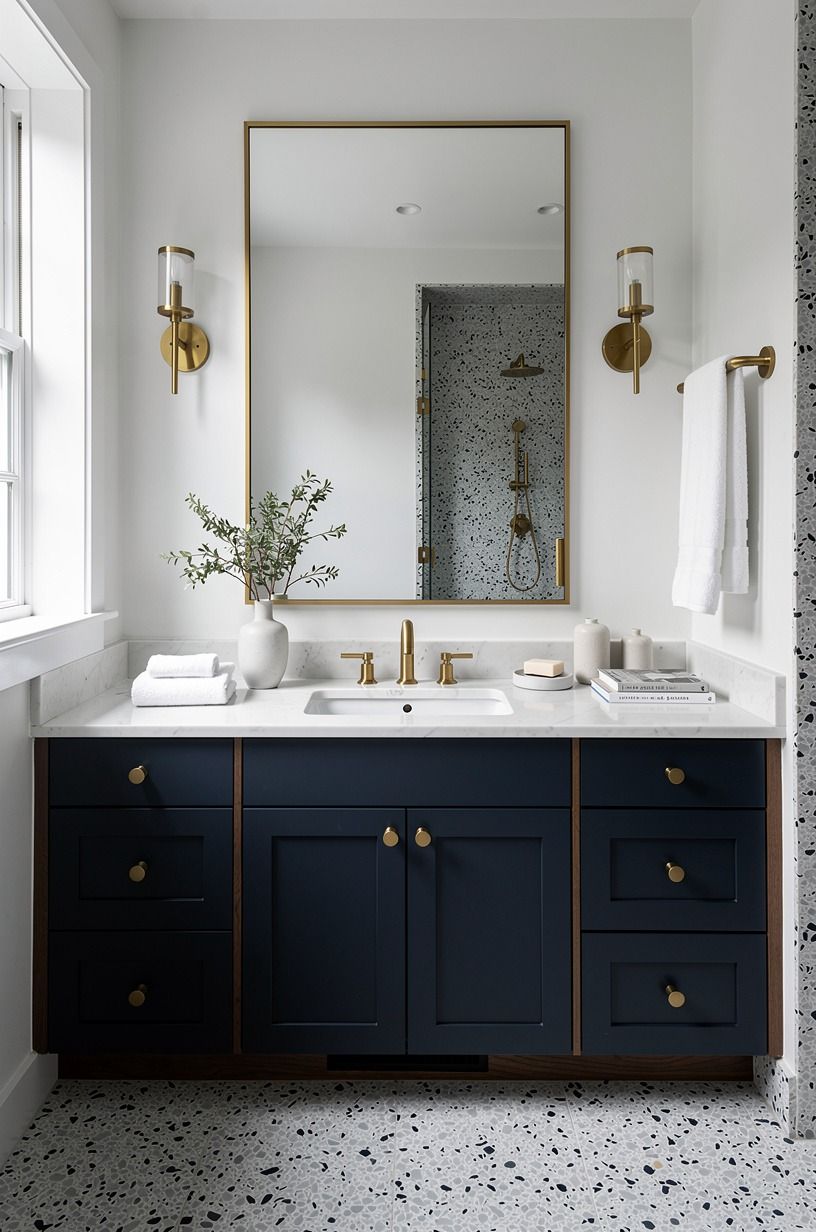
I stopped treating every update as a faucet decision and paired a navy wall with a walnut vanity and oversized-chip terrazzo instead. The mix gave the room some weight without making it feel formal. Your sink area needs one warm wood note and one durable surface, not a collection of shiny finishes fighting under every bulb.
Terrazzo can vary wildly in price, which is enough range to make comparison shopping worth your time. I’d avoid matching every accent, though.
Walnut vanity, terrazzo surface, maybe one small brass tray. A brass drain, brass toilet lever, brass everything?
Too rehearsed. You want patina, not a costume. For another warm-metal direction, browse these organic modern tadelakt bathroom ideas.
4Build the Three-Height Light Stack
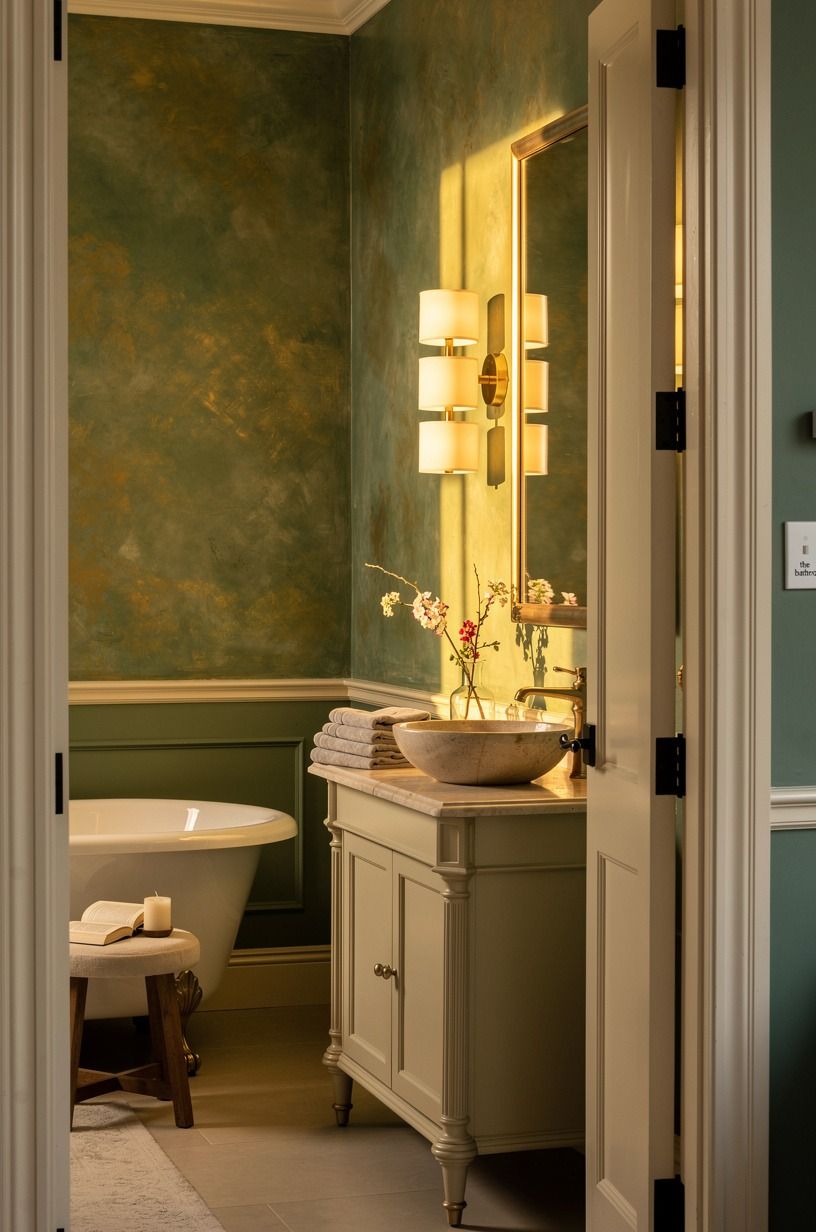
I learned this after living with one overhead fixture for too long: your face needs side light, and your room needs a lower glow.
5Choose zellige over perfectly flat tile
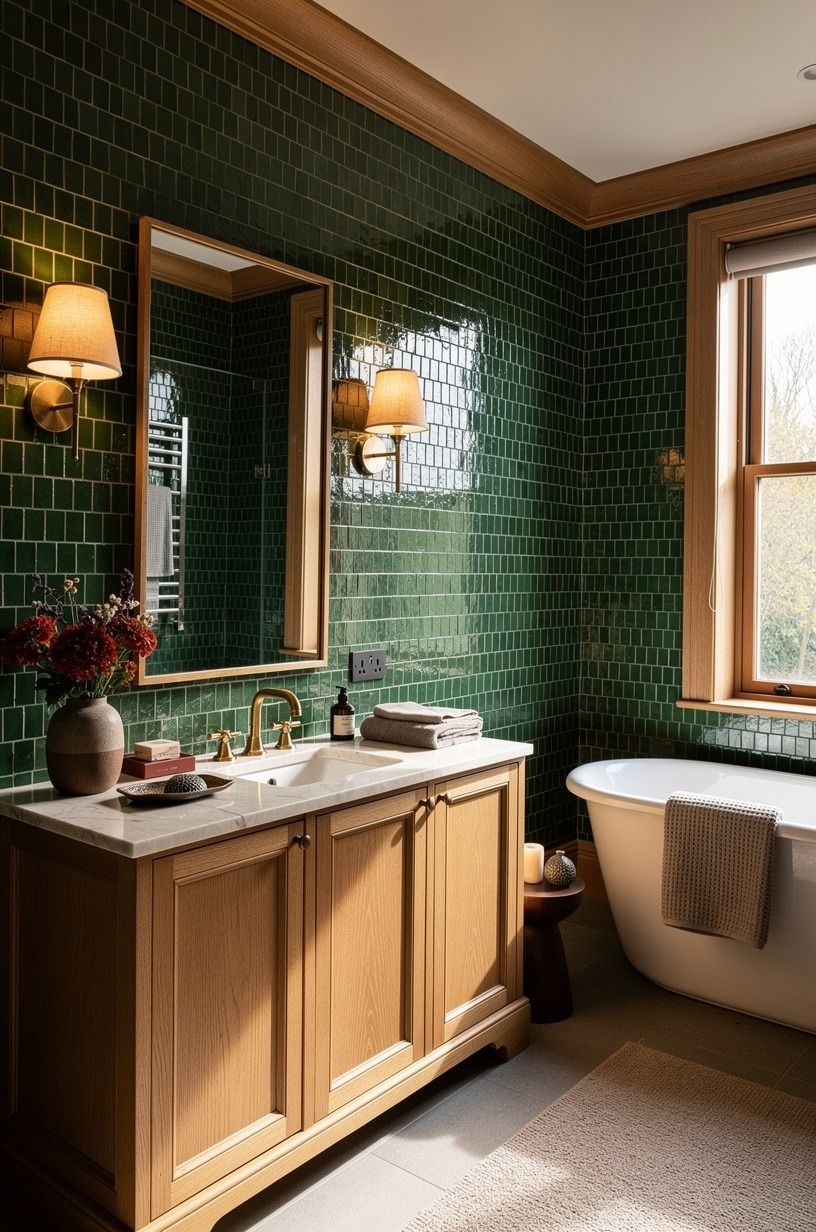
For the shower niche, I used a forest-green shagreen accent with rust and natural oak nearby. Your bathroom doesn’t need a huge wall of texture. A niche, a short backsplash, or a small vanity detail is enough to add that Mediterranean home feeling.
Shagreen is more of an investment than basic subway tile, so I wouldn’t put it on every surface if you’re watching the budget. The charm comes from contrast.
Smooth plaster beside a tactile accent is the point. Want more neutral combinations? These soft earthy zellige bathroom ideas are a useful reference.
6Frame the mirror like a weathered window
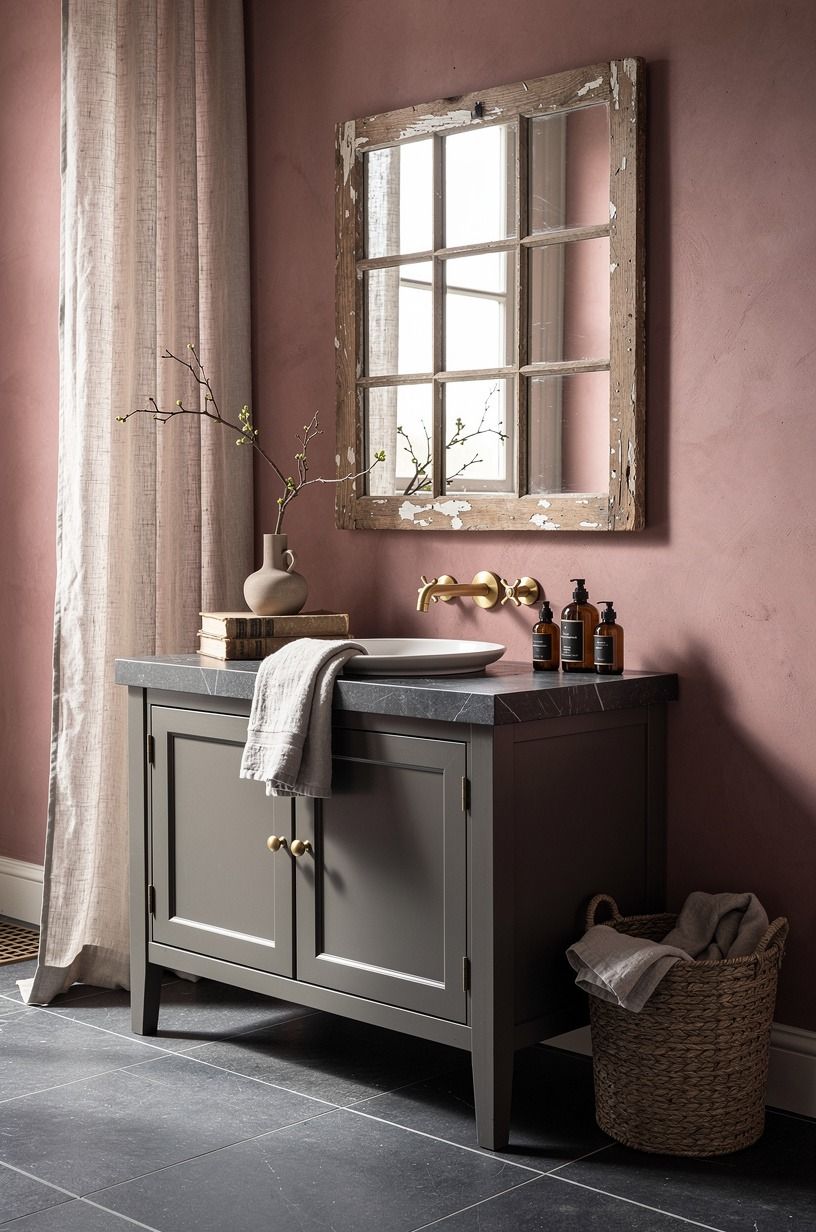
The old frameless mirror made the room look temporary. I softened that wall with washed Belgian linen in dusty rose, charcoal, and brass tones, and suddenly the space had more depth. Your mirror is usually the largest thing at eye level, so the materials around it can’t be an afterthought.
I kept the linen treatment simpler than I first planned. Too much rustic texture plus tadelakt can drift into theme-restaurant territory fast. A restrained panel was enough.
The brass sconces reflected softly nearby. That little bit of imperfection is what made the room welcoming.
7Let the Two-Wood Rule keep your tuscan bathroom grounded
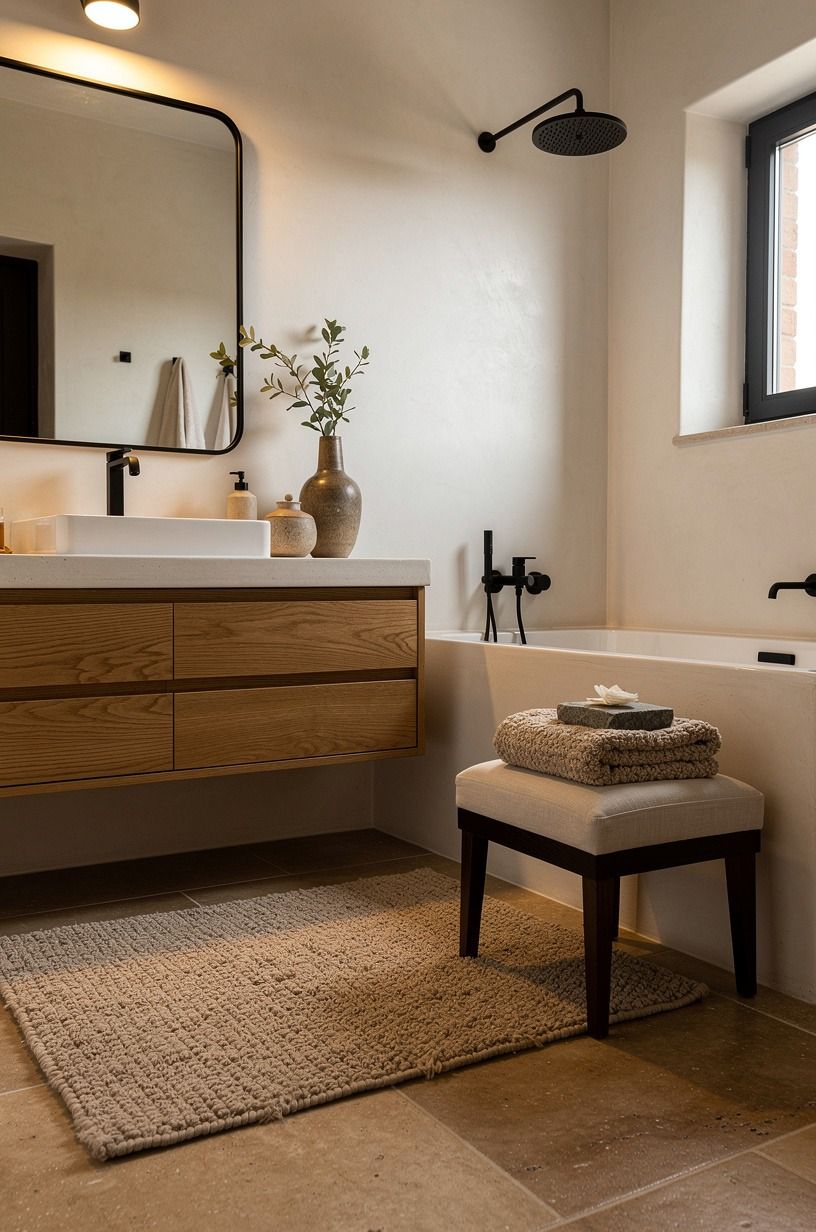
I used only two wood tones, then softened them with a warm-white bouclé seat and camel textiles. Your bathroom can handle contrast, but it can’t handle five unrelated stains fighting over six square feet. The Two-Wood Rule kept me from buying every charming teak stool I saw online.
A 3/4-inch solid white oak shelf gave me room for hand soap, a small dish, and a folded washcloth without sagging. I sealed it properly because bathrooms are wet, obviously.
I once skipped that step on a shelf near a shower, and the edge lifted within months. Don’t repeat my mistake.
If limewashed wood is more your speed, look at these rustic limewash bathroom ideas.
8Hang linen where you’d normally add more tile
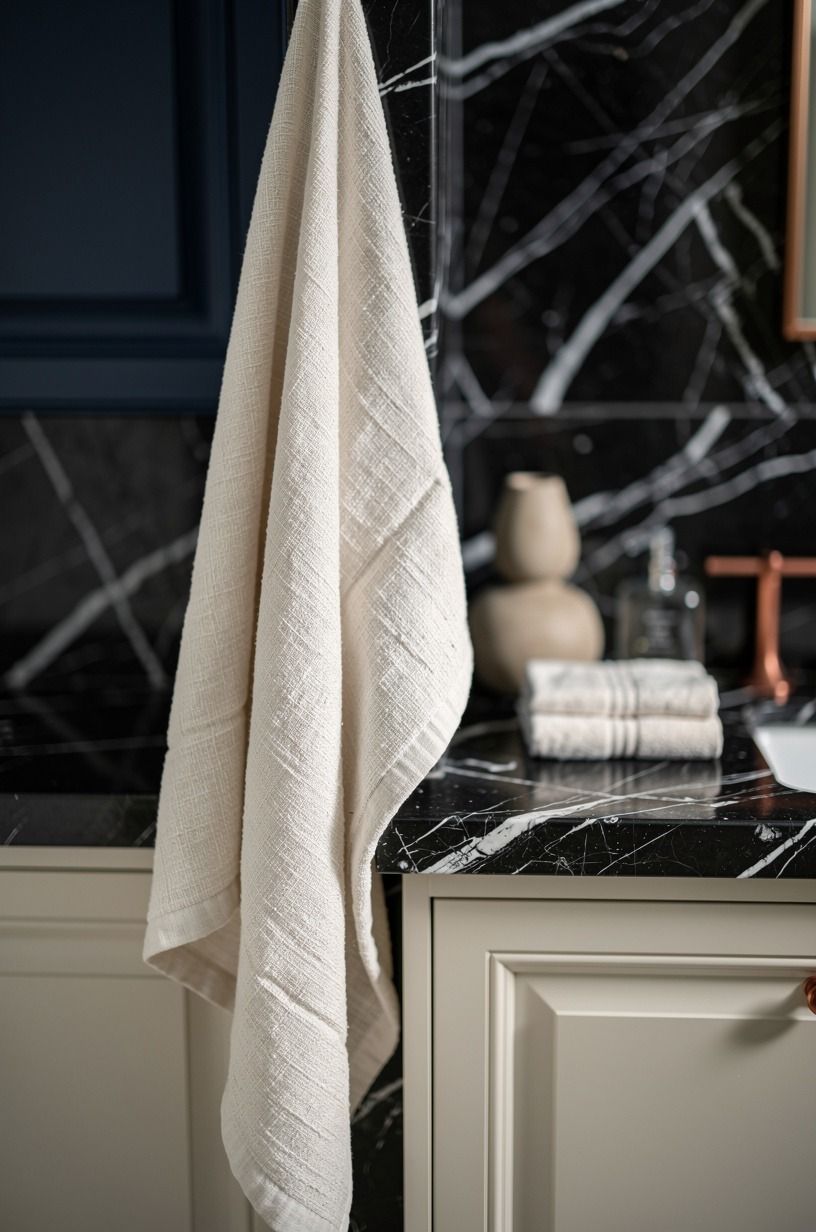
Instead of extending tile to the ceiling, I used Nero Marquina black marble with white veining around the high window. It softened the midnight-blue, copper, and ivory palette by giving it one crisp dark note. Your window treatment doesn’t need to be precious; the surrounding materials need enough presence that the room won’t feel limp when humidity rolls through.
I used a tension rod because I wasn’t ready to drill into the trim. The fabric is easy to take down, wash, and rehang.
And it gave the room a little privacy without shutting out the light. A woven shade would’ve felt heavier here.
Linen was the better call.
9Float the vanity to make the floor feel larger
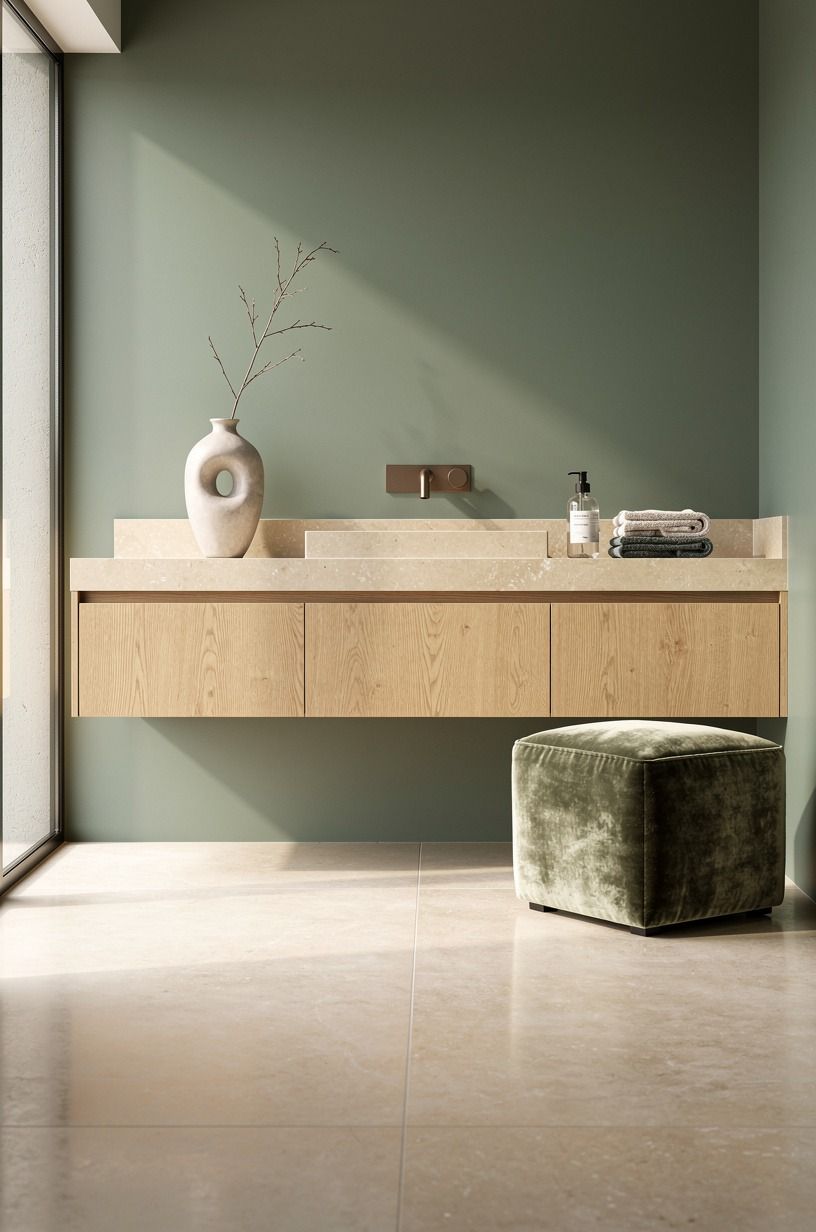
The old vanity touched the floor and made the small room feel crowded.
10Why should an earthy bathroom keep one dark note?
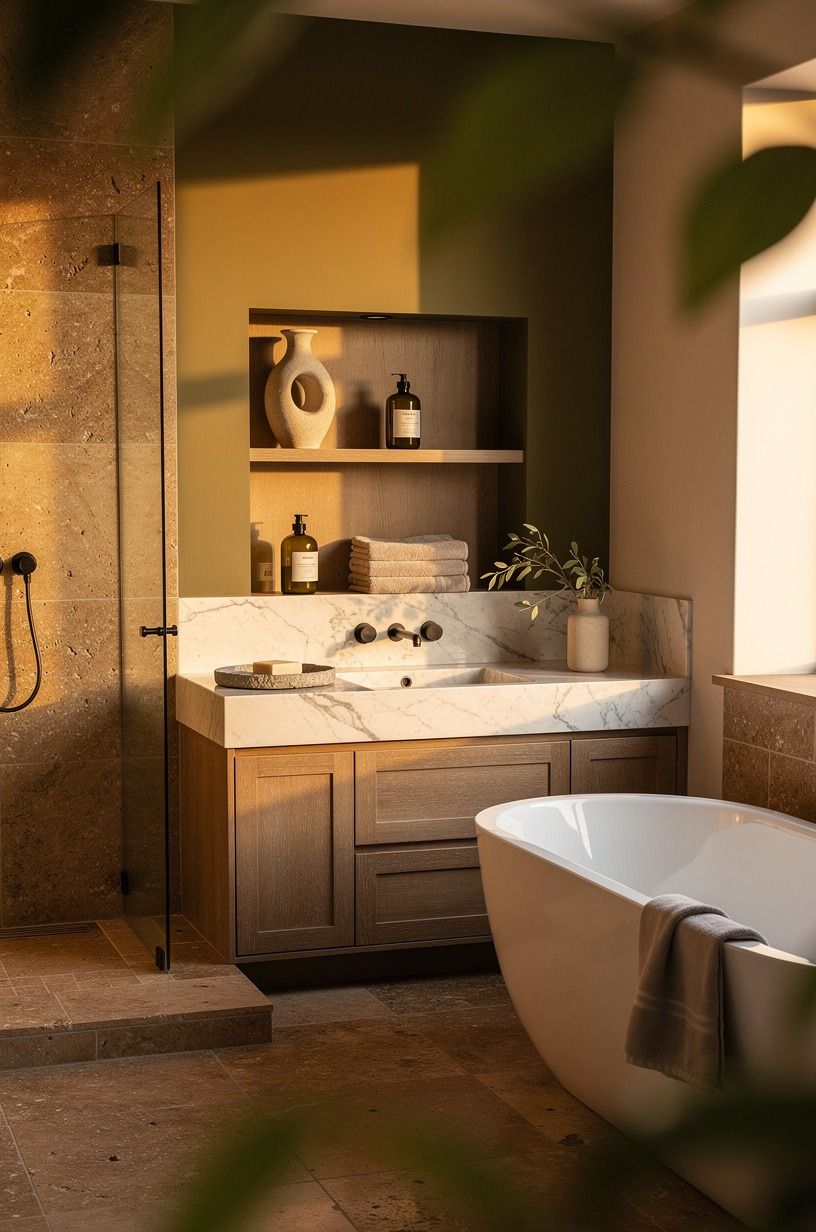
Because all pale surfaces can get timid. I added Carrara marble with subtle gray veining, and it gave the terracotta, stone, and olive palette a cool, grounded contrast.
Your room doesn’t need a navy feature wall. One restrained stone surface is enough to make the lighter materials look intentional.
The marble became the thing everyone mentioned first, which surprised me. I almost chose black, but black would’ve felt too graphic beside the plaster. Carrara has more softness and keeps the room calm at night.
It also made the unlacquered brass look richer. Small choice.
Big difference!
11Use the Bath-Ledge Pause instead of countertop clutter
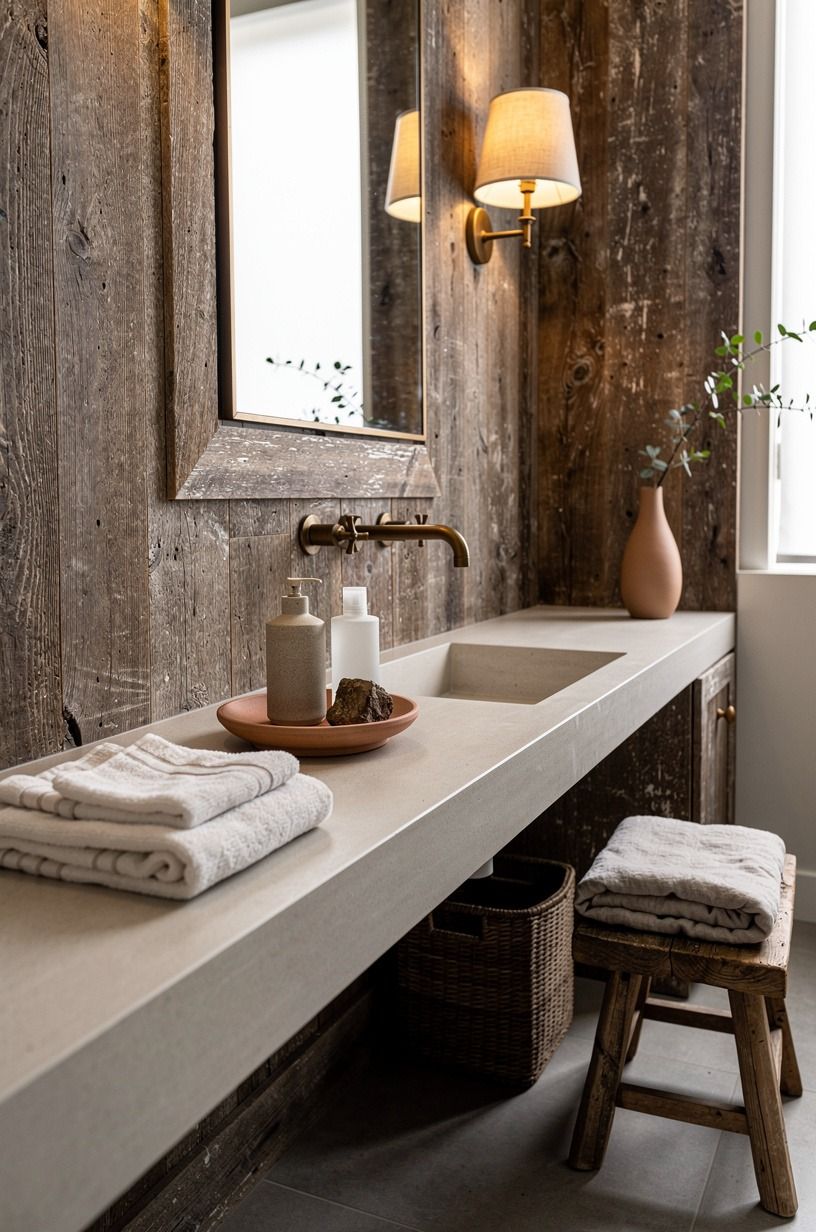
I placed one reclaimed weathered teak bath tray across the tub, then stopped. Your bathroom doesn’t need six jars, three candles, and a fake olive branch to feel lived-in.
It needs one place where your eye can rest. Mine holds a soap dish, a book, and sometimes nothing at all.
The standard tub is 60 by 30 inches, so I checked the tray length before buying. That sounds boring, but a too-short tray slides around and makes you hate it.
I chose reclaimed teak with a weathered finish because the surface echoes the tadelakt without copying it. That restraint feels refined.
12Bring in a striped towel that isn’t trying too hard
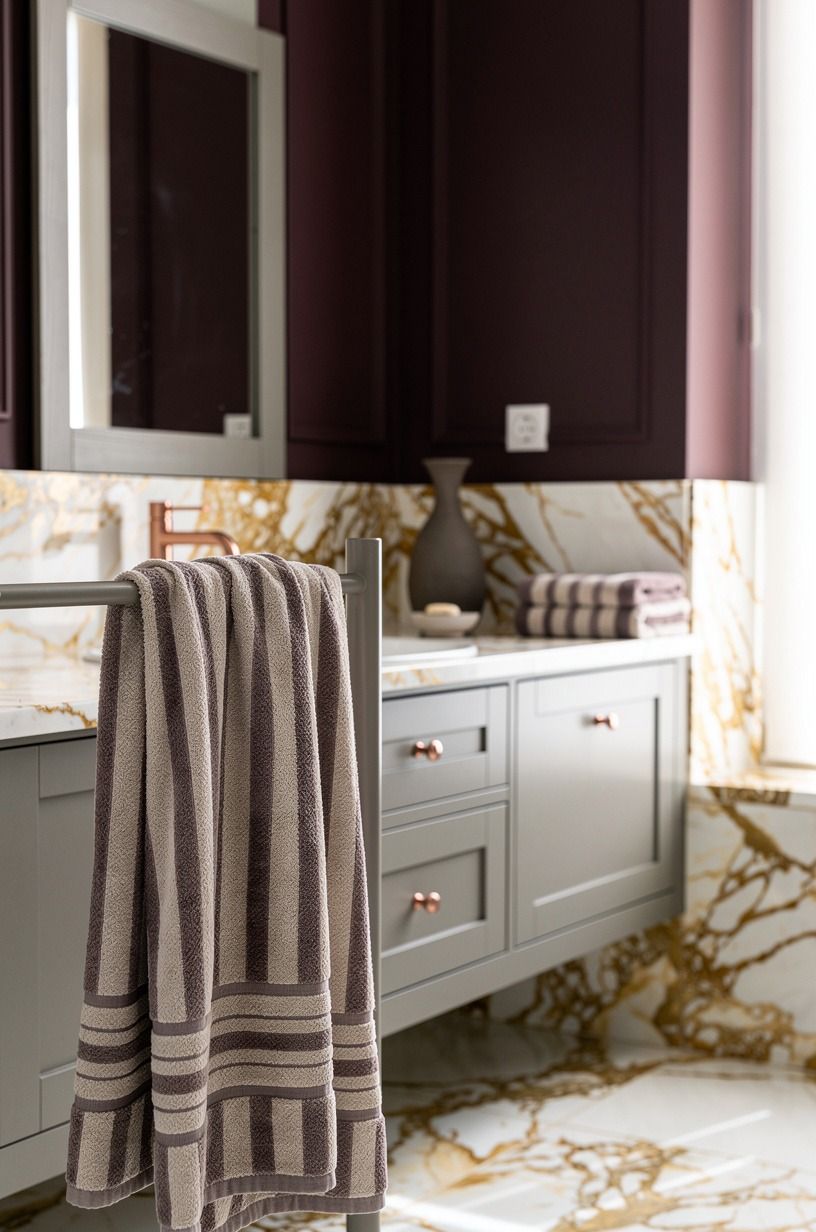
I bought 600gsm Turkish cotton towels in muted plum and gray, then let the Calacatta marble with gold veining carry the richer note.
13Make a tiny stool earn its place
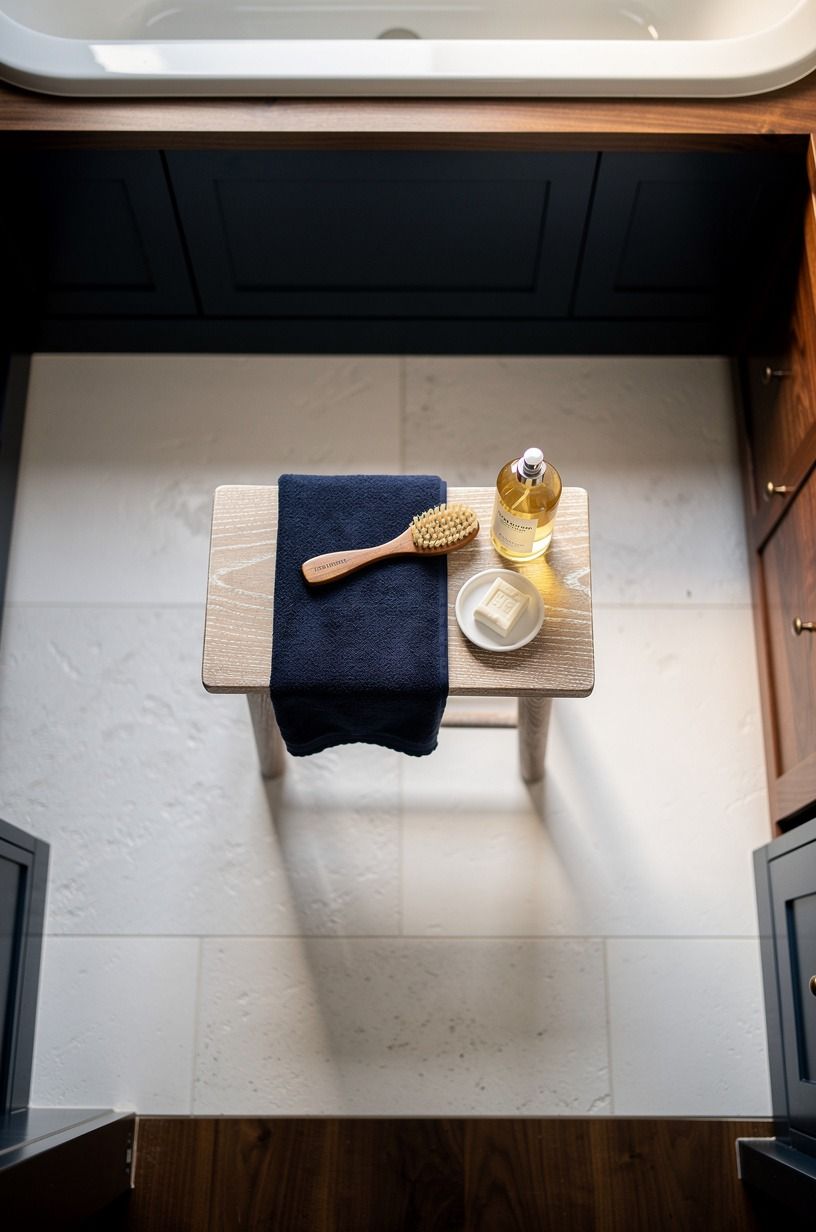
A small cerused white oak stool became the piece I didn’t know I needed. Your stool can hold a towel, give you somewhere to set a lotion bottle, or make the room feel less like a row of fixed fixtures. Mine sits near the tub and catches the lamp’s low light in the evening.
I chose cerused oak because the finish keeps the navy, white, and walnut palette from feeling too heavy. I avoided orange-toned versions.
Too glossy, too resort lobby. A pale, weathered finish looked organic beside the plaster. If your space is very tight, use a narrow stool with open legs so the floor stays visible.
It’s calming, not cluttered.
14Skip a busy rug for a long woven runner
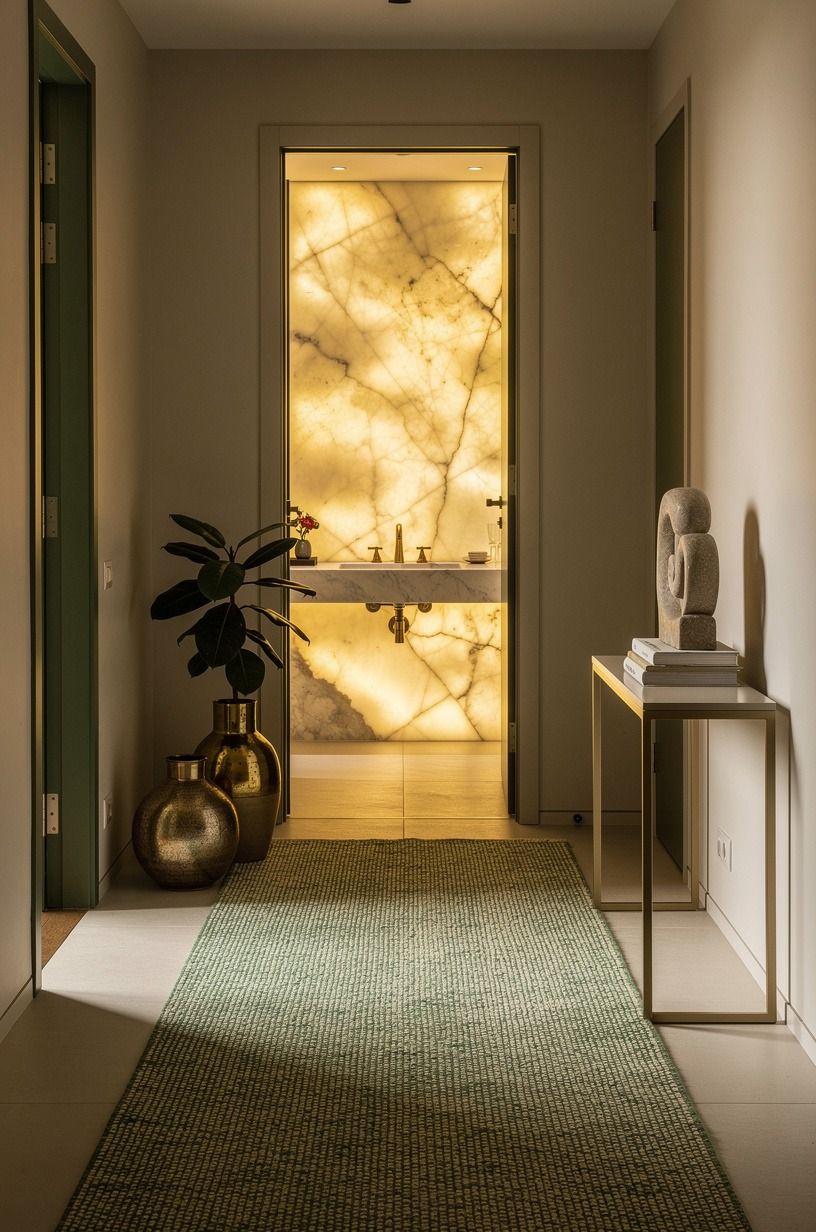
I almost bought a patterned bath mat. Then I saw how much it would compete with the backlit translucent onyx.
Instead, I used a flatwoven cotton runner in washed terracotta and oat, long enough to bridge the vanity and tub. Your feet get softness, but the room keeps its quiet rhythm.
Keep it out of the direct splash zone. I know, obvious, but I’ve watched a thick rug turn into a damp little science project.
A low pile dries quicker and lets the tadelakt remain the main texture. For a sun-baked variation on this palette, try these Tulum-style tadelakt bathroom ideas.
15Mix handmade ceramics with one plain dispenser
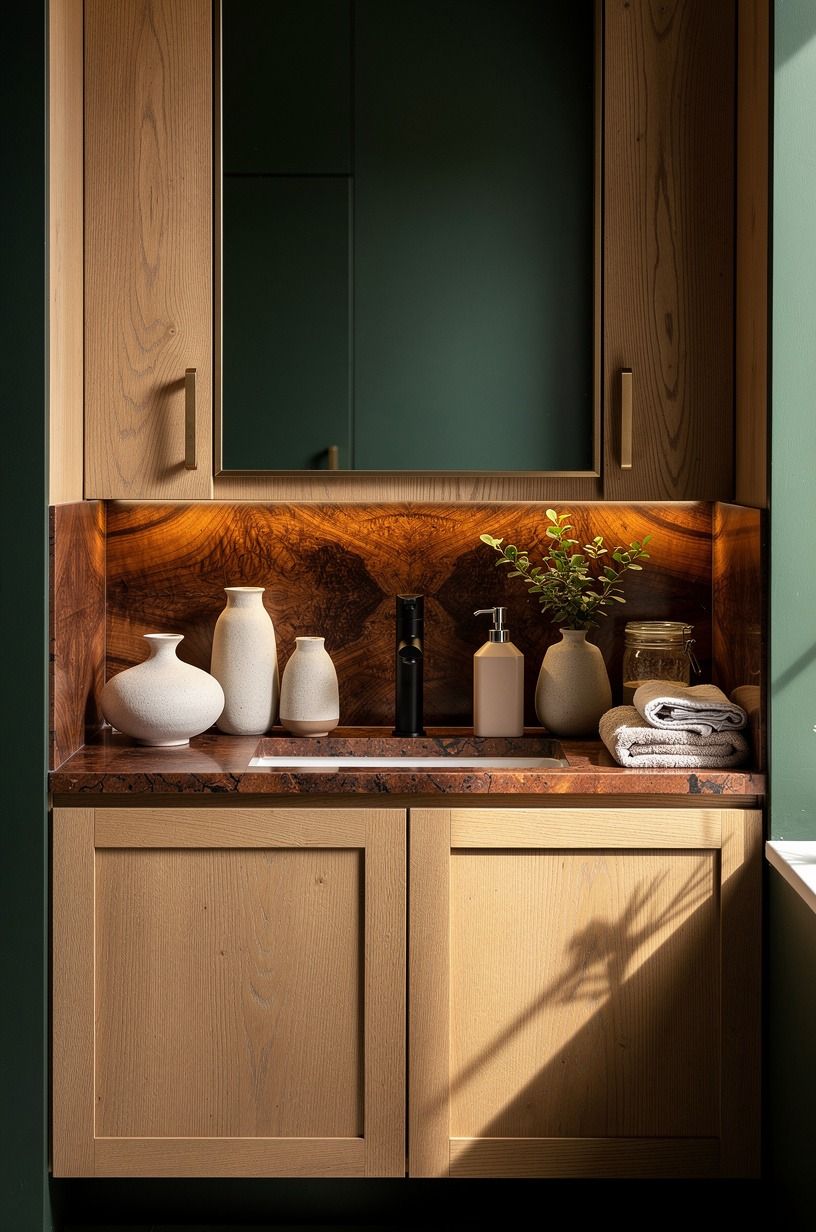
I used a book-matched walnut tray with a simple amber glass dispenser, not a matching countertop set. Your bathroom should look collected over time, even if you finished it last weekend. The warm wood catches drips and looks better with use, while the amber bottle disappears into the forest-green and rust palette.
But don’t buy a dozen handmade pieces. One ceramic note is charming; a shelf full of pottery starts to feel like you’re selling it.
I keep the counter mostly clear, then let the tray and dispenser do their job. The combination is small, useful, and surprisingly picturesque.
16Put storage behind the Mediterranean Screen Effect
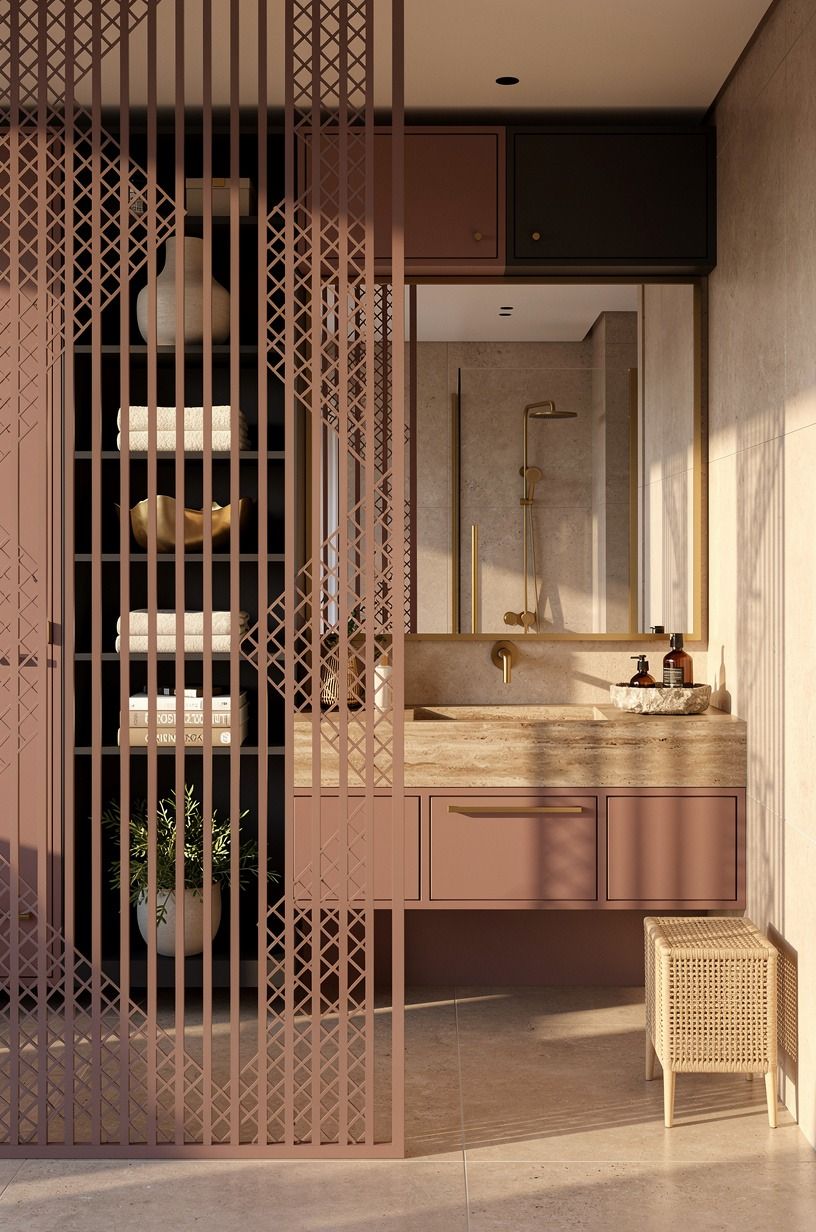
I used a shallow cabinet with a warm travertine front to hide the unglamorous stuff: extra toothpaste, medication, cleaning cloths. Your open shelf can stay gentle and useful when the backups have somewhere else to go. That’s the Mediterranean Screen Effect, soft texture covering practical clutter.
The stone had to sit away from direct shower spray, and I sealed the wood frame before installation. I’d choose a solid door if your bathroom has no fan, because constant dampness is hard on almost any finish. Still, in a ventilated room, travertine adds a warm variation that plain cabinet fronts can’t match.
17Add an artful interruption above the toilet
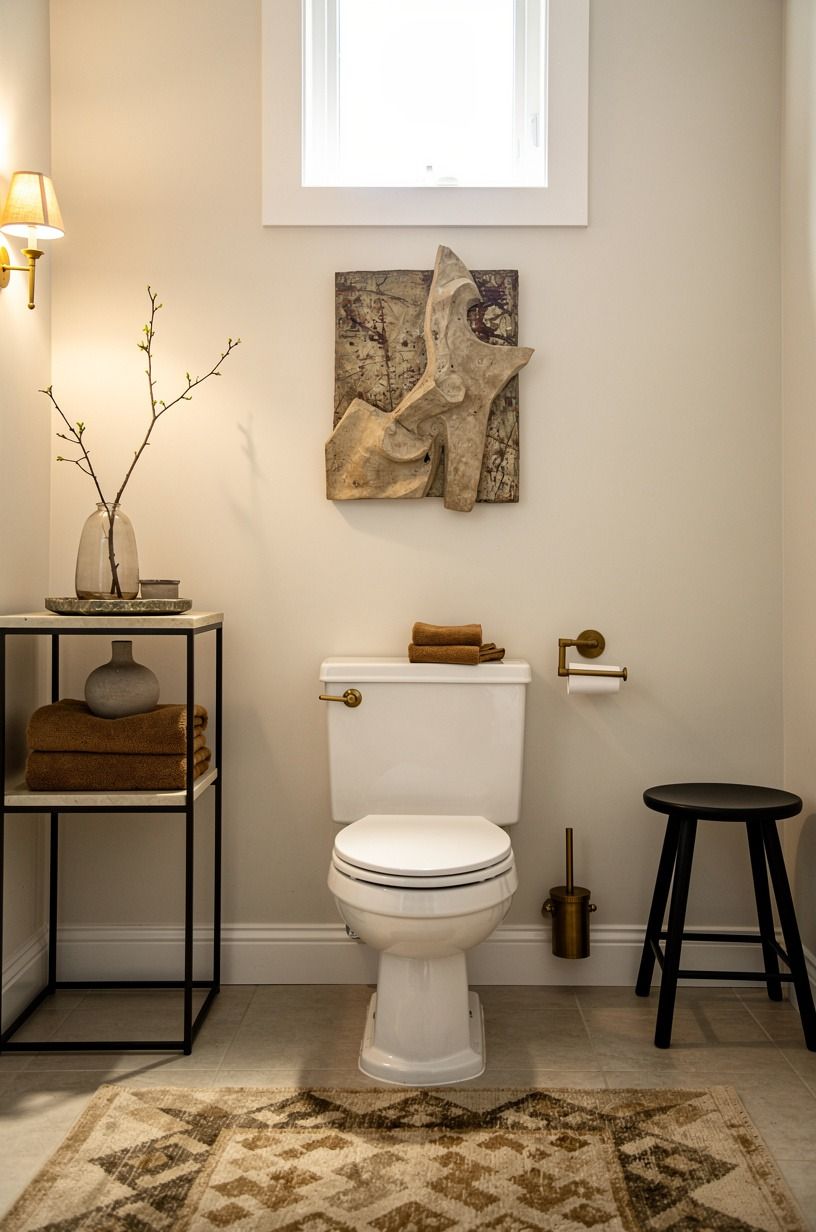
I used a small unlacquered brass wall accent above the toilet instead of a generic bathroom sign. Your wall art can be small, but it should interrupt the fixture logic of the room. The aging brass gave mine a little story without turning it into beach decor.
I kept it away from the shower. No need for a gallery wall.
One object, one quiet subject, enough negative space around it. And if you’re tempted by a word print, don’t. The room already says “relax” through its materials.
It doesn’t need to spell it out.
18Let the shower hardware disappear into the plaster
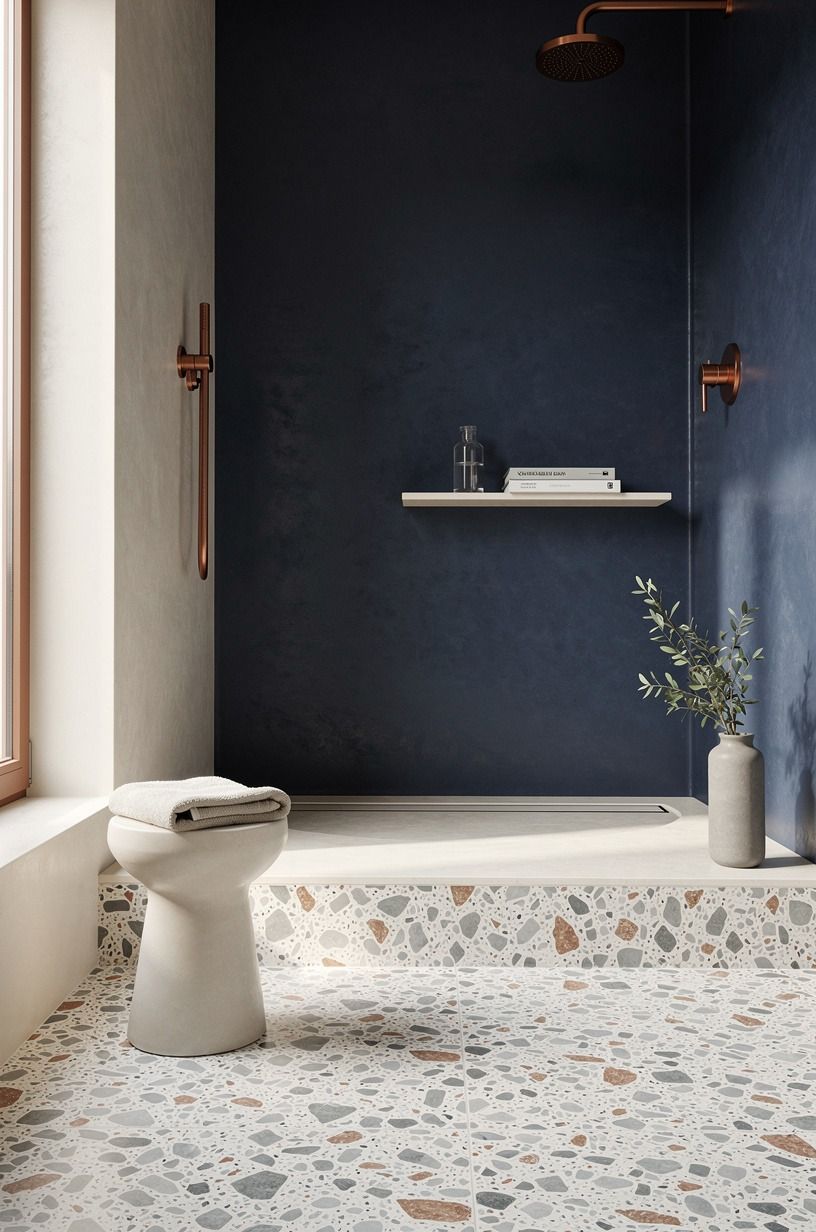
I chose oversized-chip terrazzo around the shower hardware rather than forcing brass into the wet zone.
19Finish with a scent you’d recognize with your eyes closed
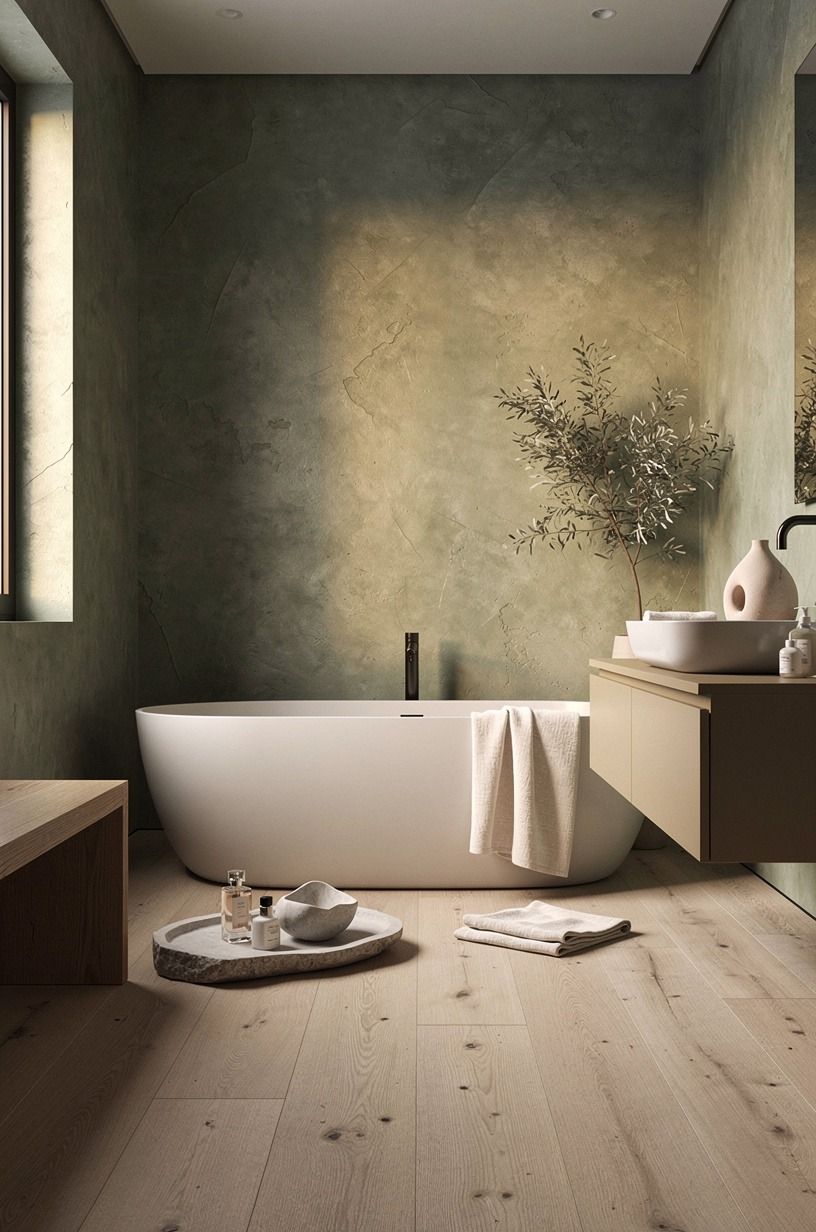
The final piece was a neroli and cedar candle on a hand-applied Venetian plaster ledge, lit only when I had time to stay in the bath. Your bathroom shouldn’t smell like a department-store aisle. I wanted something dry, citrusy, and a little woody, like sun-warmed shutters after rain.
This is not about buying calm in a jar. It’s about giving your finished room a ritual, however small.
I keep the candle near the mirror, away from towels, and use it maybe twice a week. The scent arrives slowly.
So does the feeling that the room is finally yours.
How much it cost
My version was a mid-level makeover because the vanity and plaster work carried the spend. I reused the tub, kept plumbing where it was, and did the styling myself. Your total can land much lower if you paint instead of plastering, or much higher if you re-tile a shower.
The material choices are where you should pause before committing. Zellige tile generally runs $15 to $35 per square foot, while marble tops often land at $50 to $100 per square foot.
I’d spend on the wall finish and faucet first, then save on styling pieces you can swap later. For more low-commitment texture, these limewash bathroom ideas are a smart place to start.
Why I think tadelakt is worth the fuss
I used to think a bathroom had to be bright white to feel clean. That idea comes from hotels, catalogs, and a lot of landlord paint. But a room can be clean and still have warmth.
Tadelakt gave my bathroom a surface that changed from hour to hour: pale and almost chalky at breakfast, richer by late afternoon, softly shadowed after the lamp came on. I don’t think every bathroom needs it. A badly finished plaster wall is expensive disappointment, especially around water.
Here’s my honest decision rule: use tadelakt where you can see and touch it, not where it will be punished all day. Put robust tile in the shower, use the plaster near the vanity, and choose a finish you’ll still like when the towels are on the floor and the counter has toothpaste on it.
That’s real life. I made the mistake of chasing a fully matching palette once, and it looked stiff. This room improved when I let brushed nickel do its practical work and let brass be the jewelry.
And yes, I understand the urge to buy every Mediterranean-looking accessory in sight. I had it too.
But the room became more peaceful when I removed things. One dark door.
One striped towel. One irregular tile surface.
The plaster did the heavy lifting, so everything else could stay quiet. What’s more luxurious than not needing to add another thing?
A Few Things Worth Answering
What is the best Mediterranean Tadelakt Bathroom Ideas for Warm, Coastal Calm for a small bathroom?
A tadelakt vanity wall with a floating IKEA GODMORGON-style oak vanity is the best small-space pairing. Your floor stays visible, and the warm wall gives the room depth without adding bulk. Keep your mirror simple and your shower tile light.
Where can I buy Mediterranean Tadelakt Bathroom Ideas for Warm, Coastal Calm pieces on a budget?
Start with Target Threshold, IKEA, and Wayfair for towels, mirrors, and simple lighting. Your best secondhand finds are often wood stools and frames from Facebook Marketplace or thrift stores. One worn-in piece does more than several matching new ones.
How much does a Mediterranean Tadelakt Bathroom Ideas for Warm, Coastal Calm makeover cost?
A cosmetic version can cost about $200 to $1,200, while a larger project can run $3,000 to $9,000. Paint, textiles, and rearranging are the free or low-cost moves. Your tub and plumbing location are what protect the budget.
Can I create a Mediterranean Tadelakt Bathroom Ideas for Warm, Coastal Calm on a budget?
Yes, and you can start without replacing tile. Paint the ceiling Sherwin-Williams Sea Salt SW 6204, switch to clay-toned towels, and add a thrifted wood frame. Your room will feel warmer before you touch a wall.
Is a Mediterranean Tadelakt Bathroom Ideas for Warm, Coastal Calm worth it in a small space?
Yes, it’s especially worth it in a small space because you see every surface up close. One textured wall makes a compact bathroom feel intentional. Keep the vanity floating and leave clear floor around the toilet.
Is Mediterranean Tadelakt Bathroom Ideas for Warm, Coastal Calm a good idea for a rental?
Yes, if you choose removable layers. Your options include peel-and-stick backsplash tile, a tension-rod linen curtain, and removable mirror framing. Skip permanent plaster unless your landlord agrees, then borrow the look with paint and textiles.
Where I'd Start First
If I had to pick one, I’d start with the tadelakt vanity wall. You can’t fake the way its uneven surface catches low light, and every shiny fixture looks less generic beside it. Pin that wall for later, then let your bathroom grow around it.