
 by
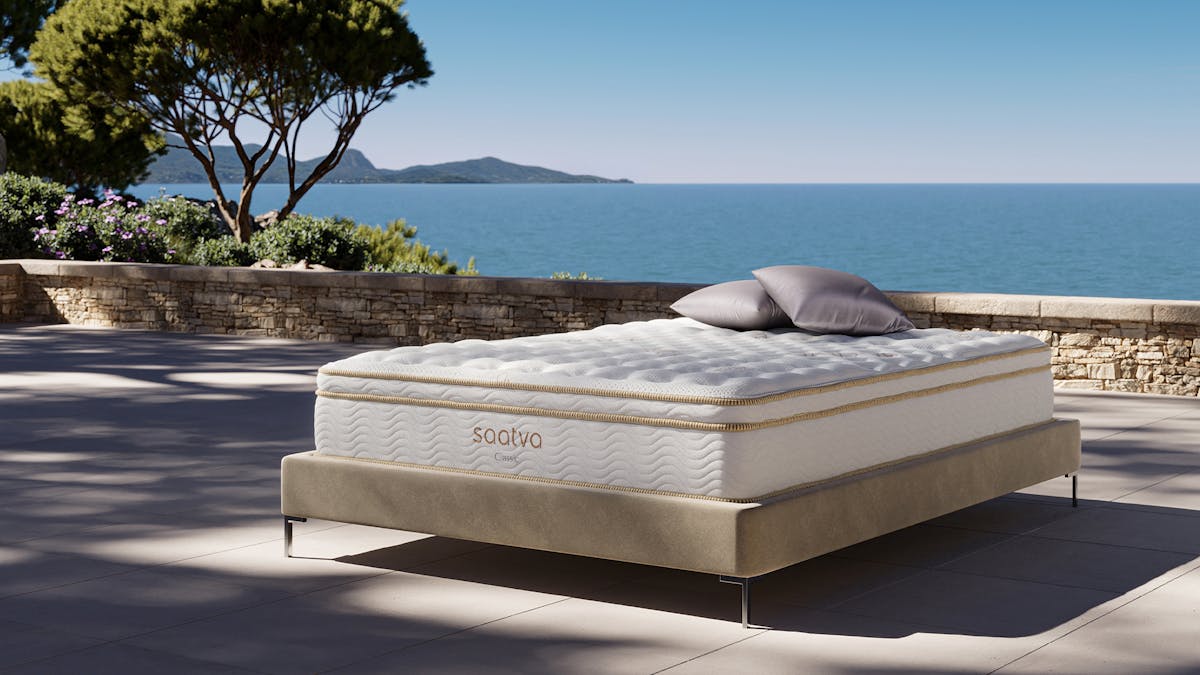
by A medium-firm mattress is the most versatile firmness level, suited to most average-weight back sleepers, combination sleepers, and couples. Our top pick is the Saatva Classic (Luxury Firm): a dual-coil innerspring hybrid with a dedicated lumbar pad, outstanding edge support, free white-glove delivery, and a 365-night trial. For sleepers who prefer an all-foam feel, the Amerisleep AS3 is our top foam alternative with HIVE 5-zone support.
Saatva Classic
9.2/10
- Dual-coil construction with a reinforced lumbar zone pad, true medium-firm support that does not sag
- Outstanding edge support for couples using the full surface
- Free white-glove delivery, in-room setup, and old-mattress removal included
- 365-night trial and lifetime warranty, best return policy in this category
- Heavy, ships flat rather than compressed, requires more effort to set up than a bed-in-a-box
- $99 return processing fee applies during the trial period
The Saatva Classic in Luxury Firm lands squarely at the medium-firm sweet spot most back and combination sleepers need. The dual-coil system maintains consistent firmness better over time than foam, and the dedicated lumbar zone pad addresses the most common support gap without relying on memory foam sinkage.
What medium-firm actually means
Most brands place medium-firm at roughly 6 out of 10 on a firmness scale, where 10 is hardest. It is the most popular firmness range for a good reason: the majority of sleepers prefer something between 5 and 7. The appeal is balance, enough support to hold the spine in neutral alignment, with enough give to relieve pressure at the shoulders and hips without excessive sinkage.
Firmness ratings are not standardized across brands. A medium-firm from one manufacturer may feel noticeably firmer or softer than the same label from another. That is why real-world specs, ILD foam ratings, coil gauge, and zoned support construction, matter more than the number on the label.
Medium-firm pros and cons
| Pros | Cons |
|---|---|
| Most versatile firmness, works across positions and body types | Often too firm for lightweight side sleepers (under ~130 lb) |
| Ideal for back and combination sleepers at average weight | May not provide enough support for heavier sleepers (230 lb+) |
| Good compromise for couples with different preferences | Usually too soft for strict stomach sleepers who need hip support |
| Linked to better outcomes for chronic lower back pain (Jacobson et al., Sleep Health 2015) | Balanced feel means not optimized for any single sleep style |
Who medium-firm is and is not for
Best fit
- Average-weight back sleepers (130-230 lb): medium-firm keeps the lumbar curve supported without forcing the hips into extension. It is the research-backed default for this group.
- Combination sleepers: moving between positions works well on a surface that is not too soft to shift on but is not rigid either.
- Couples with mixed firmness preferences: medium-firm is the most common compromise that works reasonably well for both a back sleeper and a side sleeper sharing a bed.
- Average-weight side sleepers (130-200 lb): at average weight, most can sleep on medium-firm without excessive pressure at the shoulder and hip. Lighter-weight side sleepers usually need to go softer.
Not a good fit
- Lightweight side sleepers (under ~130 lb): medium-firm is too resistant to allow the shoulder and hip to settle enough for pressure relief. A medium (5/10) or medium-soft will serve better.
- Heavier sleepers (230 lb+): body weight compresses a medium-firm surface further than the firmness rating suggests, effectively making it feel softer. A true medium-firm for this group means choosing a construction that holds its shape under more load, typically a hybrid with strong coil support.
- Strict stomach sleepers: stomach sleeping requires firmer support to keep the hips from dipping below the shoulders. Medium-firm is a marginal choice; medium-firm-to-firm (6.5-7.5) is typically better.
The best medium-firm mattresses compared
| Mattress | Type | Firmness | Trial | Queen price |
|---|---|---|---|---|
| Saatva Classic | Innerspring hybrid | Luxury Firm 6/10 | 365 nights | ~$1,395 |
| Amerisleep AS3 | All-foam Bio-Pur | Medium 5/10 | 100 nights | From $1,049 |
| PlushBeds Botanical Bliss | Organic latex | Medium-firm ~6 | 100 nights | ~$1,800 |
| Puffy Original | All-foam in-a-box | Medium/medium-firm ~6 | 101 nights | ~$1,499 |
| Sweetnight CoolNest | Hybrid gel foam | Medium-firm ~6-7 | ~100 nights | Sub-$600 |
Amerisleep AS3
8.9/10
- HIVE 5-zone support layer firms specifically under the lumbar and hips while staying softer at shoulders
- Partially plant-based Bio-Pur foam runs cooler and more responsive than standard memory foam
- CertiPUR-US certified, made in the USA
- Outstanding motion isolation, ideal for couples where one partner moves frequently
- Softer edges than a coil hybrid, less ideal for sitting on the perimeter
- All-foam can retain warmth; sleepers over 230 lb may prefer the AS2 or a hybrid model
If you prefer an all-foam feel over an innerspring, the AS3 is the clearest medium foam pick. Its HIVE zoning performs closer to a medium-firm in spinal support terms while keeping enough shoulder relief for side sleeping.
PlushBeds Botanical Bliss
8.7/10
- GOLS-certified organic Dunlop latex, natural materials with no off-gassing
- Configurable firmness across multiple layers so you can tune the feel without returning the mattress
- 25-year warranty, one of the longest in the category
- Buoyant latex feel gives a floating-on sensation rather than sinking in
- Heavy and expensive, not a budget option
- Latex feel is very different from foam contouring; memory foam fans may not adjust easily
For sleepers who want natural materials and long-term durability, the Botanical Bliss is the clearest organic medium-firm choice. Latex holds its shape better than foam over time and the configurable layers let you dial in the exact firmness you need.
Puffy Original
8.5/10
- Strong pressure relief and motion isolation for the price
- Lifetime warranty at a mid-range price point
- Easy bed-in-a-box setup, arrives compressed and ready to expand
- Can sleep warm for hot sleepers
- Not as supportive as a coil hybrid for heavier sleepers or strict back sleepers
The Puffy Original sits in the medium to medium-firm zone that works for a broad range of average-weight sleepers. Its lifetime warranty and strong pressure relief make it a solid value pick for those who do not need the premium features of the Saatva or PlushBeds.
Sweetnight CoolNest
8.1/10
- Hybrid construction (gel memory foam and pocketed coils) at a sub-$600 price
- Gel foam layer addresses cooling better than standard memory foam at this price point
- Pocketed coils add edge support and airflow that pure foam budget mattresses lack
- Build quality and durability are a step below premium brands
- Not the best choice for primary use by heavier sleepers long-term
If budget is the primary constraint, the Sweetnight CoolNest delivers the medium-firm hybrid feel at a price most bed-in-a-box foam options cannot match. Best for guest rooms, secondary bedrooms, or as a first mattress before upgrading.
Medium-firm vs medium: what is the difference?
The practical difference between a medium (5/10) and a medium-firm (6/10) is around half an inch of surface sinkage at the hip. For most back and combination sleepers, either works. For side sleepers, that difference matters more: a 5/10 usually relieves shoulder pressure better than a 6/10. The Saatva Classic in Luxury Firm is rated 6/10 but its lumbar zone wire reinforcement firms specifically under the lumbar while the Euro pillow-top softens the initial feel at the shoulder.
Firmness by sleep position and weight
| Sleep position | Weight | Recommended firmness |
|---|---|---|
| Back | Under 130 lb | Medium (5/10) |
| Back | 130-230 lb | Medium to medium-firm (5-6/10) |
| Back | 230 lb+ | Medium-firm to firm (6-7/10), prefer hybrid |
| Side | Under 130 lb | Medium-soft to medium (4-5/10) |
| Side | 130-230 lb | Medium (5/10), medium-firm marginal |
| Side | 230 lb+ | Medium-firm (6/10), strong coil support |
| Stomach | All weights | Medium-firm to firm (6-8/10) |
| Combination | 130-230 lb | Medium to medium-firm (5-6/10) |
The case for coil vs foam at medium-firm
Both foam and coil constructions can deliver a medium-firm feel, but they maintain it differently over time. A well-made innerspring or coil-hybrid resists compression more consistently. The coil gauge and zone structure determine where the surface firms, and that structure does not change the way foam density can soften after years of compression. The Saatva Classic uses a dual-coil system with a dedicated lumbar zone wire; the firmness profile holds more predictably than a flat medium-firm foam layer.
All-foam beds like the Amerisleep AS3 compensate through layering and zoning rather than coil resistance. The tradeoff is better motion isolation and a more conforming feel, at the cost of some long-term sag risk, which the AS3 20-year warranty and 1.5-inch sag threshold coverage helps address.
Medium-firm is the safest starting point for most adult sleepers at average weight. The Saatva Classic (Luxury Firm) is our top pick on a 365-night trial; the Amerisleep AS3 is the best all-foam alternative on a 100-night trial. Both offer full refunds if the feel does not match.
Frequently asked questions
Is medium-firm or firm better for back pain?
Medium-firm (5-6/10) outperforms both soft and firm for most lower back pain, according to a 2015 study in Sleep Health. Firm mattresses (7+/10) can help stomach sleepers and heavier back sleepers, but push the lumbar into extension for most average-weight back sleepers. Start medium-firm, then adjust after a few weeks on your trial.
How long does it take to know if a mattress firmness is right?
Allow at least 3-4 weeks. Your body re-patterns around a new surface, and what feels wrong at night one can feel right by night 30. If pain is clearly worse at 4-6 weeks, the firmness is likely off. This is why trials of 100 nights or longer exist.
Can a medium-firm mattress feel different depending on body weight?
Yes, this is the most common source of confusion with firmness ratings. A sleeper at 180 lb will compress a medium-firm surface noticeably less than someone at 260 lb. At higher weights, a rated medium-firm 6/10 can feel more like a medium or even medium-soft. Heavier sleepers should prioritize a hybrid with strong coil support over a standard all-foam medium-firm.
What is the difference between medium-firm and Luxury Firm?
Luxury Firm is Saatva branding for their middle firmness option, rated around 6/10, which places it squarely in the medium-firm zone. The term luxury refers to the pillow-top and finish, not extra softness. It is essentially a premium medium-firm innerspring.
This guide is part of our Mattress Buying Guide hub, compare all the top picks and narrow down your choice there.